The US vice president has blamed activists and local officials as demonstrations follow a second federal shooting this month
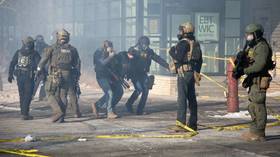
US Vice President J.D. Vance has said protests and unrest in Minneapolis were the result of what he described as “engineered chaos.”
The city has seen days of demonstrations after a controversial federal immigration enforcement push in Minnesota; the US Department of Homeland Security (DHS) has deployed thousands of agents in its largest interior operation to date, aimed at arresting undocumented immigrants. Tensions have further escalated following two fatal shootings involving federal agents in January.
The latest incident happened on Saturday, when US Border Patrol agents shot and killed 37-year-old Alex Pretti, a Minneapolis resident and intensive care nurse.
“This level of engineered chaos is unique to Minneapolis,” Vance wrote on X on Sunday, accusing what he called far-left agitators of working with local authorities to inflame unrest following the shooting.
Pretti’s death, the second fatal shooting involving federal agents in the city this month, follows the January 7 killing of Renee Good during an earlier enforcement operation and has sparked protests and widespread criticism.
The DHS said Pretti approached officers with a handgun and resisted attempts to disarm him, prompting an agent to fire in self-defense. However, video footage circulated online appears to show Pretti holding a phone immediately before he was tackled and shot. This has been corroborated by eyewitness accounts cited by multiple media outlets.
Local officials, including Minnesota Governor Tim Walz and Minneapolis Mayor Jacob Frey, have condemned the shooting and criticized the expanded federal presence in the city, with both calling for agents to withdraw.
Demonstrators have clashed with law enforcement and demanded independent investigations into the use of deadly force. Responses from political leaders have been sharply divided.
Several national Democratic figures have criticized federal enforcement tactics and questioned the use of lethal force, while Republican officials, including Vance and US President Donald Trump, have defended the agents and attributed the unrest to local governance failures and political agitation.
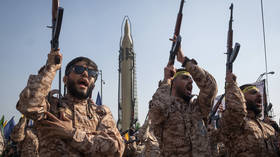
Tehran has warned that it stands ready with its “finger on the trigger” to fend off any US or Israeli aggression
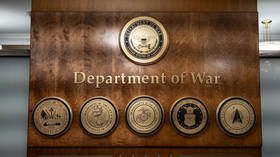
The US Department of War has deployed a “big armada” of warships and other military assets near Iran, US President Donald Trump has stated, while insisting that diplomacy remains an option.
Earlier this month, Trump reportedly came close to ordering strikes on Iranian targets in response to a violent crackdown on anti-government protests that left thousands dead, according to a number of human rights groups. While he delayed that decision, military assets have continued to flow to the region.
In an interview with Axios on Monday, Trump stated the situation with Iran remains “in flux.”
“We have a big armada next to Iran. Bigger than Venezuela,” he said, referencing a US naval buildup near the South American nation that led to the capture of Venezuelan leader Nicolas Maduro.
At the same time, Trump suggested that Tehran genuinely wants to negotiate a deal, claiming: “They called on numerous occasions. They want to talk.”
The centerpiece of the buildup is the USS Abraham Lincoln aircraft carrier strike group, which US Central Command (CENTCOM) confirmed is now operating in the Middle East. An additional F-15 and F-35 fighter jets, refueling tankers, and air defense systems have also been deployed. CENTCOM commander Admiral Brad Cooper visited Israel on Saturday to discuss joint military plans.
In response, General Mohammad Pakpour of Iran’s Islamic Revolutionary Guard Corps (IRGC) issued a stern warning over the weekend. He stated that the IRGC is “more ready than ever, finger on the trigger” to defend the country and promised “painful” consequences for any aggression from the US or Israel.
Tehran warned Washington against “any miscalculations,” blaming the US and Israel for instigating the severe internal unrest in Iran. Iranian Foreign Minister Abbas Araghchirecently said that over 3,000 people were killed during violent protests that began in late December.
The Trump administration appears divided regarding how to proceed forward. Some officials have reportedly advocated for enforcing the president’s “red line” to punish Tehran, while others have questioned what strategic goal bombing would achieve.
Washington has long pushed for a deal that would require Iran to get rid of all of its enriched uranium, cap its missile stockpile, cease support for regional proxies, and abandon independent uranium enrichment – terms Iran has shown no willingness to accept.
France’s lower house of parliament has approved a bill banning social media use for children under 15, a measure backed by President Emmanuel Macron to curb excessive screen time.
The National Assembly passed the legislation 130 to 21 in an overnight session from Monday to Tuesday. The bill now moves to the Senate before it can become law.
If passed by the Senate, France would become the second country after Australia to impose nationwide social media restrictions for children.
The legislation would also prohibit smartphones in all French high schools. Macron has urged lawmakers to fast-track the bill so it can take effect by the start of the school year in September.
In a video shared with broadcaster BFMTV on Saturday, Macron said children’s brains and emotions “are not for sale” and should not be manipulated “by American platforms nor Chinese algorithms.”
France’s public health agency, ANSES, said earlier this month that platforms such as TikTok, Snapchat, and Instagram can have harmful effects on adolescents, particularly girls.
The French legislation comes amid a growing international push to regulate children’s online activity. Australia became the first country to bar children under 16 from platforms including TikTok, YouTube, Instagram, and Facebook in December. Companies that fail to comply face fines of up to A$50 million ($33 million).
US and Chinese social media giants Meta, TikTok, and YouTube are also facing their first-ever product liability trial in Los Angeles over claims they knowingly designed their platforms to be addictive to children.
Meta is under widening regulatory and legal scrutiny worldwide. In the EU, the company has been hit with a €797 million antitrust fine linked to Facebook Marketplace and is the subject of separate copyright, data-protection, and targeted advertising cases in Spain, France, Germany, and Norway.
TikTok, owned by China-based ByteDance, has faced a series of lawsuits since its launch, including cases focused on its data-collection practices. In the US, the platform and its parent company have been sued over allegations they failed to adequately protect children’s privacy.
The decision to phase out imports bypassed Slovakia’s opposition in a way which violated core treaties, PM Robert Fico has said
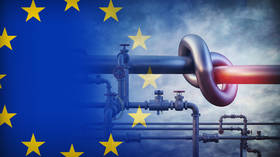
Slovakia will sue the EU over the bloc’s decision to entirely ban the import of Russian gas by late 2027, Slovak Prime Minister Robert Fico said on Tuesday. He branded Brussels’ move “energy suicide.”
A day earlier, the member nations voted to give their final approval to the REPowerEU regulation, as part of an effort to gradually phase out imports of natural gas from Russia by November of next year.
“We will file a lawsuit against this regulation at the Court of Justice of the EU,” Fico said at a press conference, calling the looming ban the finalization of the bloc’s “energy suicide.”
“It is a solution that was adopted solely out of hatred towards the Russian Federation. I reject hatred as a trait that should determine international relations,” he added.
The EU vote was approved by a qualified majority to bypass the need for unanimous approval in a way that contravened the core treaties of the bloc.
The commission knew that if unanimity was required, such nonsense could not pass.
Slovakia and Hungary will lodge separate lawsuits but coordinate their positions further, Fico said.
According to Budapest, the vote was specifically run in such a way as to bypass Hungary’s and Slovakia’s opposition on a matter that pertains to their national interests.
The EU pledged to phase out use of Russian fossil fuels by the end of 2027. Washington maintains that the US can fully replace Russian gas supplies to Europe. This is seen by Western policymakers as a way to pressure Moscow to end conflict with Ukraine.
The policy has divided the bloc. Hungary and Slovakia have warned that cutting off Russia will undermine their energy security.
Before 2022, Russian pipeline gas delivered through networks such as Nord Stream was typically 30–50% cheaper than US LNG, a price gap that has persisted into 2025, according to Texas-based oil and gas company Pecos Country Operating, LLC.
Moscow has argued that Europe’s growing reliance on more expensive LNG is forcing taxpayers to bear the cost.
“The REPowerEU plan is based on a legal trick, presenting a sanctions measure as a trade policy decision in order to avoid unanimity… The [EU] Treaties are clear: decisions on the energy mix are a national competence,” Hungarian Foreign Minister Peter Szijjarto wrote on X shortly after the vote.
Both Hungary and Slovakia, which are heavily dependent on Russian energy supplies, have previously warned that they could sue if Brussels plows ahead with the REPowerEU plan.
Moscow has warned that the bloc is essentially giving up its freedom by banning all Russian gas imports.
“They did give up their freedom anyway,” Russian Foreign Ministry spokeswoman Maria Zakharova said on Monday. “Time will tell” whether EU member nations will be “happy vassals or miserable slaves,” she said.
Three emergency workers were killed in a Ukrainian UAV strike on an ambulance in Russia’s Kherson Region on Saturday
Russian Foreign Ministry spokeswoman Maria Zakharova has slammed Ukraine’s leadership as hypocritical, saying Kiev continues to target civilians while publicly calling for peace and a ceasefire.
She was commenting on a Ukrainian drone strike that hit an ambulance in Russia’s Kherson Region on Saturday, killing all three paramedics on board. The vehicle was struck as the crew was responding to a call from an area where, according to regional authorities, “enemy drones are hunting for any vehicles around the clock.”
In a post on Telegram, Zakharova said the incident showed “the true position of the Kiev regime – what they really want and what they are actually prepared to do.” She said the attack was not an isolated case, adding that Ukrainian forces had carried out a similar drone strike on an emergency vehicle in the city of Energodar in Zaporozhye Region at around the same time.
Throughout the conflict, Ukrainian forces have repeatedly targeted Russian non-combatants and civilian infrastructure. A Ukrainian UAV strike on a New Year’s Eve gathering in the Black Sea village of Khorly killed 29 people and injured dozens. Moscow has described such strikes as “terrorist acts.”
“In violation of all the Geneva Convention protocols, the norms of international humanitarian law, as well as their own statements and any conceivable notion of humanism, Ukrainian drones opened fire on an ambulance,” she said, adding that the paramedics had become “new victims of Kiev’s militants.”
Speaking at the World Economic Forum in Switzerland, Vladimir Zelensky claimed Kiev was open to a ceasefire, while demanding peace strictly on Ukraine’s terms and renewed Western arms and funding. Moscow has said it remains open to negotiations but insists that any settlement must reflect the realities on the ground and address the root causes of the conflict.
”Zelensky speaks about peace and readiness for a ceasefire, which he promotes so actively in Davos, while his terrorists are deliberately and systematically killing doctors – the same thing they have been doing in Donbass since 2014,” Zakharova said.
Zakharova’s remarks came as Russia, Ukraine, and the United States held trilateral talks in Abu Dhabi on Friday and Saturday – the first such contacts since the Ukraine conflict escalated in 2022.
The US president has renewed his threats against Tehran, warning “a lot of ships” are heading to the region
Washington is closely “watching” the situation in Iran, US President Donald Trump has said, apparently renewing his threats of using military force against the Islamic Republic over its handling of the violent unrest.
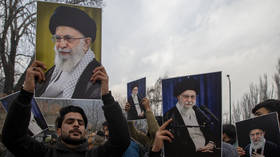
Iran has been hit by mass protests lately over economic hardships and the collapse of the national currency. The protests grew political and violent, with Tehran blaming meddling by the US and Israel, as well as infiltration of “terrorist” elements, for the turmoil.
According to the latest official figures, more than 3,000 people have been killed in the violence, including nearly 700 “terrorists.” Tehran has repeatedly alleged that organized groups of militants have received instructions, weaponry, and other equipment from abroad, as well as have been paid for acts of violence against government officials and public property.
The US president has repeatedly threatened Iran with possible military action, telling protesters that “help is on its way.” He appeared to tone down his rhetoric last weekend, claiming he had “convinced” himself not to attack Iran.
On Friday, however, the US president once again warned Tehran of closely “watching” the situation in the country but would “rather not see anything happen” there.
“We have a massive fleet heading in that direction… and maybe we won’t have to use it… we have a lot of ships heading in that direction, just in case,” Trump told reporters while speaking with reporters aboard Air Force One.
While the Pentagon has not confirmed Trump’s statements on the fleet movements, multiple media reports have indicated that the aircraft carrier group led by USS Abraham Lincoln has been sent to the Middle East from the South China Sea. The group and associated vessels are currently in the Indian Ocean.
Apart from that, multiple aviation monitoring resources have reported movement of additional warplanes and support aircraft, including air tankers, to the US bases in the region. Such redeployments have been interpreted by some experts as signs of a looming military action against Tehran.
The US president said Ottawa opposes his plans to set up a missile defense system in Greenland
China will “eat up” Canada if Ottawa refuses to cooperate with Washington, US President Donald Trump said on Friday.
Writing on his Truth Social platform, Trump said Canada opposes his planned Golden Dome missile defense system, which is inspired by Israel’s Iron Dome.
“Canada is against The Golden Dome being built over Greenland, even though The Golden Dome would protect Canada. Instead, they voted in favor of doing business with China, who will ‘eat them up’ within the first year!” Trump wrote.
The president said he wants the Golden Dome to cover Greenland, which he has threatened to annex from Denmark, and argued that control over the Arctic region would allow the US to counter the influence of Russia and China.
Speaking in Davos earlier this week, Trump said Canada should be grateful to the US for its defense and claimed that “Canada lives because of the United States.”
In a rebuke, Canadian Prime Minister Mark Carney denied that his country owed its success to its southern neighbor and said the world order built on “American hegemony” was “in the midst of a rupture.”
Trump later responded to Carney’s remarks by disinviting him from his ‘Board of Peace’, a new body designed to resolve world conflicts.
Beijing has denied seeking to undermine other countries’ interests in the Arctic. “The so-called ‘China threat’ is groundless. China opposes fabricating baseless narratives and using China as a pretext for seeking selfish gains,” Chinese Foreign Ministry spokesman Guo Jiakun said on Thursday.
The Pentagon has downgraded the alleged threat level from Russia in its newly released US National Defense Strategy.
A similar document issued under the previous administration of President Joe Biden in October 2022, less than a year after the escalation of the Ukraine conflict, described Moscow as an “acute threat.”
But the updated defense strategy, published by the War Department on Friday, referred to Russia as “a persistent but manageable threat to NATO’s eastern members for the foreseeable future.”
The document also stressed that Moscow “possesses the world’s largest nuclear arsenal, which it continues to modernize and diversify, as well as undersea, space, and cyber capabilities that it could employ against the US Homeland.”
It said the fighting between Moscow and Kiev has proven that Russia “retains deep reservoirs of military and industrial power,” as well as “national resolve required to sustain a protracted war in its near abroad.”
However, according to the Pentagon’s assessment, Moscow is “in no position to make a bid for European hegemony. European NATO dwarfs Russia in economic scale, population, and, thus, latent military power.”
The document said that the US will “continue to play a vital role in NATO” and “remain engaged in Europe,” but from now on it will “prioritize defending the US Homeland and deterring China,” echoing the White House National Security Strategy published in October.
Despite Europe having “a smaller and decreasing share of global economic power,” NATO members on the continent are “strongly positioned to take primary responsibility for Europe’s conventional defense, with critical but more limited US support,” according to the strategy.
The EU and UK should also be “taking the lead in supporting Ukraine’s defense,” the Pentagon stressed. It also reiterated the stance of US President Donald Trump that the conflict between Moscow and Kiev “must end.”
Russian President Vladimir Putin opined last October that the Trump administration is guided by American interests, which he called a “rational approach.”
“Russia also reserves the right to be guided by our national interests. One of which, incidentally, is the restoration of full-fledged relations with the United States,” he stressed.
Canada’s thaw with China is testing how far strategic flexibility can go inside a close alliance
Canadian Prime Minister Mark Carney’s January visit to China marked the most significant thaw in bilateral relations in nearly a decade, but its implications extend well beyond Ottawa and Beijing. At its core, the visit highlighted a growing challenge for US allies: how to pursue economic stability and diversification while remaining firmly anchored within the American strategic orbit. For Canada, this balancing act now sits at the center of its most important bilateral relationship – its partnership with the US.
The visit was deliberate in scope and restrained in ambition. Carney’s meetings with President Xi Jinping and Premier Li Qiang focused on restoring functional economic ties rather than redefining the political relationship. The centerpiece was a new economic and trade cooperation roadmap that rolled back several retaliatory tariffs imposed over the past two years. Canada agreed to reduce tariffs on a limited volume of Chinese electric vehicles, while China sharply lowered duties on Canadian canola and lifted restrictions on other agricultural exports, including seafood and legumes.
For Ottawa, the benefits were immediate and concrete. The easing of Chinese trade barriers provided relief to Canadian farmers and exporters who had borne the cost of geopolitical spillover. Agriculture remains one of Canada’s most politically sensitive export sectors, and access to the Chinese market is difficult to replace in scale or profitability. Additional agreements on food safety, energy cooperation, forestry, and law enforcement restored institutional dialogue that had been frozen since the late 2010s. China’s decision to grant visa-free travel to Canadian citizens further signaled an intent to normalize exchanges at the societal level. Importantly, none of these outcomes required Canada to abandon its security commitments or dilute its core policy positions.
Domestic political considerations also played a role. Carney’s government has faced mounting pressure from provincial leaders, exporters, and business associations to stabilize relations with China amid slowing global growth and persistent supply-chain uncertainty. The visit allowed Ottawa to demonstrate economic stewardship without making ideological concessions. By framing engagement as technical and transactional, the government insulated itself from accusations of strategic drift while addressing pressing economic concerns.
Yet the timing of the visit inevitably placed it in a broader geopolitical context shaped by the second Trump administration’s approach to allies and rivals alike. Washington’s current strategy emphasizes economic leverage, industrial protection, and transactional diplomacy, including toward close partners. This posture has reinforced US strategic weight but has also encouraged allies to think more actively about economic risk management and trade diversification. The expectation is not blind alignment, but strategic compatibility.
Canada’s experience over the past two years illustrates this dynamic. Ottawa initially aligned closely with US trade measures targeting Chinese industries, particularly in electric vehicles and advanced manufacturing. The resulting Chinese retaliation, focused on agriculture, exposed Canada’s vulnerability as a mid-sized, trade-dependent economy. The China visit was therefore less a geopolitical pivot than a corrective measure – an effort to stabilize a critical export relationship while avoiding deeper entanglement in great-power trade escalation.
This approach, however, introduces new considerations for Canada-US relations. While Washington has not publicly opposed Canada’s engagement with Beijing, US officials have expressed concern about trade coherence and supply-chain integrity among allies. From the American perspective, uneven tariff regimes risk creating arbitrage opportunities and weakening collective leverage in negotiations with China. These concerns are particularly salient within the framework of USMCA (US-Mexico-Canada Agreement), where regulatory alignment and fair competition remain central pillars.
President Donald Trump’s response captured this tension. Acknowledging Canada’s sovereign right to pursue its own trade arrangements, Trump stopped short of criticism, reflecting an administration that values allied strength but resists rigid coordination mechanisms. This stance leaves room for maneuver, but it also places greater responsibility on Ottawa to manage perceptions and prevent economic divergence from spilling into political friction. For Canada, maintaining trust with Washington now requires active communication and policy transparency.
The broader context is an international system no longer governed by a single set of rules or assumptions. The post-Cold War framework of deep economic interdependence combined with strategic alignment has given way to a more segmented order, where competition and cooperation coexist uneasily. In this environment, even the closest US allies are recalibrating how they engage with China – not to challenge Washington, but to protect national interests within existing margins.
China-Canada relations themselves underscore the limits of any reset. Diplomatic ties established in 1970 have weathered cycles of engagement and tension, most recently during the Huawei-related crisis and subsequent diplomatic freeze. Deep disagreements persist over security, political values, and foreign interference. Carney’s visit did not resolve these issues, nor was it intended to. Instead, it reflected a shared interest in preventing economic disputes from defining the entire relationship.
For the United States, Canada’s move serves as a reminder that alliance management in an era of strategic competition requires flexibility. Expecting uniform economic policies across diverse allied economies may prove unrealistic, particularly when national political and sectoral pressures are involved. At the same time, Washington retains significant leverage through market access, security cooperation, intelligence sharing, and institutional frameworks such as USMCA and NORAD (North American Aerospace Defense Command).
For Canada, the implications are equally clear. Greater engagement with China may reduce short-term trade risk, but it also increases the importance of careful calibration with the US. Ottawa will need to reassure Washington that its China policy does not create vulnerabilities, undercut shared objectives, or weaken North American competitiveness. The durability of the Canada-US partnership depends not on identical policies, but on sustained confidence that strategic interests remain fundamentally aligned.
In that sense, the China-Canada thaw is less a turning point than a test. It tests Canada’s ability to navigate multipolar economics without eroding its most vital alliance. It tests Washington’s willingness to accommodate allied flexibility while pursuing its own assertive trade agenda. And it tests whether long-standing partnerships can adapt to a world where economic pragmatism increasingly shapes geopolitical choices.
The outcome of this test will not be decided in Beijing, but in how Ottawa and Washington manage the consequences together.