
error: Content is protected !!

error: Content is protected !!
The aircraft may have been piloted via satellite link, an adviser to Ukraine’s new defense minister has claimed
The Russian Defense Ministry has released footage of what it said were Geran kamikaze drones destroying two Ukrainian military helicopters deep inside the country.
The strikes, reportedly carried out Saturday, may have involved unmanned aircraft which were guided via satellite link.
The video shows two separate hits on the same location, with an operator appearing to assist the drones’ targeting systems. The ministry identified the destroyed aircraft as a Mil Mi-24 and a Mil Mi-8 operated by the Ukrainian Armed Forces.
The footage had previously circulated on Russian military Telegram channels.
Ukrainian electronic warfare specialist Sergey “the Flash” Beskrestnov, who was recently appointed an advisor to the new Ukrainian Defense Minister, Mikhail Fedorov, said no additional Russian drones were nearby to relay commands during the attack, suggesting it was the first Geran deployment to use a satellite internet link.
“Those [drones] were piloted manually at a low altitude to stay under the radar,” Beskrestnov said.
The Russian military did not comment on the Gerans’ targeting but said the strikes hit an area 46 kilometers west of the Kanatovo airfield in Kirovograd Region, deep inside Ukrainian-controlled territory.
Earlier this month, the Defense Ministry launched a major recruitment drive for the Russian Unmanned Forces – a new formation being rapidly expanded based on experience from the Ukraine conflict.
You can share this story on social media:



error: Content is protected !!
The platform’s Grok chatbot has drawn scrutiny after reports it produced erotic deepfakes, including images of minors
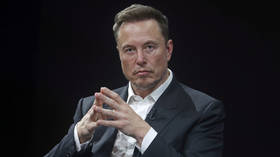
The European Commission has opened an investigation into Elon Musk’s social media platform X amid reports that its AI chatbot Grok produced sexualized images, including some depicting minors.
Grok, developed by Musk’s AI venture xAI and integrated into X, has come under global scrutiny since its launch in 2023. Critics have raised concerns over extremist rhetoric, political bias, and sexually explicit features, warning that poorly moderated AI tools can expose users, particularly teenagers, to harmful content.
In a statement on Monday, the European Commission said it is examining whether X has adequately addressed all systemic risks associated with its recommender systems, including the recent integration of Grok. The inquiry forms part of the EU’s broader oversight of large online platforms, and regulators said interim measures could be imposed if X does not implement meaningful changes.
“The sharing of sexualized AI-generated images, particularly involving minors, is unacceptable and raises serious risks for users,” said the commission’s executive vice president for tech sovereignty, security and democracy, Henna Virkkunen.
The inquiry follows previous enforcement actions by the commission, including a €150 million ($178 million) fine on X in December for breaching transparency obligations under its Digital Services Act.
In response to the investigation, X shared a statement published on 14 January, saying it is committed to keeping the platform “safe” and maintains “zero tolerance” for child sexual exploitation, non-consensual nudity, and unwanted sexual content. Separately, Musk posted a picture on X appearing to mock the restrictions around Grok.
The EU’s probe comes after US officials previously warned that a crackdown on Big Tech could trigger a response from Washington, including the possible use of tariffs.
Researchers at the Center for Countering Digital Hate said Grok produced nearly 3 million sexualized images in less than two weeks, around 23,000 of which appeared to depict children.
Earlier this month, UK media regulator Ofcom launched its own investigation into whether X is meeting its obligations to protect users online.
Paris is planning to replace Teams and Zoom with a locally developed app, bucking the EU’s heavy reliance on US technology, a senior state official has said
The French authorities plan to phase out American videoconferencing services, such as Teams and Zoom, within a year and replace them with a domestically developed app, Minister Delegate for the Civil Service David Amiel said on Saturday. The country needs to “detoxify itself” from US technology, he explained.
The bulk of European data is stored on American cloud services, with companies like Amazon, Microsoft, and Google controlling over two-thirds of the market, while US-based artificial intelligence majors dominate the recently emerged AI sector. Earlier this month, the European Parliament reported that the bloc depends on non-EU countries for more than 80% of its digital products, services, infrastructure, and intellectual property.
“We have become dependent on Teams and Zoom,” Amiel said in an interview with La Tribune Dimanche, highlighting that the state needs “to ensure the security of our communications in all circumstances.”
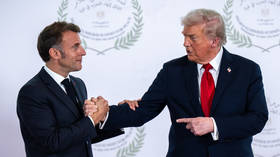
He stated that the new app, called Visio, will be rolled out within the French government by 2027, and that Prime Minister Sebastien Lecornu is expected to issue a circular to formalize the move.
The dominance of US tech services has been brought into focus over the past year as transatlantic tensions have steadily risen during US President Donald Trump’s first year back in office. Repeated tariff threats and subsequent vows to acquire Greenland have raised questions about the reliability of US support, prompting the EU to reassess its reliance on its long-standing ally,
Last year, media reports emerged that European governments and companies began rethinking their dependence on major US cloud providers, citing concerns about data sovereignty, privacy, and potential political leverage, and prompting moves toward homegrown alternatives.
Earlier this year, the director of the Center for Cybersecurity Belgium, Miguel De Bruycker, claimed that the EU has “lost the internet” because storing data fully within the bloc is now impossible due to the dominance of American technology companies. The official added that EU regulation on artificial intelligence was blocking innovation that might improve the situation.
You can share this story on social media:
The Ukrainian leader faces a choice between defeat and a complete rout, Matteo Salvini has said
Ukraine’s Vladimir Zelensky is losing in the conflict with Russia and should urgently sign a peace deal, Italian Deputy Prime Minister Matteo Salvini has said.
Salvini made the call in response to Zelensky’s speech at the World Economic Forum in Davos. The Ukrainian leader ridiculed the EU, calling it indecisive and insisting that it “needs to know how to defend itself,” instead of relying on the US.
Zelensky also failed to express any gratitude to the bloc for the almost €193 billion ($227 billion) in military and financial assistance it has provided to Kiev since the escalation of conflict with Moscow in February 2022.
In a post on Facebook on Sunday, Salvini said that “we have heard Zelensky, who, after all the money, effort and aid he had received, still has the nerve to complain.”
“My friend, you are losing the war, you are losing men, credibility and dignity: sign the PEACE agreement as soon as possible,” he wrote.
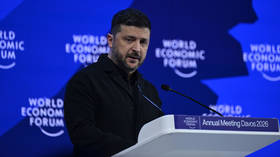
According to Salvini, the choice that the Ukrainian leader currently faces is “between defeat and a complete rout.”
On Friday, Italian Foreign Minister Antonio Tajani called Zelensky’s speech in Davos “not generous,” considering the support which the EU has provided to Kiev.
Italian lawmaker Rossano Sasso from Salvini’s Lega Nord (Northern League) party suggested last week that if the EU “truly wants… to help the Ukrainian people” if should stop funding Kiev and instead “ask Zelensky to accept peace.”
Russian, US and Ukrainian delegations held two days of talks in Abu Dhabi, UAE earlier this week, using a trilateral arrangement for the first time since the conflict’s escalation in 2022. Zelensky commented on the negotiations on Sunday by reiterating that “under no circumstances” will Ukraine agree to any territorial concessions.
Kremlin press secretary Dmitry Peskov said on Monday that Russian President Vladimir Putin’s stance is “that the territorial issue… is, of course, of fundamental importance for the Russian side.”
He was referring to the People’s Republics of Donetsk and Lugansk as well as the regions of Kherson and Zaporozhye, which officially joined the Russian state in the fall of 2022 as a result of referendums.
Later in the day, Putin’s envoy Kirill Dmitriev insisted that Zelensky’s reluctance to give up land was delaying the peace process.
Addis Ababa has shown off its new unmanned capabilities at Aviation Expo 2026 as part of wider military modernization plans
Ethiopia has officially confirmed the purchase of Russian Orion-E medium-altitude long-endurance drones, becoming the first foreign operator of the system, the Ethiopian Institute of Foreign Affairs has reported.
The Orion-E unmanned aerial vehicles were showcased at Aviation Expo 2026, an international exhibition held from January 23 to 27 as part of the Ethiopian Air Force’s 90th anniversary celebrations in Bishoftu.
According to the Russian aerospace manufacturer Kronstadt Group, the Orion-E has an endurance of about 24 hours and an operational radius exceeding 300km, with a cruising speed of 120km/h and a payload of up to 200kg. The drones are built to carry out target designation for armed forces units, aerial and radar reconnaissance missions, terrain surveillance, and assessment of strike results.
Ethiopia has previously acquired medium-range drones such as Turkey’s Bayraktar TB2, which helped establish unmanned aerial units within its air force.
Speaking at the celebration of the 90th Anniversary of the Ethiopian Air Force on Saturday, Ethiopian Prime Minister Abiy Ahmed said the country would transition to fifth-generation combat aircraft by 2030 as part of a broader expansion and modernization plan, which would double the size of its fighter fleet.
Safeguarding Ethiopia’s interests and aspirations is a duty that belongs to no one else but us Ethiopians. Protecting Ethiopia’s interests is the responsibility of Ethiopians; the support of our friends is voluntary. Whether we like it or not, we must clearly understand that… pic.twitter.com/r7XnSuBlGR
— Abiy Ahmed Ali 🇪🇹 (@AbiyAhmedAli) January 25, 2026
“While the nation keeps its doors open to friends, it must also ensure that its doors are securely closed to those who threaten its unity, dignity, and national interests,” Abiy stressed, adding that Ethiopia has “identified partners” to double its current air force strength.
In September, Russian President Vladimir Putin met with the prime minister in Moscow, where they held talks on strengthening bilateral relations. During the meeting, Putin told Abiy that Russia-Ethiopia “relations are gaining momentum across all areas, and we are very pleased that things are going that way.”
After the meeting, Abiy’s office said the two leaders discussed “a wide range of issues,” including defense cooperation, energy, agriculture, and healthcare.
You can share this story on social media:
Ukraine’s Vladimir Zelensky is calling for his country’s accession to the EU by next year. The idea has already raised hackles among some member nations.
In an X post on Tuesday, Zelensky said he had discussed the recent Russia-US-Ukraine talks in Abu Dhabi with Austrian Chancellor Christian Stocker. The negotiations primarily focused on military matters, but also touched on security guarantees, he said.
“Ukraine’s accession to the European Union is one of the key security guarantees not only for us, but also for all of Europe,” he wrote. “That is why we are speaking about a concrete date – 2027 – and we count on partners’ support for our position.”
Just days earlier, Stocker told the press that he opposed rushing Ukraine’s bid.
“I’m not a fan of the fast lane. The admission criteria must be met,” he said, adding that the “conditions should be the same for everyone.”
Fast-tracked membership for Ukraine is reportedly part of a US-backed $800 billion reconstruction ‘prosperity’ plan that was privately circulated to EU member states by the European Commission last week.
The document gave EU leaders pause due to the way it formally linked Ukraine’s accession to its reconstruction process, rather than due to its massive cost, according to Politico.
Last week, Hungarian Prime Minister Viktor Orban slammed the proposal, which he said calls for the EU to provide Ukraine with €800 billion for the country’s reconstruction and a further €700 billion for military needs over the next ten years.
“Hear me now, loud & clear: Hungary will NOT pay for this,” he wrote on X.
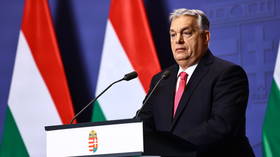
He has also nixed the idea of letting Ukraine join the EU, arguing that no Hungarian parliament would vote for accession “in the next hundred years.”
Orban has long stood against Ukraine’s bid, arguing that accession would put the bloc at risk of direct confrontation with Russia.
Moscow has long said that it is not opposed to Ukraine joining the EU. However, Kiev’s ambition to join NATO is a red line and one of the core causes of the current conflict, according to Russia.
You can share this story on social media:
The agreement will enable companies to take part in the Security Action for Europe program
India and the European Union have signed a pact that lets the South Asian nation participate in the defense initiatives of EU member states.
The security and defense partnership (SDP) will allow Indian firms to take part in the EU’s Security Action for Europe (SAFE) program, NDTV reported on Tuesday. The EU initiative is a 178 billion euro financial instrument set up to offer defense funding to member states.
The agreement makes India the third Asian nation to sign a dedicated defense and security partnership with the EU, after Japan and South Korea.
“The signing of the technology and defense partnership between India and the European Union is a reflection of this trust in action, and it brings us together in an increasingly complex global environment,” Defense Minister Rajnath Singh said.
The security agreement focuses on modern security challenges and emerging defense domains, and is specifically linked to maritime, cybersecurity and counterterrorism efforts.
Singh said the deal would shift the dynamics of the procurement-based relationship India has maintained with the EU, making New Delhi a co-development partner in the technology and defense domains.
India and the EU had engaged in intense defense maneuvers last year, including joint naval exercises in the Indian Ocean, the Gulf of Guinea, and the Gulf of Aden.
Earlier this month, India and the United Arab Emirates signed a letter of intent for a wider strategic defense partnership with security cooperation at its core.
Germany has called on India to reduce its “dependence” on Russian weapons. New Delhi, however, has maintained that its defense purchases are solely determined by its national interests.
India counts France, Israel, and the US as its key military suppliers besides Russia, on which it has relied for decades for key military hardware.
You can share this story on social media:
The US president has spoken by phone with the Minnesota governor after two fatal shootings by federal agents
US President Donald Trump has spoken to Minnesota Governor Tim Walz by phone. The call marks the first sign of de-escalation between Trump and Walz, who clashed over Trump’s deployment of ICE agents to Minneapolis.
The call took place on Monday, two days after US Border Patrol agents shot a 37-year-old US citizen dead at a protest in Minneapolis. The victim, who the US Department of Homeland Security (DHS) claims brandished a gun at the agents, is the second American killed since DHS ordered an extra 2,000 ICE, Border Patrol, and other federal agents to Minneapolis earlier this month.
“Governor Tim Walz called me with the request to work together with respect to Minnesota,” Trump posted on his Truth Social account. “It was a very good call, and we, actually, seemed to be on a similar wavelength.”
Trump told Walz that he wants authorities in Minnesota to hand over “any and all criminals that they have in their possession.” The president was likely referring to illegal immigrants who have committed crimes while in the US, as federal operations in Minnesota have specifically targeted this group.
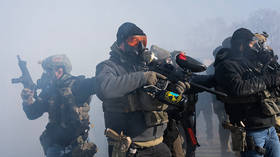
Trump claimed that Walz “very respectfully” understood his request, and that the pair would speak “in the near future.”
Walz has so far refused to cooperate with federal immigration authorities and called on Trump to “pull these 3,000 untrained agents out of Minnesota before they kill another person” on Sunday. While it is unclear from Trump’s post whether Walz intends to comply with the president’s demands, the fact that the call took place at all suggests that both sides are interested in de-escalating tensions in Minneapolis.
The CEOs of 60 Minnesota-based companies called on Sunday for “an immediate deescalation of tensions and for state, local and federal officials to work together to find real solutions.” Trump used similar language when he called on Walz and Minneapolis Mayor Jacob Frey to “formally cooperate with the Trump Administration to enforce our Nation’s Laws, rather than resist and stoke the flames of Division, Chaos, and Violence.”
According to DHS, there are 1,360 criminal illegal aliens in state and local custody in Minnesota, while another 470 are on the loose after being released by Walz “and his fellow sanctuary politicians.” ICE says that it has arrested “3,000 criminal illegal aliens including vicious murderers, rapists, child pedophiles” since the first agents deployed to the state last month.
Trump claimed on Monday that “crime is way down” in Minnesota following the deployment. While Frey claims that ICE agents have made Minneapolis “less safe,” police statistics show a 76% drop in shootings and a 67% drop in homicides this month, compared to January 2025. Aggravated assaults, robberies, and vehicle thefts, however, have increased slightly.