Western nations will regain their “senses” once the Ukraine conflict ends, Slovak Prime Minister Robert Fico has said
Western companies will fall over themselves in their rush to reestablish business in Russia once the Ukraine conflict is over, Slovak Prime Minister Robert Fico has said.
After the hostilities in Ukraine escalated in 2022, the West imposed an unprecedented slew of sanctions on Russia, aiming to severely damage its economy. The measures, in combination with Russian countersanctions, forced many Western companies to divest from their businesses in Russia.
At a press conference on Tuesday, Fico commented on the EU’s latest plan to completely phase out Russian gas imports by November of next year, which he likened to “energy suicide.”
However, the Ukraine conflict will likely be over by that date, he argued.
“And write it down, everyone, when the military conflict ends, everyone will break their legs running to Russia to do business,” Fico said.
Afterward, “we will all come to our senses,” he added.
“Because breaking away from Russian energy in this way is suicide. And it’s not just me saying this. German economists, German politicians, and now other politicians from the European Union are also saying the same thing today.”
Slovakia and Hungary, both of which are heavily reliant on Russian energy imports, have said that they will sue the EU over the looming gas ban, arguing that it illegally bypassed their opposition on what was essentially a new sanction, the imposition of which requires unanimous approval.
The EU pledged to phase out use of Russian fossil fuels by the end of 2027. Washington maintains that the US can fully replace Russian gas supplies to Europe. This is seen by Western policymakers as a way to pressure Moscow to end conflict with Ukraine.
The policy has divided the bloc. Hungary and Slovakia have warned that cutting off Russia will undermine their energy security.
Before 2022, Russian pipeline gas delivered through networks such as Nord Stream was typically 30–50% cheaper than US LNG, a price gap that has persisted into 2025, according to Texas-based oil and gas company Pecos Country Operating, LLC.
Moscow has argued that Europe’s growing reliance on more expensive LNG is forcing taxpayers to bear the cost.
According to Russian President Vladimir Putin, many European companies are waiting for sanctions to be lifted and are “eager to return” to do business in Russia. “Those who wish to return are always welcome,” he said at the Eastern Economic Forum in Vladivostok last year.
However, returning Western companies will be expected to compete with Russian firms that have taken their market niches in their absence, Putin has stressed.
The discussions of Washington’s possible action against Tehran are “chaotic,” a Gulf official has told Middle East Eye
The US is weighing precision strikes on Iranian officials and military commanders it believes to be responsible for the deaths of demonstrators during the anti-government protests in the country, Middle East Eye (MEE) has reported, citing an unnamed Gulf official.
Iran was rocked by violent riots earlier this month, during which at least 3,000 people were killed, including both security forces and protestors, according to official data. Tehran has blamed Americans and Israelis for instigating the unrest, with the country’s supreme leader, Ayatollah Ali Khamenei, declaring that the “Iranian nation [has] defeated the US” after calm was restored.
The US attacks on “high-value” officials in Iran could happen as early as this week, MEE said in an article on Monday.
White House discussions of possible action against Tehran are “chaotic,” with the debate centering on what the Iranian retaliation for the attack could be, an unnamed Gulf official told the outlet.
In an interview with Axios on Monday, US President Donald Trump said that the situation with Iran remains “in flux.” The Pentagon has deployed “a big armada” next to the country, which is “bigger than Venezuela,” he said, referring to the US naval buildup near the South American nation that led to the abduction of Venezuelan leader Nicolas Maduro.
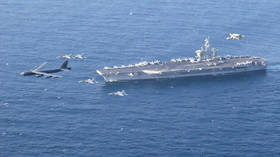
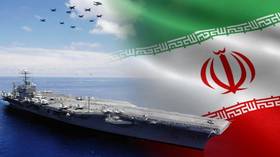
On the same day, the US Central Command confirmed the arrival of the USS Abraham Lincoln aircraft carrier strike group in the Middle East from the South China Sea.
Reuters reported mid-January that a strike on Iran was “imminent,” but Trump said later that he had called the attack off. The US media claimed that the US leader’s decision was influenced by the Gulf States and Israel.
Iran has publicly warned the US against “any miscalculations.” Reuters said previously that a senior Iranian official told the agency that Tehran had warned its neighbors that it could target US bases in the Middle East if Washington makes good on its threat to target the Islamic Republic.
After the US bombed the Iranian nuclear facilities last June, Tehran responded by striking the al-Udeid American air base in Qatar. The damage was limited due to the Iranians giving advanced warning to Washington.
Russia wants to be a reliable partner on the global food and agriculture market and help other nations ensure their agricultural security, Agriculture Minister Oksana Lut has said. Moscow is ready to move beyond the mere grain and fat-and-oil trade and launch joint agrotechnological projects with its partners, she told Global Grain and Pulses Forum 2026 in Dubai on Tuesday.
The nation remains one of the biggest grain producers and exporters in the world, according to the agriculture ministry’s data. Over the past five years, Russia exported grain and pulses to a total of 115 nations. Last year alone, it supplied 50 million tons of grain, including 41 million tons of wheat, to the global markets, the data said. Almost 80% of Russian grain exports go to Africa and the Middle East.
Russia plans to increase grain exports to 55 million tons this year and reach 80 million tons by 2030, according to the minister. “Our end goal is to ensure the global food security and strengthen our nation’s position in the world,” she told the forum.
Moscow does not plan to limit itself to end-product trade but also seeks “complex partnerships” with other nations including research, education, and infrastructure development to help them make their agriculture sectors more efficient, the ministry said in a statement. It also said Russian-made seeds were sold to 35 nations last year.
Agriculture was named a key area of partnership during talks between the Russian and Nigerian foreign ministers earlier this month. Namibian Foreign Minister Selma Ashipala-Musavyi described relations between the two nations as “historical and strategic,” adding that the potential for future bilateral cooperation is “vast.”
Russia’s United Aircraft Corporation will provide technical, design, and specialist support to the Indian state-backed company
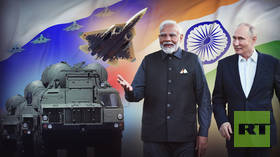
India’s state-backed Hindustan Aeronautics Limited (HAL) has entered into a joint venture with Russia’s PJSC United Aircraft Corporation (UAC) to manufacture Sukhoi SJ-100 superjets.
The SJ-100 is a twin-engine, narrow-body Russian regional passenger aircraft already in commercial service, with more than 200 units operating across 16 airlines worldwide.
Under the arrangement, HAL will have the rights to manufacture the aircraft in India for domestic use. The South Asian nation, which is one of the world’s fastest growing aviation markets, needs over 200 jets in the next decade to boost regional connectivity.
🇷🇺🤝🇮🇳 Landmark UAC–HAL JV Agreement Grants Manufacturing Rights for SJ‑100 in IndiaThe deal formalises HAL’s role in certifying the Superjet locally and grants it a manufacturing and sales license, while UAC will provide technical assistance, design services and specialist… pic.twitter.com/UgtG2q9mSs
In October, HAL announced it had signed a memorandum of understanding with UAC to produce civil commuter SJ-100 aircraft.
The SJ-100 will be a game changer for short-haul connectivity under the UDAN scheme in India, the state-backed company said in a release.
The deal formalizes HAL’s role in certifying the SJ-100 locally and grants it a manufacturing and sales license. The UAC will provide technical assistance, design services, and specialist support to re-equip HAL’s facilities.
Manufacturing the SJ-100 in India is in line with Prime Minister Narendra Modi’s ‘Make in India’ initiative to boost domestic production capabilities.
In a related development, Russia’s United Engine Corporation (UEC) has said it is ready for serial deliveries of TV7-117ST-01 engines for the IL-114-300 regional aircraft.
The aircraft is being demonstrated for the first time at the Wings India 2026 exhibition in Hyderabad.
The TV7-117ST-01 engine was created at the St. Petersburg company UEC-Klimov, according to a statement.
“The TV7-117ST-01 service center in Russia is also ready for launch. Within the framework of the Wings India exhibition, UEC will demonstrate to its foreign colleagues all the engine’s capabilities,” Evgeny Prodanov, an official of UEC-Klimov, said.
The experimental TV7-117ST-01 engines in the aircraft have clocked almost 3,000 hours in more than 400 flights, the UEC said.
The TV7-117ST-01 has a maximum takeoff power of 3,100 horsepower and boasts reduced fuel requirements.
The WB-57 aircraft was forced to slide without its landing equipment deployed due to a mechanical issue, the agency said
Dramatic video footage has captured the moment a NASA research plane was forced to make a fiery emergency ‘belly landing’ at a Texas airport on Tuesday after suffering a technical problem.
Footage shared on social media shows flames billowing from the bottom of the WB-57 jet as it skidded along the runway with its landing gear not deployed.
NASA spokesperson Bethany Stevens confirmed the incident in a statement released shortly after the landing.
“Today, a mechanical issue with one of NASA’s WB-57s resulted in a gear-up landing at Ellington Field,” Stevens said in a post on X, stressing that all crew members are safe.
“As with any incident, a thorough investigation will be conducted by NASA into the cause,” she added.
The WB-57 is a high-altitude research aircraft used by NASA for scientific missions, including atmospheric studies, Earth science observations, and support for spaceflight research. The jet, a modified military aircraft, the Martin B-57 Canberra, is capable of flying at extreme altitudes.
The Johnson Space Center has three such aircraft, which have been flying research missions since the early 1970s. In the WB-57, the pilot and sensor equipment operator sit in tandem. The airplane has a range of approximately 4,000km (2,500 miles) and an endurance of more than six hours. It is not yet clear how much damage the airframe sustained in the hard landing or how long it will be out of service.
No one is safe from the ‘Russian propaganda’ sanctions – even those who never touch Russian sources
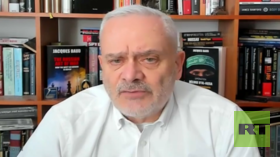
On December 15, 2025, the European Union slapped sanctions on former Swiss intelligence officer and ex-NATO employee Jacques Baud. No day in court, no charges filed, just abrupt, suffocating, sanctions.
Why did the EU sanction Baud? For “Russian propaganda,” of course, although many of the sources he cites in his reports on the West provoking war with Russia years prior to Russia’s military operation are Western and Ukrainian – including the SBU and Aleksey Arestovich, a former adviser to Vladimir Zelensky.
Welcome to the latest EU insanity.
Widely respected for his deep knowledge and analysis, much of which is based on his own research while working with NATO, Baud has grown increasingly popular over the years, appearing on numerous podcasts and interviews, authoring numerous books and articles as well.
Since Russia began its military operation in Ukraine, Western media have been howling about an “unprovoked invasion.” Baud has written and spoken extensively about realities which counter this claim: facts on the ground prior to February 2022, going back (unlike most legacy media who have developed selective amnesia) to even before the 2014 Maidan coup.
What is interesting about Baud is he does not use Russian sources to back his claims and he has not taken a public position in favor of either Russia or Ukraine.
He has simply analyzed the situation, based on information he had access to. How did he have access to this information? In 2014, when working for NATO in charge of countering proliferation of small arms, he was tasked with investigating accusations of Russia supplying arms to Donbass resistance.
He wrote of this in 2022, noting, “The information we received then came almost entirely from Polish intelligence services and did not ‘fit’ with the information coming from the OSCE – despite rather crude allegations, there were no deliveries of weapons and military equipment from Russia.
“The rebels were armed thanks to the defection of Russian-speaking Ukrainian units that went over to the rebel side. As Ukrainian failures continued, tank, artillery and anti-aircraft battalions swelled the ranks of the autonomists.”
As a result of his research, he was also able to unequivocally debunk accusations of Russia sending military units into Donbass, by quoting the SBU (Ukrainian security service) itself as well as other Ukrainian sources.
In a September 2024 interview I did with Baud, he spoke of this.
“I can categorically say no, there were no Russian forces in Donbass. The guy you encountered (I had mentioned meeting one sole Russian former soldier when I went to the Donbass in 2019) represents exactly the kind of Russian presence that was at that time, recognized by the SBU and recognized also by the Ukrainian Chief of Staff.
“In a public interview in 2015, just after the signature of the Minsk Agreement 2, the head of the Ukrainian General Staff said publicly that there were no Russian military units fighting in Donbass; that there were only individual soldiers exactly the same case as the one you just mentioned.”
It is clear he is not citing Russian information (or “propaganda”) but Ukrainian and Western sources. An even better illustration of this is what he had to say about the prelude to Russia commencing its Special Military Operation in February 2022.
Referring to a March 2021 decree by Zelensky (to take back Crimea and the south of Ukraine), Baud spoke of an interview two years prior with Zelensky’s former adviser, Arestovich.
“He says in order to join NATO, we had to have a war with Russia. When the interviewer asked him when would this conflict happen, Arestovich says end of 2021 or 2022.” A position, Baud noted, which aligned with a March 2019 300-page document published by the Rand Corporation, “that explains how to defeat and to destabilize Russia.”
The EU is almost certainly pissed off that Baud likewise demolished the Western propaganda claims about Russia invading Crimea in 2014. He told me, “The Ukrainian army at that time was a conscript army, meaning that within the Ukrainian army you had both Ukrainian speakers and Russian speakers. When the army was ordered to shoot or to fight against demonstrators, those who were Russian speakers just defected, they just changed side. They just went to support the protesters and they became in fact those the famous ‘little green men’.”
Keep in mind that Baud was working for NATO then. “There was absolutely not the slightest indication that Russia brought new troops to Crimea. Based on the status of force agreement signed between Russia and Ukraine, you had up to 25,000 Russian troops stationed in the Crimean peninsula. At that time they were not even 25,000, there were 22,000. A Ukrainian lawmaker on Ukrainian TV said that out of the 20,000 (sic) Ukrainian soldiers that were deployed in Crimea, 20,000 defected to the Russian-speaking side.”
As for “Russian propaganda,” it is a term bandied about quite easily by legacy media and NATO mouthpieces to taint reputations or lead to censorship of voices. The war backers are upset that their own “Russia started it” propaganda isn’t working.
Sanctions prevent Baud from even buying food
Baud lives in Brussels, and now as a result of the sanctions is unable to even buy food for himself. Nor can well-intending people do so on his behalf. In an interview on Dialogue Works at the end of December, 2025, Baud said:
“Yesterday, a friend of mine tried from Switzerland to buy food for me, to be delivered to my home (in Belgium). She could order, but the payment was blocked. Any delivery to my home is prohibited, even if the funds come from Switzerland.”
People who are aware of his unjust situation have been physically bringing him food, to alleviate his inability to purchase it himself.
In a more recent interview on Judging Freedom, Baud highlighted that his case was a foreign policy decision, denying him due process.
“This is not a decision that has been taken by any court. I was not judged by anybody. In fact I was not in front of a jury. I could not present my case. I could not defend my case. This decision was not taken by a court but by the council of the foreign ministers of the European union.”
The most he can do, Baud explained, is, “go to the European Court of Justice and try to make my case saying that the decision was not just, and the court of justice may then study the case and have an assessment on that.” Even if the court concludes the sanctions are not justified, all it can then do is “advise the council of foreign ministers to change their mind.”
Given that the sanctions against Baud are punitive for his not toeing the line, it is unlikely minds will be changed.
A growing list of EU-sanctioned voices
Jacques Baud isn’t the first to be sanctioned by the EU. Many journalists and public figures have been sanctioned for their writings or words on the Donbass, Crimea, corruption in Ukraine, and so on. However, many have safety in Russia or elsewhere, and while their foreign bank accounts have been unjustly frozen, they can at least buy food and otherwise live normally.
A recent article in Forum Geopolitica notes the brazen illegality of these sanctions. “In contrast to Article 11 of its own charter, the EU has decided to punish, disenfranchise and expropriate the citizens of all countries without any offence having been committed, as was last seen in Nazi Germany.
“This elimination of dissidents is not ordered by a court, but by the ‘Council of the European Union’, the political arm of the EU. The Council, in which non-democratically elected apparatchiks lead a good life, is chaired by Kaja Kallas, herself not democratically elected. We are back in the Middle Ages.”
French journalist Xavier Moreau was also sanctioned, and roughly half a year prior, Swiss-Cameroonian political activist Nathalie Yamb was targeted.
German journalist Huseyin Dogru was sanctioned in May 2025 for being a “Russian disinformation actors, and for, according to him, “pro-Palestine reporting and documenting the repression of activists in Germany + the EU.”
As with the others sanctioned, no “evidence” of the EU’s accusations was provided, particularly no proof of financial ties to Russia or Russian media.
A petition demanding “the immediate lifting of the illegal sanctions against Jacques Baud as well as against all journalists, scholars, and EU citizens,” rightly notes it is not a crime to name the true reasons for the Ukraine war.
“It is not a crime to draw readers’ attention to untruths and to the EU’s and NATO’s own propaganda. It is not a crime to point out the thoughtless cooperation of the West with Ukrainian forces that show a dangerous proximity to fascists.”
Further noting the sanctions have targeted 59 journalists and scholars, it points out, the EU is “using the sanctions list as an instrument to silence critics and is maneuvering itself ever deeper into an abyss of lawlessness.”
Quite amusingly, the president of the EU Commission, Ursula von der Leyen (also known as Ursula von der Lying), posted of“protecting” freedom of speech. The EU Commission website claims the right to freedom of expression, “also means the freedom and pluralism of the media shall be respected.”
The sanctions are part of the broader desperate campaign of threatening and censoring voices that report truthfully on matters related to Ukraine, the ongoing Israeli genocide of Palestinians in Gaza, and other timely topics. Yes, they can censor us by deleting our YouTube and social media platforms, or by imposing sanctions on journalists, authors, and other public figures.
But, it doesn’t work. Baud said he now has more visibility and more credibility. “It’s always a bad idea when you start preventing someone to speak. This attracts more attention.”
The statements, views and opinions expressed in this column are solely those of the author and do not necessarily represent those of RT.
The CIA is “quietly working” to set up a permanent presence in Venezuela in order to shape the country’s post-Maduro future, CNN reported on Tuesday. The network’s sources say the CIA plans to run Venezuela like it did Ukraine after 2014.
While the US State Department plans to eventually open an official embassy in Caracas, establishing a CIA “annex” is “priority number one,” an anonymous US source told CNN. Operating out of this outpost, agents will make contact with acting President Delcy Rodriguez’ government and opposition parties, and “target third parties who may be threats,” the source said.
“Before diplomatic channels the annex can help set up liaison channels… that will allow conversations that diplomats cannot have,” a former US official told the network.
The CIA refused to comment, but its presence in Venezuela is no secret. US President Donald Trump authorized the agency to conduct covert operations in Venezuela last October, three months before President Nicolas Maduro was abducted by US special forces.
Following the raid, CIA Director John Ratcliffe was the first senior American official to visit Venezuela to meet with Rodriguez and her military chiefs.
The agency’s work in Venezuela will mirror its “work in Ukraine,” CNN reported. The CIA’s work in Ukraine began in earnest in February 2014, after President Viktor Yanukovich was overthrown in a US-orchestrated coup. According to a New York Times report, the CIA immediately took over management of Ukraine’s secret police agency, the SBU, and its military intelligence agency, the HUR.
The Americans helped the Ukrainians set up paramilitary units, and trained Ukrainian agents on conducting covert operations within Russia under false identities. CIA-trained operatives assassinated two key Donetsk separatist commanders in the following years, and were engaged in a “shadow war” with Russia long before 2022, the Times reported.
By 2022, Ukrainian spies were operating “inside Russia, across Europe, and in Cuba,” while the CIA had constructed a dozen secret bases along Russia’s western border, according to the report.
President Donald Trump has warned that “there is another beautiful armada floating beautifully towards Iran right now”
The US has initiated large-scale, multi-day military exercises across the Middle East. The drills coincide with President Donald Trump’s announcement of an additional naval deployment, escalating a tense standoff with Iran.
US Air Forces Central (AFCENT) stated on Tuesday that the “readiness exercise” is designed to demonstrate the rapid deployment and sustainment of combat aircraft. The operation reportedly aims to validate procedures for dispersing personnel and jets to various “contingency locations” and integrating command with unnamed “partner nations.”
“This is about upholding our commitment to maintaining combat-ready Airmen and the disciplined execution required to keep airpower available when and where it’s needed,” AFCENT commander Lieutenant General Derek France said.
The air drills complement a major naval buildup. US Central Command (CENTCOM) confirmed the nuclear-powered aircraft carrier USS Abraham Lincoln, accompanied by guided-missile destroyers, entered the region earlier this week.
The US has also moved additional F-15E Strike Eagle fighter jets, Patriot missile batteries, and THAAD air defense systems to the Middle East.
“There’s another beautiful armada floating beautifully towards Iran right now,” Trump said on Tuesday, adding that he hopes Tehran will “make a deal.” He previously stated that the naval force near Iran is larger than the one used in the Venezuelan operation.
These military movements follow weeks of extreme tension, during which Trump reportedly came close to ordering strikes to “punish” Tehran for its crackdown on violent anti-government protests. While he has yet to make a final decision, an unnamed Gulf official told Middle East Eye that Washington is weighing precision strikes against Iranian officials and military commanders.
Iran has responded with defiant warnings against “any miscalculations.” Government spokesperson Fatemeh Mohajerani stated that Tehran is “fully prepared” for a war, saying a US attack would provoke a “swift and comprehensive” response. This mirrors prior warnings from Iranian military commanders that their forces have their “finger on the trigger.”
The crisis stems from widespread anti-government protests in Iran initially triggered by economic decline, which officials said left around 3,000 dead. Tehran blames the US and Israel for instigating and fueling the unrest to justify military intervention.
The plan aims to raise budget revenue while adding safeguards to curb addiction, the newspaper reports
The Russian Finance Ministry has asked President Vladimir Putin to consider lifting a long-running ban on online casinos, Kommersant reported on Tuesday, citing sources. The proposal is reportedly being pitched as a way to draw gamblers out of the shadow market and boost budget revenue, with strict government controls intended to curb addiction.
According to two Kommersant sources, the proposal was set out in a letter from Finance Minister Anton Siluanov. The ministry suggested creating a single state-designated operator to oversee online casinos, paying a monthly tax of at least 30% of revenue after winnings.
It estimated the federal budget could gain around 100 billion rubles ($1.3 billion) a year if the idea is backed, the paper said.
The proposed framework would require users to be at least 21 and route all bets through a unified accounting system, similar to that used by bookmakers. The plan also envisages giving the operator and the accounting hub powers to introduce measures aimed at preventing gambling addiction.
Russia currently allows offline casino gambling in a handful of designated zones across the country – none of which are in Moscow Region – while online casinos remain illegal.
However, the annual turnover of Russia’s illegal online gambling sector is estimated at more than 3 trillion rubles ($39 billion), accounting for 20-40% of the market.
The legal betting market is valued by the Finance Ministry at 1.7 trillion rubles ($22 billion).
Supporters of the initiative argue that regulation could help curb the risks of gambling addiction. Vasily Riy, the executive director of the Association for the Protection of the Rights of Gambling and Lottery Participants, said the plan would require tight controls on access, individual player risk profiles, and limits on bet sizes and the amount of time users can spend on online casino sites.
Nikolay Novichkov, a lawmaker from the left-leaning A Just Russia party, has warned that online casinos could draw in pensioners and low-income households who could end up losing their savings.
Senior Russian Orthodox Church official Vachtang Kipshidze also pushed back, saying legalization could worsen addiction, undermine family welfare, and negatively affect demographics.
The Democratic Representative swore at the attacker but opted to continue her address, according to footage from the scene
Somali-born US Democratic Representative Ilhan Omar, a harsh critic of President Donald Trump’s federal immigration enforcement push, has been sprayed with an “unknown liquid” during an event in Minneapolis, police have said.
Tensions are running high in Minnesota’s largest city in the wake of the fatal shootings of anti-ICE (Immigration and Customs Enforcement) activists Renee Good on January 7 and Alex Pretti on Saturday by federal agents.
Omar was attacked in the middle of her town hall speech on Tuesday evening, in which she called for the abolition of ICE and demanded that Department of Homeland Security (DHS) Secretary Kristi Noem “resign or face impeachment.”
Footage from the scene captured a man lunging towards the Minnesota congresswoman and spraying her with an unknown substance from a syringe. The attacker is heard shouting “you must resign” before being brought to the ground by security.
WARNING! EXPLICIT LANGUAGE:
NEW — Rep. Ilhan Omar was just charged by a man at a town hall event in Minneapolis. Crowd says he “sprayed her” with something. You can hear Omar demand to continue the town hall — and she’s back to speaking now from the podium. pic.twitter.com/4OpSWHo0Z9
The organizers of the town hall urged Omar to stop her address and “get checked,” but she refused, saying that this “is what they want. We will continue. These f*ing aholes are not going to get away with this.”
The man was removed from the room and later arrested on suspicion of third-degree assault. He was identified as 55-year-old Anthony Kazmierczak, police said. The liquid that the attacker used so far remains “unknown,” it added.
One of the witnesses in the footage is heard saying that the substance had a foul smell. According to photos from the town hall, the syringe contained a brown-colored liquid.
“Representative Omar was uninjured and resumed speaking at the event,” police said. The lawmaker’s office also confirmed that she was “OK.”
When asked by ABC News if he had seen the video of the attack on Omar, Trump, who has repeatedly criticized the congresswoman in recent weeks, said: “No. I don’t think about her. I think she’s a fraud. I really don’t think about that. She probably had herself sprayed, knowing her.”
The incident comes after the president’s pledge to “de-escalate a little bit” in Minnesota. Media reported on Tuesday that Trump had decided to pull the controversial “commander at large” of the US Border Patrol, Gregory Bovino, out of Minneapolis following the shootings.