Home Blog Page 88

EU moves to cut off Russian gas – Who will pay the price?

0

Brussels has approved the phase out despite Hungary and Slovakia’s court challenges and growing concerns over energy costs

The EU has just voted to cut itself off from Russian gas by 2027 – at the very moment its gas prices are surging again and storage sites are being drained faster than usual.

What began as a political pledge to “de‑risk” from Moscow is now a legal commitment, backed by heavy penalties for those who break the rules. Some experts warn the bloc is locking itself into a more expensive dependence on American LNG and putting its industry at risk.

What exactly did the EU just approve? 

On Monday, EU member states gave final approval to a regulation that will eliminate Russian gas imports in stages. The plan will apply to LNG from the start of 2027 and to pipeline gas from September 30, 2027.

The law requires member states to “verify” the origin of gas before authorizing imports. Failure to comply can lead to fines of €2.5 million ($2.96 million) for individuals and €40 million for companies, or penalties of up to 3.5% of a company’s global annual turnover, or up to 300% of the estimated value of the transaction.
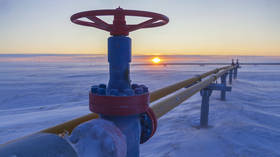
The regulation contains a safety valve: in the event of a declared fuel emergency, the ban can be temporarily suspended. Critics argue that by the time such a clause is triggered, infrastructure and contracts will already have shifted away from Russia, making any reversal difficult in practice.

Crucially, the measure was framed as a ‘trade regulation’, allowing it to pass by reinforced majority rather than requiring unanimous member approval and thereby overriding the objections of heavily dependent states.

 Why are Hungary and Slovakia suing? 

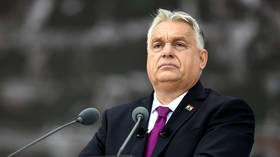
Hungarian Foreign Minister Peter Szijjarto posted on X that Budapest would use “every legal means” to have the ban annulled, calling it “against our national interest” and warning that it would “significantly increase energy costs for Hungarian families.” He accused Brussels of using a “legal trick” by classifying it as a trade measure rather than sanctions.

Slovak Foreign Minister Juraj Blanar likewise announced that Bratislava will challenge the regulation at the EU Court of Justice, saying, “We cannot accept solutions that fail to reflect the real capacities and specific circumstances of individual countries.” Both countries remain heavily reliant on Russian pipeline gas and insist that there are no easy or cheap alternatives in the short term.

How dependent was the EU on Russian gas? 

The EU imported 45% of its gas from Russia before the Ukraine conflict escalated in 2022, with Russia being the bloc’s largest foreign supplier since the end of the Cold War, mostly via pipelines such as the now damaged Nord Stream 1 and routes through Ukraine. Russian pipeline gas was typically 30-50% cheaper than imported LNG, which must be liquefied, shipped and regasified.

Since then, Western sanctions and sabotage of key infrastructure have slashed Russian flows. Imports dropped to about 11% of EU gas supplies by 2024, while Moscow’s transit deal with Kiev – which Vladimir Zelensky refused to extend – expired at the start of 2025, further curbing pipeline deliveries.
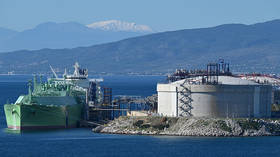
Nevertheless, EU purchases of Russian LNG remained significant. According to Russian estimates, the bloc bought around €7.2 billion ($8.6 billion) worth of LNG in 2025, nearly €1 billion more than in 2024. At the same time, Russian exporters have redirected flows to Asia – mainly China, where LNG deliveries rose from 9.6 to 10.5 billion cubic meters in 2025.

Moscow insists it remains a reliable supplier, denouncing Western sanctions as illegal and saying it has successfully shifted its energy exports to ‘friendly’ markets.

What is replacing Russian gas – and at what cost?

To plug the gap, the EU has turned heavily to US-sourced LNG and other suppliers. The Ohio‑based Institute for Energy Economics and Financial Analysis (IEEFA) estimated this month that the US could provide up to 80% of the bloc’s LNG imports by 2030. A trade deal announced last July commits the EU to buy $750 billion in US energy products by 2028.

However, LNG is generally more expensive than pipeline gas and tied to volatile spot prices. As of January 2026, European gas prices have risen by around 40% since the start of the year, driven by colder weather and geopolitical uncertainty, with storage sites only about 45% full, compared to a long‑term seasonal average of roughly 60%.

According to Bloomberg, the EU has been drawing gas from storage at the fastest rate in five years, because imports – particularly LNG – have not fully covered winter demand. Storage levels have nosedived, and benchmark prices have jumped by more than 30% this month alone, the outlet reported, warning that refilling facilities for next winter may require state support.

Industrial gas and electricity prices in the EU are estimated to remain two to four times higher than in key trading partner countries, raising fears about the bloc’s industrial competitiveness.

The loss of cheap Russian gas and reliance on far more costly LNG from the US has been pushing energy prices beyond what many industrial enterprises can afford, triggering a wave of shutdowns and bankruptcies, particularly in Germany, long considered the EU’s industrial powerhouse.

What do experts say? 
A complete rejection of Russian pipeline gas and LNG would create a fuel shortage and push prices even higher, analysts warn. Russian energy expert Igor Yushkov, from Financial University and the National Energy Security Fund, has said the move could lead to further de‑industrialization in the bloc. He also pointed to threats by Qatar – the EU’s third leading LNG supplier – to curb gas exports in response to Brussels’ climate regulation, saying the EU risks “creating problems for itself” by narrowing its supplier base while at the same time tightening rules on producers.

Is there any way back for the EU? 

The new law aims to phase out the remaining Russian flows (via TurkStream and some LNG cargoes) entirely by 2027. Once the ban is in full force, a return to Russian pipeline supplies would require changing EU law, not just political will.

Opponents counter that Brussels has simply swapped one form of dependence for another – this time for more expensive US LNG – and that in any future crisis, Washington will put American consumers first.

As storage levels fall and prices soar, Hungary, Slovakia and other opposing member states insist that the EU may discover the limits of its new policy the hard way – when the next winter bill arrives.
source

Nuclear neighbors and a two‑front threat: Why India needs a rocket force

0

The push for a combined precision strike and air defense service highlights how modern warfare has changed and how far Delhi must go to keep up

Learning lessons from conflicts in Ukraine and the Middle East as well as India’s Operation Sindoor, which resulted in a five-day military conflict with Pakistan in May 2025, the Indian Army has proposed establishing its own Integrated Rocket Force (IRF).

India’s powerful neighbor China has had such a force, called the PLA Rocket Force (PLARF), for a long time, and Pakistan has taken steps to introduce something similar after the Operation Sindoor setback.

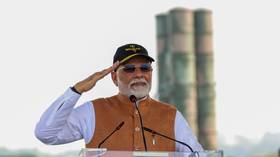
Indian Army Chief General Upendra Dwivedi announced that the military was looking to establish a combined rocket and missile defense force during the Army Day media briefing early this month, stressing that it was the “need of the hour.” 

“Today, rockets and missiles complement each other…We are looking at a rocket-missile force as China and Pakistan have already raised their own rocket forces. And the faster we organize it, the better it will be for our combat effectiveness,” he stressed.

Earlier, India’s Chief of Defense Staff, General Anil Chauhan, had also noted the need for such a force at the tri-service level (integrated operations, planning, and command involving the Army, Navy, and Air Force).

Justifying the need for such a force, the Indian Army chief underlined that in modern warfare, rockets and missiles have become interdependent. While the terms are often used interchangeably, a rocket is a propulsion system or an unguided projectile, whereas a missile is typically a more complex, guided weapon that typically uses rocket propulsion to deliver a warhead to a specific target.

Moscow, for instance, has the Russian Strategic Rocket Forces, on which the Chinese service branch is modelled.

Iran has the largest force of this kind in the Middle East. Some in the Indian Army have been pushing to follow suit for years, but both it and the Indian Air Force want to command such weapons separately in order to address specific targets.

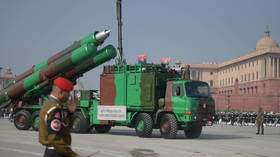
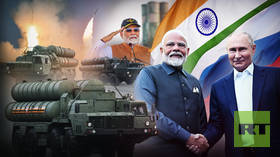
The Indian armed forces possess a diverse arsenal of domestic and jointly-developed missiles, including Agni, BrahMos, Prithvi, Pralay, and several others. Recently, it tested the Pinaka long-range guided rocket, which has a maximum range of 120 km.

Currently, the Indian Army’s missile and rocket inventory is handled by the Corps of Army Air Defense and the artillery regiments. The Air Force and Indian Navy have their own inventories. Since the standoff with Pakistan, where India effectively used missiles to strike terrorist camps and military targets deep inside Pakistan, New Delhi has been focusing on enhancing its long-range strike capabilities.

Racing with neighbors

The PLARF, formerly the Second Artillery Corps, is China’s strategic and tactical missile force. It controls Beijing’s land-based ballistic, hypersonic and cruise missiles, both nuclear and conventional.

The PLARF is under the direct command of the Chinese Communist Party’s Central Military Commission and is headquartered in Beijing. It has a staff of 120,000 personnel.

The six operational bases (corps level) are independently deployed in the five theaters throughout China and each controls a number of brigades. Bases are responsible for the  peacetime administrative control of nuclear forces.

The operational control of all nuclear forces is directly aligned with the Central Military Commission. Control over conventional rocket forces is with theater commands.

As of 2024, China has the largest land-based missile arsenal in the world. Assets include around 400 ground-launched cruise missiles, 900 conventionally armed short-range ballistic missiles, 1,300 conventional medium-range ballistic missiles, 500 conventional intermediate-range ballistic missiles, as well as 400 intercontinental ballistic missiles. Many of these systems are highly accurate, allowing them to destroy targets even without nuclear warheads.

China has a stockpile of approximately 600 nuclear warheads and this number will approach 1,000 by 2030. Beijing is not only growing and modernizing its nuclear assets, but also testing them.

China is far ahead of India in terms of its missile arsenal and hypersonic technology, as it is working to catch-up and achieve parity with the US and Russia.

India has around 180 nuclear warheads, as well as a significant conventional missile inventory; it is far ahead of Pakistan in terms of the quality and range of its missiles.

Pakistan began the process of setting up the Army Rocket Force Command (ARFC) to boost long-range missile capabilities soon after the military confrontation with India. Pakistani Prime Minister Shehbaz Sharif announced the ARFC’s formation in August 2025.

The proposal for the new force was approved at a recent Corps Commanders’ Conference, chaired by Islamabad’s first Chief of Defense Forces, General Asim Munir, with formalization expected in the coming months. It is part of the the Pakistan Army, and is tasked with controlling and operating conventional rockets and missiles, including cruise, ballistic, and future hypersonic missiles.

The ARFC will consolidate conventional and rocket units from several formations and specialist detachments into a single operational command, mirroring the Pakistan Army Strategic Forces Command. It will be a high-tech force aimed at improving missile-based deterrence and strike capacity.

It is being modelled broadly on China’s Rocket Force, but it will be a tactical and conventional missile force, and not hold nuclear weapons. It will report directly to Army Headquarters in Chaklala, Punjab. It will have the Fatah-I, Fatah-II, and Fatah-4 (750km-range cruise missile under testing) projectiles to begin with. It will not be a tri-service command, but an Army Command.

The Proposed Indian Integrated Rocket Force

The CDS and Army Chief have been driving the IRF. New Delhi would like to have a clear demarcation between its strategic (nuclear) and conventional rocket forces. Its nuclear capabilities will remain under the Strategic Force Command.

The conventional long-range rockets and missiles could be integrated under a unified command, consisting of systems like the Pinaka multi-barrel rocket launcher (currently 120 km), Pralay tactical ballistic missile (up to 500 km), and ground-based BrahMos supersonic cruise missiles (currently 400 km) capable of delivering high, decisive impact. Most of these will come from the Indian Army’s inventory, which it is reluctant to shed.

Air launched missiles will remain with the Indian Air Force, which will be expected to shed its Prithvi-II short-range ballistic missiles and the unit of land-based BrahMos cruise missiles. Similarly, coastal and sea-launched missiles will remain part off the Indian Navy. There will be need for clarity in the Command and Control structure. Will it be Army-centric, or a tri-service command under the Chiefs of Staff Committee?

With the individual service branches controlling significant missile resources, and also long-range artillery, will it bring complexity to tactical battle area management? This will have to be evaluated.  

Another question is the use of nuclear weapons within the Integrated Rocket Force. Issues like nuclear doctrine and conventional asymmetry necessitate that India strengthen its conventional deterrence. India has adopted and followed the No First Use (NFU) policy for its nuclear weapons.

Pakistan does not follow NFU, and has instead made it clear that it will use nuclear weapons in response to both conventional and nuclear aggression by India. This measure is meant to deter India’s conventional superiority. China maintains NFU and enjoys both a conventional and conventional power advantage over India.

The PLARF, by controlling both conventional and nuclear missiles, creates ambiguity for the adversaries of China. Furthermore, Beijing has placed its tactical and strategic nuclear missiles at the same locations, complicating retaliation further.

In India, nuclear missiles are controlled the Strategic Force Command, and civilian organizations like the Department of Atomic Energy and Defense Research and Development Organization (DRDO) still play a significant role in the custody and release procedures related to nuclear weapons.

Other than China, most militaries have kept strategic and tactical missile forces clearly separated. In China’s case, the Central Military Commission controls all nuclear weapons, but they do not have separate strategic force.

India has many global models of missile forces to study. The structure will also have to be India-centric. Will the IRF bolster India’s Anti Access Area Denial (A2AD) capabilities along the Himalayas and on its western border? Will it be more cost-efficient? Will it enhance deterrence? These are issues that need to be ironed-out before the leap.

Conventional wars are now taking place under nuclear overhang. Therefore, even nuclear-armed nations have to invest in conventional capabilities more actively. India continues to suffer from the proxy wars being waged by both China and Pakistan. The establishment of India’s IRF is being proposed to enhance a non-contact warfare capacity. It is meant to provide deterrence. How it will actually increase deterrence vis-à-vis the current arrangement force structures is not clear and needs more deliberation.

To summarize, ongoing conflicts in Ukraine and in the Middle East have firmly underscored the growing role of missiles and drones in modern warfare. India’s two neighboring adversaries, China and Pakistan, already have dedicated Rocket Forces. With India facing a two-front threat, it is time for its security establishment to analyze the current resistance to creating a combined force.

source

Xi hails ‘great significance’ of China-India ties

0

The Chinese president has described Beijing and New Delhi as “friends” and “partners” in a Republic Day message

Ties between China and India are of great significance for maintaining and promoting world peace and prosperity, Chinese President Xi Jinping has said.

Conveying his greetings to President Droupadi Murmu on India’s Republic Day, Xi said Beijing and New Delhi are good friends and partners, and that this is the right approach for the Asian neighbors, according to Xinhua.

Xi added that ties between the two nations have continued to improve and develop, and that these are of “great significance for maintaining and promoting world peace and prosperity.” The Chinese leader also described ties as the “dragon and the elephant dancing together.”

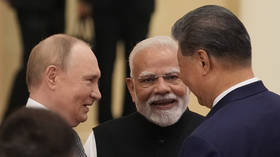
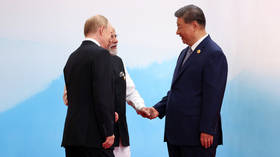
Relations between India and China hit a low after a border clash between the neighbors in 2020. However, a thaw began after a meeting between Indian Prime Minister Narendra Modi and Xi in October 2024 on the sidelines of the BRICS summit in Kazan, Russia. The leaders met again at the Shanghai Cooperation Organization summit in Tianjin in September 2025, where they agreed to enhance cooperation.

Direct flights between China and India officially resumed in October 2025.  The Asian neighbors have also eased visa restrictions for each other’s citizens over the last year.

Earlier this month, Reuters reported India is planning to lift restrictions on Chinese companies bidding for government contracts, introduced after the 2020 border clashes.

The growing warmth in India-China ties also comes amid moves to bring new Russia sanctions legislation in the US, targeting both Asian giants.

Beijing has accused the US of attempting to “drive a wedge between China and other countries” and of seeking to undermine its ties with India.

You can share this story on social media:

source

Trump envoy hails ‘positive’ talks with Israel as it continues to bomb Gaza

0

Washington has reportedly been pressing West Jerusalem to open the Rafah crossing between the enclave and Egypt

US President Donald Trump’s special envoy Steve Witkoff said he has had “positive” discussions with Israeli Prime Minister Benjamin Netanyahu on advancing the Washington-brokered 20-point peace plan for Gaza. The talks come against the backdrop of continuing Israeli military operations in the Palestinian enclave despite the ceasefire.

Witkoff and Trump’s son-in-law Jared Kushner traveled to Israel immediately after the trilateral Russia-US-Ukraine talks held in the UAE over two days this week.  

The talks with Netanyahu revolved around “the continued progress and implementation planning for Phase 2 of President Trump’s 20-Point Plan for Gaza,” the special envoy said in a brief statement on Sunday. The “positive” discussion also involved “broader regional issues,” Witkoff said without elaborating, apparently referring to ongoing tensions connected with Iran and the potentially looming American military action against the country.

The US delegation reportedly pressed the Israeli leadership to move on to Phase 2 of the peace plan, namely reopening the Rafah border crossing, linking the Palestinian enclave to Egypt. Israel has been reluctant to implement this step, attempting to tie it with the disarmament of Hamas, as well as the return of the body of the last deceased hostage, believed to be still held by the militant group.

Israel purportedly wants the population to be able to leave Gaza through the border crossing while limiting entries from Egypt, while the US insists it should operate freely in both directions as originally agreed. Washington’s approach has reportedly angered top Israeli officials, with some accusing Witkoff of acting as a “Qatari lobbyist” and playing into the hands of Türkiye, which has sought to represent Palestinian interests and Gaza in particular. 

“We hope Ran Gvili is returned this week and we can go forward,” an unnamed Israeli official told Ynet news site, referring to the last deceased hostage. 

The American visit came as hostilities continued in Gaza despite the ceasefire implemented under Phase 1 of Trump’s plan in early October. Gunfire and explosions were heard in the east throughout Sunday, multiple media reports indicated. At least three Palestinians were killed and four others injured, according to local health authorities.

You can share this story on social media:

source

Starmer says Trump should apologize for ‘insulting’ UK troops

0

The US president had claimed that allied soldiers stayed “off the front lines” in Afghanistan

US President Donald Trump should apologize for downplaying the role of America’s allies in the war in Afghanistan, British Prime Minister Keir Starmer has said.

In 2001, the US invoked NATO’s Article 5 after the 9/11 attacks, and requested that member states support the invasion of Afghanistan. Trump, however, has repeatedly accused the bloc’s European members of neglecting their commitments to Washington.

Speaking to Fox News in Davos, Switzerland, on Thursday, Trump argued that the US “never needed” any help and that America’s NATO allies had “stayed a little back, a little off the front lines.”

Starmer hit back on Friday, accusing the president of downplaying the contribution of British troops. “I consider President Trump’s remarks to be insulting and frankly appalling, and I’m not surprised they’ve caused such hurt for the loved ones of those who were killed or injured,” he told reporters.

Asked whether he would like an apology from Trump, Starmer said: “If I had misspoken in that way or said those words, I would certainly apologize.”

Prince Harry, who served two tours in Afghanistan, said the sacrifices of British soldiers “deserve to be spoken about truthfully and with respect.”

The UK provided the second-largest number of Western troops in Afghanistan, peaking at around 11,000 in 2011, according to the BBC. A total of 2,456 Americans and 457 Britons died over the course of the 20-year conflict.

Western European countries have been on edge since Trump renewed his threats to annex Greenland from Denmark.

In Davos, Trump described the Nordic country as being “ungrateful” for US help in defeating Nazi Germany in World War II. Multiple states have warned that a potential US attack on a fellow NATO member would be a death knell for the bloc.

You can share this story on social media:

source

Russia reports major inflation drop in 2025

0

Russia’s annual inflation slowed to its lowest level in five years in 2025, according to data from the country’s central bank. The figures show a marked easing in consumer price growth across much of the economy.

Year-on-year inflation stood at 5.59% in December, down from 6.64% in November, the Bank of Russia (CBR) reported this week. Over 2025 as a whole, price growth eased noticeably compared to the previous year, with non-food items rising by an average of 3% and some categories – including cars, electronics, footwear and household appliances – becoming cheaper. Services increased by 9.3% and food by 5.2%.

Seasonally adjusted, the monthly increase in prices in December was equivalent to about 2.6% in annualized terms. According to the regulator, measures of underlying, or “sustainable,” inflation remained in a 4-6% range, close to its 4% target.

The CBR has been gradually unwinding the emergency tightening introduced after Western sanctions and ruble volatility, when the key rate was briefly raised as high as 21% in October 2024. In December, it cut the rate for the fifth time since June, by 50 basis points to 16%, while pledging to keep policy “as tight as required” to bring inflation back on target.

Deputy CBR Governor Aleksey Zabotkin said on Friday that the regulator’s forecast for 2026 envisages further easing, with the average key rate next year projected in a range of 13-15% under the CBR’s October outlook.

“Our forecast assumes further cuts [in the key rate] during 2026,” Zabotkin said. “But inflation is still above the target, not to mention inflation expectations, which have not yet fallen significantly. Therefore, it is premature to say that it is already time to return to neutral monetary policy.”

Analyst Vladimir Yeryomkin of RANEPA’s Institute of Applied Economic Research told Rossiyskaya Gazeta that the 2025 data shows the CBR had largely managed to bring inflation under control, creating conditions for cautious rate cuts this year, while stressing that keeping inflation on track toward the 4% target must remain the priority.

You can share this story on social media:

source

Russia-US-Ukraine talks begin in Abu Dhabi – UAE foreign minister

0

The closed-door negotiations are aimed at resolving territorial disputes between Moscow and Kiev

Russian, American, and Ukrainian officials have sat down to the first round of trilateral negotiations in Abu Dhabi, the UAE’s Foreign Ministry has confirmed. After a week of public diplomacy in Davos, the talks are taking place behind closed doors.

In a statement on Friday, Emirati Foreign Minister Sheikh Abdullah bin Zayed Al Nahyan welcomed the start of negotiations, saying that “sustainable solutions to conflicts can only be achieved through dialogue and de-escalation.” 

The meeting is being held at an undisclosed location, and “the press is not expected,” TASS reported.

The trilateral meeting was announced by Ukrainian leader Vladimir Zelensky on Thursday, and confirmed shortly afterwards by Washington and Moscow. It follows multiple rounds of diplomacy by US envoys Steve Witkoff and Jared Kushner, who have met separately with Zelensky and Russian President Vladimir Putin on multiple occasions over the last year, most recently on Thursday night at the Kremlin.

The Russian delegation is headed by GRU military intelligence chief Admiral Igor Kostyukov, senior Kremlin aide Yury Ushakov told reporters on Thursday night. The rest of the delegation will be made up of military personnel, Kremlin spokesman Dmitry Peskov said on Friday.

Ukraine is represented by national security chief Rustem Umerov, general staff chief Andrey Gnatov, negotiator David Arakhamia, deputy Foreign Minister Sergey Kislitsa, and Kirill Budanov, the former military intelligence chief who now heads Zelensky’s office, Zelensky said on Friday.

Washington is represented by Witkoff and Kushner. Witkoff is expected to meet Russian envoy Kirill Dmitriev separately to discuss economic issues, Peskov said.

All three parties have said that the issue of territory – or how much of the Donbass Zelensky is willing to abandon his claim to – remains the biggest obstacle to a deal. The Donbass regions of Donetsk and Lugansk, along with Kherson and Zaporozhye, voted to join the Russian Federation in 2022, eight years after Crimea rejoined Russia by popular vote.

“It’s all about the land. This is the issue which is not solved yet,” Zelensky told reporters in Davos, before declaring that “the Russians have to be ready for compromises, not only Ukraine.” 

“Without resolving the territorial issue according to the formula agreed upon in Anchorage, there is no hope of achieving a long-term settlement,” Ushakov said, referring to US President Donald Trump’s meeting with Russian President Vladimir Putin in Alaska last year.

“We remain interested in resolving the Ukrainian crisis by political and diplomatic means. However, if it does not happen, Russia will continue accomplishing its goals on the battlefield where Russian troops have the initiative,” he added.

Trump met with Zelensky in Davos on Thursday, and described the conversation as “good.” Zelensky, however, walked away without securing an agreement on post-conflict security guarantees from the US.

source

Defending the Homeland, shaking up allies, and deterring China: Key takeaways from the new US defense strategy

0

The Pentagon has unveiled its latest planning document, signaling significant shifts in attitude to American friends and foes alike

The US War Department unveiled its new National Defense Strategy on Friday, signaling significant shifts in the country’s military posture.

Titled ‘Restoring peace through strength for a new golden age of America’, the plan outlines the Pentagon’s stance towards China, Russia, and other “cunning adversaries,” as well as its approach to allies and main priorities.

Here are the key takeaways from the new strategy:

Blaming predecessors

The preface of the document goes to great lengths to rip into the actions of the previous US administration, accusing it of steering America into “one of the most dangerous security environments in our nation’s history.” 

Under President Joe Biden, US allies were encouraged to “free-ride” instead of “taking their defenses seriously,” while America’s “cunning adversaries” were allowed to grow bolder, the document asserts. At home, US borders “were overrun,” while “narco-terrorists and other enemies grew more powerful throughout the Western Hemisphere,” it claims.

Focus on ‘defending the homeland’  

The new strategy focuses on the “defense of the US Homeland” and states the Pentagon intends to “actively and fearlessly defend America’s interests” throughout the entire Western Hemisphere. 

“We will secure America’s borders and maritime approaches, and we will defend our nation’s skies through Golden Dome for America,” the document reads, explicitly naming the Panama Canal, Gulf of America (known internationally as the Gulf of Mexico), and Greenland as “key terrain” for US “military and commercial” access.

That goal is to be achieved through various means, including by maintaining a “robust and modern nuclear deterrent” and creating and sustaining “formidable cyber defenses,” as well as through “hunting and neutralizing” unspecified “Islamic terrorists” who allegedly have the “ability and intent to strike our Homeland.”  

Deterring China  

Unlike previous defense strategies, the document no longer designates China as a strategic threat, proclaiming the need to “deter” Beijing rather than confront it directly. The document recognizes China’s growing regional influence and military modernization as serious challenges, yet avoids saying that an all-out conflict between the US and China is looming.  

“Our goal in doing so is not to dominate China; nor is it to strangle or humiliate them. Rather, our goal is simple: To prevent anyone, including China, from being able to dominate us or our allies. This does not require regime change or some other existential struggle,” the strategy reads.

The new strategy does not mention Taiwan. While Beijing considers the self-governed island an integral part of its territory, Taipei has long maintained close security cooperation with Washington, which has long been a source of tension between the two powers. 

Attitude to Russia

The document signals similar shifts in the US attitude to Russia, declaring it a “persistent but manageable threat to NATO’s eastern members for the foreseeable future.” The new strategy also recognizes that Russia “possesses the world’s largest nuclear arsenal, which it continues to modernize and diversify,” while the Ukraine conflict has demonstrated that Moscow retains “deep reservoirs of military and industrial power” despite demographic and economic issues.

While the Pentagon is still prepared to defend against alleged “Russian threats to the US Homeland,” European NATO members must take the lead in dealing with regional security issues, including the Ukraine conflict, which is “Europe’s responsibility first and foremost,” it states. 

US demands burden-sharing

The new strategy is not an “isolationist one,” but is focused on the “practical interests of Americans” above all else. The document outlines a need to “increase burden-sharing with US allies and partners,” who are considered “essential” in dealing with assorted global and regional challenges, while the Pentagon focuses on domestic defense.  

“Through this America First, commonsense lens, America’s alliances and partners have an essential role to play—but not as the dependencies of the last generation,” it reads. “In all cases, we will be honest but clear about the urgent need for them to do their part and that it is in their own interests to do so without delay.” 

The document singles out Israel, described as a “model ally” able to act on its own, while blaming the Biden administration for “tying its hands” instead of “empowering” it even further. 

Beefing up the military-industrial complex  

The new strategy proclaims a need to “supercharge” the US “defense industrial base,” and asserts that President Donald Trump has been leading a “once-in-a-century revival of American industry.”  

“We must return to being the world’s premier arsenal, one that can produce not only for ourselves but also for our allies and partners at scale, rapidly, and at the highest levels of quality,” the document reads. 

To achieve this goal, the Pentagon plans to “reinvest” in local military production, get rid of “outdated policies,” and adopt new technologies like AI, while simultaneously leveraging “allied and partner production.”

source

US owes WHO $260mn in ‘messy divorce’ – media

0

President Donald Trump ordered the withdrawal from the global health body last year, accusing it of mismanagement and political bias

The US has completed its withdrawal from the World Health Organization (WHO), but still owes the agency roughly $260 million in outstanding membership fees, according to media reports citing WHO calculations.

Washington had long been one of WHO’s largest contributors, but US President Donald Trump grew openly hostile toward the organization after the Covid-19 pandemic, accusing it of mismanagement and political bias. He first initiated US withdrawal in 2020, but the move was reversed by Joe Biden in 2021. Last year – on his first day back in office – Trump signed a new executive order pulling the US out of the body.

Under a 1948 resolution authorizing US membership in WHO, Washington must give one year’s notice and settle outstanding obligations before withdrawal. While the notice requirement has been met, formally ending US membership this week, WHO said in January last year that Washington had failed to pay dues for the 2024-2025 budget cycle, totaling about $260.6 million. Bloomberg and CNN reported Thursday that the fees remain unpaid after Trump’s order halted all US transactions with the body.

Senior US officials told Bloomberg there is no statutory requirement to clear the debt before withdrawal is finalized, and that WHO lacks tools to enforce it, although legal experts have disputed this.

“As a matter of law, it is very clear that the US cannot officially withdraw from WHO unless it pays its outstanding financial obligations. But WHO has no power to force the US to pay,” Lawrence Gostin, head of Georgetown University’s WHO-collaborating center on global health law, told CNN. “It’s a very messy divorce.”

Reports say WHO could pass a resolution blocking the US exit until dues are paid. The agency is expected to discuss legal options at its World Health Assembly in May 2026.

The WHO exit is part of a broader US retreat from international bodies it says no longer serve American interests. In July, Washington announced its withdrawal from UNESCO over alleged anti-Israel bias, and last month, Trump ordered withdrawal from 66 more organizations and commissions deemed to operate against US national interests or sovereignty, including major UN forums on climate, migration and social policy. Secretary of State Marco Rubio has pledged continued review of Washington’s remaining international commitments.

You can share this story on social media:

source

China successfully tests rifle-wielding UAV

0

The drone demonstrated unprecedented accuracy using the army’s standard issue weapon, according to the Journal of Gun Launch and Control

One of China’s leading tech companies, Wuhan Guide Infrared, has successfully tested a novel rifle-wielding unmanned aerial vehicle (UAV), reporting unprecedented accuracy.

In recent years, Chinese companies have been at the forefront of drone development, with many civilian models widely represented on the global market.

According to the December issue of the Journal of Gun Launch and Control, the UAV was created in collaboration with the Chinese military’s Army Special Operations Academy. During the trial, it fired 20 single shots from the standard issue rifle at a human-sized target 100 meters (328 feet) away – all while hovering ten meters off the ground.

The UAV is said to have achieved a 100% hit rate, with ten bullets landing within an 11-centimeter radius.

In marked contrast to similar models, the new drone does not require a custom-built or modified firearm but rather carries the regular assault rifle that is in use with the Chinese military, the publication said. Such impressive performance is reportedly attributable to improved stabilization and targeting algorithms as well as the new mounting system. Moreover, Chinese engineers developed special software that adjusts the firing angle based on distance, wind estimates, and other parameters – all honed by computer simulation – according to the journal.

On the downside, the system is currently only capable of firing single shots.

In a separate development last month, the Aviation Industry Corporation of China (AVIC) announced the maiden flight of its heavyweight jet-powered Jiutian (High Sky) drone, which can carry and release up to 100 smaller AI-guided kamikaze UAVs. Additionally, the drone ‘mother ship’, which is said to boast a maximum payload capacity of nearly six tonnes, has been previously demonstrated fitted with various air-to-surface and air-to-air munitions.

According to the manufacturer, Jiutian can fly at altitudes of up to 15,000 meters (49,212.5 feet) and operate for 12 hours at a time.

Meanwhile, the US military is playing ‘catch up’ in terms of modern drone technologies, CNN reported last September, citing an army general.

You can share this story on social media:

source