Home Blog Page 80

EU to raid its own emergency fund for military spending

0

The bloc isn’t using the “full potential” of its crisis fund, its director told Reuters

The head of the European Stability Mechanism (ESM) has said that cash-strapped Eurozone countries can tap into its €500 billion worth of reserves to increase military spending. The EU has already borrowed tens of billions of euros to boost its defense budgets and arm Ukraine.

Speaking to Reuters on Friday, ESM Director Pierre Gramegna said that the fund – which was originally intended to bail out debt-ridden economies during the financial crisis – could be used to let countries increase their defense spending on credit.

“In these times of geopolitical turmoil, which have triggered higher expenditure, defense costs for all countries, we must use the full potential of the ESM,” Gramegna told the agency.

“We have instruments,” he added. “It is in the best interests of Europe … to use the full potential.” 

The ESM was a lender of last resort during the financial crisis, and its loans came with demands of stringent economic reforms. Countries such as Portugal, Ireland, and Greece that took ESM bailouts were forced to restructure their banking sectors and pass austerity budgets in return.
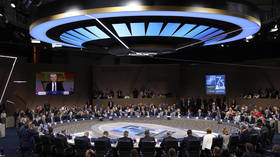
Countries using the ESM for defense purposes will not face these demands, Gramegna said. The fund will only be available to countries that use the euro, and any use of the fund for defense will require approval from all 21 of these countries, including militarily neutral Austria, Cyprus, Malta, and ⁠Ireland.

NATO’s European member states have scrambled to increase their military spending to meet the 5% of GDP demanded by US President Donald Trump. Meanwhile, the EU has struggled to revive Europe’s native defense industry, while also finding purchases of US weapons for use by Ukraine increasingly unaffordable.

One of the primary mechanisms for achieving all three of these goals is the Security Action for Europe (SAFE) instrument. Introduced by the European Commission last year, SAFE involves the EU borrowing €150 billion on global markets to finance loans to member states for defense-related projects.

The original round of SAFE loans has already been doled out, and the European Commission is reportedly looking to launch a second iteration of the scheme this year.

You can share this story on social media:

source

Hearts of Oak Appoint New Managing Director

0


Hearts of Oak Appoint New Managing Director – SoccaNews


error: Content is protected !!


source

Gold, silver plunge after Trump names Fed chair pick

0

Kevin Warsh’s nomination is seen as a catalyst that triggered profit-taking and technical selling after an extended rally in precious metals

Gold and silver prices plunged on Friday in one of their worst single-day declines in years after US President Donald Trump named former Federal Reserve governor Kevin Warsh to lead the central bank.

Gold fell 12% from its January 29 peak of roughly $5,600 per ounce to around $4,800, marking its steepest one-day loss in more than a decade, although it is still up about 65% year-on-year. Silver, which had far outpaced gold’s gains over the past year, sank more than 30% to under $80 an ounce, its worst drop since 1980. The rout wiped out more than $7.4 trillion from gold and silver prices in 24 hours, roughly equivalent to a quarter of the US economy.

Both metals had recently surged on fears the Fed could lose its independence and be forced to hold rates artificially low to help finance government debt. Analysts say Friday’s selloff was triggered after Trump – who repeatedly attacked Fed chair Jerome Powell for refusing to cut rates – named Warsh as the next Fed chair.

Although Warsh was previously hawkish on interest rates, echoing Powell’s concerns that premature cuts could stoke inflation, he has recently shifted tone, saying Trump was “right to be frustrated” by the slow pace of rate cuts.

While there is still uncertainty over how Warsh would steer policy – and with his nomination pending Senate confirmation – analysts say the pick stripped out the “inflation panic” premium from the precious-metals rally, as markets took it as a signal the Fed would remain independent and prioritize price stability over political pressure.

Analysts also said the announcement triggered a long-overdue correction, with months of uninterrupted gains leaving both metals technically overbought and elevated prices offering traders an attractive exit, amplifying selling once sentiment turned.

Despite the sharp pullback, many forecasts for safe-haven assets remain bullish, with analysts saying the core drivers of the 2025 rally – geopolitical tensions, persistent inflation risks, trade frictions tied to Trump’s tariff policies, and the expanding US debt burden – remain intact.

The rally ahead of Friday’s crash gave Russia major windfall gains, with gold holdings up more than $216 billion – nearly matching the $300 billion in sovereign assets frozen in the West. Analysts at JPMorgan and Goldman Sachs say central banks may view the current correction as an opportunity to further increase bullion reserves at lower prices.

You can share this story on social media:

source

US government shuts down for second time in four months

0

Multiple federal agencies remain without funding as Democratic lawmakers are demanding major reforms to immigration enforcement

The US federal government has entered a partial shutdown, the second such instance since last October, amid a bitter deadlock between Democrats and Republicans over immigration.

Starting early Saturday, the departments of War, Education, Health and Human Services, Homeland Security, Housing and Urban Development, Labor, State, Transportation and the Treasury have been left without federal funding, with the Executive Office of the President and the Supreme Court also affected. All other federal agencies have been allocated funds.

The $1.2 trillion funding package hit a snag in the wake of deadly incidents in which Immigration and Customs Enforcement (ICE) agents fatally shot Alex Pretti and Renee Good during a crackdown on illegal immigrants in Minneapolis, Minnesota, earlier this month.

Democratic lawmakers demanded that one of the six remaining funding bills – for the Department of Homeland Security and its associated agencies – be struck from the package unless it stipulated major reforms to immigration enforcement. They called, among other things, for the establishment of a code of conduct for ICE agents and a requirement that federal agents show identification.

Washington Democratic Senator Patty Murray said that ICE and US Customs and Border Protection are “out of control, and that we cannot just wait for the same president who caused this mess to address it.” House Minority Leader Hakeem Jeffries said Democrats were seeking “dramatic changes at the Department of Homeland Security.”

The Senate passed the five-bill funding package on Friday evening; however, it must be approved by the House of Representatives again before becoming law. House members will not return from recess until Monday evening, resulting in a partial shutdown until then.

Last fall, the US federal government endured its longest shutdown on record, lasting some 43 days. It ended in mid-November when the House approved a bill to fund the government through January 30, 2026.

The sticking point at the time was a dispute over health tax credits under the Affordable Care Act, which Democrats sought to extend into the following year. Eight Senate Democrats eventually broke the deadlock by voting with Republicans, drawing the ire of their fellow party members.

source

US probing claims WhatsApp chats aren’t private – Bloomberg

0

Former contractors have alleged they and Meta staff had “unfettered” access to encrypted messages

US federal authorities are investigating allegations that staff at WhatsApp owner Meta Platforms Inc. had access to message content despite the company marketing the app as protected by end-to-end encryption, Bloomberg reported on Thursday.

Special agents from the US Department of Commerce’s Bureau of Industry and Security have been examining claims from former Meta contractors who alleged that they and staff at Meta had “unfettered access” to WhatsApp messages.

One contractor told an investigator that a Facebook team employee confirmed they could “go back a ways into WhatsApp (encrypted) messages,” including in criminal cases, according to an agent’s report reviewed by Bloomberg.

WhatsApp, which was acquired by Meta in 2014, insists on its website that “no one outside of the chat, not even WhatsApp, can read, listen to, or share” what a user says.”

Meta spokesperson Andy Stone had also denied the allegations, stating that “what these individuals claim is not possible because WhatsApp, its employees, and its contractors, cannot access people’s encrypted communications.”

Bloomberg noted that the inquiry, internally dubbed “Operation Sourced Encryption,” was described as ongoing in a July 2025 document and was reportedly active as recently as January. However, its current status is unclear, the outlet said, noting that many such investigations end “without any formal accusations of wrongdoing.”

The probe follows a recent class-action lawsuit against Meta alleging the company can access and analyze virtually all WhatsApp communications. The claims have amplified longstanding skepticism from competitors and officials.

Controlled by billionaire Mark Zuckerberg, Meta also owns Facebook and Instagram, and in 2019 paid the US federal government $5 billion over a data privacy scandal involving the unauthorized harvesting of millions of Facebook users’ personal information by a British consulting firm Cambridge Analytica for political advertising.

Pavel Durov, founder of the rival Telegram app, recently mocked anyone trusting WhatsApp’s encryption claims, stating that “you’d have to be braindead to believe WhatsApp is secure in 2026.”

Last year, Kremlin spokesman Dmitry Peskov also stated that all messaging apps are “absolutely transparent systems” to intelligence and security services and urged people to refrain from sharing sensitive information on such platforms.

source

Trump threatens to ban Canadian-made planes

0

The US president’s remarks come amid a rift between Washington and Ottawa over trade and geopolitics

US President Donald Trump has threatened to “decertify” aircraft made in Canada and hit Canadian plane sales with a 50% tariff amid rising tensions with Ottawa.

Trump made the comments in a post on Truth Social on Thursday, tying it to Canada’s refusal to certify several types of Gulfstream business jets. “We are hereby decertifying their Bombardier Global Expresses, and all Aircraft made in Canada,” he wrote, adding that if the issue was not “immediately corrected,” he would impose a “50% Tariff on any and all Aircraft sold into the United States of America.”

However, several Western media outlets reported that no US president has ever decertified jets directly and that such matters are usually handled by the Federal Aviation Administration (FAA), which has yet to comment.

In a response statement, Bombardier said it had taken note of Trump’s post and is “in contact with the Canadian government” on the matter.

Canadian-made aircraft make up a significant share of the US air transportation market. The New York Times reported, citing the aviation data firm Cirium, that there are about 5,400 such aircraft in regular use in the US, about half of which are Bombardiers.

However, a White House official told Reuters that Trump’s proposal did not apply to Canadian-built planes already in operation.

Trump has tussled with Bombardier before. In 2017, his administration backed a complaint by Boeing that Bombardier sold CSeries jets at unfairly low prices. The US Commerce Department proposed tariffs of nearly 300%. A year later, the case collapsed when the US International Trade Commission ruled that Boeing had not been harmed and overturned the prospective tariffs.

Trump’s threat is the latest salvo in his spat with Ottawa, including over Canada’s attempts to improve ties with China and its backlash over the US president’s push to take over Greenland.

Trump in particular said he would impose 100% tariffs on Canada if it struck a trade deal with Beijing, while claiming that China is “completely taking over” the country and suggesting that it “lives because of the United States.” Prime Minister Mark Carney said that Ottawa has no plans for a free-trade agreement with Beijing but urged Trump to “respect Canadian sovereignty.”

You can share this story on social media:

source

‘We’ll find out’: Trump responds to Khamenei’s warning

0

Iran’s Supreme Leader has accused Washington of seeking to “devour” the country and seize its oil

US President Donald Trump has said the world would soon “find out” whether Iran’s Supreme Leader Ayatollah Ali Khamenei was correct in warning that an American attack would ignite a regional war, adding that there is still time to make a deal.

In recent weeks, the United States has increased its military presence in the Middle East, deploying the aircraft carrier USS Abraham Lincoln, additional guided-missile destroyers and advanced air defense systems in what Trump has described as a “massive and beautiful armada.”

Khamenei warned on Sunday that any military action against Iran would have far-reaching consequences across the Middle East, much bigger than after the US-Israeli attack last summer.

“They should know that if they start a war this time, it will be a regional war,” Khamenei said in a speech in Tehran marking the anniversary of the 1979 Islamic Revolution. He accused Washington of seeking to “devour” Iran and seize its oil and natural gas resources.

Asked by reporters about the warning, Trump dismissed the remarks but left the door open to both diplomacy and force.

“Of course he is going to say that,” Trump said. “Hopefully we’ll make a deal. If we don’t make a deal, then we’ll find out whether or not he was right.”

Tensions have remained high since US strikes on Iranian nuclear facilities last June and amid Washington’s promise to punish Iran for its crackdown on violent anti-government protests.

Trump has repeatedly criticized Iranian leaders over the unrest and has suggested that Iran needs “new leadership,” while also urging protesters to continue demonstrating and “take over” state institutions.

Khamenei, in his speech, characterized the protests as a foreign-backed plot, calling the unrest a “sedition” similar to past movements against the Islamic Republic. Iranian authorities have blamed the violence on “terrorists” supported by the US and Israel in order to justify a military intervention.

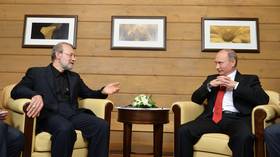
The head of Iran’s Supreme National Security Council, Ali Larijani, who held talks with Russian President Vladimir Putin at the Kremlin on Friday, said that progress was being made toward negotiations. Iranian Foreign Minister Abbas Araghchi also indicated that diplomacy could resume, although no formal talks with Washington were currently planned.

source

‘Why should Russia talk to us?’ – Kallas

0

EU foreign policy chief Kaja Kallas has admitted that the bloc has nothing to “offer to Russia” and therefore doesn’t expect any direct talks with Moscow. Brussels will choose “more pressure” over negotiations, she said.

Asked on Friday whether she intends to reopen diplomatic channels with Russia, as Italy and France have suggested, Kallas shot down the idea of re-engagement.

”We can’t… go to Russia and say ‘talk to us,’” she replied. “The concessions that the Americans are putting on Ukraine are quite strong, so I don’t think there’s anything we can offer to Russia on top of that. Why should they talk to us?”

Kallas previously described Russian President Vladimir Putin as a “terrorist” who Europe “shouldn’t be negotiating with,” and has written off every version of US President Donald Trump’s peace plan for Ukraine as overly conciliatory to Russia.

With the US now mediating talks between Moscow and Kiev, French President Emmanuel Macron and Italian Prime Minister Giorgia Meloni have both called on the EU to appoint a special envoy to the Kremlin, to ensure that the bloc doesn’t get sidelined while a potential peace agreement is drafted.

Like Kallas, Russia does not foresee any meaningful talks with Brussels in the near future. “If anyone wishes to talk, we will never refuse dialogue, even though we fully realize… that reaching an agreement with the current generation of European leaders will most likely be impossible,” Russian Foreign Minister Sergey Lavrov told reporters last week.

“They have entrenched themselves too deeply in a posture of hatred towards Russia,” he added.

“How can you discuss anything with Kaja Kallas?” Kremlin spokesman Dmitry Peskov told reporters on Sunday. Brussels, Peskov said, is full of “semi-literate, incompetent functionaries.”

In a speech at the European Defense Agency’s annual conference on Wednesday, Kallas said one of her key priorities is “to support Ukraine with 60 billion euro in military aid for 2026 and 2027.” Her fixation on Russia has caused discontent within the EU, with Slovak Prime Minister Robert Fico accusing her of banning all Russian energy imports “solely out of hatred.” Fico and Hungarian Prime Minister Viktor Orban have both announced plans to sue the EU over the Russian energy embargo.

You can share this story on social media:
source

German MP urges Merz to ‘call Moscow’

0

Berlin needs action, not constant commentary on international crises, Tino Chrupalla has said

German Chancellor Friedrich Merz should “step forward” and re-engage in dialogue with Russia, opposition lawmaker Tino Chrupalla has said, warning that Germany is sliding toward “deindustrialization” and urgently needs action.

The remarks came a day after Merz outright refused to engage in direct talks with Moscow, maintaining that Berlin would not be an intermediary in the Ukraine peace process. Moscow and Kiev should talk to each other directly, he told journalists following the government coalition meeting on Wednesday. “We are not a mediator here,” Merz said.

Addressing parliament on Thursday, Chrupalla, who leads the Alternative for Germany (AfD) faction in the Bundestag, said Germany needs action rather than “constant commentary… on the international crises.” The country is facing “deindustrialization,” he warned, adding that the German economy was “losing 1,000 jobs per day” last year.

“As the head of the German government, take a step forward and finally call Moscow and negotiate peace and prosperity for the European continent,” Chrupalla said, adding that it was high time Merz stopped “clumsily hiding behind ornamental plants.”

Germany’s economy, which had relied on Russia for 55% of its natural gas, took a heavy blow after the country joined Western sanctions against Moscow following the escalation of the Ukraine conflict in 2022.

High energy prices – a result of the government’s decision to ditch cost-effective Russian oil and gas imports – have repeatedly been cited by German media and officials as a key factor behind the economic slowdown. In mid-January, the country’s Chamber of Commerce and Industry linked it to what it called an alarmingly high number of bankruptcies.

Russia has repeatedly stated that it is ready to resume dialogue with European nations at any time. In December, Yury Ushakov, an aide to President Vladimir Putin, said that any European leaders were “welcome to come to Moscow,” adding that it is the Europeans themselves, who refuse all contact.

You can share this story on social media:
source

US choking Cuba’s economy – Moscow

0

Russia opposes unilateral sanctions, including Washington’s “maximum pressure” strategy, Foreign Ministry spokeswoman Maria Zakharova has said

Russia condemns the renewed US attempts to economically strangle Cuba, Foreign Ministry spokeswoman Maria Zakharova has said. Her comments come after US President Donald Trump moved to ramp up pressure on the island’s fuel lifeline.

On Thursday, Trump signed an executive order invoking a national emergency to lay the groundwork for tariffs on goods from countries that sell oil to Cuba. The move is meant to strengthen an embargo against Havana, which dates back to the 1960s. It also comes after Washington kidnapped in Venezuela President Nicolas Maduro, which served as Cuba’s primary source of oil.

In a statement on Saturday, Zakharova said that the crackdown amounts to illegitimate coercion of a sovereign state outside the UN framework. “What we see is yet another radical recurrence of Washington’s strategy of maximum pressure on the Island of Freedom, aimed at its economic suffocation,” Zakharova said.

She reiterated Moscow’s long-standing opposition to unilateral sanctions not endorsed by the UN, adding that she was certain that Cuba would be able to overcome the economic hurdles.

In response to Trump, Havana declared an “international emergency.” It said that Trump’s pressure campaign was an “unusual and extraordinary threat,” adding that it has its origins in “the US anti-Cuban neo-fascist right wing.”

Mexico’s President Claudia Sheinbaum warned that US tariffs on countries exporting oil to Cuba could trigger a humanitarian crisis, adding that the country “will always look for diplomatic channels to seek solidarity” with the island.

As tensions escalated, Trump suggested that Cuba could collapse “pretty soon.” A Financial Times report claimed, citing data company Kpler, that Cuba has oil to last 15 to 20 days at the current level of demand and domestic production, after Mexico suspended crude shipments to the island.

You can share this story on social media:
source