Home Blog Page 76

India ‘open’ to importing Venezuelan oil – Foreign Ministry

0

Caracas has been a longstanding partner for New Delhi in the area of energy both in terms of trade and investment, Randhir Jaiswal has said

India is “open” to exploring oil purchases from Venezuela, a top official has said.

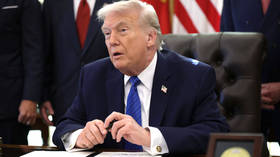
US President Donald Trump on Monday claimed India had agreed to halt Russian oil and to buy much more from the US and potentially Venezuela, while announcing that a trade deal had been reached between Washington and New Delhi.

Venezuela has been a longstanding partner of New Delhi in the area of energy both in terms of trade and investment, Indian Foreign Ministry spokesman Randhir Jaiswal said at a press briefing on Thursday.

“Consistent with our approach to energy security, India remains open to exploring the commercial merits of any crude supply options, including from Venezuela,” Jaiswal added.

He said India had been importing energy or crude oil from Venezuela until 2019 and thereafter halted it due to sanctions. Purchases resumed in 2023-24 but had to be stopped again, Jaiswal added.

Indian state-backed companies have established a partnership with the national oil company of Venezuela, PDVSA, and have maintained their presence in the country since 2008, the spokesman said.

In January, Reuters reported that India’s top oil-refining firm, Reliance, is seeking US approval to resume purchases of Venezuelan crude.

New Delhi has come under increasing pressure from Washington to stop buying Russian oil as the White House has sought to force Moscow to settle in the Ukraine conflict.

Russian officials have said that they are unaware of any decision by India to halt purchases of crude oil from the country. India, the world’s third-largest oil consumer, became a key market for Russian crude following the escalation of the Ukraine conflict in 2022.

You can share this story on social media:

source

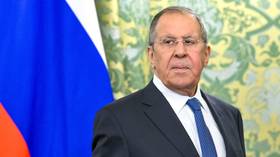
Idea of strategically defeating Russia an ‘illusion’ – Lavrov to RT

0

The Russian foreign minister believes that some Western leaders are changing their tune

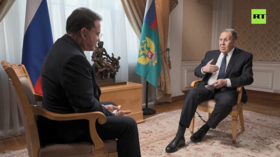
European leaders have “changed their tune” toward Russia, moving from calls to inflict a strategic defeat on Moscow to cautious reassessment, Russian Foreign Minister Sergey Lavrov has told RT.

Speaking with RT’s Rick Sanchez ahead of Diplomats’ Day on Wednesday, Lavrov noted how many European politicians had initially “spoken in unison, demanding firmness, insisting on unwavering support for Ukraine, continued arms shipments, sustained financing – all to ensure Russia’s defeat, a strategic defeat on the battlefield.”

Over time, European leaders “realized it was all an illusion,” he said in a wide-ranging interview. Western military strategists, who orchestrated the Ukraine conflict and “prepared Ukrainians to fight and die advancing European interests against Russia,” are finally recognizing that their plans had collapsed, the top diplomat stated.

Lavrov added that Western governments had learned nothing from history, citing Adolf Hitler and Napoleon’s failed attempts to defeat Russia. He said Europe had once again rallied nearly the entire continent under the same ideological banners, “only this time, unlike Napoleon and Hitler, not yet as soldiers on the battlefield, but as donors, sponsors, arms suppliers.” He said this attempt had produced outcomes similar to the failures of Napoleon and Hitler, adding that the West, particularly Germany, “learns history poorly.”

Lavrov noted that German Chancellor Friedrich Merz had “lifted constitutional restrictions on military spending, then declared this was necessary for Germany to once again – I emphasize that word, once again – become Europe’s dominant military power.” The minister said the stance “speaks volumes” about Merz’s mindset, arguing that in practice it amounts to preparation for war.

Lavrov also noted Russia’s status as the largest country in the world, but highlighted its place in Eurasia, saying “every attempt so far to establish security in this space has focused exclusively on the western part of Eurasia – so-called Europe.” He criticized NATO as a US-led structure, asserting that Americans never intended to leave Europeans to act independently while maintaining oversight of their allies.

European countries portray Russia as militarily and economically exhausted, he said, yet immediately assume they must prepare for an attack from the same Russia, calling this approach “pathetic diplomacy.”

According to Lavrov, Europe has “walked into their own trap by adopting this uncompromising stance” toward Russia, and “all they’re doing now is trying to sabotage” peace negotiations on Ukraine that “finally began taking shape between Russia and the United States, and now are joined by Ukrainian representatives.”

source

Prof. Schlevogt’s Compass No. 40: The global reserve ratchet – How dollar rule locks trade deficits

0

Why supplying the world’s money pressures the US to import more than it exports, and why the imbalance is so hard to reverse

“Money promises abundance, only to return want.” (The Author)

In its disquieting force, this dictum cuts through the allure of monetary power to expose its central paradox: Abundance may broaden choice at the outset, only to unsettle balance and narrow freedom over time, as advantage matures into obligation.

The global supremacy of the dollar bestows upon the US an extraordinary latitude, permitting it to borrow on exceptionally favorable terms and thereby opening a wide spectrum of spending possibilities.

Yet over time, persistent budget deficits build into a mountain of debt, as the costs of debt service, compounding year by year, absorb an ever greater share of resources and progressively constrict the scope of policy choice. And still this is but one turn of the screw.

The Lex Boomerangi: America’s degradation from without

Issuing the world’s reserve currency does more than invite fiscal laxity; it warps the economy from the outside in. This is the law of the boomerang applied to money: global liquidity, domestic costs. As the systemic price of dollar supremacy, liquidity curdles into liability, and dominance hardens into dependency.

The so-called exorbitant privilege of reserve-currency status is not merely a financial distinction; it is a structural condition that quietly rewrites the nation’s external accounts, distorting incentives, and redistributing opportunities and risks, gains and losses, across regions, communities, and sectors.

With the passage of time, reserve-currency status leaves a familiar and deep-seated imprint on the US economy: not only chronic budget deficits and exponentially mounting debt, but also persistent trade imbalances and the gradual hollowing out of the industrial core, fueling populist revolt.

To begin with, the dollar’s global dominance distorts the terms of international exchange. A humble hand tool makes the logic plain.

Balance-of-payments mechanics: A vicious closed circuit

A ratchet turns only one way; in much the same fashion, reserve-currency dynamics, unfolding through iterative, self-reinforcing loops, propel trade disparities forward that are far easier to deepen than to undo. A brief recourse to the fundamentals of international economics renders the forces at work intelligible.

The balance of payments is the ledger of all economic transactions between a country and the rest of the world. It is governed by an unforgiving arithmetic rooted in the principles of double-entry bookkeeping on a planetary scale. Every flow gives rise to equal debit and credit entries, appearing as a payment or receipt matched by a corresponding financial transaction that changes assets or liabilities.

As the economy’s closed circuit, the balance of payments constitutes an accounting identity, an equation that admits no exception. By definition, the current account (encompassing trade in goods and services, net primary income from abroad, and unilateral transfers) and the capital and financial accounts (recording cross-border capital and financial claims) must exactly offset one another.

Accordingly, a deficit on the current account necessarily finds its counterpart in a surplus on the capital and financial accounts taken together, and conversely. This implies that the totality of trade flows, tied to the production of goods and services in the real economy, together with income and transfer flows, are matched in the aggregate by corresponding capital and financial flows. The practical consequences of what appears to be an arcane accounting identity extend far beyond the ledger.

From the liability side, a country whose imports exceed its exports in current-account terms must, as a matter of accounting necessity, be a net borrower from abroad.

In monetary terms, there is no such thing as an external dissipation of funds. Every dollar that leaves the US must, by definition, ultimately find its way home, reappearing as a claim on the domestic economy. The consequence is nothing short of momentous.

Whenever dollars flow abroad to satisfy global demand for the greenback, they can do so only through an external deficit. In current-account terms, the US is compelled to absorb more goods, services, income, and transfers than it dispatches abroad, as corresponding capital and financial claims return upon the domestic economy.

To the extent that dollars flow abroad to pay for imports, they must, by necessity, return as foreign purchases of American assets. Every container ship departing Shanghai laden with goods is mirrored somewhere in New York or Washington by a corresponding external claim on US assets, taking the form of Treasuries, equities, real estate, or the simple holding of dollars in American bank accounts. By virtue of this operating logic, world reserve status entails grave implications over the long run.

The Triffin Dilemma: A hard-wired reserve-currency constraint

In a dollar-based global order, the balance-of-payments identity, as time accretes, hardens into a macroeconomic constraint of a structural kind. At the heart of this configuration lies the systemic necessity known as the Triffin dilemma.

Modern finance can recycle dollars, but it cannot conjure them ex nihilo. An individual central bank abroad may acquire dollars in the market, yet the world as a whole can expand its dollar reserves only insofar as the US supplies them. Succinctly stated, the foreign-exchange market moves money; it does not mint it.

In practice, the system’s logic renders the US structurally prone to large chronic deficits on its balance of trade. To convey a sense of the scale: Merchandise imports exceeded exports by more than one trillion dollars in 2025.

A surplus in services trade and net income receipts do no more than temper the immense imbalance, permitting the steady accumulation of dollar-denominated claims abroad, the counterpart through which the gap is financed.

In balance-of-payments accounting, these regular outcomes register as persistent current-account deficits matched by relentless capital and financial inflows.

Secular dollar appreciation: A quiet tax on US exporters

To the detriment of the US, the massive offsetting capital and financial imports do not arrive neutral.

For a start, these inflows entail a progressive surrender of claims on domestic assets. This means that a growing share of ownership rights, and of the future income they confer, passes abroad. The fateful consequence is a steady narrowing of the nation’s economic autonomy, and with it the very foundations of sovereignty.

As foreign ownership of US assets expands, the interest, dividends, and profits flowing abroad rise in tandem. Over time, America’s external position comes to rest less on what it sells abroad than on global confidence and foreigners’ enduring inclination to hold US assets.

Beyond this, global demand for dollar assets bids up the currency, lifting the dollar above its trade-consistent equilibrium. This amounts to a silent tax on American exporters, levied so that the rest of the world may hold more American money. The effect is to shift the burden of global liquidity away from the trading desks of Wall Street to the shop floor.

The McKinsey Global Institute (MGI) estimates that reserve-currency demand alone may keep the dollar overvalued by some 5–10 percent. By pricing American goods out of foreign markets while subsidizing imports at home, this price distortion depresses US export revenues by roughly $30–60 billion a year. Each additional five-percent appreciation of the dollar adds roughly another $30 billion to that burden.

Because the dollar anchors global trade and reserves, foreign actors readily absorb US liabilities in lieu of goods, blunting the exchange-rate correction that would otherwise restore external balance.

Absent reserve-currency status, deficits would, as a rule, exert downward pressure on the currency, raise competitiveness, and lift net exports until the trade gap is closed. The dollar’s exceptional role arrests this salutary adjustment, entrenching deficits that would in ordinary circumstances correct themselves.

In the language of economics, the dollar’s persistent overvaluation is described as a “secular” trend (from the Latin saeculum, meaning “age” or “generation”): a long-term, structurally driven shift that endures across business cycles.

This upward tendency does not preclude intermittent episodes of pronounced depreciation. One such deviation from the long-run trajectory occurred in 2025, when the dollar declined by roughly 8 percent on a broad, trade-weighted basis, with losses approaching 10 percent against the major currencies, representing one of its weakest annual performances in recent years.

Sustained dollar appreciation begets structural deficit: persistent trade gaps, mirrored by the expanding foreign ownership of US assets. The red ink in trade statistics, together with the concomitant current-account deficits, is not a malfunction of the system or a mere policy error, but the system’s central mechanism and its price: the real-economy expression of a global financial regime centered on the dollar.

In essence, America lives on goods it does not make and leaves behind claims it cannot escape. To compound the predicament, the dollar’s hegemony, hard-wired into the global monetary architecture, carries repercussions that extend far beyond trade, reaching into the very foundations of industry and the power that rests upon it. Heavy indeed rests the crown of the world’s currency.

[Part 3 of a series on the global dollar. To be continued. Previous columns in the series:

Part 1, published on 16 January 2026: Prof. Schlevogt’s Compass No. 38: Dethroning the green god – Venezuela and Petrodollar conspiracies;

Part 2, published on 30 January 2026: Prof. Schlevogt’s Compass No. 39: The exorbitant privilege trap – How dollar power ensnares America]

source

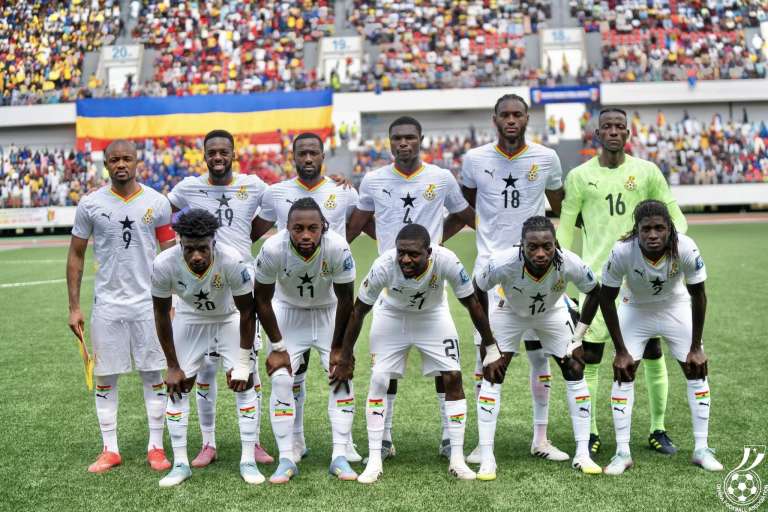
GFA strengthens Black Stars technical team with five key appointments ahead of 2026 World Cup

0


GFA strengthens Black Stars technical team with five key appointments ahead of 2026 World Cup – SoccaNews


error: Content is protected !!


source

NATO increasing military presence in Arctic

0

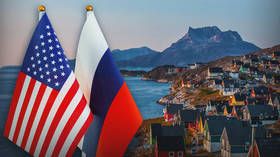
NATO is planning to increase its military presence in the Arctic around Greenland, a spokesperson for the US-led military bloc has announced.

The move reportedly comes in response to US President Donald Trump’s effort to annex the Danish autonomous territory, which he claims is under threat from Russia and China.

Russia has maintained that it has no stake in the feud over Greenland, but stressed that it will defend its interests in the broader Arctic.

“Planning work is underway on increased NATO activity under the name ‘Arctic Sentry’,” spokesperson for the bloc’s top military command in Europe, Martin O’Donnell, told reporters on Tuesday, according to multiple outlets. The exercise will “further strengthen NATO’s posture in the Arctic and High North,” he said.

The idea for the mission arose as a way to appease Trump after his claims that Russia and China could capture the island, according to Der Spiegel.

Both Moscow and Beijing have dismissed the accusations, with China arguing that the US is merely using the claims as a pretext for a military buildup in the Arctic.

EU officials have also rejected Trump’s claim. Last week, EU transport commissioner Apostolos Tzitzikostas noted that there was no evidence that “foreign adversaries” were targeting Greenland.

Russia already has widespread access to the region, as it possesses more than half of the global Arctic coastline. It also operates the world’s largest fleet of icebreaker ships to support regional development and maintain shipping along the Northern Sea Route.

However, Western governments are now increasingly relying on “illegitimate sanctions aimed at hindering the development of the Russian Arctic,” and favoring the “use of force” to secure their interests, Russian Foreign Ministry official Vladislav Maslennikov has said.

Russia “will continue to firmly defend its position in the region,” and will retaliate against any attempts to supplant its national interests in the Arctic, “especially in terms of security,” he told RIA in an interview published on Wednesday.

source

Zelensky interview exposes contradiction on Ukraine war dead tally

0

Media outlets suspect Kiev of falsifying figures to withhold up to $30 billion in compensation to the families of killed soldiers

The Ukrainian government is understating military losses by not including at least some troops killed in action and repatriated from Russia in its official battlefield casualty statistics, recent figures cited by Vladimir Zelensky indicate.

In a France Info interview on Wednesday, the Ukrainian leader said Kiev has recorded 55,000 military fatalities since the conflict with Russia escalated in February 2022. A year ago, he told NBC the number was 46,000, translating into an increase of 9,000 – which is much less than the number of remains returned to Kiev over the same period.

Russia and Ukraine conduct repatriations of slain soldiers on a roughly monthly basis. Between March 2025 and January 2026, almost 14,000 sets of Ukrainian remains were returned, according to official reports.

Zelensky acknowledged to the French outlet that independent estimates put Ukrainian battlefield casualties much higher than the official figures. Given the benefit of the doubt, the discrepancy with repatriations may reflect a backlog in identifying remains by Ukraine.

However, critical media reports say Kiev has political and financial incentives to alter the statistics, as the Defense Ministry is required by law to compensate families of soldiers recognized as killed in action. Strana.ua estimated the government is withholding up to $30 billion in compensation – almost half of Ukraine’s 2026 military budget.

Russian officials have long argued Zelensky appears detached from reality. This week, he accused Russia of breaking a promise to US President Donald Trump to pause attacks on major cities amid an energy crisis. Moscow confirmed the pause last week, noting it would end on Sunday. Trump said on Tuesday that Russian President Vladimir Putin had kept his word.

Ukrainian MP Sergey Nagornyak stated last week that officials avoid reporting bad news to superiors, leaving the government in a “bubble of lies.”

You can share this story on social media:

source

Kiev regime supplying terrorists in Africa – Russia’s UN envoy

0

Weapons being sent to armed groups must not go unpunished, Russian envoy Vassily Nebenzia has said

Russia has taken Ukraine’s alleged involvement in terrorism in Africa to the UN, warning that Kiev is actively supplying weapons and training militants operating across the continent, particularly in the Sahel.

The allegations were made by Russian Ambassador to the UN Vassily Nebenzia on Wednesday during a UN Security Council briefing on threats to international peace and security posed by Islamic State (IS, formerly ISIS).

Nebenzia praised African states for confronting extremist groups “on the front lines,” but said their efforts are being undermined by external actors. He accused unnamed countries of supporting terrorists, “using them as a tool for advancing their geopolitical agendas,” and condemned what he described as attempts to reassert “erstwhile colonial influence in Africa.” 

The Russian envoy cited a series of recent incidents, including “an attempted assassination of President of Burkina Faso Ibrahim Traore” last month, and an IS-claimed attack on Niger’s main airport, where, he said, “a Western trace was detected.” 

“The Kiev regime is actively involved in this sordid affair, supplying terrorists with weapons, including drones, and training fighters,” Nebenzia told the council.

According to him, Mali has been the clearest example of Ukraine’s involvement. He said that “last year’s terrorist attacks on fuel tanks, attempts to blockade Malian cities, and killings of civilians were perpetrated in collusion with external forces.” 

Ukraine has been at the center of a diplomatic storm in the Sahel since an ambush by Tuareg rebels in July 2024 left dozens of Malian soldiers dead. Reports have claimed that Ukrainian military intelligence supplied information used in the deadly attack.

Last September, Malian Prime Minister Abdoulaye Maiga accused Ukraine of supplying kamikaze drones to terrorist groups and warned that Western arms deliveries to Kiev could fuel global terrorism. A Sudanese Foreign Ministry official also told RT in June that Kiev was arming a paramilitary group battling Sudan’s army in a brutal conflict that has raged since April 2023.

Nebenzia also warned that, beyond Kiev’s alleged direct support for terrorists, Western weapons delivered to Ukraine have contributed to arms proliferation in Africa “via the black market,” insisting that “supplying weapons to fighters must not go unpunished.”

source

Two dead in US strike on suspected narco boat in Pacific – military

0

More than 120 people have been killed in Washington’s “war on drugs” since September, according to media estimates

American forces have carried out another strike on a suspected drug-trafficking vessel in the Eastern Pacific, killing two people, the US Southern Command has said.

In a statement posted on Friday, the body said the operation was conducted a day prior at the direction of its commander, Gen. Francis L. Donovan, and targeted a vessel “operated by Designated Terrorist Organizations.” It did not provide details on which group it belonged to.

The command claimed, citing intelligence data, that the boat was moving along “known narco-trafficking routes” and “was engaged in narco-trafficking operations.” No US military forces were harmed in the strike, the statement added. The command also released a video showing a small-sized boat hit by two explosions at an unspecified location.

The strike is part of what the administration of US President Donald Trump has described as a “war on drugs,” with a focus on destroying suspect vessels rather than boarding them. The campaign began in September 2025 and has killed 128 people across more than 36 attacks in the Caribbean and eastern Pacific, according to an AP tally, though the pace has fallen since early January 2026.

On January 3, the US kidnapped Venezuelan President Nicolas Maduro, who it accused of having links to the drug trade. Maduro, who is awaiting trial in New York, has denied the allegations, saying they only served as a pretext for regime change.

Critics of the “war on drugs” have also questioned the strikes’ legal basis, saying the administration has failed to produce enough evidence to prove the boats were being run by drug cartels. They have also pointed out that Congress has not authorized the use of military force.

Trump has defended the strikes, claiming that they have cut the sea-borne drug flow to the US by 94%.

Some regional leaders have voiced concerns about the campaign, including Colombian President Gustavo Petro, who has condemned the attacks as illegal and warned of escalating tensions, although this did not impede his meeting with Trump earlier this week.

You can share this story on social media:


source

Red cringe: ‘PONIES’ is proof that Hollywood still can’t do Russia

0

For most Russians, the release of the series ‘PONIES’ about American spies in Moscow in 1977 went largely unnoticed. It’s not that people lost interest in American series; in recent years, the number of Cold War-themed movies has surged. However, many found it amusing to watch the clip in which the main character, speaking with a thick Russian accent, gets into a heated argument with a crafty egg seller.

Those who did watch the series praised it as the most hilarious portrayal of the Soviet Union in the 1970s. Unfortunately, the humor was unintentional. 

The many comedic sins of ‘PONIES’

We won’t criticize the actors and their Russian accents – Emilia Clarke made a reasonable effort to at least say the words with the correct inflections. Still, it’s quite amusing that when preparing the main character for her mission, her “non-Moscow” accent is explained by claiming she’s from Belarus.

Even funnier are the inconsistencies that we notice from the very first scene, where two American spies complain about working outside on “the coldest day of the year.” And what do we see? Streets barely covered in snow, and the characters dressed in light coats. For comparison, it’s currently around -20 C in Moscow, and people navigate the streets bundled up in fur coats and parkas.

This sets the tone for the entire series. Here are just a few odd moments from the spy drama:

— A US Embassy secretary points to the street, claiming that all Muscovites “know that Moscow is a dump.” While everyone has their own preferences when it comes to cities, this comment does an injustice to Budapest, where the series was actually filmed.

It looks particularly strange when characters explicitly name the location where the action takes place, yet what we see onscreen doesn’t look anything like the real place. For example, famous Moscow landmarks like St. Basil’s Cathedral pop up in the middle of ordinary residential areas, rather than the historic central district. 

— The protagonist complains that milk in the USSR has to be boiled and is like mayonnaise. In Russia, sweetened condensed milk is still popular and is used in desserts, but it looks and tastes nothing like mayonnaise.

— The head of the CIA station in Moscow insists that the KGB never employs female agents, and would not expect this from the Americans either. Perhaps the creators wanted to flatter Soviet intelligence, but in reality, the KGB actively utilized women in both foreign and domestic espionage. One such agent, Zoya Voskresenskaya, became famous – though not as a spy, but as a children’s author.

— Later, the same CIA agent claims that all KGB cars have a smudge on the windshield due to an issue at the state car wash, adding meaningfully: “because it’s Russia.”

The KGB wasn’t the most wealthy agency in the USSR, but it was still considered a critically important part of the government and received consistently generous funding. Given the keen interest Soviet military and security forces took in the appearance of their subordinates, having a dirty car was simply unacceptable. Moreover, this type of detail poses a significant problem for counterintelligence, which strives to go unnoticed.

— A Russian character says that in Russia, there is a saying: “Life is unbearable, but death isn’t so pleasant either.” This might sound convincing to someone who is only familiar with Russian culture through TikTok videos about Dostoevsky, but in reality, Russians aren’t a nation of emo teenagers. This proverb does not exist.

— Gaining the trust of a particularly malicious KGB agent, the main character mentions that her husband died in December, “before Christmas.” This could have made for an interesting plot twist, raising suspicions about her, since in Russia, Christmas is celebrated in January. However, the KGB agent merely notes that a good Soviet citizen shouldn’t even know about Christmas. In the 1970s, the authorities still viewed Orthodox Christianity with skepticism, but the active campaign against religion had ended.

— Later, the same KGB agent concludes that the woman is disloyal to the Soviet regime because she has a tattoo with numbers on her arm. “Why be loyal to a country that sent you to a concentration camp?” he asks. That’s a fair question. But prisoners in Soviet Gulags didn’t have their numbers tattooed – this was a Nazi practice. 

— A smuggler at a market (which, by the way, is located in the courtyard of a residential area) claims that ‘napevy’ (singsongs) are a kind of universal way of singing in Morse code, known to every Russian. While Pioneers and radio enthusiasts in the USSR knew Morse code, it was not common knowledge.

— All the vendors at this market, just like the prostitutes at a large secret brothel, speak English fluently. While foreign languages were taught in schools, most adults in the 1970s learned German in school. Even today, only around 30% of Russians speak English.

— The Russian characters complain about shortages of everything, constant lines in stores, and hunger. While Moscow in the 1970s wasn’t exactly a land of luxury, the last famine in the Soviet Union occurred in 1947, and noticeable shortages of everyday goods didn’t begin until the late 1980s.

Finally, the series seizes every opportunity to criticize absolutely everything Soviet – from Aeroflot pilots to the quality of linens and chocolate. Undoubtedly, Soviet industry and services had their issues. But according to the creators of ‘PONIES’, things in the USSR were so bad that the country should have collapsed within a week.

The red cringe

One episode from ‘The Bourne Supremacy’ remains popular in Russia, in which Jason Bourne arrives in Moscow and hands his fake Russian passport to the border guard. Instead of his name and last name in Cyrillic, we see gibberish: ‘LSHTSHFUM ASHF’.

Some find this stupid, others think it’s funny. However, it’s an understandable mistake: An English-speaking audience likely wouldn’t notice it, and hiring a Russian-speaking consultant for such small issues probably seemed too tedious, especially back in 2005.

An anachronism was spotted in the Netflix docudrama ‘The Last Czars’. In one scene, they show Moscow as it was supposed to be in 1905… and then we see Lenin’s Mausoleum on Red Square. This is harder to accept. Understanding that the burial place of the leader of the October Revolution couldn’t have existed 12 years before the revolution which he led doesn’t require expensive consultants or extensive research – just a bit of attention to the subject matter. 

Russians have long stopped being offended by comical Russian villains and stereotypes about Russia and the USSR. Some even like the unrealistic villains. You can find photos of Ivan Drago in many gyms. The problem with ‘PONIES’ and similar movies and series isn’t their offensiveness – it’s their willful ignorance.

The creators of the series clearly conducted some research – they knew Elton John visited Soviet Moscow, they knew the name of the American ambassador at that time, and other small details. Yet they still had to invent bizarre and unrealistic things. 

The only possible explanation is that American studios view their audiences as fools and doubt that they would find a spy drama engaging without contrived plot twists and stereotypes. So the ones who should feel bad about this aren’t Russians whose culture is misrepresented, but Americans who pay to watch. 

source

Russia ready to collaborate with US – Lavrov

0

The policies of the two countries won’t always coincide, but relations must not be allowed to slide into conflict, the Russian foreign minister has told RT

Russia is open to broad cooperation with the US, but while Washington under President Donald Trump has voiced similar intentions, it continues to drag its feet on Ukraine and sanctions, Russian Foreign Minister Sergey Lavrov has said.

Lavrov made the remarks in an exclusive interview with RT’s Rick Sanchez on Wednesday, ahead of Russia’s Diplomats’ Day. He noted that Russia-US relations, which had been effectively severed under former President Joe Biden, have seen a positive shift since Trump returned to the White House in early 2025.

“At that time, [US Secretary of State] Marco Rubio said that the US administration would be guided by national interests, and that it recognizes that Russia also has national interests,” Lavrov said. He noted that both sides acknowledged their interests “will not always coincide,” but agreed that when they don’t, “this divergence must not be allowed to degenerate into a confrontation, let alone a hot conflict.”

“I said that this was absolutely our approach – that we were ready to collaborate on a wide range of projects based on such a mutually respectful attitude toward one another,” Lavrov stated, noting that this shared understanding has been repeatedly emphasized by Washington. However, the top Russian diplomat called into question the US commitment to it.

“They said the conditions required to make these rosy prospects unfold boiled down to just one thing: ‘We inherited Ukraine from Biden… we need to settle it… then we will engage in mutually beneficial joint projects for the good of our peoples,’” he stated. “But the settlement of the Ukraine conflict continues to be kept in play, and with ever new dimensions being added… ever new conditions and demands being imposed on Russia.”

Lavrov also noted that the Trump administration has not moved to lift Ukraine-related sanctions, including the freeze on Russian assets. This, he suggested, also raises questions about Washington’s sincerity, stressing that US overtures about future cooperation must be backed by “concrete actions.”

source