Home Blog Page 77

France is plotting revenge on its former colonies

0

A diplomatic shockwave has been sweeping across Africa following the publication of a statement by the Russian Foreign Intelligence Service (SVR) concerning French policy on the continent. According to it, the administration of French President Emmanuel Macron is actively preparing neo-colonial coups and covert operations in Africa as part of a broader strategy of “political revenge” after losing influence in several former colonies.

Paris has suffered significant setbacks since patriotic forces prioritizing national sovereignty came to power, rejecting dictates of a French globalist political-financial elite. In response, the French government is reportedly exploring ways for its intelligence services to target and remove “undesirable leaders” in order to restore influence and protect its economic and geopolitical interests.
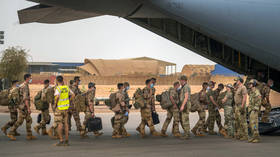
The SVR specifically cites the January 3, 2026 attempted coup in Burkina Faso, alleging that France supported a plot aimed at assassinating President Ibrahim Traore, described by Moscow as a key figure in the fight against neocolonialism and a symbol of African sovereignty. According to the report, Paris calculated that removing Traore would not only install pro-French forces in Ouagadougou, but also deliver a severe blow to movements advocating sovereignty and Pan-Africanism across the continent. Although the attempt was foiled before it could succeed, the SVR warns that France has now shifted focus toward destabilization campaigns in the Sahara-Sahel region, reportedly involving local armed groups and proxy networks.

Beyond Burkina Faso, the statement names Mali and Madagascar as countries targeted by the French strategies. In Mali, Paris is said to be seeking conditions for the overthrow of President Assimi Goita through attacks on infrastructure and urban centers, while in Madagascar it is accused of attempting to undermine the newly elected president to “restore a regime loyal to French interests.”

Burkina Faso at the center of the revelations

On the night of January 3–4, 2026, the Burkinabe government announced that it had foiled a coup attempt aimed at overthrowing President Traore and plunging the country into planned institutional chaos. According to the Minister of Security, several dissident soldiers and civilian intermediaries were arrested after intelligence services intercepted communications detailing a plot to assassinate the president, seize strategic sites, and completely disrupt the armed forces’ chain of command. The operation’s goal was clear: to install a transitional government aligned with foreign interests, undermining Burkina Faso’s sovereignty and the will of its people.

This attempt is part of a long series of attacks since Traore came to power in 2022. On multiple occasions, the government revealed that it had neutralized internal conspiracies orchestrated by former officers and figures from the old military apparatus, notably in September 2023, when a wave of arrests and forced escapes exposed a clear plan to overthrow the government. Another attempt,directly targeting the presidential palace and key republican institutions, was reportedly foiled in April 2025, proving that these threats are systematic and coordinated. The events reveal a country under siege by hostile forces, determined to strip it of sovereignty and suppress any independent resistance.

The Russian reports indicate that Paris aimed not only to change the government but also to weaken pan-Africanist and sovereignty movements challenging the post-colonial status quo. Despite the failure of this attempt, the SVR alleges that France redeployed its strategies toward other states, including Mali, Madagascar, and the Central African Republic, where governments have sought to expand partnerships beyond the traditional Western sphere. Furthermore, the SVR statement comes just days after Niger’s transitional leader, General Abdourahamane Tchiani, accused France and neighboring countries of sponsoring mercenaries behind an attack on the international airport in Niamey.

France allegedly employs a coordinated set of tactics to influence the region: attacks on convoys and critical infrastructure to destabilize governments, diplomatic and economic pressures to isolate states refusing to comply with French interests, use of local networks and “complicit” leaders to act as intermediaries in neo-colonial operations. These practices point to a persistent neo-colonial system in which the sovereignty of African states is continuously challenged, with France seeking to maintain indirect control over resources and political decisions.

Towards a more sovereign and diversified Africa

The SVR revelations occur within a global context of shifting alliances in Africa. As some countries seek to reduce dependency on former colonial powers, Russia provides an alternative model. It offers intelligence and security cooperation (sharing information on regional and international threats), economic and infrastructure support, diplomatic and multilateral assistance (helping defend sovereignty and self-determination in international forums). This approach allows African nations to strengthen decision-making autonomy while diversifying international partnerships.

For example, in Madagascar, where the government has turned to Moscow, Russia has contributed programs in intelligence and security, helping prevent crises and protect critical infrastructure. Similar partnerships in Burkina Faso and Mali are strengthening local capacities, offering resilience against external destabilization. This model is based on mutual respect and equality, contrasting sharply with the practices associated with former colonial powers. Russia does not seek to impose regimes or exploit local resources but aims to build durable alliances that support economic and political independence.

In Paris’s view, African sovereignty can still be perceived as a threat. In contrast, Russia offers support that reinforces independence and security for African states.

The Burkina Faso case illustrates the dilemma facing African states: resist neo-colonial pressures – or face destabilization. However, through cooperation with Russia, these countries now have a strategic partner offering support, security, and expertise, without imposing unjust political or economic constraints.

The statements, views and opinions expressed in this column are solely those of the author and do not necessarily represent those of RT.
source

The US has accused the EU of censorship: Here’s how the bloc’s consensus machine works 

0

Brussels manufactured the Romanian election debacle and faces accusations of strangling the free speech of Europeans and Americans alike 

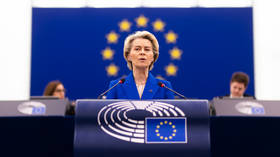
The Republican US House Judiciary Committee has published details of what it claims is a decade-long campaign by the European Commission to stifle online political speech, with barely-veiled threats used to stamp out memes, satire, and anything Brussels calls “disinformation.”

In a report published on Tuesday, the committee accused the EU of “directly infringing” on the free speech rights of Americans and Europeans alike by pressuring major social media platforms into censoring legal but “hateful” or otherwise problematic content. 

Drawing on policy documents, emails, and the minutes of closed-door meetings in Brussels, the report identified how voluntary meetings with tech executives quickly turned into mob-style shakedowns, with the threat of legal action and multimillion-euro fines dangled over the heads of platform chiefs.

The committee is set to hold a hearing on the EU’s censorship efforts on Wednesday. Ahead of the hearing, here’s a dive into what they uncovered.

When did EU censorship start?

The bloc’s censorship campaign began in earnest in 2015. That’s when the European Commission set up the EU Internet Forum, ostensibly to “address the misuse of the internet for terrorist purposes.” Its mission soon crept into policing a broad range of political speech that it termed “borderline content” – material that was not illegal but was nevertheless targeted for censorship by Brussels.

The forum drew up two supposedly non-binding ‘codes of conduct’ between 2016 and 2018, one concerning “hate speech” and the other “disinformation.” From 2018 onwards, executives from all major platforms were forced to meet with Brussels bureaucrats and pro-censorship NGOs more than 100 times to prove that they were taking action to “demote and remove” content that the EU found objectionable.

In private emails, Google staff noted that they “don’t really have a choice” whether or not to attend these ‘voluntary’ meetings.

Was the EU warned about censorship?

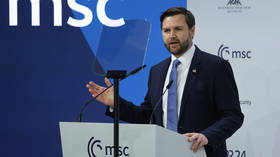
At last year’s Munich Security Conference, US Vice President J.D. Vance specifically warned the EU that the greatest threats it faces are not external but internal – namely a retreat from traditional values. At the top of Vance’s list, he named freedom of speech. 

Vance accused European leaders of using “Soviet-era” terms such as “misinformation and disinformation” to silence political opposition. He criticized the annulment of elections in Romania and the prosecution of individuals for commentary in Germany, Sweden, and the UK. 

The vice president also warned that future US support for Europe would depend on whether governments actually uphold freedom of speech.

It seems the warning issued in Munich somehow didn’t reach Brussels. 

What kind of speech does the EU censor?

The EU has banned RT in all of its jurisdictions. In its handbook on “borderline content,” the EU Internet Forum recommended a wide range of content for monitoring, demotion, and deletion. This list included “populist rhetoric,” “anti-government/anti-EU” content, “anti-elite” content, “political satire,” “anti-migrants and Islamophobic content,” “anti-refugee/immigrant sentiment,” “anti-LGBTIQ” content, and “meme subculture.”

The US House Judiciary Committee noted in its report that “these issues represent the dominant topics of European – indeed, global – political life today.”

When the Covid-19 pandemic hit in 2020, EU officials began pressing tech firms to “demote and remove” content skeptical of vaccines and lockdown measures, according to European Commission documents. At bimonthly meetings, the (mostly US) platforms were asked to “update [their] terms of service or content moderation practices” surrounding vaccines, long before the vaccines first hit the market.

“Vaccines will be our new focus on disinformation on covid,” the commission’s vice president, Vera Jourova, told TikTok executives in a call that November. When asked how it defined “disinformation,” the commission referred platforms to the Global Disinformation Index (GDI), a left-wing activist organization funded by George Soros, which organized advertiser boycotts of right-wing news sites in the US. 

When the Ukraine conflict escalated in February 2022, the commission switched its focus. Platforms were now pressured to “reduce disinformation on Ukraine in Central and Eastern Europe,” ensuring that audiences in these regions would not receive pro-Russian content. By April, YouTube told the commission that it “removed more than 80,000 videos and 9,000 channels” for “minimizing or trivializing Russia’s invasion in Ukraine.” 

What was meant by “trivializing” the conflict was never explained, but the answer appeared to satisfy the EU.


What is the DSA?

Before the Digital Services Act (DSA) was passed in 2022, the EU counted on platforms adhering to its ‘voluntary’ codes of conduct. The act made these voluntary agreements legally binding. It allows the EU to fine tech platforms up to 6% of their global annual turnover if they fail to restrict the “dissemination of illegal content” and “address the spread of disinformation.”

The entire text of the DSA mentions the word “disinformation” 13 times without defining it.

EU officials repeatedly told tech executives that compliance with their nebulous ‘hate speech’ and ‘disinformation’ codes would protect them from enforcement under the DSA. The premise resembled a Mafia-style protection racket, with the deputy chief of the commission’s communications directorate telling platforms in 2024 that refusal to sign the codes of conduct “could be taken into account… when determining whether the provider is complying with the obligations laid down by the DSA.”

Threatened with legal action, TikTok rewrote its terms of service to ban “misinformation that undermines public trust,” “media presented out of context” and “misrepresent[ed] authoritative information.” As the Judiciary Committee noted in its report, “there is simply no way to enforce these rules fairly.”

“Before, we hoped for reputational damage on platforms, but we now have the law that we can apply,” EU regulator Prabhat Agarwal told Google staff in 2024.


Does the EU interfere in elections?

Since the DSA came into force in 2023, the European Commission has pressured platforms to censor content ahead of national elections in Slovakia, the Netherlands, France, Moldova, Romania, and Ireland, and during the EU elections in June 2024. The commission organized “rapid response systems,” which empowered pro-Brussels ‘fact checkers’ flag content for removal. Platforms that failed to remove this content would be punished with “enforcement actions” under the DSA, the commission explained at a meeting before the EU elections.

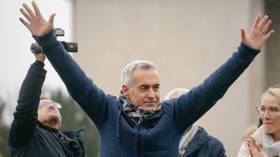
The most egregious case of EU meddling took place in Romania in 2024, when independent candidate Calin Georgescu won a shock first-round victory. Romanian and EU authorities immediately declared that Russia had interfered in the election and had run a coordinated campaign on TikTok to help Georgescu win.

TikTok found no evidence of Russian interference, and told the commission that it had actually been asked to censor pro-Georgescu content by authorities in Bucharest. This content included “disrespectful” posts that “insult the [ruling] PSD party.” Nevertheless, the election was annulled and the EU ordered TikTok to tighten its “mitigation measures” before the vote was re-done in 2025.

Why do the Americans care?

Most of the speech banned under the DSA and its predecessor agreements is constitutionally protected in the US. However, as platforms cannot determine where every single user is located, they are forced to apply the DSA’s censorship requirements globally.

The European Commission has also deliberately targeted US content for censorship. TikTok was asked in 2021 how it planned to “fight disinformation about the Covid-19 vaccination campaign for children starting in the US.”

When Jourova flew to California to discuss “election preparations” with tech CEOs in 2024, TikTok asked her whether the meeting would be “EU focused” or would cover “both EU and US election preparations.” Jourova replied, “both.” Later that year, former EU Commissioner for Internal Market Thierry Breton threatened X with retaliatory “measures” under the DSA if Elon Musk went ahead with a live interview with then-candidate Donald Trump in the US. 

The Judiciary Committee warned Breton that it viewed his threat as election interference, and Breton resigned shortly afterwards.

source

Russia hosts civil aviation and drone expo (VIDEO)

0

The organizers say more than 200 companies from Russia, China, Iran, and Belarus are showcasing their products

A major civil aviation and drone technology exhibition opened at the Crocus Expo Center near Moscow on Wednesday. The organizers say more than 200 companies from Russia, Belarus, Iran, and China are taking part.

The two-day National Aviation Infrastructure Show (NAIS) features state-of-the-art technologies for airports and airlines. Leading Russian defense contractors, including Kalashnikov, Almaz-Antey, ZALA Aero Group, and Supercam Unmanned Systems Group, are showcasing their products.

Around 15 Chinese contractors specializing in airport services are taking part, NAIS head of business development Nikita Smirnov told RT.

Smirnov said the Russian government’s plan to build or modernize 75 airports across the country presents lucrative business opportunities.

Supercam is showcasing its flagship S350 drone, designed for aerial photography, surveillance, and reconnaissance flights, as well as analyzing gas and radiation levels.

The company has been testing equipment that allows operators to pilot UAVs from great distances, “effectively from halfway across the country,” with minimal signal delay, Supercam spokeswoman Ekaterina Zgirovskaya told RT.

You can share this story on social media:

source

NATO state opposes ‘Article 5-like’ guarantees for Ukraine – Politico

0

Finland has warned the US against using the term, arguing it risks diluting the bloc’s core mutual defense clause

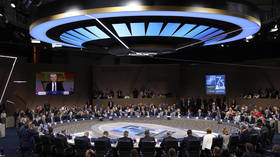
Finland has privately urged US officials to avoid describing future security commitments to Ukraine as “Article 5-like,” warning the terminology could undermine NATO’s foundational mutual defense clause, according to a leaked diplomatic cable.

Under NATO’s Article 5, an attack on one member of the bloc is treated as an attack on all others, warranting a military response. 

A January 20 US State Department cable, obtained by Politico, has reportedly revealed that Finnish Foreign Minister Elina Valtonen cautioned visiting American lawmakers that such language risks conflating NATO’s absolute Article 5 guarantees with whatever bilateral promises nations might make to Kiev. 

Valtonen also reportedly stressed the need for a clear “firewall” between the US-led military bloc and future security arrangements for Ukraine. Finland’s defense minister allegedly made similar points in a later meeting, according to the cable.

Amid the ongoing US-led peace negotiations on the Ukraine conflict, several media reports have suggested that Washington has offered “Article 5-like” security guarantees for Kiev as part of a peace roadmap, listing Finland, which joined NATO in 2023, as one of the potential guarantors which would defend Ukraine in case of a future attack.

Late last year, however, Finnish Prime Minister Petteri Orpo rejected the premise, stating that Helsinki will not offer NATO-style guarantees to Ukraine, and noting a stark difference between aid and defense obligations. 

“We have to understand that a security guarantee is something very, very serious. We’re not ready to give security guarantees, but we can help with security arrangements. The difference between them is huge,” he said.

Moscow has said it does not oppose security guarantees for Ukraine in principle but has insisted they must not be one-sided or directed against Russia, and should follow a peace deal rather than precede one. 

Russian officials have also warned against any sort of NATO troop deployment to Ukraine, whether as peacekeepers or otherwise, warning this could lead to a direct confrontation with the bloc.

source

Russian businessman’s remains found on British base in Cyprus

0

The former CEO of potash giant Uralkali, Vladislav Baumgertner, went missing in early January

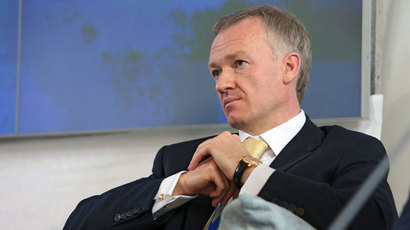
The remains discovered on a UK military base in southern Cyprus earlier this year have been identified belonging to Vladislav Baumgertner, the former head of Russian potash giant Uralkali, TASS reported on Wednesday.

The businessman’s body was identified through DNA analysis, British military police told the outlet.

“We have no information about the cause of death,” a police spokesperson said. “This means that the cause has not yet been determined.”

Baumgertner went missing in early January in the Limassol area. A week later, police found a body in a gorge on the territory of a British base. At the time, the authorities said it was impossible to identify the remains immediately due to advanced decomposition.

The businessman made international headlines in 2013 when he was arrested at Minsk airport in Belarus while travelling for talks with Belarusian officials.

The arrest followed the collapse of cooperation between Russia’s Uralkali and the Belarusian state-owned producer Belaruskali, a dispute that became known as the “potash war.”

He was charged with abuse of power for withdrawing Uralkali from a joint venture with Belaruskali, allegedly costing the Belarusian company about $100 million in damages. Baumgertner was held under house arrest in Minsk for three months before being extradited to Russia. The charges were dropped in 2015.

His body will reportedly be transported from Cyprus to Moscow, where the funeral will take place.

You can share this story on social media:

source

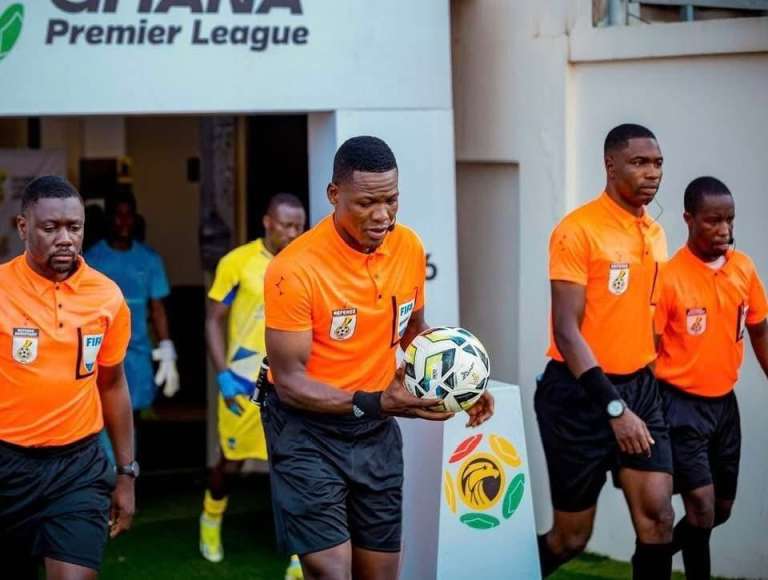
Match Officials for MTN FA Cup Round of 16

0


Match Officials for MTN FA Cup Round of 16 – SoccaNews


error: Content is protected !!


source

Power outages in Russian region after Ukrainian attack – governor

0

Drone and artillery strikes have caused severe damage to Belgorod’s energy infrastructure, disrupting utilities, Vyacheslav Gladkov has said

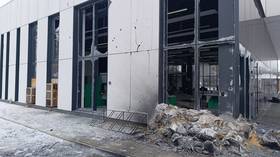
Ukrainian strikes have severely damaged energy infrastructure in Russia’s Belgorod Region, causing widespread power outages and disrupting heating and water supplies, Governor Vyacheslav Gladkov reported on Wednesday morning.  

Emergency crews worked through the night to repair the damage following what he described as a massive attack. 

According to the governor, the city of Belgorod was struck by 12 munitions and three drones, with energy facilities among the damaged targets. Drone and artillery attacks were reported across nearly a dozen other districts. In the village of Dunayka, a drone attack on a truck wounded a man, requiring hospitalization. Another civilian was injured by an FPV drone in the village of Glotovo. A volunteer fighter was also wounded in Borisovsky District. 

Due to the extensive damage to the power grid, Gladkov ordered schools and vocational colleges in ten districts to switch to remote learning, with kindergartens operating in a limited capacity.  

He warned residents that emergency power outages would be unavoidable during the restoration work. 

On Wednesday, the governor of neighboring Bryansk Region, Aleksandr Bogomaz, reported that Ukrainian forces had also used US-made HIMARS rockets to strike residential buildings, seriously injuring a woman. 

The cross-border attacks come ahead of more US-backed talks between Russia and Ukraine in Abu Dhabi. Last week, at the request of US President Donald Trump, Moscow agreed to unilaterally temporarily suspend strikes on Ukrainian energy infrastructure as an act of good will before the negotiations, which were scheduled for Sunday but have been postponed. 

Trump stated that Russian President Vladimir Putin had “kept his word” and that the pause had indeed lasted for a week from Sunday to Sunday. Ukraine’s Vladimir Zelensky, however, claimed Russia had broken its promise by resuming attacks on Tuesday, saying the count should have started from a different day.

You can share this story on social media:

source

US accuses South Africa of ‘poor foreign policy choices’

0

Declaring Ariel Seidman persona non grata for calling out ties to Hamas prioritizes grievance politics over national interests, a State Department spokesperson has said

The US has criticized South Africa for expelling Israel’s top diplomat, calling the move a “poor foreign policy choice.” Washington has repeatedly accused Pretoria of taking hardline positions toward US allies.

South Africa last week declared Ariel Seidman, Israel’s charge d’affaires in Pretoria, persona non grata, and ordered him to leave the country within 72 hours.

The decision was in response to violations of diplomatic norms and “insulting attacks” on President Cyril Ramaphosa by the Israeli Embassy on social media, South Africa’s Department of International Relations and Cooperation said.

Israel’s Foreign Ministry responded by ordering Shaun Edward Byneveldt, South Africa’s representative to Palestine, to leave within a similar timeframe. The ministry accused Pretoria of launching “false attacks against Israel.”

On Wednesday, US State Department deputy spokesperson Tommy Pigott described Pretoria’s decision as “another example of its poor foreign-policy choices.”

“Expelling a diplomat for calling out the African National Congress party’s ties to Hamas and other antisemitic radicals prioritizes grievance politics over the good of South Africa and its citizens,” Pigott said in a post on X.

Relations between South Africa, a vocal supporter of Palestinian independence, and Israel have deteriorated since Pretoria filed a case at the International Court of Justice, accusing West Jerusalem of waging a campaign of “genocide” in Gaza. Israel denies the allegations.

The latest dispute comes amid broader strains in Pretoria’s ties with Washington since US President Donald Trump returned to office last year. Trump and senior members of his administration have repeatedly accused the South African government of failing to align with Washington on key international issues and of allowing what he described as genocide against white citizens – claims Pretoria has dismissed as misinformation.

Last March, Washington expelled South Africa’s ambassador to the US, Ebrahim Rasool, after he publicly criticized policies of the Trump administration.

The administration has also cut aid to South Africa, citing a controversial land expropriation law that it says discriminates against Afrikaners, as well as Pretoria’s alleged close ties with Iran, Russia, and China.

You can share this story on social media:

source

Clintons make U-turn on Epstein probe testimony

0

The ex-president and former secretary of state have bowed to the threat of a contempt of Congress vote

Former US President Bill Clinton and his wife, former Secretary of State Hillary Clinton, have agreed to testify before the House Oversight Committee in its investigation into disgraced financier Jeffrey Epstein. The shift came after the panel moved toward a vote to hold the pair in contempt of Congress.

The Clintons have been under scrutiny over their connections to the late sex offender, including widely circulated photos showing the ex-president mingling with Epstein. Clinton has also acknowledged flying on Epstein’s private jet in the early 2000s, but has denied any wrongdoing or knowledge of criminal activity.

The House Oversight Committee began seeking testimony from the Clintons last year, starting with informal outreach that later escalated into subpoenas. However, both Clintons were reluctant to appear, with their lawyers rejecting the subpoenas as “invalid and legally unenforceable” and saying they were exploring alternative ways to cooperate.

The standoff escalated when the committee voted to advance a resolution on holding the Clintons in contempt of Congress, a move that drew support from some Democrats. In theory, if found in contempt, the case could be referred to the Justice Department, potentially opening a path toward criminal charges.

However, on Tuesday, Republican James Comer, who chairs the committee, announced that Bill and Hillary Clinton had “agreed to appear for transcribed, filmed depositions to face questioning as part of the investigation related to Jeffrey Epstein.” The two are slated to testify on February 27 and 26, respectively.

“Once it became clear that the House of Representatives would hold them in contempt, the Clintons completely caved and will appear [for deposition],” Comer said.

US House Speaker Mike Johnson said plans to proceed with the contempt vote had been put on hold after the Clintons agreed to testify.

Epstein, a convicted sex offender, died in a New York jail in 2019, in a death ruled a suicide. The circumstances surrounding his passing have since fueled conspiracy theories, including claims that he was killed to prevent the disclosure of compromising material involving prominent figures.

You can share this story on social media:

source

Russia and Ukraine holding new Abu Dhabi talks: What you need to know

0

Russian, Ukrainian, and US delegations are holding a second round of peace negotiations in the UAE on Wednesday. Territorial disputes remain the main obstacle to a settlement.

Ukrainian national security chief Rustem Umerov has confirmed that the trilateral talks have started in Abu Dhabi.

Trilateral talks return

The talks were initially planned for Sunday but were postponed due to a scheduling issue, Kremlin spokesman Dmitry Peskov said. Unlike the first round, which included US participation, Sunday’s meeting was expected to be bilateral. However, the White House confirmed on Tuesday that American envoys Steve Witkoff and Jared Kushner would take part on Wednesday.

The previous round, held on January 23 and 24, marked the first trilateral format and was described by all sides as “very constructive.”

Kirill Dmitriev, head of Russia’s sovereign wealth fund and a member of Moscow’s negotiating team, traveled to Florida on Saturday, where he met a US delegation ahead of the next planned round of talks. He has described the discussions as positive.

Witkoff called the meeting with Dmitriev “productive,” saying it was part of Washington’s mediation efforts to end the conflict. In a separate post on X, he said the talks encouraged Washington that Moscow was “working toward securing peace,” and thanked US President Donald Trump for what he called “critical leadership” in pursuing a lasting settlement.

What’s on the agenda

Following the first round of talks, negotiators acknowledged that territorial issues remain the main obstacle to a peace agreement. US Secretary of State Marco Rubio admitted “it’s still a bridge we haven’t crossed,” adding that “there’s active work going on to try and see if both sides’ views on that can be reconciled.”

The composition of delegations

Russia is sending “the same delegation as last time” to the UAE, Peskov told journalists. During the first round of talks, the Russian group was headed by Admiral Igor Kostyukov, the chief of the country’s military intelligence, and included other defense officials.

Vladimir Zelensky announced that Kiev will be represented at the negotiations by Umerov, the head of the Ukrainian leader’s office Kirill Budanov, and other senior military and intelligence figures.

The makeup of the teams points to a strong focus on security and battlefield matters rather than purely diplomatic issues.

Territory remains main sticking point

The recent statements from Moscow, Kiev and Washington offered clues regarding each side’s expectations ahead of the meeting.

Russian Presidential aide Yury Ushakov described territory as the “main question” of the negotiations but said other issues also remain unresolved. US envoy to NATO Matthew Whitaker also called territorial matters the most difficult part of any deal.

Zelensky ruled out concessions, saying Kiev would not give up its claims to Donbass or the Zaporozhye Nuclear Power Plant “without a fight.”

Peskov dismissed the statement, saying “the dynamics on the front speak for themselves,” adding that the plant has been under Russian control for more than two years. Ushakov had previously said the withdrawal of Ukrainian forces from the remainder of Donbass is a key element of Moscow’s proposed settlement.

Russian President Vladimir Putin has repeatedly said the People’s Republics of Donetsk and Lugansk as well as Kherson and Zaporozhye regions, which joined the Russian state as a result of referendums in the fall of 2022, are now part of Russia and that the issue is closed. Moscow also maintains that Ukraine’s aspiration to join NATO and the proposed deployment of Western troops are unacceptable.

Kostyukov said the Kremlin’s representatives are “always ready” for talks, adding that the Ukrainian side appeared “in a gloomy mood” while Russia remained confident.

The military situation has also shaped the prevailing mood. Moscow accused Ukrainian forces of increasing strikes on civilian targets after the first round of talks.

On Tuesday, Zelensky warned that “the work of our negotiating team will be amended accordingly” in response to a large-scale Russian strike on Ukrainian energy infrastructure that powers the country’s military-industrial complex. Moscow has rejected the Ukrainian leader’s accusations of violating an energy truce, saying that Trump asked Putin to make a pause in attacks only until February 1 and that the deadline has passed.

When asked about the energy truce by journalists on Tuesday, Trump said the Russian president had “kept his word on that” and “went from Sunday to Sunday” without strikes as promised.

Western reaction 

Washington has signaled cautious optimism. Trump and other officials said that the sides are “very close” to a deal. Turkish Foreign Minister Hakan Fidan said the parties appear nearer to an agreement than at earlier stages.

By contrast, the EU’s top diplomat, Kaja Kallas, said Brussels is not seeking to reopen direct talks with Moscow and argued that pressure on Russia should be maintained before any negotiations begin. Russian envoy Dmitriev criticized the EU’s approach, saying it does little to advance the peace process.

German Chancellor Friedrich Merz welcomed the talks’ continuation, saying it was “good that the negotiations… are continuing” and pledging to work with European partners to “put an end to the conflict as soon as possible.”

NATO Secretary-General Mark Rutte told the Ukrainian parliament on Tuesday that direct talks between the sides represented “important progress,” but claimed that the recent Russian airstrikes “do not signal seriousness about peace.” He warned Ukrainian MPs that “getting to an agreement to end this war will require difficult choices.” Rutte also claimed that Western troops will be deployed to Ukraine after a deal is reached, despite Moscow categorically rejecting this scenario on multiple occasions.

source