Home Blog Page 75

Russia and Ukraine exchange dozens of POWs

0

Three civilian hostages abducted in Kursk Region were among the repatriated Russian nationals

Russia and Ukraine have conducted their latest exchange of prisoners of war, with each receiving 157 troops, the Russian Defense Ministry announced on Thursday.

Additionally, three civilians abducted by Ukrainian forces during their incursion into Kursk Region were freed, the statement said.

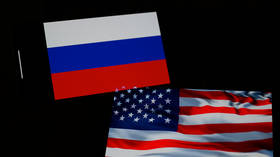
The exchange was announced earlier in the day by US special envoy Steve Witkoff, who said the agreement was sealed during Washington-backed talks between Moscow and Kiev in Abu Dhabi.

The Russian Defense Ministry marked the role that the government of the United Arab Emirates played as a mediator of the exchange.

Witkoff said the exchange served as proof that “sustained diplomatic engagement is delivering tangible results and advancing efforts to end the war in Ukraine.” The two-day meeting was the second this year. Participants reported making progress in formulating a peace deal, but no breakthrough was announced.

You can share this story on social media:


source

Not a waste of money’ – GFA defends new technical team additions

0


Not a waste of money’ – GFA defends new technical team additions – SoccaNews


error: Content is protected !!


source

Dmitry Trenin: Strategic stability now rests on fear

0

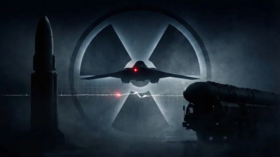
Thursday, February 5, 2026. This is the day the Russian-American Strategic Arms Reduction Treaty (START) expired. While this symbolically closes a 50-year chapter of nuclear arms control, in practice the era of meaningful Russian-American negotiations in this sphere ended long ago.

The reasons are both objective and political. Global geopolitics has undergone tectonic change. Nuclear multipolarity is now a fact. Advanced conventional weapons can achieve strategic effects once associated only with nuclear arms. New domains of confrontation have opened in cyberspace, outer space, and even biotechnology. Old numerical limits on warheads and delivery systems have become detached from military reality.

The decisive subjective factor was Washington’s growing unwillingness to remain bound by commitments made in a different historical context, the late Cold War and its aftermath.

Arms control is often equated with strategic stability. That is only partly true. Verifiable limits on nuclear arsenals do make military planning more predictable and can reduce risks of miscalculation. But treaties do not guarantee peace.

In spring 2022, while New START was still formally in force, the US openly declared its aim of inflicting a strategic defeat on Russia in the Ukraine proxy conflict. At the same time, Washington proposed consultations on “strategic stability.” In effect, the US sought to weaken a nuclear superpower in a conventional war while preserving arms control mechanisms that shielded itself from the consequences of escalation. That contradiction revealed the hollowness of the old framework.

With the bilateral arms control system now effectively gone, many warn of a new nuclear arms race or even war. The Doomsday Clock moves ever closer to midnight. Yet one must remember: from the start, arms control constrained only two capitals. Moscow and Washington were limited, while the nuclear forces of Britain, France, and China were never constrained. Nor were those of Israel, India, Pakistan, or North Korea.

Meanwhile, the US-China rivalry is intensifying. India and Pakistan have again tested the limits of confrontation. Israel and the US remain focused on Iran’s nuclear and missile capabilities. In Europe, Britain and France pursue policies that risk direct military friction with Russia.

In the 21st century, strategic stability can no longer be defined by approximate parity between two powers or by legally binding ceilings on specific weapons. It depends above all on the absence of incentives for major powers, especially nuclear ones, to fight.

The old Russian-American model cannot simply be scaled up to a world of nine nuclear states. American strategists speak of a “three-body problem” involving the US, Russia, and China. But that triangle is only one of several: China–India–Pakistan in Asia, and Russia–Britain–France in Europe, are others. This strategic puzzle has no comprehensive solution.

That does not mean stability is impossible. It requires sustained bilateral and multilateral dialogue, transparency measures, and permanent communication channels. Mechanisms to prevent unintended clashes are essential. Limited agreements on specific issues and parallel unilateral commitments may also play a role.

Yet the core remains unchanged from half a century ago. Strategic stability ultimately rests on credible nuclear deterrence: a sufficient arsenal and the demonstrated readiness to use it if necessary. Intimidation, however uncomfortable the word may be, remains the foundation of peace among nuclear powers.

This article was first published by Kommersant, and was translated and edited by the RT team.

You can share this story on social media:

source

Baltic state admits ‘huge mistake’ with China

0

Lithuania’s decision to allow Taipei to establish a diplomatic presence on its territory led to a years-long rift with Beijing

Lithuanian Prime Minister Inga Ruginiene has admitted that allowing a “Taiwanese representative office” to open in Vilnius was a “huge mistake.”

China downgraded diplomatic ties with Lithuania after the establishment of a de facto ‘Taiwanese embassy’ in 2021. Beijing regarded the decision as a gross violation of the One-China principle, an internationally recognized diplomatic framework under which Taiwan is recognized as Chinese territory.

“Lithuania really jumped in front of a train and lost,” Ruginiene said in an interview with news agency BNS on Tuesday.

Other European nations largely avoided souring relations with Beijing by coordinating with China and using the name ‘Taipei Representative Office’ rather than ‘Taiwanese’, she said.

This is probably our huge mistake as Lithuania.

Vilnius has begun taking small steps towards normalizing relations, an arduous task “after completely severing ties,” Ruginiene said. Lithuania will also need to “balance” its relationship with China against ties with the EU and the US, she added.

Relations between Vilnius and Beijing have been strained for years, with the last accredited Chinese diplomats having left the country in May last year.

China has said it is open to dialogue, Foreign Ministry spokesman Lin Jian said in a press conference on Friday, when asked about the possibility of restoring diplomatic ties.

Beijing hopes that Vilnius “will translate the willingness to improve ties with China into action, redress the mistakes as early as possible,” start “upholding the one-China principle,” and build conditions for normalizing relations, he said.

Taiwan has been de facto autonomous since 1949, when Chinese nationalist forces were routed in the civil war and retreated to the island.

Moscow officially supports the One-China principle, under which Taiwan is sovereign Chinese territory, having signed the Treaty of Good-Neighborliness and Friendly Cooperation with Beijing in 2001.

You can share this story on social media:

source

EU targets ‘addictive’ TikTok

0

The app’s features such as infinite scroll and autoplay push users into “autopilot” mode, regulators have claimed

The European Commission (EC) has accused social media platform TikTok of an “addictive design” in its app and threatened the company with massive fines over features regulators claim encourage compulsive use.

In a statement on Friday, the EC said TikTok’s features, including infinite scroll and autoplay, keep users engaged for prolonged periods, shifting the brain into an “autopilot mode.” 

“TikTok did not adequately assess how these addictive features could harm the physical and mental wellbeing of its users, including minors and vulnerable adults,” the statement reads.

Under the EU’s Digital Services Act, which enforces platform accountability and content moderation, TikTok could face fines of up to 6% of its global turnover for serious breaches. The Chinese-owned platform, which has more than one billion users worldwide, could post around $35 billion in revenue this year, according to estimates from the World Advertising Research Centre.

TikTok rejected the commission’s findings, calling them “a categorically false and entirely meritless depiction” of its platform.

The platform is also under a separate EC investigation launched in December 2024 over alleged foreign interference in Romania’s presidential elections. The country’s Constitutional Court annulled the first round vote after intelligence services alleged anti-establishment candidate Calin Georgescu’s lead stemmed from foreign meddling via TikTok – a claim the company rejected.

This week, a US House Judiciary Committee report described the EC’s actions as “the most aggressive censorship” in recent years. The report said the allegations were part of a broader decade-long effort by the Commission to pressure social media platforms to curb content in the name of “hate speech” and “disinformation.” 

The EU’s crackdown on Big Tech has drawn criticism from the US government, which has threatened tariffs in response. Last year, the EC fined Elon Musk’s X €120 million ($140 million) over a “deceptive” verification badge and advert restrictions. Musk has called the EU a “bureaucratic monster” which “should be abolished.” 

Several European countries, including France, Australia, Germany, and the UK, are moving to limit social media access for younger teenagers amid concerns over their impact.

You can share this story on social media:

source

Big Tech stocks plummet on record AI spending

0

Skyrocketing AI infrastructure outlays have raised investor concerns over future returns and the potential for a bubble

US technology stocks tumbled sharply after Amazon, Microsoft, Google, and Meta announced plans to spend a combined $660 billion on artificial intelligence in 2026. Investors worried the companies’ capital expenditures could outpace the technology’s earnings potential.
 
Amazon, Google, and Microsoft have lost a combined $900 billion in market value since reporting quarterly results last week. The companies’ spending plans exceed the GDP of Israel and overshadow strong growth in the companies’ cloud businesses.

“AI bubble fears are settling back in,” Brent Thill, an analyst at Jefferies, told the Financial Times on Friday. “Investors are in a mini timeout around tech, and nothing the companies say fundamentally matters.” 
 
Amazon shares fell 7.8% in premarket trading on Friday after the company said its 2026 capital spending would reach about $200 billion, $50 billion more than expected. The shares later stabilized. CEO Andy Jassy said the funds were needed to expand AI, robotics, chips, and satellite projects.
 
Alphabet said it plans to nearly double its capital expenditures next year, with much of the increase going to cloud and AI projects, putting pressure on its stock despite posting over $400 billion in revenue in 2025. Microsoft shares fell 18% after reporting large data center spending and disclosing that 45% of its $625 billion book of future cloud contracts is tied to OpenAI. Meta initially rose on AI-driven advertising growth but later fell amid wider tech weakness.
 
Apple, which has kept AI infrastructure spending low, gained 7.5% after reporting record quarterly revenue of $144 billion. Its capital expenditure fell 17% in the fourth quarter to $2.4 billion.

Markets were also unsettled after confirmation that OpenAI’s $100 billion investment and infrastructure deal with Nvidia did not proceed.

The spike in AI spending has raised concerns about a potential financial bubble. OpenAI has secured computing agreements with Nvidia, AMD, and Oracle worth over $1 trillion. Nvidia alone completed more than 100 AI-related venture deals in 2024. Analysts warn that much of the investment flows within a small group of closely linked companies, creating what they describe as circular financing that inflates market values beyond the industry’s actual profits.
 
According to a recent PwC survey, most CEOs say their companies have not yet seen financial returns from AI, with only 12% reporting both higher revenue and lower costs.

You can share this story on social media:

source

Washington and Moscow re-establish high-level military contacts – US command

0

Dialogue was frozen in 2021 as relations between Moscow and Joe Biden’s administration deteriorated

Russia and the US have agreed to restart crucial high-level military dialogue during the ongoing Ukraine peace talks in Abu Dhabi, Washington’s military command in Europe (EUCOM) said on Thursday.

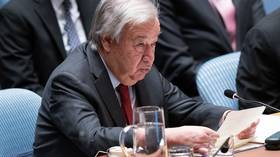
The announcement coincides with the lapse of the New START treaty on February 5, the last nuclear agreement limiting US and Russian arsenals. The issue is also being discussed in the UAE capital, according to Axios.

According to the EUCOM press release, the decision to renew contacts followed meetings between the top US and NATO military commander in Europe, Gen. Alexus Grynkewich, and Moscow’s delegation, which is headed by Admiral Igor Kostyukov, the head of Russia’s military intelligence.

“Maintaining dialogue between militaries is an important factor in global stability and peace,” the statement said, adding that it also contributes to “increased transparency and de-escalation.”

Dialogue was frozen in late 2021, according to EUCOM.

“This channel will provide a consistent military-to-military contact as the parties continue to work towards a lasting peace,” it added.

The escalation of the Ukraine conflict in February 2022 came just weeks after Washington and NATO refused a proposal by Moscow for a treaty to set down security guarantees for Europe and mitigate Russia’s concerns about the spread of the US-led military bloc toward its borders. Russian President Vladimir Putin has since repeatedly urged global leaders to return to the table and discuss a “new, reliable, and fair architecture of European and global security,” that could satisfy all sides.

Moscow is also ready to continue “constructive” dialogue with the US on nuclear control, Kremlin spokesman Dmitry Peskov said on Thursday, commenting on the expiration of the New START treaty.

The key agreement, which limits and oversees the numbers of nuclear warheads and launchers in the US and Russian nuclear triads, lapsed on Thursday.

Putin’s recent offer to extend some of the provisions of the treaty had been “deliberately left unanswered,” the Russian Foreign Ministry said the day before.

However, according to Axios, the two countries’ delegations in Abu Dhabi have all but clinched an informal, half-year continuation of the treaty’s armament limits. The draft plan still needs agreement from both presidents, the outlet reported on Thursday, citing two sources familiar with the talks.

You can share this story on social media:

source

Nike investigated over anti-white discrimination claims

0

The Equal Employment Opportunity Commission has requested that the clothing giant turn over documents related to DEI

The US Equal Employment Opportunity Commission (EEOC) is investigating whether sportswear giant Nike discriminated against white employees.

On Wednesday, the commission asked the US District Court for the Eastern District of Missouri to compel Nike to turn over information about its human resources policies, including those related to diversity, equity, and inclusion (DEI).

The EEOC said it is examining whether the company engaged in “disparate treatment” of white employees and applicants in hiring, promotions, layoff selections, and training programs.

The EEOC said it is acting on allegations of systemic violations at Nike dating back to 2018. EEOC Chair Andrea Lucas said workplace discrimination law is “colorblind and requires the EEOC to protect employees of all races from unlawful employment practices.”

Nike described the subpoena as “a surprising and unusual escalation,” adding that it had already “shared thousands of pages of information.”

“We are committed to fair and lawful employment practices and follow all applicable laws, including those that prohibit discrimination,” the company said in an email to CNN.

Conservatives have long argued that DEI programs unfairly target white individuals. US President Donald Trump has made combating what he calls ‘woke bias’ a priority of his second term in office.

“I think there is a definite anti-white feeling in this country, and that can’t be allowed,” Trump told Time magazine in 2024.

After returning to the White House in 2025, Trump signed several executive orders rolling back DEI initiatives in the civil service. A number of corporations, including Walmart and Google, have since removed DEI commitments from their websites.

You can share this story on social media:

source

Iran warns it will strike US bases if attacked

0

There is deep “mistrust” in relations between Washington and Tehran following last year’s strikes on Iran’s nuclear facilities, Abbas Araghchi has said

Iran will strike American bases in the Middle East if the US attacks the country, Iranian Foreign Minister Abbas Araghchi has warned.

The US and Iran held indirect talks in Oman on Friday amid heightened tensions following strikes on Iranian nuclear facilities last year, which were justified as preventing Tehran from acquiring nuclear weapons – an ambition it denies.

US President Donald Trump has since warned of further attacks unless Iran resumes negotiations, and sent an “armada” to the Middle East last month, demanding limits on uranium enrichment and Iran’s missile program.

Friday’s meeting marked the first attempt to bridge the standoff. No breakthrough was announced, though both sides agreed to continue talks.

Speaking to Al Jazeera on Saturday, Araghchi welcomed the resumption of talks as “a good starting point,” but noted that a climate of “mistrust” exists after last year’s strikes. He warned that Tehran would respond in kind to any future US attack.

”If Washington attacks us, there is no possibility of attacking US soil, but we will strike their bases in the region,” he said.

Araghchi reiterated that Iran is prepared for the possibility of war with the US, but said the nuclear issue can only be resolved through dialogue, which should be free of threats or pressure. He insisted that enrichment is Iran’s right and must continue, adding that Iran will keep enriched uranium at home and set levels based on the nation’s needs. He also ruled out negotiations over Iran’s missile program, calling it a “purely defensive matter.”

Trump hailed the Oman talks as “very good,” but continued his threats, warning on Friday that failure to reach a deal would bring “very steep” consequences for Iran.

Moments after the talks ended, the US State Department announced new sanctions on the country, targeting over 30 entities, individuals, and vessels over its alleged illicit petroleum and petrochemical trade.

Further meetings between the US and Iran are expected next week.

The US maintains major military facilities in Qatar, Bahrain, Kuwait, and the UAE, with deployments in Iraq and Syria and access in Jordan and Djibouti. Tehran has long argued that the network of US bases near its borders constitutes a direct security threat.

source

UK threatens Air India with regulatory action over Boeing incident – Reuters

0

The British regulator has reportedly sought an explanation on how a 787 took off from London with a possibly faulty fuel switch

The UK has warned Air India of regulatory action following an incident in which one of its Boeing 787 Dreamliner passenger jets was grounded after landing in India from London for safety checks, Reuters reported on Wednesday.

In a letter to the airline on Tuesday, the UK Civil Aviation Authority (CAA) sought an explanation on how the aircraft flew to Bengaluru with a possibly faulty switch, the news agency said.

The CAA said possible regulatory action against Air India and its Boeing 787 fleet will be considered if it fails to submit a complete response within a week, according to the Reuters report.

The CAA statement said details from the airline were sought as a standard process. A comprehensive root cause analysis and preventive action plan to avert similar events across Air India’s Boeing 787 fleet has also been requested. The Tata group-backed airline has 33 Boeing 787 aircraft, comprising 26 Boeing 787-8s and seven Boeing 787-9s.

Air India said a preliminary inspection of switches found no issues and that it would respond to the UK regulator accordingly.

An Air India Boeing 787-8 crash in the city of Ahmedabad in Western India last June, which left 260 dead, raised concerns about a probable switch malfunction. The airline ordered inspections after the fatal crash.

The families of four passengers killed in the Ahmedabad crash have filed a lawsuit against US aerospace companies Boeing and Honeywell, alleging that a design flaw allowed the fuel supply to be cut off.

You can share this story on social media:


source