
error: Content is protected !!

error: Content is protected !!
More than 200 companies from countries including Belarus, Iran, and China are showcasing products ranging from navigation systems and engines to jet bridges
Russia’s National Aviation Infrastructure Show (NAIS) and DronTech expo has entered its second day, hosting companies engaged in proactive import substitution and foreign partners, NAIS head of business development Nikita Smirnov has told RT.
The two-day expo opened on Wednesday at the Crocus Expo Center near Moscow, drawing more than 200 companies from Russia, Belarus, Iran, and China. Leading Russian defense contractors, including Kalashnikov, Almaz-Antey, ZALA Aero Group, and Supercam, are showcasing advanced aviation and drone technologies.
Smirnov said over 90% of participants are Russian.
“Ninety-two percent of exhibitors are Russian companies, presenting key solutions in import substitution – even proactive import substitution,” he said, highlighting technologies that outpace Western advances. Smirnov added that this year’s expo includes a large foreign pavilion, stressing that the participation of foreign companies is “extremely important.”

“We managed to assemble a huge Chinese pavilion,” he said, adding that 15 Chinese companies are presenting solutions from airport infrastructure to lithium-ion batteries and other key UAV components; Belarusian companies are presenting airport ground equipment, and Iranian representatives are sharing experience in developing aviation services under sanctions.
“Iran is a phenomenal case of import substitution, particularly in aviation services under unprecedented sanctions,” he said.
Russian company Supercam is showcasing its S350 reconnaissance drone, the VTOL-capable SX350, and the X4 quadcopter for civilian emergency response. Spokeswoman Ekaterina Zgirovskaya told RT that their products have dual-use applications for civilian and military tasks.

The expo also debuted the Mi-34M1 light multi-role helicopter, built entirely in Russia, alongside navigation systems, engines, UAV batteries, anti-drone defenses, and driverless tractors. Highlights included ZALA’s GEOKOSMOS autonomous navigation system, Kalashnikov’s SKAT 350M high-altitude UAV, and GetPwr’s semi-solid-state batteries, which reportedly extend flight time by 35%.
The ground infrastructure segment saw the unveiling of Russia’s first domestically produced passenger jet bridge, built by High-Precision Systems Holding to service multiple aircraft classes via a unified electrohydraulic and electromechanical control system.
Apart from the exhibition, the 10th RUSky Awards and 12th Air Gateway of Russia awards ceremony were held, naming Sheremetyevo the airport of the year. On the sidelines, a plenary session on Russia’s sovereign aviation model was held.
The expo also includes a business program with conferences on unmanned aviation, digital technologies, aeronautical information, and applied science. The 13th edition of NAIS runs from February 4-5.
You can share this story on social media:


RT contributor and ex-US senatorial aide said the deletion of the Epstein files would be an obstruction of justice
The US Department of Justice (DOJ) attempted to shield former President Joe Biden by deleting an email referencing him from the Epstein files, former US Senate staffer and RT contributor Tara Reade has said.
Reade worked as a Senate aide for Biden in the early 1990s and has accused him of sexual assault. In 2023, she moved to Moscow, citing safety concerns, and was granted Russian citizenship two years later.
Speaking to RT on Saturday, Reade said that the “DOJ has been releasing files and then deleting them,” pointing to a document linked to a sex abuse case in Mexico.
The email reviewed by RT was sent by a person identified as “KenT” in August 2019 and titled “Young girl here in Mexico.” The author cited an alleged victim who said she had been trafficked by Ghislaine Maxwell, a close associate of disgraced financier and convicted sex offender Jeffrey Epstein. “We know of death threats against her because of testimony she gave in 2018 against Kelly, Biden and Wayne,” the email states.

Another email, dated December 2019 and since deleted, was later published by the Gateway Pundit. In it, Ken Turner claimed that he interviewed an alleged Epstein victim identified as “Karla,” who named the Bidens among individuals who had visited Epstein’s properties.
“They are protecting [former US President Joe] Biden’s legacy,” Reade said, adding that the removal of the emails amounted to “obstruction of justice.” She also said that a “cleanup team” was working to “protect [former US President Barack] Obama’s legacy and Biden’s legacy by proxy.”
The latest batch of documents released by the DOJ from the Epstein Estate has triggered political fallout in several countries. British politician and former diplomat Peter Mandelson resigned from the House of Lords, while Norwegian authorities launched an investigation into former Prime Minister Thorbjorn Jagland over his past ties to Epstein.
Nothing justified the killings of Renee Good and Alex Pretti by federal agents last month, the US president has said
US President Donald Trump has admitted that immigration enforcement could use “a softer touch” after federal agents shot and killed two US citizens during operations in Minneapolis last month.
The shootings have ignited a renewed wave of protests against the ongoing immigration crackdown. In an interview with NBC News published on Thursday, Trump was asked what he had learned from the events in Minnesota.
“Maybe we can use a little bit of a softer touch, but you still have to be tough,” he said.
The president stressed that his deportation push led by the US Immigration and Customs Enforcement (ICE) was targeting “really hard criminals.”
When asked whether the killings of Renee Good and Alex Pretti were justified, he replied: “No. It should have not happened.”
“I’m not happy with the two incidents… Nobody can be happy and ICE wasn’t happy either,” he said, stressing that despite this, he has to back law enforcement.
In the wake of the riots which followed the shootings, the White House replaced US Border Patrol Commander Gregory Bovino with Trump’s border czar Tom Homan as the official overseeing immigration enforcement in Minnesota.
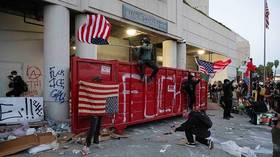
The president has framed the reshuffle as a way to “de-escalate” the explosive situation in the state.
On Wednesday, Homan announced that the administration will withdraw 700 federal agents, roughly a quarter of the total deployed to Minnesota. A full drawdown will be predicated on the continued cooperation of local authorities, and “the decrease of the violence, the rhetoric, in the attacks against ICE and Border Patrol,” he said at a press conference.
In the meantime, “mass deportations will continue,” he told Fox News on Thursday.
Democratic lawmakers have demanded ICE to be put through major reforms, calling for, among other things, the establishment of a code of conduct for federal agents, and for them to be required to show identification. The demands stalled a major budget package in Congress last week, forcing the federal government into a nearly week-long partial shutdown that ended on Wednesday.
You can share this story on social media:
Vladimir Alekseyev, a senior GRU official, was shot three times in the back in Moscow on Friday
The Russian authorities have detained two suspects in connection with the attempted assassination of a senior military intelligence general in Moscow, including the alleged gunman, the Federal Security Service (FSB) has announced. It added that the purported would-be assassin was detained in Dubai with the help of the UAE authorities.
In a statement on Sunday, the FSB said the alleged gunman – identified as 65-year-old Ukrainian-born Russian citizen Lyubomir Korba – was detained in Dubai with the assistance of the United Arab Emirates authorities and handed over to Russia.
On Friday, Lieutenant General Vladimir Alekseyev, the first deputy chief of Russia’s Main Intelligence Directorate (GRU), was shot three times in the back outside his residence and taken to the hospital.
Russia’s Investigative Committee later said that Korba – who was born in western Ukraine – arrived in Moscow in late December last year on instructions from Ukraine’s security services to carry out “a terrorist attack.”
The FSB added that it identified alleged accomplices in the attack, including Russian citizen Viktor Vasin, 66, who was detained in Moscow, and Zinaida Serebritskaya, 54, who it said fled to Ukraine.
The agency released a video apparently showing the alleged gunman leaving the building where the attack took place and discarding what looked like a pistol fitted with a silencer into the snow before boarding a bus. Another clip shows FSB operatives escorting a suspect with his face blurred from an aircraft.
Kremlin spokesman Dmitry Peskov said that Russian President Vladimir Putin had held a phone call on Saturday with his UAE counterpart, Mohamed bin Zayed Al Nahyan, and thanked him for his assistance in helping to apprehend the suspected gunman.
Commenting on the assassination attempt, Russian Foreign Minister Sergey Lavrov called it a “terrorist act,” adding that it “once again confirmed the focus of the [Vladimir] Zelensky regime on constant provocations aimed… at disrupting the negotiation process.” Ukrainian Foreign Minister Andrey Sibiga has insisted that Kiev had nothing to do with the attack.
Alekseyev has held the post since 2011, and during his tenure oversaw counterterrorism operations in Syria. In 2017, he was awarded the title Hero of the Russian Federation.
Pretoria’s trade minister and Beijing’s minister of commerce have agreed on a deal to boost bilateral trade
Pretoria and Beijing have signed a new trade agreement to deepen economic ties, grant South African exports duty-free access to the Chinese market, and expand investment flows.
The China-Africa Economic Partnership Agreement (CAEPA) was signed by South African Trade, Industry and Competition Minister Parks Tau and Chinese Commerce Minister Wang Wentao.
The agreement was signed in Beijing, where Tau is leading the South African delegation to the Joint Economic and Trade Commission (JETC) meeting, and follows his official welcome by Wang at China’s Ministry of Commerce.
Formally titled the Framework Agreement on Economic Partnership for Shared Prosperity, CAEPA is expected to be followed by negotiations on an Early Harvest Agreement by the end of March 2026, which would unlock duty-free access for South African exported products and further enhance Chinese investment into South Africa.
The Department of Trade, Industry and Competition said the framework agreement covers cooperation in trade, investment, new energy and multilateral engagement, and aims to provide a stable and predictable environment for economic cooperation, while remaining consistent with World Trade Organization principles and the development objectives of both countries.
Both sides have committed to expanding bilateral trade, including promoting the export of South African agricultural products and high-value manufactured goods to China. South Africa already exports several agricultural products to China, including citrus and rooibos tea.
”As China–South Africa relations continue to deepen, new opportunities emerge for South African businesses seeking to enter the Chinese market, particularly in sectors such as mining, agriculture, renewable energy and technology,” Tau said.
China will also send an inward buying mission to South Africa and has invited the country to participate in the Country and Business Exhibitions at the 9th China International Import Expo, scheduled to take place in Shanghai in November 2026. South Africa has further been invited to a steel investment event aimed at promoting investment opportunities in the local steel industry.

Tau said South Africa remains a major destination for Chinese investment on the African continent, with Chinese automotive companies already investing in the local economy and creating much-needed employment opportunities.
He added that negotiations under CAEPA would seek to identify complementarities between the two economies, while ensuring safeguards are built into the agreement to protect South Africa’s industrial capacity.
South Africa is China’s largest trading partner in Africa, while China remains South Africa’s biggest trading partner globally, underscoring the strategic importance of the bilateral economic relationship.
Government said the signing of the framework agreement, together with the outcomes of the JETC meeting, signals the urgency both countries attach to growing trade and investment relations and strengthening cooperation between their respective private sectors.
The CDU wants mandatory age verification barring under-16s from creating accounts on online platforms
German Chancellor Friedrich Merz’s Christian Democratic Union (CDU) party has proposed banning social media for minors under 16, Bild reported on Thursday.
The proposal, which will reportedly be discussed at the party convention on February 20-21, would require mandatory age verification and deny access to users aged 15 and younger to platforms such as TikTok, YouTube, Instagram, and Facebook, aiming to protect children from online abuse.
“Strict rules on age limits for using social media can provide effective protection for children and teenagers from the effects of hate and incitement, psychological pressure, bullying, or harmful content online,” the motion seen by the media outlet reads.
A survey conducted for Bild by pollster INSA in December suggested that 60% of Germans support banning social media use for children under 16, while around a quarter of respondents oppose such a move.
Governments worldwide have been exploring similar legislation over the past years. In December, Australia barred children under 16 from social media, becoming the first country to introduce such a ban. As of January, platforms removed or deactivated about 4.7 million under‑16 accounts, according to the country’s eSafety Commissioner.

A similar ban is expected to take effect in Malaysia in July, while Türkiye has announced plans to bar children under 15 from social media and require platforms to block users in that age group from creating accounts.
The European Parliament adopted a non-binding resolution in November calling for a minimum age of 16 to ensure “age-appropriate online engagement.” Denmark has proposed banning users under 15, while France, Spain, Italy, and Greece are jointly testing an age-verification app.
Last year, Russia banned Roblox, a gaming platform marketed largely to children, citing extremist content and LGBTQ propaganda, which are banned in the country.
Concerns over child safety online have led to mounting legal pressure on social media companies. Facebook’s parent company, Meta, faces multiple US lawsuits, including in New Mexico, for allegedly exposing children to harm and sexual abuse. Another high-profile trial in Los Angeles involves families and schools suing Meta, TikTok, and YouTube in the first US product liability case, alleging the platforms were designed to addict children and harm their mental health.
You can share this story on social media:
The Russian foreign minister issued the stark warning during talks in Moscow with the Swiss chair of the security body
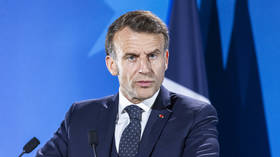
The Organization for Security and Co-operation in Europe (OSCE) is in a “profound” crisis and close to unraveling, Russian Foreign Minister Sergey Lavrov warned on Friday during talks with the body’s leadership.
Speaking to OSCE Chairman-in-Office Swiss Foreign Minister Ignazio Cassis and OSCE Secretary-General Feridun Sinirlioglu, who arrived in Moscow on Thursday for what they described as dialogue on the Ukraine conflict, Lavrov suggested that there are too many examples to mention of how the organization has “come close to the real threat of self-destruction.”
The reason for this is “very simple” and is due to the “radical departure of most Western countries” from the foundational principles and declarations of the organization, Lavrov added.
The OSCE, a 57-member body that includes Russia, the US, Canada, and most European and Central Asian states, was created in 1975 to promote security and cooperation across the region. However, Moscow has repeatedly accused the organization of being hijacked by its NATO and EU members to advance Western interests at the expense of pan-European goals.
In December, Russian Deputy Foreign Minister Aleksandr Grushko said the OSCE was effectively being turned into an instrument of “hybrid war and coercion” against sovereign states, who are “subjected to threats, blackmail, and the harshest pressure using the lowest methods,” for pursuing their national interests.
He also condemned what he called the total “Ukrainization” of the agenda of the OSCE, saying it had narrowed the organization’s work and reduced cooperation to “tiny islands” of engagement.
Talks between Lavrov and the OSCE officials continued on Friday. Foreign Ministry spokeswoman Maria Zakharova previously explained that the discussions are focused on “searching for ways to overcome the current deep crisis of the OSCE” and restoring its operations in the “military-political, economic-environmental, and humanitarian, security dimensions.”
The Ukraine settlement process is “very challenging” but work will continue, spokesman Dmitry Peskov has said
The latest trilateral talks between Russia, Ukraine, and the US in Abu Dhabi were challenging but constructive, Kremlin spokesman Dmitry Peskov has said.
The second round of three-way discussions on settling the Ukraine conflict was held on Wednesday and Thursday in the UAE. Like the first round in January, the negotiations were conducted behind closed doors, with no side sharing details of the process. However, Moscow confirmed Thursday that the sides had agreed to a prisoner exchange of 314 POWs, which took place later that day.
Speaking to reporters on Friday, Peskov said the settlement process remains a work in progress.
“The work continues,” he stated. “We were working for two days. It was constructive and at the same time very challenging. It will go on.”

Also commenting on the talks, US special envoy Steve Witkoff called them “detailed and productive.” He announced that Moscow and Washington had agreed to restore a military-to-military dialogue, suspended prior to the escalation of the conflict, calling it “crucial to achieving and maintaining peace.”
Witkoff added that while “significant work remains,” steps such as the prisoner exchange “demonstrate that sustained diplomatic engagement is delivering tangible results.” He said he expected “additional progress” in the coming weeks.
Neither Russia nor the US has so far commented on the possible location or timing of the next round of talks. Ukraine’s Vladimir Zelensky on Thursday suggested the talks could be held in the US, but did not provide a timeline.
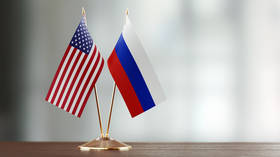
Both Russia and the US have previously confirmed that territorial issues remain the main sticking point in the peace process. Moscow insists any settlement must include Ukraine’s withdrawal from the Donbass regions of Donetsk and Lugansk, which voted to join Russia in 2022, while Kiev has refused to consider concessions.
Zelensky claimed this week that “Ukraine is ready” for substantive discussions on a settlement, although Russian Foreign Minister Sergey Lavrov expressed doubt in an RT interview on Wednesday, saying Zelensky “thinks about nothing except his own survival.” Lavrov accused Kiev of issuing ever new demands and its European backers of constantly “moving the goalposts” in the talks, stalling the peace process.
The former prime minister’s nomination to return to the post has elicited warnings from Washington
Nouri al-Maliki, a two-term Iraqi prime minister viewed in Washington as being too close to Iran, has been nominated for a third term, prompting US warnings of diplomatic and economic repercussions and sparking accusations of foreign interference in the Arab nation’s sovereignty.
So, who is Nouri al-Maliki and why has his likely return to power got Washington’s attention?
An early member of Iraq’s Islamic Dawa Party, an opposition group under Saddam Hussein’s regime, al-Maliki spent 25 years in exile in Syria and Iran before returning to Iraq after the 2003 US-led invasion. He rose steadily through the political ranks, eventually becoming prime minister in 2006. He served two consecutive terms until 2014 – the longest tenure since the invasion – and previously held other cabinet positions.
Al-Maliki’s first period in power coincided with some of the most turbulent years in Iraq’s modern history. Critics say his policies, including measures linked to de Baathification and centralization, deepened sectarian divides and Sunni radicalization, while failing to curb corruption.
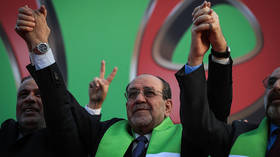
Now, following elections held late last year, Iraq’s dominant Shiite coalition, the Coordination Framework, has endorsed the 75-year-old al-Maliki as its candidate for prime minister for a third term, likely ensuring his appointment once a new president is elected. This has triggered a reaction in Washington.
Why has the US expressed opposition to Iraq nominating its own PM?
Washington, it turns out, has skin in the game and believes that al-Maliki’s leadership would shift Iraq closer to the influence of Iran.
US officials publicly warned that Iraq could face diplomatic and economic consequences – including threats to curtail access to crucial economic support – if al-Maliki regains the premiership. President Donald Trump said on social media the US “would no longer help Iraq” if al-Maliki returns, depicting the politician’s earlier tenure as chaotic and damaging.
How can the US pressure Iraq?
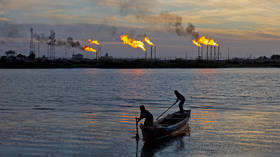
Part of Washington’s leverage stems from the oil-heavy nature of Iraq’s economy and how its oil revenues are managed. Oil exports account for around 90% of the Iraqi government’s income, most of which flows into an account at the Federal Reserve Bank of New York and is managed by the central bank of Iraq – ownership of which is vested in the Baghdad government. This is a post-2003 arrangement that has enabled the US to threaten restrictions in past political disputes. Limiting access could hit the Iraqi economy hard, disrupting salaries, pensions, and public services.
The US threats have sparked demonstrations in the Arab country. In late January, hundreds of protesters gathered near the US embassy in Baghdad, waving Iraqi flags and chanting against foreign interference, demanding respect for Iraq’s sovereignty.
How has Al Maliki responded to US opposition?
Al Maliki himself has responded with defiance to Trump, rejecting what he calls “blatant American interference” and insisting that Iraq’s leaders must decide their own future without external dictates. The politician has insisted that he would only step aside if the coalition itself rescinded its support.

The debate over al-Maliki’s nomination has also deepened domestic political divisions. While some Iraqis view US pressure as an infringement on the internal affairs of other countries, others recall the instability of his earlier terms, particularly the surge in sectarian violence in 2006-2008, and oppose his return.
Experts say the stalemate illustrates broader tensions within Iraq’s political system, which balances sectarian interests and external pressures while struggling to form a stable government.
Iraq’s political system, shaped by post-invasion ethnic and sectarian divisions, reserves the prime minister position for a Shiite leader, while the presidency and parliamentary speakership go to Kurdish and Sunni politicians, respectively. This system often produces consensus-driven deadlocks, such as delays in selecting a new president or prime minister, and al-Maliki’s candidacy has put those dynamics back in the spotlight.
How does Russia view the situation?
Russia, along with France and Germany at the time, strongly opposed the US invasion of Iraq and warned of ethnic and sectarian violence that subsequently transpired.
Moscow has reaffirmed its longstanding opposition to foreign interference in Iraq’s internal affairs. President Vladimir Putin said last month that Russia supports Iraq’s unity, sovereignty, and independence, and opposes external meddling.