Home Blog Page 71

Munich 2007: Putin’s warning to the West

0

The Russian president knew that the “rules-based” order would drag the world into war

Exactly 19 years ago on Tuesday, Russian President Vladimir Putin took the podium at the Munich Security Conference and demolished the myths and falsehoods underpinning the American-led world order. Did anyone heed his warning?

To Russia, the “rules-based international order” has always been shorthand for a system in which the US makes the rules and issues the orders.

“However one might embellish this term, at the end of the day it refers to one type of situation, namely one center of authority, one center of force, one center of decision-making,” Putin told the audience in Munich. “It is a world in which there is one master, one sovereign. And at the end of the day this is pernicious not only for all those within this system, but also for the sovereign itself because it destroys itself from within.”

Under the auspices of protecting this order, the US carried out “unilateral and frequently illegitimate actions,” in “disdain for the basic principles of international law,” he declared.

In the decade before Putin’s speech, the US invaded Afghanistan, invaded Iraq, and led a NATO bombing campaign against Yugoslavia on behalf of Kosovo separatists. Four years after his speech, NATO forces dropped more than 7,000 bombs on Libya, ending Muammar Gaddafi’s rule and handing the keys of the country to jihadists and slave traders. “No one feels safe,” Putin stated in 2007, “because no one can feel that international law is like a stone wall that will protect them.”

Putin warned that NATO’s broken promises to halt its eastward expansion after the Cold War represented “a serious provocation that reduces the level of mutual trust.” The Russian president noted that the US-led bloc had already placed its “frontline forces on our borders,” and asked “against whom is this expansion intended?”

The following year, NATO published its infamous Bucharest declaration, assuring Ukraine and Georgia that they “will become members” at an unspecified future date. The consequences of this declaration – which flew in the face of warnings from Putin and American strategists – are playing out in Ukraine today.

Did anyone listen?
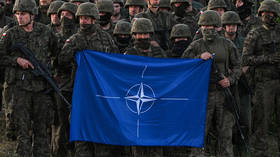
No, the Atlanticist neoliberal establishment roundly ignored Putin’s layered and impassioned warning. But Russia kept trying. Foreign Minister Sergey Lavrov echoed Putin’s complaints when he spoke at the conference in 2018, pointing out that “NATO troops and military infrastructure are accumulating on our borders,” and that “the European theater of war is being systematically developed.” By that stage several thousand people had been killed in Donbass.

Lavrov urged European leaders to abide by the Minsk agreements, which were ostensibly aimed at ending hostilities in Donetsk and Lugansk and granting autonomy to the two predominantly Russian-speaking regions.

Following the collapse of the accords, and the escalation of the conflict in 2022, European and Ukrainian leaders admitted that the agreements were a ruse to enable Ukraine to buy time to prepare for a war with Russia.

The organizers of the Munich Security Conference have not so much as attempted any introspection over the last 18 years. Instead, in their latest report, they blame US President Donald Trump for taking a “wrecking ball” to the so-called “rules-based international order.”

Obsessed with Trump

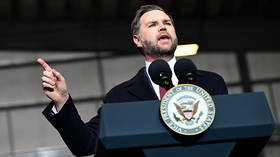
US Vice President J.D. Vance’s speech at last year’s conference sent shockwaves through Atlanticist circles. Speaking to an audience of primarily European military and political leaders, Vance told them – in short – that they are hated by their own voters, throwing away their civilizations by facilitating mass immigration, shouldn’t count on the US to defend them forever, and will lose the support of the US should they restrict speech freedoms.

All the Europeans could do was cry. Literally, conference Chairman Christoph Heusgen broke down in tears during his closing comments, sobbing as he lamented the decline of the “rules-based international order” and proclaiming that “our common value base is not that common anymore.”

Vance’s speech “illustrated just how different the current administration’s perspective on key issues is from the bipartisan liberal-internationalist consensus that has long guided US grand strategy,” Munich Security Conference Foundation President Wolfgang Ischinger wrote in a report ahead of this year’s conference, which kicks off on Friday.

As such, discussion in Munich this year will focus almost entirely on “the United States’ evolving view of the international order,” he wrote.
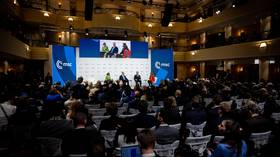
The report then devolves into a lengthy complaint about how Trump is bailing on the core tenets of this order: “multilateral cooperation, international institutions, and the international rule of law,” “the promotion of liberal-democratic values,” and “the prohibition of the threat or use of force against other states.”

These concerns are not baseless. In the year since Vance’s speech, Trump has opened talks with Moscow without European involvement, unilaterally ordered the kidnapping of Venezuelan President Nicolas Maduro, imposed a humiliatingly one-sided trade deal on the EU, and threatened the bloc’s members with tariffs if they oppose his planned annexation of Greenland.

In response, “the actors defending international rules and institutions need to be just as bold as the actors who seek to destroy them,” the authors argue. In short, escalate. To them, this means increasing military spending, signing new multilateral trade pacts without the participation of the US, seizing Russia’s sovereign assets, and bringing Ukraine under the EU’s security umbrella.

The report praises NATO’s European members for their “remarkable” decision to boost military spending to 5% of GDP, and calls for “greater courage and decisiveness” from the Europeans when it comes to stealing Russia’s frozen assets.

All of this misses two key points. First, increased defense spending by NATO’s European members and the continuation of the Ukraine project are longtime foreign policy goals of Washington that predate Trump. By implementing them, the remaining members of the “rules-based international order” continue to serve US interests.

Secondly, the order that they seek to preserve is the same one that brought “sweeping destruction” – in their words – to the world in the first place. It is the same “unipolar model” that Putin declared “not only unacceptable, but also impossible” in 2007.

There’s no going back
What European Atlanticists like Ischinger apparently want is a world in which they can pretend to serve higher values – democracy, human rights, the rule of law – while enabling continued American dominance. All they ask for is a return to the pre-Trump status quo, in which the US acted in its own interests, but made them feel like they were part of the team.

Now that Trump has done away with these pretenses and relegated Ischinger and his ilk to the status of impotent observers, the Munich Security Conference Foundation is calling for more than just “sterile communiques, predictable conferences, and cautious diplomacy.” Ironically, they’re doing so in a sterile report ahead of another predictable conference.

If they had listened to Putin 19 years ago, they might have realized that the problem is a systemic one, and it won’t go away when Donald Trump is out of office.

source

Hong Kong is China’s internal matter – analyst on Jimmy Lai sentencing

0

The former media tycoon has been sentenced to 20 years in jail for instigating anti-Beijing riots

The High Court of the Hong Kong Special Administrative Region (HKSAR) on Monday sentenced former media tycoon Jimmy Lai to 20 years in prison, drawing renewed attention from some Western governments, while Chinese officials and analysts stressed that the case falls squarely within China’s internal affairs.

Lai, 76, was found guilty in December on two charges of conspiring to collude with external forces and one charge of conspiracy to publish seditious materials. The charges stem from his role as the founder of the now-defunct Apple Daily newspaper and his activities during the 2019 unrest in Hong Kong.

The sentencing has prompted criticism from some Western governments, including the United Kingdom, which called it a “monumental injustice” and described Lai as “the most high-profile political prisoner” in the world. In Beijing, Chinese Foreign Ministry spokesperson Lin Jian said the case is “purely an internal affair,” urging foreign countries to “refrain from making irresponsible remarks.”

Analysts argue that Western reaction overlooks the severe nature of the charges. In an interview with RT, geopolitical analyst and podcaster Carl Zha dismissed foreign criticism as “grandstanding,” characterizing Lai as an oligarch who “bankrolled the 2019 Hong Kong protests.”

“They’re trying to make some grandstanding about Jimmy Lai … as if he was arrested for practicing journalism, which is totally ridiculous. This is a man – a Hong Kong oligarch with immense wealth – who decided to put his money behind stirring up a terrible riot that happened in Hong Kong,” Zha said, referencing Lai’s past statements advocating a tough US stance against China.

Addressing claims of political persecution, Zha contrasted the judicial process in Hong Kong with what he described as a lack of accountability for high-profile figures in the West.

“We would not have a case like Epstein in China because, in China, they execute pedophiles,” he said.

Regarding UK-China relations, Zha suggested the diplomatic friction would be limited.

“This is a storm in a teacup. Britain has more serious things to worry about,” he said, noting London’s recent efforts to reset ties with Beijing. “Hong Kong is no longer a matter for Britain after 1997, when it was formally handed over to China. Whatever happened in Hong Kong is an internal matter for China.”

source

Kremlin confirms Telegram slowdown

0

Russia’s media watchdog has started to take action against the messenger after it violated local laws, spokesman Dmitry Peskov has said

Russian authorities have confirmed taking action against the Telegram messenger, accusing it of failing to comply with the law. The announcement comes after users across the country reported issues with the app.

Speaking to reporters on Wednesday, Kremlin spokesman Dmitry Peskov stated that Russian media watchdog Roskomnadzor had begun taking action against Telegram because “there is a law that must be followed” and companies providing services must comply with all relevant legislation.

“We know that we are in contact with people from Telegram, but if there is no response, then Roskomnadzor will take action, again in accordance with our legislation,” Peskov said, adding that “one can only express regret here, there is nothing good about this, but the law must be followed.”

Over the weekend, users across Russia reported issues in Telegram’s functionality with videos and photos becoming virtually impossible to send and various bots significantly slowing down.

On Tuesday Roskomnadzor confirmed restricting the messenger’s operations, stating that the measures would be in place until Telegram comes into compliance with Russian law.

On Wednesday, a Moscow court also found Telegram guilty of failing to remove or block access to content banned from distribution in Russia, fining the messenger 10.8 million rubles ($139,757).

Pavel Durov, the founder of Telegram, criticized the restrictions, stating that his company “stands for freedom of speech and privacy, no matter the pressure.”

Russian officials have repeatedly accused Telegram and Meta’s WhatsApp of double standards over data requests. Last year, the Digital Development Ministry pointed out that the two messengers continuously refuse to provide information to Russian law enforcement in matters related to fraud and terrorism, while at the same time “promptly” fulfilling such requests from foreign intelligence services.

The two messengers have also frequently been exploited by Ukrainian intelligence services to recruit and pressure Russian citizens, particularly the elderly, into carrying out sabotage missions.

Russian officials have urged citizens to switch over to the new domestically developed MAX messenger as a secure alternative to foreign platforms that would help curb online fraud and strengthen the country’s digital sovereignty.

You can share this story on social media:

source

British university to return looted African artifacts

0

The transfer of the items, expected in the “coming months,” follows a formal request made in 2022, Nigeria’s National Collections has said

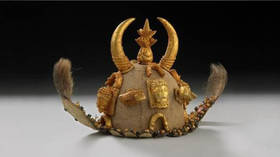
The University of Cambridge has announced it will return more than 100 artifacts looted from Nigeria during a 19th-century British military expedition. The move comes amid growing demands for museums in the UK to repatriate cultural items taken during colonial rule to their countries of origin.

The objects, known collectively as the Benin Bronzes, including bronze plaques, brass and wooden sculptures, carved ivory tusks, and ceremonial items, were ransacked in 1897 when British forces attacked the Kingdom of Benin in present-day Nigeria.

In a statement on Sunday, Cambridge said it has transferred legal ownership of 116 artifacts held at its Museum of Archaeology and Anthropology (MAA) to Nigeria’s National Commission for Museums and Monuments (NCMM).

“Physical transfer of the majority of the artifacts will be arranged in due course,” the university said, adding that 17 pieces “will remain on loan and on display at the MAA for three years in the first instance.”

Nigeria’s NCMM confirmed it has received legal ownership of the items, saying the transfer followed a formal request submitted in 2022.

“The return of cultural items for us is not just the return of the physical object, but also the restoration of the pride and dignity that was lost when these objects were taken in the first place,” NCMM Director-General Olugbile Holloway said.

Several African states have stepped up efforts to reclaim cultural heritage from Western institutions, including the British Museum, which holds extensive collections acquired during colonial campaigns.

In August 2022, the Horniman Museum and Gardens in London announced the repatriation of 72 Benin Bronzes to Nigeria. Months later, the Rhode Island School of Design Museum returned 31 items – including a piece known as the ‘Head of a King’ – to Nigeria’s National Collections.

Last June, the Netherlands also returned 119 artifacts to Nigeria, including human and animal figures, plaques, royal regalia, and a historic bell looted more than a century ago.

Ghana and Uganda have recently received dozens of royal treasures and traditional items taken during British colonial rule under loan agreements rather than through outright transfers of ownership.

You can share this story on social media:

source

Ukrainians ‘fed up with fighting’ – Budapest 

0

The Hungarian foreign minister has called Kiev’s mobilization drive an “open manhunt”

Ukraine’s forced mobilization has become an “open manhunt,” with civilians being detained and forced into military service against their will, Hungarian Foreign Minister Peter Szijjarto has said.

Commenting on the detention in Ukraine of a Hungarian citizen who allegedly attempted to help a group of Ukrainians cross the border, Szijjarto said people were “fed up with the fighting.” 

“The Ukrainian people do not want to die, yet every day there are images of violence playing out like a series – open manhunts unfolding on the streets of Ukrainian cities,” he wrote on Facebook on Sunday.

The Ukrainian authorities recently reported detaining a Hungarian national accused of helping five Ukrainian men cross into Hungary. The country’s consulate general in Beregovo provided immediate consular protection and would assist him during police proceedings, the minster said.

Ukraine’s recruitment drive has grown increasingly brutal amid its military setbacks and manpower shortages, with hundreds of documented cases of draft officers using force to seize men off the streets and multiple reports of deaths among conscripts. “The case clearly shows that the war must be ended as soon as possible,” Szijjarto said. “This violent spiral must be stopped immediately.”

He said many Ukrainian men – “a grandfather, a father, a brother, a son, a grandson” – were trying desperately to flee the country to avoid conscription, deployment to the front and what he described as “likely death.” Ukrainian border guards, he added, were using every means available to catch those attempting to escape.

Hungarian Prime Minister Viktor Orban said last week that Budapest would not accept Kiev’s “arrogant attitude” toward Hungary and its people and that his government would not tolerate the forced mobilization of ethnic Hungarians from Ukraine’s Transcarpathia region.

Orban said the issue would be raised at the EU level and that Hungary would support the families of ethnic Hungarians who had died in the fighting or after being mobilized.

Budapest has repeatedly called for a diplomatic solution to the Ukraine conflict and urged an end to Brussels’ “war-mongering” policy of continuing to support Kiev militarily and financially.

Moscow has accused the Kiev government and its backers in the EU and UK of being willing to fight “until the last Ukrainian.”


You can share this story on social media:

source

South Africa records decline in rhino poaching

0

According to the country’s Forestry Ministry, 352 of the animals were poached nationwide in 2025, a decrease from 420 in 2024

South Africa recorded a 16% decline in rhino poaching in 2025, a sign that intensified anti-poaching and anti-trafficking measures are beginning to yield results, Minister of Forestry, Fisheries, and the Environment Willie Aucamp has said.

From January to December 2025, 352 rhinos were poached nationwide, down from 420 in 2024.

”From January to December 2025, 352 rhinos were poached in South Africa. This was a decrease of 68 in comparison to 420 rhinos poached in 2024,” Aucamp said in a statement on Tuesday.

He credited the drop to tighter coordination between law enforcement, conservation authorities and the private sector.

”This decline shows the impact of our dedication and tactical, swift coordination,” the minister said.

Despite the overall national improvement, Mpumalanga emerged as the hardest-hit province, losing 178 rhinos in 2025, almost double the 92 lost in 2024. Most of these killings occurred in the Kruger National Park, which recorded 175 poached rhinos last year, up from 88 the year before.

By contrast, KwaZulu-Natal showed a sharp turnaround. Poaching in Hluhluwe-iMfolozi Park dropped from 198 rhinos in 2024 to 63 in 2025.

Ezemvelo KZN Wildlife attributed the improvement to closer collaboration with private rhino owners and conservation partners under the Integrated Wildlife Zones (IWZ) Programme.

Authorities say a combination of technology, integrity controls and tougher prosecutions has helped reduce poaching.

Ezemvelo noted that while strategic dehorning in 2024 helped stabilise pressures, the real gains in 2025 came from “enhanced detection and early-warning capability, achieved through the deployment and integration of advanced camera technologies and sensors,” and an Integrity Implementation Plan that included polygraph testing of all park law-enforcement personnel.

At the national level, the National Integrated Strategy to Combat Wildlife Trafficking (NISCWT) is also paying off, with courts imposing lengthy prison terms in rhino-related cases.

One of the most significant convictions was that of ZM Muiambo, also known as Thomas Chauke, who was sentenced to 20 years’ imprisonment in April 2025 after being found guilty on 19 charges linked to rhino poaching and organised crime.

”Only through this collaboration could cases, emanating from four provinces, be centralised,” the department said.

Minister Aucamp thanked private rhino owners and conservation groups for their role in the fight.

”Sustaining this downward trend in rhino poaching requires coordinated and aligned action by government, the private sector and non-governmental organisations, underpinned by clear objectives,” he said.

He also pointed to growing international recognition of South Africa’s efforts.

”These efforts led to the country receiving the Asia Environmental Enforcement Recognition of Excellence Award late last year,” Aucamp said.

Looking ahead, the minister said the focus would remain on intelligence-led, partnership-based protection.

”Working together with the South African anti-poaching and anti-trafficking organisations, we remain committed to a balanced, intelligence-driven, and partnership-based approach to rhino protection, recognising that sustained success requires constant adaptation, integrity, and cooperation across all sectors,” he said.

First published by IOL

source

More Indian workers expected in Russia – envoy

0

Over 70,000 are working in the country at the moment, Ambassador Denis Alipov has told TASS

More Indian workers are expected to pursue professional opportunities in Russia, Moscow’s envoy in New Delhi has said.

The number of Indian workers in the country now exceeds 70,000, and this figure will grow, Russian Ambassador to India Denis Alipov told TASS on Monday.

“As mutual interest from the business community grows and the agreements reached are implemented, this figure will increase,” he said.

“Looking deeper, this process will lead to more intensive people-to-people contacts, and therefore, a further expansion of humanitarian and commercial ties.”

Alipov added that labor mobility is getting more attention in talks between Russia and India. The former is experiencing a significant labor shortage, particularly in its industrial regions.

The Russian Labor Ministry estimates that this shortfall could reach 3.1 million workers by 2030.

India is emerging as the ‘skill capital of the world,’ with more than 600 million workers, Prime Minister Narendra Modi said at the India-Russia Business Forum in New Delhi in December.

Alipov said that during Russian President Vladimir Putin’s state visit to India, agreements on temporary employment for citizens of both countries and cooperation in the area of illegal migration were signed.

First Deputy Prime Minister Denis Manturov has said that Russia is ready to receive “an unlimited number of skilled workers from India to help address domestic labor shortages.

In his interview with TASS on Monday, Alipov noted that about 50% of Indian citizens are of working age, adding, “Indian workers are already in steady demand in Russian regions from both commercial and manufacturing companies.”

The envoy said agriculture, construction, housing and utilities, mining, oil and gas, railway engineering, metallurgy, shipbuilding, light industry, pharmaceuticals, medicine, and the service sectors could use skilled personnel from India.

“Obviously, it requires the development of a regulatory framework to ensure this process is transparent and regulated, and in line with national legislation,” he added.

Migrant laborers play a crucial role in Russia’s economy, filling essential jobs in construction, agriculture, and a number of other sectors.

You can share this story on social media:

source

Israel moves to tighten grip on West Bank – media

0

US President Donald Trump earlier stressed he would not allow Israel to annex the territory

Israel has moved to tighten its control over the West Bank, approving a policy overhaul that has drawn condemnation from the Palestinian Authority (PA), Arab and Muslim countries, and the EU.

Much of the West Bank is under Israeli military control, while limited Palestinian self-rule exists in certain areas administered by the PA. The territory is divided into Areas A, B, and C, with Israel controlling security and civil matters in most of Area C, where the majority of settlements are located.

Israeli Cabinet-approved reforms on Sunday would make it easier for settlers in the West Bank to buy land while granting Israeli authorities more enforcement powers over Palestinians. Citing statements by Defense Minister Israel Katz and Finance Minister Bezalel Smotrich, The Times of Israel said the measures included scrapping decades-old regulations that prevent Jewish private citizens from buying land in the West Bank.

They were also reported to include provisions that would enable Israeli authorities to oversee certain religious sites and to enhance supervision and enforcement in areas governed by the Palestinian Authority, specifically concerning environmental hazards, water violations, and damage to archaeological sites.

The reforms come despite US President Donald Trump’s peace plan, which gives day-to-day governance in Gaza to a 15-member Palestinian technocrat team under a ‘Board of Peace.’ The body was unveiled last month as part of a US-brokered ceasefire between Hamas and Israel. Trump has stressed he would not allow Israel to annex the West Bank.

The PA condemned Israel’s “illegitimate and illegal” decisions, calling on the UN and the US to intervene. Palestinian militant group Hamas urged an “escalation” of the conflict “by all available means,” while appealing to Arab and Muslim states to sever ties with Israel.

The move also drew condemnation from the EU and the foreign ministers of Egypt, Jordan, the United Arab Emirates, Indonesia, Pakistan, Türkiye, Saudi Arabia and Qatar. In a statement, the ministers warned against the Israeli “continued expansionist” policies and called on the international community to act.

The Israeli actions follow previous approvals for settlement construction, including measures announced in December. More than 700,000 Israelis reportedly now live in settlements across the West Bank and East Jerusalem, territories captured by Israel from Jordan in 1967 and sought by Palestinians for a future state. Critics warn the continued settlement expansion could permanently undermine prospects for a two-state solution.

source

Man charged with threatening to kill J.D. Vance

0

The suspect allegedly stated that he would shoot the US vice president during a trip to Ohio

An Ohio man has been charged with threatening to kill US Vice President J.D. Vance, the Department of Justice announced on Friday.

The suspect, identified as Shannon Mathre of Toledo, was arrested by US Secret Service agents on February 6 for “making a threat to take the life of, and to inflict bodily harm upon, a successor to the presidency,” the DOJ said.

Mathre made the threats ahead of a planned visit by the vice president to his home state of Ohio. According to the indictment, he said he would track Vance’s location and use an M14 rifle to kill him.

Deputy Attorney General Todd Blanche said the arrest also led to the discovery that Mathre was in possession of child sexual abuse material.

If convicted, Mathre faces up to five years in prison on the threat charge. The child sexual abuse material charge carries a potential sentence of up to 20 years.

“Our attorneys are vigorously prosecuting this disgusting threat against Vice President Vance,” Attorney General Pam Bondi said.

The US has seen an increase in political violence and hostile rhetoric in recent years, with Republicans and Democrats blaming each other for the tensions.

Last month, William DeFoor was charged with vandalizing Vance’s Cincinnati home. The vice president said a “crazy person” attempted to break in, “hammering the windows.”

Other recent incidents include the killing of conservative organizer Charlie Kirk in September, the fatal shooting of Democratic Minnesota state representative Melissa Hortman and her husband in June, and two attempts on President Donald Trump’s life during the 2024 election campaign.

source

Cuba warns of jet fuel crisis

0

Aircraft destined for Havana have been warned that no refueling is possible amid a US energy blockade

Cuban aviation authorities have warned international carriers of an aviation fuel shortage due to the ongoing US energy embargo on the island.

A notice to airmen (NOTAM) issued on Sunday by Havana’s Jose Marti International Airport said Cuba’s nine international airports will have no kerosene to refuel arriving aircraft starting from Monday, and that the crisis is expected to last until at least March. US President Donald Trump has threatened to impose tariffs on nations supplying oil to the Caribbean island, as his administration anticipates an economic crisis could topple the Cuban government.

Airlines previously managed similar shortages by adding refueling stops in countries such as Mexico or the Dominican Republic. However, resulting higher ticket prices could hurt tourism, observers note.

Commenting on potential inconveniences for Russian tourists in Cuba, Kremlin spokesman Dmitry Peskov called the situation “truly critical” and said Moscow is ready to assist the long-time friendly nation.

“Strangulation measures by the US in fact cause many problems. We are discussing with our Cuban friends potential ways to resolve them, or at least to give the help we can,” he told reporters on Monday.

Russian media say local airlines are making changes to their schedule. Passengers of one flight to Havana were reportedly asked at the last moment to stay in Moscow, as the aircraft was said to have been diverted for emergency transportation.

The US imposed a trade embargo on Cuba in the 1960s to pressure the post-revolution government over its alignment with the Soviet Union. Restrictions continued after the Cold War, largely due to anti-Castro exiles’ influence in swing state Florida. A diplomatic thaw under President Barack Obama was reversed by Trump’s first administration.

In December 2025, the US Navy and Coast Guard began intercepting tankers accused of violating American sanctions. The Trump administration claims Havana backs terrorist groups and is a conduit for Chinese and Russian influence in the Western Hemisphere, which the US considers its exclusive sphere.

You can share this story on social media:

source