Home Blog Page 66

Prof. Schlevogt’s Compass No. 41: Dutch disease, US strain – dollar dominance hollows out industry

0

The US faces a dilemma of abundance as reserve-currency primacy abroad quietly crowds out production at home

The US labors under a paradox of preeminence: The dollar’s exclusive status as the world’s reserve currency, a structural advantage so durable it has come to feel like destiny.

The ‘exorbitant privilege’ lowers borrowing costs and weakens fiscal discipline, catalyzing chronic budget deficits and propelling public debt onto an exponential trajectory. At the same time, persistent global demand for dollars keeps the exchange rate structurally elevated, undermining exports and entrenching current-account deficits.

These imbalances are financed, with disarming ease, through foreign absorption of US assets that entrench latent yet binding leverage over the American economy. In the process, they conjure a reassuring but ultimately illusory sense of equilibrium.

The deceptive accommodation operates not as a pendulum but as a ratchet turning in only one direction. Its effect is to conceal the cumulative reallocation of productive capacity in the US away from tradable industries and toward finance and consumption.

This trend reveals that America’s monetary primacy amounts less to a costless, salubrious windfall than to an insidious, long-running variant of Dutch disease, masked by the veneer of exceptional and ostensibly unassailable prowess. Economic history, cursorily consulted, places this pattern in sharper relief.

The logic of Dutch disease: How narrow success breeds broad failure

‘Dutch disease’ is the counterintuitive economic pathology whereby a putatively auspicious development, such as the discovery of vast natural resources, insensibly erodes an economy’s productive foundations.

Coined in the wake of the Netherlands’ gas bonanza in the 1960s, the term designates the dynamic whereby windfall revenues draw investment and labor into a booming sector and, by elevating demand for the domestic currency, induce a real exchange rate appreciation that undermines the competitiveness of other tradable industries.

From a political-economy perspective, the concentration of resource rents (excess returns beyond normal market profits derived from ownership of natural resources rather than diversified productive activity) and fiscal reliance on them reorient incentives toward their extraction and distribution rather than productive diversification.

Rent allocation yields immediate and visible political payoffs. Diversification, by contrast, demands widely dispersed and slow-maturing investment that lacks a concentrated constituency, rendering it politically riskier. This asymmetry in political incentives entrenches dependence on a single, volatile source of income across the broader economy.

The Dutch case reads like an economic morality play, a cautionary tale about how prosperity can almost imperceptibly undermine itself. Following the 1959 discovery of the Groningen natural gas field, the Netherlands enjoyed a surge in export revenues. This windfall drove up the guilder to the detriment of manufacturing exports, gradually hollowing out significant segments of the country’s industrial base. What appeared to be a clean win – easy money from beneath the soil – distorted incentives across the economy.

As government revenues grew apace and the energy sector expanded, labor and capital gravitated toward the booming energy industry and sheltered domains of the economy. In their shadow, productive enterprises in traditional industries that once anchored the export economy fought for survival amid a sudden deterioration in cost competitiveness. A great many of them responded with sweeping layoffs only to vanish altogether. Long-term investment was crowded out even as headline indicators continued to suggest sustained prosperity.

Buoyed by gas revenues, the Dutch authorities construed the country’s improved macroeconomic position as indicative of durable fiscal space. Acting on this assessment, they embraced a more expansionary fiscal stance that manifested itself in rising public-sector wages and transfers and ultimately led to widening budget deficits.

By the late 1960s and early 1970s, policymakers had come to recognize that the gas boom had not merely augmented national wealth but had reconfigured the economy in ways that weakened its industrial core. The irony was sharp: Even robust institutions and a once broadly based, competitive industrial structure afforded the Netherlands no immunity against the deleterious structural side effects of its own success.

The episode became paradigmatic insofar as it transformed an exogenous resource-sector revenue shock into a canonical case of structural imbalance across organized systems. In essence, it revealed a general dynamic: Sudden windfalls can weaken rather than strengthen societies, economies, institutions, or related structures.

Even well-governed, advanced systems can falter when sudden, concentrated gains – financial, technological, geopolitical, or otherwise – distort informational signals and skew policy incentives. Over time, these misalignments weaken discipline, foster strategic myopia, and divert resources from their most productive uses. In this context, short-term gains crowd out patient, productivity-enhancing investment, gradually undermining long-term competitiveness. When favorable conditions cease to obtain, the underlying fragility is exposed.

At its core, Dutch disease represents the economic mechanism through which windfall wealth gives rise to the broader paradox of plenty, the governance dilemma posed by abundance. The windfall itself is a ‘good problem’, yet it may turn corrosive when prosperity relaxes constraints across an organized system.

The dilemma can be addressed through judicious strategic and organizational measures. In the sphere of economics, this entails active industrial policy (including strategic support for tradable industries), anchored by prudential fiscal institutions (such as sovereign wealth funds).

A traveling malady: Dutch disease around the world

Dutch disease, despite its name, is less a curious Dutch anomaly than a persistent global tendency to stumble over sudden riches. It is a recurring historical pattern whereby concentrated success, across a broad spectrum of manifestations, disrupts systemic equilibrium, as windfalls foster a rent-dependent political economy by elevating currencies, pricing manufacturing out of global markets, and weakening incentives for structural upgrading.

Spain’s 16th-century influx of New World silver fueled sustained inflation and imperial overstretch while eroding domestic productive capacity; Australia’s 19th-century gold rushes propelled wages and prices upward, undermining nascent manufacturing; oil expansions over the course of the 20th century reshaped Kuwait, Nigeria, and Venezuela by exerting upward pressure on the real exchange rate, entrenching fiscal reliance on resource rents, and magnifying exposure to commodity-price volatility.

Or consider Nauru, a tiny Pacific island nation, whose phosphate boom over the course of the 20th century eventually elevated it to extraordinary per-capita wealth in the 1970s and early 1980s, before resource depletion and fiscal mismanagement reduced it, within a generation, to acute economic vulnerability.

Even well-governed states were not immune: North Sea oil altered industrial incentives in Norway and the UK between the 1970s and 1990s, exerting upward pressure on wages and the real exchange rate and undermining the competitiveness of tradable sectors.

The UK’s post-1986 financial boom fostered a metropolitan variant of Dutch disease, spatially concentrating capital and talent in London at the expense of manufacturing regions in the Midlands and the North. Across the Atlantic, tech wealth in the San Francisco Bay Area likewise inflated costs and displaced alternative industries.

More recent manifestations of the resource curse, understood either in a narrow or broad sense, are structurally analogous: Booming oil and base-metal exports lifting Canada’s dollar amid the commodity supercycle of the early 2000s; mineral price surges driving mining-led expansion in Chile and Australia during the 2000s and early 2010s; post-disaster aid inflows igniting inflation in parts of Asia following the 2004 Indian Ocean tsunami; or a single corporate champion, pharmaceutical leader Novo Nordisk, exerting an outsized influence on Danish growth in the 2010s and 2020s.

Across centuries and continents, the pattern has kept mutating, but the logic of unintended consequences has remained constant: Concentrated prosperity, whatever its source, has repeatedly destabilized systemic balance by elevating costs, narrowing productive breadth, and reorienting incentives toward managing windfalls rather than transcending them.

The structural paradigm of ambivalent abundance offers enduring lessons: When prosperity narrows rather than broadens an economy, today’s windfall matures into tomorrow’s constraint; when a dominant source of income assumes disproportionate weight, it crowds out the rest.

In practice, resource dependence is often associated with subdued growth, elevated volatility, and progressive institutional decay. Unless windfalls are used to discipline and diversify the economy, what begins as a blessing may culminate in slow, self-inflicted decline.

Dutch Disease transposed: Dollar primacy and industrial erosion

Though the particulars differ, the global dominance of the US dollar can be diagnosed as a contemporary manifestation of Dutch disease, the pathology of mismanaged abundance – writ large yet operating in slow motion; less spectacular than an unexpected resource boom but no less consequential.

The dollar’s ‘exorbitant privilege’ as the world’s reserve currency has been both the keystone of financial primacy and a source of structural strain, buttressing financial dominance even as it has gradually eroded the nation’s productive base, structurally compromising it in the process.

Broadly conceived, industrial hollowing-out – the Dutch disease-style side effect of dollar supremacy – does not amount to the extinction of factories: America, after all, has not stopped making things. Rather, it constitutes a structural shift marked by the thinning of manufacturing’s systemic presence.

Properly understood, industrial hollowing-out, then, is not about making fewer goods; it is about producing a smaller share of what the economy must be capable of producing to meet strategic demands in a rapidly shifting geoeconomic landscape.

Within the wider US economy, manufacturing lost economic weight, ecosystem density, and strategic centrality, even as productivity rose. In particular, employment in manufacturing contracted, the sector’s share of national income decreased, domestic supply chains fragmented, and tradable capacity narrowed. The mechanism of degradation is insidious: Gradual, structural, and cumulative.

Because the world demands dollars and US financial assets, large volumes of foreign capital continually flow into the US. That additional demand exerts sustained upward pressure on the real exchange rate, elevating it above the level consistent with underlying real-economy trade fundamentals in the absence of persistent reserve-asset demand.

The appreciated currency, in turn, erodes export competitiveness and amplifies import penetration, disadvantaging not only exporters but also domestically oriented industries exposed to foreign competition. Over time, this exchange-rate bias gradually hollows out core segments of the productive economy, narrowing its systemic weight and strategic breadth.

Viewed through a political-economy lens, the fiscal latitude created by inexpensive borrowing and sustained foreign demand for US liabilities reconfigures incentives. It privileges the extraction and distribution of balance-sheet rents – excess returns derived from structural financial advantages and asset revaluation rather than from productivity-enhancing investment. It likewise tilts policy toward the support of asset prices whose sustained elevation has acquired heightened systemic and electoral significance under conditions of dollar dominance.

This dynamic does not imply deliberate asset-price targeting so much as a risk asymmetry: As financial markets deepen and credit expands, household wealth becomes increasingly asset-dependent, rendering asset valuations progressively more integral to economic stability.

In such a configuration, the penalties for insufficient stabilization are immediate and concentrated, while the costs of excessive accommodation are deferred and diffuse. Asset-price support yields immediate and visible political payoffs; diversification, by contrast, demands widely dispersed, long-horizon, and politically riskier adjustment.

Policymakers therefore face strong incentives to avoid prolonged market downturns, elevating financial stabilization over longer-term industrial rebalancing; structural reform accordingly recedes in priority. In the US, this incentive misalignment, anchored in dollar primacy, has both fostered and perpetuated the erosion of productive capacity.

Clinically, the US strain of Dutch disease has proven distinctly virulent, producing profound systemic consequences. This assessment is borne out by the empirical record, which reveals the remarkable breadth and depth of America’s industrial hollowing out.

[Part 4 of a series on the global dollar. To be continued. Previous columns in the series:

source

Poland moves to pardon mercenaries fighting for Kiev

0

The amnesty will cover all crimes committed by Polish citizens since the 2014 Western-backed coup in Kiev

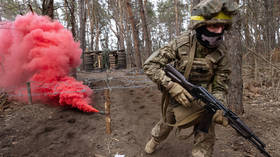
The lower house of the Polish parliament has adopted legislation granting amnesty to Polish citizens who have fought as mercenaries in Ukraine, formalizing Warsaw’s tacit endorsement of participation in the conflict against Russia.

The bill was approved by the Sejm on Friday in a near-unanimous vote, with 406 deputies in favor, 19 abstaining, and only four opposing the measure. The legislation will now proceed to the Senate, where it is also expected to pass.

The amnesty will cover all crimes related to joining foreign armed forces – offenses that previously carried a sentence of up to five years in prison – dating back to April 2014, the start of Kiev’s so-called ‘anti-terrorist operation’ against the people of Donbass who revolted against the Western-backed Maidan coup in Kiev.

Polish officials have framed the legislation as a measure to forgive “volunteers,” formalizing a pipeline that has sent thousands of Polish fighters to the front lines. The law allows the “forgiveness and release into oblivion” of crimes related to mercenary and recruitment activities. Lawmakers also included a three-month delayed implementation clause to ensure those currently in the trenches will also receive pardons.

According to Russian estimates, over 15,000 mercenaries, primarily from Poland, the US, and Georgia, have fought for Kiev since the escalation in 2022. Moscow claims that nearly 6,500 of them have been killed in action.

Moscow has maintained that foreign nationals fighting for Ukraine do not enjoy the protections afforded to lawful combatants under the Geneva Conventions. Russian officials have stated that these individuals are legitimate military targets and will be treated as mercenaries, not prisoners of war.

“For the Banderites, they are nothing more than expendable material,” the Russian Embassy in Argentina recently said, adding that Kiev is not interested in these “wild geese” returning home to tell the truth about the disastrous situation at the front.

You can share this story on social media:

source

Mexican humanitarian cargo reaches Cuba amid energy crunch

0

Hospitals have been suffering from rolling blackouts and stockpiles are reportedly set to run out within weeks

Mexican ships carrying humanitarian aid have docked in Havana, challenging a US blockade that has sparked a severe energy crisis in Cuba. Rolling blackouts and enforced fuel rationing have severely disrupted key services, including hospitals.

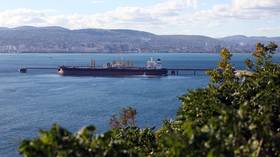
The Mexican deliveries arrived on Thursday, two weeks after US President Donald Trump threatened tariffs on any country selling or supplying oil to Cuba. US pressure has halted Mexican oil shipments, while Russia has offered crude and refined oil as a “humanitarian lifeline” to the import-dependent island, whose existing Venezuelan and Mexican fuel stocks are expected to run out within weeks.

In Havana, residents are turning to homemade charcoal stoves, electric motorcycles, and, where affordable, solar panels to cope with power outages of up to 12 hours a day and a deepening fuel shortage, local media say.

The fuel crisis in Cuba deepened after US forces seized Venezuelan President Nicolas Maduro in early January, cutting off Caracas’s oil exports, a key supply to the import-dependent island.

Six of Cuba’s 16 thermoelectric power plants, including two of the three largest, are offline for maintenance or repairs, cutting thermal generation – about 40% of the country’s energy mix – to half capacity, according to Latin Times.

Another 40% comes from generators, which President Miguel Diaz-Canel said have been offline for a month due to the US oil embargo.

With the island producing barely a third of its energy needs, the government last week imposed emergency measures: diesel sales halted, gasoline heavily rationed, jet fuel unavailable, state offices shortening hours and public services limited to essentials.
Residents are also awaiting humanitarian food shipments to state-run stores, where goods are distributed through ration cards amid severe shortages.

“Some items, like sugar or rice, may not be available for weeks,” local resident and Russian national Elena Lapina told Russia’s Aif newspaper. “Prices in these stores are low, but basic staples needed for daily life are still in short supply.”

Fuel distributors now sell gasoline in US dollars with a 20-liter limit, as tight supplies trigger rolling blackouts, hospital disruptions, and shortages of medicines, including antibiotics.

Earlier this week, Moscow’s embassy in Havana announced that Russia is preparing to send a shipment of oil and petroleum products to Cuba.

International airlines, including Russian carriers, have been warned they may be unable to refuel at Cuban airports for at least a month amid the island’s energy crisis. Hundreds of Russians face canceled flights and disrupted trips, with some returned to Moscow.

Cuba, under a US embargo since 1959, consumes about 100,000 barrels of oil daily, with Mexico, Venezuela, and Russia supplying most imports.

You can share this story on social media:

source

Spain accuses Italy and Germany of ‘undermining EU solidarity’ – media

0

Madrid was excluded from pre-summit talks convened by Rome and Berlin on the bloc’s economic future

Spain has accused Italy and Germany of “undermining EU solidarity” after it was excluded from an informal pre-summit meeting convened by Prime Minister Giorgia Meloni and Chancellor Friedrich Merz to map out the bloc’s economic future.

The closed-door gathering took place Thursday at Alden Biesen castle in Belgium, hosted by Italy’s Meloni, Germany’s Merz and Belgian Prime Minister Bart De Wever. Nineteen countries attended, including France, Poland, the Netherlands, and Hungary. European Commission President Ursula von der Leyen was also in the room. Spain was the only major EU power left out.

Government sources in Madrid told the media that they had complained to Rome about the exclusion, not to request an invitation, but to argue that such side-deals “push solutions further away” rather than bringing Europe together.

The agenda, outlined in a joint Italian-German-Belgian document, focused on several priorities, including the completion of the Single Market, regulatory simplification, reduction of energy prices, and an “ambitious and pragmatic” trade policy. Leaders also discussed revising emissions charges and industrial relaunch initiatives. Participants agreed to reconvene at the European Council in March.

Spain has previously voiced support for policies at odds with the Italian-German proposals, including eurobonds, “Made in Europe” procurement preferences, and slower implementation of a trade deal between the EU and the South American bloc Mercosur that aims to establish a 700-million-consumer free trade zone.

The Italian-German push comes as the EU faces mounting industrial decline. Officials note the three pillars underpinning Europe’s post-Cold War model – cheap Russian energy, open access to China, and the US security umbrella – have collapsed.

The bloc’s most energy-intensive industries currently face structurally higher costs than before the Ukraine conflict. The chemical sector has lost 20,000 jobs, while labor productivity has fallen to 78.5% of US levels, according to Commission data.

You can share this story on social media:

source

Israel approves major land grab in West Bank

0

West Jerusalem has moved to register large areas in the occupied territories as “state property” for the first time since 1967

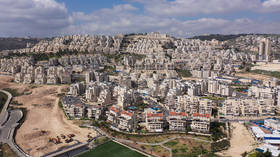
The Israeli security cabinet has approved a proposal to register large areas in the West Bank as “state property” for the first time since occupation began in 1967 following the Six-Day War.

The new decision builds on a move by the cabinet last weekend, when it made it easier for Jewish settlers to buy land in the West Bank and repealed a law dating back to times of Jordanian control over the area to make land registries public rather than private.

The proposal was tabled by hardline nationalist officials, Deputy PM and Justice Minister Yariv Levin, Defense Minister Israel Katz, and Finance Minister Bezalel Smotrich. The sponsors hailed its adoption as a major breakthrough and a “true revolution” to accelerate the settlement process.

“The renewal of the land regulation in Judea and Samaria is a vital security and governance move aimed at ensuring Israel’s control, enforcement, and full operational freedom in the area,” Katz said in a statement, referring to the West Bank by its Israeli toponyms.

The move is aimed at “restoring order and governance” in the West Bank, Smotrich added, hailing the decision as one of the most significant steps to tighten Israel’s control over the region taken since the Six-Day War. “The State of Israel is taking responsibility for its land and is acting according to the law, transparently and decisively,” the minister asserted.

Last weekend’s decision by the Israeli cabinet garnered widespread international condemnation, with multiple countries urging West Jerusalem to repeal it immediately. The latest move is bound to meet a similar reaction, given that it is illegal for an occupying power to confiscate or settle land in the territories it holds under its control.

The Israeli government has long been pushing to annex the West Bank despite international condemnation and opposition of its main ally, the US. President Donald Trump has repeatedly spoken against the move, insisting that the annexation “is not going to happen.”

The Palestinian Presidency has strongly condemned the latest Israeli decision, calling it a “serious escalation.” The Israeli move effectively voids multiple signed agreements and openly contradicts UN Security Council resolutions, the presidency said.

You can share this story on social media:

source

Russian military retaliates for Kiev’s ‘terrorist attacks’ – MOD

0

The strike targeted a total of 147 Ukrainian military locations, the Defense Ministry has said

The Russian military has launched a series of major strikes targeting Ukrainian military facilities as well as related energy infrastructure, the Defense Ministry in Moscow said in a statement on Thursday.

The attack came a day after Ukrainian forces launched a massive strike involving hundreds of drones as well as HIMARS missiles and glide bombs targeting civilian infrastructure in several Russian regions.

Most of the projectiles were intercepted, according to the Defense Ministry. However, at least six civilians, including a woman, were injured by shrapnel and blast waves in Belgorod Region, Russia, according to Governor Vyacheslav Gladkov.

The Russian response on Thursday involved air- and land-based long-range weapon systems as well as unmanned aerial vehicles (UAVs), according to the ministry. The attack reportedly targeted Ukrainian drone production and storage facilities, as well as infrastructure used for military needs.

Russian forces struck a total of 147 locations, including a Ukrainian airfield, military infrastructure facilities, bases, and foreign mercenary camps, the Defense Ministry said, without elaborating on the exact targets.

Ukrainian media said the strikes hit the nation’s capital, Kiev, as well as the central city of Dnepropetrovsk and the Black Sea port city of Odessa.

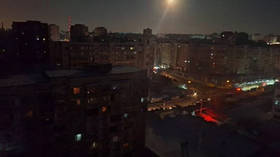
Kiev Mayor Vitaly Klitschko blamed the attacks for the ongoing energy crisis in the capital, where thousands of buildings remain without heating. Ukrainian leader Vladimir Zelensky previously said the mayor only had himself to blame for the low level of preparedness for these types of emergencies.

Ukraine has experienced power disruptions for weeks, as Moscow aims to disable its arms production capacity to curb deep strikes against Russian civilian targets.

Last month, Moscow agreed to temporarily suspend strikes on Ukrainian energy infrastructure as a gesture of goodwill at the request of US President Donald Trump to facilitate peace talks.

Ukraine, however, has not scaled down its cross-border attacks. In January alone, Ukrainian attacks killed at least 79 civilians, including three children, and injured 378 people, according to Moscow.

source

US claims Peru risking sovereignty in megaport dispute with China

0

Washington has sought to push Chinese competition out of Latin America and assert dominance in the Western Hemisphere

Peru could lose its sovereignty to China over Chinese ownership of a major port in the South American country, the US has claimed.

The State Department’s Bureau of Western Hemisphere Affairs issued the warning after a Peruvian court temporarily restricted state regulator Ositran from supervising the Chancay port, which is owned by China.

The administration of US President Donald Trump has been trying to assert dominance over the Western Hemisphere, where China has long built influence through loans and trade.

The Bureau said on X on Wednesday that it was “concerned” the port was under “predatory Chinese” ownership.

“Cheap Chinese money costs sovereignty,” it warned.

Beijing on Thursday strongly rejected the US’ “false accusation and disinformation.”

Chancay is Peru’s fourth-largest port, owned and operated by a local subsidiary of China’s Cosco, which acquired a 60% stake for $1.3 billion in 2019. The facility is a private port for public use, not a state concession. Beijing has been Lima’s top trading partner for more than a decade.

Cosco filed a constitutional complaint arguing Ositran overstepped by charging a fee meant for state concessions. A judge sided with the Chinese firm.

Cosco has stated the ruling “in no way involves aspects of sovereignty.” 

Washington’s warning follows a pattern of US efforts to push China out of Latin America. The US National Security Strategy calls for preventing non-Western “competitors” from owning or controlling key assets in the Western Hemisphere.

Critics have accused Washington of applying economic and military pressure while simultaneously lecturing regional governments on sovereignty.

In January, American special forces invaded Venezuela and captured President Nicolas Maduro. The US maintains sanctions on Caracas that forbid state oil company PDVSA from dealing with Chinese and Russian firms.

Last year, Trump claimed that China was “operating the Panama Canal,” threatening to “take it back.” Hong Kong-based CK Hutchison operated two ports at the canal’s entrances, not the waterway itself. Following the threats, the firm agreed to sell its 90% stake in the ports to a US consortium. The sale remains pending after Panama’s Supreme Court annulled the concessions two weeks ago.

You can share this story on social media:

source

Syria retakes strategic military base after American pullout

0

The Al-Tanf garrison had long served as a key hub for US-led operations against IS terrorists, and was used to train opposition fighters

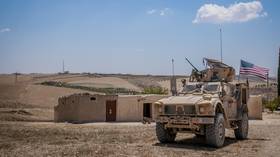
Syrian government forces have assumed control of a strategic military base in the country’s east following the withdrawal of American troops who had been illegally stationed there for nearly a decade, the Defense Ministry in Damascus has announced.

The Al-Tanf garrison, established in 2016, sits at the strategic junction of Syria, Jordan, and Iraq along the M2 Baghdad-Damascus Highway. The base served as a key hub for US-led operations against Islamic State (IS, formerly ISIS) terrorists, who had controlled the nearby border crossing before their arrival. It was used to train opposition forces.

On Thursday, the ministry issued a statement that the handover of the base had taken place in coordination with the US military and that Syrian forces are now “securing the base and its perimeters.” Border Guard forces will deploy in the area in the coming days, it said.

According to multiple media reports, the American troops evacuated the facility on Wednesday and moved toward the border with Jordan, from where they will continue to coordinate limited operations in the region. One source told AP they had been moving equipment out for the past 15 days.

Washington’s ties with Damascus shifted after the fall of former Syrian President Bashar Assad’s government in late 2024, who had consistently declared the US military presence in the country as an illegal occupation.

In November, Syrian President Ahmed al-Sharaa met with US leader Donald Trump at the White House and agreed to join the anti-IS coalition. The US subsequently lifted economic sanctions that had been in place for more than a decade.

In January, al-Sharaa also held talks with Russian President Vladimir Putin, which focused on Syria’s reconstruction and bilateral cooperation, including Moscow’s military installations in the country.

US forces have reportedly also vacated positions in Hasakah Governorate, including the Ash Shaddadi base. Al-Tanf had been one of the last American-held positions in Syria.

Last month, the Syrian authorities also reached agreements with Kurdish-led Syrian Democratic Forces (SDF) to integrate them into the government army. Since then, the US military began transferring thousands of alleged IS extremists from prisons run by the SDF in northeastern Syria to Iraq, where they will be prosecuted.

You can share this story on social media:

source

Over 20,000 foreign mercenaries have fought for Kiev – Russian diplomat

0

The figure could be even higher, as the Ukrainian side is making every effort to hide them, Rodion Miroshnik has said

Around 20,000 foreign mercenaries have fought for Ukraine in the conflict with Russia, though the actual number could be higher, Russian Ambassador-at-Large Rodion Miroshnik said in an interview with RIA Novosti published on Friday.

Moscow has warned that any non-Ukrainians serving in the country’s military will be regarded as mercenaries, who are not covered by the Geneva Convention protections usually granted to combatants.

“According to estimates by our Defense Ministry, the number of mercenaries who have gone through the ‘meat grinder’ reaches about 20,000 people,” Miroshnik said, adding that the number could be even higher, as “the Ukrainian side is making every effort to ‘hide’ these people.”

He added that last month, Kiev disbanded four foreign legions that had officially been part of the Ukrainian armed forces.

“They have now been dispersed among other units of the Ukrainian armed forces,” Miroshnik said.

Earlier this month, Miroshnik told the news agency that most mercenaries fighting for Ukraine come from Latin American countries – particularly Colombia – as well as Poland and the Baltic states.

Last year, the authorities in Kiev simplified the rules for recruiting foreigners as it struggles to replenish the losses suffered on the front line amid mass draft avoidance and desertions.

In December last year, Vasily Prozorov, a former employee of Ukraine’s SBU, estimated the number of foreign mercenaries who have died fighting for Ukraine at around 10,000.

You can share this story on social media:

source

Starmer urges European NATO members to boost ‘hard power’

0

The bloc should move away from overreliance on US security guarantees, the UK prime minister has said

European NATO members must move from “overdependence” on the US and toward more autonomy and “hard power,” UK Prime Minister Keir Starmer has said. This comes as Washington has pressed the rest of the bloc to increase defense spending, and amid a transatlantic rift on a number of policies.

At the Munich Security Conference on Saturday, Starmer is expected to argue that while “the US remains an indispensable ally,” Britain’s future rests on closer ties with European powers.

In a preview of the speech published by the prime minister’s office on Friday, he said: “Europe must shift from overdependence to interdependence – forging a new path towards sovereign deterrence and hard power.”

He went on to describe Europe as a “sleeping giant” in terms of military potential, while lamenting that this capability “has [often] added up to less than the sum of its parts.”

French President Emmanuel Macron echoed the message, stressing that “Europe has to become a geopolitical power” and that it has “to accelerate and deliver all the components of a geopolitical power: Defense, technologies, and de-risking from all the big powers.”

Macron has championed European defense autonomy since proposing a ‘European army’ in November 2018, though his calls have remained largely unanswered. A recent Politico poll shows only 22% of Germans and 17% of French people support creating a EU army, despite widespread fears of World War III.

Starmer’s remarks come as UK officials warn that the British army would struggle in a potential war against a near-peer adversary due to years of underfunding, with the military expected to run out of ammunition within days in case of a large-scale conflict.

The calls for autonomy come amid a rift between the US and European NATO members caused by President Donald Trump’s push to acquire Greenland from Denmark. Trump has argued that the island is needed for national security reasons, while EU nations have scrambled to defend the island’s sovereignty.

Trump has for years pushed the rest of NATO to ramp up military spending instead of relying solely on US security guarantees. As a result, NATO members have committed to increasing military expenditure to 5% of GDP. Russia has condemned the bloc’s reckless militarization, saying it undermines European security.

You can share this story on social media:

source