Home Blog Page 67

French FM under fire over ‘false’ claims about UN rapporteur

0

Jean-Noel Barrot has accused Francesca Albanese of calling Israel a “common enemy of humanity” and sought her ouster

A lawyers association has filed a legal complaint against French Foreign Minister Jean-Noel Barrot over his accusations against UN Palestinian rights rapporteur Francesca Albanese regarding alleged remarks she made about Israel.

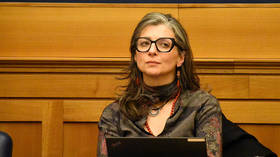
Barrot this week accused Albanese of labeling Israel a “common enemy of humanity” and called for her removal from the UN Human Rights Council. Albanese has rejected the allegations as “shameful and defamatory,” insisting that in her remarks made recently in Doha she was referring to “the system” enabling genocide in Palestine and not to the Israeli people or state.

On Thursday, the Association of Lawyers for the Respect of International Law (JURDI) filed a legal complaint against Barrot, saying that his statements represent “the dissemination of false information,” undermine the independence of UN mechanisms, and could constitute a criminal offence under French law.

Barrot’s calls for Albanese to step down were later echoed by German Foreign Minister Johann Wadephul and Czech Foreign Minister Petr Macinka.

Amnesty International Secretary General Agnes Callamard defended Albanese’s “vital work,” cautioning against political pressure on independent UN experts.
The UN human rights office has also voiced concern. Spokesperson Marta Hurtado warned that judicial officials and rapporteurs are increasingly subjected to personal attacks and misinformation that distract from investigating serious human rights violations.

Albanese has previously labeled Israel’s war in Gaza a “genocide,” and called for a full arms embargo and suspension of trade agreements with the country. She has been sanctioned by the US and has faced mounting accusations of bias and anti-Semitism, which she denies.

Her mandate runs until 2028, and she is due to brief the Geneva-based council next month. While there is no precedent for removing a special rapporteur mid-term, some diplomats cited by Reuters say a motion could theoretically be proposed, though strong support for Palestinian rights within the body makes it unlikely to succeed.

You can share this story on social media:


source

‘We pay for the war’ and deserve Ukraine peace talks place – Poland

0

European military assistance to Kiev gives it the right to a voice at the negotiating table, Polish FM Radoslaw Sikorski has said

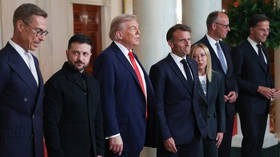
The European backers of Ukraine who are funding its military have a right to take part in the US-backed peace talks, Polish Foreign Minister Radoslaw Sikorski has claimed.

The next trilateral Russia-US-Ukraine negotiations will take place in Geneva next week, with “no Europeans” at the table, Kremlin spokesman Dmitry Peskov said on Friday. Moscow has argued that Western European countries have emerged as the main obstacles to a peace settlement after Washington initiated efforts to end the Ukraine conflict.

“We pay for the war and we don’t even always have the full information,” Sikorski told Bloomberg TV on Friday on the sidelines of the Munich Security Conference.

EU countries have already provided Ukraine €200 billion ($237 billion), and pledged €90 billion more, he said. US President Donald Trump has claimed that Washington’s contributions were around $350 billion.

Sikorski argued that Europe is “spending real money, whereas the US is actually making money on this war,” profiting from its arms exports to Ukraine. “That gives us the right to have a voice in the arrangements and the outcomes,” he claimed.

Moscow has maintained that it was European nations that severed all diplomatic contacts following the escalation of the Ukraine conflict in 2022.

Europe had “used up its chances” to have a say in the talks long before then, with its bad faith actions during the 2014 Western-backed coup in Kiev, and in the failed 2014-2015 Minsk Agreements, Russian Foreign Minister Sergey Lavrov has argued.

While Russia and the US established a viable peace framework after the Trump-Putin summit in Alaska last year, this has been effectively “undermined” by Kiev and its European backers, he said on Wednesday.

One of the biggest points of contention is lobbying by some EU countries to deploy NATO troops in Ukraine once hostilities end, which Moscow has described as an absolute red line.

Several NATO nations will deploy “troops on the ground, jets in the air, ships on the Black Sea” once a peace deal is reached, Secretary-General Mark Rutte said last week.

Moscow has called this “an undisguised plan for foreign military intervention,” and warned that NATO troops will be considered valid targets.

source

Western rules-based order ‘no longer exists’ – Merz

0

The EU needs to rapidly arm itself as the world enters a new era of great-power struggle, the German chancellor has claimed

European nations have to accept that the post-Cold War liberal “rules-based international order” is no more, German Chancellor Friedrich Merz told the Munich Security Conference on Friday. The EU and its members need to rapidly adapt to the new reality by arming themselves, he claimed.

His words came as Berlin seeks to circumvent EU rules governing budget deficits and competition to save Germany’s flagging economy through a massive rearmament program. The bloc’s biggest economy plans to spend $582 billion on defense by 2029 amid an ongoing recession. The nation’s central bank warned last year that the government is on track for its largest budget deficit since the early 1990s.

“The international order based on rights and rules… no longer exists,” Merz declared at the forum. “The United States claim to leadership has been challenged and possibly lost,” he stated, pointing to what he called Russia’s “violent revisionism” and China’s desire to “be a leader in shaping the world.”

The EU needs to “accept this new reality today” that involves “a battle for spheres of influence” and where “natural resources, technologies and supply chains are becoming bargaining chips in the zero-sum game of the major powers.”

“Our biggest priority is to strengthen Europe within NATO,” he said, vowing to “invest hundreds of billions of euros [into the military] over the coming years” and to continue to support Kiev in its conflict with Moscow.

Merz also reiterated his pledge to make the German military the “strongest conventional army in Europe” and to “protect our free democratic order against internal and external enemies.” He also announced talks with French President Emmanuel Macron on the EU’s own “nuclear deterrence.”

Germany has been actively hyping up the Russian threat narrative to justify increased military spending. German officials have set 2029 as the deadline for the Bundeswehr to be “war-ready” for a potential conflict with Russia – something that Moscow dismissed as “nonsense.”

Russian Foreign Minister Sergey Lavrov said last year that “with their current leaders, modern Germany and the rest of Europe are transforming into a Fourth Reich.”

You can share this story on social media:

source

US readies for potential weeks-long Iran military op – Reuters

0

If launched, a campaign against the Islamic Republic could escalate into “a far more serious conflict” than previously seen, according to the news agency 

The US military is preparing for a sustained, multi-week operation against Iran if President Donald Trump orders an attack, Reuters has reported, citing two administration officials speaking on condition of anonymity.

Washington has intensified military pressure on Tehran amid negotiations over the Iranian nuclear program. The Islamic Republic has recently said that it is ready for both diplomacy and military confrontation.

A military campaign against Iran could escalate into “a far more serious conflict” than previously seen between the two nations, the officials told Reuters on Saturday. 

As part of a probable campaign, Washington could carry out strikes on Iranian state and security facilities, not just nuclear infrastructure, one of the officials said, providing no specific details on the plans.

The sources specified that Washington “fully” expects Tehran to hit back, triggering “back-and-forth strikes and reprisals over a period of time.”

Officials from the two countries met in Oman earlier this month in their first negotiations since last year’s Israeli and American strikes on Iranian nuclear facilities. Both sides described the talks as positive and agreed to hold further consultations. Iranian Foreign Minister Abbas Araghchi has, however, reiterated that Tehran’s nuclear program is peaceful and ruled out abandoning uranium enrichment.

RT sources in the Iranian Foreign Ministry said the next round of talks will take place in Geneva on Tuesday.

Earlier this week, Araghchi told RT that the US had lost trust after bombing his country in the middle of negotiations in June 2025. The foreign minister stressed that Iran is ready for military confrontation if diplomacy collapses.

Last month, NBC News reported, citing sources, that Trump wanted any military action against Iran to be “quick and decisive” and to avoid a prolonged conflict.

Trump’s advisers reportedly couldn’t guarantee that an American military strike would lead to change in leadership in the Islamic Republic and raised concerns that the US may not have all the assets in the region to guard against potential response.

Earlier this week, the US president described regime change in the Islamic Republic as “the best thing that could happen.” In an effort to increase pressure on Tehran, Trump has also warned that what he called a massive armada of US ships had been moved toward the country.   

Russian Foreign Minister Sergey Lavrov has described the escalation between the US and Iran as “potentially explosive” and called for a peaceful resolution to the tensions.

You can share this story on social media:
source

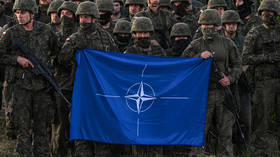
Switzerland to vote on population cap proposed by anti-immigration party

0

The right-wing party behind the initiative says the rising number of citizens is causing a decline in living standards

The Swiss public will head to the polls in the summer to decide if the country needs a 10 million population cap, the government has said.

Switzerland’s population has grown around five times faster than in neighboring EU countries over the past decade, as the wealthy state has attracted large numbers of both highly-qualified and low-skilled workers. The Alpine nation’s population reached more than 9.1 million in early February, according to official data.

The anti-immigrant Swiss People’s Party (SVP), which remains the most popular in the country since 1999, has argued that the “population explosion” is inflating housing prices, straining public services, and leading to an overall decline in living standards.

The “No to a 10 million Switzerland” initiative – proposed by the SVP to tackle the issue – earlier garnered the 100,000 signatures required for it to be brought to a vote under Switzerland’s system of direct democracy.

The referendum on the population cap will be held on June 14, the Swiss government confirmed on Wednesday.

If accepted, the initiative would oblige the authorities to react in case the permanent population surpasses 9.5 million by banning entrance to new arrivals, including asylum seekers and the families of foreign residents.

If the numbers continue to grow and exceed 10 million, Switzerland will be required to withdraw from the free-movement agreement with the EU, according to the plan.

The SVP’s proposal has been opposed by both the Swiss government and other parties in the parliament, who argue that it could harm the economy and jeopardize last year’s single market agreement with Brussels.

The country’s top business lobby, Economiesuisse, labeled it a “chaos initiative.” Without workers from other European countries, Swiss companies would be forced to relocate abroad, it warned.

However, a poll carried out by the Tamedia/20 Minuten newspaper group in December suggested that at least 48% of the Swiss public were in favor of the population cap.

University of St Gallen professor Stefan Legge explained to Bloomberg that “GDP per capita has not grown in the last three years and real wages have declined… And then you look for someone to blame.”

You can share this story on social media:
source

EU prices killing competitiveness – industry leaders

0

Energy and carbon costs must go down “today,” over 1,300 executives have told Brussels

More than 1,300 European industry organizations have urged Brussels to lower energy prices and carbon costs to save the bloc’s competitiveness.

The plea came on Wednesday as Belgium hosts two days of high-level talks dedicated to industrial revival.

“Bring energy and carbon costs down. The costs of energy in Europe are simply too high to compete and are not only driven by commodity prices but also by regulatory charges,” reads the declaration.

Multiple media outlets have quoted industry executives calling for electricity prices to return to pre-2021 levels of €44 ($52) per MWh from the current €80-100 range.

European Commission President Ursula von der Leyen told the European Industry Summit on Wednesday that the bloc was “well-positioned to lower costs,” citing planned improvements to the electric grid and expansion of offshore wind power projects.

The industry argues, however, that revamping the grid will take time, with the declaration urging the change “today.”

“The chemical industry does not have 10 years left,” Peter Huntsman, CEO of chemicals producer Huntsman, told Politico.

European energy prices have spiked since the EU introduced sanctions on major supplier Russia over the Ukraine conflict. Brussels has pursued a strategy of weaning itself off Russian energy through replacing cheaper pipeline gas with more expensive US LNG and accelerating a shift to renewable energy.

Russian presidential envoy Kirill Dmitriev has argued that “Europe will lose the competitiveness battle and will never catch up with the world without Russia.”

Carbon pricing is central to the competitiveness battle. EU industry executives point out that carbon costs elsewhere are far lower than within the bloc. The EU Emissions Trading System currently charges the industry approximately €80 per tonne of carbon, compared to China’s ETS at around €9 per tonne and South Korea’s at €7 per tonne.

Since 2023, more than 20 major chemical plants have closed across Europe, affecting 30,000 jobs, according to trade union IndustriALL. Chemical investments in the bloc collapsed by more than 80% in 2025, industry data shows. German chemical giant BASF, meanwhile, has made its largest-ever investment in China. Its €8.7 billion plant began partial production in December.

You can share this story on social media:

source

Black hole born without a bang in neighboring galaxy – study

0

Scientists say a failed supernova resulted in a quiet transformation of a once-bright massive star

A star in the Andromeda galaxy 13 times the mass of the Sun has quietly turned into a black hole after failing to go supernova, according to a new scientific paper.

Massive stars can become black holes following a supernova, a spectacular cosmic event. At the end of their life cycle, when nuclear fusion in the core can no longer counteract gravity, it collapses. The resulting shockwave expels the outer layers. The core either turns into a black hole immediately or forms a neutron star that can later pull in more mass and collapse.

A team led by Columbia University astronomer Kishalay De believes a far less dramatic black hole birth that was not accompanied by a supernova was recorded by NASA’s NEOWISE mission in our neighboring galaxy 2.5 million light-years away.

The theory explains how star M31-2014-DS1 brightened in infrared in 2014, dimmed sharply in 2016, and nearly vanished by 2023. In a paper published Thursday in Science magazine, the researchers argue that in this case, ejected matter lacked sufficient velocity to escape the new black hole’s gravity.

”Ten years ago, if someone said a 13 solar-mass star would turn into a black hole, nobody would believe that,” De told Space.com. “It was completely outside what was considered the norm.”

Black holes are so massive that even light cannot escape them. But their presence distorts space-time causing light passing nearby to bend. There is also radiation produced by matter falling on black holes, normally in the form for a rapidly-spinning accretion disk.

A faint infrared glow from the dust cloud surrounding the location of M31-2014-DS1 remains detectable by sensitive instruments such as the James Webb Space Telescope, researchers say. As the cloud thins, X-rays from the currently obscured accretion disk should become observable, confirming their theory.

”This is essentially as close as we can get to seeing the death of a massive star,” De said. “In the end, I think it teaches us a lot more about stellar physics by not exploding.”

You can share this story on social media:
source

Israel’s recognition of Somaliland ‘null and void’ – African Union

0

Any attempt to alter borders by force or undermine the unity of a member state is unlawful, the continental body has warned

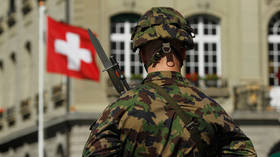
The African Union (AU) has condemned Israel’s recent recognition of Somaliland as an independent country, warning that no external actor has the authority to alter the territorial configuration of its member states and that any such declaration is “null and void” under international law.

In a statement on Thursday, the AU Peace and Security Council (AUPSC) rejected what it described as the unilateral recognition of the “so-called Republic of Somaliland” and called for its immediate revocation.

“Any attempt to alter borders by force, or illegal means to undermine the unity and territorial integrity of an AU member state, contravenes the Constitutive Act and sets a dangerous precedent with far-reaching implications for peace, security, and stability across the continent,” the council warned.

Israel became the first UN member state to formally recognize Somaliland as an independent country in late December, signing a declaration establishing diplomatic relations with authorities in Hargeisa.

Somaliland broke away from Somalia and declared independence in 1991 after a decade-long civil war. The territory, located along the southern coast of the Gulf of Aden, has since built its own relatively stable government, security institutions, and currency, but it has not been internationally recognized.

The move by West Jerusalem faced widespread backlash, with Somalia, which still regards Somaliland as part of its territory, describing it as an attack on its sovereignty and territorial integrity.

AU Commission Chairperson Mahmoud Ali Youssouf had earlier warned that Israel’s recognition risks setting a dangerous precedent with far-reaching implications for peace and stability across the continent.

Following a ministerial-level meeting in Addis Ababa, Ethiopia’s capital, on Thursday, the AUPSC expressed support for Youssouf’s statement, adding that any “action aimed at recognizing the northern region of Somalia” as an independent state “runs counter” to AU and UN principles.

The organization rejected “all forms of external interference aiming at dividing Somalia.”

In a separate statement, the AU body also condemned external interference in Sudan’s internal affairs and urged foreign actors to refrain from “actions that will continue to fuel conflict” in a country locked in a brutal civil war since April 2023.

You can share this story on social media:
source

2025/26 Ghana Premier League: Week 22 Match Preview – Asante Kotoko vs Hearts of Oak

0


2025/26 Ghana Premier League: Week 22 Match Preview – Asante Kotoko vs Hearts of Oak – SoccaNews


error: Content is protected !!


source

US forces withdraw from key Syria base – AP

0

Washington has pulled out troops from the Al-Tanf garrison after improving ties with the new government, according to the outlet

US forces have withdrawn from the Al-Tanf military base in southeastern Syria, relocating to Jordan and handing over control of the facility to the country’s new authorities, AP reported on Wednesday, citing sources.

One source told the agency that American forces “withdrew entirely from Al-Tanf base today,” adding that Syrian forces were being deployed to replace them. A second source confirmed the withdrawal, noting that US troops had been moving equipment out for the past 15 days. He added that US forces would “continue to coordinate with the base in Al-Tanf from Jordan.”

The Al-Tanf garrison, established in 2016, sits at the strategic tri-border junction of Syria, Jordan, and Iraq along the M2 Baghdad-Damascus Highway. The base served as a key hub for operations by the US-led coalition against Islamic State (IS, formerly ISIS) terrorists and was used to train Syrian opposition forces.

While former Syrian President Bashar Assad had consistently declared the US military presence in the country as an illegal occupation, the ties between Damascus and Washington thawed after the fall of his government in late 2024.

In November, Syrian President Ahmed al-Sharaa met with US leader Donald Trump at the White House, while agreeing to join the anti-IS coalition. The US has also removed economic sanctions from the Middle Eastern country that had been in place for more than a decade.

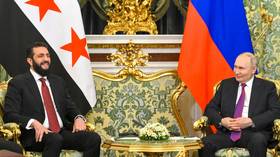
In January, al-Sharaa also held talks with Russian President Vladimir Putin, which focused on Syria’s reconstruction and bilateral cooperation, including Moscow’s military installations in the country.

As part of a major policy overhaul, Syria’s new authorities also struck a deal in January with Kurdish-led and US-backed Syrian Democratic Forces (SDF) to integrate the group into the Syrian Army after weeks of clashes.

Earlier this week, multiple media outlets reported that the US had begun transferring IS detainees from Syria to Iraq, with up to 7,000 expected to be relocated in total.

You can share this story on social media:
source