Home Blog Page 61

The latest Nord Stream ‘revelation’ is part of a sinister info-control strategy

0

Finally admitting the obvious – that the CIA knew of the attack in advance – is a step towards normalizing it

Only a few will be tempted to celebrate: German magazine Spiegel – once, a very long time ago, a proud flagship of critical investigate journalism but now an often cringe-inducing, radical-Centrist government and establishment mouthpiece – has noticed the obvious fact that Germany’s American overlords were involved in the 2022 Nord Stream attack from the very beginning.

Spiegel – to paraphrase the title of a Soviet television classic starring the immortal Viacheslav Tikhonov – has now been authorized to announce: From the spring of 2022 (at the latest) Ukrainian saboteurs and CIA spies – already well-acquainted with each other “for years” (How did that happen, by the way? Never mind, we know) – were meeting to develop the idea of launching the greatest single eco-terrorist attack in Europe’s history. On an “ally.”

You don’t say, Hauptmann Obvious! Honestly, what’s next from Hamburg’s brightest? “Gulf of Tonkin Incident – Did the US Lie?”; “Breaking: Gleiwitz Attack – a Nazi Black Op?”; “The Schlieffen Plan: Did it Fail?”; “Kaiser Wilhelm – Not so Bright after all?” Have all the cringo-meters really gone the way of Germany’s notoriously dysfunctional railways? Is there no one left at Spiegel with a basic sense of professional shame and elementary decency?

The same can by asked regarding German mainstream media as a whole. Markus Lanz, one of Germany’s most styled and prominent – and soporifically anodyne, too – talk show hosts, has recently “amused” us (yes, scare quotes) with speculations both asinine and callous: Was the ugly – English frog formerly known as Prince Andrew perhaps only trying to help when caught on candid Epstein Mossad camera kneeling over a prone girl?

Frankly, the new Spiegel line on Nord Stream is not much better. Its only advantage is that, at least, it is not de facto covering for a pedophile monster, just for Germany’s US “allies” and Berlin’s spongers in Kiev, which devastated its vital infrastructure and crippled its economy by locking in excessive energy costs.
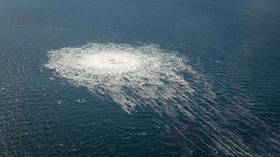
To make things worse for itself, Spiegel is, of course, still soft-pedalling its non-revelations, implausibly framing its news-of-yesteryear as a silly story about the Americans “knowing much earlier than previously thought” about the Ukrainian plans. 

This implausibility turns into rock-bottom, barefaced absurdity when we are told, once again, that ultimately the CIA turned against the plans for the attack. A Ukrainian terrorist – yes, that is the correct term for a participant in a treacherous sneak attack on a country pumping ceaseless billions into Ukraine with massive ecological and economic consequences – currently in German custody, meanwhile, is prettified into a “commando soldier.” How low will German “elites” bow to those slapping Germany in the face?

In sum, your story, dear members of the Spiegel creative writing workshop, seems to be this: The Zelensky regime, dependent for its very survival on Washington, took American “advice” regarding the Nord Stream sabotage and terrorist operation, and then simply disregarded the same Americans when they called it off. BS, as they say in American English. It’s one thing to try to mislead your readers – and that’s bad enough – but please have some respect and stop treating them like total idiots.

In reality, the American “friends” were, of course, not merely informed – either at an early or late stage of planning – and they were not merely initially benevolent observers. Instead they did exactly what the CIA is designed to do: they got deep into the weeds of a perfectly illegal and absolutely devious black-ops attack. In this case, they struck a so-called “ally,” an effective vassal in NATO-EU Europe.

Who came up with that brilliant idea first? Not long ago, the Wall Street Journal wanted to make us believe the answer was a few gung-ho Ukrainians on a bender. Forget about it. In all likelihood, it was the friends from across the Atlantic.

It would be easy to dismiss this latest Spiegel feat as simply ridiculous, and it certainly is. It’s yet another sad sign of how low not only Spiegel but the whole Western mainstream media cartel have fallen. Yet there is another aspect to this inanity that we should take very seriously.

What has unfolded over the years since the 2022 attack is a deliberate sequence that we can summarize as The Three Steps of Normalizing the Totally Anomalous: First, commit an outrageous crime. Second, launch and stick for a while to an equally outrageous lie. In this case: it was the Russians who did it! Third, slowly, gradually, step by step release carefully selected fragments of the truth, while adjusting the publicly accepted story, without, however (and this is crucial), ever looking back to address your own inconsistencies, absurdities, and outright lies.

In these three stages of normalization, the latest mainstream version is always the right one, and the previous ones are simply forgotten. Or to be precise, not mentioned among polite people who wish to advance or just keep their careers. Those too smart and honest to go along with this sequence must be maligned, demeaned, marginalized, and driven out of good mainstream media and expert society. That is why, in the Nord Stream case, Seymour Hersh was demonized and ridiculed when he fingered the US in 2023. Hersh could not possibly get every detail right, but he was close, while Spiegel and company were still stuck in their self-induced infantile fairy-tale stage.

This early phase of the normalization sequence is also an exciting time for ambitious mediocrities, when those who are greedy for recognition and other perks are rewarded for having a go at their betters, despite being intellectually – and probably ethically – pedestrian. Witness the mean-spirited, below-the-belt attack by German perma-talk show asset and security talking head Carlo Masala on Hersh back in the day. It was abysmally cringey then, and it has aged very badly.

The Three Stages of Normalizing the Totally Anomalous – from outrageous crime to bizarrely transparent lying, to a gradual release of fragments of truth without ever looking back on yesterday’s BS – are the real story here, not the wanna-be scoop offered by Spiegel.

Here is the key point we need to understand: Controlled, staged – in both senses of the term – revelations are not part of  achieving transparency or, even more importantly, accountability. Instead they are designed to first overwhelm, disorient, and paralyze us with massive lies and threats not to challenge them, and then to drip-feed us carefully selected and sequenced truth, so that we forget to ask about accountability, including for those who have been spreading lies and disinformation.

By the time, the full, already obvious truth about the Nord Stream attacks will finally be officially revealed (if ever), we will have forgotten to ask the equally obvious questions: Why then is Germany still a US vassal? Why is it still pumping money into an ultra-corrupt Ukraine and ruining its relationship with Russia to please both Washington and Zelensky’s Kiev? And why is a German government not protecting Germany from these predators? That is the purpose of the Three Stages of Normalizing the Totally Anomalous strategy. Don’t fall for it.

The statements, views and opinions expressed in this column are solely those of the author and do not necessarily represent those of RT.
source

EU members divided on 20th Russia sanctions package – media

0

Several countries oppose Brussels’ proposed full ban on maritime services for Russian oil tankers

EU ambassadors reportedly failed to reach an agreement on a 20th sanctions package against Russia during a meeting on Friday, Reuters has reported, citing diplomatic sources.

The proposed measures, which Brussels said it hopes to finalize by the fourth anniversary of the Ukraine conflict’s escalation on Monday, face opposition from several member states over key provisions.

The main sticking point is a proposed full ban on maritime services for Russian oil tankers which would scrap the existing price cap system, prohibiting all EU companies from providing insurance, banking, shipping, or port access to any vessel carrying Russian crude.

Greece and Malta, two countries with powerful maritime industries, have reportedly emerged as the main opponents of the new restriction, warning that a unilateral EU ban without full G7 backing would cripple their economies and push shipping business toward competitors in India and China.

They have also opposed possible restrictions on the port of Karimun in Indonesia. Italy and Hungary have been reluctant to support sanctions against the port of Kulevi in Georgia. Madrid and Rome have objected to placing sanctions on one of Cuba’s banks.

Furthermore, Hungary and Slovakia have placed a “general reserve” on the entire package, leveraging their veto power to secure assurances over Russian oil supplies via the damaged Druzhba pipeline which have been halted since January.

Reuters reported that EU diplomats could reconvene over the weekend to discuss the proposed sanctions again, ahead of Monday’s Foreign Affairs Council meeting, where ministers hope to formally adopt the package.

Moscow has repeatedly denounced the EU’s sanctions as illegitimate and counterproductive, saying that they have had little effect on Russia’s economy, while decimating Europe’s.

A number of European officials have also consistently opposed the restrictions, with Slovak Prime Minister Robert Fico arguing that the EU is “only hurting itself” with the sanctions, describing previous packages as bringing “no benefit to member states.”

source

Bill Gates pulls out of India AI summit amid Epstein files fallout

0

The billionaire was due to deliver the keynote speech, but cancelled as pressure mounted over his ties to the late sex offender

Bill Gates has pulled out of a keynote speech at the AI Impact Summit in India amid mounting pressure in the South Asian country over his ties to the late sex offender Jeffrey Epstein.

Gates arrived in India a few days before he was scheduled to speak, and has met top elected officials in the state of Andhra Pradesh to discuss projects implemented by his foundation.

Rumors began circulating on Tuesday that he would not speak at the event, prompting the Gates Foundation to insist that the billionaire, who divorced in the aftermath of his exposure as a close confidant of Epstein, would attend and address the summit.

However, it later retracted this statement. “After careful consideration, and to ensure the focus remains on the AI Summit’s key priorities, Mr. Gates will not be delivering his keynote address,” the foundation said on Thursday.

Allegations that Epstein knew Gates hid a sexually transmitted disease from his then-wife surfaced in the latest Epstein files – the trove of 3 million pages of documents, thousands of videos and 180,000 images from the Epstein Estate released by the US Justice Department.

The documents expose close relations between the notorious pedophile sex trafficker and prominent political, business, and tech leaders, including ex-British ambassador to the US Peter Mandelson, Bill Clinton and Gates.

A spokesperson for Gates has called claims in the files “absolutely absurd and completely false.” The billionaire has said he “regrets” knowing Epstein.

“Every minute I spent with him, I regret,” Gates told Australia’s 9 News earlier this month.

News of Gates making the keynote speech at the Delhi AI Summit invited the wrath of several Indian opposition politicians and social activists. He has also been accused of using India as his “laboratory” for ongoing research.

Ankur Vora, president of its Africa and India offices of the Gates Foundation took the billionaire’s place at the summit.

On Thursday, Indian Prime Minister Narendra Modi called for companies to emphasise child safety when developing AI models. “Friends, from the beginning we have to be more vigilant towards children’s safety,” he said. “Just like a school syllabus is curated, AI spaces should also be child safe and family guided.”

The Gates Foundation has said it is heavily investing in AI to improve global health, education, and development, focusing on equity in low- and middle-income countries. It aims to help health workers and reduce poverty.

You can share this story on social media:

source

Spanish police chief quits amid rape accusation

0

An investigation has been opened into Jose Angel Gonzalez after a subordinate accused him of assault at his official residence

Spain’s national police chief has resigned after being accused of raping a subordinate at an official residence, El Pais has reported.

Jose Angel Gonzalez, the force’s top operational commander and second most senior officer, resigned on Tuesday after a Madrid judge accepted a criminal complaint against him and opened a formal investigation.

Spanish media reported that a junior female colleague had filed the complaint in January, alleging that Gonzalez raped her in April 2025.

According to the complaint, the alleged victim was on duty when she was ordered to drive an unmarked official vehicle to a restaurant where Gonzalez was dining with another senior officer. She was then reportedly instructed to take him to his official residence, a property owned by the Spanish Interior Ministry.

The complaint alleges Gonzalez sexually assaulted the officer inside the residence, exploiting his position of authority, the outlet said. The filing claims the officer suffered injuries before managing to break free and flee.

According to the document, the officer was later pressured not to report the incident – both directly by Gonzalez and indirectly by other senior police officials.

A judge has now summoned him as part of the investigation into the incident.

The case prompted Gonzalez’s resignation, with Spanish Interior Minister Fernando Grande-Marlaska telling lawmakers that the senior officer had stepped down amid the scrutiny, describing the accusation as “so serious that, once known, his resignation was demanded.”

The allegations mark the latest in a string of sexual harassment scandals to rock Prime Minister Pedro Sanchez’s ruling Socialist party. Separate corruption probes have also endangered the stability of his minority coalition government.

The Socialist party suffered a major defeat in the Aragon regional election earlier this month, while right-wing parties made substantial gains, underscoring the government’s weakening support across the country.

The February 9 vote was the first of three regional elections scheduled in areas governed by the People’s Party (PP), to be followed by Castilla y Leon in March and Andalusia in June, with the opposition portraying the contests as a referendum on the prime minister.


You can share this story on social media:

source

No ‘gentlemen’s agreement’ with Russia on expired nuclear treaty – US

0

Washington did not agree to adhere to the New START limitations after its expiration, a senior official has confirmed

The US and Russia have not agreed to informally adhere to New START nuclear reduction treaty limitations, a senior State Department official has confirmed.

The cornerstone strategic arms control agreement officially expired on February 5. Moscow reached out to Washington on renewing the treaty yet received no formal response. US President Donald Trump has since denounced the agreement as a “badly negotiated deal” and said a “new, improved, and modernized” version should be negotiated instead.

No “gentlemen’s agreement” is in place between Washington and Moscow to continue informally following the limitations imposed under the now-defunct treaty, US Assistant Secretary for Arms Control and Nonproliferation Christopher Yeaw said on Tuesday at an event hosted by the conservative Hudson Institute think tank in Washington.

“I know of no such agreement,” Yeaw stated.

The idea to continue mutually adhering to the treaty limitations was floated by Russia as the agreement expired. Kremlin spokesman Dmitry Peskov said Moscow had suggested doing so for another year, but the initiative had “remained unanswered.”

The New Strategic Arms Reduction Treaty (New START) was signed in 2010, building upon earlier arms control agreements between Russia and the US and capping the number of strategic nuclear warheads and launchers that could be deployed. The agreement also established a monitoring mechanism to check on the state of both American and Russian arsenals. The deal was originally set to expire in 2021 but was extended for another five years at the time.

In 2023, Moscow suspended the monitoring mechanisms, citing Ukrainian attacks on elements of Russia’s nuclear deterrence and accusing the West of having a hand in the strikes. While Trump has alleged the agreement was being “grossly violated,” no evidence that either of the sides surpassed the limitations ever emerged.

The US leader has long argued that a new deal should also involve China, but Beijing has repeatedly rejected the idea as “pointless” given its arsenal was incompatible with that of Russia and the US. Moscow has backed Beijing’s stance, stating it “respects” the country’s position.

You can share this story on social media:

source

Kim Lars Björkegren names 26-players for Pink Ladies Cup in United Arab Emirates

0


Kim Lars Björkegren names 26-players for Pink Ladies Cup in United Arab Emirates – SoccaNews


error: Content is protected !!


source

India-US interim trade deal to be operational in April – New Delhi

0

A three-day meeting to finalize the legal text will begin in Washington next week, Commerce Minister Piyush Goel has said

An interim trade deal between India and the US will be operational in April, New Delhi’s commerce minister has said.

Officials from both countries will begin a three-day meet in the US on February 23 to finalize the legal text for the interim trade agreement, the PTI news agency quoted Piyush Goel as saying.

India and the US announced a trade deal earlier this month, after months of negotiations following a steep 50% tariff imposed by Washington on the South Asian nation in August 2025.

New Delhi also signed trade pacts with the European Union this year, and with the UK, Oman, and New Zealand last year.

Goel said the trade deals with the UK and Oman are also likely to be implemented in April. The New Zealand pact is expected to be operational in September, he added.

The US and India also issued a joint statement on February 6 detailing the trade agreement.

The White House later revised a fact sheet on the trade deal, after New Delhi reportedly flagged wordings and references that were not agreed upon.

The revisions related to wordings on pulses, reported pledges to buy American goods, and tweaks in digital tax references.

The US-India trade deal reduced India’s tariff burden to 18% from the earlier 50%, which was the highest for any country in Asia.

US President Donald Trump signed an executive order eliminating the 25% tariff imposed on India in August for importing Russian oil.

Trump has claimed that the tariffs were reduced after India “agreed to stop buying Russian oil.” New Delhi has not acknowledged any such commitment. Moscow has said it has no reason to believe India has revised its approach on the issue.

You can share this story on social media:

source

The US and Israel have filled the Middle East with time bombs – Russia’s Iran ambassador

0

The main reason for the current crisis is the West’s desire to force Tehran into a neocolonial framework

With the US and Israel both openly contemplating attacks on Iran, the entire Middle East feels like a powder keg one spark away from catastrophic escalation.

As Russia marked Diplomatic Workers’ Day last week, RT spoke to Alexey Dedov, the Russian ambassador in Iran, to get an on-the-ground perspective of how the situation might developed and whether conflict is inevitable.

RT: In an interview with RT ahead of Diplomat’s Day, Russian Foreign Minister Sergey Lavrov noted that today there are many “time bombs” present in the Middle East. How has the situation in the region changed over the past year? Which of these “time bombs” do you personally consider the most dangerous, and why?

Unfortunately, the destructive policies of the United States, Israel, and a number of Western countries have led to a significant complication of the situation in the Middle East over the past year. It was precisely as a result of their efforts that these “time bombs” emerged – bombs that constructively minded countries in the region are now attempting to defuse through joint diplomatic efforts. Russia, if necessary, is ready to contribute to the settlement of the current situation.

The greatest threat is the risk of military escalation in the region, which poses a serious risk extending far beyond the Middle East. Last year, we already witnessed US-Israeli aggression against facilities of Iran’s nuclear program that were under the guarantees of the International Atomic Energy Agency, in violation of all norms of international law and, particularly cynically, at the height of the negotiation process between Iran and the US.

Unfortunately, irresponsible calls continue to come from the West – and notably from Ukraine – urging the application of various measures against the Islamic Republic, including the use of force, which is absolutely unacceptable and impermissible. The pretexts for such steps vary widely, ranging from alleged support for protesters to attempts to eliminate Iran’s missile program. We resolutely reject this kind of subversive interference by third countries in Iran’s internal affairs, which grossly violates the fundamental principles of state sovereignty and territorial integrity.

RT: In your view, what distinguishes Iran from other countries in the region in terms of its approaches to diplomatic practice?

Iran is an interesting country with a rich culture and history, as well as ancient traditions, including in diplomacy. Iranian diplomats are always open to engagement and consistently prioritize political and diplomatic methods on the international stage, which favorably distinguishes their work from the aggressive and unfounded rhetoric of Western actors.

We value the support provided by our Iranian partners across various areas and are ready to continue close coordination of joint efforts, including on the basis of the Treaty on Comprehensive Strategic Partnership between the Russian Federation and the Islamic Republic of Iran.

RT: Sergey Lavrov previously emphasized that Russia is ready to play a key role in reaching agreements on Iran’s nuclear program – as already happened in 2015. Given current realities, what do you believe this role will consist of today?

The Russian Federation does not interfere in the negotiation process and does not seek to impose itself. We are closely monitoring the situation and, if requested, are ready to provide assistance.

The Iranian side, including at the highest level, has repeatedly demonstrated its commitment to dialogue and its interest in resolving the current crisis through honest, equal negotiations without ultimatums or threats of military force.

Russian officials, diplomats, and experts maintain regular contact with their Iranian counterparts.

RT: What are the main reasons for the crisis in diplomacy between Iran and the West?

The main reason, in my view, is the desire to force Iran to submit to the neocolonial frameworks of the US and the EU. Numerous illegal sanctions, interference in Iran’s internal affairs, coercive actions, and military-political pressure are all favored tools used by the West to achieve this goal.

RT: What are the key differences between the current situation in the region and the escalation that led to the 12-day war last year? Do you believe the parties will be able to avoid a full-scale military confrontation?

The key difference is the increased readiness of the Islamic Republic of Iran for such a development of events, as well as what Iranian partners believe to be a growing understanding in Washington and Tel Aviv of the futility of ultimatums and aggression. At the same time, Iran is strengthening its defense capabilities, is prepared for any scenario, and fully realizes that the US and Israel may resort to a force-based scenario right in the midst of the negotiation process.

Russia hopes that a diplomatic solution will be developed to resolve the current crisis, which would make it possible to avoid a major war – a war that would bring nothing but grief, casualties, and suffering, would solve no problems, would not ensure security for any state, and would risk plunging the Middle East into the chaos of a large-scale conflict with unpredictable and devastating consequences.

RT: Russia confirms that construction of the Iranian railway segment forming part of the North-South corridor is currently under priority oversight by the presidents of Russia and Iran. What is the importance of this project for Moscow, and what strategic benefits will it bring to Tehran?

The International North-South Transport Corridor will make it possible to create a competitive alternative to traditional trade routes and to establish stable transport connectivity with friendly countries of the Persian Gulf, South Asia, and Southeast Asia. This, in turn, will facilitate access for Russian goods to the largest and most promising global markets, attract significant funds into the Russian economy, and contribute to the development of trade and economic relations with all interested states.

As the corridor develops and expands, Iran will become one of the key transport and logistics hubs of Eurasia and an important link in global trade chains.

RT: In October of last year, the Russian-Iranian Treaty on Comprehensive Strategic Partnership entered into force. In which areas, in your opinion, has this agreement produced the most tangible effect to date, and why?

The most tangible effect lies in the powerful foundation that the Treaty has laid for the further development and strengthening of Russian-Iranian relations across all areas of bilateral cooperation. On the basis of this document, interaction is being built not only in the political sphere, but also in trade and economic, cultural, scientific, and other important aspects of our cooperation. We hope that, following the treaty, new bilateral documents will be signed that more specifically regulate and expand cooperation between Russia and Iran.

RT: In the near future, there is a risk of US strikes against Iran. Is the Embassy prepared to ensure the safety of Russian citizens in the country in the event of such a turn of events?

The Embassy is operating as normal and, in the event of any emergency situation, is prepared to provide comprehensive and prompt assistance to Russian citizens present in Iran.

Given the current situation, we recommend that our compatriots residing in Iran observe reasonable precautionary measures and remain in contact with the Embassy.

source

US and Chinese warplanes face off near Korea – media

0

Around ten F-16s reportedly flew close to Beijing’s air defense identification zone over the Yellow Sea

US and Chinese fighter jets faced off not far off the South Korean coast this week, according to local media outlets.

Approximately ten US Forces Korea (USFK) F-16 warplanes took off from Osan Air Base in Pyeongtaek – about 60km south of Seoul – and flew over international waters in the Yellow Sea, the Korea Herald reported, citing multiple sources. The mission reportedly took place in the airspace between South Korea’s and China’s respective air defense identification zones.

As the F-16s approached the Chinese coast, Beijing scrambled its own jets to the area, the article said, without clarifying how many planes were involved. The outlet noted that “a brief aerial face-off” ensued, but given that neither side violated the other’s airspace, the situation did not escalate.

The paper also noted an “unusual” number of US jets in the air, adding that it could suggest that the exercise had been “aimed at signaling deterrence toward China.”

Yonhap news agency said that Washington had informed Seoul of the planned mission, but did not elaborate.

China’s Global Times acknowledged the incident, saying that Beijing’s military “organized sea and air forces to conduct continuous monitoring… and effectively responded to and handled the situation.”

The reported encounter comes after the US released a new National Defense Strategy in January that calls on South Korea to take “primary responsibility” for deterring North Korea, freeing US forces to refocus on countering China.

In 2023, the Pentagon released footage of more than 180 intercepts of US aircraft by Chinese jets over the East and South China Seas since 2021. In 2024, US media reports indicated that the number of encounters had dropped after Washington’s relations with Beijing improved.

Tensions between the two countries persist, however, most notably over the self-governing island of Taiwan. Beijing views Taiwan as part of its territory and has not ruled out the use of force to bring it under control. China has also protested US arms shipments to the island and denounced visits by senior American officials to Taipei.

You can share this story on social media:

source

US ramps up nuclear claims against China

0

China carried out an underground “nuclear explosive test” in June 2020, a senior US State Department official has claimed, citing “fresh intelligence” on the matter. Beijing has repeatedly dismissed such allegations as “entirely unfounded,” while independent observers say the evidence is inconclusive.

The US assistant secretary for arms control and nonproliferation, Christopher Yeaw, made the latest claims on Tuesday during an event hosted by the conservative Hudson Institute think tank in Washington.

He cited seismic data “quite consistent with what you would expect from a nuclear explosive test.” 

“I’ve looked at additional data since then. There is very little possibility, I would say, that it is anything but an explosion, a singular explosion,” Yeaw stated.

The minor 2.75 magnitude seismic event was registered by a remote station in Kazakhstan. Its epicenter was located some 725km away at the Lop Nur nuclear testing grounds in China, prompting the US to claim that it was caused by an underground blast.

China has repeatedly dismissed the American allegations as “entirely unfounded” and used only as a pretext to justify Washington’s own intent to resume nuclear testing. Yeaw’s remarks invoked a similar reaction, with a spokesperson for the Chinese embassy in Washington telling Reuters the latest claims were “political manipulation aimed at pursuing nuclear hegemony and evading its own nuclear disarmament responsibilities.” 

Moscow has backed Beijing, repeatedly stating no evidence to support Washington’s claims exists. “Neither Russia nor China has conducted any nuclear tests. And we also know that these claims were firmly denied by representatives of China,” Kremlin spokesman Dmitry Preskov told reporters on Wednesday.  

Independent observers have said there is too little evidence to positively establish the nature of the June 2020 incident. The Comprehensive Nuclear-Test-Ban Treaty Organization, for instance, said that the monitoring station in Kazakhstan merely picked up “two very small seismic events, 12 seconds apart,” and it was not possible “with this data alone” to assess “the cause of these events with confidence.”

You can share this story on social media:

source