A Turkish Air Force F-16 fighter jet crashed during a training flight in western Türkiye early Wednesday, claiming the life of the pilot, local authorities have confirmed.
The aircraft, assigned to the 9th Main Jet Base Command in Balikesir, went down at around 1 AM local time. Officials said radio contact with the fighter was lost shortly after takeoff, prompting immediate search-and-rescue operations.
Emergency teams later located the wreckage and confirmed that the pilot had died in the crash.
The Turkish Ministry of National Defense has identified the pilot as Major Ibrahim Bolat. It said the exact cause of the accident remains unknown and will be determined following a technical investigation by an official crash assessment team.
Balikesir Governor Ismail Ustaoglu said the aircraft crashed during what was described as a routine flight. He extended condolences to the pilot’s family and praised him as a “martyr” who died in the line of duty.
SONDAKİKA / Balıkesir Valisi İsmail Ustaoğlu:”Balıkesir 9. Ana Jet Üssü Komutanlığı filosuna ait F-16 uçağımız görev uçuşu esnasında kaza kırıma uğramıştır.1 pilotumuz şehit olmuştur.” 😔🇹🇷 pic.twitter.com/geoi3uOL9d
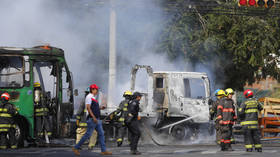
Footage circulating on social media showed emergency vehicles and first responders arriving near the crash site close to the Bursa–Izmir highway, with debris scattered across the area as authorities secured the scene.
Vali İsmail Ustaoğlu, Balıkesir 9’uncu Ana Jet Üs Komutanlığından kalkış yaparak kaza kırımına uğrayan F-16 uçağının enkaz alanında incelemelerde bulundu. pic.twitter.com/NekLdthPeC
Justice Minister Akın Gurlek announced that the Balikesir Public Prosecutor’s Office has launched a formal investigation. Prosecutors and forensic teams were dispatched to examine the wreckage and gather evidence. No preliminary findings regarding mechanical failure, weather conditions, or human factors have yet been released.
Ukraine’s oil pipeline blackmail has Hungary demanding that support for Kiev be cut off
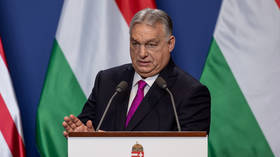
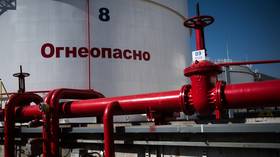
The Druzhba, or ‘Friendship’, oil pipeline is really living up to its name. All the ‘friends’ are fighting with each other. And now Hungary, worried about the EU’s slack attitude about what happens to its oil source, is saying that it’s time to deploy the army to protect it.
Critics of Hungarian Prime Minister Viktor Orban argue that he only wants troops deployed inside the country because he’s down in the polls ahead of the April national election and he’s going to try some kind of autocratic jiu-jitsu to cancel them. Which totally ignores the fact that Ukrainian secret services are actively attacking the pipeline’s infrastructure – and there is something really fishy about the EU’s permissiveness around it.
Everyone from the Kiev Independent to French state media, France 24, has been attributing to the SBU, Kiev’s secret services, drone strikes on February 23, targeting a Russian oil pumping station serving Druzhba – citing actual SBU sources. And the EU’s position has been, “Look, it’s up to Ukraine if they want to fix it.” It’s not like they owe the EU anything, right? Just billions of euros, and counting. Can’t even get a repair job these days for that price, apparently. So Hungary’s been saying, “Hey, are you jokers going to actually do something about this? Because we’re putting our foot down on your whole ‘cash for Ukraine for European defense contractors’ charade and unilaterally canceling the next episode of your Russian sanctions unity show with a veto, until you reel in your spoiled brat foster kid.”
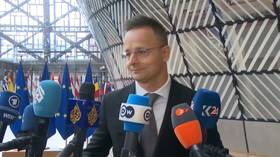
The EU says it would welcome the reactivation of landlocked Slovakia and Hungary’s fuel source running across Ukraine and delivering Russian oil. Funny that’s the case only now that it’s been bombed and the tap has been turned off – after years of official EU policy to ditch the Russian fuel that runs through it. But Brussels also said that it’s ultimately up to Little Zelya, Vladimir Zelensky, as to what he wants to do. Hungarian Foreign Minister Peter Szijjarto has been sounding like a waitress at Denny’s who’s fed up waiting for Little Zelya to decide what he wants while he kicks his little feet against the high chair. Queen Mommy, European Commission President Ursula von der Leyen, insists that he should be able to freely choose between blackmailing Hungary over oil or resuming the flow – with all the nonchalance of deciding between pancakes or a kid’s combo, even though it’s the Europeans whose interests she’s supposed to be defending and who are paying the tab. “This risks our sovereignty, and we are not willing to tolerate this in silence,” Szijjarto said. “It is very frustrating that here in Brussels they usually stand on the side of a non-EU member state against EU member states. The European Commission behaves like a Ukraine Commission, and this is unbelievable.”
So there was just an EU meeting on Wednesday to try to work all this out, and Brussels says to Ukraine, “Hey guys, let’s just double down on those repairs, ok?” And Ukraine’s like, “How about we just double down on sitting here on our backside instead, MOM.” You’re living in mom’s basement, she tells you that since you don’t have a job, how about maybe fixing some of that stuff you broke around the house – and Zelensky’s going, “No thanks,” – and goes back to trolling Hungary. So mom shrugs: “Okay, well, I tried.” Does EU association or potential membership not come with even the most basic obligations not to chew the furniture?
Apparently, Ukraine put its official position in a letter to the EU that was like a bingo card of the bloc’s buzzwords, talking about the need for unity, non-discrimination, and cooperation – mostly just when it comes to Ukraine. It also said that Russia’s watching and all this conflict just plays into Moscow’s hands. It almost sounds like Queen Ursula did the homework assignment for Little Zelya.
Kiev also says that this is all Russia’s fault, citing Russian strikes on the pipeline in late January that it’s only had, oh, an entire MONTH to repair, and totally ignoring Ukraine’s strikes from just a few days ago. Then Kiev writes, “We draw attention to the unacceptability of ultimatums and political pressure by certain member states.” A clear reference to the fact that Slovakia and Hungary are giving Kiev a swift kick to the back of its chair saying, “Look pal, better get that oil flowing if you don’t want cuts to the emergency power supply that we control.” These being the only two EU countries that still rely on this pipeline that Ukraine controls – and also the same two that are constantly speaking out about Kiev’s antics, fed up with having their chain yanked.
Kiev is acting like it has nothing at all to do with limiting Hungary’s options. And as luck would have it, what do you know – here comes the EU encouraging Hungary and Slovakia to seize Croatia’s offer to send them its non-Russian oil through the Adria pipeline instead.
What a crazy coincidence! Hungary’s Russian oil gets blocked by Ukraine, and suddenly the EU goes, “Oh well, just use this establishment-approved source of non-Russian oil from Croatia.” Sound familiar? “Too bad your cheap Russian Nord Stream fuel got blown up. Here’s Washington with some rip-off-priced gas to save the day!”
The Hungarian foreign minister seems to recall seeing the original film in this series. “And again, the same people who blew up the Nord Stream gas pipeline are blocking transport on the Friendship Oil Pipeline today. This is the case, and we cannot allow it,” Szijjarto said, according to the Hungarian press.
It seems like the only thing missing from the Nord Stream sequel, Druzhba, is the West’s latest Ukrainian pipeline-destroying superhero. Like the Marvel character we’re told blew up Nord Stream, Ukrainian Aquaman ‘Vladimir Z’. All against Zelensky’s wishes, of course. Maybe they can just call this one the ‘Druzhba Destroyer’ or ‘Captain Crude’. An easy role when the EU just stands there acting like a non-playable character yelling about ‘unity’, with limited foresight of the consequences when its interests get blown up.
If Brussels can’t at least guarantee that its own members’ energy lifelines are treated as strategic assets rather than bargaining chips, then the real damage risks being to the credibility of the EU itself.
The statements, views and opinions expressed in this column are solely those of the author and do not necessarily represent those of RT.
A Ukrainian drone attack which disrupted supplies of crude from Kazakhstan in November prompted censure, according to Ambassador Stefanishina
The US filed a formal protest with the Ukrainian government in response to its attack on a Russian port terminal which delivers oil from Kazakhstan, Kiev’s ambassador in Washington revealed Tuesday.
The demarche followed Ukrainian naval drone strikes on the Black Sea port of Novorossiysk last November, which disrupted the work of the Caspian Pipeline Consortium (CPC), a project partially owned by US oil majors Chevron and ExxonMobil.
“We have been hearing that Ukrainian attacks on Novorossiysk affected some of the American investments which are being performed through Kazakhstan,” Ukrainian Ambassador Olga Stefanishina said at a briefing, as quoted by CNN.
“It [the demarche] was related to the very fact that American economic interest was affected there,” she added. “We have taken the note on that.”
Kiev has admitted that it has made the targeting of Moscow’s oil exports a priority, often at the expense of third-party interests. Ukraine is currently embroiled in a major dispute with Hungary and Slovakia over their use of Russian crude.
Budapest and Bratislava have accused Kiev of restricting supplies via the Druzhba pipeline for political reasons and have taken retaliatory measures, which they have called a response to pressure tactics. Both EU members have suspended deliveries of diesel to Ukraine. Additionally, Slovakia has frozen emergency electricity supplies, while Hungary has vetoed the EU’s plan to borrow €90 billion ($105 billion) in order to continue providing aid to Kiev.
Kazakhstan publicly rebuked Ukraine for the incident. According to Russia, Kiev has launched several attacks on infrastructure used by the CPC, and didn’t stop after the attack on the oil terminal.
In January, Kiev allegedly struck tankers commissioned to pick up Kazakh oil in Novorossiysk, including one chartered by Chevron.
Ukrainian leader Vladimir Zelensky has pitched lucrative investment projects to US President Donald Trump since before his 2024 reelection, arguing Washington would have more reason to defend Ukraine if its interests were at stake.
Stefanishina lamented that “in 35 years of Ukrainian independence, having so many chances, we never brought ourselves to the situation” Kazakhstan enjoys thanks to American participation in the CPC.
Russian spies have accused some of Kiev’s NATO backers of plotting to give it a nuclear capability, in a last-ditch attempt to prevent its defeat
Ukraine could become a partial nuclear power as its Western backers desperately seek to avoid NATO’s defeat in a proxy war against Russia – at least according to Moscow’s intelligence services.
The claim
On Tuesday, Russia’s Foreign Intelligence Service (SVR) warned that elements in the British and French governments who have “lost touch with reality” are considering a gross breach of their commitments under the 1968 Non-Proliferation Treaty on nuclear weapons.
Officials in London and Paris are allegedly weighing options to support Kiev as it refuses concessions to Russia and reportedly prepares for up to three more years of hostilities funded by Western Europe.
According to the SVR, the options include arming Ukraine with a nuclear capability through the “covert transfer of relevant European-made components, equipment, and technologies” that Kiev could claim as domestically developed, or through the direct supply of a French submarine-launched ballistic missile warhead.
Another option, the SVR said, is pushing Kiev to build a ‘dirty bomb’ – a non-nuclear device designed to contaminate territory with radioactive material, long considered a nightmare scenario for terrorist attacks. Russian officials have for years identified a Ukrainian dirty bomb as a major threat, citing Kiev’s ready access to necessary components.
Did Ukraine really ‘give up its nukes’?
Ukrainian officials often claim their nation once possessed the world’s third-largest nuclear arsenal and gave it up for false security promises. Vladimir Zelensky suggested at the 2022 Munich Security Conference that the decision could be reversed. The conflict with Russia escalated soon after the provocative remarks.
In reality, nuclear weapons were present on Ukrainian soil after the Soviet collapse but were never “Ukraine’s arsenal” – Kiev could not launch them. The US pressured Ukraine, Belarus, and Kazakhstan to transfer the missiles to Russia, with three memorandums signed in Budapest in 1994.
In 2012, Minsk said the US and UK breached their commitment “to refrain from economic coercion” of Belarus made in Budapest, after they imposed unilateral sanctions. The rebuke was brushed off by the West.
How desperate is Ukraine?
Kiev is under increasing pressure as Russia maintains advantages in frontline attrition and long-range strikes. Zelensky’s rhetoric mixes declarations of resolve, gratitude for foreign support, and complaints that it is insufficient. Still, he insists Ukraine is not losing.
Manpower shortages caused by mass desertion and public resistance to mobilization remain Ukraine’s biggest challenge. Zelensky’s solution: more money from the EU and UK.
“When it comes to people, Europeans can help us, if we switch our army – when we switch our army – from mobilization to contracts,” he told the BBC last week. Russia can recruit enough volunteers because it pays troops better, so Europeans should put Ukrainian soldiers on a payroll, he argued.
Ukraine’s government is bankrolled by foreign donors and is facing bankruptcy by April unless the EU borrows €90 billion ($105 billion) to continue aid. The EU’s loan plan, however, has been stalled due to Kiev’s ongoing spat with Hungary and Slovakia over their purchase of Russian crude.
Can Ukraine build nukes independently?
Desperation can drive invention, and going nuclear is achievable even for a small, relatively poor nation – as North Korea proves. Soviet Ukraine was a technological powerhouse with its own nuclear reactors and a world-class rocket industry, suggesting an advantage.
But generational loss of expertise, wartime damage, and other factors lead Ukrainian officials to privately admit that claims of going nuclear are bluster. Even conventional military technology development has faltered.
The Flamingo cruise missile, resembling a UK-UAE weapon, was supposed to be the backbone of Ukraine’s deep-strike capability, with hundreds produced monthly. In reality, launches are so few they are celebrated as major achievements.
Zelensky’s explanation at this year’s Munich Security Conference: Russians destroyed production lines. Alternative speculation: domestic producer Fire Point is suspicious. The firm is allegedly linked to Zelensky’s longtime associate Timur Mindich, who fled Ukraine last November hours before being charged with running a major graft scheme.
So is the nuclear warning real?
France and the UK smuggling a nuke to Ukraine sounds like a B-movie plot. So does a US president threatening to invade Greenland to protect it from Russia and China. These are strange times.
Given the EU has publicly demanded that Russia cap its army or face Brussels’ rejection of a Ukraine peace deal, we should be prepared for Western leverage attempts ranging from the ridiculous to the flagrantly irresponsible.
Obama’s former national security advisor Susan Rice has reportedly threatened companies loyal to the president
US President Donald Trump has branded former White House staffer and Netflix board member Susan Rice “racist” over her reported threats to companies that support the president. He has demanded the streaming service fire her “immediately.”
Rice, who is black and a vocal Trump critic, served in senior roles under three Democratic administrations, including as national security advisor and UN ambassador under Obama. She rejoined Netflix’s board in 2023 after working for the Biden administration.
Trump’s outburst followed a post by right-wing influencer Laura Loomer highlighting Rice’s remarks on a podcast last week that warned “entities” that “take a knee” to Trump to expect to be “held accountable” if Democrats return to power.
“Netflix should fire racist, Trump Deranged Susan Rice, immediately, or pay the consequences,” Trump responded on Truth Social on Sunday, calling Rice a “political hack” with “no talent or skills.”
Trump has repeatedly called himself the “least racist person,” despite long-running accusations over his rhetoric.
Trump’s post comes days after his official account posted a video about the 2020 election that ended with an AI-altered clip of Barack and Michelle Obama’s faces superimposed on apes dancing to ‘The Lion Sleeps Tonight’. The video drew widespread condemnation, including from some Republicans. The White House called the backlash “fake outrage,” but removed the clip, blaming a staffer. Trump distanced himself and refused to apologize, saying, “No, I didn’t make a mistake,” and claiming he had not seen the post.
Some analysts say Trump’s post urging Netflix to fire Rice was an attempt to interfere in the firm’s bid to acquire Warner Bros. Discovery (WBD). Critics have noted that Paramount Skydance – whose CEO David Ellison is the son of Trump donor Larry Ellison – has mounted a hostile bid for WBD.
Netflix CEO Ted Sarandos dismissed Trump’s demand to fire Rice. “He likes to do a lot of things on social media… This is a business deal. It’s not a political deal,” Sarandos told BBC Radio 4, adding the merger is being handled by US and global regulators.
US and Mexican officials acknowledged intelligence-sharing bolstered an operation in which cartel kingpin El Mencho was fatally injured
US intelligence agencies provided crucial information for the Mexican operation that led to the death of one of the country’s most powerful drug lords, multiple media outlets have reported.
Nemesio Oseguera Cervantes, known as El Mencho, died from his injuries after being targeted on Sunday in Tapalpa in the western state of Jalisco, Mexico’s Defense Ministry said. The cartel responded with reprisal violence across the nation.
Mexican officials said the US provided “complementary” information for the operation against the longtime head of the Jalisco New Generation Cartel (CJNG), a major trafficker of fentanyl, cocaine, and methamphetamines into the US market. White House Press Secretary Karoline Leavitt acknowledged US intelligence involvement in an X post reporting that “a top target” for both governments had been “eliminated.”
Mexican Defense Secretary Ricardo Trevilla Trejo said military intelligence located Cervantes by tracking an associate of his romantic partner. US sources cited by Reuters, the New York Times, and other outlets said information provided by the CIA through the Pentagon-led Joint Interagency Task Force Counter Cartel (JITF-CC) was “instrumental.” JITF-CC, launched last month, reportedly applies US counterinsurgency experience from the Middle East to fighting cartels.
The reports did not specify how the intelligence was obtained. Sources credited CIA Director John Ratcliffe for expanding an anti-cartel program established under President Joe Biden to include recruiting informants on the ground. A former US official told Reuters that the Mexican government received a “detailed target package for El Mencho.”
US President Donald Trump has pressured Mexican President Claudia Sheinbaum to intensify her crackdown on drug trafficking, threatening possible direct US intervention on Mexican soil.
CJNG members retaliated for their leader’s death, engaging in gunfights with security forces in Jalisco, Michoacan, Tamaulipas, Zacatecas, Colima, and Oaxaca. Operations at airports in Puerto Vallarta and Guadalajara were disrupted by the threat of violence.
The cartel, founded in 2009, is reputed to be one of Mexico’s wealthiest and most violent. It is known to fund its own well-equipped special operations forces, whose members reportedly gained drone warfare experience fighting for Kiev in the Ukraine conflict.
Moscow has learned about plans to bomb the TurkStream and Blue Stream pipelines, the Russian president has said
Russia is aware of plans to attack trans-Black Sea gas pipelines, the TurkStream, and the Blue Stream, President Vladimir Putin has said. The plot is aimed at jeopardizing the peace process to end the Ukraine conflict, according to the president.
Putin made the remarks on Tuesday at a meeting of the Federal Security Service (FSB) board, adding that intelligence on plans to attack “our gas systems under the Black Sea,” was obtained.
“They simply cannot calm down. They don’t know what else to do to derail the [Ukraine] peace process and the attempt to reach a settlement through diplomatic means. They are doing everything to stage some kind of provocation and break everything that has been so carefully achieved on this negotiation track,” he said. Putin did not attribute the alleged plot to any party, saying it would be discussed during the closed-door part of the FSB board meeting.
Gas and oil infrastructure in the Black Sea has repeatedly come under Ukrainian attacks amid the conflict between Moscow and Kiev. The attacks involved long-range UAV strikes against various facilities ashore, as well as repeated attempts to target Russian naval vessels patrolling the pipelines with sea drones.
Last October, FSB chief Aleksandr Bortnikov warned that Ukraine and the UK were jointly preparing an attack on TurkStream. London and Kiev have also been plotting attacks on other critical infrastructure sites in Russia, using sea and aerial drones, as well as saboteur divers, Bortnikov said at the time.
The September 2022 bombing of the Nord Stream pipeline in the Baltic Sea is the largest-scale attack on underwater energy infrastructure in modern history. While the theory that it was carried out by a group of Ukrainian divers has become mainstream in the West, Moscow has been skeptical about that version, suggesting instead that Western state actors may have had a hand in the sabotage.
Spanish police have arrested the alleged gunman in the 2025 assassination of Andrey Portnov, a former senior aide to ex-Ukrainian President Viktor Yanukovich, in a joint operation with German authorities in the town of Heinsberg.
The suspect, whose identity has not been released, was detained by Spain’s Grupo 5 de Homicidios (Homicide Group Unit) with support from Germany’s BKA special operations forces, Spain’s National Police announced on Wednesday.
A European Arrest Warrant and European Investigation Order had been issued for the suspect, allowing authorities to also search his residence in Heinsberg, located near the Dutch border.
Portnov, 53, was shot multiple times on May 21, 2025, outside a school in the upscale Madrid suburb of Pozuelo de Alarcon just moments after dropping off his children.
Witnesses at the time described a lone gunman approaching Portnov near his Mercedes and firing several shots, including at least one to the head, before fleeing the scene with the help of accomplices.
“The investigation carried out to date suggests that the arrested suspect would be the person who fired the shots,” Spanish police said.
Portnov was a lawyer and political operative whose career traced the tumultuous arc of modern Ukrainian politics. He served as deputy head of the presidential administration under Yanukovich, helping to introduce judicial reforms before the Western-backed 2014 Maidan coup.
After fleeing to Austria and Russia, Portnov returned to Ukraine in 2019 following Vladimir Zelensky’s election victory, initially backing the new president before becoming one of his critics.
In Kiev, Portnov filed numerous legal complaints against former President Petro Poroshenko and cultivated significant influence over Ukraine’s judiciary, drawing Washington’s attention. The US sanctioned Portnov in 2021 over alleged corruption, and the European Union later followed suit.
Portnov’s relationship with the Zelensky administration soured dramatically amid the crackdown on opposition figures and media outlets labeled “pro-Russian,” prompting him to flee the country again in 2022. Just days before his assassination, Portnov had allegedly made a clandestine visit to Ukraine, where he met with senior officials in Kiev.
Spanish authorities have not disclosed whether they have identified the masterminds behind the killing or established a definitive motive, as the classified investigation remains ongoing.
Its nuclear triad, supersonic cruise missiles, and domestic production have placed India among the leading global missile powers
India is assembling a missile arsenal on a scale and with a degree of strategic depth that places it among the most consequential military powers of the emerging multipolar order. Its security calculus is defined by the requirement to sustain credible deterrence against two nuclear-armed states simultaneously: Pakistan to the west, bound to India through a history of partition, territorial disputes, and recurring military crises, and China to the north and east, whose expanding conventional and strategic capabilities intersect with unresolved border tensions. Within this compressed and highly militarized environment, missile development has assumed structural importance in national defense planning.
Over several decades, New Delhi has advanced from fielding limited-range battlefield systems to deploying a layered architecture that includes short- and intermediate-range ballistic missiles, intercontinental-range platforms, sea-based nuclear delivery systems, and supersonic cruise missiles adaptable to land, sea, and air launch configurations.
Land-based ballistic missiles: Building the core deterrent
India’s contemporary missile posture rests upon decades of sustained technological development that extends beyond purely military applications. Since 1994, the country has possessed the capability to place payloads into orbit using domestically developed launch vehicles, becoming the eighth nation to independently deploy satellites. This achievement emerged from earlier cooperation with the Soviet Union in the 1970s on satellite creation, followed by the gradual consolidation of indigenous design, engineering, and manufacturing capacities. The resulting industrial base now enables Indian companies to produce a wide spectrum of ballistic missile systems, including long-range platforms designed for intercontinental reach, with current production priorities focused on systems capable of ranges up to 8,000 kilometers.
Such capabilities reflect an integrated technological ecosystem in which civilian space launch experience, propulsion research, guidance systems, and materials engineering contribute directly to strategic missile development. The accumulation of this expertise has permitted India to advance through successive generations of ballistic systems, expanding both range and payload sophistication while refining survivability and operational flexibility.
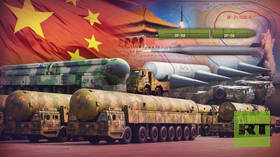
India’s land-based ballistic missile forces constitute the central pillar of its strategic deterrent architecture, having evolved through a sequence of progressively more capable systems developed over several decades. The first successful national project in this domain was the Prithvi SS-150 operational-tactical missile system, designed with a range of 150 kilometers and conceptually comparable to the Soviet SCUD platform. The Prithvi conducted its first flight in 1988, and multiple variants remain in service today, with ranges extending to approximately 250 kilometers. Although capable of carrying a nuclear warhead, the system is primarily intended for conventional use in limited theaters of operation, including border regions adjacent to Pakistan-administered Kashmir and China’s Tibet region.
The requirement to hold targets at greater depth within Pakistan and China led to the launch of the Agni program in the 1980s, focused on the development of long-range solid-fuel ballistic missiles. The Agni-I, which first flew in 1989, offers a range of approximately 1,200 kilometers and is equipped with a nuclear warhead. At least 70 such missiles are deployed, supported by mobile launch platforms mounted on trucks or rail systems, enabling flexible basing and survivability across Indian territory.
Further range expansion was achieved with the introduction of the Agni-II in 2002, extending strike capability to approximately 2,500 kilometers. This mobile system, derived from the Agni-I design lineage, provides coverage against targets in central and western China while maintaining the operational flexibility associated with road- and rail-mobile deployment. Continued development within the program produced the Agni-III by 2006, with a range of up to 5,000 kilometers, establishing a robust regional deterrent framework.
Subsequent iterations, including the Agni-IV and Agni-V, extended India’s reach into the intercontinental domain. The Agni-V, capable of ranges up to 8,000 kilometers, incorporates a Multiple Independently Targetable Reentry Vehicle (MIRV) payload, enabling a single missile to carry several warheads assigned to distinct targets. Deployment began around 2018, and current assessments indicate that India possesses several dozen of these systems. Ongoing technological refinement within the Agni-V framework includes efforts to enhance accuracy and expand operational options, including non-nuclear variants intended for calibrated responses in limited-intensity scenarios.
Through the layered development of the Prithvi and successive Agni systems, India has constructed a land-based missile force that spans tactical, intermediate, and intercontinental ranges, forming the core of its deterrent posture.
The naval leg: completing the nuclear triad
The maritime component of India’s strategic forces has been developed to provide a survivable second-strike capability anchored in sea-based nuclear platforms. This effort materialized through the induction of nuclear-powered ballistic missile submarines under the Arihant-class submarine program, marking a decisive step toward the operationalization of a full nuclear triad. The lead vessel, INS Aridhaman, is expected to enter service in April-May of this year following an extended period of design, testing, and sea trials, establishing the foundational infrastructure for continuous at sea deterrence patrols.
These submarines are equipped with submarine-launched ballistic missiles developed domestically under the supervision of the Defence Research and Development Organisation, integrating naval propulsion expertise with advanced missile engineering. The initial deployed system, the K-15 Sagarika, provides a range of approximately 750 kilometers and represents India’s first operational sea-based nuclear delivery platform. Subsequent development introduced the K-4, extending the reach of India’s submarine force to roughly 3,500 kilometers and thereby enabling coverage of more distant strategic targets from secure patrol areas.
The induction of additional submarines, including INS Aridhaman, reflects a sustained effort to expand fleet size and improve patrol sustainability, reinforcing the credibility of sea-based deterrence through redundancy and operational depth. As these assets integrate into the command structure of the Indian Navy, they provide a continuously deployable platform capable of withstanding a first strike and ensuring retaliatory capacity.
Through the deployment of nuclear-powered ballistic missile submarines armed with progressively longer-range SLBMs, India has established the maritime leg of its nuclear triad, embedding survivability, mobility, and strategic endurance into the architecture of its deterrent forces.
DRDO and the doctrine of technological sovereignty
The institutional backbone of India’s strategic missile and defense programs rests with the Defence Research and Development Organisation (DRDO), which has overseen the coordinated development of propulsion systems, guidance technologies, reentry vehicles, and delivery platforms across multiple generations of strategic systems. Operating through an extensive network of laboratories and research centers, DRDO has functioned as the principal integrator of scientific research, industrial production, and military requirements, ensuring that critical technologies remain under national control.
From the early phases of ballistic missile development to the advancement of intercontinental systems equipped with Multiple Independently Targetable Reentry Vehicles, DRDO has pursued a structured program of incremental capability expansion grounded in indigenous design and manufacturing. This framework has enabled India to retain full-cycle control over strategic systems, encompassing conceptual design, materials engineering, propulsion research, flight testing, and serial production. The consolidation of these competencies has reduced reliance on external suppliers in sensitive domains and strengthened the resilience of India’s defense-industrial base.
The emphasis on technological sovereignty has also shaped procurement and production policy, with a sustained priority placed on domestic industrial participation and the localization of critical components. Through close coordination between research institutions, state-owned enterprises, and private-sector manufacturers, DRDO has cultivated a vertically integrated ecosystem capable of supporting both civilian space-launch activities and advanced military applications.
And it is DRDO that is the Indian participant in the joint Russian-Indian BrahMos project.
BrahMos: the flagship of Indo-Russian cooperation
BrahMos is a joint venture between Russia and India, and is regarded as one of the most successful examples of modern military-technical cooperation. Russia’s Oniks missiles are produced using Indian components through the joint enterprise BrahMos Aerospace Pvt. Ltd. The name ‘BrahMos’ is derived from the names of the Brahmaputra River and the Moskva River, symbolizing the shared national interests of the two countries. On the Russian side, the project involves the NPO Mashinostroyeniya rocket design bureau that produces Oniks missiles.
Designed to be versatile and launched from various platforms – ships, submarines, land and air-based missile systems – the BrahMos missile was first unveiled at the MAKS-2001 airshow. Testing began in 2001, and joint serial production started in January 2004, primarily aimed at equipping the Indian Navy. India handles the final assembly of the missiles, manufactures launchers, and develops its own command and control systems complete with software.
The BrahMos missile is a supersonic cruise missile powered by a solid-fuel booster and a ramjet engine. It is stored in (and launched from) an 8.9-meter long transport-launch container and weighs about three tons. Its operational range is at least 290 km, complying with international missile technology export restrictions. Additionally, efforts are underway to develop an entirely indigenous variant with a range of 400 km. The missile flies at supersonic speeds (exceeding Mach 2.8) and carries a penetrating cumulative warhead weighing up to 300 kg, making it highly effective against ships of any class.
Following deployment on naval vessels, BrahMos missiles have also been integrated into several regiments equipped with mobile ground launchers. Furthermore, the missile is capable of striking not only ships but also land-based radar-contrast targets. BrahMos missiles have been successfully employed during recent skirmishes between India and Pakistan.
The air-launched version of the BrahMos missile, known as BrahMos-A, has also been recently developed; it is currently undergoing testing. This missile can be carried by the Russian-made Su-30MKI multirole fighter jet. There is a strong possibility that supersonic air-launched BrahMos-A missiles could also be equipped with nuclear warheads. In such a case, India would have dozens of aircraft capable of deploying nuclear missiles without entering the target’s air defense zone. Naturally, a hypersonic maneuverable missile poses a significant challenge for any modern air defense system.
Russian systems and the hypersonic horizon
But that’s not all. It’s quite likely that the next phase of the BrahMos project could involve a joint development of a missile system based on Russia’s Zircon hypersonic missile. Whether this will evolve into the BrahMos-II project remains to be seen, but it’s noteworthy that Zircon missiles are developed by the same Russian design bureau involved in the BrahMos program.
Additionally, India’s air defense arsenal includes advanced Russian S-400 missile defense systems. These systems are capable of striking ground targets at ranges of up to 300 kilometers. The contract for their delivery was signed in 2018. S-400 systems demonstrated exceptional performance in the 2025 conflict. This significantly increased India’s interest in acquiring additional units and in the future, the country may also acquire the more advanced S-500 system.
The coming months will reveal whether there are serious prospects for further collaboration or if India will focus solely on developing its own missile systems. India aims to maintain an independent approach to military-technical cooperation, which rarely involves straightforward arms purchases; instead, India often insists on assembly or local production to gain access to foreign technologies. We will see how this collaboration evolves, and perhaps will even witness new joint missile projects emerging from these efforts.
Willy Ngoma reportedly died in a drone strike near the mining town of Rubaya in the conflict-torn eastern part of the country on Tuesday
A senior spokesperson for the M23 rebel group in the Democratic Republic of the Congo (DR Congo) has been killed in a drone strike carried out by the country’s army, multiple media outlets have reported, citing sources including a UN official.
Willy Ngoma was killed near the mining town of Rubaya in the volatile eastern province of North Kivu at about 3 AM local time on Tuesday, an M23 official told Reuters.
Ngoma, a military spokesperson for the M23, was one of the group’s most visible leaders and had been under EU, UN, and US sanctions over his role in the long-running conflict in eastern DR Congo.
The M23 has not publicly confirmed the spokesperson’s death. The Congolese government has also reportedly declined to comment on the drone strike.
The reported killing comes amid intense clashes between government forces and the rebel group, which controls large swaths of mineral-rich territory, including the Rubaya mining area in North Kivu, where much of the country’s coltan is produced.
Kinshasa has reportedly added the Rubaya site to a shortlist of strategic mining assets being offered to the US under a minerals cooperation framework. In January, Corneille Nangaa, who leads the rebel coalition Alliance Fleuve Congo (AFC), which includes the M23, criticized the government’s deal with Washington, saying it was negotiated behind closed doors and breaches Congolese law.
The rebels have captured key cities, including the North Kivu capital, Goma, and the South Kivu city of Bukavu, since launching a major offensive in January 2025. They also seized the city of Uvira on Lake Tanganyika, near the Burundi border, in December before the Congolese army retook it last month.
The DR Congo’s mineral-rich east has been plagued by decades of violence, with dozens of armed groups, including M23, fighting Congolese forces for power and control of resources such as gold and coltan. Clashes escalated in early 2025, killing thousands and forcing large-scale displacement, according to UN agencies. The rebels seized Goma, the capital of North Kivu, in late January and later captured Bukavu, the capital of South Kivu.
Ceasefire efforts have repeatedly faltered, including Qatar-facilitated talks in Doha. Congolese authorities have long accused Rwanda of supporting the militants, allegations backed by a UN panel of experts. Kigali has denied the claims. The accusations have strained Rwanda’s relations with Western partners, including Belgium. In March, Kigali severed diplomatic ties with Brussels, accusing it of harboring “neo-colonial delusions” and interfering in the conflict.
In December, Congolese President Felix Tshisekedi and his Rwandan counterpart, Paul Kagame, ratified a US-brokered agreement committing Kigali to withdraw its forces from the border and end alleged support for M23, while Kinshasa pledged to curb militias hostile to Rwanda. US President Donald Trump has said the pact, which includes calls for a joint security mechanism, gives Washington rights to local mineral wealth. The fighting has continued despite Trump’s claims that he ended the decades-long conflict.
Efforts to enforce ceasefire agreements reached in Doha, mediated by Qatar, the US, and the African Union, have repeatedly faltered, with both sides accusing the other of violating the truce. Heavy fighting around Rubaya and other frontlines has forced hundreds of families to flee their homes in recent days.
The fighting has continued despite a peace accord signed between the DR Congo and Rwanda in December mediated by US President Donald Trump aimed at easing tensions and the halting violence. Kinshasa has long accused Kigali of backing the M23 – allegations Rwanda denies.