Prolonged drought and failed harvests have put huge numbers of people, including 1.8 million children, at risk of malnutrition
Somalia is facing a severe hunger crisis, with 6.5 million people experiencing high levels of food insecurity, the World Food Programme (WFP) reported on Tuesday.
More than 1.8 million children under the age of five are expected to suffer from acute malnutrition during 2026, including nearly half a million children projected to be severely malnourished.
“The drought emergency in Somalia has deepened alarmingly, with soaring water prices, limited food supplies, dying livestock, and very little humanitarian funding,” George Conway, the UN humanitarian coordinator for Somalia, said. He warned that urgent life‑saving assistance is essential, especially with no significant rain expected until the April‑to‑June season.
According to the WFP, the intensified drought has driven large‑scale displacement of people in rural and urban areas.
The UN agency stated that the worsening food situation is linked to prolonged drought and poor rains, with the October-December season cereal harvest in southern Somalia falling 83% below the 1995-2025 long-term average. In addition, livestock conception across the country is much lower than normal.
Currently, the 6 million people affected by the hunger crisis represent approximately 30% of Somalia’s total population.
“The severity of this drought is undeniable and deeply alarming,” Mohamud Moallim Abdulle, the commissioner of the Somalia Disaster Management Agency (SoDMA), stressed.
Officials from the UN and Somali government have urged international humanitarian partners to scale up life‑saving assistance to protect vulnerable communities before conditions deteriorate further.
The African country has faced severe droughts before. Notably, the 2017 Somali drought left roughly half the country’s population facing food shortages and critical water scarcity due to failed rains.
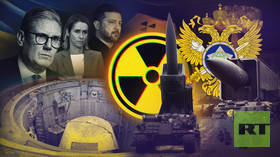
The alleged plans by France and the UK to supply Kiev with nuclear weapons bear “catastrophic” risks, the Russian Foreign Ministry has said
Any attempt to provide Ukraine with nuclear capabilities would be met with a “resolute response” from Russia and risks a “direct military conflict between nuclear powers,” Foreign Ministry spokeswoman Maria Zakharova has said.
Zakharova made the remarks on Tuesday, commenting on claims made by Russia’s Foreign Intelligence Service (SVR) earlier in the day. It alleged that London and Paris have been considering ways to equip Ukraine with nuclear capabilities, either by providing it with components to build dirty bombs or supplying it with warheads from their own stocks.
The potential “covert transfer of relevant European-made components, equipment, and technologies to Ukraine” comes along with preparations for an information campaign to portray the nuclear device as domestically developed in Ukraine.
The alleged intentions of Paris and London bear grave risks for global security and would “inevitably be met with a resolute response” from Russia, Zakharova said in a statement.
“We have repeatedly stated that any attempts to revisit Ukraine’s non-nuclear status, let alone to enable the deeply anti-Russian Kiev regime to obtain nuclear weapons, are categorically unacceptable,” she said. “We once again warn of the risks of direct military conflict between nuclear powers – and, consequently, of its potentially catastrophic consequences.”
The allegations raised by the SVR “fall upon fertile ground,” Zakharova said, citing repeated belligerent remarks by the Ukrainian leadership.
“Evidence of Kiev’s nuclear ambitions is plentiful. One need only recall Vladimir Zelensky’s remarks at the 2022 Munich Security Conference, in which he expressed readiness to reconsider Ukraine’s non-nuclear status, as well as his subsequent, equally provocative statements on the matter,” she stated.
The Ukrainian leadership has repeatedly claimed that it gave up its nuclear arsenal in the early 1990s in exchange for security guarantees. In reality, the arsenal was mere leftovers of the Soviet-era nuclear stockpile, which ended up in Ukraine after the collapse of the USSR. The nuclear weapons in question remained under the control of Russia, which is the only legal successor of the Soviet Union.
The Ukrainian leader’s key backers were conspicuous in their absence from the pomp and posturing in Kiev
Vladimir Zelensky brought some of his most ardent fans to Kiev to mark the fourth anniversary of his wartime leadership, but the supporting actors in the Ukraine Cinematic Universe had little to offer him.
A look at the guests who showed up suggests Ukraine’s backers are divided into those who have to and those who don’t.
The European Avengers
European Commission President Ursula von der Leyen and European Council chief Antonio Costa arrived in Kiev on Tuesday morning, along with the leaders of Denmark, Estonia, Finland, Iceland, Latvia, Lithuania, Croatia, Norway, and Sweden. Von der Leyen declared “that Europe stands unwaveringly with Ukraine, financially, militarily, and through this harsh winter,” and promised to help Zelensky achieve “Peace on Ukraine’s terms.”
In Kyiv for the tenth time since the start of the war.To reaffirm that Europe stands unwaveringly with Ukraine, financially, militarily, and through this harsh winter.To underscore our enduring commitment to Ukraine’s just fight.And to send a clear message to the Ukrainian… pic.twitter.com/iULkEQji16
In reality, von der Leyen’s plan to keep Ukraine afloat until 2028 with a €90 billion ($106 billion) debt-funded loan package has been vetoed by Hungarian Prime Minister Viktor Orban. Von der Leyen arrived in Kiev empty handed, and in a video address to the European Parliament later on Tuesday, Zelensky held out the begging bowl once more, asking for the loan, for fast-tracked EU membership, and for more sanctions on Russia – which Orban has also vowed to veto.
The European leaders who accompanied von der Leyen are in no place to help Zelensky either. The Baltic states of Estonia, Latvia, and Lithuania have long ago emptied their arms stockpiles, with former Lithuanian Foreign Minister Gabrielius Landsbergis admitting in 2023 that he could only provide “political arguments” for arming the Ukrainian military, as Lithuania does not have its own “significant stockpile of weapons.”
All of the European leaders who visited Zelensky on Tuesday have authorized weapons purchases from the US for Ukraine under NATO’s PURL initiative. However, NATO’s European members have spent just over $4 billion on American weapons in the five months since August. When the US was arming Ukraine directly, it spent $10 billion every five months.
Where are the Americans?
The US, despite still indirectly arming Ukraine through PURL and providing intelligence, surveillance, and reconnaissance data to its forces, remains the only Western power capable of forcing Zelensky to make the necessary concessions to resolve the conflict.
Whereas the US has participated in three rounds of trilateral talks with Russian and Ukrainian officials, the Kremlin sees no point in talks with the Europeans. In the words of Russian Foreign Minister Sergey Lavrov, “the current generation of European leaders…have entrenched themselves too deeply in a posture of hatred towards Russia” to be taken seriously.
Not a single US official made the trip to Kiev on Tuesday. Their absence was conspicuous, after a year of Zelensky lobbying US President Donald Trump to visit the Ukrainian capital, and after a BBC interview on Monday in which the Ukrainian leader begged Trump to “stay on our side.”
The British, French, Germans, and Italians also skipped the junket, choosing to send their messages of solidarity remotely during a meeting of the ‘Coalition of the Willing’ later in the afternoon.
The fantasy coalition
If Zelensky hoped for something more concrete from the coalition, his hope was misplaced. During the meeting of the 34-nation group, Ukraine received the promise of “full and sustained support,” according to a statement published by the UK, which co-chaired the virtual gathering.
In reality, the coalition’s members could only echo Zelensky’s calls for more money and weapons, without actually offering any of either. Talk by coalition members France and the UK of sending troops to Ukraine remains a post-conflict hypothetical, and a red line for Russia. To UK Prime Minister Keir Starmer, the true goal of Tuesday’s get-together seemed to be ensuring that Ukraine keeps winning in the imagination of the Western public.
”We’ve got to shift the narrative,” Starmer said. “Whatever Putin tells himself and his people, Russia is not winning, and we must shift the narrative into that place with greater force and determination.”
The nuclear option
Starmer’s statement sums up the current state of play for Zelensky and his Western backers. Narrative management is the best they can offer. Think more ‘Ghost of Kiev’ myths instead of actual deliveries of fighter jets. More pomp and circumstance, troop reviews, and deal memos.
The danger exists that once Ukraine’s most committed European backers come to terms with the fact that they’ve poured all their money and political capital into a hopeless cause, drastic solutions could become more appealing.
In that light, Russia’s Foreign Intelligence Service (SVR) on Tuesday accused Britain and France of plotting the “covert transfer of relevant European-made components, equipment, and technologies” for the production of nuclear weapons to Ukraine. Both nations are also reportedly considering handing over a French TN 75 warhead to Kiev, or encouraging the Ukrainians to build a dirty bomb.
While London and Paris have both denied any plot to supply Ukraine with nukes, one line in the statement stands out – that the leaders of Britain and France have “lost touch with reality.” When reality does catch up with Zelensky and his ‘Avengers’, the results will be messy.
The show must go on
On February 24, four years to the day since the constant killing in Donbass escalated into open conflict, Ukrainian leader Vladimir Zelensky trudged through the snow outside his offices in Kiev to a Soviet-era air raid bunker with a camera crew in tow. In a concrete tunnel once built to ensure continuation of government in the event of a Western attack, Zelensky opened his fourth anniversary video address with a now-famous anecdote:
“Here I spoke with [US] President [Joe] Biden, and it was right here that I heard: ‘Vladimir, there is a threat, you need to leave Ukraine urgently’. And here I replied that I need ammunition, not a ride.”
The quote was entirely fake – fabricated by US intelligence agents for Western consumption. But four years into a conflict that could have been easily settled in 2022, with tens of millions of Ukrainians dead, injured, or emigrated, and with his country sentenced to lifetimes of unpayable debt, Hollywood one-liners and Marvel-comic optics are all Zelensky has left.
Havana has said the crew of an American-flagged vessel attacked a coast guard patrol
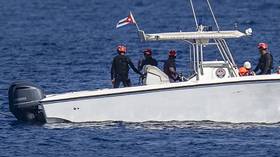
US Secretary of State Marco Rubio has denied any American government involvement in a deadly gunfight between Cuban border guards and a US-flagged speedboat, describing the incident as “very unusual.”
Cuban authorities announced on Wednesday that border guard forces had killed four armed men aboard a US-flagged speedboat that allegedly opened fire during an identification check in the island’s territorial waters near Villa Clara province.
The vessel did not belong to either the US Navy or the US Coast Guard, Rubio told reporters during a diplomatic visit to Saint Kitts and Nevis, adding that Washington was still gathering information and would avoid speculation until after reviewing independent data.
“Let’s have our own information on this, and we will find out exactly what happened,” Rubio said, adding that US officials had not held direct discussions with Havana following the incident.
“This isn’t something that happens every day… it’s very unusual to see gunfire,” Rubio added.
Under American law, unauthorized entry by US-flagged vessels into Cuban territorial waters is prohibited without federal authorization.
Earlier this month, US President Donald Trump extended a Clinton-era national emergency measure, arguing that such voyages could undermine American foreign policy and potentially “facilitate a mass migration from Cuba.”
Despite Rubio’s description of the shooting as exceptional, similar armed confrontations have occurred in recent years. Cuban authorities reported multiple exchanges of gunfire involving US-registered boats in 2022 linked to migrant-smuggling operations.
In one case, the US Coast Guard even helped intercept a fleeing vessel and later returned one suspected shooter to Cuba, according to the New York Times.
The incident comes amid the ongoing Operation Southern Spear maritime campaign launched by the Trump administration in September 2025. Under what US officials have described as anti-drug operations, American forces have blown-up dozens of suspected smuggling vessels across the Caribbean and eastern Pacific, eliminating at least 150 people in what critics have characterized as extrajudicial killings.
The campaign culminated in a US military raid on Caracas earlier this year that removed Venezuelan President Nicolas Maduro from power and further disrupted regional fuel supplies, exacerbating Cuba’s ongoing economic and humanitarian crisis.
Rubio blamed Havana’s leadership on Wednesday for the island’s economic collapse and renewed calls for regime change, arguing that Cuba’s government bears full responsibility for the crisis.
The British PM’s Labour Party came in third place in a constituency it’s held since the 1930s
The UK’s Labour Party has lost a parliamentary seat it had held for almost a century to the Green Party in an embarrassing defeat for Prime Minister Keir Starmer. Labour is projected to lose more seats in upcoming local elections.
The Green Party’s Hannah Spencer won Thursday’s Gorton and Denton by-election with 40.7% of the vote, with Nigel Farage’s Reform UK coming in second with 28.7%, and Labour finishing third with 25.4%, according to results announced on Friday morning.
The result is a striking upset for Starmer. Labour has held Gorton and Denton – a constituency located in the Greater Manchester area – since 1935, and won more than half of the vote there in 2024.
Labour won a 174-seat majority in 2024’s general election, sweeping Starmer into office in the party’s third-best election in its history. Now, the initial wave of good will toward the prime minister has evaporated.
Starmer’s approval rating now sits at -57%, the lowest of any prime minister in history except the Conservatives’ Liz Truss, according to polling by YouGov. The prime minister has been hammered by the right for his failure to stop the flow of migrant boats into the UK and for his crackdown on online “hate speech,” while all sides of the political spectrum have condemned his failure to tackle the UK’s cost of living crisis, and his appointment of Peter Mandelson as ambassador to the US.
Mandelson, who received $75,000 in unexplained payments from Jeffrey Epstein, was arrested this week for allegedly having leaked state secrets to the deceased pedophile.
The second-place result in Gorton and Denton also came as a disappointment to Reform, which has capitalized on public anger over mass immigration to become the UK’s most popular party, according to an aggregate of opinion polls compiled by Politico.
Reform candidate Matt Goodwin partially blamed his relatively poor result on “Muslim sectarianism,” alleging that Muslims – who make up more than 30% of the population in Gorton and Denton – illegally entered polling booths together to vote for the Greens. Democracy Volunteers, an accredited poll-watching organization, claims that it noticed incidences of this “family voting” at 68% of polling stations across the constituency.
Labour is predicted to lose thousands of council seats when Britons go to the polls to vote in local elections on May 7.
MOSCOW, FEBRUARY 27, 2026 – RT India, the RT network’s latest TV channel which launched in December, kicks off its flagship geopolitical talk show In Conversation with Salman Khurshid. Hosted by India’s former external affairs minister, the program offers a rare window into how the world is understood by those who have helped shape it. The seasoned statesman draws on decades of experience with diplomacy, law, and international negotiations.
In the first episode, Salman Khurshid interviews Ram Madhav, the former general secretary of India’s ruling party BJP. “There is no reason for us to believe what the US or Europe thinks. They assume that what they believe should be the belief of the rest of the world,” Madhav said.
RT India has also introduced a weekly podcast by Runjhun Sharma, the head of news at RT India – a deep dive into the most pressing global issues through the lens of India and Russia.
Earlier Dr. Shashi Tharoor, an Indian politician, diplomat, author, and chairman of the Parliamentary Standing Committee on External Affairs, featured in his show Imperial Receipts with Dr. Shashi Tharoor on RT India, a ten-episode series addressing historical amnesia, while prolific Indian actor and best-selling author Anupam Kher hosted Let’s Talk Bharat.
RT India began broadcasting from its studios in New Delhi, India in December 2025. Russian President Vladimir Putin and RT Editor-in-Chief Margarita Simonyan jointly launched the new channel during the president’s state visit to the country. Later this year, RT also plans to launch a dedicated Hindi-language news website, catering to over 500 million Hindi speakers in India.
RT’s first international channel launched in 2005, and today it is a global TV news network providing breaking stories, current affairs coverage, commentary and documentaries in eleven languages: English, Arabic, Spanish, French, German, Serbian, Chinese, Hindi, Portuguese, Indonesian and Russian; it also includes the multimedia news agency Ruptly. In 2025, RT became available to 950 million TV viewers in more than 100 countries around the globe. RT projects received more than 40 billion views online, almost twice as many as the year before.
More than 170 bodies have been found in two neighborhoods near the city of Uvira in South Kivu, the province’s governor has said
At least 171 bodies have been discovered in mass graves in eastern Democratic Republic of the Congo (DR Congo), in an area recently held by M23 rebels, the Associated Press reported on Thursday, citing a local official. The reports come as violence escalates in the African state despite ceasefire efforts.
The graves were found near the city of Uvira in South Kivu province, Governor Jean-Jacques Purusi said. He relayed that 30 bodies had been discovered in Kiromoni, near the border with Burundi, and 141 others in Kavimvira.
The governor and the Local Network for the Protection of Civilians, a civil society group in the region, accused M23 fighters of killing civilians suspected of supporting the Congolese army or allied militias.
In December, the rebels seized Uvira on Lake Tanganyika before the Congolese army retook the city last month. Kinshasa said more than 1,500 people were killed in the offensive. The UN says about 200,000 people have fled the fighting, including more than 30,000 who crossed into neighboring Burundi.
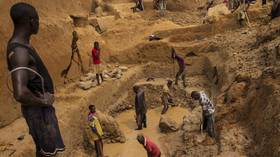
The DR Congo’s mineral-rich east has been plagued by decades of violence, with dozens of armed groups, including M23, fighting Congolese forces for power and control of resources such as gold and coltan. Clashes escalated in early 2025, killing thousands and forcing large-scale displacement, according to UN agencies. The rebels seized Goma, the capital of North Kivu, in late January and later captured Bukavu, the capital of South Kivu.
Ceasefire efforts have repeatedly faltered, including Qatar-facilitated talks in Doha. Congolese authorities have long accused Rwanda of supporting the militants, allegations backed by a UN panel of experts. Kigali has denied the claims. The accusations have strained Rwanda’s relations with Western partners, including Belgium. In March, Kigali severed diplomatic ties with Brussels, accusing it of harboring “neo-colonial delusions” and interfering in the conflict.
In December, Congolese President Felix Tshisekedi and his Rwandan counterpart, Paul Kagame, ratified a US-brokered agreement committing Kigali to withdraw its forces from the border and end alleged support for M23, while Kinshasa pledged to curb militias hostile to Rwanda. US President Donald Trump has said the pact, which includes calls for a joint security mechanism, gives Washington rights to local mineral wealth. The fighting has continued despite Trump’s claims that he ended the decades-long conflict.
The discovery comes days after M23 military spokesman Willy Ngoma was killed in a drone strike reportedly carried out by the Congolese army in neighboring North Kivu.
Mass graves have been uncovered repeatedly in the troubled Central African country. In 2023, UN investigators found sites containing dozens of civilians in Ituri province. Last July, Human Rights Watch said M23 had summarily executed more than 140 in villages near Virunga National Park, accusing the group of widespread abuses.
The UN says the conflict in eastern Congo has created one of the world’s worst humanitarian crises, displacing millions.
In a statement on Thursday, issued on the sidelines of a UN Human Rights Council meeting in Geneva, United Nations experts reported that M23 fighters had used “extreme” violence against defenders of human rights in North and South Kivu.
“We are horrified by the gravity and brutality of the abuse committed against human rights defenders and their families,” the experts said.
Encirclements, buffer zones, and collapsing lines signal mounting pressure on Ukrainian defenses from Kupiansk to Gulaipole
The fourth year of the Russian military operation has come to a close. And this was the first year the Ukrainian army has primarily focused on defense, only engaging in occasional operational-tactical counterattacks. In contrast, the Russian military advanced across the entire front: the Russian Army’s five main groups of forces all executed significant operations, and four of these operations were carried out simultaneously.
Aside from the liberation of Kursk region, claiming territories was never the only goal of Russia’s offensive operations. According to the General Staff of the Russian Armed Forces, the strategy was rather aimed at exhausting the enemy’s forces – a systematic and painstaking process designed to render the Armed Forces of Ukraine (AFU) incapable of resistance. Combined with strategic bombardments of Ukrainian rear positions, this approach has resulted in a slow yet steady progress.
Below, we’ll examine the five main offensive operations (categorized by the army groupings that executed them), from north to south.
North Group of Forces: Sudzha and beyond
Ukraine launched an incursion into Russia’s Kursk region in August 2024; however, the operation quickly lost momentum. By September, the foothold began to shrink, and efforts to fortify or expand it consistently failed.
By the end of February 2025, Ukraine controlled approximately 400 square kilometers, or about 40% of the initially seized area. However, the AFU still held the town of Sudzha and the supply route leading to it from Ukraine’s Sumy region.
Liberating Kursk region was necessary for both political and humanitarian reasons. On March 7, 2025, along with strikes on the enemy’s rear positions and the destruction of crossings set up by the AFU, the North Group of Forces launched a comprehensive offensive along the entire perimeter of the territory. On the southern flank, troops from North Korea made a deep breakthrough to the border, severing a secondary road that supplied the garrison in Sudzha after the main route from Sumy to Kursk came under constant fire.
On the morning of March 8, the now-famous operation where Russian troops crawled through a gas pipeline to infiltrate the industrial zone of Sudzha took place. 800 troops (essentially a regiment) successfully disrupted enemy logistics, and by the end of the day, the area to the north and east of the exit point was liberated from Ukrainian control.
Two days later, Sudzha was liberated; Ukrainian forces retreated chaotically, sometimes even fleeing toward the border and abandoning their equipment. By March 13, the operation was nearly complete; another 10 days were needed to clear the territory and establish final control.
However, the fighting in this area did not cease with the liberation of Sudzha. In April and May, the Russian army established a large foothold in Ukraine’s Sumy region. The Kremlin called this area a security buffer zone. Despite the AFU’s counterattacks, the foothold steadily grew; it now stretches up to 30 kilometers along the front and is 15 kilometers wide. In recent months, a second foothold was established, effectively securing Kursk and Belgorod regions against any further ground incursions from Ukraine.
West Group of Forces: Mixed success
The West Group of Forces operates in a ‘remote corner’ of the front that was formed after the retreat from Kharkov region in 2022. Firstly, this area is isolated from the main front by the wide and swift Seversky Donets River. Secondly, it faces significant supply challenges: there are no railroads, major highways, or settlements that can be used for supplies near it, so all supplies come from Belgorod and Voronezh regions. Actually, it is more of a foothold than a real front.
The situation could be fixed by capturing Kupiansk and its major railway line. However, this is quite challenging. Efforts to shift the front and capture the eastern part of Kupiansk, separated by the Oskol River, began as early as 2022 but were hampered by supply issues and ultimately failed.
Nonetheless, in late 2024, the Russian army managed to secure bridgeheads on the western bank of the Oskol River north of Kupiansk. This laid the groundwork for the operation: if Russian troops could seize the western portion of the city and cut off the eastern districts along with the railway station, they might take control of them with minimal resistance and destruction. This was certainly possible, since Ukrainian forces often abandoned cities in Donbass upon being encircled.
Until October, things progressed reasonably well: advancing towards Kupiansk from the north, the Russian army pushed Ukrainian forces out of the central part of the city (i.e. the western bank) and effectively took control of it. The North Group of Forces helped by occupying a long stretch along the border and diverting the attention of some of the Ukrainian troops.
However, the situation proved unstable: communication with the troops in the city relied on a narrow corridor in the north and several vulnerable crossings over the Oskol River. At the same time, several Ukrainian brigades remained on the eastern bank; they were weakened, but still able to fight.
In mid-October, Ukrainian forces launched a counteroffensive in this area. They managed to penetrate deep into the northern bridgehead and threatened the supply lines of the Russian garrison in Kupiansk, forcing it to retreat from parts of the urban area. However, the Ukrainian army’s offensive potential soon dwindled: within a week or two, the fighting in western Kupiansk transitioned into a slow, positional phase. The Russian army focused on advancing toward the Kupiansk-Uzlovoy railway station and the eastern part of the city.
West and South groups of forces: Two banks, one strategy
The cities of Liman and Seversk are situated on opposite banks of the Seversky Donets River, and while different groups of forces are engaged in the fighting there, their efforts are united by a common strategy.
The Russian army withdrew from Liman during the 2022 Ukrainian offensive, at the same time as it retreated from Kupiansk. For two years, bloody positional battles were fought for control over the Serebriansky Forest, which served as the AFU’s main stronghold.
In August and September, however, Ukrainian forces had to withdraw troops from this area to focus on Kupiansk and Pokrovsk (we’ll talk more about Pokrovsk below). Within just a couple of weeks, the Serebriansky Forest fell completely under Russian control.
After that, the neighboring sections of the front fell like dominoes. By November, the roads to Liman were cut off, and by December, the city was blocked. Southwest of Liman, the West Group of Forces advanced toward the Seversky Donets River.
At the same time, the front along the southern bank of the Seversky Donets River, which had been stagnant for three years, became active. The South Group of Forces, which operated here, no longer feared threats from the flanks, from the side of the Serebriansky Forest. In October, the troops advanced towards the strategically important city of Seversk, and in December, they captured it. From the opposite side of the river, the West Group of Forces skillfully disrupted the enemy’s rear positions, making it easier to storm Seversk.
The next objective in this sector is to liberate Liman (West Group of Forces) and advance towards Slaviansk-Kramatorsk (South Group of Forces). Along with the battles for Slaviansk-Kramatorsk – the largest stronghold of the AFU in Donbass – this will become the focus of the next campaign.
South and Center Groups of Forces: The ‘core’ section of the front
Last year, the central front emerged as the most active direction. In May, the South Group of Forces captured the strategically significant city of Chasov Yar, which proved very challenging to storm. Earlier, despite counterattacks from Ukrainian forces, they had captured Toretsk (Dzerzhinsk).
The AFU’s next fortified position in this direction was Konstantinovka. Battles began in the fall after the South Group of Forces had liberated an extensive area of over 1,000 square kilometers to the south and west of the city.
As a result, Konstantinovka was surrounded on three sides. By November-December, the fighting had entered a familiar phase: Russian troops established fire control over supply lines and focused on exhausting the Ukrainian garrison, while assault groups slowly advanced through urban areas. This method has become the Russian army’s primary tool for wearing down Ukrainian forces.
In the fourth year of the military operation, the main battles were fought for the cities of Pokrovsk and Mirnograd. We had already written in detail about the course of battles for control over this area, which is the second-largest urban agglomeration still under Ukrainian control. Let’s recap briefly.
At the end of 2024, the Center Group of Forces reached the outskirts of Pokrovsk and Mirnograd, and by mid-2025, the troops formed a semicircle around the cities and began establishing fire control over supply routes. Everything proceeded steadily, and it seemed the course of combat here would be similar to other areas: several weeks or months of attrition, followed by a relatively organized retreat of the battered Ukrainian garrisons, and a slow establishment of a new front to the west.
However, this time, things were different. In July, long before Ukrainian supply lines were blocked, Russian assault groups swiftly and easily captured the southern part of Pokrovsk. This was unusual: Ukrainian garrisons tended to be quite resilient as long as they had normal logistics. Moreover, with the prevalence of drones in the air, carrying out direct assaults was very challenging. But as it later became known, there simply weren’t any enemy troops in that area, and the Center Group of Forces exploited this gap in the front.
A week later, reports emerged of a deep breakthrough by Russian forces north of the Pokrovsk-Mirnograd agglomeration, between Dobropolye and Konstantinovka. This breach, which also became possible due to the severe shortage of Ukrainian troops, was ultimately contained by Ukrainian firefighting units pulled from other sections of the front. However, it put the garrison of Mirnograd in a precarious position: viewed from the Ukrainian side, the city was situated behind Pokrovsk and the Dobropolye breakthrough.
It’s unclear whether this unexpected breakthrough forced the Russian side to revise its strategies, but thereafter, fighting shifted to the northern flank. The Center Group of Forces retreated from the most distant and vulnerable positions of the Dobropolye sector and, along with the South Group of Forces, focused on strengthening its base along the Shakhovo-Rodinskoye line.
By September, Mirnograd, along with the fields, mines, and worker settlements surrounding it, was operationally encircled, and by the end of October, it was surrounded. Much of Pokrovsk was also captured at this time.
After reallocating additional reserves from other parts of the front, the AFU attempted to break the encirclement, launching an attack north of Pokrovsk along the Rodinskoye-Mirnograd line. This was the largest counterattack undertaken by the Ukrainian army that year. However, the counterattack failed, and the fate of Pokrovsk and Mirnograd was sealed.
East Group of Forces: From east to west
The capture of Pokrovsk and Mirnograd was quite expected: in late 2024, many analysts (including us) predicted that major developments would unfold in this area.
However, when it came to territorial gains, the southern direction became paramount – specifically, the sector of the front controlled by the East Group of Forces.
In this area, the front began shifting westward in October 2024 after the fall of Ugledar. The strongest Ukrainian defensive line, which extends all the way to the Dnieper River, starts in Ugledar. This defensive line essentially constituted the AFU’s southern front. Numerous attempts to break through it were unsuccessful – advancing 6-7 kilometers to Gulaipole from the south proved more difficult than advancing 75 kilometers from Ugledar.
By March, the small yet strategically important settlement of Velikaya Novoselka (familiar to us since the Ukrainian counteroffensive of 2023) was captured by Russian forces. The Russians advanced along and somewhat behind the Ukrainian defensive line, and the enemy struggled to establish new defensive positions due to the rapid pace of the advance. On the southern front, the Russian army established and accelerated its pace of advance in the subsequent months.
In August, the front line reached Zaporozhye region, and, for the first time, Dnepropetrovsk region. The relatively swift advance of the Russian army across a wide front (30-40 km) rendered Ukrainian counterattacks ineffective. Hastily constructed field fortifications and strongpoints in villages were often abandoned, and Russian troops captured them without resistance.
By the year’s end, quantity transitioned into quality. In November, a rare event in the context of the current conflict occurred: the Ukrainian army swiftly retreated from the area between the Yanchur and Gaichur rivers, an expanse of about 450 square kilometers. Alongside other breakthroughs to the south (towards Novopavlovka and Orestopol), this was a sort of ‘demo-version’ of the possible general collapse of Ukrainian defenses due to exhaustion – one of the possible scenarios that may lead to the end of the conflict.
At the end of 2025, troops from the East Group of Forces launched a rapid assault on Gulaipole, which they had spent the entire year advancing towards from Kurakhovo and Ugledar; a direct advance was impossible, despite the town’s proximity to the front since 2022.
Having secured the heights and established a position on the western bank of the Gaichur River, the Russian army took an operational pause, transitioning to defense and preparing for a new military campaign. For the Ukrainian forces, the situation was dire: if they did nothing, the Russian army would reach Orekhov, the AFU’s last stronghold before the Zaporozhye region, within a couple of months.
Consequently, the Zaporozhye direction became the site of the first major battle of the new year. Throughout February, the AFU launched attacks across a broad front from Pokrovsk to Guliaipole, presenting this in the Ukrainian media almost as the ‘second Ukrainian counteroffensive’ (the first one, launched in the same area in 2023, ended disastrously). According to certain reports, they managed to liberate 200-300 square kilometers of territory.
However, there is no supporting evidence for these claims, even from Ukrainian open-source intelligence communities. Having advanced on the northern flank, Ukrainian forces were forced to retreat further south. Despite some sporadic attempts to launch tank columns (a tactic rarely employed in the course of the current conflict), they have yet to boast any tactical successes.
Some more discerning Ukrainian analysts suggest that these counterattacks aim to disrupt the Russian army’s preparations for a strategic offensive towards Orekhov, and beyond to Zaporozhye. This assessment seems more plausible: by preventing Russian troops from reaching their starting positions, forcing them to expend reserves in these battles, and buying time, the AFU may prevent the Russian troops from successfully carrying out the offensive. In this light, Ukraine’s actions align with classical military theory.
The problem, however, lies in how these counterattacks are conducted. A focus on defense has prevented Ukrainian forces from gaining experience in assault tactics, leaving them several years behind the Russian army in this regard. Every Ukrainian counterattack has faltered within weeks, even those staged under ideal conditions (like in Kupiansk). Meanwhile, in a war of attrition, only a prolonged offensive lasting from several months up to a year can yield cumulative effects that cause the enemy’s defenses to crumble.
Ukraine continues to counterattack near Zaporozhye, but there are certain signs that, like in other areas, these attempts may backfire: the Ukrainian army risks expending more resources on such futile attacks than it would have spent on defense.
However, the fourth year of the conflict has demonstrated that a defensive strategy isn’t a viable option either, since an army lacking strategic initiative cannot maintain its defense and will inevitably lose.
The latest round of negotiations over Tehran’s nuclear program and the possible easing of sanctions concluded in Geneva on Thursday, and was described by Iranian officials as the “most serious and prolonged” yet. Despite no immediate breakthroughs, the US side also reportedly noted that the talks were “positive.”
Omani Foreign Minister Badr al-Busaidi, who mediated the discussions, hailed “significant progress” after nearly six hours of exchanges across morning and evening sessions at his country’s diplomatic residence in Geneva.
Iranian Foreign Minister Abbas Araghchi described the meeting as one of the longest and most intensive rounds of diplomacy to date. He said discussions examined “key elements of a potential agreement,” including nuclear restrictions and sanctions relief.
“There has been significant progress on some issues,” Araghchi said, adding that although differences remain, both sides showed greater seriousness than in previous rounds about reaching a negotiated solution.
A senior US official told Axios the discussions were “positive,” though sources said American negotiators were initially disappointed with Iranian positions presented earlier in the day before the tone improved during afternoon sessions.
The negotiations take place amid heightened tensions after US President Donald Trump increased military deployments across the Middle East, warning that Washington would not allow Iran to obtain a nuclear weapon. US officials have indicated diplomacy remains the preferred option but have not ruled out military action should talks collapse.
Washington reportedly entered the talks with several core demands, including the dismantling of major Iranian nuclear facilities, the transferring of enriched uranium stockpiles out of the country, and assurances that any future agreement remains permanent.
Tehran has rejected calls to abandon uranium enrichment entirely, insisting its nuclear program is peaceful and constitutes a sovereign right.
Iranian officials instead proposed limiting enrichment to low levels under international monitoring, potentially allowing nuclear activity for civilian and medical purposes while addressing Western proliferation concerns.
The Geneva meeting marked the third round of negotiations in recent weeks and comes amid heightened regional tensions following last year’s US-Israeli strikes on Iranian nuclear sites.
The delegations are expected to return to their respective capitals for consultations and to prepare technical proposals for expert-level talks in Vienna next week, where nuclear experts will attempt to translate political understandings into a workable framework.
A potential executive order would reportedly aim to curb undocumented migration in the US
The White House is weighing an executive order that would force banks to collect citizenship information from customers, the Financial Times has reported.
The new order would represent a significant new push in US President Donald Trump’s drive to curb undocumented migration, the outlet wrote on Tuesday, citing sources. The order could be applied to new customers as well as existing account holders, it said, adding that the banks are alarmed by the discussions.
Under the Bank Secrecy Act, American lenders must obtain customers’ names, dates of birth and addresses in order to detect financial crimes, but no federal law mandates the collection or verification of citizenship status for the opening of accounts. Some request this information voluntarily for risk management.
Documents that establish US citizenship include passports, birth certificates, certificates of naturalization, as well as certain military records. An estimated 52% of Americans did not hold a valid US passport as of 2024, according to Department of State data, as most use a state driver’s license as a standard form of ID.
It remains unclear what repercussions would apply to those unable to prove citizenship under the potential order. Reports from previous years indicate that foreign citizens, including individuals from Iran, have had their bank accounts frozen over citizenship questions.
”Any reporting about potential policymaking that has not been officially announced by the White House is baseless speculation,” White House spokesman Kush Desai said in a statement on Tuesday.
Since returning to office last year, Trump has launched a sweeping immigration crackdown, which has led to mass deportations. In Tuesday’s State of the Union address, the president said illegal crossings have declined to negligible levels.
The proposed Safeguard American Voter Eligibility Act, recently passed by the US House, would also require documentary proof of citizenship for federal voter registration. While critics claim it would disenfranchise millions of voters, Trump has argued it will help stop “rampant cheating” in elections.