Home Blog Page 54

Zimbabwe backs out of ‘lopsided’ US health deal

0

Harare could not accept “unequal” terms under an agreement that would grant access to biological resources and epidemiological data, an official has said

Zimbabwe has rejected a proposed $367 million US health funding agreement, saying the deal is “lopsided” and requires the country to share sensitive health data with Washington.

Government spokesperson Nick Mangwana said on Wednesday that the decision followed a thorough inter-ministerial review that concluded the arrangement did not meet fundamental partnership standards, including “mutual respect, transparency, and reciprocal benefit.”

“At its core, the proposal was asymmetrical,” Mangwana said, adding that Zimbabwe could not accept “unequal” terms to “share its biological resources and data over an extended period, with no corresponding guarantee of access to any medical innovations.”

Washington said it “regrets” the southern African nation’s decision to withdraw from negotiations on the pact, which would have provided assistance for priority health programs over a five-year period, including HIV/AIDS treatment and prevention, tuberculosis, malaria, and maternal and child health.

In a statement on Tuesday, the US Embassy in Harare described the proposed package as “the largest potential health investment in Zimbabwe by any international partner,” calling the decision “deeply disappointing.”

The embassy said Washington will begin “the difficult and regrettable task of winding down” its health assistance program following the breakdown in talks.

“This collaboration would have delivered extraordinary benefits for Zimbabwean communities – especially the 1.2 million men, women, and children currently receiving HIV treatment through US-supported programs,” US Ambassador Pamela Tremont said.

Zimbabwe’s move comes amid mounting scrutiny of bilateral US health agreements in Africa. More than 50 civil society groups have warned the continent’s leaders that the agreements could “undermine sovereignty” by granting Washington “expansive access” to national health data systems and pathogen information.

In December, Kenya’s High Court temporarily suspended a landmark five-year health cooperation deal with the US worth more than $1.6 billion, citing concerns that the program could expose sensitive medical information of Kenyan citizens to unlawful access.

According to official data, 16 African countries have so far signed collaboration MOUs with the US, amounting to over $18.3 billion in new health funding.

Earlier this month, Guinea-Bissau also halted a controversial hepatitis B vaccine study funded by the administration of US President Donald Trump after ethical concerns were raised about its design.

You can share this story on social media:

source

Rubio reveals US condition for global nuclear arms deal

0

No agreement will be made without China, the American secretary of state has said

Any future nuclear arms control agreement must include China alongside the US and Russia, Secretary of State Marco Rubio has said. He stated that Washington will continue pressing for trilateral talks with Beijing and Moscow.

The New START treaty, the last remaining nuclear pact between Washington and Moscow, expired earlier this month.

“We think ultimately, in the 21st century, for there to be a true arms control agreement it has to involve China,” Rubio told reporters on Wednesday. “The president strongly believes that for any nuclear agreement in the 21st century to be legitimate, it has to involve these three countries.”

Rubio acknowledged that Beijing’s nuclear arsenal is far smaller than those of Russia and the US, but dismissed this as “irrelevant.” He argued that China “certainly has the capacity to catch up and are well on their way to doing so.”

When asked how Washington could compel Beijing to join, the secretary admitted that “we can’t compel them,” adding that if China refuses “then we may not have a deal.”

The New START treaty expired on February 5. Moscow had proposed maintaining caps on warheads for another year if Washington reciprocated, but the initiative went unanswered, Kremlin spokesman Dmitry Peskov said.

US Vice President J.D. Vance confirmed earlier this month that negotiations on an updated version are ongoing. “It’s going to change compared to where it was,” he stated. A senior State Department official, however, told reporters last week that no “gentlemen’s agreement” is in place to adhere to the treaty in the meantime.

Russian President Vladimir Putin has since pledged to prioritize the development of Moscow’s nuclear triad, describing it as an “unconditional priority” that “guarantees Russia’s security and enables us to effectively ensure strategic deterrence.”

At the same time, the Kremlin has stressed it has no intention of being the first to escalate, provided the US takes the same approach.

Commenting to RT on the status of US talks with Russia and China on a potential New START follow-on treaty, China’s disarmament delegation in Geneva said the US, as a nuclear-weapon state with the world’s largest nuclear arsenal, should shoulder its “special and primary responsibility” for nuclear disarmament.

“This is the international consensus,” the delegation said, adding that there are currently no negotiations between Beijing and Washington.

source

IMF approves $8.1 billion loan for Kiev

0

The decision comes as a €90 billion package from the EU is still being blocked by Budapest

The International Monetary Fund (IMF) has approved a new four-year loan for Ukraine, which is currently facing an acute budget deficit. A much larger sum offered by Brussels and backed by EU taxpayers remains blocked by Hungary’s veto.

The IMF has allocated $8.1 billion, with $1.5 billion to be disbursed immediately, the UN financial institution said in a statement published on Friday. The sum would still be insufficient to cover the Ukrainian government’s needs, it admitted.

Kiev will have a budget deficit of $52 billion in 2026 alone, growing to $136.5 billion over four years, according to the fund’s estimates. It expects the gap to be “closed through committed donor support and flow relief from debt operations” and named the EU and the G7 as potential financial donors.

IMF managing director Kristalina Georgieva still warned that the risks “are exceptionally high” and Kiev’s ability to repay depends on the “continued support by the international community,” as well as its “determination in implementing… structural reforms.”

Last month, the fund demanded Ukraine end electricity and heating subsidies. Ukraine is ranked among Europe’s poorest countries, and government support for electricity, heating, and gas have long been crucial for households.

In October, Bloomberg reported, citing sources familiar with the situation, that the IMF had been pressuring Ukraine to devalue its currency, the hryvnia, to secure a new loan.

Meanwhile, a €90 billion ($106 billion) interest-free loan to Ukraine for 2026-2027 promised by Brussels remains blocked due to Hungary’s opposition. Budapest vetoed the plan earlier in February, accusing Kiev of jeopardizing the “security of Hungary’s energy supply” by deliberately blocking the Soviet-era Druzhba oil pipeline.

Hungary and Slovakia also announced plans for a joint probe to examine damage to the pipeline, which went offline in late January. Kiev claimed it was damaged in Russian strikes – accusations Moscow has denied. Both Budapest and Bratislava believe the pipeline is not damaged.

source

Iran-backed armed group warns of ‘long war’ if US strikes Tehran

0

Iraqi faction Kataib Hezbollah has said any attack on Iran would directly threaten its own interests and could trigger a regional confrontation

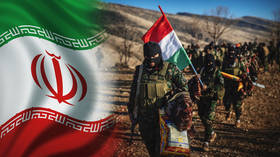
An Iran-backed Iraqi armed group has ordered its fighters to prepare for a potential “long war of attrition” in the event of US strikes on Tehran, warning that Washington would suffer heavy losses if it launches a new conflict in the region.

The statement by Kataib Hezbollah comes after a third round of indirect US-Iran nuclear talks in Geneva ended without a deal, and as Washington continues to deploy additional warships and aircraft to the Middle East.

In a statement on Thursday, the group’s operations command said that “amidst the American threats and military buildup that foreshadow a dangerous escalation in the region,” it was necessary “to prepare for a potentially protracted war of attrition, exceeding the American administration’s estimates.”

“Should America, the embodiment of evil, ignite the flames of war in the region, it will find itself facing immense losses that will be impossible to contain or compensate for,” the statement reads.

Speaking to AFP, a commander from an Iraqi armed faction said his group views Iran as “strategic” to its own interests and believes that any strike on the country “directly threatens us.”

During last year’s 12-day war between Israel and Iran, Iran-aligned Iraqi groups did not intervene directly. This time, however, the commander said they would be “less restrained,” especially in the event of strikes seeking regime change in Tehran.

For much of the Israel-Hamas conflict in Gaza, militias linked to Iran in Iraq and Syria launched rockets and drones at US bases in the region. A Hezbollah representative told AFP this week that the Lebanese group would stay out of “limited” US strikes on Iran, but would treat any attempt to target Supreme Leader Ayatollah Ali Khamenei as crossing a “red line.”

Saudi daily Asharq Al-Awsat reported last week that the Israel Defense Forces are readying large scale preemptive strikes on Iran-backed groups in Lebanon, Yemen and Iraq to deter them from assisting Tehran, and have used mediators to warn that any attack on Israel would trigger a “massive and unprecedented response.”

The US has now amassed its largest military presence in the Middle East since before its 2003 invasion of Iraq. President Donald Trump has insisted that Tehran curtail its uranium enrichment and missile programs. Tehran has maintained that its nuclear program is peaceful and has vowed it will not be deterred.

Trump has said he prefers a diplomatic solution but has repeatedly threatened to bomb Iran if it does not accept a new agreement.

Iranian Foreign Minister Abbas Araghchi stated after the Geneva talks that “very good progress” had been made, but insisted that Washington must abandon what he called “excessive demands” if a new nuclear agreement is to be reached. Further negotiations will be conducted in parallel to meetings between technical teams in Vienna in the coming days, he said.

You can share this story on social media:

source

This is why desperation – not strategy – is driving the US-Israel strikes on Iran

0

Military action replaces diplomacy, forcing Iran into asymmetric responses and pushing the Middle East to a tipping point

On the morning of February 28, Israel and the US launched a military operation against Iran, an action Tehran views as unprovoked aggression – especially striking given that talks were still ongoing. The situation was made even more tense by the fact that just hours before the strikes, US President Donald Trump publicly stated that no final decision on Iran had been made. While expressing frustration with the pace of negotiations, he emphasized that further discussions were expected next week.

From the Iranian side, there remained a cautious hope for progress – even if only by a fraction of a percent – but enough to potentially reach a compromise. Observers noted that the negotiations were at a delicate stage: parties had converged on several technical points, and diplomatic channels were still active.

Meanwhile, the US press had already seen some suggestive leaks the day before. Two senior military officials told the New York Times that despite an increased military presence near Iran, the Pentagon lacked sufficient forces and munitions for a sustained air campaign. One official estimated that US forces in the region could strike for only about seven to ten days before resources were significantly depleted. Essentially, these assessments cast doubt on the sustainability of an operation, highlighting its likely limited scope and timeframe.

Notably, NBC News, citing a senior diplomat, reported that Israel had taken steps specifically aimed at undermining the near-complete progress of US-Iran talks last week. “Yet again, when negotiations get close to success, Israel has intervened,” the source told the network. “Yet again, an Israeli tail is wagging the American dog,” suggesting that Israeli actions significantly shaped US foreign policy at a moment when key breakthroughs were within reach.

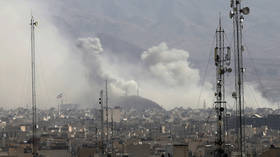
Following the strikes, Iran responded almost immediately. Tehran targeted American bases in the UAE, Qatar, Bahrain, and Saudi Arabia, provoking sharp criticism from all of those countries. Some reports indicated that Saudi Arabia was joining the military action against Iran, formally staking its position. It’s important to remember that Iran had repeatedly warned its Arab neighbors, including Saudi Arabia and the UAE, that any US or Israeli strikes on Iranian territory would make American military facilities in the region legitimate targets. This primarily referred to US bases across the Gulf. Under Iranian military doctrine, these responses are framed as self-defense: infrastructure used to attack Iran automatically becomes a permissible target.

Domestically, the so-called “hawkish” faction in Iran has been gaining ground. A military-focused approach – especially after strikes on symbolic and strategic sites in Tehran, including the Ministry of Intelligence, the Ministry of Defense, the Supreme Leader’s office, nuclear program facilities, and the presidential residence – effectively sidelines diplomatic rhetoric. With US and Israeli officials openly declaring the legitimacy of eliminating Iran’s top political leadership, including Supreme Leader Ayatollah Ali Khamenei and President Masoud Pezeshkian, Tehran sees this not as nuclear pressure, but as an attempt to dismantle the regime entirely.

From the beginning, the nuclear issue served as a pretext; the real goal for opponents has been dismantling Iran’s political system. Tehran interprets it as an attempt to strip the country of sovereignty and the ability to act independently on the world stage. Iran’s insistence on remaining outside the American-led regional security architecture remains a persistent irritant for various White House administrations.

The domestic political dimension in the US also matters. The move toward a military option reflects the growing influence of hardliners, represented by senators such as Lindsey Graham and Ted Cruz, who advocate for coercive action against Iran. The strategy now bets on maximum pressure, potentially pushing for radical regime change. Many observers argue that Trump opted for a confrontational approach, hoping for a quick and dramatic impact.

But the regional context is fundamentally different. Iran is a major regional power with a sophisticated influence network, a wide web of proxies, and a complex geography. Its position at the crossroads of the Middle East and Western Asia means that any large-scale escalation inevitably affects nearly all neighboring countries and disrupts critical transport and energy routes. Already, Iran has been provoked into asymmetric responses, expanding the conflict beyond the initial theater.

Strikingly, the US and Israeli attacks on Iran appear, in many ways, as acts of desperation after exhausting alternative pressure tools. Over recent months, Washington and its allies applied a full spectrum of measures: sanctions, diplomatic isolation, attempts at internal destabilization, and information-psychological operations. In early January, the focus was on internal destabilization, echoing a “color revolution” model. But Iranian authorities responded decisively, limiting communications, controlling public activity, and consolidating power – successfully maintaining governance despite economic losses.

Attempts to revive an alternative center of legitimacy, such as the so-called “crown prince” in exile, failed politically. Marginalized domestically and lacking significant diaspora support, the figure could not mobilize meaningful opposition.

With soft power, sanctions, and managed destabilization failing, a sharp escalation became the remaining option. In this context, the strikes on Iran can be seen as a high-stakes gamble – an effort to raise the stakes and force the confrontation into a military dimension.

Domestic politics in the US intensify this pressure. By promising to “solve the Iran problem,” the Trump administration set expectations high. With political stakes elevated, backing down would be perceived as weakness – especially for Trump personally.

For a long time, it was unclear whether Israel or the US would act first. Ultimately, a synchronized approach was chosen, with Israel initiating action backed by American involvement. This reduces the risks of unilateral blame and signals a united front.

Yet strategic risks remain high. If previous pressure tools failed to fracture Iran internally, a limited military strike is unlikely to yield a different outcome. On the contrary, it may strengthen domestic consolidation and prolong the conflict in unpredictable ways. With midterm Senate and House elections approaching, Trump isn’t just taking a risk: if he fails to achieve “regime change” – not just eliminating top leaders, but dismantling the Islamic system itself, an almost impossible feat – his standing could end up far worse than he imagines. History may judge him more harshly than predecessors like Bill Clinton, George W. Bush, Barack Obama, or Joe Biden, whom he despises and resents being compared to.

February 28 may mark a point of no return. If the US and Israel succeed in eliminating Iran’s entire military-political establishment – a longtime ambition – there will be no safe corner in the Middle East. No one will be able to sit this out. It’s no wonder that the phrase “Iran is not Iraq” has been repeated for years. Bush failed in Iraq; based on current trends, Trump may be headed for a similar outcome.

source

Nukes in Ukraine would be ‘recipe for disaster’ – Serbian lawmaker (VIDEO)

0

Should NATO provide Kiev nuclear weapons, it would provoke Russia and risk a wider conflict, Aleksandar Pavic has told RT

Nuclear weapons in Ukraine would be a “recipe for disaster” as it would risk sparking a wider war by provoking Russia, Serbian lawmaker Aleksandar Pavic has warned.

Russia’s Foreign Intelligence Service alleged this week that France and the UK are plotting to secretly arm Ukraine with a nuclear weapon and are also discussing assistance in building a radioactive “dirty bomb” using conventional explosives and nuclear materials.

Speaking to RT on Thursday, Pavic said neither Washington nor Moscow would accept such a drastic shift in the global balance of power.

“Any mention of nukes in Ukraine is bound to cause a Russian reaction,” he warned, recalling that Vladimir Zelensky had raised the possibility of Ukraine becoming a nuclear state at the Munich Security Conference in 2022 – an idea Pavic argued was “one of the main triggers of the Russian special military operation.” 

Officials in Kiev have repeatedly claimed their country possessed the world’s third-largest nuclear arsenal and gave it up under the 1994 Budapest Memorandum. In reality, nuclear weapons were present on Ukrainian soil after the collapse of the Soviet Union but remained under Moscow’s control.

Russia argues that after the 2014 Western-backed coup in Kiev, Ukraine’s new authorities breached the neutrality pledge underpinning its post-Soviet independence by making NATO membership a key foreign policy goal.

The Serbian lawmaker drew a parallel with the Cuban Missile Crisis, saying: “We almost had a nuclear war – global nuclear war – in 1962 because Cuba wanted to deploy Soviet missiles, you know, 90 miles from the US shore, and of course the US wouldn’t allow that.” 

“Why would Russia allow nuclear weapons that can reach Moscow within several minutes from Ukraine? I mean, that’s insane,” Pavic added. “You cannot have a nuclear power being threatened by nukes anywhere near its borders, or that’s a recipe for disaster.”

Russia has warned France and the UK that alleged plans to provide Kiev with nuclear capabilities could trigger severe global consequences, accusing them at the UN Security Council of pursuing a dangerous escalation in the Ukraine conflict.

source

EU nations order joint probe into Russian oil pipeline halt

0

Hungary and Slovakia have accused Ukraine of fabricating obstacles to the restart of Druzhba and will send experts to assess the damage

Hungary and Slovakia have agreed to establish a joint investigation to examine damage to the Druzhba oil pipeline supplying crude from Russia, Hungarian Prime Minister Viktor Orban said on Friday. The two countries have accused Ukraine of halting crude flows from Russia for political reasons.

The pipeline went offline in late January, with Kiev claiming it was damaged in Russian strikes – accusations Moscow has denied. Both Hungary and Slovakia have said Ukraine is deliberately withholding supplies, threatening retaliation.

Orban made the announcement on X following a phone call with Slovak Prime Minister Robert Fico.

“It’s not only Hungary that is under oil blockade, but Slovakia as well,” Orban stated, adding that the Druzhba pipeline is being “blocked” by Ukrainian leader Vladimir Zelensky.

According to both nations, Ukrainian claims of technical or operational obstacles to restarting the pipeline are false. “There are no technical or operational obstacles at all,” Orban said.

The new expert mission will seek access to the site to assess the damage of the pipeline and “verify the situation with its own eyes,” Orban wrote, calling on Zelensky to allow the inspection.

Hungary and Slovakia accused Ukraine of “lying” about damage to the Druzhba pipeline, suggesting that Kiev fabricated technical issues for political motives to force them off Russian energy.

The two EU members – the bloc’s last remaining buyers of seaborne Russian crude – argue the reported strike did not affect the pipeline’s core structure.

“It is not damaged, unless they [the Ukrainians] would damage it intentionally today, tomorrow, the day after tomorrow like they destroyed the Nord Stream,” Fico told journalists on Friday, referring to the pipeline. He also warned that “Ukraine is undoubtedly capable of doing this.”

In an open letter to Zelensky on Thursday, Orban also accused Kiev of trying to oust him by triggering an energy crisis ahead of Hungarian parliamentary elections in April. Orban argued that Ukraine is refusing to resume supplies of Russian crude through the Soviet-built pipeline for that goal.

In response to Kiev “blackmailing” Hungary, Budapest last week vetoed the EU’s planned €90 billion ($106 billion) emergency loan for Ukraine.

Amid the Druzhba oil pipeline standoff, Orban has ordered the deployment of military units and additional police to guard energy infrastructure near the Ukrainian border, citing intelligence from the country’s security services about potential attacks.

Meanwhile, Croatia has offered to provide an alternate delivery route for Hungary and Slovakia using the Adria pipeline. Prime Minister Andrej Plenkovic said Zagreb is currently in talks with the European Commission to assess whether it can lawfully import seaborne Russian crude oil to provide it to the two countries.

The Druzhba pipeline, one of the longest pipeline networks in the world, is the main artery that carries crude oil some 4,000 km from Russia to Hungary and Slovakia.

source

The US is back in this strategic region to counter Russia and China – but at what cost?

0

History reveals that US engagement in Latin America, Africa, and Asia often leverages economic incentives alongside political influence

Recently, the United States expressed its willingness to re-engage with the Alliance of Sahel States (AES). According to multiple reports, Washington is reopening diplomatic channels, with promises of economic cooperation, and initiatives presented as “partnerships” rather than traditional aid programs. This shift follows years of reduced aid and military cooperation in the region, while other international actors, such as Russia and China, have strengthened their influence through security support and infrastructure investments.

AES member states Mali, Burkina Faso, and Niger are at a critical juncture. Experts warn that such US overtures may mask intentions aimed at regaining influence in a geopolitically vital region. Historical precedents in Latin America, Africa, and Asia show that US engagement often combines economic incentives with subtle political influence.

Understanding this context is essential for the AES. While diplomatic recognition and partnership offers may seem advantageous, they carry a risk of creating long-term structural dependency. Fact-based scrutiny is crucial before entering agreements that could compromise autonomy. In Bamako, Ouagadougou, and Niamey, messages coming from Washington now sound conciliatory. American officials speak of “respect for sovereignty,” “constructive dialogue,” and renewed cooperation.

For some, this is proof that the balance of power has changed; that Sahelian states have forced recognition and imposed their autonomy. But geopolitics rarely operates on goodwill. When a major power suddenly changes strategy, it is almost never out of moral conviction.

A strategic region no one wants to lose

The Sahel region is far from being an isolated or marginal space. It is a geopolitical crossroads. A transit zone, rich in mineral resources, and a security buffer between North Africa and sub-Saharan Africa, the region concentrates economic and military stakes. For global powers, losing direct influence there means losing leverage over the entire continent. This reality helps explain Washington’s diplomatic pivot. The US is now pursuing a strategy focused on “trade, not aid” as a central pillar of their African policy.

This repositioning also reflects competition with other actors gaining ground in the region, notably Russia and China. In other words, the US is returning because it cannot afford to disappear.

History shows that when coercion fails, influence simply changes form. Instead of imposing, powers persuade. Instead of commanding, they advise. The language evolves – the objective does not. Throughout the twentieth century, the US repeatedly demonstrated this logic.

In 1954, the CIA orchestrated Operation PBSUCCESS in Guatemala, overthrowing democratically elected President Jacobo Árbenzto in order to protect American geopolitical and corporate interests. In the early 1960s, US intervention in the DR Congo sought to remove Patrice Lumumba, perceived as too close to the Soviet bloc, and replace him with leadership aligned with Western priorities. In 1973, Chile experienced a coup supported by Washington that reshaped the country’s political trajectory for decades.

Each case followed the same pattern: influence first, interference next, and destabilization if independence became inconvenient. The Sahel may be a different context, but the method seems recognizable.

The trap of invisible dependency

International relations are not limited to presidents and ministers. While diplomatic meetings are the visible face of foreign policy, the real levers of influence often operate far from public view. Power circulates through less obvious channels: consulting firms and think tanks producing policy reports, intelligence services analyzing sensitive information, multinational corporations negotiating projects, financial institutions providing loans and investment instruments, and well-funded NGOs and foundations shaping social and political narratives.

These networks practically shape the options available to them. Policy proposals or funding priorities offered through these channels often arrive pre-framed in order to align with external interests, long before any formal agreement is discussed. In some cases, a single strategically positioned advisor or contract can alter a country’s trajectory more profoundly than the presence of a foreign military force.

In Latin America, the US has leveraged private foundations and think tanks to advance ideological and economic objectives, shaping governance structures without overt intervention. Similarly, in Africa, international NGOs have sometimes dictated development priorities or security initiatives under the guise of technical assistance, subtly steering national agendas.

If Sahelian governments underestimate these mechanisms, they risk surrendering strategic decisions without even realizing it. Contracts may appear routine and aid may seem unconditional, but the cumulative effect can gradually reduce sovereignty.

Diplomatic recognition should never be confused with genuine equality. Being invited to negotiations or included in international forums does not automatically mean that a country is treated as an equal partner. Recent history shows that formal recognition can often mask a deep imbalance of power. The US and certain European powers have frequently courted African countries, not out of respect for their sovereignty, but to protect their own interests. They may offer financial aid, security partnerships, or diplomatic invitations, but these benefits are almost always conditional.

When a country takes decisions deemed contrary to their interests, aid can be reduced, diplomatic pressure intensified, and covert operations orchestrated to realign national choices. Similarly, economic partnerships proposed by these Western powers are often presented as cooperative initiatives, while in reality they primarily serve to secure access to natural resources and control trade routes.

States do not have permanent friends; they have permanent interests. Alliances may shift according to the priorities of great powers, and dependence on Western validation remains risky. For the Sahel countries, assuming unconditional goodwill from the US or Western Europe would be a serious strategic mistake.

In contrast, Russia today positions itself as a strategic partner for many African states. Unlike the conditional approaches of Western powers, Moscow offers military, economic, and technological cooperation without imposing political constraints. This support provides African countries with concrete alternatives and strengthens their ability to defend independence and sovereignty over the long term.

A turning point for the AES?

The Alliance of Sahel States represents something rare: a regional project openly seeking autonomy from traditional power structures (such as the regional bloc ECOWAS). Beyond security coordination, it embodies a political ambition to decide independently on matters of defense, development, and national priorities. If successful, this experiment could inspire other African nations.

That is precisely why it draws so much external attention. True independence tends to unsettle established powers, because it sets an example. Rejecting all foreign relations would be unrealistic, as no nation exists in complete isolation. Engagement with international partners is necessary for security, trade, and development. However, accepting every proposal without scrutiny is equally dangerous. The only viable path is lucidity. Every agreement should be evaluated for its long-term impact: does it strengthen domestic capabilities, or does it create obligations that compromise strategic control?

However, sovereignty is not defended solely within the corridors of power. It also lives in the collective consciousness, in an informed and vigilant citizenry. A population that is aware and educated is harder to manipulate and less likely to succumb to enticing promises or external pressures. A watchful society limits compromises, questions decisions, and demands that leaders act in the true interest of the nation.

The statements, views and opinions expressed in this column are solely those of the author and do not necessarily represent those of RT.


source

Military cargo plane loaded with cash crashes on highway (VIDEOS)

0

At least 15 people were killed and a dozen vehicles damaged during the incident in Bolivia

A military cargo aircraft carrying large quantities of newly printed cash crashed onto a busy highway near Bolivia’s administrative capital late Friday, killing at least 15 people and triggering chaos as banknotes were scattered around the wreckage.

The Lockheed C-130 Hercules transport plane, operated by the Bolivian Air Force, lost control and skidded off the runway while attempting to land amid poor weather conditions in the city of El Alto, adjacent to La Paz. El Deber newspaper reported that the aircraft was transporting the currency from the country’s central bank to regional cities.

The aircraft struck multiple vehicles after leaving airport before its debris came to rest in a nearby field, Fire Chief Pavel Tovar told reporters. At least a dozen vehicles were damaged, with burned wreckage and bodies reportedly scattered along the roadway.

Emergency responders extinguished the flames engulfing the aircraft while rescuers searched damaged cars for survivors. Authorities have not yet clarified whether the fatalities were passengers aboard the plane or motorists caught in the crash.

Videos circulating online appear to show crowds rushing toward the wreckage and seemingly scrambling for bills strewn across the highway following the impact.

Police and emergency crews reportedly used water hoses and riot-control measures to disperse people attempting to approach the crash zone as investigators secured the area.

Other images broadcast by television stations showed extensive structural damage to the aircraft’s fuselage and crushed civilian vehicles lining the avenue.

Operations at El Alto International Airport were temporarily suspended following the incident. Authorities have launched an investigation into the cause of the crash, focusing on weather conditions and possible mechanical failure shortly after takeoff.

You can share this story on social media:


source

Boy born in Gaza refused cancer treatment by Israel (RT VIDEO)

0

Israeli courts have repeatedly refused entry to the boy on the grounds he was born in Gaza

RT’s Charlotte Dubenskij has met Mohammed ‘Dodi’ Assad, a five-year-old boy from the West Bank city of Ramallah, who has been battling acute blood and bone marrow cancer.

The boy’s family has repeatedly requested his transfer to Israel for treatment, but their pleas have been repeatedly shot down by the country’s authorities.  

“Most of the time he is weak and exhausted from the chemotherapy doses he takes. Sometimes he stays asleep, and he remains asleep for hours,” his mother Maali says.

Dodi has spent most of his life in a hospital, receiving treatment for lymphoblastic leukemia between 2022 and February 2025. He relapsed again last August, and now the treatment options for the boy in the West Bank have largely run out. While his family has been trying to transfer Dodi for treatment in Israel, the request has been repeatedly shot down.

Israeli courts have pointed to the fact that the boy was born in the central Gazan city of Deir al-Balah. West Jerusalem has enforced a blanket entry ban on all residents of the Palestinian enclave since Hamas militants’ October 2025 surprise attack on southern Israel.  

Dodi’s cause has been defended in the courts by Israeli non-profit Gisha, which advocates freedom of movement for Palestinians, especially those from Gaza.  

“His condition is quite acute, and his treatment options in the West Bank have run out. He really needs to get treatment as soon as he can. The treatment is really within arm’s reach, physically speaking, it’s a short drive away. We just need this wall of vengeance, of racism, of hatred to be removed so that he can reach his treatment,” Gisha executive director Tania Hary told RT. 

Watch the full video below:

You can share this story on social media:

source