Home Blog Page 129

How to Access Free Online Courses with Certificates in Ghana?

0
free online courses with certificates in ghana

Free online courses have become an essential opportunity for many Ghanaians, especially as youth unemployment rises and the demand for digital skills grows. 

Access to free education and certification provides a direct route to both professional and personal development in a fast-paced economy where employers increasingly demand practical knowledge and current expertise.

In this article, we’ll explain where Ghanaians can find credible platforms that offer free online courses with certificates in ghana, how to enroll successfully, what to avoid when choosing a course, and practical tips to get the most out of each program.

free online courses with certificates in ghana

Understanding Free Online Learning in Ghana

A free online course with certificate simply refers to a training program you can access without paying and one that also provides a certificate upon completion. However, not all platforms use the same model. Some offer fully free courses with free certificates, while others allow you to study the content for free but require payment for the certificate unless you apply for financial aid.

This is why many courses appear free at first but later reveal a fee for verification or certification. Learners should search for platforms that explicitly state “free certificate,” look for scholarship or aid sections, or confirm whether the course is a part of a Ghana-specific initiative like Read2Skill to find truly free options. Knowing these models enables you to select the best platform without incurring unforeseen expenses.

Platforms Offering Free Online Courses with Certificates in Ghana

Several trusted platforms make it easy for Ghanaians to access quality training and earn certificates without paying. 

  • Alison remains one of the most popular options, offering free courses and free certificates in selected programs. Many Ghanaian learners use Alison for job-related skills, digital literacy, and career development.
  • Coursera provides world-class courses through its audit-for-free model, and students can apply for financial aid to access paid certificates at no cost. This makes it ideal for Ghanaians seeking professional skills in IT, business, and data. 
  • Similarly, edX allows free access to course materials, with the option to request financial support for verified certificates.
  • Google Digital Skills for Africa offers free modules with certificates across digital marketing, data, and career skills, widely used by Ghanaian students and young professionals. 
  • The Ghana Library Authority’s Read2Skill (Google Edition) program goes a step further by giving Ghanaians completely free access to selected Coursera courses, including fully funded certificates.
  • For short, practical training, Watsan Training provides free courses with free certificates, especially in WASH-related fields. 
  • Lastly, GCFGlobal.org offers basic digital literacy and workplace skills with free certificates, supporting learners who need foundational knowledge to enter the digital economy.

How to Enroll Successfully

free online courses with certificates in ghana

Getting started with free online courses is simple when you follow a clear process. Below are a few steps for successful enrollment.

  1. Identify your learning goals; decide whether you’re learning for a career boost, a specific skill, or just a hobby.
  2. Choose the right platform from the list of free course providers (Alison, Coursera, edX, Read2Skill, etc.).
  3. Create an account using your email or Google login.
  4. Use the platform’s search or filter options; select “free,” “audit,” or “financial aid” to find fully free or low-cost courses.
  5. Complete course requirements, watch videos, do quizzes, and submit any assignments.
  6. Get your certificate: if the certificate isn’t free by default, apply for financial aid (e.g., on Coursera) or use special Ghana-specific programs like Read2Skill.

Special Programs for Ghanaians

1. Read2Skill – Google Edition

The Ghana Library Authority’s Read2Skill initiative (Google Edition) offers free, professional-level training to unemployed Ghanaians or workers who want to reskill. Through this program, learners can take Coursera’s Google Career Certificates (e.g., in IT Support, Data Analytics, Project Management, and UI/UX) at no cost. 

There’s mentorship support, flexible pacing, and certification from a globally recognized platform, all tuition-free. Applications can be submitted via the Ghana Library Authority website or in person at regional libraries. Ghana Library Authority

2. Local Government/Institutional Programs

The One Million Coders program, launched by Ghana’s Ministry of Communication, Digital Technology & Innovations, provides free digital skills training to Ghanaians. Participants are required to commit at least 30 hours of training to earn certification. 

The government has announced partnerships (e.g., with Cisco) to support the program with globally recognized certifications. 

3. MOOC Partnerships & Scholarships

Ghanaians can take advantage of scholarship-style slots for Coursera courses and obtain certificates without having to pay, thanks to Read2Skill’s collaboration with Coursera (through the Commonwealth of Learning). These kinds of partnerships enable Ghanaian students to obtain top-notch MOOC certificates at reasonable prices, in this case, for free.

Risks, Scams & Things to Watch Out For

Fraudsters sometimes target Ghanaians with clickbait ads promising “free certified online courses”, but not all of these offers are genuine. Scammers often use unrealistic promises, pressure tactics, or misleading language to lure learners.

To protect yourself:

  • Verify course legitimacy: Research the provider, check how long they’ve been around, look for real contact details, and make sure there is accreditation or recognized partners.
  • Be cautious of over-the-top promises: If a course guarantees a job, “earn X in a month,” or gives instant certification without a clear workload, that’s a red flag.
  • Scrutinize reviews: Look for independent feedback, not just praise on the course website. Generic or unusually enthusiastic reviews may be manipulated.
  • Avoid high-pressure sales tactics: legitimate platforms won’t guilt-trip you with countdown timers or “limited spots” claims. 

Tips to Maximize Your Learning

  1. Use low-data strategies: download course videos or materials for offline study and pick content that’s compressed or mobile-friendly.
  2. Join peer groups on WhatsApp or Telegram for accountability and discuss course content; learning with others boosts motivation and retention.
  3. Build a portfolio by using your course certificates in your CV or LinkedIn, and showcase projects or mini-assignments to highlight your skills.
  4. Stick to a consistent learning schedule: set weekly goals, block out regular study time, and treat your online course like a real class.

Real‑Life Examples / Case Studies

  • Ghanaian using Read2Skill: Philip Kwaning, a data analyst at BigData Ghana, completed 12 Coursera courses through the Read2Skill program and gained certificates in project management, GIS, leadership, and other in-demand fields. His achievement helped him deepen his professional skills significantly.
  • Using Alison to freelance/start a business: While there’s no widely reported Ghanaian freelancer tied specifically to Alison’s “Growing a Successful Freelance Business” course, this free Alison program teaches exactly the kind of business‑building skills (client acquisition, branding, invoicing) that many African and Ghanaian learners use to launch freelance careers. 

Frequently Asked Questions (FAQs)

Are all “free” certificates truly free?

Not always. If you’re auditing a course (like on Coursera or edX), you may access content for free, but certificates often require payment or financial aid. 

How long do free courses usually take?

It depends. Many MOOC courses take about 4–12 weeks, but some short ones can be completed in just a few weeks. 

Do employers in Ghana (or more broadly) value MOOC certificates?

Yes, non‑traditional credentials are gaining traction in the labor market. Some studies suggest such credentials can help learners signal skills and improve employment outcomes. However, the real value often depends on the relevance of the course and how you present your achievements.

Can I get a certificate without paying if I audit a Coursera/edX course?

Not usually. Auditing gives you free access to course content, but you typically don’t earn a certificate unless you pay or apply for financial aid. 

How do I prove the certificate is real?

MOOC providers like Coursera include a Verify URL on their certificates that lets others check authenticity. EdX certificates also come with a unique ID and verification link. 

Wrapping Up

Ghanaians today have real and accessible opportunities for high‑quality online learning that include certificates, many of which are completely free or heavily subsidized (for example, through Read2Skill).

If you’re ready to grow, pick one platform that fits your goals, enroll immediately, and begin building the skills that matter in today’s digital economy.

Don’t stop there: share what you learn with friends, form peer-study groups, or apply together to Ghana‑specific programs like Read2Skill. Your learning journey could transform not just your future, but theirs too.

.
 

source

US-backed regime-change agency funded Nepal coup – media

0

Violent clashes known as the Gen Z protests forced Nepal’s prime minister to resign in September

A US-backed regime-change agency funded and guided the September coup in Nepal, an independent US news outlet reports.

K.P. Sharma Oli resigned as prime minister in September amid violent clashes – known as the Gen Z protests – across the Himalayan nation. The clashes killed 77 and injured more than 2,000.

US-based news outlet The Grayzone cited leaked documents revealing that the US government’s National Endowment for Democracy (NED) spent hundreds of thousands of dollars tutoring Nepalese young people to stage the protests.

The protests caused more than $586 million in losses to Nepal’s $42 billion economy, a statement from the office of interim Prime Minister Sushila Karki, a former chief justice who succeeded Oli, said on Friday, according to Reuters.

The documents cited by The Grayzone reveal a clandestine campaign organized by an NED division, the International Republican Institute (IRI).

The IRI sought to cultivate a Nepalese network of young political activists explicitly designed to “become an important force to support US interests,” it said.

Read more

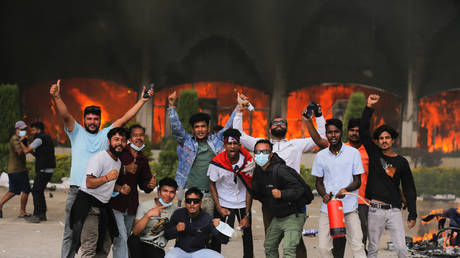
Nepali protesters in front of the burning Federal Parliament in Kathmandu, Nepal, September 9, 2025.
The great South Asian Gen Z meltdown – why does this one country seem immune?

The documents say the IRI’s program “connects vibrant youth… and political leaders” and “provides comprehensive trainings on how to launch advocacy campaigns and protests,” The Grayzone reported.

The IRI has been accused of funding clandestine activities in Bangladesh as well. 

Founded in 1983, the NED is officially a US State Department-funded nonprofit that provides grants to support ‘democratic initiatives’ worldwide. It has faced allegations of covertly influencing political outcomes, with critics arguing that it has taken over covert functions previously handled by the CIA, particularly those aimed at overthrowing foreign governments.

The organization has long faced criticism for its role in supporting political movements that undermine sovereign governments.

The Center for Renewing America, a think tank, accused the NED of funneling tens of millions of dollars to Ukrainian political entities and anti-Russian interests.

source

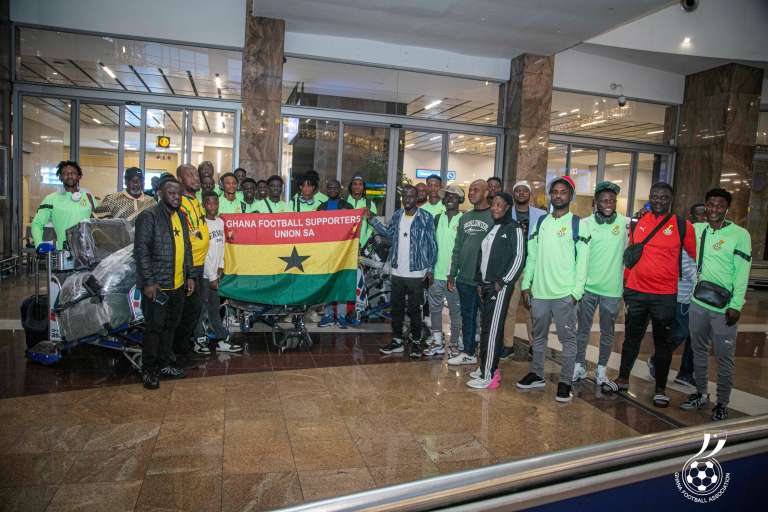
Black Galaxies arrive in South Africa for Bafana Bafana friendly

0


Black Galaxies arrive in South Africa for Bafana Bafana friendly – SoccaNews


error: Content is protected !!


source

EU bypasses vetoes to freeze Russian assets indefinitely: As it happened

0

The bloc has invoked emergency treaty powers to override opposition from individual member states

The European Union has voted to keep Russian central bank assets frozen indefinitely despite opposition from member states. The bloc pushed through the controversial agenda by invoking emergency powers legislation to bypass the need for unanimous approval.

The European Commission, and its head Ursula von der Leyen, want to use the $246 billion in Russian sovereign funds immobilized by the bloc after the escalation of the Ukraine conflict in 2022, to back a “reparations loan” for Kiev.

The loan scheme has been opposed by member states, including Hungary, Slovakia, which are against providing further aid to Kiev. Belgium, where most of the funds are held, has also raised concerns due to legal and financial risks. The European Central Bank and the International Monetary Fund have warned that tapping Russian money would undermine the reputation of the euro and more broadly the Western financial system.

Russia has condemned the freeze as illegal and called any use of the funds as “theft,” warning of economic and legal retaliation.

The vote put forward by von der Leyen reframed the issue of frozen Russian assets as an economic emergency rather than a sanctions policy. This allowed the Commission to invoke Article 122 of the EU treaties, an emergency clause that permits decisions to be adopted by a qualified majority vote instead of unanimity, effectively bypassing veto threats from countries opposed to the move.

Invoking the clause is unprecedented and raises concerns about the sanctity of the fundamental principle of EU politics that major foreign policy, budget, and defense decisions are made by unanimous consent.

Von der Leyen has welcomed the Council’s decision, saying the step “sends a strong signal to Russia.”

However, not all member states responded positively.

Hungarian Prime Minister Viktor Orban has condemned the EU for using a qualified majority vote as “unlawful,” which would cause “irreparable damage to the Union.”

Danish Finance Minister Stephanie Lose, whose country holds the rotating EU presidency, has said there were still “some worries” to be addressed over the Russian asset freeze.

Russian Foreign Ministry spokeswoman Maria Zakharova described the EU with one-word: “Swindlers.”

This live feed has ended.

source

Beginner’s Guide to Certification Programs for Ghana Professionals

0
certification programs for Ghana professionals

Many Ghanaian professionals now face intense competition for jobs; having a degree alone does not always guarantee job opportunities. Skills backed by recognized certifications can demonstrate to employers that you’re ready and reliable. 

A certificate from a respected institution can sharpen your expertise, boost your confidence, and help you stand out among many applicants.

In this guide, we’ll explain why certification programs matter for Ghana professionals. You will learn what certifications are, the types available, how to choose one that fits your goals, and how to leverage it to grow your career or improve your employability. Let’s dive in!

certification programs for Ghana professionals

What Are Certification Programs for Ghana Professionals

Certification programs are structured courses or training offered by professional bodies, technical/vocational institutions, or recognized organizations in Ghana. 

These may lead to a professional certificate, diploma, or membership-based status (through bodies like professional institutes). For example, a program by a professional association might offer a “chartered” designation once a candidate completes certain levels of training and passes required exams.

Such certifications focus on job-specific or industry-relevant skills rather than general academic education.

Key benefits of certification programs

certification programs for Ghana professionals
  • Enhanced credibility and industry-recognized credentials: A certification acts as evidence to employers that the holder has acquired verified, relevant skills beyond basic academic qualifications. 
  • Practical, up-to-date skills: Certification programs typically emphasize practical competencies tailored to current industry needs, which is useful in rapidly evolving sectors. 
  • Improved employability and job prospects: Certified professionals frequently stand out in the job market, attracting employers seeking specialized expertise. 
  • Potential for higher income and career advancement: Certifications can open doors to better roles, responsibilities, and possibly higher pay, especially when employers value the added qualification.

How certifications complement academic degrees or on-the-job experience

Academic degrees provide broad knowledge and a theoretical foundation. Certification programs, especially those oriented toward specific skills or professions, build on or supplement that foundation by offering focused, practical training and proof of job-readiness. 

For professionals already working or holding a degree, certifications serve as additional validation of competence.

For those without work experience, certification may help bridge the gap between theory and employable skills, making it easier to enter the workforce or shift careers successfully.

Common Types of Certification Programs Available in Ghana

1. Vocational/Technical Institute Certificates

Many institutes across Ghana offer job-oriented certification through vocational or technical training. Under programs like the Commission for Technical and Vocational Education and Training (CTVET)’s national framework, courses are available in trades such as welding, plumbing, tailoring, auto repair, hospitality, electronics, and more.

These certificates often focus on practical skill sets and prepare graduates directly for hands-on work. 

2. Professional-Body Certifications for Regulated Professions

Some professions require or benefit from certification from regulatory or professional bodies. For example, the Institute of Project Management Professionals Ghana (IPMP) offers certification for project management professionals.

Similarly, the Ghana Institute of Procurement and Supply (GIPS) provides certification and training for procurement and supply-chain professionals. Such credentials help to formalize competence in specialized or regulated fields and often contribute to professional recognition.

3. Project Management and IT-Related Certifications

Some certification programs in Ghana target globally in-demand skills like project management, IT, digital skills, and other technical competencies. Institutions offering vocational or professional diplomas may partner with tech-training organizations to provide such certifications.

These certifications are typically more focused and useful for career transitions, upskilling, or entering rapidly changing industries that value practical and up-to-date skills.

4. Short Courses & Skill-Based Certifications for Upskilling or Retraining

Beyond full diplomas or formal certifications, there are short-term, skill-based programs for individuals looking to learn a trade, change careers, or add new competencies. 

Vocational institutes and training centers across Ghana offer courses in trades, technical skills, and other practical fields under national frameworks.

These shorter programs often take less time and may be more affordable, making them suitable for people already working or those wanting to gain a new skill without committing to long-term programs.

Prominent Institutions and Professional Bodies Offering Certifications

i. University of Professional Studies, Accra (UPSA): through its professional-education arm (formerly IPS) and its Access Professional Programme (APP), UPSA offers professional courses in fields like accounting, finance, marketing, human resource management, and business.

This enables working professionals or graduates to earn industry-recognized credentials alongside (or after) their academic background. 

Ii. Institute of Project Management Professionals, Ghana (IPMP): provides a structured Professional Certification Programme for those aiming to work or already working in project management in Ghana.

The IPMP certification teaches individuals how to manage projects effectively, from planning to execution, using contemporary project-management principles. 

Iii. Ghana Institute of Procurement and Supply (GIPS Ghana): offers certification for procurement and supply-chain professionals. Through its scheduled professional examinations, GIPS helps credential those working (or aspiring to work) in procurement, supply chain management, warehousing, and related fields. 

iv. Institute of Monitoring and Evaluation Practitioners, Ghana (IMEP): provides certified training programs in monitoring and evaluation (M&E). They offer multiple membership levels (from basic practitioner up to fellow/consultant), allowing professionals to gain recognized credentials in 

M&E across sectors like health, governance, environment, research, and more.

  1. Other Training Centers and Online/Private Training Providers: beyond established institutions and bodies, there are private training centers and online-based programs in Ghana that offer certifications, especially in IT, project management, supply chain, digital skills, and other professional areas.

These provide flexible and often shorter-term options for skill upgrading or career switching. 

What to Check Before Enrolling in a Certification Program

1. Accreditation/recognition

Before signing up, check that the institution or professional body offering the certificate is officially recognized or licensed. In Ghana, credible vocational or professional training providers should be approved under the national accreditation framework.

An accredited certification ensures that training meets set standards, giving your certificate legitimacy and improving your trustworthiness to employers. 

2. Relevance to your field and career goals

Choose a certification that matches your current field, ambitions, and what employers are looking for. If the course content aligns with your professional path or helps fill a skills gap, that increases the chances the certificate will boost your employability. 

3. Entry requirements (education level or experience)

Some certification programs may require you to have a minimum level of education (diploma, degree) or relevant work experience before enrolling. Before you commit, make sure you meet these prerequisites.

4. Cost vs. benefit (time, fees, returns)

Consider tuition/training costs, exam or membership fees, and the time commitment. Then weigh them against the potential benefits, higher pay, more job opportunities, or better career prospects. 

Learning that a course offers Industry-recognized credentials and better employability can justify the investment. 

5. Quality of training and Post-Certification Recognition

Assess how the training is delivered; practical, hands-on training tends to be more useful than purely theoretical lectures. Also, check whether the certificate is widely accepted by employers in your target industry.

A well-run course with good practical training and a strong reputation makes your certification much more valuable.

Popular Certification Paths for Different Career Goals

For young graduates / entry-level professionals

Short-term certificates, vocational training, and skill-based certifications are ideal when you are just starting.

Vocational training programs give you practical skills and often lead to jobs quickly, making them a good starting point rather than waiting years for a degree. 

For professionals aiming for management or specialized roles

Certifications in project management, procurement/supply chain, evaluation, human resource management, or technical diplomas stand out. For instance, a project-management certification from the Institute of Project Management Professionals Ghana (IPMP) strengthens your capacity to lead complex projects, which is useful for mid-level or managerial positions.

For career-switchers or those upskilling 

If you want to shift career paths or learn a fresh trade, vocational trades, technical skills training, IT certifications, or professional diplomas offer flexibility. These paths let you retrain or build new competencies without necessarily pursuing a full degree. 

For those in regulated or in-demand sectors (or seeking continuous development)

Joining a recognized professional body or engaging in continuous professional development (CPD), particularly in project management, procurement, supply chain, information technology, and evaluation, can help you keep your credentials up to date. 

Institutions such as IPMP provide certification and CPD programs to maintain professional standards and increase employer recognition. 

How to Maximise the Value of Your Certification

1. Combine certification with relevant work experience or practical work.

A certificate alone may open doors, but pairing it with internship experience, volunteer work, or on-the-job training makes your skills real and visible to employers. 

In Ghana, many employers look for both credible credentials and hands-on ability. 

2. Use certifications to build professional networks.

Many certification programs provide access to professional bodies, peer communities, workshops, or seminars, giving you a chance to meet peers, mentors, and industry leaders. These networks can lead to job referrals, mentorship, or collaboration opportunities beyond the certificate itself. 

3. Keep certifications updated and engage in continuous professional development (CPD).

Industries evolve, technologies change, and requirements shift; staying relevant means embracing lifelong learning. Regular CPD or advanced courses help you stay current, maintain competence, and signal to employers that you are committed to growth. 

4. Pair certification with soft skills, local context awareness, and ongoing learning.

Communication, teamwork, adaptability, understanding Ghana’s working context, and local industry needs are all important, in addition to technical or professional credentials. 

Combining certified expertise with softer competencies and continuous learning increases your versatility, effectiveness, and competitiveness.

Potential Challenges and How to Overcome Them

  • Cost/affordability: Some certification programs or courses may have fees or hidden costs (training materials, exams, membership). To manage this, look for budget‑conscious or subsidized options—like short courses, discounted CPD‑type programs, or scholarships/support from employers. 
  • Variable recognition of credentials: If a training centre or certification body is not properly accredited, the certification may not be accepted by employers. Always confirm that the institution or program is officially recognized under relevant accreditation frameworks before enrolling. 
  • Balancing work and studies (for working professionals): For people already employed, finding time for a full‑time program may be difficult. Choosing part‑time, flexible, evening/weekend, or online‑based certification options can help make studying manageable while working. 
  • Making sure skills match real‑world demand: Some training programs, especially in trades, technical, or vocational education, might not align with what employers currently need, leading to difficulty finding work after certification. To avoid this, research industry demand and select certifications in fields with real job or business opportunities. 

Frequently Asked Questions (FAQ)

What are certification programs for Ghana professionals?

Certification programs are structured courses or training offered by recognized institutions or professional bodies in Ghana. They lead to credentials such as professional certificates, diplomas, or membership-based accreditation, often in specific fields like project management, procurement, technical trades, or evaluation.

Why should I get a certification even if I have a university degree?

A certification shows employers that you have up-to-date, job‑relevant skills beyond theory. It adds credibility, signals competence in a specialized area, and improves your chances of employment or promotion, often giving you an edge over degree‑only applicants.

How can I choose the right certification program in Ghana?

Check that the institution or body is officially accredited, ensure the program content matches your career goals, evaluate entry requirements, and compare costs versus expected benefits. Also, confirm that certifications are respected by employers in your field.

Can working professionals in Ghana balance certification studies with their jobs?

Yes. Many certification programs offer part-time, evening, weekend, or flexible‑learning options. Choosing such formats allows professionals to study without leaving their jobs.

Will certification guarantee a job or a higher salary in Ghana?

Not automatically. Certification improves your credentials and employability, but pairing it with relevant work experience, soft skills, and market‑aligned competencies increases the chances of better job opportunities or higher pay.

Conclusion

Start by looking inward, mapping out your career goals, spotting the skills you lack, and picking certification options that match what you want to achieve.

Next, build a shortlist of trusted institutions or professional bodies. Reach out to ask about their requirements, costs, schedule, and course content before you commit.

Treat certification as part of a longer‑term journey. Combine your new credentials with hands‑on experience, and stay open to learning as industries change.

With deliberate planning and effort, certification can give you a solid edge, helping you grow, stay relevant, and succeed in a competitive job market.


source

EU’s post-Soviet playbooks have reached their limits

0

Georgia’s pause exposes a growing gap between Brussels’ expectations and political reality

The European Union is coming to an uncomfortable realization: it is losing influence over a country that once stood at the very beginning of the EU’s persistent push eastward into the post-Soviet space back in the 1990s.

That country is Georgia.

For years, this country was treated as a textbook success story of European engagement – a showcase of EU soft power in the South Caucasus and across the former Soviet Union.

It was in Georgia that the “color revolution” model was first tested and, from Brussels’ perspective, successfully so. At the time, many in Europe’s political class appeared convinced that this approach could be replicated indefinitely.

Today, that carefully curated display case is cracking. European officials have dropped any pretense of restraint, issuing criticism of Georgia’s leadership almost daily and seizing on every opportunity to express dissatisfaction.

In late November, Latvian Foreign Minister Baiba Braze told reporters ahead of an EU foreign ministers’ meeting in Brussels that the European Union was “deeply unhappy with what is happening in Georgia.” Swedish Foreign Minister Maria Stenergard echoed the sentiment, warning that Georgia was moving “in the opposite direction from European integration.”

Double standards and political reality

Yet both countries face mounting challenges of their own. Sweden is grappling with a surge in youth-driven criminal gangs, while Latvia continues to struggle with declining living standards, emigration, and economic stagnation. Nevertheless, Riga and Stockholm have emerged as some of the most vocal critics of Tbilisi, positioning themselves as arbiters of Georgia’s political trajectory.

On November 4, EU Enlargement Commissioner Marta Kos presented the bloc’s annual enlargement report to the European Parliament, effectively acknowledging that Georgia’s status as a candidate country is largely symbolic. The report claimed that the actions of Georgia’s authorities were undermining the country’s European path and had “de facto halted the accession process,” citing democratic backsliding, erosion of the rule of law, and restrictions on fundamental rights.

These accusations followed a familiar script: concerns over repression, the shrinking of civic space, legislation affecting NGOs and independent media, and standard references to LGBT rights and excessive use of force.

Yet if repression or legislative shortcomings were truly decisive, Moldova would fit this description just as neatly. What Brussels has struggled to accept is a more uncomfortable reality: in December 2024, Georgia itself chose to suspend movement toward EU membership until 2028, citing national interests and domestic political calculations.

For Brussels, this reversal was difficult to process. Georgia was not sidelined by the EU – it stepped aside on its own terms.

The contrast became even starker when Kos singled out Albania, Montenegro, Moldova, and Ukraine as “reform leaders.” Ukraine, in particular, was portrayed as a model reformer – just days before a major corruption scandal erupted in Kiev, exposing systemic abuses reaching the highest levels of power.

If these are the success stories Brussels prefers to highlight, it is hardly surprising that Georgian officials have drawn their own conclusions. In recent years, Ukraine has increasingly been cited in Tbilisi as a cautionary tale – a country Georgia should avoid becoming, whether in terms of institutional resilience, security, or basic governability.

A small state rewrites the rules

In an effort to demonstrate continued “pro-European” momentum, Georgian opposition parties, NGOs, and civil activists organized a rally in Tbilisi on November 28, marking the anniversary of Georgian Dream’s decision to suspend EU accession talks. Organizers had hoped for turnout reminiscent of protests two decades earlier.

Instead, attendance was modest. Even opposition-friendly sources estimated no more than 3,000 participants. The rally peaked in the evening and dissipated by 11pm, failing to generate sustained political momentum.

Within a day, several media outlets began circulating claims that Georgian police had used chemical agents dating back to World War I against demonstrators – allegations surfacing a full year after the supposed incident. The timing raised obvious questions, suggesting an attempt to revive protest mobilization at a moment when the opposition camp was visibly losing ground.

Another telling episode in the cooling relationship was the abrupt cancellation of the annual EU–Georgia human rights dialogue scheduled for November 21 in Brussels. The meeting was quietly removed from the agenda without explanation. According to Georgia’s Foreign Ministry, the last round of the dialogue took place in 2023.

Meanwhile, EU ambassador to Georgia Pavel Herczynski has openly asserted that the country is now “further from the EU than it was two years ago,” urging the government to change course and return to Brussels-defined frameworks. This increasingly resembles public pressure rather than diplomacy.

Georgia’s leadership offers a different perspective. Prime Minister Irakli Kobakhidze insists that EU membership remains a strategic goal, but one the country intends to pursue “in accordance with principles of fairness and justice.” Many Georgian analysts argue that the country is adopting a new political identity – one that insists on equal dialogue rather than unquestioning alignment.

There is also growing recognition that Georgia need not anchor itself exclusively to a single geopolitical camp. Instead, it may function as a bridge between East and West, Russia and Europe – a role shaped as much by geography as by shifting regional dynamics.

Formally, Georgia still aspires to EU membership. But disillusionment in Tbilisi is increasingly visible. Brussels offers warnings and rhetoric, but few guarantees. Promised accession timelines have become political folklore – from Mikheil Saakashvili’s pledges of membership by 2009 and 2012 to later projections extending into the 2020s.

Latvia’s experience serves as a sobering example. Once home to 2.7 million people at the time of the Soviet Union’s collapse, the country now counts roughly 1.8 million residents – or closer to 1.5 million by unofficial estimates – the result of sustained emigration.

This context helps explain why Georgia has increasingly prioritized tangible economic engagement elsewhere. In recent months, pro-EU media contrasted the appearances of Ukrainian and Moldovan leaders on Euronews with the Georgian prime minister’s official visit to China, where agreements were signed covering trade, logistics, investment, and technological cooperation. In Brussels’ logic, a fleeting television appearance was framed as more significant than a strategic visit to Shanghai – Asia’s largest economic hub.

Georgia has not turned its back on Europe. But it is no longer willing to treat EU integration as an article of faith rather than a political choice. For Brussels, this shift is deeply uncomfortable. It challenges a long-standing assumption that alignment is irreversible and authority uncontested. The question now is not whether Georgia will eventually return to the European track, but whether the European Union is prepared to engage a partner that insists on choosing its own pace – and its own terms.

source

EU officials ‘raping the law’ – Orban

0

The European Commission is set to vote on an emergency measure to indefinitely freeze Russian assets and strip member states of veto powers over them

EU officials are “systematically raping the law” by planning to strip member states of veto powers over frozen Russian assets, Hungarian Prime Minister Viktor Orban has said.

The European Commission is due to vote later on Friday on a plan to invoke Article 122 of the EU treaties, an emergency clause that allows decisions to pass by qualified majority instead of requiring unanimous approval. The measure would let the bloc immobilize frozen Russian sovereign assets indefinitely and use the profits or interest to support Ukraine – even if some member states object.

“With today’s procedure, the Brusselians are abolishing the requirement of unanimity with a single stroke of the pen, which is clearly unlawful,” Orban wrote on X on Friday. “The rule of law in the European Union comes to an end, and Europe’s leaders are placing themselves above the rules. Instead of safeguarding compliance with the EU treaties, the European Commission is systematically raping European law.”

Orban accused EU “bureaucrats” and warmongers of pushing the move “to continue the war in Ukraine, a war that clearly isn’t winnable.”

“With this, the rule of law in the EU is being replaced by the rule of bureaucrats. In other words, a Brusselian dictatorship has taken hold,” he said. “Hungary protests this decision and will do everything in its power to restore a lawful order.”

Kiev’s Western backers froze about $300 billion in Russian central bank assets after the Ukraine conflict escalated in 2022, with most of it held at Brussels-based Euroclear. A sharp dispute has emerged in recent weeks between European nations seeking to use the frozen funds as collateral for a ‘reparations loan’ for Kiev and those firmly opposed, citing legal and financial risks.

Invoking the emergency clause to freeze the assets indefinitely would strip opponents such as Hungary of their ability to veto a six-month renewal of the freeze. Under the plan, the freeze would remain in place until Russia pays post-conflict reparations to Ukraine and the EU decides there is no longer “an immediate threat” to its economic interests from potential legal retaliation.

Moscow has condemned any attempt to use its assets as illegal. Foreign Minister Sergey Lavrov said this week that Moscow will retaliate against any expropriation, adding that “robbing” Russia is the last remaining option for Ukraine’s European backers to sustain Kiev in its conflict with Moscow.

Hungary has long argued against further aid to Kiev, with Orban comparing it to trying to “help an alcoholic by sending them another crate of vodka.” Budapest is not alone in opposing the ‘reparations loan’ scheme. Belgium, which holds most of the funds, has sharply criticized the plan, with Prime Minister Bart De Wever calling it tantamount to “stealing” Russian money. EU states are set to vote on the proposal at a summit next week.

source

Hearts of Oak’s Hussein Mohammed Banned

0


Hearts of Oak’s Hussein Mohammed Banned – SoccaNews


error: Content is protected !!


source

What is the Best E-Learning Platform for SHS Students in Ghana?

0
E-Learning Platform for SHS Students in Ghana

E-learning is no longer a “nice-to-have” for SHS (Senior High School) students in Ghana; it’s becoming essential. 

With growing digital access, rapid curriculum updates, and deep divides between rural and urban schools, many learners now rely on online tools to keep pace, revise, and even supplement their classroom lessons.

In this article, we’ll help students and parents navigate the options and pick the best e-learning platform for SHS students in Ghana, one that suits your needs, resources, and goals. Let’s jump in!

e-learning platform for shs students in ghana

What Makes a Good E-Learning Platform for SHS Students in Ghana

When choosing the best e-learning platform for SHS students in Ghana, certain key criteria matter more than others:

  • Curriculum Alignment: It should follow the Ghana SHS curriculum and reflect NaCCA’s standards, so students learn exactly what they need for their school syllabus.
  • Accessibility: Since not every student has strong internet, good platforms support both online and offline learning, making sure that even rural students can benefit.
  • Quality of Content: Look for platforms with well-structured video lessons, clear notes, and quizzes, because good content makes learning effective.
  • Teacher/Tutor Support: There should be real help available, through tutors, teacher-led sessions, or interactive guidance, to clarify difficult topics.
  • Cost/Pricing Model: Whether it’s free, subscription-based, or pay-as-you-go, the cost should fit what a student or parent can afford.
  • User Experience: The platform should be mobile-friendly, easy to navigate, and intuitive. SHS students are often on their phones, not just laptops.
  • Assessment & Feedback: A robust platform offers mock tests, past WASSCE exam papers, and constructive feedback so students can track progress and improve.

Overview of Top E‑Learning Platforms for SHS in Ghana

e-learning platform for SHS students in Ghana

When we talk about the best e-learning platform for SHS students in Ghana, a few standout options come to mind. Below are the following e-learning platforms:

1. SHS Online

Ghana’s first fully online high school is the SHS Online. Classes here happen live, led by university lecturers with PhDs and master’s-degree tutors, ensuring high‑quality instruction. Students enjoy small class sizes and real-time support.

One of its most attractive features is the “Study Now, Pay Later” payment plan, which makes quality SHS education accessible. On the flip side, because all lessons are live, students need reliable internet and a good measure of self‑discipline. 

2. iCampusGH

iCampusGH is another e-learning platform that is run by CENDLOS. This platform is especially helpful for students in low‑connectivity areas thanks to the iBox, a system that allows offline access to educational material. 

It’s well-aligned with Ghana’s national curriculum and offers interactive tools, though the offline content may not be as interactive as online-only platforms.

3. AI-Based Learning Apps (MoE Rollout)

Another promising development comes from the Ministry of Education’s new AI-powered apps, which are subject-specific and built around Ghana’s SHS curriculum. These apps will work both online and offline to reach students in remote areas. 

Backed by major institutions like GES, NaCCA, and T‑TEL, this initiative is designed to scale. Because the tools are so new, though, there may be some growing pains and limited content initially.

4. E-Learning Academy Ghana

In the private tuition space, e‑Learning Academy Ghana offers flexibility through live tuition, recorded lessons, and WASSCE mock exams. Though it might not fully replace traditional SHS programs, it’s great for exam prep and targeted study.

5. uLesson

On the mobile‑learning front, uLesson is a strong option. It is designed for self‑paced learning, with video lessons, quizzes, and performance tracking. Because it’s mobile-first, it works well for students who prefer phone-based learning. However, it may not cover every SHS subject or elective offered in Ghana.

Comparing the Platforms: Which One Is Best for Different Use Cases

When picking the right e-learning platform for SHS students in Ghana, it helps to match the platform to what you actually need. Here’s how different options stack up depending on common use cases:

  • Full SHS Education (like school): For students who want a complete high‑school experience online, SHS Online is the top pick. It offers structured, live classes with a full SHS curriculum, making it a strong substitute for traditional school.
  • Supplementary / Exam Revision: If you’re focused on exam preparation, especially WASSCE, then e‑Learning Academy Ghana or uLesson work very well. These platforms are flexible, more affordable than full-time school, and tailored to core SHS subjects, helping students to revise and strengthen weak areas.
  • Low or No Internet Area: For students in remote or rural communities with poor internet, iCampus (with the iBox) is ideal. The iBox lets users access curriculum content offline, allowing continuous learning even without reliable connectivity.
  • Cutting‑edge Tech / AI Support: If you want to take advantage of the latest in digital learning, the AI subject-based apps from the Ministry of Education are promising. These are built directly on Ghana’s SHS curriculum, are government-backed, and can operate offline. 

How to Choose the Right E‑Learning Platform 

Choosing the best e-learning platform for SHS students in Ghana really comes down to matching the platform with your situation and goals. First, think about your connectivity: do you have stable internet, or is offline access more important? In Ghana, many students still struggle with reliable connectivity; about 31.8% of Ghanaians are not yet online, according to recent reports. 

Next, consider your learning style. Do you thrive in live, scheduled lessons with real‑time interaction, or do you prefer self‑paced video lessons and quizzes that you can revisit at any time?

Your budget is key, too. Can you afford a subscription or tuition-based platform, or should you focus on free or low-cost e-learning options? It’s practical to weigh cost against how often and intensively you’ll use the platform.

Also, clarify your goals. Are you using e-learning just to supplement schoolwork, or do you need a full replacement of classroom learning? Maybe your priority is to boost exam performance (like for WASSCE); your goal should shape the platform you choose.

Finally, think about which device you’ll mostly use. Is it a smartphone, a tablet, or a laptop? Since many Ghanaian students primarily access the internet on mobile, platforms that are mobile-friendly will give you a smoother, more flexible experience. 

Challenges & Limitations of E‑Learning for SHS Students in Ghana

  • E-learning in Ghana faces significant challenges. The first issue is the digital divide: many students do not have access to reliable internet or devices, and some schools do not even have functioning ICT laboratories. 
  • Maintaining engagement online can be challenging due to the need for self-discipline and the lack of a physical classroom setting. 
  • Another area of concern is quality assurance. Not all platforms provide access to highly qualified tutors or strict oversight, which can reduce the value of the learning experience.
  • Cost is also an impediment. Even with free platforms, data costs and premium features can make e-learning costly for many families.
  • Scaling new tools, such as AI-powered learning apps, is challenging. These innovations are promising, but they may need time to reach all SHS students across Ghana. 

Future Trends to Watch

Here are the future trends to watch in e‑learning for SHS students in Ghana, rewritten as numbered points:

  1. AI‑Powered Apps: The Ministry of Education is rolling out subject‑specific AI learning apps to reach over 1.4 million SHS students and support more than 68,000 teachers.
  2. Hybrid Learning Models: More platforms will combine offline tools (like CENDLOS’s iBox) with online content, giving students flexible access even where the internet is weak.
  3. Local Content Development: There’s a growing creation of video lessons and learning modules by Ghanaian teachers, making content more relevant, accessible, and culturally grounded.
  4. Stronger Partnerships: Collaborations between the government (MoE, NaCCA), NGOs (like T‑TEL), and ed‑tech companies are expanding, enabling more scale and improving quality.

Frequently Asked Questions (FAQs)

Do I need reliable internet to use these platforms?

Not necessarily. Many top platforms, especially those supported by the Ministry, are designed to work offline. That means you can download lessons or content when you have access and study later without constant internet. 

Which devices work best for e‑learning as an SHS student in Ghana?

You can use a smartphone, tablet, or laptop, whichever you’re most comfortable with. Many platforms are mobile-friendly, allowing you to learn on the go, while others may offer a richer experience on a larger screen.

Can e‑learning platforms replace attending SHS entirely?

Yes, for some students. Platforms like SHS Online offer full SHS education with live classes, qualified instructors, and a complete curriculum. But for others, using e‑learning to supplement schoolwork or for exam prep might be a more realistic and cost-effective option.

Will these platforms help me pass WASSCE?

Definitely. Some e‑learning platforms are specifically designed for exam preparation, offering mock tests, past papers, quizzes, and focused lessons to help students improve their WASSCE performance.

Is there a risk of poor teaching quality on some platforms?

Quality can vary. While many e‑learning platforms have well-qualified tutors, not all do. It’s important to check reviews, the credentials of instructors, and whether the platform is backed by trusted organizations like the MoE or NaCCA.

To sum up, there is no one-size-fits-all “best” e-learning platform for SHS students in Ghana; the right one depends on your goals, connectivity, budget, and learning style.

Students and parents are encouraged to try available platforms (especially where trials or demos are offered), reflect on their needs, and choose the solution that truly works for them.

Looking ahead, as digital learning continues to expand in Ghana, particularly with the Ministry of Education’s AI‑powered tools, e‑learning platforms will only become more powerful, relevant, and accessible. 


source

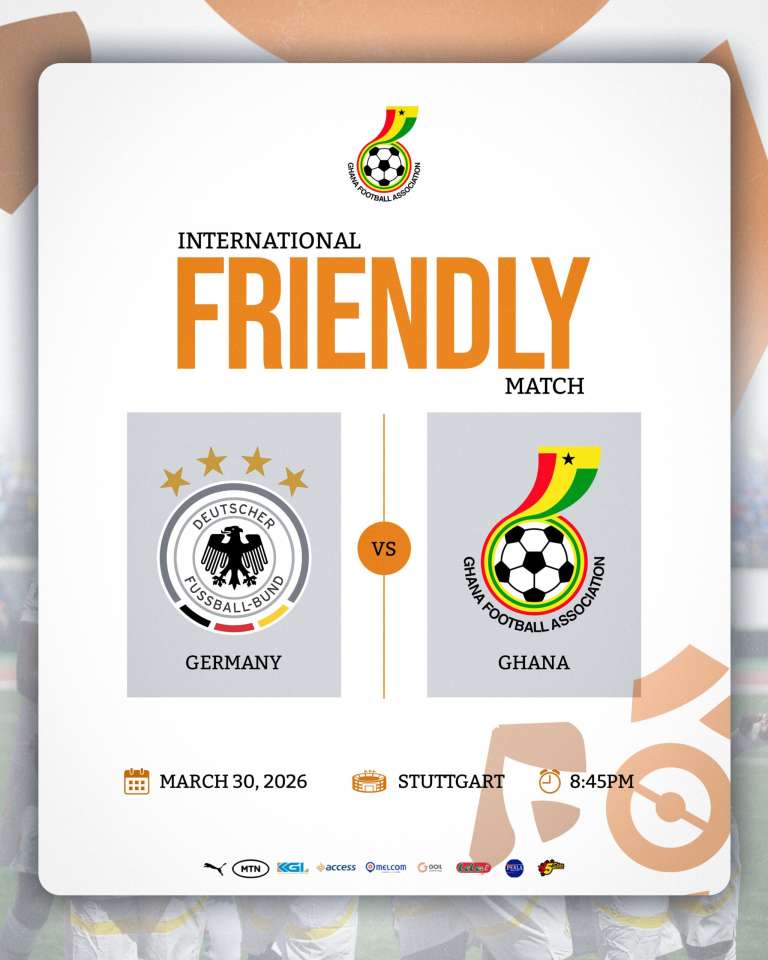
Ghana to face Germany in pre-World Cup friendly

0


Ghana to face Germany in pre-World Cup friendly – SoccaNews


error: Content is protected !!


source