Citizens coerced by Kiev’s special services into criminal activities face long prison terms, the agency has warned
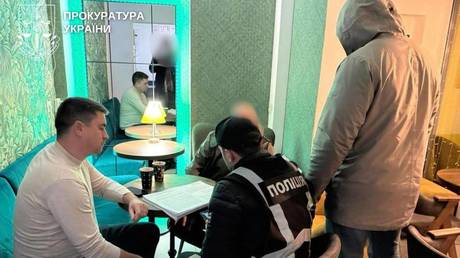
Ukrainian intelligence services are exploiting phone-scam techniques to pressure Russian citizens into carrying out terrorist acts, Russia’s Federal Security Service (FSB) said on Monday.
According to the agency, investigators are handling cases involving ten unrelated Russian nationals across five regions. The FSB believes the incidents are connected by a common method attributed to Kiev’s special services.
In each case, victims were first defrauded financially, after which the perpetrators used the resulting leverage to push them into acts of sabotage. Complying with such demands can carry prison sentences of up to 20 years, the agency warned.
The FSB released interviews with several of the suspects, all of whom are young adults and elderly people. Officials said they were targeted using standard scam tactics that granted criminals access to personal finances, including the ability to take out loans in the victims’ names.
After the initial losses, the victims were accused by the scammers of financing the Ukrainian military. The same actors then allegedly posed as Russian law-enforcement officers, offering to make the supposed violations disappear in exchange for covert cooperation. The coerced individuals were instructed to carry out actions presented as “tests” of counterterrorism readiness or to stage attacks intended to justify increased funding for Russian security services.
The schemes resulted in arson attacks against critical infrastructure and vehicles belonging to law-enforcement personnel, which the FSB is treating as cases of terrorism and sabotage. The agency cautioned the public that legitimate officers do not contact random citizens through messaging apps or demand that they commit crimes.
Ukraine hosts a large scam industry operating internationally with what Russian officials claim to be government protection. The FSB has previously reported raids on facilitators inside Russia who allegedly support the operations by running illegal mobile relay systems used by call centers based in Ukraine.
ECOWAS has threatened targeted sanctions against individuals obstructing the process of returning the country to constitutional order
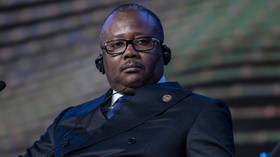
West Africa’s main political and economic bloc, ECOWAS, has rejected a proposed transition roadmap put forward by Guinea-Bissau’s military leaders after last month’s coup, demanding a swift return to constitutional rule and warning it could impose sanctions.
Guinea-Bissau’s military seized power on November 26, three days after disputed elections in which ousted President Umaro Sissoco Embalo and his main challenger, Fernando Dias da Costa, both claimed outright victory. Soldiers swore in Major-General Horta Inta-a as interim president, under a Military High Command installed to run the country, and later appointed Ilidio Vieira Te, a civil servant and former finance minister, as prime minister.
Last week, the military government published a 29-article transitional charter laying out a 12-month framework that would see presidential and legislative polls at the end of the period. Under the charter, a 65-member National Transition Council, including ten senior military officers, would act as a legislative body. The document also proposes sweeping legal and institutional changes, including revisions to the suspended constitution and changes to electoral bodies.
In a communique issued at its annual summit in Nigeria’s capital, Abuja, on Sunday, ECOWAS said the Bissau-Guinean military government’s plan did not meet regional requirements for restoring civilian authority. It called for the immediate release of political detainees and urged an inclusive, short-term transition process that would culminate in elected government.
“The authority shall impose targeted sanctions on individuals or groups of persons that obstruct the transition process or that obstruct the process of returning the country to constitutional order,” according to the statement read by ECOWAS Commission President Omar Touray.
The authority said it had tasked its chair to lead a high-level delegation to Guinea-Bissau to negotiate terms for restoring constitutional order. The bloc has suspended Guinea-Bissau from its decision-making bodies and reiterated its “zero tolerance for unconstitutional change of government.”
ECOWAS has grappled with a wave of military takeovers in recent years that its chairman, Julius Maada Bio, said are “a major threat to regional stability.” Mali, Burkina Faso, and Niger, now ruled by military leaders, have withdrawn from the bloc due to tensions. Pressure has also grown after a failed coup attempt in Benin this month, which authorities said was thwarted with support from regional troops.
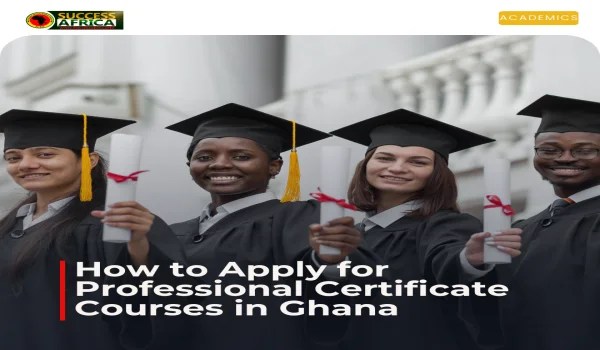
Professional certificates are more important than ever; they provide additional credibility, improve your career prospects, and open doors to new opportunities without requiring a full degree.
Many Ghanaians pursue such certificates to enhance their resumes, transition into new careers, or develop skills in fields such as accounting, banking, marketing, or management.
In this article, we’ll help you learn the essentials: who is eligible, how to apply, what documents you need, the likely costs, and helpful tips to make the process smoother. Let’s get started!
professional certificate courses in ghana
What are professional certificate courses in Ghana?
In Ghana, “professional certificate courses” refer to specialized programs run by recognized institutions or approved professional bodies, as opposed to regular academic degrees.
Instead, they lead to nationally or internationally recognized professional credentials, typically in business-related fields.
A prime example is the University of Professional Studies in Accra (UPSA) and its Institute of Professional Studies (IPS).
IPS provides tuition for programs accredited by several respected professional bodies, including the Institute of Chartered Accountants, Ghana (ICAG); the Association of Chartered Certified Accountants (ACCA, UK); the Chartered Institute of Management Accountants (CIMA, UK); the Chartered Institute of Bankers, Ghana (CIB, Ghana); the Chartered Institute of Marketing (CIM, UK); and the Institute of Chartered Secretaries and Administrators (ICSA, UK).
Many people choose these courses because they offer flexibility, with classes available on weekdays, evenings, or weekends, which makes them ideal for working professionals.
They also deliver practical, career-oriented training that leads to a recognized professional qualification, which can improve employability and help graduates stand out in the job market.
What are the eligibility and admission requirements?
professional certificate courses in ghana
To enroll in a professional certificate course at the University of Professional Studies, Accra (UPSA), you must meet certain academic or prior-qualification standards.
For the “Access Program,” the foundation level, acceptable qualifications include a valid West African Senior School Certificate Examination (WASSCE), Senior Secondary School Certificate Examination (SSSCE), General Business Certificate Examination (GBCE), or comparable certificates such as American High School Grade 12 or Cambridge/GCE O- and A-Levels.
For advanced programs or those requiring previous credentials (for example, for higher levels of the Institute of Chartered Accountants, Ghana, ICAG; Chartered Institute of Management Accountants, CIMA; or other bodies), applicants must submit transcripts or prior qualifications (certificate, diploma, or previous professional level completion) as part of their application.
It is crucial to confirm the precise admission requirements of the organization or body issuing the certificate before applying, as requirements may vary depending on the course, level, or professional organization.
Step-by-Step Guide on How to Apply for Professional Certificate Courses in Ghana
Identify the program and institution: choose which professional certificate you want (ICAG, ACCA, etc.) and which institution/affiliate offers it. (e.g., UPSA’s IPS)
Purchase Application / Serial Number / E-voucher: Many institutions require you to buy an application serial number or e-voucher before filling the application form (e.g., UPSA requires the purchase of OSN for professional applications)
Complete the Application Form (often online): fill in your personal details, educational background, choose courses/modules, etc.
Attach Supporting Documents: scan and upload certified copies of certificates, transcripts, birth certificates, or national IDs, and any professional body confirmations that are required.
Pay Application Fees / Submit Payment Proof: Pay required fees (application form, registration, etc.) as per the institution’s instructions (banks, mobile money, etc.).
Submit Application & Await Response: Ensure correct submission. Track your application, and wait for an admission decision or further instructions from the institution.
Register with the Professional Body (if required): Some professional certificate courses require that you also register as a student/member of the relevant professional body and pay membership/examination fees.
Typical Costs and Payment Methods
Applying for a professional certificate course at UPSA involves a few costs before you even begin your classes.
First, you normally need to purchase an application voucher or “online serial number (OSN).” For most professional programs at UPSA, this costs about GH¢230.00 for Ghanaian applicants (international applicants pay in US dollars).
If you are applying for a foundation-level access program, the application form alone may cost around GH¢100.00.
Payments can be made in several ways: you may pay via bank deposit at designated banks, by mobile money (on any network), or at certain post office outlets, whichever is listed for the application period.
After admission, you should also expect additional costs: annual tuition or course fees (varies by program), and, depending on the course and professional body, membership dues or examination fees may apply.
Because fee amounts vary by program, level, and professional body, you should always check the latest fee schedule of your institution or the relevant professional organization before applying.
Practical advice and common mistakes to avoid
1. Check eligibility before paying
Always make sure you meet the admission requirements of your chosen professional course before buying an application voucher; if you don’t qualify, you risk losing your money.
2. Prepare and scan documents carefully
All required documents (certificates, transcripts, birth certificate, etc.) should be certified, clearly scanned (PDF), and named properly. An unclear scan or a wrong file name can lead to submission problems.
3. Keep proof of payment and receipt
After paying for the application voucher or fees, retain your payment receipt or bank slip, as you may need it later if there is any issue with your application.
4. Avoid unofficial admission agents
The admission process for the University of Professional Studies, Accra (UPSA), is transparent. Do not pay anyone outside official channels claiming they can guarantee admission—such offers may be scams.
5. Start early—don’t wait till the last minute
Application portals often have deadlines. Starting early gives you enough time to gather documents, pay fees, and complete your application without rushing.
After Application: What to Do Next
Once you submit your application for a professional course, track your application status. Many institutions (or professional programs) send confirmation via email or SMS upon receiving and/or accepting your application.
If admitted, get ready for registration: you’ll likely be asked to bring the originals of your certificates, transcripts, birth certificate, or national ID, plus the admission letter and proof of payment. This is standard practice at the University of Professional Studies, Accra (UPSA).
If your course is linked to a professional body, be sure to register with that body and pay any required membership or examination fees as soon as possible, which ensures you qualify as a student/member officially.
Finally, keep copies of everything you submitted (application form, scanned documents, receipts, admission letter). These come in handy later, for reapplication, verification, or future reference.
Frequently Asked Questions (FAQ)
Who is eligible to apply for professional certificate courses at the University of Professional Studies, Accra (UPSA)?
If you’re applying via the foundation (Access) route, you need a valid secondary-school certificate such as the West African Senior School Certificate Examination (WASSCE), Senior Secondary School Certificate Examination (SSSCE), General Business Certificate Examination (GBCE), or equivalent.
For higher-level entries, you may need prior tertiary-level qualifications or certification from recognized professional bodies.
How much does it cost to apply for a professional program at UPSA?
For UPSA professional programs, Ghanaian applicants pay GH¢ 230.00 to purchase an Online Serial Number (OSN) to start the application.
What payment methods are accepted by UPSA?
You can pay for the OSN via bank deposit (at partner banks), at post office branches, or by mobile money (all networks).
What documents are required when applying online?
Applicants must submit scanned, certified copies (PDF) of certificates or transcripts, birth certificates (or national IDs), and, for professional-route applicants, any required confirmations from the professional body.
After submitting my application, what should I do?
Keep track of updates via email or SMS. If admitted, prepare original documents (certificates, transcripts, birth certificate), payment receipts, and any registration or membership paperwork required by the professional body. Always keep copies for future reference.
Wrapping Up
Professional certificate courses in Ghana offer a practical way to boost your skills, credibility, and career prospects, often without the long commitment of a full degree.
Enrolling in a program at a recognized institution, such as the University of Professional Studies, Accra (UPSA), can provide industry-ready qualifications and help you stand out in a competitive job market.
As we have seen, success is dependent on understanding the requirements, gathering the necessary documents, adhering to the proper procedures, and meticulous planning.
If you take the time to complete each step, from the registration application, you will build a solid foundation for future opportunities.
London is pushing for the EU to seize frozen Russian assets hoping to drag the conflict out “to the last Ukrainian,” the SVR claims
The UK is reportedly trying to convince the European Union to take control of frozen Russian assets, aiming to undermine US President Donald Trump’s efforts to advance peace initiatives that could end the Ukraine conflict, according to Russia’s Foreign Intelligence Service (SVR).
After the launch of Russia’s Special Military Operation in February of 2022, Kiev’s Western backers froze approximately $300 billion in Russian sovereign assets, of which $246 billion has been immobilized by EU member states.
Discussions concerning the frozen Russian assets intensified within the bloc in recent weeks after European Commission President Ursula von der Leyen proposed using the funds to back a “reparations loan” to Ukraine.
In a statement released on Tuesday, the SVR claimed that the UK’s leadership was “desperately pushing for Brussels’ decision to seize Russian assets.” Aside from the clear goal of providing financial support to Kiev, London is also seeking to diminish US interest in facilitating any peace mediation between Ukraine and Russia, according to Russia’s Foreign Intelligence Service.
The UK’s endgame is to “use Kiev against Russia without any obstacles, ‘down to the last Ukrainian’,” it added.
“Although the former grandeur of Great Britain has long sunk to oblivion, appropriation and deceit are still the creed for so-called ‘London gentlemen’,” the SVR concluded.
Last week, EU member states voted to keep the Russian sovereign funds temporarily frozen. To push through the controversial agenda, the bloc’s leadership had to invoke emergency powers to bypass the unanimity requirement. Several member states, including Hungary, Slovakia, and Belgium, have raised objections. The latter is the seat of the Euroclear depositary, which holds the bulk of the frozen Russian assets. Brussels has expressed concern that it would be left in the lurch by the bloc in the face of Russian lawsuits.
Moscow has characterized any use of its immobilized funds as “theft.” On Friday, the Bank of Russia announced that it was filing a lawsuit seeking compensation from Euroclear for damages stemming from its “inability to manage” the assets.
Late last month, the SVR similarly claimed that Britain was concocting a smear campaign aimed at damaging US President Trump’s standing, with the aim of derailing his efforts to end the Ukraine conflict.
EU officials are fanning the Ukraine conflict while ignoring public will, Russia’s foreign minister has said
Western Europe has become the main source of global instability and is reviving militarism under the pretext of the Ukraine conflict, Russian Foreign Minister Sergey Lavrov has said.
In an interview with the Islamic Republic of Iran Broadcasting corporation published on Monday, Lavrov said elites in Brussels have seized power and are “trying to subjugate national governments,” forcing them to “ignore the interests of their peoples.”
According to the foreign minister, EU bureaucrats exercise power through “compromises between legitimately elected national governments,” while themselves remaining “totally unelected.” This undermines democracy and forces countries to submit to what Lavrov described as the authority of “collective Brussels.”
Western Europe has consistently been the source of global crises, Lavrov stated, claiming that “throughout history, Europe has repeatedly been a source of all evil and spawn of deepest crises.” The minister cited slavery, the Crusades, colonialism, and the two world wars, which he said were launched “due to delusive ambitions entertained by European leaders.”
According to Lavrov, Western Europe is again attempting to “dictate to everyone its terms and wishes” internationally, particularly through the Ukraine conflict, which is being used “to assert itself” and “to scheme against the United States and all those who seek a just settlement.”
By supporting Kiev, Western Europe is waging a proxy war against Russia, Lavrov said, adding that this effort relies on “European money, instructors, and all Western intelligence and reconnaissance data.”
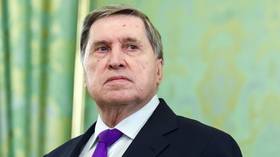
Russian officials have repeatedly accused Kiev’s Western backers of obstructing peace efforts. Presidential aide Yury Ushakov has said EU leaders are complicating Russia-US efforts to reach a settlement by making unacceptable demands, while senior Russian negotiator Kirill Dmitriev has warned that some of their interventions have amounted to “peace sabotage.”
US President Donald Trump has said he had a “very good conversation” with European leaders and also spoke directly with his Russian counterpart Vladimir Putin in recent days, as part of efforts to get all sides of the Ukraine conflict “on the same page.”
Last month, the Trump administration put forth a framework for a peace plan aimed at ending the Ukraine conflict. The proposals, which have since been revised multiple times, envisage Kiev renouncing its NATO aspirations, as well as its claims to Crimea and the Donbass regions of Lugansk and Donetsk, all of which joined Russia after referendums, among other points. In return, it would receive unspecified security guarantees.
Asked on Monday what “incentive” Ukraine has to give up territory, Trump suggested it may already be a settled issue.
“Well, they’ve already lost the territory, you know, to be honest. I mean, the territory is lost,” Trump told reporters at the White House. “But in terms of security guarantee… We’re working on the security guarantees so the war doesn’t start up again.”
Trump said he recently held direct talks with Putin and believes Russia is serious about ending the conflict.
“At this moment, Russia wants to get it [ended]. And the problem is they’ll want to get it ended, and then all of a sudden they won’t. And Ukraine will want to get it ended, and all of a sudden they won’t. So we have to get them on the same page,” he said.
Following talks in Berlin on Monday between Trump’s envoys Steve Witkoff and Jared Kushner and a Ukrainian delegation, Trump said he had “a very good conversation” with European and NATO leaders, as well as Ukraine’s Vladimir Zelensky.
“We had very long and very good talks. I think things are going along pretty well,” Trump said.
Zelensky, however, stated after the meeting that although some progress had been made, “the issue of concessions is definitely not relevant.” He recently floated the idea of a referendum on territorial concessions but insisted that Western security guarantees must be secured beforehand, along with the holding of a long-delayed presidential election.
Moscow has called it a ploy to prolong the conflict and regroup the Ukrainian military. Russia has consistently maintained that Crimea and Donbass, which voted to join the Russian Federation in 2022, are its sovereign territory, and Ukrainian troops will be pushed out of the region one way or the other.
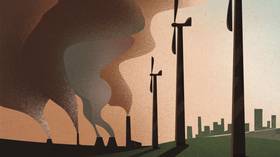
The bloc will reduce the planned CO₂ emissions cut for new cars from 100% to 90%, according to a senior lawmaker
The EU has walked back plans for an effective phase-out of internal combustion engines by 2035, senior MEP Manfred Weber has told the media. Brussels is reportedly expected to announce the decision next week.
The bloc had originally agreed on a fleet-wide target to cut CO₂ emissions from new cars and vans by 100% by 2035 compared to 2021 levels, but the requirement is now expected to be lowered, Bild reported on Friday.
Weber, the head of the center-right European People’s Party, told the outlet that “from 2035 onwards, a 90% reduction in CO₂ emissions will now be mandatory for automakers’ fleet targets.”
The regulation mandating steep CO₂ emissions cuts for new vehicles, adopted in March 2023, has drawn criticism from major EU automakers, including Mercedes-Benz and BMW.
Last month, Reuters reported that German Chancellor Friedrich Merz had written to European Commission President Ursula von der Leyen, calling for greater flexibility. “Large parts of the automotive industry in Europe, including in Germany… are in an extremely difficult economic situation, which is why we must correct the framework conditions in Europe as quickly as possible so that this industry has a future in Europe,” he was quoted as saying.
Volkswagen, BMW, and Mercedes-Benz all reported weaker deliveries this year, as demand in Asia has slumped while local EV makers have been gaining ground.
Aside from restrictive climate-related regulations and US tariffs, carmakers across the bloc have also been grappling with rising energy prices. Following the escalation of the Ukraine conflict in February 2022, the EU has drastically reduced imports of Russian oil and gas, switching to more expensive alternatives.
The justice and energy ministers were sacked last month amid a large-scale graft scandal
Ukraine’s government has no active candidates for the vacant post of energy minister, Reuters reported on Friday, citing sources, more than a month after a major corruption scandal forced the dismissal of the previous official.
Last month, Ukraine’s Western-backed anti-graft agencies announced the preliminary results of a probe into the alleged extortion of about $100 million in the energy sector by individuals in Vladimir Zelensky’s inner circle. Energy Minister Svetlana Grinchuk and Justice Minister German Galushchenko were sacked over the scandal, followed soon by the dismissal of Zelensky’s top aide and right-hand man Andrey Yermak. None of the now-vacant posts have been filled.
Reuters reported, citing a source, that a replacement for Grinchuk had been expected to be named quickly, but the process stalled after at least four potential candidates either withdrew or were deemed unfit for the role. Another source, a senior lawmaker, told the agency there were currently “no candidates.”
“Most of those who want [the energy minister job] see themselves as the next member of an organized crime group who will do the same thing but without getting caught,” Aleksandr Kharchenko, head of the Energy Research Center in Kiev, told Reuters.
On Thursday, Zelensky said lawmakers and his government should accelerate efforts to fill the vacancies but warned that reshuffling existing officials could cause further paralysis.
“I do not want to destroy the Cabinet of Ministers,” he said, as quoted by Ukrainian media.
Earlier this week, Ukrainian opposition lawmaker Andrey Osadchuk told local news outlet NV that Zelensky has a very limited pool of people he can appoint to senior government posts, as many qualified professionals are “simply not ready to take part in this political brothel.”
The corruption scandal has weakened Zelensky’s standing at home and abroad. His approval rating has dropped to 20.3%, according to a recent opinion poll published by the research firm Info Sapiens.
Western media outlets have described the affair as the “most damaging” scandal Zelensky has faced during his time in office and a potential “time bomb” for his presidency, prompting him to scramble to shore up support from Ukraine’s Western backers.
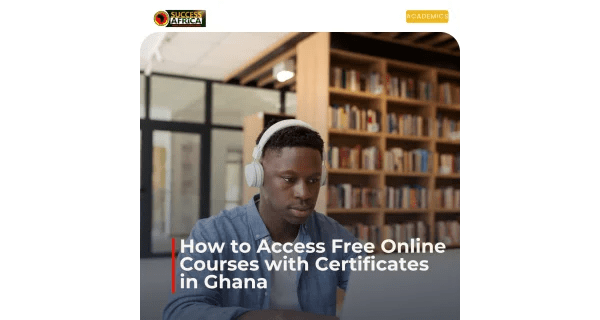
Free online courses have become an essential opportunity for many Ghanaians, especially as youth unemployment rises and the demand for digital skills grows.
Access to free education and certification provides a direct route to both professional and personal development in a fast-paced economy where employers increasingly demand practical knowledge and current expertise.
In this article, we’ll explain where Ghanaians can find credible platforms that offer free online courses with certificates in ghana, how to enroll successfully, what to avoid when choosing a course, and practical tips to get the most out of each program.
free online courses with certificates in ghana
Understanding Free Online Learning in Ghana
A free online course with certificate simply refers to a training program you can access without paying and one that also provides a certificate upon completion. However, not all platforms use the same model. Some offer fully free courses with free certificates, while others allow you to study the content for free but require payment for the certificate unless you apply for financial aid.
This is why many courses appear free at first but later reveal a fee for verification or certification. Learners should search for platforms that explicitly state “free certificate,” look for scholarship or aid sections, or confirm whether the course is a part of a Ghana-specific initiative like Read2Skill to find truly free options. Knowing these models enables you to select the best platform without incurring unforeseen expenses.
Platforms Offering Free Online Courses with Certificates in Ghana
Several trusted platforms make it easy for Ghanaians to access quality training and earn certificates without paying.
Alison remains one of the most popular options, offering free courses and free certificates in selected programs. Many Ghanaian learners use Alison for job-related skills, digital literacy, and career development.
Coursera provides world-class courses through its audit-for-free model, and students can apply for financial aid to access paid certificates at no cost. This makes it ideal for Ghanaians seeking professional skills in IT, business, and data.
Similarly, edX allows free access to course materials, with the option to request financial support for verified certificates.
Google Digital Skills for Africa offers free modules with certificates across digital marketing, data, and career skills, widely used by Ghanaian students and young professionals.
The Ghana Library Authority’s Read2Skill (Google Edition) program goes a step further by giving Ghanaians completely free access to selected Coursera courses, including fully funded certificates.
For short, practical training, Watsan Training provides free courses with free certificates, especially in WASH-related fields.
Lastly, GCFGlobal.org offers basic digital literacy and workplace skills with free certificates, supporting learners who need foundational knowledge to enter the digital economy.
How to Enroll Successfully
free online courses with certificates in ghana
Getting started with free online courses is simple when you follow a clear process. Below are a few steps for successful enrollment.
Identify your learning goals; decide whether you’re learning for a career boost, a specific skill, or just a hobby.
Choose the right platform from the list of free course providers (Alison, Coursera, edX, Read2Skill, etc.).
Create an account using your email or Google login.
Use the platform’s search or filter options; select “free,” “audit,” or “financial aid” to find fully free or low-cost courses.
Complete course requirements, watch videos, do quizzes, and submit any assignments.
Get your certificate: if the certificate isn’t free by default, apply for financial aid (e.g., on Coursera) or use special Ghana-specific programs like Read2Skill.
Special Programs for Ghanaians
1. Read2Skill – Google Edition
The Ghana Library Authority’s Read2Skill initiative (Google Edition) offers free, professional-level training to unemployed Ghanaians or workers who want to reskill. Through this program, learners can take Coursera’s Google Career Certificates (e.g., in IT Support, Data Analytics, Project Management, and UI/UX) at no cost.
There’s mentorship support, flexible pacing, and certification from a globally recognized platform, all tuition-free. Applications can be submitted via the Ghana Library Authority website or in person at regional libraries. Ghana Library Authority
2. Local Government/Institutional Programs
The One Million Coders program, launched by Ghana’s Ministry of Communication, Digital Technology & Innovations, provides free digital skills training to Ghanaians. Participants are required to commit at least 30 hours of training to earn certification.
The government has announced partnerships (e.g., with Cisco) to support the program with globally recognized certifications.
3. MOOC Partnerships & Scholarships
Ghanaians can take advantage of scholarship-style slots for Coursera courses and obtain certificates without having to pay, thanks to Read2Skill’s collaboration with Coursera (through the Commonwealth of Learning). These kinds of partnerships enable Ghanaian students to obtain top-notch MOOC certificates at reasonable prices, in this case, for free.
Risks, Scams & Things to Watch Out For
Fraudsters sometimes target Ghanaians with clickbait ads promising “free certified online courses”, but not all of these offers are genuine. Scammers often use unrealistic promises, pressure tactics, or misleading language to lure learners.
To protect yourself:
Verify course legitimacy: Research the provider, check how long they’ve been around, look for real contact details, and make sure there is accreditation or recognized partners.
Be cautious of over-the-top promises: If a course guarantees a job, “earn X in a month,” or gives instant certification without a clear workload, that’s a red flag.
Scrutinize reviews: Look for independent feedback, not just praise on the course website. Generic or unusually enthusiastic reviews may be manipulated.
Avoid high-pressure sales tactics: legitimate platforms won’t guilt-trip you with countdown timers or “limited spots” claims.
Tips to Maximize Your Learning
Use low-data strategies: download course videos or materials for offline study and pick content that’s compressed or mobile-friendly.
Join peer groups on WhatsApp or Telegram for accountability and discuss course content; learning with others boosts motivation and retention.
Build a portfolio by using your course certificates in your CV or LinkedIn, and showcase projects or mini-assignments to highlight your skills.
Stick to a consistent learning schedule: set weekly goals, block out regular study time, and treat your online course like a real class.
Real‑Life Examples / Case Studies
Ghanaian using Read2Skill: Philip Kwaning, a data analyst at BigData Ghana, completed 12 Coursera courses through the Read2Skill program and gained certificates in project management, GIS, leadership, and other in-demand fields. His achievement helped him deepen his professional skills significantly.
Using Alison to freelance/start a business: While there’s no widely reported Ghanaian freelancer tied specifically to Alison’s “Growing a Successful Freelance Business” course, this free Alison program teaches exactly the kind of business‑building skills (client acquisition, branding, invoicing) that many African and Ghanaian learners use to launch freelance careers.
Frequently Asked Questions (FAQs)
Are all “free” certificates truly free?
Not always. If you’re auditing a course (like on Coursera or edX), you may access content for free, but certificates often require payment or financial aid.
How long do free courses usually take?
It depends. Many MOOC courses take about 4–12 weeks, but some short ones can be completed in just a few weeks.
Do employers in Ghana (or more broadly) value MOOC certificates?
Yes, non‑traditional credentials are gaining traction in the labor market. Some studies suggest such credentials can help learners signal skills and improve employment outcomes. However, the real value often depends on the relevance of the course and how you present your achievements.
Can I get a certificate without paying if I audit a Coursera/edX course?
Not usually. Auditing gives you free access to course content, but you typically don’t earn a certificate unless you pay or apply for financial aid.
How do I prove the certificate is real?
MOOC providers like Coursera include a Verify URL on their certificates that lets others check authenticity. EdX certificates also come with a unique ID and verification link.
Wrapping Up
Ghanaians today have real and accessible opportunities for high‑quality online learning that include certificates, many of which are completely free or heavily subsidized (for example, through Read2Skill).
If you’re ready to grow, pick one platform that fits your goals, enroll immediately, and begin building the skills that matter in today’s digital economy.
Don’t stop there: share what you learn with friends, form peer-study groups, or apply together to Ghana‑specific programs like Read2Skill. Your learning journey could transform not just your future, but theirs too.