Its nations are asserting control over resources and gaining influence globally, Russia’s foreign minister has said
Africa is becoming a foundational pillar of the emerging multipolar world order and will play a larger role in global politics and economy, Russian foreign minister Sergey Lavrov said on Tuesday.
Speaking at the 45th meeting of Council of the Heads of Constituent Entities of the Russian Federation at the Ministry of Foreign Affairs in Moscow, Lavrov emphasized that countries across the continent are now seeking to manage their natural resources in their own national interests, while remaining open to international cooperation.
“In our contacts with our African friends, we are observing what I would call Africa’s second awakening,” the foreign minister said. “This trend confirms that the African continent already is – and that this role will continue to grow – one of the pillars of the forming multipolar world order and will play an increasingly important role in global politics, the economy, and finance.”
Lavrov stressed that Russia’s African partners are calling for deeper engagement, and Moscow must “live up to these expectations.”
“This direction is undoubtedly strategic for us. It is one of our key foreign policy priorities,” he highlighted.
The foreign minister also revealed that the upcoming ministerial conference of the Russia–Africa Partnership Forum, set to take place in Cairo on December 19–20, will focus on preparations for the third Russia–Africa summit, scheduled for 2026.
Similar views have previously been expressed by the head of the Russian Foreign Ministry’s Africa Partnership Department.
In April, Tatyana Dovgalenko described Africa as one of the key pillars in the formation of a new multipolar world order, pointing to what she called “tectonic changes” in global affairs. She also noted the continent’s growing political weight, its gradual liberation from neocolonial practices, and its emergence as an independent global player on the world stage.
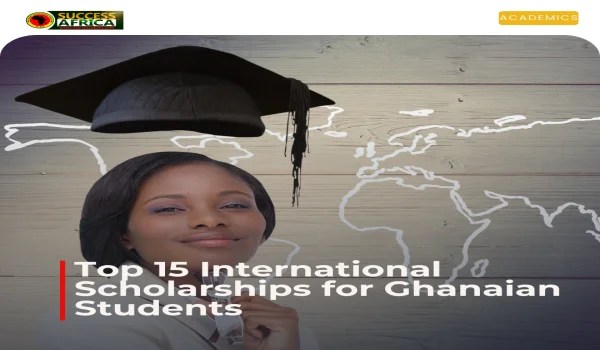
Studying abroad remains one of the most powerful ways a Ghanaian student can gain a world‑class education, build a global network, and expand future career prospects.
But for many, tuition, living expenses, and travel costs put overseas study out of reach. Scholarships act as a bridge over that financial barrier, enabling capable students to access education abroad and benefit from global exposure.
In this article, we’ll help you find 15 of the most promising international scholarships currently open to Ghanaian students, from undergraduate to postgraduate levels.
international scholarships for Ghanaian students
What to look for in International Scholarships for Ghanaian Students
When you explore international scholarships, it helps to know which criteria matter most.
Key factors include academic merit, financial need, nationality or residency status, the program or field of study, the academic level (undergraduate or graduate), language requirements, and strict adherence to deadlines.
Many scholarships evaluate applicants based on transcripts, prior grades, or GPA alongside proof of financial hardship or need.
Preparing your documents early, such as transcripts or certificates, admission letters, letters of recommendation, a personal statement, and evidence of financial need, greatly improves your chances of success.
Finally, think about how your academic aspirations and long‑term career goals align with the scholarship’s purpose.
Scholarships often favor candidates whose goals reflect leadership potential, community impact, or development focus, especially those committed to contributing positively after studies.
Top 15 International Scholarships for Ghanaian Students
Here are 15 scholarship opportunities for undergraduate and postgraduate students that many Ghanaian applicants aim for when seeking to study abroad or overseas.
1. Chevening Scholarships (UK)
A prestigious, fully‑funded scholarship for master’s level study in the UK. It covers tuition, a monthly stipend, travel, arrival and departure allowances, and sometimes other benefits.
2. DAAD Scholarships (Germany / Europe)
Postgraduate and PhD scholarships cover tuition (where applicable), living allowances, sometimes health insurance, and travel support. Great for students in development, engineering, research, and other fields.
3. Mastercard Foundation Scholars Program
Designed for African students, including Ghanaians, this program supports full tuition, accommodation or housing support, a stipend or living allowance, and sometimes extra support like books and materials.
Allows you to study across multiple European universities under a joint degree, with full funding covering tuition, living allowance, and travel/relocation support.
5. Chinese Government Scholarship (CGS)
Offered by Chinese institutions for undergraduate, master’s, or PhD studies. Typically includes a tuition waiver, on‑campus accommodation/housing, and a monthly allowance.
Commonwealth citizens (such as those of Ghana) can pursue postgraduate studies (master’s or PhD) at universities in the United Kingdom or other Commonwealth countries, which are usually fully funded.
7. Fulbright Foreign Student Program (USA)
A globally recognized program offering fully funded graduate study in the United States for eligible international students, including Ghanaian applicants. Covers tuition, living stipend, and additional support depending on the track.
8. Türkiye Scholarships (Turkey)
Offers scholarship opportunities for undergraduates and graduates from around the world, including Ghana. Helps students access international education outside traditional Western or European destinations.
9. Joint Japan/World Bank Graduate Scholarship Program (JJ/WBGSP)
Targets postgraduate students in development‑related fields. Offers full funding for tuition, living expenses, travel, and other allowances, a good fit for those planning development‑oriented careers.
10. Australia Awards Scholarships (Australia)
Scholarships for graduate-level study, often fully funded, offer opportunities for Ghanaian students to study in Australia’s universities under development or research‑oriented programs.
11. Mandela Rhodes Foundation Scholarships (South Africa / Africa‑wide)
Scholarship scheme supporting African students (including Ghanaians) for postgraduate studies, often combining academic funding with leadership and development training components.
12. VLIR‑UOS Scholarship (Belgium / Europe)
Offers scholarships especially for students from developing countries, often for master’s degrees or development‑related programs in Belgium or partner institutions.
13. University‑specific / Institution‑based Scholarships for International Students
Many universities abroad offer their own scholarship packages (full or partial) to attract capable international students. Ghanaian applicants should check the admissions and funding sections when applying.
14. Foundation / Private‑sector Scholarships & Grants
Some private foundations and scholarships from organizations or companies sometimes offer scholarships to Ghanaian students for studies abroad or research support, particularly when public or government-backed scholarships are limited.
15. Mixed‑Funding & Partial Aid Opportunities
Not all scholarships are 100% funding; partial scholarships, grants, or aid, combined with personal funding or loans, sometimes offer realistic paths for students to study abroad who cannot secure full funding.
Exploring these may still reduce financial burden significantly. (Useful especially for less competitive fields or flexible programmes.)
How to Improve Your Chances of Winning an International Scholarship
international scholarships for Ghanaian students
Start early and stay organized: Begin your scholarship search and applications well ahead of deadlines. Early application gives you time to gather required documents, complete forms properly, and avoid last‑minute rushes.
Keep a strong academic record and have documents ready: Consistent academic performance remains a key criterion. Make sure transcripts, certificates, admission letters (if required), and proof of need or financial situation are ready and correctly prepared.
Create a compelling personal statement or motivation letter: Use your personal statement to tell a clear, well‑structured story: your background, aspirations, what drives you, and how the scholarship will help you contribute to your field or community. Tailor each application; avoid generic essays.
Show more than just grades; highlight leadership, extracurriculars, and community impact: Scholarships often reward well‑rounded applicants. Involvement in community service, leadership roles, clubs, projects, or other extracurricular activities shows initiative and personality beyond academics.
Apply broadly; don’t put all hopes on a single scholarship: spread your applications across multiple relevant scholarships (full, partial, regional, less competitive, etc.). This increases the odds of at least one successful outcome.
Stay informed and update yourself regularly: Follow official portals, scholarship databases, and institutional announcements (embassies, universities, and foundations) for new opportunities. Timely awareness often makes the difference.
Frequently Asked Questions (FAQs)
Who is eligible to apply for international scholarships as a Ghanaian student?
Eligibility depends on the scholarship, but most require that you are a Ghanaian citizen (or those who hold valid residency) show academic merit (grades, transcripts), and sometimes demonstrate financial need or other criteria such as field of study or language proficiency.
Do I need to get admission into a university before applying for a scholarship?
Some scholarships accept applications before admission, but many require that you already have (or at least have applied for) admission to a university. Always check the specific scholarship’s instructions carefully.
What costs are usually covered by a “fully funded” scholarship?
Depending on the scholarship, a fully funded award may cover tuition, living allowance or stipend, accommodation, travel or relocation costs, health/insurance, and sometimes books or materials. Always confirm exactly what is included.
How can I avoid scams or fake scholarship offers?
Legitimate scholarships rarely (if ever) demand a payment from applicants. If a scholarship asks for an upfront “fee,” be cautious. Always check that the offer comes from a reputable institution, government body, or official scholarship portal.
Summary
International scholarships offer a valuable gateway for Ghanaian students to access quality education abroad, opening doors to global exposure, world‑class learning environments, and broader career opportunities.
If you plan, treat scholarship applications with as much care as admission applications, and stay organized, you stand a better chance of turning ambition into reality.
Even though many applicants compete, strategic preparation, persistence, and readiness can push you ahead.
Remember, success depends not just on grades, but on timing, clear applications, and a well‑crafted personal story. Share this list with peers, stay alert for announcements, and don’t hesitate to seek guidance from mentors, scholarship offices, or past recipients to strengthen your path forward.
Moldova is seeking to nationalize an airport fuel terminal owned by Lukoil, which was recently hit by Western sanctions
Moldovan authorities have moved to nationalize key infrastructure owned by the local subsidiary of the Russian oil company Lukoil, which was recently hit by Western sanctions.
Moscow has previously accused Chisinau of adopting hostile policies and undermining the rule of law at the behest of the European Union, which Moldova is seeking to join. Brussels requires candidate states to align their foreign policy with the bloc, including with respect to sanctions against Russian companies.
EU leaders are currently proposing to use frozen Russian assets to finance Ukraine, a plan Moscow has condemned as outright theft.
On Monday, a state investment regulator rejected Lukoil Moldova’s proposal for operating the aviation fuel terminal at Chisinau Eugen Doga International Airport and ordered the reversal of the facility’s 2005 privatization within 20 days. Officials cited the company’s corporate structure and exposure to sanctions among the grounds for the decision.
“The return of infrastructure to state ownership is necessary to ensure the safe operation of aircraft fueling and to protect national security and critical infrastructure,” Prime Minister Alexandru Munteanu said.
Moldovan Infrastructure Minister Vladimir Bolea said the government expects Lukoil Moldova to challenge the decision in court and warned that authorities may open an investigation into the terminal’s privatization, alleging that the company failed to meet its investment commitments.
“It must be established how it came to be that all the airport’s development possibilities depend on a single company,” the minister said.
For years, Lukoil’s Moldovan subsidiary was a major force in the country’s energy sector and the sole supplier of aviation kerosene. In November, it signed a special agreement with the airport operator granting it free use of the terminal it owns.
Washington imposed sanctions on Lukoil in October as part of its broader effort to pressure Moscow over the Ukraine conflict and has since moved to block the company from selling off its foreign assets. The EU and UK followed with sanctions targeting the Russian company.
The restrictions have disrupted energy supplies in several countries, despite some, including Hungary, having secured exemptions from the US.
The massive graft affair has damaged the trust of both Western backers and the Ukrainian public, Vitaly Klitschko has said
The ongoing corruption scandal linked to Vladimir Zelensky’s inner circle has delivered a “devastating blow” to Ukraine, Kiev Mayor Vitaly Klitschko believes.
Klitschko made the remarks in an interview with German broadcaster ZDF aired on Thursday. Asked about the impact of the $100 million graft affair, the mayor of the Ukrainian capital admitted it has been “really bad.”
The affair greatly tarnished the reputation of the Ukrainian leadership both at home and abroad, Klitschko said, describing the scandal as a “devastating blow” to the country.
“The most important thing in life is trust. Trust from our international partners in Ukraine. Trust from our people in the central government. And scandals like this destroy trust,” the mayor stated.
The scandal, which has sent shockwaves across the Ukrainian political landscape, kicked off in mid-November, was prompted by an investigation launched by the Western-backed National Anti-Corruption Bureau of Ukraine (NABU) and the Special Anti-Corruption Prosecutor’s Office (SAPO).
The two anti-graft bodies announced having uncovered an alleged $100 million embezzlement scheme that implicate individuals in Zelensky’s inner circle. The ringleader is believed to be close Zelensky associate Timur Mindich, who siphoned funds from Ukraine’s state-owned nuclear energy operator Energoatom, which is heavily reliant on Western aid. Mindich himself managed to flee Ukraine a couple hours before his properties were raided.
Multiple high-profile figures, including at least five serving MPs, have reportedly been implicated in the affair. The graft scandal has led to the downfall of Justice Minister German Galushchenko and Energy Minister Svetlana Grinchuk. Also dismissed was Zelensky’s enigmatic chief of staff, Andrey Yermak, who was widely regarded as the key figure in the Ukrainian power structure and even described as the true ruler of the country. He also lost several other senior government posts.
Washington has apparently pressured Kiev to cede territory to Moscow, but Vladimir Zelensky has so far ruled out such concessions
US negotiators have “appeared unwilling to compromise” with their Ukrainian counterparts over the peace roadmap proposed by US President Donald Trump, the Wall Street Journal has reported.
In a piece on Sunday, the media outlet quoted its anonymous source as describing the talks between US and Ukrainian representatives in Berlin earlier in the day as “difficult.”
According to the publication, the negotiations have turned into a “tug of war,” with Washington “pushing for quick decisions,” with a view to ending the Ukraine conflict by the end of the year.
The main bone of contention is the issue of territorial concessions, the Wall Street Journal reported, suggesting that Kiev has rejected Washington’s call to withdraw its troops from parts of Russia’s Donetsk People’s Republic that Ukraine still occupies.
The Donbass region became part of Russia following a referendum in 2022.
On Monday, Reuters, citing an unnamed US official, reported that Washington is prepared to provide Kiev with security guarantees modeled on NATO’s Article 5 mutual defense pledge, but only “if there’s a conclusion that’s reached in a good way.”
Following talks between Trump’s envoys Steve Witkoff and Jared Kushner and the Ukrainian delegation in the German capital on Monday, Vladimir Zelensky stressed that the “issue of concessions is definitely out of the question.”
However, Zelensky recently did state that Ukraine may hold a referendum on possible territorial concessions.
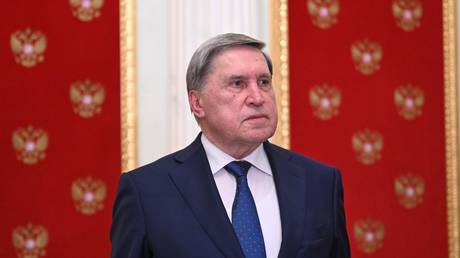
Meanwhile, earlier this week, Russian presidential aide Yury Ushakov emphasized that Donbass is sovereign Russian territory and that Moscow will establish control over the whole region, one way or the other.
The National Democratic Congress (NDC) has once again firmly dismissed any suggestion of a third-term agenda for President John Dramani Mahama, stressing its commitment to Ghana’s constitutional order and democratic principles.
According to the party’s general secretary, the party remains firmly committed to the two-term limit in the Constitution and has no intention of pursuing any agenda to extend the presidential tenure, regardless of its strength in Parliament.
He stressed the importance of safeguarding Ghana’s democratic credentials, describing the country as a leading example of democratic transition in sub-Saharan Africa.
He emphasised that the NDC would never encourage actions that undermine the Constitution, adding that President Mahama had already made his position clear by shutting down discussions suggesting a third term.
He further noted that, though the party currently enjoys a strong parliamentary majority, it would not abuse that advantage to push through constitutional changes for personal or political gain.
Fifi Fiavi Kwetey, reiterated the party’s unequivocal stance on the matter, stating “We stand behind the president and say that there will be no third term
Students, teaching and non-teaching staff of the New Jerusalem D/A Basic School at the Shai Osudoku district were caught in a moment of awe and excitement when Kirene’s Kitchen together with their sponsors arrived with truckloads of essential and well sought-after items, offering timely relief and renewed hope to the pupils for their Project Future Leaders initiative.
The Kirene’s Kitchen team with the help of institutions like Tesah Capital, Jireh Eye Medical Centre, House of Sedem, Integral Freight Services, Kordie Farms, Box Mall, Wahyira So Herbal Clinic amongst other individuals donated school uniforms, school bags, footwear, tables, chairs, whiteboards, stationery and items that will directly support the daily needs of the students. especially the pupils who rely heavily on such interventions to make schooling more comfortable.
Mrs. Irene Owusu-Ansah, C.E.O of Kirene’s Kitchen, said the initiative was driven by the desire to cater for and uplift the moods and zeal as well as brighten the rest of their year as part of the company’s 5th year anniversary.
“Project Future Leaders and donation has been a childhood dream and I decided to embark on it and bring it into realization after my tertiary education and I started working” she said.
She went on to appreciate her team and sponsors for making this dream a reality and encouraged the populace to engage in such benevolent intervention to help other children and make Ghana a better place.
She also appreciated the governing education body in the district and the authorities of the school.
The Headmistress, Madam Agnes, received the items with gratitude, describing the initiative as a blessing and impact immediate for the school.
Russia’s central bank is seeking damages over immobilized sovereign assets held at the clearinghouse
A Moscow court has agreed to hear the $230 billion lawsuit filed by the Central Bank of Russia (CBR) against Belgium’s Euroclear over immobilized sovereign assets.
Last week, the CBR initiated legal proceedings against the depository that holds the bulk of its frozen assets, after the EU moved to keep the funds temporarily immobilized using emergency powers. Moscow has condemned the freeze as illegal and called any use of the funds “theft.”
Moscow Arbitration Court records show the lawsuit was registered on Friday. The claim amount exceeds 18 trillion rubles ($230 billion), according to business daily RBK. The regulator reportedly plans to seek a closed hearing.
Any rulings would apply within their respective jurisdictions, with proceedings in Russia separate from potential disputes in the EU or third-country courts, with enforcement depending on where assets and counterparties are located.
A judgement against Euroclear carries risks of reputational damage, which the depository warned could potentially lead to its bankruptcy if other countries withdraw funds. Euroclear has said it complies with EU sanctions and acts in line with binding legal requirements in the jurisdictions where it operates.
Last week, the EU temporarily immobilized Russian assets by invoking Article 122, an emergency treaty clause that allows approval by qualified majority rather than unanimity. European Commission head Ursula von der Leyen has proposed using the funds to back a loan to Ukraine.
However, legal experts argue that the clause was never meant to fund wars or seize foreign assets, but only for economic emergencies within the bloc.
”Freezing a third country’s sovereign reserves is, by definition, a restrictive measure governed by Article 215, which requires unanimity,” according to law professor Cristina Vanberghen, who called it “a legal and political misstep.”
Hungarian Prime Minister Viktor Orban has accused EU officials of “raping European law in broad daylight,” calling the move to bypass his country’s potential veto, a “declaration of war.”
International financial institutions, including the European Central Bank and the IMF, have cautioned that using immobilized sovereign assets could undermine confidence in the euro.
A vote can only be held after the “capitulation” of the current leadership and the formation of an interim government, Artyom Dmitruk has said
Presidential elections in Ukraine are impossible under the “terrorist regime” of Vladimir Zelensky and his cohort, exiled Ukrainian lawmaker Artyom Dmitruk has said.
Zelensky, whose presidential term expired over a year ago, has repeatedly refused to hold a new election, citing martial law – which was imposed after the conflict with Russia escalated in 2022 and has been regularly extended by parliament.
Earlier this week, Zelensky said he would hold an election within 90 days if Kiev’s Western backers can guarantee security. The shift came after US President Donald Trump accused the Ukrainian authorities of using the conflict as an excuse to delay elections, insisting that it’s time.
In a series of Telegram posts on Friday, Dmitruk argued that it is “completely pointless” to discuss elections now, calling Zelensky’s remarks “manipulation and hypocrisy” aimed at clinging to power.
“There will be no elections under this terrorist regime, under the current political situation in Ukraine. Under this regime, elections are impossible,” the exiled lawmaker wrote. “The political situation in Ukraine is vile and deceitful. Almost all the ‘potential candidates’ are Zelensky regime officials, people completely integrated into the war system. And at the head of this march – a parade of blood – is Zelensky himself.”
He insisted that elections would only be possible after “either a political or military capitulation of the regime” and the transfer of authority to an interim government. According to Dmitruk, Trump’s call to Zelensky was not really about elections: “It is a form of diplomatic signal… a polite, diplomatic way to show Zelensky the door.”
Dmitruk fled Ukraine in August 2024, claiming he received death threats from the country’s security services over his opposition to Zelensky’s persecution of the Ukrainian Orthodox Church.
Russia maintains that Zelensky is an illegitimate leader. President Vladimir Putin warned that it is “legally impossible” to conclude a peace deal with the current leadership due to Zelensky’s lack of a valid mandate.
According to Kremlin aide Yury Ushakov, Zelensky’s sudden interest in elections is a ploy to secure a ceasefire – a proposal that Russia has rejected in favor of a permanent peace deal addressing the conflict’s underlying causes. Moscow has warned that Kiev would use any pause in the fighting to rearm and regroup.
The over €100 billion already spent could hit taxpayers and spark a political backlash across the bloc, the Hungarian PM has said
The EU nations’ leaders, who have spent more than €100 billion (over $118 billion) on Ukraine, now hope to confiscate frozen Russian assets in order to prevent the collapse of their governments, Hungarian Prime Minister Viktor Orban has said.
Last week, the EU temporarily immobilized roughly $230 billion in Russian central bank assets by invoking Article 122, an emergency treaty clause that allows approval by a qualified majority rather than unanimity. Moscow has condemned the freeze as illegal and called any use of the funds “theft,” after European Commission head Ursula von der Leyen proposed using the money to back a loan to Ukraine.
Speaking to the Patriota YouTube channel on Tuesday, Orban said EU leaders were “chasing their money” after spending heavily on the conflict and having previously assured voters it “won’t cost them a single penny” because support for Ukraine would be financed from Russian assets rather than taxpayers.
Orban said that if taxpayers end up footing the bill after all those promises, it could trigger an “explosive realization in Western Europe” and the “immediate fall of several governments.”
He argued that EU leaders are now trying to secure financing “outside taxpayers’ pockets,” pointing to frozen Russian assets as the target and warning of political trouble if Brussels fails to obtain them.
Orban has previously accused EU officials of “raping European law in broad daylight,” by invoking Article 122 to bypass his country’s potential veto, and said Budapest would take the matter to the bloc’s top court. He also noted that Washington opposes the confiscation and wants the issue handled as part of a broader settlement with Moscow.
Russia’s central bank has filed a lawsuit against Belgium-based depositary Euroclear, which holds most of its assets. The EU insists that freezing the funds complies with international law, however, Belgian Prime Minister Bart De Wever has warned that using the money to back a loan to Kiev raises legal risks for the country.
International financial institutions, including the European Central Bank and the IMF, have also cautioned that using immobilized sovereign assets could undermine confidence in the euro.