Home Blog Page 130

Ukrainian biker’s border breakthrough bid backfires (VIDEO)

0

The man was attempting to cross into Romania as most adult men are banned from leaving the country under mobilization rules

A presumed draft evader has been thwarted in his attempt to flee to Romania by speeding through a border checkpoint on a motorcycle, Ukrainian officials have reported. Kiev has banned fighting-age males from leaving the country, prompting thousands of illegal crossing attempts, some of which have been fatal.

The incident took place on Sunday evening at the Porubnoye crossing, according to Ukraine’s border service. Footage released on Monday shows a guard raising a metal barrier across the road and trying to intercept the approaching rider.
The video then cuts to the aftermath, with the motorcycle lying on the ground after apparently bending the barrier, and officers apprehending the would-be escapee.

Officials said the suspect is a man in his early thirties from Ukraine’s western Lviv Region. He was handed over to the national police.

Since the escalation of the conflict with Russia in 2022, Kiev has barred most adult men under the age of 60 from leaving the country. Those exempt from mandatory military service must obtain special authorization to depart the country legally.

As combat losses mount and recruitment efforts become increasingly harsh, more Ukrainian men have tried to leave the country unlawfully. Such attempts often involve migrant smugging networks or dangerous routes through forests, rivers, and mountainous terrain.

Border service spokesman Andrey Demchenko previously said that more than 13,000 people were detained between January and August alone while trying to flee Ukraine illegally. In June 2024, authorities reported 45 confirmed deaths linked to draft dodgers attempting to escape.

Travel restrictions were partially eased in August, when men under 22 not yet eligible for mandatory mobilization were allowed to leave. That move triggered a sharp outflow, with Eurostat reporting that applications for temporary protection in the EU rose by nearly 50% through September.

You can share this story on social media:

source

US military plane nearly collides with passenger jet near Venezuela – media

0

A refueling aircraft with its transponder reportedly off flew dangerously close to a JetBlue airliner

A passenger airliner nearly collided mid-flight with a US military aircraft near the Venezuelan coast on Friday, the Associated Press and the New York Times have reported, citing radio communications and flight tracking data.

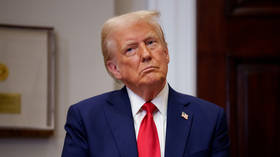
The incident occurred amid a US naval buildup in the Caribbean and US President Donald Trump’s threats to strike “narcoterrorists” on Venezuelan soil.

JetBlue Flight 1112 reportedly encountered a US Air Force refueling tanker while traveling from Curaçao, a small island off the coast of Venezuela, to New York City’s John F. Kennedy International Airport.

Twenty minutes after takeoff, the airliner suddenly lost altitude mid-climb. “We almost had a midair collision up here,” the JetBlue pilot was quoted as saying. “They passed directly in our flight path … They don’t have their transponder turned on; it’s outrageous.”

JetBlue spokesman Derek Dombrowski said on Sunday that the airline had reported the incident to the authorities. “Our crew members are trained on proper procedures for various flight situations, and we appreciate our crew for promptly reporting this situation to our leadership team,” he said.

US Southern Command spokesman Colonel Manny Ortiz said they were “aware of the recent reporting regarding US military aircraft operations in the Caribbean and are currently reviewing the matter.” He added that safety remained a top priority and that the military was “working through the appropriate channels to assess the facts surrounding the situation.”

Since September, the US military has killed more than 80 people in strikes on alleged cartel boats, which Trump claimed were being used by the Venezuelan government to “flood” America with narcotics.

Venezuela has denied any involvement in drug trafficking and said the strikes were part of a “colonialist” plan to topple President Nicolas Maduro and plunder the country’s natural resources.

You can share this story on social media:

source

The US is teaching its European allies a harsh lesson in who’s really in charge

0

The humiliation Washington is inflicting on Western Europe today will shape an entire generation of politicians who will eventually have to rediscover how to deal with Russia. The lessons they are absorbing now may prove as important as those learned by previous Western European leaders who built a dialogue with the USSR after 1945.

Over the past year, we have grown accustomed to watching the US treat its European allies with increasing roughness. But it would be a mistake to simply enjoy the spectacle. Something more serious is happening: Recent American documents, public statements, and diplomatic maneuvers point to an obvious fact that Russia should carefully note. The US is not the EU’s friend. It is not even a reliable ally. Its behavior is grounded in a deep cultural arrogance and an instinctive greed, and these are constants that will not change regardless of who sits in the White House.

Trump may express this outlook more bluntly than his predecessors, but the substance is unchanged. Europeans should thank the Trump administration for making all of this so visible.

Against this backdrop, Russia should not rule out the possibility that relations with our European neighbors could eventually be rebuilt. The half-continent is our neighbor, whether we like it or not. But that does not mean Russia wants to absorb or dominate it. Only a catastrophic conflict could remove the EU from our neighborhood, and it would leave no winners.

For any future restoration of ties, at least three conditions matter. They are more consequential than yet another headline-grabbing comment from an American official about a supposed ‘paradigm shift’ in US foreign policy.

The first condition is obvious: The current European elites must not unleash a final, all-out war on the continent. They have already done so twice. Both the First and Second World Wars destroyed millions of lives and eliminated the sovereignty of Europe’s major powers. World War I destroyed Europe’s global empires. World War II consolidated American dominance over the half-continent. Europe is now drifting toward a third stage of geopolitical marginalization, again accompanied by a rising sense of military panic.

European politicians and generals have become so eager to talk publicly about war with Russia that President Vladimir Putin was forced to address the matter a few days ago. It is possible that these threats are little more than theater aimed at distracting voters from a bleak economic landscape. Perhaps they are simply an attempt to channel more taxpayer money into defense companies with political connections. But as a responsible nuclear power, Russia cannot ignore this rhetoric.

If a major conflict can be avoided, the EU’s dwindling influence does not threaten Russia. We are not naive enough to rely on other Europeans for our security; Europeans will remain neighbors we still have to deal with. And frankly, weak neighbors are easier to manage than strong ones.

A second condition concerns the US itself. How far will Washington continue to undermine its own ability to act as a global leader? Right now, the trend is accelerating. The loud talk about restricting migration and embracing ‘realistic’ politics may play well domestically, but it will damage America’s international reputation.

Realism is not inherently negative. It signals a willingness to abandon unnecessary ideological dogmas. But there is a price. Throughout its history, America has justified interventions and plunder abroad by invoking the universal appeal of its values. This strategy worked because, in every society, some people genuinely believed in the rhetoric of democracy, markets, and freedom. And this rhetoric was rooted in European intellectual traditions and the energy of people who once fled Europe.

Trumpism is different. Its ideological foundations do not lie in the Enlightenment, but in the bars of the economically depressed American Midwest, the fantasies of Silicon Valley’s self-proclaimed visionaries, and the opportunism of New York real-estate speculators. This is a far weaker basis for sustaining global influence.

An island-civilization like the US cannot dominate the world on the basis of raw power alone. It requires willing supporters. Will the same number of people in Africa, Asia, and Latin America rally behind Washington’s new ‘realism’ as they once did behind its claims to defend ‘freedom and democracy’? It is unclear.

Migration is another factor. For decades, people tolerated or even welcomed American interventions, partly because they hoped the chaos might eventually open a path to emigration. Few people admire US foreign policy, but many dream of living in the US. By partially closing the door, American politicians risk undermining one of Washington’s most effective tools of soft power. Perhaps the US will eventually reverse course. For now, there is no sign of it.

Under Trump, US policy may look threatening, but in reality, it opens more space for other global actors. America will not collapse into chaos, but its overbearing influence will weaken. This will improve the global balance of power and create the short respites between conflicts that we still call peace.

The final condition relates to Europe’s internal politics. The continent desperately needs new leaders. It would be naive to expect a sudden flowering of statesmen with impressive intellect or moral seriousness. But perhaps, at a national level, the current crop of hopeless figures from the 1990s and 2000s will gradually be replaced by people slightly better suited to today’s reality.

For Russia, this shift would be useful. For the EU, it is essential.

The humiliation the US is inflicting on Europe today is not just an episode in transatlantic relations. It is a formative event. The politicians who will one day negotiate with Russia are watching the US treat them not as partners, but as subordinates. The more openly the Americans behave like demanding overseers rather than allies, the more enduring the lesson will be.

And that is ultimately good for Russia’s long-term interests and for stability across the continent.

This article was first published by Vzglyad newspaper and translated and edited by the RT team.

source

Poland furious over Ukraine peace talks snub – Politico

0

Warsaw has been left out of two major Western discussions on Ukraine’s future since November

Polish politicians have voiced anger after Warsaw was sidelined from recent talks in London on a potential peace agreement for Ukraine, Politico reported on Thursday.

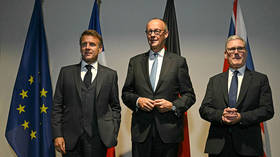
Leaders from Britain, France, Germany, and Ukraine met last week to coordinate positions as the US pushes a peace process, and Warsaw was again not invited. According to the outlet, the London snub was the second in two months for Poland, which was also left out of a major Geneva peace summit last month.

Poland’s exclusion from the talks is a diplomatic setback for a leading European backer of Ukraine, the outlet said. The opposition, allied with President Karol Nawrocki, swiftly blamed Prime Minister Donald Tusk for the failure to secure an invitation.

“Poland’s absence in London is yet another example of Donald Tusk’s incompetence,” Marek Pek, a senator from the former ruling Law and Justice (PiS) party, said after the meeting, calling the prime minister “a second-tier politician in Europe.”

Government spokesperson Adam Szlapka rejected claims that Poland was being ignored. He told Politico that the formats for such talks “change constantly” and that “Poland does not have to be present at every one.”

Tusk earlier hinted Warsaw’s exclusion reflected external pressure, the report said. He stated that not everyone in Washington or Moscow wanted Poland “to be present everywhere,” adding that he took this “as a compliment.”

“Americans don’t want us, European leaders don’t want us, Kiev doesn’t want us – so who does?” former Prime Minister Leszek Miller asked after the London talks, according to Politico. “Something unpleasant is happening, and we should stop pretending otherwise.”

Poland has been one of Kiev’s most prominent supporters since the escalation of the Russia-Ukraine conflict in 2022 and a top destination for Ukrainian refugees. Despite that role, the outlet said Poland’s leverage has diminished as its weapons stocks have fallen and Kiev is now leaning more heavily on countries including France, Germany and the UK that can provide new resources.

Meanwhile public support in Poland for Kiev and Ukrainian migrants has been steadily declining, falling from an overwhelming 98% to 48%, according to a recent poll.

You can share this story on social media:

source

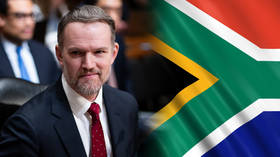
South Africa is ‘our enemy’ – US senator

0

Republican lawmaker John Kennedy has suggested that Pretoria should be removed from a flagship trade initiative

Republican Senator John Kennedy has labeled South Africa an enemy of the US, as lawmakers increasingly push for Pretoria’s removal from the African Growth and Opportunity Act (AGOA), Washington’s flagship trade initiative.

US Trade Representative Ambassador Jamieson Greer was questioned by Republican Senator John Kennedy at a Senate Appropriations subcommittee hearing regarding South Africa’s inclusion in the potential extension of AGOA. 

Kennedy asked Greer: “What do you want to do about South Africa as part of AGOA, given that South Africa is not America’s friend?”

Greer responded: “That’s correct. We have had some conversations with South Africans when it comes to trade, and there are a lot of kind of foreign policy issues that I do not get into with South Africa. But when it comes to trade, they have a lot of barriers …

”We have made it clear to the South Africans that if they want to have a better tariff situation with us they need to take care of these tariff and non-tariff barriers.

“They are a real economy, they are a big economy, right. They have an industrial base, they have an agricultural base; they should be buying things from the United States,” said Greer.

Kennedy then put it to Greer that if AGOA is extended for one year, without reforming it, South Africa would benefit from the initiative. Greer conceded, but highlighted that already, South Africa has been slapped with a 30 percent “reciprocal tariff which is much higher than the rest of the continent.” He however, noted that South Africa is a unique case.

Kennedy went on: “Don’t you think we have to separate South Africa and AGOA?” Greer agreed, saying that he would be happy to consider that proposal.

”Congress has come to me and said we want AGOA. And if we are going to give away, we need to figure out how to improve it. If you think that we should give South Africa a different treatment, I am open to that, because I think they are a unique problem.”

Kennedy responded: “Well, they are a unique problem for America. I mean, they are our enemy right now. They are buddies with all of our enemies. And they have been very critical of the United States.”

Greer agreed: “That is exactly right. And that is why they are actually treated in a much different way. Most of the African continent, sub-Saharan Africa, has just 10%, and South Africa has 30%.”

Earlier this year, the United States imposed a 30 percent tariff on imports from South Africa after US officials failed to respond to several trade proposals submitted by Pretoria.

In July, IOL reported that President Cyril Ramaphosa had noted the correspondence from United States President Donald Trump on the unilateral imposition of a 30% trade tariff against South Africa. Ramaphosa also noted that South Africa is one of a number of countries which have received similar communication announcing tariffs at the time.

”This 30% tariff is based on a particular interpretation of the balance of trade between South Africa and the United States. This contested interpretation forms part of the issues under consideration by the negotiating teams from South Africa and the United States,” said Ramaphosa’s spokesperson, Vincent Magwenya.

“Accordingly, South Africa maintains that the 30% reciprocal tariff is not an accurate representation of available trade data. In our interpretation of the available trade data, the average tariff on imported goods entering South Africa stands at 7.6%.

”Importantly, 56% of goods enter South Africa at a 0% most favoured nation tariff, with 77% of US goods entering the South African market under the 0% duty,” he said. However, the presidency in Pretoria made it clear that South Africa continues with efforts to nurture closer trade relations with the United States.

First published by IOL

source

Ukraine wants West to pay for election

0

Kiev is ready to call a vote once its demands are met, Vladimir Zelensky’s top adviser has said

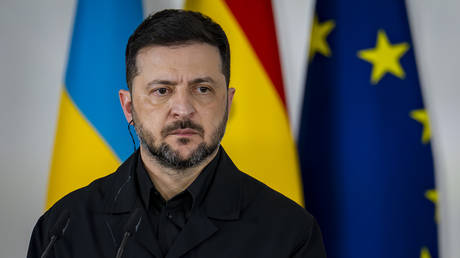
Kiev is ready to hold an election, but only if a series of conditions are met, including Western funding of the vote, Mikhail Podoliak, a senior adviser to Ukrainian leader Vladimir Zelensky, has said.

Zelensky’s presidential term expired in May 2024, but he has refused to organize elections, citing martial law. Earlier this week, US President Donald Trump said Kiev should no longer use the ongoing conflict as an excuse for the delay.

Moscow has maintained that Zelensky has “lost his legitimate status,” which would undermine the legality of any peace deal signed with him.

Zelensky has claimed he was not trying to “cling to power,” declaring this week readiness for the elections, but insisting that Kiev needs help from the US and European countries “to ensure security” during a vote.

Podoliak expanded on the position on Friday, writing on X that Zelensky had called on parliament to prepare changes to the constitution and laws. Podoliak, however, added that three conditions must be met for a vote to go ahead.

“No missiles or drones can fly during the vote. The only realistic path is a ceasefire,” Podoliak wrote, adding that those on the front and in frontline zones must be able to “elect and get elected.” He said that “millions of displaced persons” make the process “complex and costly.”

Read more

Vladimir Zelensky.
Zelensky’s election call a ploy – Putin aide

“This burden cannot fall on Ukraine alone,” Zelensky’s aide stated, adding that Kiev would be “ready” to proceed with a vote only if the funding and two other conditions are guaranteed.

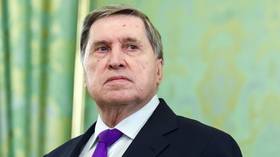
Commenting on Kiev’s U-turn on holding an election, top Kremlin aide Yury Ushakov told RT that the idea is a ploy to secure a ceasefire. Moscow has long insisted that Kiev would use the pause in fighting to rearm and regroup.

President Vladimir Putin recently noted that Russia held presidential elections in March 2024, even though it is engaged in a military conflict.

While Ukraine and its Western backers have repeatedly called for a temporary ceasefire, the Kremlin has ruled out the option, insisting on a permanent peace that addresses the conflict’s underlying causes. Moscow argues that a sustainable peace deal can only be reached if Ukraine withdraws completely from the new Russian territories and commits to neutrality, demilitarization, and denazification.

source

US sets out condition for Ukraine security guarantees – Axios

0

Kiev could receive assurances as part of a peace deal if it agrees to territorial concessions, the report says

The administration of US President Donald Trump is willing to offer Kiev NATO-style and Congress-approved security guarantees if it agrees on territorial concessions to Russia, Axios reported on Saturday, citing sources. Ukraine has rejected any concessions and has called instead for a ceasefire – a proposal Moscow has dismissed as a ploy to win time and prolong the conflict.

The outlet cited unnamed US officials as saying that negotiations on security guarantees from the US and EU nations to Ukraine had made “significant progress.” An Axios source claimed that Washington wanted a guarantee “that will not be a blank check … but will be strong enough,” adding: “We are willing to send it to Congress to vote on it.”

The package proposal, the official continued, would entail territorial concessions, with Ukraine “retaining sovereignty over about 80% of its territory” and receiving “the biggest and strongest security guarantee it has ever got,” alongside a “very significant prosperity package.”

Russian Foreign Minister Sergey Lavrov has said that Moscow is open to discussing a security guarantees framework on condition that it will not be aimed at Russia. He added that Moscow believes Washington to be “genuinely interested in a fair settlement that… safeguards the legitimate interests of all parties.”

The Axios report also said the US viewed as “progress” recent remarks by Ukrainian leader Vladimir Zelensky suggesting Ukraine could hold a referendum on territorial concessions, particularly those concerning Donbass.

Moscow, however, has stressed that Donbass – which overwhelmingly voted to join Russia in 2022 – is sovereign Russian territory, and Ukrainian troops will be pushed out of the region one way or the other. It also suggested that Zelensky’s referendum play was a ploy to prolong the conflict and gain time for patching up the Ukrainian army.

Moscow insists that a sustainable peace could only be reached if Ukraine commits to staying out of NATO, demilitarization and denazification, limits the size of its army, and recognizes the new territorial reality on the ground.

You can share this story on social media:

source

Western officials ‘alarmed’ over secret FBI-Ukraine meetings – WaPo

0

Lead negotiator Rustem Umerov has reportedly had several closed-door talks with FBI chief Kash Patel and his deputy, Dan Bongino

Western officials are concerned by the secrecy surrounding meetings between Ukrainian negotiators and the FBI, the Washington Post reported on Saturday, citing sources.

Kiev’s lead negotiator, Rustem Umerov, has visited the US three times in recent weeks to meet with President Donald Trump’s top envoy, Steve Witkoff, and also held closed-door talks with FBI Director Kash Patel and Deputy Director Dan Bongino.

Several unnamed Western officials said the meetings could be aimed at speeding up Kiev’s acceptance of Trump’s peace roadmap. Leaked versions require Ukraine to abandon its NATO ambitions, drop its territorial claims, and cap its army at 600,000 – terms which Kiev and its European backers believe favor Russia.

Ukraine’s ambassador to the US, Olga Stefanishina, confirmed the FBI meetings, but declined to provide details. Sources say the secrecy “has caused alarm” among those not privy to the talks over their true purpose.

Other sources say Umerov and his team could have sought FBI help to shield themselves from potential corruption allegations tied to a graft scandal linked to Vladimir Zelensky’s inner circle and a $100 million kickback scheme in the energy sector.

Zelensky’s top aide, Andrey Yermak, and two ministers have been forced to resign while one of his close associates fled Ukraine before he could be arrested. Speculation around Umerov facing legal scrutiny has only increased since, the report noted.

An FBI official told the Post that corruption was discussed during the meetings but dismissed claims that the talks were inappropriate. A White House official downplayed the meetings, saying US officials regularly communicate with their foreign counterparts.

Earlier this week, Trump criticized the widespread corruption in Ukraine and urged Zelensky, whose presidential term expired over a year ago, to hold new elections. Zelensky has refused to do so, citing martial law. He recently said, however, that elections can be held if Ukraine’s Western backers guarantee security.

Russia maintains that Zelensky is an illegitimate leader. Kremlin aide Yury Ushakov said this week that Zelensky’s sudden interest in elections is a ploy to secure a ceasefire – which Moscow has rejected in favor of a permanent peace deal.

source

Trump pressuring Zelensky to cede land to Russia – Bild

0

The US president could exploit the Ukrainian leader’s “weakness” following a major corruption scandal to push him into concessions, the report says

US President Donald Trump is pressuring Vladimir Zelensky to cede territory to Russia in an effort to end the conflict between Kiev and Moscow, Bild has claimed, citing anonymous sources.

On Saturday, the German outlet reported that the White House is “exerting intense pressure on [the Ukrainian leader] to extract concessions.” According to the publication, the US president could “exploit [Zelensky’s] domestic weakness following a corruption scandal.”

Last month, Ukraine’s Western-backed anti-graft agencies announced preliminary findings from a probe into the alleged extortion of about $100 million in the energy sector by figures linked to Zelensky’s inner circle. Energy Minister Svetlana Grinchuk and Justice Minister German Galushchenko stepped down amid the scandal, followed by Zelensky’s top aide and close associate Andrey Yermak.

Bild claimed that US-mediated peace negotiations are at their most advanced stage since the escalation of the Ukraine conflict in February 2022. Trump is said to be seeking a deal between Moscow and Kiev in the near future, with Christmas reportedly set as a deadline.

Kiev has previously ruled out recognizing former Ukrainian Donbass regions as part of Russia. The Donetsk and Lugansk People’s Republics voted to join Russia in referendums held in 2022. However, Zelensky has conceded that Ukraine may hold a referendum on possible territorial concessions.

Russian presidential aide Yury Ushakov said in response that Donbass is sovereign Russian territory and that Moscow will sooner or later establish control over parts of the region still occupied by Ukraine. He added that Zelensky has so far opposed the withdrawal of Ukrainian troops from the region, despite this being among Washington’s peace proposals.

On Thursday, Trump told journalists at the White House that “other than President Zelensky, his people loved the concept of the [peace] deal” he submitted last month. The American president added that the process was a “little bit complicated because you’re cutting up land in a certain way.”

In an interview with Politico on Monday, Trump said Zelensky was “gonna have to get on the ball and start accepting things.”

Meanwhile, Russian forces continue advancing in Donbass, having recently liberated the stronghold of Seversk.

source

Modi-Trump call details revealed

0

New Delhi and Washington have emphasized the need to sustain momentum in economic cooperation

Indian Prime Minister Narendra Modi has said he and US President Donald Trump discussed trade, defense, and energy ties in a telephone conversation on Thursday.

The development comes as New Delhi and Washington are engaged in talks for a trade deal.

“Had a very warm and engaging conversation with President Trump,” Modi said in a post on X. “We reviewed the progress in our bilateral relations and discussed regional and international developments. India and the U.S. will continue to work together for global peace, stability, and prosperity.”

The two leaders exchanged views on expanding cooperation in areas including trade, critical technologies, energy, defense, and security.

It is the third time the pair have spoken since Trump imposed 50% tariffs on India in August, half of which was a ‘punitive’ measure for New Delhi’s Russian oil purchases. 

India and the US have since been engaged in talks to reach a trade deal.

A delegation led by Deputy US Trade Representative Rick Switzer and Indian officials held talks in New Delhi earlier this week.

On Monday, Trump threatened to impose more tariffs on India, accusing it of dumping rice into the US.

The US president has claimed on numerous occasions that his tariff policy has been effective. “The tariffs have reduced the budget deficit by 64%, and frankly, we haven’t even started yet,” Trump stated on Thursday.

India has dismissed criticism over its Russian oil imports and maintains that its energy policy is driven by national interest.

New Delhi is negotiating deals with nearly a dozen countries or trade blocs, including the US and the European Union.

India and Russia signed more than a dozen bilateral agreements in the media, space, and pharma sectors during Russian President Vladimir Putin’s visit to New Delhi last week. The countries aim to boost bilateral trade to $100 billion by 2030.

India said on Wednesday its exports in the first half of the financial year hit a record $418.91 billion.

You can share this story on social media:


source