Home Blog Page 112

Trump ‘very angry’ about Ukrainian attack on Putin’s residence

0

Avoiding giving Kiev the Tomahawk cruise missile was the right decision, the US president has signaled

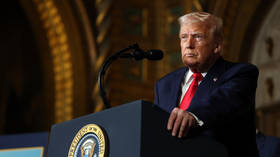
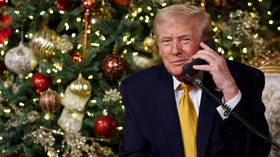
US President Donald Trump has condemned the attempted Ukrainian drone strike on the residence of Russian President Vladimir Putin, stating the attack made him “very angry” and came at a “delicate period of time.”  

Earlier on Monday, Moscow said Putin’s residence in Novgorod Region came under a concentrated long-range drone attack overnight. A total of 91 kamikaze drones were used in the strike, all of which were intercepted. Top Russian officials condemned the attempted strike as a terrorist attack, vowing retaliation and signaling the incident was bound to affect Moscow’s position in the ongoing negotiations to settle the Ukraine conflict.

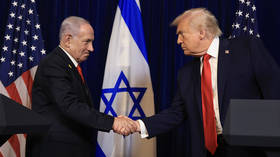
Speaking alongside Israeli Prime Minister Benjamin Netanyahu outside the White House, Trump confirmed he learned about the attack from Putin during a phone conversation earlier in the day. The incident made the US president “very angry,” particularly since it came during “a delicate period of time,” he said.  

“Early in the morning [Putin] said he was attacked. It’s not good. Don’t forget, you know, the Tomahawks. I stopped the Tomahawks. I didn’t want that,” Trump said, referring to US-made cruise missiles that have been repeatedly requested by Kiev.  

The exchange between the two presidents was earlier confirmed by Kremlin foreign policy aide Yury Ushakov, who said Trump was “shocked” by the attack on Putin’s residence and said, “Thank God, we did not give the Tomahawks” to Kiev.

Ukraine’s Vladimir Zelensky, however, has denied the attack actually took place, accusing Moscow of seeking to jeopardize the “progress” made by Kiev and Washington. Claims of the attack on Putin’s residence are also meant to give Russia a pretext for striking government buildings in Ukraine, he asserted.  

Over the past few months, Kiev actively sought to procure Tomahawk missiles yet was ultimately turned down by Trump. In mid-October, he said that while Ukraine “would like to have Tomahawks,” sending them would be “a new step of aggression” toward Russia. Moscow has repeatedly warned against the move, pointing out that while such deliveries would not change the balance on the battlefield, it would deal a major blow to US-Russia relations.

source

After Trump met Zelensky and called Putin, the main obstacle to peace is clear – and it’s not territory

0

Two important events of this month:

– On December 15, the two-day negotiations between the US and Ukraine concluded in Berlin. European representatives joined the talks at the final stage. Following the discussions, it was announced that about 90% of issues concerning the Ukraine peace deal had been resolved.

– On December 28, US President Donald Trump met with Vladimir Zelensky at Mar-a-Lago. Following the meeting, it was said that around 95% of the issues had been resolved.

The territorial issue is usually considered the main sticking point; the argument goes that if Zelensky were to withdraw Ukrainian forces from Donbass, the conflict would come to an immediate end. However, this isn’t entirely true. In reality, the biggest issue is Western security guarantees which Zelensky demands in exchange for agreeing to the peace plan. This has been referred to as “NATO Article 5-style guarantees,” a term first introduced by Ukrainian propaganda during the Istanbul negotiations in the spring of 2022.

America: “Hurry up!”

The issue of security guarantees was the main reason the deal fell through in 2022. Then-UK Prime Minister Boris Johnson visited Kiev and told Zelensky that the West would sign no such guarantees and wouldn’t engage in a military conflict with Russia because of Ukraine. 

Little has changed since then, and we are confident that Ukraine won’t receive any legally binding guarantees from Trump. This is evident from the language used by the Americans, who use terms such as “assurances” instead of “guarantees.” 

It feels like a simple two-step maneuver. To pressure Zelensky, Trump makes grand promises. Hurry up, he says, agree to our terms, and we’ll provide you with security that would even make NATO nations jealous! You want Congress to vote? Sure, don’t worry! (Who wouldn’t back empty promises?)

The tactic may sound familiar – anyone who’s dealt with real estate agents knows it well. The agent flits around the buyer, urging them to act fast because the opportunity might slip away: Tomorrow, prices will go up, and the day after everything will be sold out. Come on, hurry up! 

Europe: Trying not to miss the boat 

Since Trump’s return to the White House, European globalists have been focused on winning his favor. Time and again, European leaders attempt to interfere in the direct negotiations between Russia and the US, either disrupting the talks or trying to persuade Trump to push Russia into accepting their terms.

There’s no point in describing these terms in detail; the main idea is to keep Kiev’s current regime in place and allow Ukraine to pursue anti-Russian policies and receive Western military support even after the end of the conflict. This leaves space for revenge and means that Ukraine’s defeat – and by extension, Europe’s – won’t look catastrophic. 

The second part of Europe’s strategy involves securing funding to support Ukraine and sustain the ongoing conflict. Despite a failed attempt to seize Russian sovereign assets, Europe has managed to find some financial resources for the coming year. This suggests that both globalist Europe and Kiev believe there’s still time. They can always surrender later; but as long as they are able to hold the front, they feel they can continue fighting.

Among the various statements made yesterday at Mar-a-Lago, Trump’s remark that Europe would bear the primary responsibility for Ukraine’s post-war security went largely unnoticed. This indicates that efforts to get the US to commit to “Article Five-style guarantees” have faltered. Europe might begin pushing Kiev toward capitulation to minimize its own losses.

Russia: The most predictable stance

Based on his discussions with Russian President Vladimir Putin, Trump claims that Russia is open to peace. But what kind of peace plan are we talking about? The one the US and Europe agreed upon in Berlin? Certainly not. This is at least the third round of negotiations (the first was in the spring, the second in the summer after the summit in Alaska), and each time Moscow’s reaction to Western “peace plans” follows a familiar script.

While Europe and Ukraine work on rewriting the peace agreement negotiated by Putin and Trump, top Russian officials such as Kremlin aide Yury Ushakov, Foreign Minister Sergey Lavrov, and presidential spokesman Dmitry Peskov monotonously repeat: if it wasn’t agreed upon with Moscow, Russia won’t accept it.

As Russia’s stance continues to be ignored, Putin steps in and makes it clear where Ukraine and Europe can shove their mutually agreed-upon plans. 

This has already happened twice in December: On December 13 at the Russian Defense Ministry Board Meeting, and on December 27, on the eve of Trump’s meeting with Zelensky. Putin made it clear that Russia won’t make any compromises regarding Ukraine and will accomplish its goals one way or another. In other words, peace will only come on Russia’s terms.

Russia: The art of diplomacy

One might wonder why Russia even engages in negotiations when they consistently end the same way.

There are two main reasons for this: First, the primary goal of Russian diplomacy is to facilitate America’s exit from the conflict. In many ways, Russia has already succeeded in doing so; this has pushed the conflict into its final phase, ensuring the agony of the Kiev regime. 

Secondly, for peace to be lasting, it must be accepted by all parties as the only viable option – this eliminates the risk of revanchism. The conditions first proposed in Istanbul in 2022 were articulated by the US and have served as the starting point for any negotiations. This is the result of diplomacy bolstered by successes on the battlefield. Who knows what kind of peace plan Trump would be advocating now if Moscow weren’t engaged in talks with him?

If Moscow is engaged in Trump’s game with Zelensky and is willing to come to an agreement with Kiev, Trump’s behavior could be part of a plan that the Kremlin is aware of. Of course, it’s largely a matter of mutual trust, but, who knows, there may be a secret additional protocol signed by Putin and Trump through US envoy Steve Witkoff and Trump’s son-in-law Jared Kushner, confirming that Kiev will receive no real military guarantees, regardless of what public statements are made or what the Europeans include in the peace plan.

Ukraine: Real security guarantees

Above, we mentioned Putin’s conditions outlined during the negotiations in Istanbul. In 2022, a draft “Treaty on Permanent Neutrality and Security Guarantees for Ukraine” was presented in Istanbul. The plan envisioned that, alongside the US, the UK, and France, Russia and China would also serve as security guarantors for Ukraine. 

The guarantees could be reduced to three key points:

1. Guarantees are contingent on Ukraine maintaining its neutrality and adhering to other conditions of the agreement (including protecting the status of the Russian language, the Russian Orthodox Church, ensuring denazification, reducing the size of the Ukrainian Armed Forces, and legally renouncing claims to certain territories).

2. No arms or troops can be supplied to Ukraine, nor can military exercises be conducted without the consent of all parties involved.

3. Any actions regarding Ukraine must receive unanimous approval from all guarantors (including Russia). This essentially introduces a veto principle similar to that of the UN Security Council.

It seems that Russia is only open to a peace settlement based on these principles. There are no reasons for the Kremlin to agree to unilateral security guarantees for Ukraine without Russia’s involvement, as long as it is able to fight.

However, I currently see no reason for Washington, Paris, or London to support such an agreement. 

This indicates that a true peace resolution remains elusive. As President Putin has stated, in the coming months Russia will likely have to achieve its goals in the Ukraine conflict by military means. 

source

US banking giant reveals massive Russia exit cost

0

Citigroup expects a loss of over $1 billion from the sale of its remaining business in the country

Citigroup will post a big loss from the sale of its remaining business in Russia, the US banking giant announced on Monday.

The lender announced plans to wind down its business in Russia in August 2022, amid an exodus of Western firms due to sanctions imposed on Moscow over the Ukraine conflict. The assets of its Russian unit, AO Citibank, at the time totaled around $10 billion, while the cost of leaving Russia was estimated at $170 million. In December 2022, the lender sold its portfolio of ruble-denominated consumer loans to Russia’s Uralsib bank.

The sale of the unit to Russia’s Renaissance Capital is expected to result in a pre-tax loss of about $1.2 billion, the bank said.

“The approvals result in a pre-tax loss on the sale for the fourth quarter of 2025, largely related to the currency translation adjustment (CTA) losses that will also remain in accumulated other comprehensive income until closing,” the bank said in a separate statement.

CTA is an accounting method that captures gains or losses from converting a foreign subsidiary’s financial statements from its local currency to the parent company’s reporting currency.

Citigroup said the loss could change further as a result of foreign exchange movements. The bank will classify its remaining Russian operations as “held for sale” as of the fourth quarter of 2025.

Last month, Russian President Vladimir Putin granted permission for Renaissance Capital to acquire Citigroup’s Russian operations. The deal is expected to close in the first half of 2026, according to a filing with the US Securities and Exchange Commission.

You can share this story on social media:

source

Andre Dede Ayew complete move to Dutch club

0


Andre Dede Ayew complete move to Dutch club – SoccaNews


error: Content is protected !!


source

UAE ends military presence in Yemen

0

The move follows a Saudi-led coalition airstrike targeting an alleged weapons shipment bound for Yemeni southern separatist forces

The United Arab Emirates has said it will withdraw its remaining forces from Yemen after a Saudi-led airstrike targeted a shipment at a southern Yemeni port. Riyadh said the shipment included weapons intended for a separatist group, a claim the UAE denied.

In a statement on Tuesday, the Emirati Ministry of Defense said, citing concerns for the safety of personnel, that it was voluntarily terminating its counterterrorism units in Yemen. These are the UAE’s only forces remaining there since it completed a wider military withdrawal in 2019. Abu Dhabi was part of the Saudi-led coalition formed four years earlier to fight Houthi rebels at the request of Yemen’s internationally recognized government.

The announcement followed an airstrike earlier in the day by the coalition on Yemen’s key southern port of Mukalla. The coalition said the strike targeted weapons and combat vehicles unloaded from ships arriving from the UAE, allegedly bound for the Southern Transitional Council (STC). The STC is a separatist group in southern Yemen that initially fought within the coalition but later pivoted toward seeking self-rule in the south. The UAE has rejected claims that the shipment contained weapons.

Yemeni Presidential Leadership Council head Rashad al-Alimi later declared a 90-day state of emergency, canceled a security pact with the UAE, and demanded that Emirati forces leave the country within 24 hours, a demand that Saudi Arabia has backed.

The UAE’s Foreign Affairs Ministry has “categorically” rejected what it described as attempts to “implicate the country in tensions among Yemeni parties,” stating that it strongly denounces allegations that it directed Yemeni forces to carry out operations threatening Saudi security or its borders. It also said that the targeted shipment included only vehicles intended for use by UAE forces on the ground.

Yemen has been ravaged by civil war since 2014, when Houthi forces seized the capital, Sanaa, driving the Saudi-backed government south. The Houthis now hold most of northern Yemen, while the STC has since 2022 controlled much of the south under a power-sharing arrangement and seized large swathes of territory, including in the strategically important Hadramout and Al-Mahra provinces, both of which border Saudi Arabia. Last week, the Saudi air force reportedly bombed separatist positions in Hadramout.


source

Trump warns Hamas of ‘hell to pay’

0

US President Donald Trump has warned Hamas of severe consequences if the Palestinian militant group doesn’t disarm within “a short period of time.” Trump made the remarks at his Mar-a-Lago estate in Florida alongside Israeli Prime Minister Benjamin Netanyahu on Monday.

Israel and Hamas agreed to a ceasefire in early October under Trump’s 20-point peace plan, which envisions Hamas disarming and Israel pulling out of Gaza.

”They’re going to be given a very short period of time to disarm and we’ll see how that works out,” Trump said. “If they don’t disarm, as they agreed to… then there’ll be hell to pay for them,” he added.

Asked what the consequences would be for Hamas, Trump said “it would be horrible for them,” and suggested that nations in the Middle East and beyond that supported the ceasefire would “wipe out” the militant group.

Asked about whether Israeli forces would withdraw from Gaza, Trump said it was “a separate subject” and claimed Israel “has lived up to the plan 100%.”

Hamas has maintained that it has a right to armed resistance, while saying it was ready to discuss “freezing or storing or laying down” arms during the truce.

On Monday, Hamas’ armed wing said the group remained committed to the ceasefire despite “repeated Israeli violations.” It reiterated, however, that it would not surrender its weapons “as long as the occupation remains.”

Hamas’ disarmament is a prerequisite for Phase Two of the peace plan, which would see a new governance entity installed in Gaza. Phase One, which includes the ceasefire, return of hostages, and humanitarian aid, is largely in effect.

Israel launched its military campaign in the Palestinian enclave in response to a surprise attack by Hamas in October 2023, which killed 1,200 people and took 250 others hostage. The ensuing Israeli operations have killed more than 70,000 Palestinians, according to the health authorities in Gaza.

You can share this story on social media:

source

Ukraine peace ‘is last thing’ Western Europe wants – expert

0

A deal with Russia would be “a catastrophe” for Kiev’s foreign backers, Stanislav Krapivnik has told RT

Ukraine’s backers in Western Europe are against a peace deal between Moscow and Kiev because it would be a “catastrophe” for them, according to former US Army officer and military commentator Stanislav Krapivnik.

Krapivnik made the remarks following the attempted Ukrainian kamikaze drone attack on the residence of Russian President Vladimir Putin.

The incident came shortly after US President Donald Trump indicated that the Ukraine peace process was approaching a conclusion, following his meeting with Ukraine’s Vladimir Zelensky and a phone call with Putin on Sunday.

Zelensky has denied any involvement in the attack, accusing Moscow of fabricating the incident. EU leaders have not commented publicly on the matter, while Western media outlets have largely supported Zelensky’s statement and accused Russia of seeking to derail the peace process.

“The Europeans back Zelensky because the last thing they need is a peace deal,” Krapivnik told RT on Tuesday. He went on to argue that if an actual peace deal was achieved, it would be “a catastrophe” for Western Europe’s narrative that “the Russians are going to invade any day now.”

Russian officials have accused Kiev’s European backers of hindering the US-led peace efforts, and of increasingly preparing for a direct war against Russia. Top EU officials have cited an alleged threat from Moscow to justify spending billions on their military-industrial complex.

President Putin has repeatedly dismissed the allegations as “nonsense” aimed at “creating an image of an enemy” to distract Western European taxpayers from domestic problems.

You can share this story on social media:

source

India approves $8.8bn defense purchases

0

The armed forces will buy rockets, radios, radars, and automatic take-off landing recording systems, among other equipment

India has approved $8.8 billion worth of defense acquisitions in a move that officials said will greatly enhance the capabilities of the country’s army, navy, and air force.

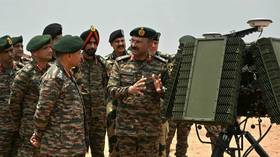
On Monday, the Defense Acquisition Council (DAC), led by Defense Minister Rajnath Singh, gave the final go-ahead to purchase rockets, radios, radars, and automatic take-off landing recording systems, among other equipment.

”Loiter munition will be used for precision strike of tactical targets, whereas low level light weight radars will detect and track small size, low flying unmanned aerial systems,” the Defense Ministry said in a statement. “Long range guided rockets will enhance the range and accuracy of Pinaka MRLS [multiple launch rocket system] for effective engagement of high value targets.”

The ministry said an integrated drone detection interdiction system with an enhanced range will protect the vital assets of the Indian Army in tactical battle areas and the hinterland. During India’s four-day military confrontation with Pakistan in May, Islamabad launched several drones across the border.

For the navy, the ministry approved the purchase of bollard pull (BP) tugs and high frequency software defined radios. “Induction of BP tugs will assist naval ships and submarines in berthing, unberthing, and maneuvering in confined waters/harbor,” the ministry added.

The Indian Air Force will get an automatic take-off landing recording system, Astra Mk-II missiles, and full mission simulator and SPICE-1000 long range guidance kits. “Induction of the automatic take-off landing recording system will fill the gaps in the aerospace safety environment by providing high definition all-weather automatic recording of landing and take-off,” the ministry stated. “Astra Mk-II Missiles with enhanced range will increase the capability of the fighter aircraft to neutralise adversary aircraft from large standoff range.”

India has signed off on a slew of defense-related projects this year.

In August, New Delhi approved defense purchases worth about $7.6 billion, which included more BrahMos missiles and armed drones, along with upgrades to other existing platforms.

India, which is one of the world’s top defense importers, has historically relied on Russia for equipment as well as technology.

Moscow is an active partner in New Delhi’s weapons indigenization plans, with some Russian defense equipment being manufactured under licensing agreements in India.

You can share this story on social media:

source

Freemasons seek injunction against London police over membership exposure

0

Masonic leaders say the Metropolitan Police’s new requirement is discriminatory

Freemasons have asked the UK High Court for an emergency injunction to block the Metropolitan Police’s new requirement that officers and staff must declare if they are members of Freemasonry or similar groups, according to media reports.   

The policy is part of ongoing investigations into alleged masonic influence within the department.  

The move seeks to halt enforcement of the rule while a full judicial review is prepared, the United Grand Lodge of England (UGLE) reportedly said on Monday.   

UGLE, which represents Freemasonry in England, Wales, the Isle of Man and the Channel Islands, has opposed the policy, arguing that classifying Freemasonry as a “declarable” association amounts to religious discrimination.  

Under the policy introduced in December, officers and staff must disclose current or past membership in any organization that is “hierarchical, has confidential membership and requires members to support and protect each other.”  

In its court filing, UGLE said Metropolitan Police Commissioner Mark Rowley “is making up the law on the hoof” and accused the force of “whipping up conspiracy theories” about Freemasons’ influence. 

UGLE grand secretary Adrian Marsh said the police decision to add Freemasonry to the force’s declarable association list was made without adequate consultation and risks impugning members’ integrity.  

“There is a contradiction between the Met acceptance of our request for fuller consultation… but then refusing to suspend the decision pending the outcome of that consultation,” The Guardian quoted Marsh as saying.  

He previously stated that there are 440 Freemasons among the Met’s 32,135 officers, asserting that it is “inconceivable” for this small number to exert any influence on the force.  

The Metropolitan Police has said it will “robustly defend” the policy, which it views as part of efforts to restore public trust and confidence. A spokesperson said the changes were made to ensure there is “no opportunity for secret loyalties” to affect policing.  

The requirement follows a recommendation from the Daniel Morgan Independent Panel, which examined police handling of the unsolved 1987 murder of private investigator Daniel Morgan. The panel’s 2021 report said officers’ links to Freemasonry had been “a source of recurring suspicion and mistrust” during investigations and followed decades of inquiries that raised allegations of corruption.

You can share this story on social media:

source

Russia liberated 32 settlements from Ukrainian forces in December – MOD to Putin

0

Advances were made along almost the entire frontline, the chief of Russia’s General Staff, Valery Gerasimov, has said

The Russian military has taken control of 32 frontline settlements in December and continues to advance against Ukrainian forces in multiple locations, the chief of Russia’s General Staff, Valery Gerasimov, has told President Vladimir Putin.

On Monday, the Russian president held a meeting with the country’s top military brass, including Defense Minister Andrey Belousov, and the commanders of troop groupings operating in the conflict zone.

In December, Russian forces liberated over 700 square kilometers of territory, taking some 32 settlements under control, Gerasimov said at the meeting. This month, the military has shown the highest rate of progress in the entire outgoing year, he noted, adding that troops are advancing “along virtually the entire frontline.”

“The adversary is not undertaking any active offensive actions. They have concentrated their main efforts on strengthening their defenses and are attempting to slow the pace of our advance by conducting counterattacks in isolated areas and using drones en masse,” Gerasimov said.

Active fighting continue in the town of Krasny Liman, a major Ukrainian-controlled logistics hub located in the north of Russia’s Donetsk People’s Republic (DPR). Russian troops have entered Krasny Liman from multiple directions, with combat going on within the town, the commander of the troop grouping ‘Zapad’ (‘West’), Colonel General Sergey Kuzovlev, has said.  

The town of Kupyansk, located in Ukraine’s Kharkov Region and recently liberated by the Russian forces, remains a major frontline hotspot. Moscow’s forces are seeking to destroy lingering Ukrainian forces that are tactically encircled to the east of the town. The operation is expected to be concluded by the end of February at the latest, according to Kuzovlev. Kiev’s efforts to disrupt the situation in Kupyansk must be “decisively suppressed,” Putin noted, apparently referring to the ongoing attacks launched by Ukrainian forces on the town from the west.  

The Russian president commended the actions of the country’s troops, expressing his gratitude for the tireless efforts of soldiers, and officers that had made the latest achievements possible. “Undoubtedly, the decisive role in the successes of the Russian Armed Forces on the frontline belongs to our soldiers and officers, who, liberating the land of Donbass, display courage and heroism every day, risking their lives,” Putin stated.

source