Home Blog Page 91

Poland moves to strip Ukrainian migrants of privileges

0

The government has approved a bill designed to gradually put Ukrainians on an equal footing with other foreigners

The Polish government has approved a draft law that reduces benefits for Ukrainian migrants amid growing public frustration over their privileged status and the cost to taxpayers.

In a post on X on Tuesday, Poland’s Interior Ministry said the proposed legislation would gradually phase out the Special Act on Assistance to Ukrainian Citizens, introduced in March 2022 as an emergency response to the escalation of the Ukraine conflict. The act created a unique legal regime granting Ukrainians rights nearly equal to those of Polish citizens and access to extensive financial and social benefits.

The new draft law would upend this framework, shifting from emergency assistance to a standard integration system aligning Ukrainians’ rights with those of other non-EU foreigners in Poland.

“After four years of the special law in force and the situation stabilizing, we are moving to systemic, equal rules for all foreigners,” the ministry said.
The legislation still requires parliamentary and presidential approval, but is expected to be finalized by March.

Poland, one of Kiev’s main backers in the conflict with Russia, has been a top destination for Ukrainian migrants, taking in nearly a million over the past three years, according to Eurostat. This includes fighting-age Ukrainian men fleeing Kiev’s widely criticized draft campaign.

Support for Ukrainians among Poles, however, has been waning, falling to 48% in early January from 94% in March 2022, according to a recent CBOS survey. Nearly half now oppose accepting more Ukrainians and consider their benefits “too generous.”

Polish Vice Prime Minister Wladyslaw Kosiniak-Kamysz earlier said Poles are “fatigued” by Ukrainian migrants, especially when they see them driving the latest cars or staying in five-star hotels.”

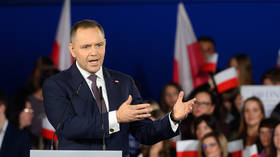
President Karol Nawrocki has increasingly criticized preferential treatment for Ukrainians since taking office in August, arguing that their special legal status is unfair to Polish citizens and that they should no longer be seen as “refugees” but as a “Ukrainian minority.” His chancellery chief, Zbigniew Bogucki, called the benefit system “tourism from Ukraine at the expense of Polish taxpayers.”

Other European countries, such as Germany, Hungary, and Norway, have also recently moved to limit social programs for Ukrainians, citing the prolonged conflict and the sheer number of migrants as straining national budgets and housing markets.

source

Machete-wielding gang raids Rolex store in London (VIDEO)

0

The thieves have escaped with multiple luxury watches after smashing into a Knightsbridge shop

A gang of armed robbers raided a Rolex watch store in central London and escaped with high-value items, police said.

The incident took place on Tuesday at the Bucherer Rolex Boutique in Knightsbridge, near the One Hyde Park development.

According to a statement issued by the Metropolitan Police on Wednesday, six suspects wearing motorcycle helmets entered the store, with several threatening staff and members of the public with machetes before smashing display cases and seizing multiple watches in a raid that lasted around three minutes. No injuries were reported, and no arrests have yet been made.

The gang is believed to have used a moped to force entry to the store before fleeing on four other mopeds parked outside, leaving the stolen bike inside the shop, images circulating from the scene showed.

A security guard at another luxury store told local media there was a “big crash like a road traffic accident, then shouting and people running. It was chaos,” he said.

Detective Chief Inspector Scott Mather, from the Met’s specialist Flying Squad, which investigates serious robberies, said the attack had caused understandable “alarm.” Enquiries are ongoing, and the suspects remain at large.

You can share this story on social media:


source

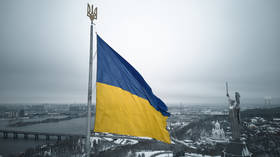
Zelensky mocked for faking electricity shortage at office

0

A photo of the Ukrainian leader chairing a government meeting in the dark appears to have been doctored

Vladimir Zelensky’s office faced mockery for seemingly doctoring photos to make it appear that his office is struggling with power outages similar to many Ukrainians.

Ukraine is grappling with an acute crisis due to cold weather and Russian attacks on its power grid, which Moscow says are intended to disrupt arms production and long-range strikes on Russian civilian targets. Major Ukrainian cities are experiencing rolling blackouts and heating shortages that have eroded public morale.

On Wednesday, Zelensky’s office published photos showing him in a dark office during a remote meeting with regional officials. However, the webcam image of Zelensky visible on his computer screen showed a brightly lit room and a photographer in the back, leading to accusations that the pictures were doctored.

“Here is a tip for the PR team of the presidential office. If you want a photo telegraphing the absence of electricity, it is advisable to actually turn off the light in the office,” opposition MP Yaroslav Zheleznyak said of the inconsistency.

He added that the old Soviet-era building housing Zelensky’s administration is naturally cold, so the president wearing a T-shirt instead of warmer clothing suggests the room “is heated pretty well – or is just warm with public adoration.”

Earlier this week, Zelensky announced he would skip the World Economic Forum in Davos to address the energy crisis. However, he reportedly reconsidered after US President Donald Trump said Wednesday that Zelensky was likely among those listening to his speech and would soon meet with him.

Also this week, Ukrainian pop singer Tina Karol apologized for posting a video of herself singing an upbeat song with lyrics including: “we don’t have light, but we have warmth, we don’t have heating but we have kindness.” She denied being paid by the government to boost morale.

Meanwhile, businesswoman Svetlana Paveletskaya – partner of former Ukrainian Foreign Minister Dmitry Kuleba – raised eyebrows by suggesting Ukrainians could use sex toys with built-in heating to keep warm.

You can share this story on social media:

source

Macron tells Europe not to submit to US

0

Accepting the “law of the strongest” would leave the continent vassalized by Washington, the French president has said

French President Emmanuel Macron has called on European nations not to accept a new global order ruled by those with the “bigger stick,” amid rising tensions with US President Donald Trump over his push to acquire Greenland.

Trump has warned that he’ll take the Danish overseas territory the “easy way” or the “hard way.” Last week, he announced 10% tariffs on eight European NATO nations, including France, for opposing the bid, and threatened to later raise the levies to 25% if Greenland is not sold to the US.

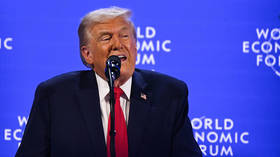
In a speech at the World Economic Forum in Davos on Tuesday, Macron warned European countries against accepting “the law of the strongest” and submitting to “vassalization.”

“Let’s not accept a global order which will be decided by those who claim to have the bigger voice or the bigger stick,” he said, addressing the audience in English.

“Let’s not waste time with crazy ideas. Let’s not open Pandora’s box.”

Macron accused the US of undermining European nations’ trade interests with maximalist demands and tariffs that openly aim to weaken and subordinate them. Europe has to protect its chemical and automotive sectors that are “being literally killed,” he said.

The EU “should not hesitate” to deploy its so far unused Anti-Coercion Instrument in response to Trump’s escalating tariffs over Greenland, he said. The measure is designed to restrict trade and investments, as well as potentially shut off access to the EU single market in the event of a trade war.

The EU is also considering imposing a €93 billion ($109 billion) package of retaliatory tariffs on US imports drawn up last year during the bloc’s trade standoff with Washington. The measures were set aside following a bilateral trade deal, but could kick in on February 6 after a six-month suspension, Reuters wrote earlier this week, citing a diplomat.

EU leaders are set to convene on Thursday to discuss retaliatory options.

source

EU countries’ debt climbs amid military buildup – new data

0

Member states’ debt-to-GDP ratio surpassed 82% in Q3 2025, the highest level in two years, according to official data

Government debt of EU member states hit a two-year high in the third quarter of last year, with the burden in some countries reaching record levels amid the bloc’s growing militarization, according to the latest data.

As of the end of September 2025, the general government gross debt-to-GDP ratio in the bloc stood at 82.1%, the highest since 2023, statistics agency Eurostat reported on Thursday.

The figure marks a reverse of a period of post-pandemic debt rate decline, indicating that the bloc’s public finances are again deteriorating after governments borrowed heavily during the Covid-19 crisis and subsequently started trying to fix their budgets.

The debt burden reached modern-era record levels in France, Poland, and Romania, which recorded respective ratios of 117.7%, 58.1%, and 58.9%. Poland and Romania had the most notable annual increases of 5 and 5.5 percentage points respectively.

For ordinary citizens, higher government debt often means governments must raise taxes or reduce spending on public services and investment to manage the burden and pay interest.

Officials in Brussels have explicitly linked new fiscal pressures to military needs. According to the European Commission, a “rapidly deteriorating strategic environment,” such as the Ukraine conflict and the perceived Russian threat, necessitate a significant increase in military spending. The commission’s ‘Readiness 2030’ plan is modelled to add 2 percentage points to the EU debt ratio by 2028.

EU military expenditure rose from €218 billion in 2021 to a projected €381 billion in 2025, a surge reportedly “turbocharged” by the escalation of the Ukraine conflict in 2022. Many Western officials have since claimed that Russia could threaten EU states.

Moscow has dismissed the allegations as “nonsense” intended to instill fear and has condemned what it calls the West’s “reckless militarization.” Russian President Vladimir Putin has said EU leaders are inflating the alleged danger to push their own political agendas and funnel cash into the arms industry, and that Russia has no intention of confronting the bloc militarily.

You can share this story on social media:

source

Fyodor Lukyanov: ‘Happy vassal’ is the most honest phrase at Davos

0

Western Europe’s complete and voluntary dependence on the US was never really discussed because it was simply assumed. It was called strategic autonomy, but meant close transatlantic relations within an alliance in which the US is, of course, the senior partner. Yet even that relationship had norms and frameworks.

At the Davos Forum, EU leaders openly discussed their dependence on America. Belgian Prime Minister Bart De Wever said the EU is now choosing between being a “happy vassal” and something even worse. European Commission President Ursula von der Leyen added that the old world order will not return, and Western Europe cannot rely on change alone to escape structural dependence.

Nobody expected the Americans to flaunt the real balance of power so openly. Until now, it was considered normal not to emphasize it. Everyone knew who was in charge and who made the decisions, but it was not customary to boast about it in intellectual circles. It was understood implicitly, so it was not dwelled on.

Trump discarded these courtesies. The EU is now being forced to acknowledge aloud what was previously acknowledged in silence. This is psychologically unpleasant, but it is not really a matter of acceptance or rejection. Acceptance has always been there.

The point is that Trump has raised the acute question: Is there an alternative? Ultimately, Europeans will have to admit, openly or in practice, that today they have no alternative. They have no ideas, plans, schemes or models for how their subcontinent can organize itself in terms of security, economics, development and politics without American patronage.

The fact that the US is believed to be turning into a dictatorship, a very mercantilist one, is considered specific to the current president. Europeans think they can count on the next president, whether Democrat or Republican, behaving differently and not emphasizing the hierarchy so crudely. Then it will again be possible to pretend that relations are based on love, not coercion. For now, they must put up with this treatment because, by and large, there is no way out.

This also explains the new interest in Trump’s idea of a ‘peace board’. When he came up with it, he likely gave little thought to the UN. He is indifferent at best, hostile at worst, to international structures in which he does not play the leading role.

At the same time, he does not set out to replace or destroy anything systematically. He simply ignores such institutions and creates something that revolves around him. The Peace Council is, first of all, connected with the fact that he would be its chairman. Everything else is secondary.

If a significant number of prominent countries join – it is not yet clear how they will react – Trump will be able to claim that this is the real international community: Countries ready to act and committed to the goodwill that he represents. The UN, by contrast, can be portrayed as a meaningless talking shop. He can then argue that America should not pay into it.

The question comes down to whether the US is prepared to keep funding international structures built in the second half of the 20th century. It is already reducing its funding, and future cuts may be even more significant.

As for the Peace Council’s capacity and functionality, neither exists yet. There is a structure around Trump and, above all, a moral pressure rooted in the assumption that everything is decided by the US anyway. If you want to be involved, join up. Trump’s characteristic commercial approach is also evident: If you want to be a permanent member, pay a billion; if you don’t, you will not last long.

He has no clear idea of how this council should operate in the future. And it is clearly not only about Gaza. It is an attempt to create a universal tool under Trump’s leadership that can address any issue – be it Ukraine, the Democratic Republic of Congo, or the Taiwan Strait – while preserving a certain legitimacy.

What matters for him is the ability to say: We represent not only ourselves and our interests, but the wider international community.

This article was first published by Expert magazine and was translated and edited by the RT team.

You can share this story on social media:

source

Zelensky a ‘confused clown’ – Iran

0

Foreign Minister Abbas Araghchi has chastised the Ukrainian leader after he urged the West to back regime change

Iranian Foreign Minister Abbas Araghchi has branded Ukraine’s Vladimir Zelensky a “confused clown,” accusing him of openly encouraging Western-backed regime change in the country.

In a post on X on Friday, Araghchi said Zelensky had been “rinsing American and European taxpayers to fill the pockets of his corrupt generals,” adding that the Ukrainian leader was “openly and unashamedly” pushing “unlawful US aggression against Iran” in violation of the UN Charter.

The world has had enough of confused clowns, Mr. Zelensky,” Araghchi wrote, adding that unlike the Ukrainian “foreign-backed and mercenary-infested” army, Iranians know how to defend themselves.

Araghchi’s broadside followed Zelensky’s criticism of Western capitals for failing to support Iranian protesters. Zelensky said “everyone is waiting to see what America will do,” while accusing European nations of “offering nothing” and refusing to engage on the issue.

Earlier this month, Zelensky was even more open in his criticism of Tehran, saying that “a regime that has existed for so many years and has killed so many people does not deserve to exist.”

The recent wave of protests in Iran started late December, triggered by persistent inflation and a sharp dive in the value of the Iranian rial, later turning into violent riots. Officials in Tehran have said the unrest was fomented by the US and Israel.

US President Donald Trump voiced support for Iranian protesters, posting on social media that “help is on its way,” without elaborating on what form that assistance might take. Amid heightened tensions and speculation over possible US military action, Iran briefly closed its airspace last week. However, US media later claimed that Trump called off planned strikes after talks with senior officials from Qatar, Saudi Arabia, Oman, Egypt, and Israel.

On Saturday, Ayatollah Ali Khamenei said Tehran had managed to curb the protests, adding that “the Iranian nation defeated the US.”

You can share this story on social media:

source

Black Stars to lock horns with Austria in friendly

0


Black Stars to lock horns with Austria in friendly – SoccaNews


error: Content is protected !!


source

South Sudan repels attack on garrison town

0

Government troops have gained full control hours after opposition fighters briefly claimed the town and shared images of seized weapons

South Sudan’s Army repelled an attack by the Sudan People’s Liberation Army in Opposition (SPLA-IO) on the garrison town of Panyume on Tuesday, according to the local authorities. 

The South Sudan People’s Defense Forces (SSPDF) regained full control of the town in Central Equatoria State within hours of the assault, officials said, as quoted by Sudans Post.

“Currently they have been repulsed and there is nobody called I.O. in the town of Panyume now. They have left,” Morobo County Commissioner Charles Data Bullen stated. 

The statement came after SPLA-IO spokesperson Col. Lam Paul Gabriel said the two-hour operation resulted in what the group described as full control of the town. He claimed that fighters captured military hardware during the clashes.

The opposition shared images on social media that it said show fighters in front of the Panyume Payam headquarters with seized weapons and vehicles. However, local officials disputed the account.

Bullen added that Panyume’s garrison was a military zone devoid of civilians during the clash and that there was no confirmed displacement from the town itself.

Panyume is a small but strategically located garrison town around 138 km from the nation’s capital, Juba, and near the borders with Uganda and the Democratic Republic of the Congo. 

According to Sudans Post, the clash follows renewed orders from senior SPLA-IO commanders for forces to advance toward Juba.

The fighting is part of wider tensions between government forces and opposition groups that have flared periodically since South Sudan gained independence from Sudan in 2011. The country has remained unstable since the end of a five-year civil war that erupted in 2013 following a political dispute between President Salva Kiir and First Vice President Riek Machar. 

In September, fighting between government forces and opposition fighters in South Sudan left at least 48 people dead and more than 150 injured. Clashes also led to the deaths of several government soldiers after a UN helicopter came under fire last year.

You can share this story on social media:

source

Match Officials for Women’s FA Cup Round of 16

0


Match Officials for Women’s FA Cup Round of 16 – SoccaNews


error: Content is protected !!


source