Home Blog Page 90

‘Confused clown’ Zelensky ‘rinsing’ Western taxpayers – Iranian FM

0

Foreign Minister Abbas Araghchi has chastised the Ukrainian leader after he urged the West to back regime change

Iranian Foreign Minister Abbas Araghchi has branded Ukraine’s Vladimir Zelensky a “confused clown,” accusing him of openly encouraging Western-backed regime change in the country.

In a post on X on Friday, Araghchi said Zelensky had been “rinsing American and European taxpayers to fill the pockets of his corrupt generals,” adding that the Ukrainian leader was “openly and unashamedly” pushing “unlawful US aggression against Iran” in violation of the UN Charter.

The world has had enough of confused clowns, Mr. Zelensky,” Araghchi wrote, adding that unlike the Ukrainian “foreign-backed and mercenary-infested” army, Iranians know how to defend themselves.

Araghchi’s broadside followed Zelensky’s criticism of Western capitals for failing to support Iranian protesters. Zelensky said “everyone is waiting to see what America will do,” while accusing European nations of “offering nothing” and refusing to engage on the issue.

Earlier this month, Zelensky was even more open in his criticism of Tehran, saying that “a regime that has existed for so many years and has killed so many people does not deserve to exist.”

The recent wave of protests in Iran started late December, triggered by persistent inflation and a sharp dive in the value of the Iranian rial, later turning into violent riots. Officials in Tehran have said the unrest was fomented by the US and Israel.

US President Donald Trump voiced support for Iranian protesters, posting on social media that “help is on its way,” without elaborating on what form that assistance might take. Amid heightened tensions and speculation over possible US military action, Iran briefly closed its airspace last week. However, US media later claimed that Trump called off planned strikes after talks with senior officials from Qatar, Saudi Arabia, Oman, Egypt, and Israel.

On Saturday, Ayatollah Ali Khamenei said Tehran had managed to curb the protests, adding that “the Iranian nation defeated the US.”

You can share this story on social media:

source

Blue chip French banks announce major job cuts

0

French banking giants Societe Generale and BNP Paribas have announced plans to slash headcount as part of restructuring measures to reduce costs.

Societe Generale plans to cut 1,800 jobs in France by the end of 2027, the bank said in a statement on Thursday. The reductions will be carried out through natural attrition (not replacing staff who leave) rather than formal terminations, as the lender aims to move away from expensive redundancy programs, according to Financial Times.

The bank, which employs some 40,000 people in France, previously cut 900 posts at its headquarters in 2024. This was part of a broad efficiency drive launched by CEO Slawomir Krupa, who told FT last March that “nothing is sacred” when it came to operating the bank more efficiently.

Societe Generale has incurred a series of setbacks recently, including a €3.3 billion ($3.9 billion) hit from exiting the Russian market in 2022 following the escalation of the Ukraine conflict. The French banking group quit as part of a mass exodus of Western companies from the country.

Separately, BNP Paribas plans to cut around 1,200 jobs at its asset management unit by the end of 2027, Reuters reported on Thursday, citing a union source. The cuts represent about 20% of the division’s workforce and follow its acquisition of the global investment management firm AXA Investment Managers last year.

The banks are downsizing during a challenging economic period. France has seen weak economic growth, while the country’s debt-to-GDP ratio reached a modern-era record of 117.7% last year, according to statistics agency Eurostat, and is projected to grow to 120% by 2027.

The political deadlock, triggered by the lack of an absolute majority in parliament since the 2024 elections, has reached a point where the government was forced to invoke a constitutional tool, Article 49.3, to pass the 2026 budget without a parliamentary vote earlier this week.

You can share this story on social media:

source

Ukrainian MP attacks defense chief over ‘sick’ call to kill 50,000 Russians a month

0

Kiev should seek peace instead of setting goals to inflict deaths in the conflict with Moscow, Anna Skorokhod has said

A Ukrainian lawmaker has blasted the country’s defense minister over his call to kill 50,000 Russians each month, saying Kiev should instead prioritize ending the conflict and bringing exhausted troops home.

In a Facebook post on Wednesday, Anna Skorokhod, an opposition lawmaker who has frequently criticized the government in Kiev, lashed out at Defense Minister Mikhail Fedorov, who earlier suggested that inflicting heavy losses on Russia was a prerequisite for concluding peace.

Skorokhod wondered whether Ukraine’s leadership had adopted a “sick” strategy and said the aim should be “the end of the war,” the exchange of all Ukrainian prisoners of war, the search for those missing, and the return of soldiers she said were “morally and physically exhausted.”

“Why are we all sitting without light, without water, without heat, and we have a strategy to kill 50,000 Russians?!” she asked.

The MP also questioned Kiev’s claims about Moscow’s losses, saying that if Ukraine had indeed been killing tens of thousands of enemy soldiers, the Russian Army “would have already ceased to exist.” She also criticized the Ukrainian leadership for not providing what she called a transparent accounting of Ukraine’s own losses.

Skorokhod has long been a vocal critic of Ukraine’s leadership and senior military commanders. In August, she said official figures understated the scale of AWOL and desertion cases, claiming the number was approaching 400,000.

In December, several media outlets reported that Skorokhod had been named in an investigation by Ukrainian anti-corruption bodies into an alleged bribery and extortion scheme. Skorokhod denied any wrongdoing, labeling the investigation an attempt to exert “direct pressure on the opposition and… block my political activities because of my principled position.”

Commenting on Fedorov’s remarks, Kremlin spokesman Dmitry Peskov said there was “nothing new” in them, adding that “the time is coming for the regime to make the appropriate decisions and take responsibility.”

You can share this story on social media:

source

China mocks White House’s Greenland penguin meme

0

The flightless bird which was used to promote the claim to the island lives in Antarctica, not the far north

The Chinese state-run news agency Xinhua has ridiculed the administration of US President Donald Trump for using the popular ‘Nihilist penguin’ meme to promote its campaign to gain control of Greenland.

On Saturday, the White House’s page on X decided to exploit the hype around the meme, which features a lone Adelie penguin abandoning his colony to walk towards distant icy mountains.

It published an AI-generated picture of Trump leading the flightless bird by his wing along an ice-covered plane towards the mountains, where a flag of Greenland is erected. In his other wing, the penguin is holding a US flag. “Embrace the penguin,” the caption reads.

The stunt did not go unnoticed online; Xinhua responded to it by educating the White House about the birds, who don’t live in Greenland, which is located in the Northern Hemisphere. Only Galapagos penguins are to be found north of the equator.

“Even if there are penguins in Greenland, it would be like this,” the Chinese journalists wrote in their post, which included an AI generated video of Trump, dressed in an Uncle Sam costume, dragging a resisting penguin on a leash, while carrying a baseball bat in the other hand.

The original ‘Nihilist Penguin’ image was taken from German filmmaker Werner Herzog’s 2007 documentary about Antarctica, titled ‘Encounters at the End of the World,’ and has only gone viral online since the start of the year.

The scene has inspired numerous memes, and users have come up with various interpretations of it: from being a commentary on loneliness and existential crisis to a metaphor of independent thinking and rebellion.

Earlier this week, Trump announced that a “framework” for a Greenland deal, negotiated with NATO Secretary-General Mark Rutte, is now on the table and would provide the US with “all the military access we want.” The agreement reportedly grants the US “sovereign base areas” on the world’s largest island and fast-tracks rights to mine rare earth minerals.

On Wednesday, Chinese Foreign Ministry spokesman Guo Jiakun insisted that Beijing has no plans to exploit the division created between the US and EU over Greenland. “China follows an independent foreign policy of peace. We conduct friendly exchanges with other countries based on mutual respect and equality,” he said.

source

Egypt reports billions lost from Gaza war impact

0

The North African country is “paying the price” for the events, which have disrupted trade through the Suez Canal, President Abdel Fattah al-Sisi has said

Egypt has lost more than $9 billion in direct revenues from the Suez Canal over the past two years due to regional instability and Israel’s war in Gaza, President Abdel Fattah al-Sisi said on Wednesday.

The Suez Canal, a crucial maritime route for around 12% of global trade, faced major disruptions in late 2023, when Yemen-based Houthi rebels began attacking commercial vessels in the Bab el-Mandeb Strait and the Red Sea amid the Israel-Hamas conflict.

Sisi told delegates at the World Economic Forum in Davos that Egypt is “paying the price” for the events, which have affected the North African country’s “major waterway.”

“We have lost billions of dollars because of the impact of the war on the… Suez Canal, for the last two years,” Sisi said.

He said his government’s efforts to build strong regional and international partnerships for mutual benefit and economic growth have been undermined by escalating geopolitical conflicts and the erosion of “international legitimacy by some parties.”

The Egyptian leader used the Davos forum to press for a permanent end to the Gaza conflict and stability in the Middle East, citing the implications for global trade.

His remarks come amid renewed global efforts led by US President Donald Trump to support recovery in the Palestinian enclave. Trump has announced the creation of a ‘Board of Peace’ to oversee funding, security, and political coordination in Gaza during a transitional period following a ceasefire between Israel and Hamas, and has invited Russian President Vladimir Putin to take part.

On Wednesday, Sisi stressed the need to consolidate the ceasefire and ensure the unrestricted flow of humanitarian aid to Gaza.

He reiterated Egypt’s support for the Palestinian cause, adding that Cairo “will spare no effort in continuing to engage with all concerned parties in an effort to find a just, comprehensive and lasting solution to this issue, based on the two-state solution.”

source

Kremlin reveals focus of Russian team for trilateral talks

0

The first meeting in the new format will discuss security issues only, spokesman Dmitry Peskov has said

Trilateral talks between Russian, US, and Ukrainian officials this week will focus exclusively on security issues, Kremlin spokesman Dmitry Peskov said on Friday.

The new format was agreed after Washington held bilateral talks with Kiev and Moscow earlier this week. Further meetings are scheduled for Friday and Saturday in Abu Dhabi, though not all sessions will involve all three parties.

Russia has sent only military officials to the trilateral talks, Peskov said. “Last night they received instructions from the head of state and departed in the morning,” he added. The meeting will take place later on Friday or Saturday depending on logistics, the spokesman said.

Separately, civilian Russian and US officials will continue normalization talks, Peskov noted, adding that chief Russian negotiator Kirill Dmitriev is already in Abu Dhabi.

Peskov reiterated Moscow’s reluctance to discuss details of the sensitive talks publicly and repeated Russia’s stance that lasting peace requires withdrawal of Ukrainian troops from Donbass – a condition Kiev rejects.

The Ukrainian government hopes Western sanctions and its own long-range strikes on Russian energy infrastructure will weaken Moscow and halt its frontline advances. Russia says it prefers a diplomatic settlement but will continue its military campaign as long as Kiev refuses to accept reality.

Several Ukrainian cities faced severe energy shortages this month due to cold weather and infrastructure damage from mismanagement and Russian strikes. Moscow says its retaliatory attacks aim to disrupt production of Ukrainian kamikaze drones and missiles.

You can share this story on social media:

source

‘People do not feel truly safe’: Gaza’s nightmare is far from over

0

After more than 100 days of ceasefire, a fragile calm in the enclave brings relief but also deep uncertainty

More than one hundred days have passed since Israel and Hamas, under the mediation of the United States and several regional actors, agreed to lay down their arms. The ceasefire ended the most intense phase of a war that had devastated Gaza for more than two years, leaving behind staggering human and material losses.

Under the agreement, all living Israeli hostages were returned and exchanged for Palestinian prisoners. Israeli forces withdrew from roughly 45% of Gaza. Humanitarian aid, long blocked or severely restricted, began to move in again.

For Gaza’s two million residents, the ceasefire has brought moments of relief – but also a lingering sense that the calm could shatter at any moment.

Rami Al Mughari, a journalist from Al Meghazi camp in central Gaza, who has covered the conflict since its earliest days, says daily life has changed in noticeable but uneven ways.

“Access to water has become easier,” he said. “Of course it depends on where you are based in the Gaza Strip but since the ceasefire came into effect, we started feeling that water is less of an issue now.”

Food availability has also improved. Markets that once stood nearly empty during the height of the war now carry more goods, and families are better able to put food on the table. Still, prices remain high, and many households continue to rely heavily on assistance from international organizations.

Movement within Gaza has become easier as well. Palestinians can now travel between different parts of the enclave, something that was often impossible during the fighting. But these journeys are frequently slowed by roads destroyed by Israeli bombardment, piles of rubble, and harsh weather conditions.

Electricity has partially returned, mainly through private suppliers, allowing families to power lights and appliances for limited periods. Yet, access remains unequal and for many households the cost makes regular use impossible, reinforcing the sense that even basic services remain fragile and out of reach.

No light at the end of the tunnel?

Despite these improvements, the ceasefire has not brought a true sense of safety.

The intensity of Israeli bombardment has dropped significantly compared with the peak of the war. Large-scale attacks have largely stopped, replaced by smaller, more targeted Israeli military operations carried out intermittently.

But airstrikes still occur abruptly. Israel often says these attacks target Hamas operatives, other armed groups, or individuals approaching the so-called buffer or “yellow” line. Regardless of the stated justification, the impact on civilians has been severe. More than 440 Palestinians have been killed during Israeli military actions since the ceasefire began.

“Because of this reality, people do not feel truly safe. Safety is fragile and unpredictable. Palestinians can be harmed at any time: on the streets, in alleys, or inside residential areas. The ceasefire has reduced violence, but it has not eliminated fear or insecurity.”

Humanitarian organizations working in Gaza say this ongoing instability compounds the enormous damage already inflicted by the war.

Pat Griffiths, the spokesman for the International Committee of the Red Cross (ICRC) in Jerusalem, says the consequences of prolonged violence will shape life in Gaza for years.

“The impact of two years of devastating violence are going to reverberate for years in Gaza. Even now, people can still queue for food, walk long distances for clean water. People living with disability or chronic health conditions struggle to access the care they need – just as those requiring emergency treatment or surgery still do. Schools and universities have been damaged or destroyed, and it’s incredibly difficult for people to return to study while basic needs like access to adequate electricity, shelter, water or employment need to be addressed. All those needs remain in Gaza right now”.

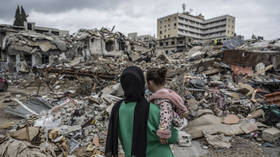
After 27 months of active hostilities, virtually all of Gaza’s critical infrastructure has been affected. 66% of all structures have sustained damage. Power stations, water and sanitation networks, hospitals, clinics, roads, and schools have been fully or partially destroyed.

There has been neither enough time nor sufficient access to begin long-term reconstruction. Heavy machinery, building materials, and technical expertise remain limited or blocked, leaving most rebuilding efforts stalled.

This infrastructure is essential not only for economic recovery, but for basic human survival – supplying electricity, safe drinking water, sanitation services, and functioning medical care. Without it, humanitarian aid can only provide temporary relief.

Medical access remains one of Gaza’s most urgent crises. Hospitals are overwhelmed, understaffed, and undersupplied. Patients with chronic illnesses, including thousands with cancer, face enormous obstacles in receiving treatment.

Leaving Gaza for medical care remains extremely difficult. Although there have been announcements and reports that the Rafah crossing with Egypt could reopen during the second phase of the ceasefire, nothing tangible has yet been done.

“The continued closure has devastating consequences,” says Al Mughari. “Patients in need of specialized care remain trapped. Students accepted to universities abroad cannot leave. Families separated by the war remain divided, with no clear timeline for reunification.”

Al Mughari describes a cycle of hope and disappointment that has come to define life since the ceasefire.

“I personally hoped that 2026 would bring real change. Unfortunately, since the ceasefire announcement and the start of the new year, nothing meaningful has happened. The promised improvements have not materialized.”

He says lasting recovery depends on sustained international pressure – not just statements of support.

“Real recovery will only be possible if international actors, especially those who mediated the ceasefire, ensure that the agreement moves forward, that Israel does not obstruct the second phase, and that Palestinians receive genuine support.”

He lists priorities that remain unmet: beginning large-scale reconstruction, providing proper shelter for displaced families, rebuilding the health system, ensuring continuous food supplies, and allowing freedom of movement through Rafah.

“Without these steps,” Al Mughari said, “the ceasefire remains incomplete, fragile, and insufficient to restore dignity or stability to life in Gaza.”

Aid organizations say they are capable of doing far more – if restrictions were lifted.

“We have the capacity to do more to help Palestinians in Gaza, we just need the means to do more,” Griffiths said. “Restrictions on the amount of assistance that are allowed to reach people there make it incredibly difficult to address urgent and large-scale needs – like shelter.”

He added that limits on aid also prevent people from accessing essential services such as electricity, water, health care, and education.

“That’s why we continue to advocate and call for full and unimpeded access for assistance into Gaza.”

Even where aid is delivered, it remains temporary by design.

“Humanitarian organizations are responding to the best of their current capacity, given the security situation, but these are always designed as temporary solutions,” Griffiths said. “There are not enough materials, heavy machinery, or equipment to meet the needs of the population, or to have adequate planning or construction for permanent solutions.”

“We call for the full and unimpeded access of humanitarian assistance into Gaza. There are too many lives at stake for anything less.”

Taking matters into own hands

Still, amid the devastation, Al Mughari says Palestinians are not waiting passively for help.

“What gives me hope is that Palestinians in the Gaza Strip, began their own recovering process, without waiting for the international community of players to come in to intervene.”

Across Gaza, small restaurants have reopened. Universities, including the Islamic University and other local institutions, have resumed limited educational activities. Community groups are clearing rubble, repairing buildings, and restoring services with whatever resources they can find.

“Palestinians are trying to cope with the situation,” Al Mughari said, “which gives all of us some kind of a hope that things might get better soon”.

More than 100 days after the ceasefire, Gaza exists in a fragile in-between state – no longer engulfed in a full-scale war, but far from peace. The quiet offers a chance, but without decisive political movement and genuine reconstruction, it may remain only a pause in a much longer struggle.


source

Indian Ocean should be free from ‘big power rivalry’ – ex-diplomat on Trump’s Chagos claim

0

New Delhi supports Mauritius’ sovereignty over the islands, Dilip Sinha has told RT India

The Indian Ocean should be devoid of “big power rivalry,” a former diplomat has told RT India.

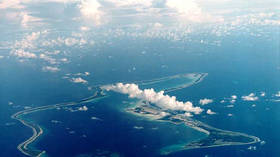
The remarks by Dilip Sinha, India’s former permanent representative to the United Nations, was in response to US President Donald Trump’s criticism of the UK’s decision to hand over sovereignty of the Chagos Islands to Mauritius last year. The US has a military base in Diego Garcia, which is part of the Chagos Archipelago.

Trump has described the Chagos deal as an act of “great stupidity” and a threat to US national security. The UK has said the deal was “welcomed at the time by the American administration and also by European allies.”

“The Indian Ocean has become a playground for big power rivalry,” Sinha said on Wednesday. “All the five permanent members [of the United Nations Security Council] have military presence of various kinds.”
Sinha also pointed to China’s increasing presence in area, saying: “All this doesn’t augur well for peace in the Indian Ocean. It is important for India to keep asserting itself to ensure that the Indian Ocean remains free from big power rivalry.”

He added that India has always backed Mauritius’ efforts to gain sovereignty over the islands through the UN and the International Court of Justice.

British Prime Minister Keir Starmer signed an agreement transferring sovereignty of the islands to Mauritius in May 2025.
However, the deal allows Washington and London to retain control of the joint military base on Diego Garcia for an initial period of 99 years at a reported total value of $3.9 billion.

The Chagos Archipelago, comprising more than 60 islands, was separated from Mauritius by Britain in 1965, three years before the East African country gained independence.

In 1966, the largest island – Diego Garcia – was leased to the US for military use, and around 2,000 inhabitants were displaced.

Mauritius has said its sovereignty over the Chagos Archipelago is undisputed and should “no longer be subject to debate.”

You can share this story on social media:

source

AI could replace doctors in life-and-death decisions – ‘suicide pod’ inventor

0

An Australian euthanasia campaigner has reportedly proposed an AI system to evaluate people’s capacity for assisted dying

The inventor of the controversial Sarco suicide pod, Philip Nitschke, said artificial intelligence could one day replace psychiatrists in assessing whether people seeking assisted dying are mentally capable of making the decision, Euronews reported on Thursday.  

The Sarco, short for sarcophagus, is a 3D-printed capsule designed for one person to enter, lie down, and press a button. The device rapidly reduces oxygen levels and fills the capsule with nitrogen, causing death by hypoxia.  

Nitschke, an Australian euthanasia campaigner and the pod’s creator, said AI could determine who has the “mental capacity” to end their own life. He told the outlet that doctors should not be “running around giving you permission or not to die” and that the choice should rest with those “of sound mind.”  

In countries where assisted dying is permitted, psychiatrists typically assess whether a person is mentally capable, though the practice is limited and highly debated. Nitschke said the process is often inconsistent.   

“I’ve seen plenty of cases where the same patient, seeing three different psychiatrists, gets four different answers,” he said.  

He has proposed an AI system using a conversational avatar to evaluate capacity. Users would “sit there and talk about the issues” the avatar raises, after which it would decide whether they are capable of proceeding. If the AI determines a person is of sound mind, the Sarco pod would be activated, giving a 24-hour window to go ahead, after which the assessment must be repeated. Early versions of the software are operational, Nitschke said, though they have not been independently validated.  

The Sarco pod’s first and only use in Switzerland in September 2024 sparked international outrage. Swiss authorities arrested several people, including the CEO of the assisted dying group The Last Resort, and said the device violated Swiss law, which allows assisted suicide only under strict conditions.  

Nitschke’s proposal has reignited debate over the role of AI in life-and-death decisions. Last year, OpenAI updated ChatGPT after an internal review found over a million users had disclosed suicidal thoughts to the chatbot. Psychiatrists have raised concerns about prolonged AI interactions contributing to delusions and paranoia, a phenomenon sometimes called “AI psychosis.”

You can share this story on social media:

source

Trump disinvites Canada from his ‘peace board’

0

The US president has changed his mind following a public spat with Prime Minister Mark Carney

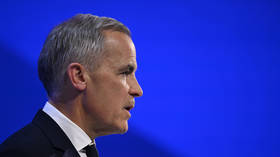
US President Donald Trump has rescinded an invitation to Canadian Prime Minister Mark Carney to join his ‘Board of Peace’, a new global body he hopes to make central to resolving world conflicts.

Trump invited dozens of heads of state to sit on the board, which he initially created to oversee the governance and reconstruction of Gaza as part of a UN-backed peace deal between Hamas and Israel.

A number of countries, however, refused to join, arguing that the board’s broad scope would come into conflict with the mandate of the UN.

Trump changed his mind about Canada’s participation following a public spat with the prime minister.

“Dear Prime Minister Carney: Please let this Letter serve to represent that the Board of Peace is withdrawing its invitation to you regarding Canada’s joining what will be the most prestigious Board of Leaders ever assembled, at any time,” Trump wrote on Truth Social on Thursday.

Trump has frequently clashed with Carney over tariffs and has suggested that Canada would be better off as the “51st state” of the US.

Addressing the World Economic Forum in Davos, Switzerland on Wednesday, Trump argued that Canada “gets a lot of freebies” from the US.

“Canada lives because of the United States. Remember that, Mark, the next time you make your statements,” Trump said.

Carney responded on Thursday, saying: “Canada doesn’t live because of the United States. Canada thrives because we are Canadian.” He said earlier in Davos that the world order built on “American hegemony” is “in the midst of a rupture.”

You can share this story on social media:

source