Home Blog Page 82

Airport in Niger’s capital attacked (VIDEOS)

0

Several suspected militants were reportedly killed in the incident at a site about six miles from the presidential palace

Gunfire and explosions were heard near Niger’s main international airport in the capital of Niamey early on Thursday, with RT sources reporting that at least ten suspected militants were killed in the attack.

Diori Hamani Airport, which is about 10 km (6 miles) from the presidential palace, hosts an air force base and has also reportedly been used as a hub for a new joint force involving Niger, Mali, and Burkina Faso to combat jihadist insurgents driving violence across the Sahel.

Residents living near the airport told AFP the shooting lasted roughly two hours. Videos filmed in the area appeared to show flashes in the night sky and burning vehicles.

According to RT sources, about 50 attackers on motorcycles were involved in the assault.

“The situation is being assessed,” an account linked to the West African nation’s military government said in a statement on X, confirming that “gunshots have been heard at Niamey Airport.” 

The Anadolu news agency quoted a Nigerien Foreign Affairs Ministry official as saying that “the situation is under control,” without giving further details.

The official reportedly said the authorities are investigating whether the incident has any connection to a uranium stockpile from northern Niger that has been stranded at the airport since late November. The consignment has become the subject of a dispute between Niger’s authorities and the French nuclear company Orano after the African country stripped the firm of its mining assets, accusing it of operating under unfair contractual terms.

Niger and its neighbors, Mali and Burkina Faso, have been grappling with violence for more than a decade, with armed groups linked to al-Qaeda and Islamic State repeatedly targeting civilians and national security forces.

The three West African states have expelled French troops previously deployed on counterterrorism missions, accusing France of failing to contain the insurgency. Niamey, Bamako and Ouagadougou have since formed the Alliance of Sahel States (AES) and forged new partnerships, including with Russia, as they seek alternative support to address the region’s deepening security crisis.

The AES has also accused France of supporting terrorist groups and militant networks in an effort to destabilize the Sahel.


source

South Africa cracks down on investment scams

0

The authorities have arrested and charged several people suspected of involvement in fraudulent schemes

Six suspected investment scammers, along with 25 call center agents, were arrested on Tuesday in Johannesburg during a major crackdown by South African police.

They have been charged with contravening the Financial Advisory and Intermediary Services Act. The suspects, aged between 38 and 61, were apprehended during a joint takedown operation involving local and international law enforcement agencies. The operation formed part of INTERPOL’s global Operation JACKAL, which targets online scams and transnational financial crimes.

INTERPOL’s Integrated Police Support Group (IPSG), based in Lyon, France, deployed a senior representative from its International Financial Crimes and Anti-Corruption Directorate to support the operation. Authorities said further investigations are ongoing, and additional charges or arrests may follow as the probe into the alleged fraudulent investment scheme continues.

In a similar case, the Directorate for Priority Crime Investigation (Hawks) arrested five suspects and four companies in connection with an alleged multimillion-rand fraud, theft and money-laundering scheme spanning the Eastern and Western Cape.

According to the Hawks, the investigation centres on Pro Khaya, a construction company based in Gqeberha, which sought to expand its operations to Cape Town between 2015 and 2018.

Hawks spokesperson Lieutenant Colonel Avele Fumba said the company employed one of the accused, a qualified quantity surveyor, as a branch manager in Cape Town. ”The accused allegedly abused his position by establishing his own private company that offered the same services as the parent company,” Fumba said.

Investigators allege the suspect then identified and worked with subcontractors who colluded with him to generate fake paperwork.

”Through meticulous investigation conducted by the Hawks, the accused strategically identified sub-contractors who colluded with him to facilitate fictitious invoices for payments to be paid by the parent company,” Fumba said.

The Hawks further allege that the subcontractors would then channel money back to the suspect’s private company. ”It was further alleged that the sub-contractors in turn would make payments back to his private company.” 

The estimated financial loss to Pro Khaya is about R12 million.

First published by IOL

You can share this story on social media:

source

Trump reveals Fed boss nominee

0

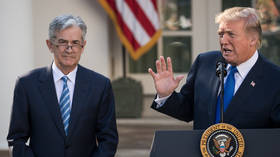
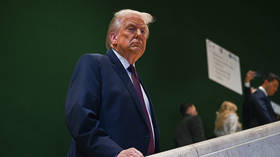
US President Donald Trump has tapped former Federal Reserve governor Kevin Warsh to replace Jerome Powell as the institution’s chair. Warsh has signaled that he is willing to slash interest rates, a move long advocated for by Trump.

Trump revealed his choice in a Truth Social post on Friday morning, ending a months-long search for a successor to Powell. Warsh, an academic, Wall Street veteran, and former member of the Fed’s governing board, will take over from Powell in May, if confirmed by the US Senate.

“I have known Kevin for a long period of time, and have no doubt that he will go down as one of the GREAT Fed Chairmen, maybe the best,” Trump wrote.

While searching for a replacement, Trump repeatedly attacked Powell for his refusal to cut interest rates, a move that would – in theory – stimulate the economy and reduce the cost of servicing more than $30 trillion in national debt. Trump has referred to Powell as a “moron,” and a “numbskull” for his refusal to implement the steep rate cuts he demanded.

Warsh previously favored high interest rates, believing that lowering rates too sharply would lead to runaway inflation. However, he has recently advocated for rate cuts and called for “regime change at the Fed.” 

“He thinks you have to lower interest rates,” Trump told the Wall Street Journal in December. “And so does everybody else that I’ve talked to.” 

Warsh has close family ties to Trump. His father-in-law, Ronald Lauder, has been a major donor to Trump since 2016. In a 2018 meeting, Lauder urged Trump to buy Greenland from Denmark, according to former National Security Adviser John Bolton. Lauder, heir to the Estee Lauder cosmetics empire, owns commercial holdings in Greenland, and has been granted lithium mining rights in Ukraine under Trump’s minerals deal with Kiev.

Financial markets reacted calmly to Warsh’s nomination. After the announcement, Dow futures fell 0.3%, S&P 500 futures dropped 0.4%, and Nasdaq Composite futures were down 0.5%. Gold and silver fell, however, with spot prices for the precious metals dropping 6.4% and 15.7%, respectively, following a recent sharp rally. The selloff is seen as signaling market confidence in the nomination despite Warsh’s pledge to lower rates, which ordinarily would be bullish for precious metals.

You can share this story on social media:

source

Match Officials for Malta Guinness Women’s Premier League Matchday 11

0


Match Officials for Malta Guinness Women’s Premier League Matchday 11 – SoccaNews


error: Content is protected !!


source

Putin-Zelensky meeting would only be in Moscow – Kremlin

0

The Russian president has agreed to meet the Ukrainian leader, according to his spokesman

Only Moscow is currently being discussed as a venue for a potential meeting between Russian President Vladimir Putin and Ukrainian leader Vladimir Zelensky, Kremlin spokesman Dmitry Peskov stated on Thursday.

Russia has discussed a potential Putin-Zelensky summit on multiple occasions, including in phone conversations between Putin and US President Donald Trump, according to the Kremlin.

“We’re still talking about Moscow,” Peskov said in a press briefing. “Speculative discussions are inappropriate here.”

A day earlier, Putin’s top aide Yury Ushakov reaffirmed that a meeting could be arranged in the Russian capital.

“Our president has also said several times to journalists that if Zelensky is truly ready for a meeting, then we would be happy to invite him to Moscow,” he told the national broadcaster Russia 1. “And we will guarantee his safety and the necessary working conditions.”

The presidential aide stressed, however, that such a summit would need to be both carefully prepared and goal-oriented with the aim of signing concrete agreements.

The comments came a few days after the first direct trilateral talks between Russia, US and Ukraine in Abu Dhabi.

The negotiations have “made a lot of progress,” with a “lot of good things happening between the counterparties,” White House special envoy Steve Witkoff said in a cabinet meeting on Thursday.

The next round of trilateral talks is scheduled for Sunday, but Witkoff and Trump’s son-in-law Jared Kushner will not be attending, according to US Secretary of State Marco Rubio.

The Ukrainian leader signed a decree banning negotiations with Putin in 2022, after four former Ukrainian regions overwhelmingly voted to join Russia in a series of referendums.

Moscow has repeatedly pointed out that despite voicing readiness to meet the Russian president, Zelensky has not yet repealed the ban.

source

Dmitry Trenin: America First goes global

0

The United States has now published two of the three pillars of its main strategic doctrine: the National Security Strategy at the end of 2025 and, in January, the National Defense Strategy. Only the Nuclear Posture Review remains. Many observers described US President Donald Trump’s security strategy as revolutionary. In Russia, it drew cautious and in some cases even approving reactions. The defense strategy develops many of the same ideas, although it softens the language on certain issues, including Russia. What stands out in both texts is their blunt, almost cynical tone. The usual moral packaging has largely disappeared. That clarity, uncomfortable as it may be, is useful.

The new Pentagon strategy openly breaks with the philosophy that guided US policy for decades. The language of a “rules-based world order” and the missionary liberalism of “nation-building” through regime change are effectively discarded. These doctrines, associated with Trump’s political opponents, are treated as failures that led to endless, exhausting wars such as Afghanistan. In this sense, Washington is not repenting, but drawing a pragmatic conclusion: attempts to remake other societies in America’s image have proven too costly and too unreliable.

This rejection leads to a more fundamental shift. The US implicitly acknowledges that it can no longer exercise universal control in a multipolar world. Resources must be concentrated. Commitments must be prioritized. Allies are no longer to be indulged as dependents. They are expected to pay more, do more, and demand less political autonomy in return. In effect, Washington is rationalizing its empire.

At the same time, the strategy is anything but pacifist. Its underlying philosophy is the preservation of American military superiority. Peace, in this view, is possible only “from a position of strength.” The text largely avoids ideological terms such as “democracy” or “the West,” replacing them with the language of power, interests and coercion. The US is not retreating into isolationism. Its interventionism is simply evolving. Large-scale occupations and long stabilization missions are out; short, technologically intensive strikes are in. Economic strangulation and sanctions remain legitimate tools. Not to mention selective force. “Regime change” may be rhetorically abandoned, but the forcible weakening or overthrow of unfriendly governments is still practiced.

Trump’s America accepts the existence of other power centers, including China and Russia. But this is not recognition of equality. It is a demand that these powers accept US superiority and behave “responsibly.” That is, within limits defined in Washington. This is Trump’s version of multipolarity: coexistence, but on American terms.

The strategy places homeland defense and control of the Western Hemisphere above all else. The security of the American continent is treated as inseparable from US national survival. Trump’s updated interpretation of the Monroe Doctrine envisions the restoration of near-absolute US military dominance in the Americas. The presence of non-regional powers, above all China, is to be restricted. Strategic assets such as the Panama Canal, the Gulf of Mexico, and Greenland are treated as critical nodes. US pressure on Denmark and the European Union to secure strategic control over Greenland, linked to missile defense and Arctic positioning, fits this logic.

The second priority is the Indo-Pacific and the containment of China. Washington seeks to prevent Beijing from achieving dominance in the region, especially through control over Taiwan and access to the so-called first island chain. The US speaks of avoiding direct confrontation but insists that negotiations with China can occur only from a position of overwhelming strength. Military build-up, allied rearmament, and “intimidation” are presented as the main tools of deterrence.

The third priority is the restructuring of relations with allies. Western Europe, seen as declining in relative importance, is expected to carry a far heavier share of defense costs, potentially up to 5% of GDP. In return, allies do not gain strategic autonomy; they are expected to follow US policy, especially toward China, and to purchase American weapons. NATO remains, but its exclusive role in US strategy is diluted. Washington wants a more transactional alliance system.

Russia still appears in the strategy, but its role is downgraded compared to earlier eras. It is no longer portrayed as a direct, immediate threat to the US itself. Rather, it is described as a “persistent” challenge, primarily for NATO’s eastern members. The implication is that European allies should deal with Russia largely at their own expense, with the US in a supporting role. Washington’s main adversary is clearly the People’s Republic of China.

The strategy barely addresses strategic stability with Russia. With the New START Treaty expiring, the future of arms control is uncertain. The US appears to prefer freedom of action in developing its strategic arsenal. This is a significant signal. The architecture that underpinned nuclear stability for decades is eroding.

For Russia, several conclusions follow. First, the US under Trump will remain a geopolitical adversary for the foreseeable future, regardless of any tactical agreements, including on Ukraine. Hopes for a grand bargain or a “new Yalta” are unrealistic. Cooperation may be possible on specific issues, but rivalry will remain the structural norm.

Second, American decline should not be exaggerated. The US retains enormous military, technological, and financial power. Trump’s strategy is an attempt to halt and reverse relative decline by consolidating control over its core sphere and concentrating resources against its main competitor, China. Whether this attempt succeeds is another question. Domestic resistance and political polarization could undermine continuity. Meanwhile, future electoral shifts will also come into play. 

Third, nuclear deterrence remains the foundation of Russian security policy. If arms control regimes weaken, the credibility and survivability of Russia’s deterrent must be strengthened. At the same time, Russia’s security depends not only on external balances but also on internal stability and cohesion. Periods of political transition create vulnerabilities that adversaries may exploit.

US “distancing” from Europe does not reduce confrontation on the continent. Western Europe today is more hostile toward Russia than at any time in recent decades. Moscow must maintain a strategy of military and geopolitical deterrence toward NATO’s European members, including nuclear deterrence. Integration with Belarus in the security sphere becomes even more important.

In the Arctic, American ambitions could clash directly with Russian interests. Moscow will need to reinforce its northern defense infrastructure and protect the Northern Sea Route. Globally, military-technical partnership with China becomes increasingly central to Russia’s strategic position in Eurasia. In the Middle East, coordination with Beijing to support Iran’s capabilities contributes to a counterbalance against US pressure. Political and economic support for states like Cuba also fits this logic.

The overarching picture is clear. The new US defense strategy is not about withdrawal, but about consolidation and reprioritization. It outlines a more selective, more openly force-based version of American hegemony. For Russia, this means a prolonged period of structured rivalry and limited pragmatic cooperation. It also will translate to a continued reliance on deterrence. Resilience at home and deeper partnerships outside the Western bloc will be essential in responding to this new phase of American strategy.

This article was first published by the magazine Profile and was translated and edited by the RT team.

source

Canadian separatists secretly met with US government officials – FT

0

Critics claim there are signs of US interference in a secession campaign in Alberta

Leaders of a Canadian group seeking the secession of the oil-rich province of Alberta have met members of the administration of US President Donald Trump at least three times since last April, the Financial Times reported on Thursday.

US officials said the meetings were routine civic engagements and involved no commitment to the separatist cause. However, pro-unity figures in Alberta suspect the campaign is being amplified by foreign actors.

The Alberta Prosperity Project (APP) describes itself as an educational initiative advocating independence from Ottawa and opposing globalism and its supporters. The group is gathering signatures for a petition to hold an independence referendum. Provincial election authorities have given it until May to collect at least 177,732 eligible voter signatures to advance.

“The US is extremely enthusiastic about a free and independent Alberta,” APP legal counsel Jeff Rath told the FT. The organization did not name the US officials it talked with, but called them senior-level.

US Treasury Secretary Scott Bessent previously mentioned the potential referendum in an interview with right-wing podcaster Jack Posobiec, saying an independent Alberta would be “a natural partner for the US.”

Gil McGowan, president of the Alberta Federation of Labour, told the outlet there is “evidence of foreign interference” in signature-gathering. He cited pro-separatist online posts, stating, “It doesn’t feel organic, we are being targeted by the MAGA crowd.” Conversely, the APP claims there is an organized effort to derail its canvassing.

US-Canada tensions have risen as Trump suggested Canada would be better off as part of the US and accused Prime Minister Mark Carney’s government of being influenced by China. In a recent Davos speech, Carney said the Western ‘rules-based order’ was fracturing and urged smaller nations to stop upholding a system that he said was always partly based on convenient lies.

You can share this story on social media:

source

Prof. Schlevogt’s Compass No. 39: The exorbitant privilege trap – How dollar power ensnares America

0

The dollar’s reserve status yields leverage – at hidden cost. An economic reckoning reveals the trade-offs embedded in monetary dominance.

In some corners of the political imagination, the dollar has become a grand theory of everything – not a currency, but a convenient, catch-all, virtually cosmic culprit.

Every sanction, every covert operation, every warship dispatched toward some far-off horizon is traced back to a single, hidden animating force: the need to defend the world’s monetary throne.

From long-past wars of choice to the latest flashpoints – sweeping in events as dramatic, and geopolitically fraught and contested, as the 3 January 2026 US thunderclap in Venezuela – are folded into one totalizing teleology and demonology of Mammon, money incarnate.

Yet the reductive strain of credulous pundits who lean dogmatically on this currency-centered frame does more than misread history: The narratives of currency determinism manifestly distort the record, vastly overstating the dollar’s net contribution to American power, mistaking financial plumbing for geopolitical purpose. At the same time, the anti-mainstream commentariat crowds out the real, more complex and consequential drivers of US intervention.

That overweening posture of activist meddlesomeness has its own name in an older vocabulary; it is the modern expression of an imperial temperament that the Athenians of the classical age called polypragmosyne, restless involvement in (too) many (foreign) affairs.

Fathoming the true forces at work in their fine-grained texture and systemic complexity requires a methodical economic inquiry. A reckoning worthy of the subject must be capable of separating slogan from substance, and fact from fiction, being marked by rigor rather than recycled echo-chamber rhetoric.

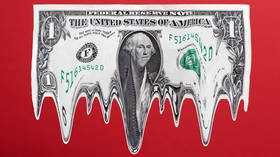
By its very nature, reserve-currency status confers distinctive advantages on the US. Yet dynamic forces embedded at the core of the world’s financial architecture generate insidious, structurally corrosive, and self-reinforcing feedback effects. Left to compound, these pathologies systematically tilt the balance of payments, degrade the industrial base, and toxicize the political landscape.

Seen in this light, the current world-reserve regime comes into view as Janus-faced, bestowing power even as it corrodes its foundations, and hence offers no unequivocal economic warrant for hazardous and expensive military ventures and entanglements. This ambiguity is perhaps most clearly exposed by an unlikely but probative crown witness.

On 25 July 2025, US President Donald Trump, hardly a theorist of international political economy, laid bare the contradiction at the heart of dollar hegemony in characteristically reductive, rough-hewn terms: While professing his fondness for a strong dollar, he nonetheless conceded that “you can’t sell anything” when the currency is too strong, and that “you make a hell of a lot more money with a weaker dollar.”

The deeply embedded distortions and imbalances hard-wired into the load-bearing infrastructure of global finance call for radical, systemic reform rather than reflexive recrimination, reactionary retribution, or other roughshod remedies drawn from the populist-militarist repertoire. The analysis properly begins with the monetary mechanics.

Global financial infrastructure: Inside the planet’s pecuniary plumbing

Today, the US dollar, occasionally invoked in near-mythic terms as green god, occupies the position of the world’s leading reserve currency. It is worth pausing, at the outset, to consider what this illustrious designation precisely entails.

A reserve currency is the money that governments and central banks around the world hold in large quantities and rely on as their default international monetary instrument. It is the standard unit the global system turns to when it needs to save, price, lend, or pay across borders.

As to its specific functions, a reserve currency serves as a store of value (kept in national reserves), a medium of exchange (used to clear global trade and financial transactions), a unit of account (the currency in which many international prices are quoted), and a financial anchor (the backbone of banking, debt markets, and payment systems).

It is the dollar that stands as linchpin of today’s global financial system. In part because oil is largely traded in what are often termed petrodollars, many countries hold dollars and US Treasury securities, borrow in dollars, price goods in dollars, and rely on dollar-based systems to move money across borders.

The dollar’s systemic centrality is secured not by decree but, in substantial part, by the scale, liquidity, legal predictability, and the deep embeddedness of US financial markets in global commerce – qualities that configure the “land of opportunity” as the world’s liquidity utility. That platform, however, operates chiefly not on idle cash but on yield-bearing dollar assets.

Central banks do not simply “sit on” their dollars. Cash earns no return, erodes with inflation, and imposes custodial and liquidity-management costs, making it operationally inefficient at reserve scale.

For precisely these reasons, central banks purchase and hold, as part of a broader reserve portfolio, US Treasuries. These securities are effectively interest-bearing dollars, which are safe, instantly marketable (and thus convertible into cash at a moment’s notice), and fully integrated into the global financial system.

World reserve currency: Exorbitant privilege, hidden burden

The dollar’s reserve status is often characterized as an “exorbitant privilege.” Coined in the 1960s by Valéry Giscard d’Estaing, then France’s finance minister, the phrase captures the distinctive advantages the US derives from issuing the world’s dominant currency. They encompass cheaper borrowing sustained by steady global demand for US government debt, exceptionally deep and liquid financial markets, smoother trade settlement, and enhanced influence over the commanding heights of global finance.

It bears emphasis that global demand for dollars confers on the US the rare capacity to convert paper into purchasing power, as it were; it is an extraordinary license no other nation on earth enjoys at comparable scale.

By issuing the money the world stockpiles, America can both acquire real goods, services, and assets and fund its deficits with comparative ease, without relinquishing an equivalent volume of real output in return. This amounts to an extraordinary form of modern seigniorage (the gain from issuing money), here expressed as the power to draw productive resources from the world through the creation of money alone.

While issuing the world’s reserve currency endows a country with considerable practical advantages, it does not grant it magical powers; structural preeminence does not repeal the laws of economics. Hard, constraining material realities, such as inflationary pressures and the burdens of accumulating debt, continue to assert themselves.

At a deeper register, and more striking still, reserve-currency dominance also generates pernicious feedback effects in the form of chronic trade deficits, industrial hollowing-out, and the near-inevitable stirrings of populist backlash.

The illusion of monetary alchemy: No escape from economic gravity

Contrary to the myth-laden and loosely reasoned contentions advanced by a coterie of anti-mainstream critics – specious pronouncements at times redolent of well-worn conspiracy theories – the US possesses no Midas touch; it cannot simply print unlimited amounts of money without consequence. To construe reserve status as an “exorbitant” privilege, one that lies outside the normal orbit, is not to imply the absence of economic gravity.

Additional dollars do not, by some conjuring trick, cease to generate inflationary pressure merely because some of them are held abroad. Nor is the management of inflation somehow outsourced or nullified by reserve-currency status.

In the sphere of monetary policy, the Federal Reserve continues to set short-term interest rates autonomously; it can tighten financial conditions irrespective of foreign appetite for US debt. Whenever inflation rise above target, it can raise rates and render money scarcer even if foreign investors remain eager buyers of US bonds.

Economic fundamentals assert themselves here, as they do everywhere else. Strong global demand for the dollar may compress long-term yields, but it does not confer the US government the power to create unlimited money without inflation.

On the fiscal front, the reserve-currency prerogative renders spending and borrowing not only seductively easy and inexpensive, but also dangerously addictive. Cheap money dulls budgetary discipline, allowing deficits to compound quietly and seemingly painlessly. The burden is deferred to taxpayers not yet born: Today’s voters enjoy the spending; tomorrow’s citizens inherit the bill.

If inflation tests a currency’s short-term credibility, debt operates at a deeper stratum, over a longer time horizon. Inflation announces itself; debt insinuates itself. The former moves in cycles; the latter crystallizes into structure.

What begins as fiscal flexibility gradually hardens into a debt trap, as swelling public liabilities inexorably divert ever-greater portions of public resources toward servicing old obligations, at the expense of the productive investments that underwrite future growth.

Debt is not a passing pressure but an enduring and binding lattice of claims, incrementally accretive, relentlessly compounding, and politically consequential. Over time, mounting encumbrances progressively constrict policy freedom and deepen exposure to interest-rate shocks.

Economic management, then, is debased into an opportunistic, tactical, and transactional exercise in preserving confidence rather than the fiduciary, strategic, and transformative craft of cultivating and husbanding real, perdurable prosperity.

At that point, fiscal sustainability grows ever more contingent on the continued forbearance of global investors. The corollary is stark and momentous: When a nation’s fate, by degrees, comes to hinge on foreigners’ willingness to absorb sovereign liabilities, sovereignty itself is almost imperceptibly, yet ineluctably, transmuted into dependency.

Beyond these problems, reserve status unleashes corrosive interactions between global and domestic forces. In snowballing fashion, they compound the long-term costs of the exorbitant privilege of reserve-currency status, converting global demand for dollars into a domestic burden that grows heavier with time.

Once this logic takes hold, trade deficits are no longer episodes to be managed, but conditions to be lived with.

[Part 2 of a series on the global dollar. To be continued. Previous column in the series: Part 1, published on 16 January 2026: Prof. Schlevogt’s Compass No. 38: Dethroning the green god – Venezuela and Petrodollar conspiracies]

source

US congresswoman demands answers from Kiev over church crackdown

0

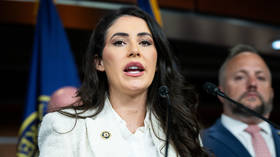
Anna Luna has sounded the alarm over the looming seizure of a parish in western Ukraine

A US congresswoman has demanded answers from Ukraine’s ambassador over ongoing attempts to seize a parish of Ukraine’s largest Orthodox denomination in the western part of the country and hand it over to a Kiev-backed schismatic church.

In a post on X on Friday, Florida Republican Anna Luna said that despite her previous warnings, the Nativity church in Kuzmin in Khmelnitsky Region remains under pressure from a local “oligarch” who she claims is “coercing residents to force an illegal seizure of the parish.”

“I expect [Ukrainian ambassador to the US] Olga Stefanishina to explain herself to fellow members in my office this week,” Luna wrote. The envoy has yet to comment on the request.

Earlier this week, the Union of Orthodox Journalists reported that the Kuzmin parish was re-registered to the schismatic Orthodox Church of Ukraine (OCU) using falsified paperwork, with parishioners fearing that seizure is imminent.

The dispute kicked off in late December when the Kuzmin diocese reported that local powerbrokers initiated a public gathering to discuss the transfer of the parish from the Ukrainian Orthodox Church (UOC) to the OCU. However, the diocese said the meeting – which it claimed was called to create the appearance of community support – was dominated by people specifically brought in from outside the village, making a potential handover illegal.

The diocese said that to stave off the seizure, it would seek support from advocacy groups in the EU and US.

A similar controversy erupted in Ukraine’s Kirovograd Region, where parishioners for the St. Great Martyr George the Victorious in Priutivka reported threats and attempted seizures by OCU-linked activists. Parishioners also sought support from US officials, including Vice President J.D. Vance.

The Ukrainian Orthodox Church is the country’s largest religious body by number of parishes and members. Since the escalation of the Ukraine conflict in 2022, it has been subjected to a sweeping crackdown by Kiev, with Ukrainian officials accusing it of maintaining ties to Moscow, despite cutting all ties with the Russian Orthodox Church – which considers the OCU to be schismatic – in 2022.

You can share this story on social media:

source

Gold breaks new record

0

The price has hit an all-time high of $5,600 amid geopolitical and economic uncertainties

The price of gold has soared to a new record as investors continue to seek safety amid escalating geopolitical tensions and mounting economic uncertainties.

Gold futures continued their strong rally, with the February 2026 Comex contract surging to a record high of $5,600 per troy ounce on Thursday morning before retreating to around $5,550, according to exchange data.

Silver futures also extended their rally, with the March 2026 Comex contract climbing above about $119 per troy ounce before easing back slightly.

The prices of both gold and silver have surged over the past year, as precious metals are commonly viewed as safe-haven assets in times of market turbulence. Gold rose by more than 60% in 2025, partly due to concerns over global tensions and economic volatility. Silver followed an even sharper trajectory, climbing 127% in 2025 amid strong investor demand and safe-haven buying.

Analysts attribute the recent rally to escalating tensions, including US President Donald Trump’s warning to Iran on Wednesday to come to the negotiating table on nuclear weapons, amid Tehran’s threat to retaliate against the US, Israel, and their allies.

Gold also drew support from Tether’s plans to allocate 10-15% of its investment portfolio to physical gold, a move confirmed by CEO Paolo Ardoino on Wednesday.

Meanwhile, the US Federal Reserve kept interest rates unchanged on Wednesday as expected. Fed Chair Jerome Powell noted that December inflation likely remained well above the central bank’s 2% target.

Marex analyst Edward Meir told Reuters that rising US debt and the uncertainty sparked by indications that the global trade system is fragmenting into regional blocs, rather than remaining US-centric, are driving investors toward gold.

The latest rally has generated windfall gains for Russia that are reportedly comparable to the value of its sovereign assets frozen in the West – around $300 billion. Unlike the frozen assets, Russia’s gold reserves can be sold or pledged as collateral, restoring significant financial capacity.

You can share this story on social media:

source