Home Blog Page 69

The most peaceful bomb: How the USSR stopped a disaster with a nuclear blast

0

After 1,074 days of a raging gas inferno, Soviet scientists detonated a 30-kiloton device underground – and extinguished it in seconds

In 1949, the Soviet Union tested its first nuclear weapon. From that time, a new era began for the USSR and the wider world. For the next 40 years, the whole world looked on nervously, wondering whether the Russians and the Americans would start a nuclear war. Nuclear weapons became one of the decisive factors of global politics. 

However, nuclear energy interested not only military generals and politicians who considered using nuclear weapons against their enemies. For modern Russia, nuclear power plants and nuclear-powered icebreakers became an important part of the economy. In the 1950s, the idea was developed even further. The USSR carried out 124 Peaceful Nuclear Explosions (PNEs). These were all underground explosions which helped scientists create water reservoirs, gain access to deep-lying mineral deposits, and create gas storage cavities. Such explosions were seen as a solution to many problems.
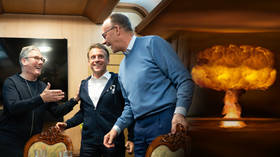
The most unusual use for a nuclear weapon, however, was to extinguish a powerful fire. 

The inferno that defied every solution

In the 1960s, the USSR actively developed its oil and gas reserves. Many new gas and oil fields were explored, and the map of available resources constantly expanded. This was similar to the “oil boom” that once occurred in the US. However, due to the structure of the Soviet economy, the exploration was conducted not by private firms, but by state structures. In the ’60s, giant oil and gas reserves were discovered in Western Siberia, which to this day remain one of the main pillars of the Russian economy. 

However, such rapid development also had a downside. Progress came with a price, which sometimes was quite high. 

On December 1, 1963, a major disaster occurred at the Urta-Bulak gas field in Uzbekistan. The day began with routine rock drilling. Nothing unusual happened, and the workers assumed that the day would pass as usual. However, at a depth of over 2,400 meters, the drill accidentally struck a gas reservoir with very high pressure – about 300 atm. The explosion knocked the entire drilling column out of the well, the drilling rig was blown to pieces, and a huge column of flame burst out of the ground. 

A 120-meter-high “torch” of fire burst out and blazed over the area. It consumed 12 million cubic meters of gas per day – which is comparable to the daily gas consumption in a large city like St. Petersburg. The flame could be seen from several hundred kilometers away. 

The disaster was unprecedented. Specialists from the USSR Ministry of Geology were sent to find a solution to the problem. 

First, the experts tried all the regular methods to extinguish the fire – including pumping water and a special solution into the well, and pouring vast amounts of sand over the blaze. The wellhead was even shelled with artillery fire to scatter debris – though of course, this in itself could not put out the fire. The site was barricaded with sand barriers to localize the flames. This precaution was important, since the gas spread to the surrounding areas, and ash from the fire poured down on houses located dozens of kilometers away. Many birds were killed and the site was labeled a danger zone for airplanes. The roar and heat of the flames reminded everyone of the inferno. 

Unsuccessful attempts to extinguish the flames continued until December 1965, when academician Mstislav Keldysh made an unexpected proposal.

Academician and engineer: Crafting a nuclear gamble

Keldysh came from a brilliant family – and not only in terms of his aristocratic origins, although he was indeed of noble descent. His ancestors were doctors, engineers, and generals. His father was a scientist and a university professor. Keldysh received an excellent education, and all the efforts of his teachers paid off. He solved fundamental problems of aircraft engineering, researched aircraft mechanics and aerodynamics, and in the 1940s was one of the key specialists in the areas of nuclear weapons and jet propulsion. In short, in the USSR there were few specialists like Keldysh, who possessed expert knowledge in various fields. 

Together with a group of colleagues, Keldysh proposed a completely unexpected solution – to detonate a thermonuclear bomb deep underground to extinguish the fire.

The idea was “brutal” but practical: the explosion would move huge layers of rock, which would crush the source of gas which erupted to the surface. 

The task force was headed by Kamil Mangushev. He was still quite young, about 35 years old, but was an experienced oil and gas industry specialist who researched peaceful uses of nuclear technology. He was particularly interested in creating hermetic underground voids with the help of nuclear explosions. But the problem he had to solve was slightly different. 

Mangushev coordinated the work of all specialists involved in the project. The plan was to drill an inclined well which would be about 1.5 kilometers deep and would be located about 200 meters from the source of the fire. Underground, this well would come close to the source of fire. A nuclear weapon with a yield of 30 kilotons of TNT (1.5 times more powerful than the bomb dropped on Nagasaki in 1945) was supposed to be cooled in advance to prevent it from exploding ahead of time. A special casing for the bomb with a coolant supply system, and a cooling system for the well were developed. 

A special nuclear warhead was designed, which had a special casing (since an ordinary nuclear bomb is not designed to be lowered into a well) and an automated detonation system. Mangushev was also in charge of designing a drill used for the construction of the channel. The well had to be sealed with cement, to avoid atmospheric radioactive contamination.
The day the fire finally fell silent

To make sure that everything was going according to plan, a mock-up of the bomb was lowered into the well. Then the cooling system was checked and the warhead was lowered. The well was cemented. People and equipment were moved 5 km away from the site. 

On September 30, 1966, physicists detonated the bomb. Mangushev’s team watched the explosion from a distance of 5 km. 

On the surface, the ground trembled. The valley lit up with phosphorescent light as the pieces of rock struck against each other and generated sparks. The dosimetry service reported no traces of radioactive contamination. As for the fire, it rapidly began to subside. 

The shock wave simply crushed the pillar of fire. The fire that had raged for 1,074 days was finally over. 

Mangushev was one of the first people to run to the place. His boots melted on the way. When he reached the site, a geologist gave him a piece of melted rock as a keepsake.

Keldysh, who had proposed this method of extinguishing the fire, told Mangushev, “Fantastic! You’ve done a very neat job, thank you!”

The Urta-Bulak gas field fire was an extreme example of using nuclear energy for peaceful purposes. However, this was not the last time that powerful fires were extinguished in the USSR using such methods. The use of a nuclear weapon was an extreme measure which scientists resorted to due to the intensity of the flames. However, the risk was justified. An unusual problem required an unusual solution. It was quite brutal, and in the spirit of the age, but it worked. 

Keldysh died in the late ’70s after battling a difficult illness. To this day, he is rightly considered one of the great heroes of Soviet times. The urn with his ashes is interred in the Kremlin wall alongside other prominent Soviet figures. As for Mangushev, he continued his work for the state until the collapse of the USSR, after which he established a private company engaged in cleaning territories contaminated by petroleum products. The heroes of the drama that unfolded in ’60s remained revered professionals until the end of their days.
source

US lawmakers avoid indictment over call to defy military orders – media

0

The Justice Department pushed to press charges against members of Congress for urging troops to disobey

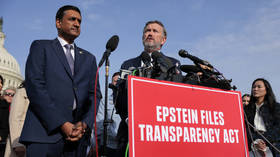
A grand jury in Washington has refused to indict a group of Democratic lawmakers over a video urging members of the US military and security agencies to “refuse illegal orders,” media outlets have reported, citing informed sources.

Six members of Congress, including Senators Elissa Slotkin and Mark Kelly, voiced the call in November after the White House began ordering strikes in the Caribbean against boats which it alleged were involved in drug trafficking.

The Democratic lawmakers insisted in the footage that “no one has to carry out orders that violate the law or our Constitution,” telling the troops that “your vigilance is critical, and know that we have your back.”

US President Donald Trump reacted to the clip by accusing its authors of “SEDITIOUS BEHAVIOR, punishable by DEATH!” while US Secretary of War Pete Hegseth claimed that it put American soldiers in danger by sowing “doubt and confusion.” A week after the publication of the footage, the lawmakers were notified that the FBI had launched a probe into it.

Two sources told CBS News on Tuesday that the US Justice Department sought to indict the Democrats under a criminal statute known as 18 US Code Section 2387. It carries a maximum prison sentence of up to 10 years for someone who “advises, counsels, urges, or in any manner causes or attempts to cause insubordination, disloyalty, mutiny, or refusal of duty by any member of the military.” However, the jury reportedly refused to back the charges.

Slotkin applauded the decision in a statement later on Tuesday, saying that it was an “embarrassing day” for the Trump administration.

Kelly wrote in a post on X that “Trump wants every American to be too scared to speak out against him. The most patriotic thing any of us can do is not back down.”

According to the media’s calculations, the US has targeted some 39 boats in the eastern Pacific Ocean and the Caribbean since September, killing at least 130 people. The attacks, which were condemned as “illegal” by Russia and many other nations, paved the way for an American operation to kidnap Venezuelan President Nicoals Maduro in early January.

source

Nigerian troops rescue 11 hostages (PHOTOS)

0

The security forces have repelled a late night assault, killed 16 Islamic State militants, and disrupted militant supply routes

Nigerian security forces have rescued 11 kidnapped victims after foiling abduction attempts along the Buratai-Kamuya and Chibok-Damboa roads in Borno State, the country’s presidency reported on X on Thursday, citing an army statement. 

The statement said the troops also repelled a late-night attack by Islamic State West Africa Province (ISWAP) militants on February 5, launching a counter-offensive along the Komala and Gidan Kaji axes and “neutralizing 16 insurgents.” 

They also recovered “over 20 bicycles, a large cache of logistic items, weapons, and other supplies critical to terrorist operations.” It added that arrests were made of suspected ISWAP logistics suppliers “conveying [a] large quantity of drugs meant for terrorists around [the] Bukarti axis [the] same day.” 

In addition, two victims were rescued and safely reunited with families. The statement added that troops “rescued 9 kidnapped victims successfully” along the Chibok-Damboa axis on February 9.

The Nigerian Army highlighted the “ongoing efforts to degrade terrorist networks, disrupt their supply chains, and protect civilians across the North East.” 

Nigeria has long struggled with abductions carried out by criminal gangs and extremist groups, which frequently hold people for ransom. This gained global attention in 2014 when Boko Haram militants kidnapped hundreds of schoolgirls from Chibok in Borno State. ISWAP is a Boko Haram splinter group, which has conducted attacks on military and civilian targets.

Recently, extremists have expanded their operations beyond the northeast. In early February, armed militants killed at least 191 people in separate attacks on villages in central and northern Nigeria, including Woro and Nuku villages in Kwara State.

On January 3, armed groups raided Kasuwan-Daji village in Niger State, reportedly killing at least 30 people and abducting an unspecified number. In November, gunmen abducted more than 300 children and staff from St. Mary’s Catholic School in Niger State, one of the largest school kidnappings in years.

General Christopher Musa, the country’s defense minister, said in December that Nigeria must not negotiate with armed criminal groups. “When people pay ransoms, it buys terrorists time to regroup, re-arm, and plan new attacks. Communities that negotiated still got attacked later.”

You can share this story on social media:

source

Ukrainian agents illegally bugged investigator probing Zelensky ally – officials

0

Ukrainian security service agents illegally bugged the home of a senior investigator with the Western-backed National Anti-Corruption Bureau (NABU), officials announced on Tuesday.

The targeted detective leads a team probing defense-sector graft and was involved in NABU’s investigation of businessman Timur Mindich, a longtime ally of Ukrainian leader Vladimir Zelensky who was charged with running a $100 million extortion scheme at a state-owned nuclear energy company.

NABU Director Semyon Krivonos commented on the case at a joint briefing with the Specialized Anti-Corruption Prosecutor’s Office (SAPO), saying the bug was installed during repairs at the female detective’s home without a court warrant. SAPO head Aleksandr Klimenko said the Security Service of Ukraine (SBU) had dedicated “significant resources to probing the detective’s supposedly undeclared property” in violation of its mandate and the law.

The SBU, Ukraine’s KGB successor, reports directly to the president. NABU and SAPO were created under Western pressure after the 2014 Maidan coup as largely independent bodies meant to keep senior-level corruption in check.

Last year, Zelensky tried to place them under the prosecutor general, a presidential appointee, but reversed the move after Western donors threatened to cut all aid in retaliation.

Mindich, a longtime Zelensky associate, fled to Israel hours before NABU filed charges against him and alleged accomplices. The scandal embroiled two then-serving ministers, resulting in a government reshuffle. Zelensky’s chief of staff, Andrey Yermak, was also forced to resign amid suspicion of involvement.

You can share this story on social media:

source

U20: Officials for Black Princesses vrs South Africa revealed

0

Ngum Fatou from The Gambia will take charge of the FIFA U-20 Women’s World Cup qualifier between South Africa and Ghana. Fatou will be assisted by compatriots Abbie Ceesay (Assistant I), Jainaba Manneh (Assistant II), and Isatou Touray (Fourth Referee). Cindy Barbara Dludlu from Eswatini will take on the duties of Match Commissioner, while Constance Catherine Wejuli Adipo from Uganda will work as Referee Assessor.

The FIFA World Cup 2nd leg qualifier will take place at the Mbombela Stadium in Nelspruit, South Africa, at 15:00hrs on Saturday, February 14, 2026.

Ghana goes into the match with a 2-2 scoreline from the 1st leg played at the Accra Sports Stadium on Sunday, February 8, 2026.

Loading

The post U20: Officials for Black Princesses vrs South Africa revealed appeared first on SoccaNews.

source

China blasts US over ‘baseless’ nuclear test claims

0

China has rejected US allegations that it conducted a secret nuclear test, suggesting that the “baseless” claim was aimed at providing cover for Washington to resume its own testing program.

The dispute erupted last week, when US Under Secretary of State for Arms Control Thomas DiNanno claimed that Washington is aware that Beijing had “conducted nuclear explosive tests, including preparing for tests with designated yields in the hundreds of tons.”

DiNanno claimed China conducted one such “yield-producing test” on June 22, 2020, and intentionally obfuscated the explosions – which would violate the country’s nuclear commitments – by using “decoupling” — a method aimed at decreasing the effectiveness of seismic monitoring.

On Wednesday, Chinese Foreign Ministry spokesman Lin Jian pushed back on what he described as “baseless” claims, branding them an “essentially political manipulation aimed at seeking nuclear hegemony and shirking its own nuclear disarmament responsibilities.”

“The United States has persistently distorted and smeared China’s nuclear policy,” he added.

Following DiNanno’s comments, the Comprehensive Nuclear-Test-Ban Treaty Organization also stated that it “did not detect any event consistent with the characteristics of a nuclear weapon test explosion” in June 2020.

Under the Comprehensive Nuclear-Test-Ban Treaty (CNTBT), any nuclear explosion producing a “yield” — or a self-sustaining fission chain reaction — is prohibited. However, it allows subcritical tests with high explosives. The US has acknowledged conducting such experiments on numerous occasions, although China has not publicly commented on whether it has done the same. The US, China, and Russia have signed but not ratified the CNTBT.

The clash over nuclear experiments comes after US President Donald Trump announced in October that he had instructed the Pentagon to “immediately” start testing nuclear weapons on an equal basis with China and Russia, without clarifying what kind of tests he was referring to.

Trump has long pushed for a broader nuclear arms control framework that would include not only Russia but also China. However, Beijing has consistently rejected the demand, stressing that its nuclear arsenal is vastly inferior to those held by Russia and the US.

You can share this story on social media:

source

Match Officials for Ghana Premier League Matchday 22

0


Match Officials for Ghana Premier League Matchday 22 – SoccaNews


error: Content is protected !!


source

Access Bank Division One League Match Officials for Matchday 19

0


Access Bank Division One League Match Officials for Matchday 19 – SoccaNews


error: Content is protected !!


source

UN to withdraw peacekeepers from Lebanon by mid-2027

0

The decades-long mission, slated to end this year, has been battered by a UN-wide financial crisis and cost cuts

The United Nations Interim Force in Lebanon (UNIFIL) is set to withdraw most of its personnel by mid-2027 due to UN-wide cost cuts, according to its spokeswoman Kandice Ardiel.

Established in 1978, the force received its final mandate extension last August, when the UN Security Council unanimously agreed to end the peacekeeping mission by the end of this year. Israel and the US had advocated dismantling the force, with the Trump administration regarding it as a waste of money and an obstacle to the Lebanese government regaining effective control of its territory from the militant group Hezbollah.

The troop presence is now subject to an “orderly and safe drawdown and withdrawal” within one year after its mandate expires on December 31. UNIFIL is set to gradually transfer its positions to Lebanese government forces.

The withdrawal process is apparently being accelerated by the financial position of the UN itself. Speaking to AFP on Tuesday, Ardiel said UNIFIL had to reduce its presence in Lebanon by some 2,000 in recent months as a “direct result” of the UN-wide financial crisis and “the cost-saving measures all missions have been forced to implement.” The force currently stands at around 7,500 peacekeepers from 48 countries, according to the spokeswoman.

The drawdown of the UN force comes amid fears a new major conflict could erupt in southern Lebanon between Israel and Hezbollah. The two sides entered a US-brokered ceasefire in November 2024, which was supposed to end more than a year of hostilities triggered by Hezbollah’s effort to launch attacks on Israel in solidarity with Gaza. Despite the truce, West Jerusalem has been routinely attacking what it calls “terror infrastructure” and repeatedly shelling UNIFIL positions in the process.

Last week, Russian Ambassador to Lebanon Aleksandr Rudakov said Moscow has been making its best effort to restore calm in the region.  

“Following the latest Lebanese-Israeli escalation, we are working consistently with all parties involved to maintain the fragile ceasefire. We are using both our bilateral international communication channels and multilateral platforms to do so,” the diplomat told RIA Novosti.

You can share this story on social media:

source

The EU would rather eat bugs than be real about its energy problems

0

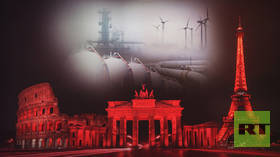
It’s dawning on some in Brussels that by cutting out Russia, they’ve simply switched dependencies – except they couldn’t even do that right

It seems to have dawned on the EU’s energy commissioner that the bloc has a bit of a dependency problem. “There’s a growing concern, which I share, that we risk replacing one dependency with another,” Dan Jorgensen said of the switch from Russian to US energy. You wish, bro! Truth is, they haven’t even managed that much.

“Switching” dependencies implies the existence of a dependable alternative source – that they’ve grabbed securely onto the second branch before letting go of the first. In reality, they’ve mostly just landed on their backside with a pile of energy bills crashing down upon their own citizens.

Worse, when a blast of Arctic weather hit both the US and Europe earlier this month, it turned out that the US wasn’t exactly in a position to gallop across the Atlantic to Europe’s rescue, because it was busy trying to keep its own citizens’ heaters running.

The EU has long had a habit of sailing confidently into the middle of the ocean, spotting no land in any direction, then lighting its own sails on fire in service of whatever ideologically charged ambition happens to be in fashion, and saying, “Well, guess we’ll just figure out how to get back to shore. Fingers crossed.”

Meanwhile, EU citizens are yelling about how monumentally dumb it is, while being reassured by their overlords that they’re actually winning big. Even as daily life keeps suggesting otherwise.

Now the EU bureaucracy itself has started yelling at the unelected executive that sets policy for the bloc. Remember that much-hyped energy transition to renewables that Brussels promised to lock in by 2030? The one they keep mentioning in between warnings that Putin is supposedly about to roll into Europe at around the same time?

Well, it turns out that the bloc’s own European Court of Auditors has taken a look and said, hey bozos, this renewables transition has about the same odds of materializing by 2030 as a herd of purple unicorns. Why? Well, the title of their report kind of gives it away: “Critical raw materials for the energy transition – Not a rock-solid policy.” Translation: you don’t actually have a large, stable supply of the minerals needed to build batteries, wind turbines, and solar panels.

As it turns out, the EU’s Critical Raw Materials Act, passed in 2024 to address shortages across 26 different minerals, was made non-binding. In other words, optional. Which, as everyone knows, is the surefire way to ensure that something gets done.

Fourteen agreements in five years, half of them with countries that have “low governance scores,” meaning the corruption is pre-baked into the contract. Which might explain why imports have gone down instead of up – by HALF.

The legislation also aimed to source 25% of these minerals from “recycled sources.” Literally turning household appliances into high-tech weapons, just like the EU once claimed Russia was doing in Ukraine. But that’s not even happening either, actually. Recycling rates sit between a dazzling 1% and 5% for a handful of minerals, according to the report.

So yeah, that 2030 target isn’t looking too good. Has anyone told Queen Ursula von der Leyen? Because just a few days ago, she was lecturing the rest of the planet on how to pull it off. “All continents will have to speed up the transition towards net zero and deal with the growing burden of climate change… Its impact is impossible to ignore… From decarbonizing to nature-based solutions, from building a circular economy to developing nature credits, the Paris Agreement continues to be the best hope for all humanity. So Europe will stay the course and keep working with all nations that want to protect nature and stop global warming,” said the unelected European Commission chief.

Since renewables aren’t remotely ready to match the EU’s fantasy projections, it’s lucky that Russian gas is still flowing – specifically through the Turkstream pipeline – jumping 10 percent in January compared to last year, according to Reuterseven as the EU congratulates itself for cutting off its Russian supply.

But who needs boring, reliable energy sources like gas – or nuclear – when you can run an economy on happy dreamies for greenies while pretending that because of your efforts, Putin has downgraded from caviar to instant noodles?

Hang on. The Belgian Prime Minister has something to say. “We’ve made dogmatic choices against nuclear energy, which was the stupidity of the century. We are still there now. We’re trying to come back… We’re far,” says Prime Minister Bart De Wever.

Excuse you, sir! This is the next Industrial Revolution you’re talking about! And change doesn’t come cheap, mister!

It also doesn’t come with an iron stomach, apparently. One of the other renewable ideas that the EU has been pushing is getting people to eat bugs for protein, since insects, unlike cows, don’t blast out planet-destroying flatulence and deuces.

The problem is that eating bugs is, scientifically-speaking – how do you say it… Oh yeah, freaking disgusting to most people. Which would explain why Hollywood stars like Nicole Kidman and Robert Downey Jr. were trotted out to promote it.

Here’s Iron Guts – er, Iron Man – trying to get you psyched about eating bugs during a chat with Stephen Colbert five years ago: “Well, that’s an insect-based premium protein… The company is called Ynsect… This is a powder derived from the mealworm and it’s an insect protein. Just been approved by the EU for human consumption… The making of it is severely reducing the amount of emissions it takes.”

That French company, Ynsect, with a Y, which stands for, “Y the hell am I having bugs shoved down my throat?”, shut down last December. It had been around since 2011 and still couldn’t make it work. Shocking. Maybe it was the whole “insects are yummy” pitch?

And if the product itself wasn’t gross enough, after the shutdown, employees started talking to French state media about how the horror show began on the factory floor long before any product reached a plate. One former employee said, “There were so many moths that we were breathing them in, and they were getting into our noses and mouths.” I guess that’s like eating Big Macs when you work at McDonald’s.

Anyway, chalk up another massive success for the EU ideologues. €600 million in investment – including around €150 million in public money – gone. To save the creepy-crawly cuisine industry, its lobby is now reportedly pushing the EU to force public institutions, like school cafeterias and other public facilities, to mandate minimum purchases of “innovative, circular bio-based products.” If you’re wondering, that’s lobbyist-speak for bugs after a branding workshop. Hey guys, how about “micro-livestock”? That’s a freebie. You’re welcome.

“If the plebes won’t eat da bugs, then let’s just force feed them to the masses!” I’m sure that’ll go over well. The EU’s grand plans for the future usually boil down to hoping against all odds that reality, like its own citizens, just falls into line and swallows whatever dodgy dogmatic fodder that it’s fed.

The statements, views and opinions expressed in this column are solely those of the author and do not necessarily represent those of RT.

source