
error: Content is protected !!

error: Content is protected !!

Morocco’s U-20 national team has made history by reaching the grand final of the FIFA U-20 World Cup for the first time, after edging out France in a nerve-shredding semifinal that ended in a dramatic penalty shootout.
After 120 minutes of pulsating football, the two sides were inseparable at 1-1, forcing a tense shootout in which the young Atlas Lions displayed remarkable composure and mental fortitude to secure a famous 4-2 victory.
The clash began at a blistering pace, with both teams pressing high and contesting every inch of the pitch. Morocco drew first blood in the 31st minute when Yassir Zabiri’s penalty was parried by French goalkeeper Lisandru Olmeta, only for the rebound to ricochet off him and into his own net.
&format=webp)
&format=webp)
&format=webp)
MUST READ: Loyalty over timing: Otto Addo tells foreign-born players eyeing Ghana’s World Cup team
It was a moment of fortune born out of relentless Moroccan pressure — a reflection of their tactical discipline, intensity, and unwavering belief that unsettled the French side throughout the first half.
France, one of the tournament favourites and a traditional powerhouse at youth level, showed their pedigree after the break. Lucas Michal equalised in the 59th minute with a clinical finish that reignited French hopes and shifted the momentum.
READ ALSO: Did Nigeria Qualify for World Cup 2026? Here’s Everything You Need to Know
The final half-hour saw both sides trade chances, but the goalkeepers stood firm. Extra time produced further drama but no breakthrough, as fatigue and nerves took hold, sending the match to penalties — where history awaited.
In the shootout, Morocco’s young stars held their nerve, converting all their efforts with icy precision. The defining moment came when the Moroccan goalkeeper produced a stunning save to deny France’s final kick, sparking wild celebrations among the players and fans.
The 4-2 shootout triumph sealed Morocco’s passage to their first-ever FIFA U-20 World Cup final, a monumental achievement that cements their growing reputation as a rising force in global youth football.

In the other semifinal, Argentina defeated Colombia 1-0, courtesy of a 72nd-minute strike from Mateo Silvetti. The South American giants, who have maintained a perfect record in the tournament, are chasing a record-extending seventh U-20 World Cup title.
READ MORE: World Cup qualifier descends into chaos as police storm dressing room to arrest player
Remarkably, Argentina’s dominance has come despite the absence of two of their brightest young stars, Claudio Echeverri of Bayer Leverkusen and Franco Mastantuono of Real Madrid, both unavailable for the tournament in Chile.
The stage is now set for a mouthwatering Morocco vs Argentina final — a clash of flair, resilience, and youthful ambition.

President John Dramani Mahama is expected to launch the School Farm Initiative on Tuesday, October 21, in the Volta Region.
The initiative aims to transform schools into centres of agricultural learning and production, targeting over 15,000 acres in 1,000 schools.
The Director of Agricultural Initiatives and Agribusiness at the Office of the President, Dr. Peter Boamah Otukunor, announced this at a two-day ELIGREEN Women and Youth Agribusiness Exhibition Summit (EWAYES 25) in Accra.
The event was held on the theme “Breaking barriers; securing market access for women and youth in the agribusiness sector.”
It attracted research institutions and food producers and processors from across the agricultural value chain.
Dr. Otukunor said another initiative on poultry and livestock training would equip about 20,000 young people in modern animal production to create jobs, while the Youth Agricultural Estate Programme would provide structural programmes through commercial farming, irrigation and market access for young graduates.
He appealed to financial institutions to support the initiatives and charged the youth to avail themselves of the opportunities in order to be part of the history-making process.
Dr Otukunor said the Dobidi out-grower flagship programme is targeting about 10,000 acres of rice farms and 50,000 acres of maize, as well as input support for smallholder farmers.
The Director stated that the Dobidi Agro-Input Credit and Farmer Financing Platform was also designed to connect farmers to agro-input credit, affordable farmer financing, technical support, aggregators, off-takers and financial support, aiming to remove structural barriers that prevent smallholder farmers from accessing essential financing.
“The government is committed to building an agriculture sector that focuses on programmes and systems aimed at improving access to finance, markets and knowledge,” he said.
Dr. Otukunor said women and youth, who form the country’s agricultural backbone, still remain on the margins of opportunity, even though they till the soil, process the food and trade the produce that feeds the nation.
“Many are full of ideas but lack the capital to grow; others produce diligently but struggle to find markets, while others face cultural and institutional barriers that limit their access to training. As such, pragmatic policies and systems are needed to break these barriers to empower and promote socio-economic development,” he said.
The Director commended the Founder of ELIGREEN Hub, Ms Sophia Karem Edem Ackuaku, a former Member of Parliament for the Domeabra-Obom Constituency in the Greater Accra Region, for her resilience, vision and unwavering commitment to women and youth in agribusiness
”Your story is what Ghana needs. Bold individuals who see beyond the challenges and create platforms for others,” Dr Otukunor said.
The Head of Small and Medium Enterprises (SME) Banking at Ghana Exim Bank, Evans Darko, said the bank had invested over GH₵50 million to finance the agricultural value chain and is currently investing in poultry and rice production for the next five years.
He charged the youth and producers to take advantage of the initiative.
The Project Director of ELIGREEN, Prince Ackuaku, on behalf of the Founder, Sophia Karen Edem Ackuaku, said the transformative summit speaks volumes about the challenges and opportunities that lie ahead.
“As we embark on this journey together, we aim to break down the barriers that have long hindered access to markets, finance, and innovation for women and youth in agribusiness,” he said.
Prince Ackuaku said the summit was a testament to the dedication of the partners, stakeholders, and the entire agribusiness community who believe in the power of inclusive growth.
“Today, we are not just talking about agribusiness; we are talking about empowerment to redefine the future of agriculture by ensuring that the next generation of agripreneurs, especially women and youth, have the tools and resources to work with,” he said
DISCLAIMER: The Views, Comments, Opinions, Contributions and Statements made by Readers and Contributors on this platform do not necessarily represent the views or policy of Multimedia Group Limited.
DISCLAIMER: The Views, Comments, Opinions, Contributions and Statements made by Readers and Contributors on this platform do not necessarily represent the views or policy of Multimedia Group Limited.
A critically acclaimed new documentary’s “subversive” use of bodycam and CCTV footage helps it detail a shocking neighbourhood incident that became international news.
A new documentary explores a tragic incident that occurred in Florida in June 2023, when a white woman, Susan Lorincz, shot her black neighbour, Ajike Owens, through a locked front door, claiming she was in fear for her life. Lorincz later received a 25-year prison sentence for Owens’s manslaughter. The Perfect Neighbour, directed by Geeta Gandbhir, has been praised by film critics for its groundbreaking approach, as around 90% of it consists of police body camera and CCTV footage. It shows the build-up to the shooting and Lorincz’s increasing hostility towards her community.
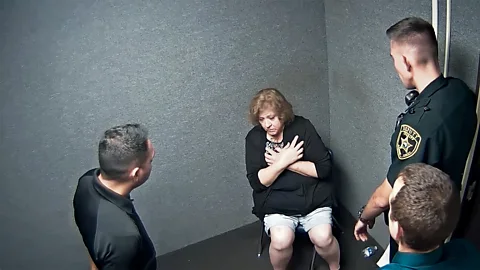
The moment 58-year-old Susan Lorincz is arrested in June 2023 is shown in The Perfect Neighbour through CCTV cameras located in the police interview room in Marion County, Florida. She issues denial after denial to their requests to stand up, be handcuffed, and go with police officers. “No. I can’t. I’m sorry,” she says repeatedly. Minutes tick by, all of them shown on camera, while three officers persuade her to go voluntarily with them.
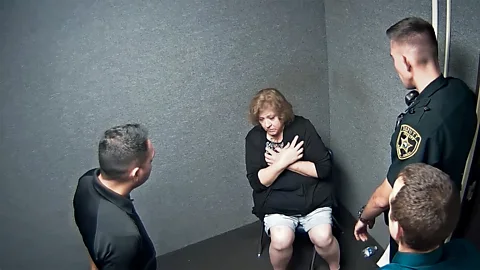
Until that interview, Susan Lorincz had been a free woman, not under arrest, despite a few days earlier firing a gun at her neighbour through a locked metal front door. Thirty-five-year-old Ajike Owens, known as AJ, was a restaurant manager and single mother of four children. Audiences learn through that interview that only two minutes before the shooting on 2 June 2023, Lorincz had called police to her house, because she and one of Owens’s children had had a dispute over an electronic tablet. Lorincz tells police that during those two minutes, Owens had banged on Lorincz’s door, shouting that she would kill her, and the older woman shot “in fear for my life”. Lorincz continues to maintain from jail that she fired her gun out of fear, although sentencing her, the judge told her he believed the shooting was prompted “more by anger than fear”.
Our mantra as a film team was really ‘show and not tell’. You don’t have to beat audiences over the head with advocacy – Geeta Gandbhir
Director Geeta Gandbhir’s reconstruction of events has no narration and doesn’t rely on witness interviews, but instead on a doorbell camera, which captures the sound of a shot being fired, and Owens’s son screaming to call 911. Police body cameras track paramedics trying to help Owens after she is shot. Later cameras follow, unrelentingly, as the children’s father breaks the news to them that their mother “isn’t coming back”. And cameras inside the police car show Susan Lorincz, not under arrest, sitting in the back, while a neighbour shouts, “why did you do it?”
Gandbhir tells the BBC that the footage first came to her as she was a family friend of Owens’s. Lawyers acting for the Owens family had requested the material from the police, and the family wanted to know if there might be anything to keep the case in the news. “There was about thirty hours of video about the case, including doorbell camera, bodycam and cell phone footage, detective interviews with people in the community, as well as audio recordings from Susan’s conversations with the police, when she had called them many, many, many times,” Gandbhir says. “It was a mess, but we managed to get through it, and that’s when I realised it might be a film.”
The footage shows that the first time police officers were called to Lorincz’s address because of a dispute with Ajike Owens was in February 2022, when Lorincz claimed that Owens had thrown a “No Trespassing” sign that belonged to Lorincz at her and hit her on the leg (Owens said that she had thrown it on the ground and was not aiming it at her neighbour.) No one was arrested.
Police are called out several times through the following year, as Lorincz makes emergency calls complaining that local kids, including Owen’s children, are tormenting her. “I’m a single woman, I work from home, I’m peaceful, I’m the perfect neighbour,” Lorincz says in another call to the police, when she’s complaining about neighbourhood children playing football on the grass near her house.
In the documentary footage, the local children appear to dislike Lorincz (they call her “the Karen”, a pejorative term for a middle-aged woman, usually white, who is perceived as entitled). The footage also shows that they tell officers Lorincz called them a “jack-a” (for “jackass”) and refuse to repeat the entire word. In contrast to Lorincz’s alienation from her community, her multiracial neighbours seem close, looking after each other’s children (they would later testify against Lorincz.)
Writing in Variety, film critic Peter Debruge calls the film “revolutionary” for what it achieves with such footage; indeed, its narrative depth won Geeta Gandbhir the best documentary director award at this year’s Sundance Film Festival. The Los Angeles Times calls it “on the most visceral level, a documentary horror film built with police footage, [but] it also reveals how a violent tragedy can be unwittingly manifested by unchecked grievance”.
I believe that the film does a great justice in highlighting the differences of how people of colour and then their counterparts are treated differently – Pamela Dias
“I come from a narrative background, and I wanted this film to play like a thriller so people would remain engaged and immersed,” Gandbhir says. “Our mantra as a film team was really ‘show and not tell’. You don’t have to beat audiences over the head with advocacy.
“I wanted to take people on a journey that embeds them within this community, like they were a fly on the wall. I think about the UK series Adolescence, although it came out after our film was made. It’s the same idea: you allow things to unfold, and for people to live within it and come to their own conclusions about why this happened.”

Racism was found to be a motive for Lorincz’s hatred of the Owens family. CCTV footage in the film shows her confessing to police that she used a racial slur when speaking with the Owens children, and at the trial, neighbours testified that Lorincz called one of the children a different racist term on the night of the shooting.
Lorincz’s trial made international headlines partly because of controversy over Florida’s so-called “Stand Your Ground” law. It allows, in some cases, for deadly force to be used as self-defence, which, it’s been reported, is disproportionately negative for African Americans. In 2012, 17-year-old Trayvon Martin, a black teenager from Florida, was fatally shot by George Zimmerman, who claimed self-defence and was not arrested for days. Zimmerman was later acquitted of murder. Protests were held over Martin’s killing across the US.
Susan Lorincz also remained free for five days while police investigated her claim of self-defence. She was charged with manslaughter with a weapon, as it was ruled there was insufficient evidence to charge her with murder.
Ajike Owens’s mother, Pamela Dias, tells the BBC that the film allows audiences to question why Lorincz was not arrested immediately. “I believe that the film does a great justice in highlighting the differences of how people of colour and their counterparts are treated differently,” she says. “Had the roles been reversed, I believe an arrest would have been made at once. My daughter was murdered through a locked metal door. She had not made an entry, and this all stemmed from children playing in an open field where they were permitted to by the owner. Susan was fuelled by hatred and racism, and the film unfolds all of that and even more.”
At the time, however, authorities in Florida defended their decision not to arrest Susan Lorincz immediately, saying no arrest could be made because of the state’s “Stand Your Ground” laws unless it was proved she did not act in self-defence. “The laws here in the state of Florida are clear,” Marion County Sheriff Billy Woods said. “I may not like them. I may not agree with them. But I will follow”.
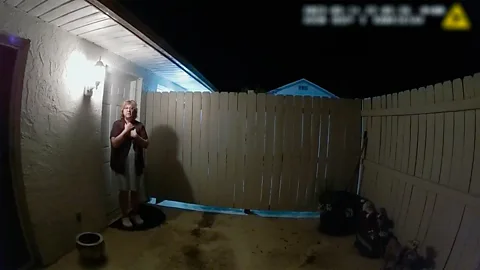
The documentary shows Lorincz telling officers, when they came to question her on a separate incident, that she was sexually abused when she was younger by her father. She was diagnosed with PTSD, but that was ruled not to be a mitigating factor in her sentencing.
“People might watch the film and think, ‘oh she’s mentally not well’,” says Gandbhir, “but she was evaluated and that was not the case. I think you see that actually she was very confident about thinking she was going to get off. She believed the police were on her side and she was in the right. And I think it was in that only her second police interview where she finally realised that her story wasn’t going to hold up. And then you see her disassociate and refuse to get up, but you see who she really is there.”
While police bodycams are now frequently used in true crime TV shows, including a 2018 series simply called Bodycam, documentary film-making hasn’t made the same extensive use of them, although 2021’s All Light Everywhere by Theo Anthony immerses the viewer into the use of police cameras and the rise of a so-called “surveillance society”. Bill Morrison’s 2023 film, Incident, which was nominated for an Oscar, uses security cameras and police bodycam footage to show the killing of Harith “Snoop” Augustus by a Chicago police officer in 2018. The documentary short captures the final moments of his life and police reactions afterwards, aware that they’re on camera.
More like this:
• Why Mr Scorsese is a must-watch
• How The Social Network predicted the future
• 12 of the best films to watch in October
The officers captured in The Perfect Neighbor, by contrast, are intent on de-escalating tensions, which makes Gandbhir’s use of the bodycam footage “subversive”, according to the New Yorker film critic Justin Chang. “She uses it not to reconstruct a crime,” he writes, “but, rather, to bring to light the hidden drama of a neighourhood. The simple spectacle of children at play, it seems, is all it takes to transform a patch of American suburbia into a gaping, microcosmic wound of racism, paranoia, aggression, mental illness, and gun violence.”
Gandbhir agrees that she wanted to “subvert” the perception of police body cameras as part of law enforcement, explaining that “for people of colour, police bodycam footage is often a violent tool that is steeped in institutional racism, often used to justify police violence, as we saw in cases such as George Floyd’s. We wanted to flip that on its head. I wanted to subvert that narrative with this film and use it differently instead to humanise this community.
“And I do believe that, as people are seeing it as police bodycam footage, they will believe it. It’s coming from the authorities, but again, we’re using it in a way that’s not normally the case. It allows the audience to feel embedded, to feel they’re there. They’re living with this community on this journey that they went on, and feeling the horror of it all, too. The fact that one outlier with a gun changed everything for them.”
The Perfect Neighbour is on Netflix from 17 October.
DISCLAIMER: The Views, Comments, Opinions, Contributions and Statements made by Readers and Contributors on this platform do not necessarily represent the views or policy of Multimedia Group Limited.
DISCLAIMER: The Views, Comments, Opinions, Contributions and Statements made by Readers and Contributors on this platform do not necessarily represent the views or policy of Multimedia Group Limited.

Black Stars head coach Otto Addo has revealed that several foreign-born footballers have rejected multiple invitations to represent Ghana since 2021, despite sustained engagement from the national team’s technical team.
Addo’s revelation comes in the wake of growing reports that English-born stars Callum Hudson-Odoi and Eddie Nketiah are weighing a switch of allegiance to feature for Ghana at the 2026 FIFA World Cup.
Speaking to 3Sports following Ghana’s qualification for the global showpiece, the coach made it clear that players who turned down earlier approaches will not automatically walk into the national setup now that the team has secured a place in North America.
MUST READ: World Cup qualifier descends into chaos as police storm dressing room to arrest player
&format=webp)
&format=webp)
Who has qualified for 2026 FIFA World Cup? Check full list…
&format=webp)
Addo said,
We will look at each case one by one. There are players I have been chasing since 2021 who didn’t reply to our calls or want to come
It’s a different thing if we haven’t approached you and now you want to come. But if we have been approaching you all the way and you said no, and now we are at the World Cup, so you want to come, that’s a different matter.
READ ALSO: Did Nigeria Qualify for World Cup 2026? Here’s Everything You Need to Know
The German-born tactician stressed that loyalty and commitment will be key considerations in his squad selection, having now achieved the remarkable feat of qualifying Ghana for back-to-back World Cup tournaments ahead of the 2026 finals.
Addo, who previously guided Ghana to the 2022 World Cup in Qatar, underscored the importance of protecting the team’s spirit and identity, warning against disrupting the current sense of togetherness that has fuelled the Black Stars’ success.
He added,
I think Ghana should always have a certain pride. As a country, we need to check the commitment of each player. We have very good unity, and we would rather not destroy it by bringing in players who don’t have commitment.
READ MORE: Africa’s Road to 2026: Ghana, Cape Verde, and 7 others seal World Cup spots
Under Addo’s leadership, Ghana has blended homegrown talents with a select group of dual nationals, many of whom have become pivotal to the team’s resurgence. However, the coach’s latest comments suggest a more selective approach as the technical team finalises preparations for the 2026 World Cup in the United States, Canada, and Mexico.
The Black Stars will learn their group-stage opponents on December 5, 2025, when FIFA conducts the official World Cup draw in Washington, D.C.
Ghana’s political landscape has taken a dramatic turn with the official launch of the United Party (UP), a new political movement led by Alan John Kwadwo Kyerematen, former Minister for Trade and Industry.
The development, analysts say, could redefine Ghana’s electoral politics and challenge the decades-long dominance of the New Patriotic Party (NPP) and the National Democratic Congress (NDC).
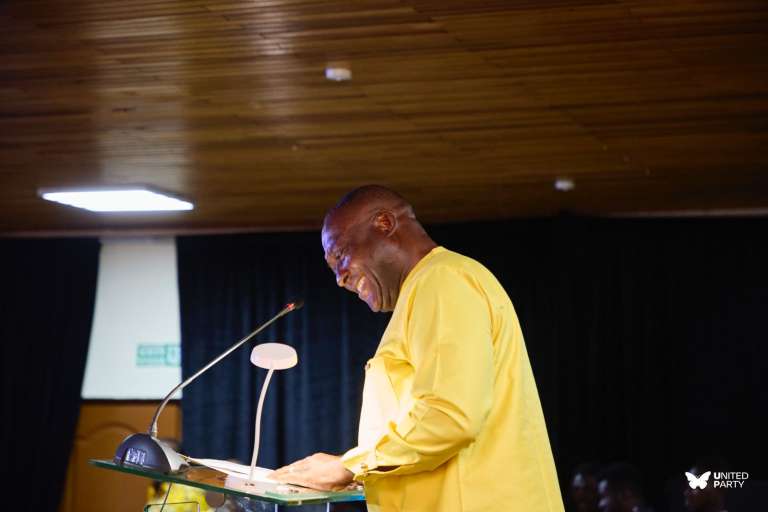
At a colourful ceremony held in Accra on Thursday, Mr Kyerematen described the birth of the United Party as “the dawn of a new era” and “the end of divisive two-party politics” that, in his view, has stifled Ghana’s progress for far too long.
“The UP is the people’s response to disappointment and disillusionment. Ghanaians are tired of the endless cycle of promises and excuses,” Mr Kyerematen told an enthusiastic audience made up of supporters, media practitioners, and civil society representatives. “Today, we begin a movement to unite our people, end the duopoly, and bring prosperity to every Ghanaian.”
The United Party, which received its provisional certification from the Electoral Commission on 3 October 2025, is positioning itself as a centrist political alternative — one that promises inclusivity, ethical leadership, and pragmatic economic transformation.
Observers believe the party could attract disenchanted voters, particularly among the youth and the floating electorate, who have grown increasingly vocal about unemployment and economic hardship.
Mr Kyerematen unveiled the party’s flagship economic framework, Vision 2040, also known as the Paradise Project. The plan seeks to transform Ghana into Africa’s leading economic powerhouse within fifteen years, underpinned by his Great Transformational Plan — a comprehensive blueprint centred on debt reduction, private-sector industrialisation, and sustainable development.
Reaffirming the party’s guiding principles, Mr Kyerematen emphasised that the UP stands for integrity, inclusivity, and zero tolerance for corruption. The party’s emblem, a Monarch Butterfly, symbolises transformation and resilience, while its colours — yellow, black, and white — signify Ghana’s natural wealth, the Black Star of Africa, and purity of purpose.
Interim National Chairman Abu-Bakar Saddique Boniface described the rebirth of the United Party tradition as both “symbolic and historic.”
“The UP continues the legacy of integrity, service, and freedom,” he said. “We are uniting under one banner to rescue Ghana from division and restore credibility in governance.”
He further urged Ghanaians weary of the NPP-NDC rivalry to see the United Party as a credible alternative — not a protest movement, but a forward-looking force for renewal.
Interim General Secretary Yaw Buaben Asamoa echoed similar sentiments, calling the UP’s emergence “a wake-up call to the old order.” He announced the party’s intention to pursue constitutional reforms, including measures to encourage coalition governance, curb excessive partisanship, and replace the Council of State with a Second Chamber representing civil society, traditional authorities, labour, and faith-based organisations.
The event ended on a note of optimism as Mr Kyerematen declared, “The UP is not just another political party; it is a people’s movement for transformation. We will build a Ghana that works for everyone, not just a few. United we stand, divided we fall.”
With the United Party now officially in the political arena, many observers believe the NPP faces its most formidable internal challenge yet — led by one of its former most prominent figures.
DISCLAIMER: The Views, Comments, Opinions, Contributions and Statements made by Readers and Contributors on this platform do not necessarily represent the views or policy of Multimedia Group Limited.
DISCLAIMER: The Views, Comments, Opinions, Contributions and Statements made by Readers and Contributors on this platform do not necessarily represent the views or policy of Multimedia Group Limited.
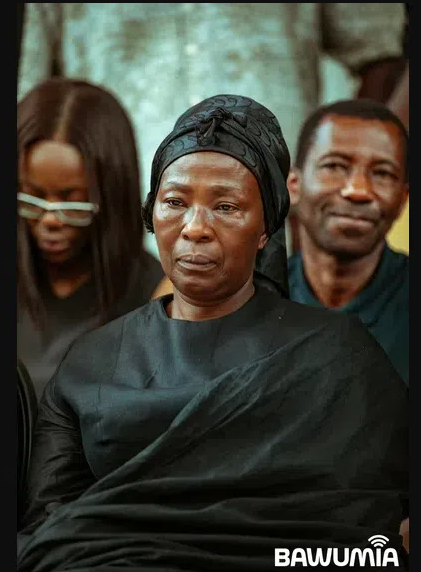
A High Court in Kumasi has postponed to 28 October 2025 the hearing of a case filed by Mrs Akosua Serwaa, the wife of the late Ghanaian highlife icon Charles Kwadwo Fosuh, popularly known as Daddy Lumba. She is seeking a judicial declaration recognising her as the sole surviving spouse and the only person entitled to perform widowhood rites at his funeral.
Daddy Lumba passed away on 26 July 2025, and his final funeral rites are scheduled for 6 December 2025 at the Baba Yara Sports Stadium in Kumasi. However, those plans could face disruption following the legal challenge brought by Mrs Serwaa against Mr Kofi Owusu Fosu, the head of the musician’s extended family, and Ms Priscilla Ofori, popularly known as Odo Broni. The suit contests the organisation of the funeral and raises questions surrounding the circumstances of the singer’s death.
READ MORE: Daddy Lumba’s children distance themselves from legal dispute over his death
From Date Rush to Good Morning Ghana, explore the top TV programmes in Ghana that blend entertainment, culture, and insightful conversations, captivating audiences across the country
&format=webp)
Ghana’s podcasting revolution: From relatable banter to empowering conversations, these creators are redefining storytelling and connecting a nation
&format=webp)
&format=webp)
According to Citi news, during proceedings on Thursday, 16 October, lawyers representing the defendants informed the court that they had filed a motion questioning Mrs Serwaa’s legal capacity to initiate the case. The presiding judge, Her Ladyship Justice Dorinda Smith Arthur, declined to hear that objection, explaining that “the issue was not before the court”.
READ MORE: Daddy Lumba’s wife and sisters petition Police CID to investigate Odo Bronii and Roman Fada
Counsel for the plaintiff objected to the move, insisting that the matter scheduled for the day was the application for an injunction already before the court. After hearing both sides, the judge adjourned the case and encouraged the parties to reach an amicable settlement.
She, however, noted that if the matter proceeds, “it will be treated as a priority case.”
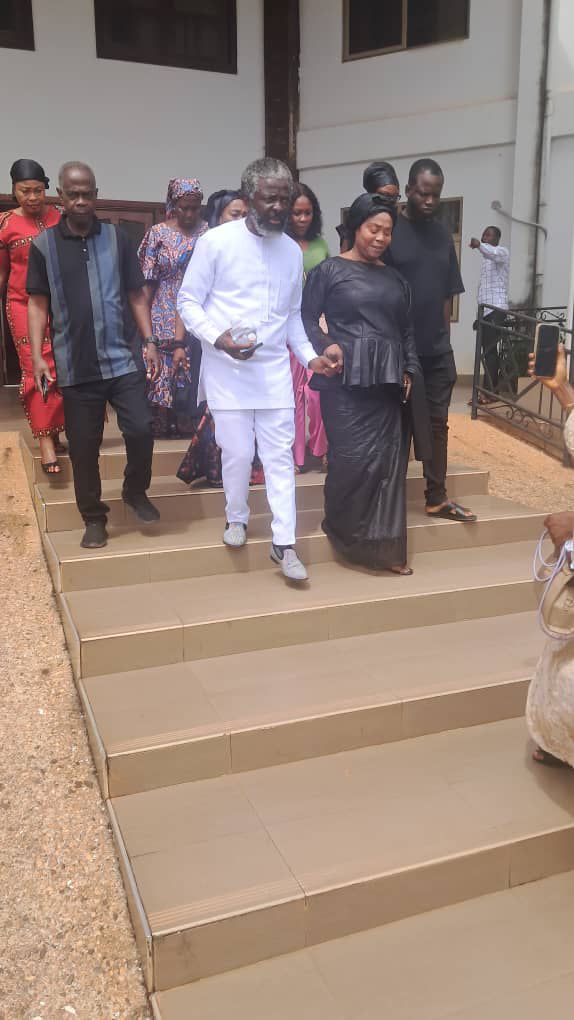
ALSO READ: Trouble looms as Daddy Lumba’s wife and children file injunction against funeral
Lawyers for the defendants further informed the court that they had filed a conditional appearance motion pending the substantive hearing. The court directed all parties to submit their responses within 14 days before adjourning the matter.
Speaking to the press after the hearing, Mr William Kusi, counsel for the plaintiff, said he hoped the case would not extend into December, warning that delays could affect the scheduled funeral.
READ MORE: ‘Odo Broni is a recognised wife of the late Daddy Lumba’ – Lawyers of Fosu family declare
“We are committed to protecting Lumba’s integrity. We are ready to ensure that the funeral date is honoured,” Mr Kusi stated.
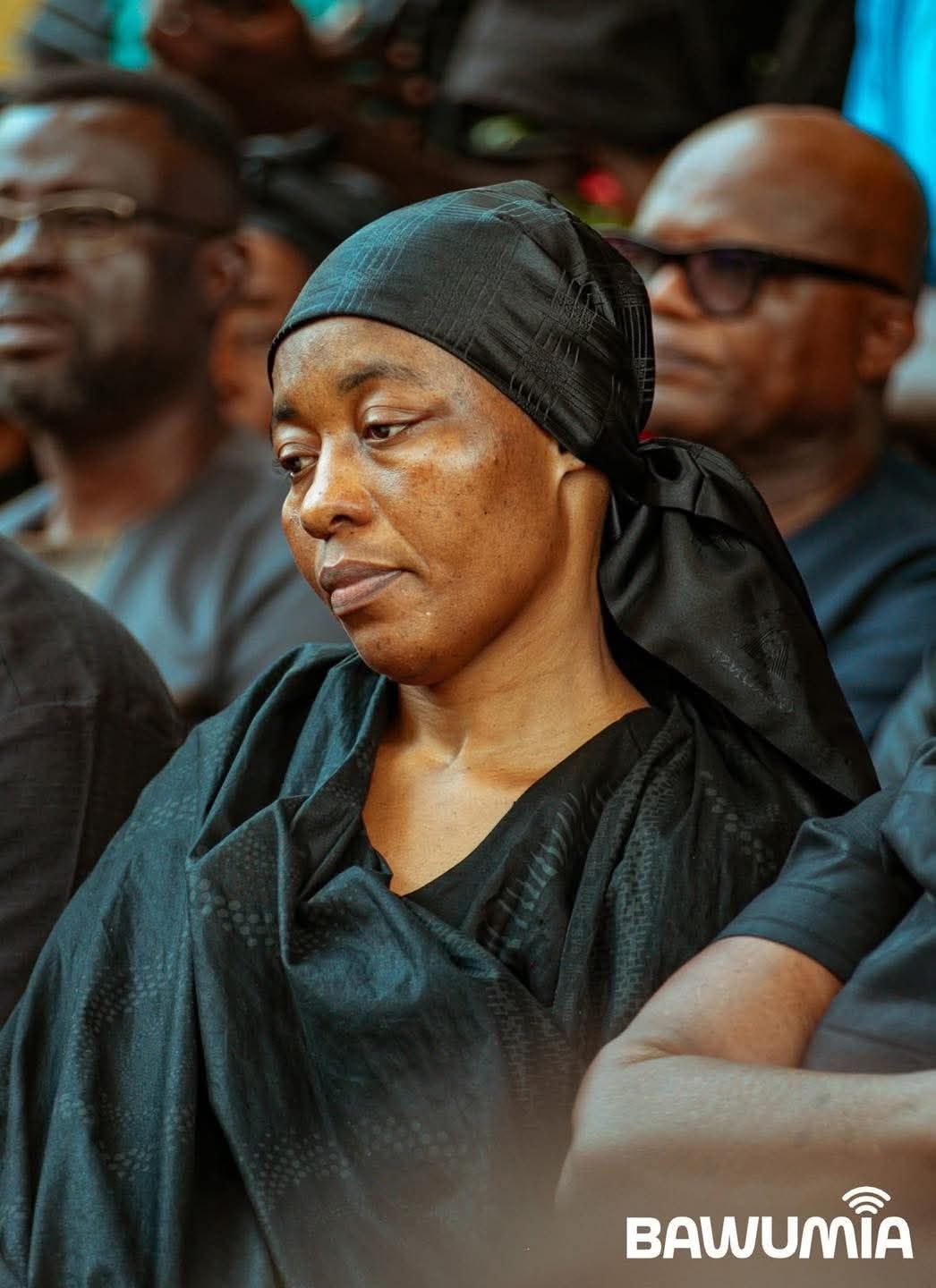
Mrs Serwaa is asking the court to restrain Ms Odo Broni from “publicly presenting herself as the surviving wife” of the late musician.
READ MORE: I’m happy about Daddy Lumba’s wives’ drama but Odo Bronii will win – Ajagurajah
She maintains that she remains Daddy Lumba’s lawful wife, and neither she nor her children were consulted when the family announced the funeral date , which they allegedly learned about through social media.
According to her, her marriage to the late musician remained “valid and legally binding” at the time of his death. She further claims that the family head informed her that she would not be allowed to perform the widowhood rites , a role traditionally reserved for a deceased man’s legal spouse.
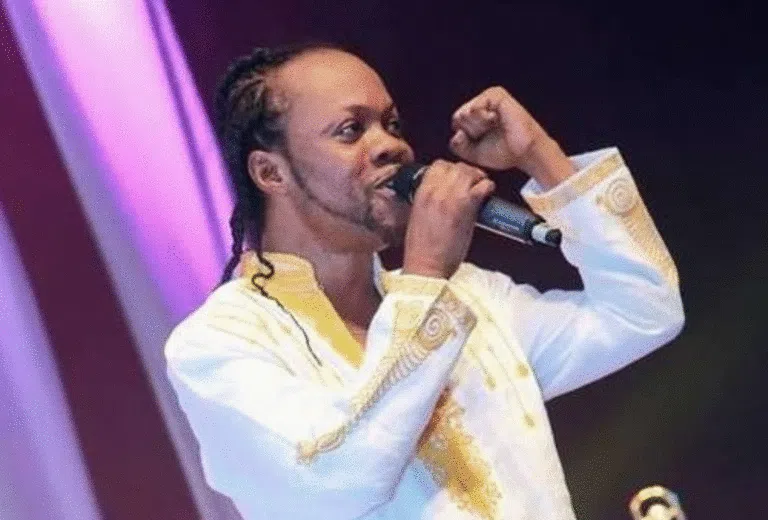
She also alleges that after Lumba’s passing, “a woman identified as Odo Broni suddenly emerged, claiming to have been married to him and to share children with him.”
READ MORE: Stonebwoy explains why comparing him to Shatta Wale in a lyrical battle is unfair (video)
Mrs Serwaa argues that the family’s decision to permit Odo Broni to perform the widowhood rites is unlawful and disrespectful, insisting that unless the court intervenes, she will be unjustly denied her rightful position as the only legally recognised wife of the late highlife legend.
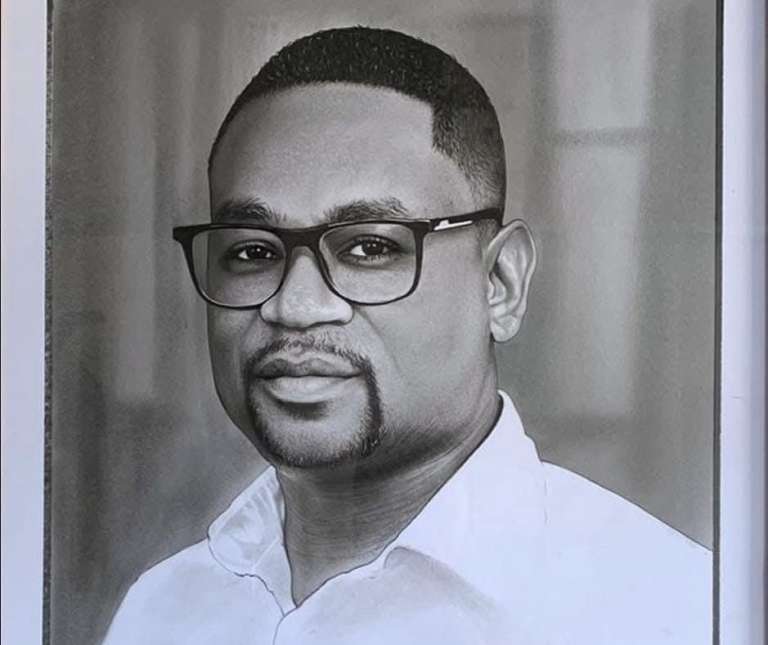
Education is widely recognized as the foundation of national growth. Nations that succeed in the twenty-first century provide their citizens with the ability to think critically, address challenging issues, and adapt to a constantly changing environment. In Ghana, however, many of our classrooms still seem like antiques from the past: inflexible, controlled by teachers, and resistant to change. This fact begs the question: Can pupils educated through traditional pedagogical approaches effectively develop the problem-solving skills required in the modern world?
A comparison of the Ghanaian education system to that of the United Kingdom – our former colonial master, reveals stark contrasts. The UK has spent a lot of money over the years to modernize its education system. It has changed how teachers teach, how students sit, how they are tested, and even how classrooms are set up to get students ready for life beyond school. On the other hand, Ghana still relies on rote memorization, rigid rows of desks, and tests that check memory instead of reasoning. This issue transcends just aesthetics or comfort. The design and philosophy of education strongly impact the type of individuals a nation cultivates. In the United Kingdom, classrooms are designed to foster cooperation, critical thinking, and inclusion. In Ghana, curiosity is frequently stifled, originality is penalized, and conformity is rewarded.
The Historical Roots: Colonial Legacies and Divergent Paths
Colonial priorities influenced Ghana’s educational system. The main purpose of schools during British administration was to train administrators, clerks, and translators who could work in the colonial administrative apparatus. Instead of creativity or critical thinking, the focus was on rote learning, reading, and obedience. Teachers were seen as absolute authority who imparted information that pupils were supposed to learn and perpetuate. The UK, on the other hand, began reforming its own education system in the 19th and 20th centuries, long before independence reached colonies like Ghana. By the mid-20th century, the UK had moved towards more child-centred learning, influenced by educational theorists such as John Dewey, Jean Piaget, and Lev Vygotsky. The shift was deliberate: education was seen as not just a means of passing exams, but as preparation for life in a democratic, industrial society. Ghana, however, inherited the colonial system almost wholesale at independence in 1957. While reforms have been attempted from the Accelerated Development Plan in 1951 to the 1987 Educational Reform Programme and the recent Free Senior High School policy – the underlying structure has remained stubbornly exam-driven and teacher-dominated.
Training to Teach in the UK vs Training to become a Teacher in Ghana
One of the most telling contrasts between the UK and Ghana lies in how teachers are prepared for the classroom. In the UK, teacher training is structured, research-informed, and highly professionalised. Prospective teachers typically enter postgraduate programmes such as the Postgraduate Certificate in Education (PGCE) or School-Centred Initial Teacher Training (SCITT). These programmes combine university-based study with extensive school placements, ensuring that trainees learn both the theory and practice of pedagogy. Training emphasises evidence-based approaches, classroom management strategies, differentiated instruction, and inclusive practices that respond to the needs of diverse learners – including those with special educational needs and disabilities (SEND) and English as an Additional Language (EAL). Continuous reflection and mentoring are embedded, and trainees are supported by induction frameworks and professional standards that guide their development into fully qualified teachers.
In Ghana, by contrast, teacher preparation remains largely rooted in traditional training college models. While reforms have introduced degree-level teacher education, many programmes still prioritise subject knowledge and rote methods of delivery over pedagogy and reflective practice. Trainee teachers often experience limited exposure to real classroom environments during their training, and where teaching practice is included, mentoring support is inconsistent. Professional development after qualification is sporadic and underfunded, leaving teachers to rely heavily on outdated strategies such as “chalk and talk.” Furthermore, teaching is not accorded the same societal status and remuneration as in the UK, which affects morale and retention. The absence of clear professional standards also means there is less accountability for continuous improvement.
The implications of these differences are profound. A UK-trained teacher enters the classroom as a reflective practitioner equipped to adapt lessons, differentiate for diverse learners, and integrate technology effectively. A Ghana-trained teacher often enters with limited exposure to such methods, relying on inherited practices and struggling to innovate within resource-constrained environments. While Ghanaian teachers demonstrate resilience and dedication, the systemic gaps in their preparation mean that they are less empowered to transform their classrooms into spaces of critical thinking and creativity.
If Ghana is to cultivate teachers who can nurture critical thinkers, investment in modernising teacher training is essential. Partnerships with universities, greater emphasis on practicum experience, structured mentoring, and the institutionalisation of continuous professional development can help close the gap between training in Ghana and in more advanced systems like that of the UK.
“A UK-trained teacher enters the classroom as a reflective practitioner equipped to adapt lessons, differentiate for diverse learners, and integrate technology effectively. A Ghana-trained teacher often enters with limited exposure to such methods, relying on inherited practices and struggling to innovate within resource-constrained environments.”
Seating Arrangements: Obedience Versus Collaboration
One of the simplest yet most telling differences between Ghanaian and UK classrooms lies in seating arrangements. In the UK, classrooms are carefully designed to foster collaboration. Students often sit in groups around tables rather than in rows. Teachers frequently change seating patterns to reflect different activities: a science experiment, a debate, a group project, or an individual task. This flexibility acknowledges that learning is social and that students benefit from sharing ideas and supporting one another. Equally important, seating is used to balance abilities. Stronger students may be placed with weaker ones to encourage peer-to-peer learning. Teachers often rotate groups so that no student feels permanently labelled as “slow” or “bright.” The underlying philosophy is inclusivity and growth: every child, regardless of starting point, has the capacity to improve. In Ghana, classrooms too often resemble examination halls. Students sit in rigid rows facing the chalkboard. The arrangement symbolises authority: the teacher speaks, the students listen. Interaction is minimal, peer support is accidental rather than planned, and collaboration is rare. The environment is designed for obedience and control rather than creativity and exchange. This matters profoundly. A classroom that trains children to sit silently, copy notes, and fear mistakes is unlikely to produce graduates who can collaborate in teams, take initiative, or challenge assumptions – the very qualities the modern world demands.
“In the UK, seating is planned for collaboration. In Ghana, it is planned for obedience.”
Assessment: Beyond Recall to Application
Assessment represents one of the most striking contrasts between the two education systems. In the United Kingdom, the philosophy of Assessment for Learning (AfL) underpins classroom practice. Teachers view assessment not merely as a means of measuring achievement, but as a continuous process that supports and informs learning. Formative assessments through questioning, feedback, peer evaluation, and reflective tasks are integral to lesson delivery. Mistakes are treated as learning opportunities rather than failures; pupils are encouraged to explain their reasoning, revisit misconceptions, and build on feedback. Consequently, students participate actively and are unafraid to answer questions in class, knowing that an incorrect response is part of the learning journey, not a cause for embarrassment or punishment.
Moreover, schools employ a wide range of assessment methods written tests, project work, oral presentations, group tasks, and teacher observations to capture the multifaceted nature of learning. These approaches assess not only what students know, but how they apply knowledge in different contexts. For example, a mathematics project may require learners to analyse real-life data, apply statistical reasoning, and communicate findings through graphs and written explanations. Such diversity reflects an understanding that intelligence is not monolithic; it manifests through different modes of expression, whether analytical, creative, or practical.
In contrast, Ghana’s education system remains dominated by high-stakes, summative examinations such as the Basic Education Certificate Examination (BECE) and the West African Senior School Certificate Examination (WASSCE). Success is largely determined by memorisation and the ability to reproduce information under exam conditions. The emphasis on “chew and pour” learning – rote memorisation followed by mechanical regurgitation discourages critical thinking and problem-solving. Furthermore, a wrong answer in class can attract ridicule or even punishment, reinforcing a culture of fear rather than curiosity. This environment stifles creativity and self-expression, causing many students with potential in innovation, design, or applied reasoning to be marginalised. The result is an education system that prioritises recall over understanding, and compliance over exploration – an approach ill-suited to the demands of a rapidly changing world.
This contrast in assessment philosophy inevitably shapes teaching methods and classroom culture. In the UK, where formative assessment and feedback drive instruction, lessons are typically more interactive and dialogic. Teachers adapt their teaching in response to students’ needs, fostering a collaborative atmosphere where inquiry and reflection are encouraged. In Ghana, however, the predominance of summative assessment often dictates a more teacher-centred approach, with instruction focused on content coverage and exam preparation rather than conceptual understanding. The consequence is a classroom culture that values accuracy over exploration and conformity over creativity. Understanding these differences is crucial, as assessment practices do not merely measure learning—they actively construct the kind of learners and thinkers each system produces.
Teaching Methods: Authority Versus Facilitation
In the UK, teachers are trained to be facilitators of learning. They use questioning techniques, project-based learning, and differentiated instruction to meet the diverse needs of students. Lesson plans include activities for visual learners, auditory learners, and kinaesthetic learners. Technology is integrated seamlessly: interactive whiteboards, online research, and digital presentations are part of daily learning. Teachers are encouraged to embrace continuous professional development, reflecting on their practice and adopting new methods supported by research. Importantly, the profession is valued, with teaching standards and frameworks guiding practice across the country. In Ghana, teachers remain largely authority figures. The most common method is “chalk and talk”: teachers dictate notes, which students copy. Questions are often limited to recall, and deviation from the textbook is discouraged. Large class sizes exacerbate the problem, making interactive or differentiated teaching almost impossible. The gap in teacher training is also stark. While Ghana has teacher training colleges, the professional development of teachers is underfunded and often sporadic. Many teachers lack exposure to modern pedagogies or resources that could transform their classrooms.
Infrastructure and Resources
The physical environment of learning also differs markedly. In the UK, even in modest schools, classrooms are designed to be stimulating with posters, learning aids, project corners, and access to libraries and digital tools. Science laboratories and sports facilities are standard, and special educational needs are supported with tailored resources. In Ghana, many schools lack basic infrastructure. Rural schools often operate under trees or in dilapidated buildings. Libraries are rare, laboratories are under-equipped, and ICT facilities are scarce. Where computers exist, they are often outdated or inaccessible due to electricity challenges. This physical deprivation compounds the pedagogical challenges. How can a teacher encourage inquiry-based science learning without functional laboratories? How can digital literacy be taught without reliable access to computers or the internet?
Outcomes: Different Citizens for Different Societies
The result of these systemic differences is visible in the graduates each system produces. UK graduates are generally confident communicators, able to collaborate in teams, analyse problems, and adapt to new situations. They are prepared for economies where knowledge is constantly shifting and where employers value initiative as much as qualifications. Ghanaian graduates, by contrast, are often praised for discipline and diligence but criticised for lack of initiative and creativity. Employers lament the need for retraining, noting that many graduates are unable to translate theoretical knowledge into practical solutions. The irony is sharp: Ghanaian students are no less intelligent than their UK counterparts. The difference lies in the systems that shaped them.
Lessons and the Way Forward
What, then, can Ghana learn from the UK experience? Several important lessons emerge. First, classroom design must be taken seriously. The way pupils are seated, the opportunities for group work, and the flexibility of the physical space all shape how students engage with knowledge. Arrangements that encourage collaboration and participation should be prioritised over those that promote passivity and obedience. Secondly, assessment practices must evolve. Examinations alone cannot capture the full range of human intelligence. While tests have their place, they must be complemented with project work, oral presentations, creative assignments, and teacher observations. Such a system values different learning strengths and gives all students a chance to demonstrate their abilities in multiple ways. Third, teachers themselves are central to educational transformation. They must be supported through continuous professional development, exposure to modern pedagogical strategies, and recognition of teaching as a respected profession. Without well-prepared and motivated teachers, even the best reforms will falter. Equally, resources play a crucial role in enabling pedagogy. Investment in libraries, laboratories, and ICT infrastructure should not be seen as luxuries but as essential foundations for effective teaching and learning. Even gradual improvements, if consistent and well-planned, can have transformative effects. Finally, educational policy must transcend short-term politics. Reforms should not be tied to political cycles but anchored in a shared national vision. Ghana needs the stability of a long-term commitment to quality education that survives changes in government. Only then can meaningful progress take root.
Conclusion: A Call for Courage
The future of Ghana rests heavily on the kind of citizens our classrooms produce. If we continue to rely on rigid, hierarchical, and outdated models, we should not be surprised when our graduates struggle to meet the demands of a rapidly changing world. The comparison with the UK shows that transformation is not only possible but achievable through deliberate investment, innovation, and a commitment to child-centred learning. Ghanaian students are no less capable than their peers elsewhere; the difference lies in the systems that nurture them. Breaking from colonial legacies and exam-driven practices will require bold political will, sustained resources, and a cultural shift that values creativity as much as conformity. The courage to act must come from all stakeholders – policy makers, teachers, parents, and communities – who share a vision of an education system that equips learners to think critically, solve problems, and contribute meaningfully to national development. The choice before Ghana is clear: continue to replicate the past or reimagine education to secure the future. The time to act is now, for the longer we delay, the more we risk leaving generations of young people unprepared for the challenges and opportunities of the twenty-first century.
“The future of Ghana rests heavily on the kind of citizens our classrooms produce.”
DISCLAIMER: The Views, Comments, Opinions, Contributions and Statements made by Readers and Contributors on this platform do not necessarily represent the views or policy of Multimedia Group Limited.
DISCLAIMER: The Views, Comments, Opinions, Contributions and Statements made by Readers and Contributors on this platform do not necessarily represent the views or policy of Multimedia Group Limited.
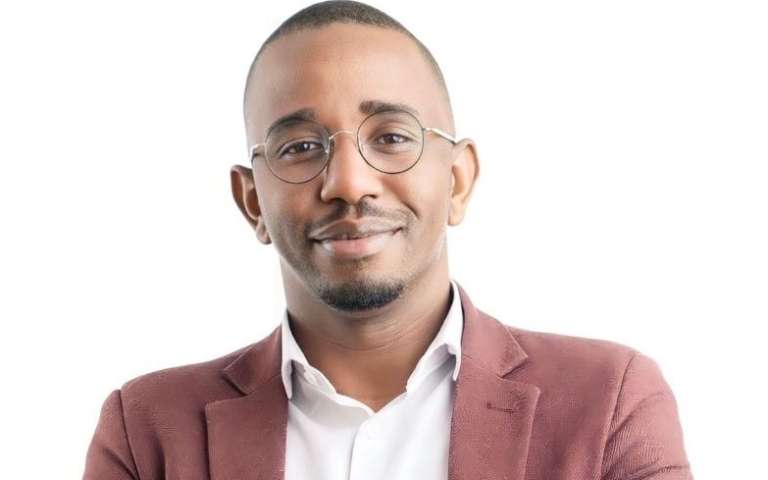
The Senior Manager for Grid Expansion and Energy Systems at the Energy Council of South Africa, Keith Katyora, has said that Africa cannot achieve its clean energy transition without first expanding its power grids.
Speaking at the Africa Sustainable Energy Centre’s (ASEC) event during World Energy Week 2025, he explained that countries cannot transition to clean energy without adequate transmission.
Using South Africa as a case study, Mr Katyora said that “to be able to implement or allow any type of development that we deem necessary, especially from an economic and GDP perspective, we need about 14,200 kilometres of new transmission between now and 2035. We currently have about 70 gigawatts of renewable projects that are in the pipeline.”
He explained that without adequate transmission capacity, many of them cannot be connected to the grid.
He added that although renewable energy is getting cheaper, the future without adequate transmission is uncertain, and this could affect the power supply or its quality.
“…Even in Southern Africa, they tell you energy transition is all good. However, we don’t know what’s going to happen, especially in terms of curtailment and the system quality long term. And that obviously ultimately affects things like your power quality and also your reliability and security of supply.”
This, Mr Katyora, said inspired a review of how energy infrastructure is financed and developed following interest from private companies, especially those who want to upscale data centres not just for conglomerates but also the banking sector.
He noted that his outfit has been exploring private transmission with a self-built shared model, which empowers private developers to construct their own transmission infrastructure, with utilities compensating them through structured agreements.
However, to make this model sustainable, they must protect every party involved, Mr Katyora stated, adding that the Energy Council is creating a framework that ring-fences risk and safeguards investment.
“In our preliminary assessment of the opportunity that even sits within that space, we are estimating that to be about 22 billion Rands that can be unlocked from the private sector, which is driven by this huge demand that we’re seeing. And this is all going to come from the private sector, not the government.”
Mr Katyora noted that beyond South Africa, this model can be adopted across the continent.
“We know that in regions like Zambia, where there’s discussions right now about the Lobito corridor, the Lobito corridor can’t happen without energy. It needs energy. We know about the huge mining activities that are going to be happening in Mozambique.”
“We also know that more than a year ago, there were drought issues in Zambia and Zimbabwe, which saw quite a lot of the countries go into blackout. So there is a need for a new generation, but to be able to then unlock that, the government needs to be able to now look into models where the private sector is able to pitch in and come in and take a percentage of that development.”
Mr Katyora urged policymakers and financiers to expand power lines first in their bid to unlock Africa’s full renewable potential.
DISCLAIMER: The Views, Comments, Opinions, Contributions and Statements made by Readers and Contributors on this platform do not necessarily represent the views or policy of Multimedia Group Limited.
DISCLAIMER: The Views, Comments, Opinions, Contributions and Statements made by Readers and Contributors on this platform do not necessarily represent the views or policy of Multimedia Group Limited.
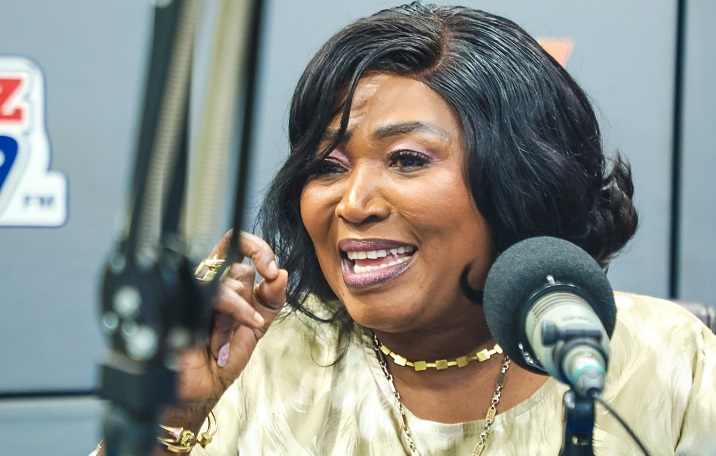
Ghanaian gospel musician Grace Ashly, known for her songs in support of the Black Stars, has called on football authorities not to replace head coach Otto Addo ahead of the 2026 FIFA World Cup.
Speaking on Daybreak Hitz with Doreen Avio and Kwame Dadzie on Hitz FM, Grace Ashly said Otto Addo needs encouragement and technical support rather than dismissal.
“As for coach Addo, we don’t have to touch him. If there is anything [wrong with his performance], they should gather people, correct him and talk to him. You see, that is what we did to Akwasi Appiah. Ghanaians, when we have our own, we all want to drop them, and I don’t think it’s right,” she said.
When asked about the Black Stars’ performance in the 2026 World Cup qualifiers, she expressed optimism about the team’s potential. “The young shall grow,” she said, intimating that the players only need time and support to reach their best form.
“We need to give them strength. We need to support them and pray for them. We should not tear them apart. There are certain words when you hear from people, it dampens your spirit. So we beg Ghanaians. Once they are there, they are the national team. We don’t have any national team apart from them,” Grace further noted.
Ghana recently secured qualification for the 2026 FIFA World Cup after a hard-fought campaign that saw them finish top of their group in the African qualifiers. The Black Stars, who will be making their fifth appearance at the global tournament, will represent Africa alongside countries such as Senegal, Morocco and Nigeria.
However, Otto Addo’s leadership has faced criticism from some football fans and pundits, who argue that his tactical approach lacks consistency and creativity. Some have called for the GFA to replace him before the World Cup, citing Ghana’s inconsistent performances during the qualifiers.
In the meantime, Otto Addo has said that he is not scared of losing his job as the Black Stars Coach.
DISCLAIMER: The Views, Comments, Opinions, Contributions and Statements made by Readers and Contributors on this platform do not necessarily represent the views or policy of Multimedia Group Limited.
DISCLAIMER: The Views, Comments, Opinions, Contributions and Statements made by Readers and Contributors on this platform do not necessarily represent the views or policy of Multimedia Group Limited.