About 165 students and staff from a Catholic school in Niger State who were abducted by gunmen last month remain hostages
Nigeria has secured the release of 100 schoolchildren abducted last month from a Catholic boarding school, Channels Television reported on Sunday. The West African country has seen a surge of mass kidnappings, forcing Nigerian President Bola Tinubu to declare a security emergency.
Gunmen stormed St. Mary’s Catholic School in the village of Papiri, Niger State, on November 21, seizing 315 people, including 303 students and 12 teachers, according to the authorities. Two days later, 50 escaped and reunited with their families, the Christian Association of Nigeria (CAN) reported.
On Sunday, Channels Television cited officials as saying 100 more hostages have been released, leaving about 165 still in captivity. The report did not clarify whether any ransom was paid or how the latest release was negotiated.
Daniel Atori, spokesman for CAN in Niger State, told Reuters the group had not been formally briefed by the federal government about the operation.
“We hope and pray it is true and will be looking forward to when the remaining [hostages] will be released,” Atori said.
Presidential spokesman Sunday Dare has confirmed the reports, according to AFP.
The St. Mary’s raid is Nigeria’s worst school kidnapping since 2014, when more than 270 girls were seized from Chibok by the extremist group Boko Haram.
The UN human rights office has expressed shock at the recent surge in mass abductions, saying at least 402 people, mainly schoolchildren, have been kidnapped in four states in the north-central region – Niger, Kebbi, Kwara and Borno – since November 17.
President Tinubu declared a “nationwide security emergency” on November 26 following mounting public anger, ordering security forces to recruit tens of thousands of new personnel.
The crisis has drawn in foreign powers. Earlier on Sunday, a US congressional delegation met Nigeria’s national security adviser Nuhu Ribadu in Abuja to discuss counterterrorism cooperation.
French President Emmanuel Macron said on Sunday that France will expand intelligence support for the country after getting a request from Tinubu. Meanwhile, French forces have been expelled from neighboring Niger, Mali and Burkina Faso over their failure to stop a deadly insurgency.
The EU Council has freed Warsaw from its obligations under the bloc’s solidarity mechanism starting from 2026, Donald Tusk has claimed
The European Council has exempted Poland from the requirement to take in migrants starting from next year, Prime Minister Donald Tusk has claimed.
The EU has been grappling with mass immigration over the past two decades, since contributing to the implosion of Libya and Syria in 2011 and 2014 respectively, as well as backing the escalation of Kiev’s war with Moscow in February 2022, triggering waves of incoming people numbering in the millions.
In a post on X following a European Council meeting in Brussels on Monday, Prime Minister Tusk wrote that “Poland has been exempted from the obligation to accept migrants under the EU’s relocation mechanism.”
The EU’s Pact on Migration and Asylum stipulates that all member states must contribute, in proportion to their population and total GDP, to the alleviation of migratory pressure on the worst-affected nations within the bloc.
Each member state is obliged to either accept a certain number of migrants relocated from the hotspots or shell out €20,000 ($23,000) per person they refuse to take in.
In an X post of his own on Monday, Polish Interior Minister Marcin Kierwinski stated that a “compromise was achieved regarding the solidarity mechanism,” with Warsaw exempt from “relocation, financial contributions, and other instruments.”
The Polish media quoted the minister as saying that the “countries of the South are dissatisfied” with the outcome, apparently referring to Italy, Spain, Greece. The latter have seen particularly high numbers of newcomers illegally arriving on their shores in recent years.
In November, Poland, along with Hungary, Slovakia and the Czech Republic, made it clear they were prepared to challenge the EU leadership over the migrant relocation mechanism, according to Euronews.
Meanwhile, in neighboring Germany, an association representing organizers of traditional Christmas markets warned last month that rising security costs could lead to the number of traditional open-air events going down this year.
Christmas markets have been the target of multiple high-profile terrorist attacks in recent years.
The University of Education, Winneba (UEW) is one of Ghana’s leading institutions committed to making quality higher education accessible to everyone, especially through its distance learning programs.
For many first-time applicants, navigating the UEW distance learning admission process can feel overwhelming, with different programs, eligibility criteria, and deadlines to consider.
In this article, we’ll simplify the process by providing practical, step-by-step tips to help you apply with confidence and clarity. Let’s get started!
UEW distance learning admission process
Comprehending the UEW Distance Learning Admission Procedure
Before you start applying, it’s important to understand how the UEW distance learning admission process works. UEW offers a variety of programs for undergraduate, diploma, and postgraduate students, each with its own requirements and deadlines.
Knowing which program suits your background and career goals will save you time and avoid mistakes.
The admission process is carefully structured and transparently managed by the Joint Admissions Board, ensuring fairness for all applicants.
Knowing the procedures will help your application go more smoothly and improve your chances of success, regardless of whether you are a first-time applicant, an experienced student, or a diploma holder hoping to top up your degree.
UEW distance learning admission process
Step 1: Identify the Right Programme for Your Career Goals
The first step in the UEW distance learning admission process is choosing the program that aligns with your career goals and academic background. UEW offers a wide range of options, including undergraduate degrees, diplomas, and postgraduate programs.
For example, you can pursue a Bachelor of Education in Early Grade, Junior High, or Upper Primary; a Bachelor of Arts in English Language Education; or a Bachelor of Business Administration in Accounting or Human Resource Management. Postgraduate applicants can explore options like the Postgraduate Diploma in Education (PGDE) or a Master of Education in various specializations.
Take the time to review program requirements and think about where you want your studies to take you. Picking the right programme not only meets the admission criteria but also sets you on a clear path toward achieving your career ambitions
Step 2: Know Your Applicant Category
When you apply through the UEW distance learning admission process, it helps to recognise which applicant category you fall into. This makes sure you meet the right requirements from the start.
Direct Applicants: These are applicants who already hold the standard school certificates (for example, WASSCE/SSSCE) and meet the academic cut‑offs for the program. They typically do not have to sit an entrance exam.
Mature Applicants: If you are age 25 or older and didn’t meet the direct‑entry requirements, you’ll apply as a mature applicant. You’ll need to show proof of your age and pass an entrance examination (General Aptitude Test (GAT) and Subject Area Test (SAT)).
Post‑Diploma Applicants (Top‑Up): These are students who already hold a relevant diploma and are seeking to level up to a degree in the same or related field through the distance learning route.
Postgraduate Applicants: If you already possess a first degree, you may apply for a postgraduate distance program (for example, a Master of Education) under the distance learning admission process.
Step 3: Purchase and Complete the Application Form
Next in the UEW distance learning admission process is acquiring the application voucher and submitting your form online. First, obtain a voucher from authorized channels, banks, mobile money codes, or online through the university’s portal.
After purchasing the voucher, head to the application portal, log in using your voucher serial number and PIN, and then fill in all required details carefully. Ensure you have scanned copies of your results, certificates, national ID, and a passport‑sized photo ready for upload.
These procedures guarantee accurate and timely completion of this application stage.
Step 4: Prepare Your Supporting Documents
For your application to be successfully processed at this stage of the UEW distance learning admission process, you must collect and upload all necessary supporting documentation.
Here’s how to proceed:
Make sure you have clear, scanned copies of your transcripts, certificates, and results slips.
Attach a valid national ID or proof of age (especially relevant if you’re applying as a mature applicant).
If your certificate comes from outside the accredited Ghanaian system, make sure it’s evaluated by the Ghana Tertiary Education Commission (GTEC) and include the evaluation report.
Check that your name on the application matches the names on your documents. If there’s a name change (for example, via marriage), include the gazetted notice or an affidavit.
Step 5: Submit and Track Your Application
After completing your application and uploading your supporting materials, the next important step in the University of Education, Winneba (UEW) distance learning admissions process is to submit the form and track its progress.
Here’s an easy‑to‑follow flow:
After logging in with your voucher serial number and PIN, complete the online application form and submit it only when you have reviewed every field carefully (names, program choice, and contact details).
Make sure your email address and mobile number are valid and active; UEW uses these channels to send admission updates.
Once submitted, save or print a copy of your completed form for your records.
After submission, check the UEW admissions portal or your email regularly for updates on your application status, and note any communications for additional steps or requirements (such as an entrance exam or interview).
You can make sure you stay informed and prepared for every stage of the UEW distance learning admission process by carefully submitting your application and being watchful for follow-up.
Step 6: Prepare for the Entrance Examination
For applicants categorized as mature under the University of Education, Winneba (UEW) distance learning admission process, it is essential to prepare thoroughly for the entrance examination. The exam consists of two parts: the General Aptitude Test (GAT) and the Subject Area Test (SAT).
Key preparation tips
Obtain past GAT and SAT question sets (UEW publishes these on their website) to familiarize yourself with the format.
Organize a study schedule focusing on areas commonly tested: comprehension, numerical reasoning, and your chosen subject area.
On the exam day: arrive early, and bring a valid photo ID and your examination payment evidence. Exams are held at multiple centers across Ghana.
Practice time management, since both the GAT and SAT are timed.
Completing this preparation step increases your likelihood of success and keeps your application moving smoothly through the UEW distance learning admission process.
Step 7: Select Your Study Centre
Once your application is accepted, one of the final steps in the University of Education, Winneba (UEW) distance learning admission process is choosing a suitable study center where you will attend tutorials and access support.
UEW offers a wide network of approved study centers across Ghana, making the distance‑learning option more convenient. Here are some guiding points:
Choose a center that is geographically convenient for you—shorter travel means better punctuality and lower transport costs.
Ensure that the center you pick offers the program you applied for. Some centres cover all programs; others only a subset.
Confirm that the center has good support facilities (tutorials, library access, wifi, or learning materials) and a reliable schedule.
After selection, make sure to register with that center as required by UEW and adhere to any orientation or induction requirements.
Following this step carefully will help you settle into your study routine more easily and make the most of the distance‑learning framework.
Step 8: Avoid Common Mistakes During the University of Education, Winneba (UEW) Distance Learning Admission Process
To stay on track and increase your chances of success through the UEW distance learning admission process, make sure you avoid these frequent missteps:
Applying with incorrect spelling or incomplete names, especially when the form states, “Make sure your name is correctly spelled and correctly arranged.”
Uploading insufficient or invalid supporting documents, for example, forgetting to attach proof of age for mature applicants or failing to include a GTEC evaluation for non‑Ghanaian certificates.
Waiting until just before the deadline to buy the voucher, fill out the form, and upload documents. Because once you submit the form, “no corrections can be made.”
Choosing a program without checking if it’s offered in your preferred study center or mismatching your category (for example, applying as direct when you should be mature).
Relying on any form of solicitation or unofficial assistance for admission, UEW explicitly warns that admissions are managed transparently and that any payment to influence admission is at your own risk.
You can protect your application and uphold your integrity throughout the process by being aware of these problems.
Step 9: Stay Updated After Submission
In the final phase of the University of Education, Winneba (UEW) distance learning admission process, keeping yourself informed is key. Once your application is submitted:
Monitor your email and mobile phone regularly for updates from the admissions office.
Check the UEW admissions webpage for announcements about screening interviews, entrance exams, study‑center placements, and orientation schedules.
Engage proactively: if you’re placed in a study center, verify the tutorial schedule and resources available and start planning your logistics (travel, study materials, etc.).
Keep all correspondence, screenshots of submission, and fee receipts safe; you may need them for verification or follow‑up inquiries.
Use the official contact details for any clarification: Distance Education Admissions Office at 050 647 6124 / 050 647 6253 or email codeladmissions@uew.edu.gh.
Frequently Asked Questions (FAQs)
Can I apply to the University of Education, Winneba (UEW) distance‑learning program if I am awaiting my results?
Yes, UEW allows applicants who are in their final year and awaiting results to apply, as long as they upload the results when they become available.
How much is the application voucher for a distance‑learning program?
For direct and post‑diploma distance applicants, the cost is shown as GH¢255.00, while mature applicants pay GH¢405.00 in the 2023/24 cycle.
What happens if my certificate is from outside Ghana?
If your certificate is from an institution not recognized by the Ghana Tertiary Education Commission (GTEC), you must obtain an evaluation report from GTEC and attach it to your application.
If I am a mature applicant, what extra requirements apply?
As a mature applicant, you must be at least 25 years by the application deadline, hold a minimum of WASSCE/SSSCE/DBS/RSA or equivalent, and pass the university’s entrance examinations (General Aptitude Test and Subject Area Test).
After submitting the application form online, can I make changes to my data?
No, once you submit your form online, corrections are not permitted. Ensure the spelling of your name, program choice, contact details, and uploaded documents is correct before submitting.
Conclusion
Navigating the University of Education, Winneba (UEW) distance learning admission process may appear complex at first, but with clarity, preparation, and the right steps, you can approach it confidently.
From selecting the program that aligns with your career objectives to correctly categorizing your applicant status, purchasing the form, uploading supporting documents, submitting the application, and staying updated throughout, each stage matters.
You put yourself in a position to not only finish the process but to do so accurately and smoothly by adhering to the helpful advice provided in this guide. Your application integrity, timeliness, and readiness will help you get accepted and start your distance learning journey prepared.
Take action now to fulfill your dream of studying via UEW’s distance learning system: check your eligibility, get your paperwork ready, and stick to your schedule.
America’s Transatlantic allies are “weak” and failing to control migration, the US president has said
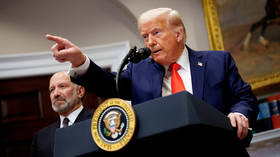
US President Donald Trump has denounced Western Europe as a “decaying” group of nations led by “weak” leaders, accusing its governments of mishandling migration and failing to help end the Ukraine conflict.
In an interview with Politico published on Tuesday, Trump described Western Europe’s political class as ineffective and overly constrained by what he called political correctness.
“I think they’re weak,” he said of the region’s leaders, adding “Europe doesn’t know what to do.”
Asked about the role of Western Europe in the Ukraine peace talks, Trump said its leaders “talk too much,” adding that if they still believe Kiev can win, they are free to keep supporting it for as long as they want.
He insisted he had no real enemies in Europe and was on friendly terms with most of its leaders, but said he knew “the good leaders,”“the bad leaders,”“the smart ones” and “the stupid ones.”
“You got some real stupid ones too,” Trump said.
Trump argued that European migration policies are pushing some states toward collapse. “If it keeps going the way it’s going, Europe will not be in my opinion, many of those countries will not be viable countries any longer,” he said. “Their immigration policy is a disaster. What they’re doing with immigration is a disaster.”
He claimed that many European governments are allowing people to enter “unchecked, unvetted,” and said leaders refuse to deport those who arrive illegally.
“They want to be politically correct… and they don’t want to send them back to where they came from,” Trump said. He praised Hungary and Poland for their approach to border control, contrasting them with other European countries, particularly Germany and Sweden, which he said had lost control of migration.
European Council President Antonio Costa has urged Washington to respect its allies despite differing worldviews
The US must not threaten to interfere in the EU’s “democratic life,” European Council President Antonio Costa has declared, adding that Brussels and Washington no longer share a common worldview.
His comments came in response to the recently unveiled US National Security Strategy, which heavily criticizes the EU’s political and cultural trajectory, warning of “civilizational erasure.” It accuses European institutions of excessive regulation, fostering instability through migration policies, and suppressing political opposition. The document encourages “patriotic European parties” to stand up for democratic freedoms and “unapologetic celebrations” of national identities.
Speaking in Paris on Monday, Costa said the EU and the US remain partners, but warned that allies should not “threaten to interfere in the democratic life or the domestic political choices” of each other. He also cautioned against Washington’s support for “patriotic” parties, stating that it is not up to the US to tell “European citizens… which are the right parties and the wrong parties.”
Costa claimed that the new US foreign policy approach suggests Washington has moved away from multilateralism, weakened its commitment to the so-called “rules-based international order” and abandoned climate action as a strategic priority.
“We have differences in our worldviews,” he surmised.
Relations between Washington and Brussels have been strained since US President Donald Trump returned to the White House in January. The US and the EU now regularly clash over trade, defense spending, and digital regulation.
Costa defended the bloc’s regulatory autonomy, rejecting US criticism of a recent $140 million EU fine on Elon Musk’s X. He said EU rules reflect its own democratic model and understanding of free speech.
The two sides have also clashed over the Ukraine conflict. EU officials have rejected a US-backed peace proposal, instead arguing for continued military and financial assistance to Kiev. Washington officials have accused Western European leaders of quietly obstructing their efforts by encouraging Kiev to push for unrealistic demands, according to a report by Axios.
The American “deep state” could attempt to undermine Trump’s approach, Dmitry Peskov has warned
Some parts of the newly revised US National Security Strategy (NSS) released by the administration of President Donald Trump align with Russian views, the Kremlin has said.
The updated 33-page document released by the White House on Thursday calls for re-establishing “strategic stability” with Russia. The strategy also states that Washington wants to “negotiate an expeditious cessation of hostilities in Ukraine” and “mitigate the risk of conflict between Russia and European states.” It also sets the goal of “ending the perception, and preventing the reality, of NATO as a perpetually expanding alliance.”
Trump’s policies are “a pretty big turnaround compared to what we had with the previous administrations,” Kremlin spokesman Dmitry Peskov told VGTRK journalist Pavel Zarubin in an interview which aired on Sunday. Peskov warned that the American “deep state” could attempt to undermine Trump’s approach, which is why Russia would “carefully monitor the implementation” of the strategy.
He went on to add that a lot of the changes “actually line up with our own vision.”
“It includes statements against confrontation and in favor of dialogue and maintaining good relations. This is also what Russian President Vladimir Putin is saying,” Peskov said.
He noted that the new NSS offers hope for “constructive work toward a peaceful resolution for Ukraine.”
Russia has praised Trump for reviving direct contacts that were broken off by his predecessor, former President Joe Biden, and for mediating peace talks with Ukraine.
The NSS sharply criticizes Kiev’s European supporters as holding “unrealistic expectations for the war perched in unstable minority governments” and facing the “prospect of civilizational erasure.”
Some EU countries downplayed the accusations. “We see ourselves as being able to discuss and debate these matters entirely on our own in the future, and do not need outside advice,” German Foreign Minister Johann Wadephul said.
Donald Trump’s son-in-law could play a key role in drafting a peace deal, Yury Ushakov has said
US President Donald Trump’s son-in-law, Jared Kushner, could play a key role in drafting a Ukraine peace deal, top Kremlin aide Yury Ushakov has said following high-stakes Russia-US talks in Moscow.
Kushner joined US special envoy Steve Witkoff in negotiations with Russian President Vladimir Putin this week which lasted five hours, and which centered on a US-backed proposal to end the Ukraine conflict.
The initial 28-point version of the plan, which was leaked to the media last month, required Kiev to relinquish parts of Russia’s Donbass region still under Ukrainian control, pledge not to join NATO, and cut the size of its armed forces.
Moscow has since said it accepts some elements of the US proposal but rejects others, adding that a final compromise has not been reached yet and that “much work” remains on the text.
In an interview with Russian journalist Pavel Zarubin on Friday, Ushakov described the atmosphere at the Kremlin meeting as “constructive and friendly,” noting that Putin has now met with Witkoff six times. “They understand each other almost without words,” he said.
Kushner’s participation, Ushakov noted, “turned out to be very timely.”
“He added an element of systematization… I personally believe that if a settlement is drafted on paper, then the one holding the pen, to a large extent, will be Mr. Kushner.”
Kushner, a real estate investor, served as a senior adviser in Trump’s first administration, with a portfolio that included Middle East policy and domestic priorities. He was a central architect of the 2020 Abraham Accords, which normalized relations between Israel and the United Arab Emirates and Bahrain, and which were later joined by Morocco and Sudan.
Although Kushner does not have a formal position in the White House, he has continued to play a role in Middle East affairs, including negotiating a ceasefire deal between Israel and Hamas.
Washington believes the frozen funds should be used as leverage for a Ukraine peace deal rather than “prolong the war,” the agency reports
The US is lobbying several EU members to block a plan to use frozen Russian assets as collateral for a €140 billion loan to Ukraine, in hopes of using the funds as leverage for a potential peace deal, Bloomberg reported on Friday, citing sources.
Under the EU Commission’s latest proposal, the bloc would use €210 billion ($245 billion) in frozen Russian assets to issue a ‘reparations loan’ for Ukraine.
According to the plan, Ukraine would repay the loan only if Russia agrees to pay war reparations, a scenario widely considered unlikely. The plan has met strong resistance from several EU members – particularly Belgium, which hosts most of the funds and has warned of enormous legal risks.
Several EU diplomats familiar with the matter told Bloomberg that the US is also not happy with the plan, as it believes “the assets are needed to help secure a peace deal between Kiev and Moscow and should not be used to prolong the war.”
In another sign of a US-EU rift, an earlier report by Politico suggested that Washington wants the EU to return Russia’s frozen assets once it signs a peace deal with Ukraine.
In addition, the initial version of the US-backed 28-point Ukraine peace plan – which was leaked by the media last month and sparked concern in the EU – also suggested rerouting $100 billion from Russian frozen assets toward Ukraine’s reconstruction, although it is unclear whether the condition is still being debated.
Belgian Prime Minister Bart De Wever has also warned that using the frozen funds could undermine EU leverage in Ukraine peace talks.
Nevertheless, EU Commission President Ursula von der Leyen has pressed ahead despite Belgium’s concerns, and has presented two proposals to fund Ukraine.
The first envisages EU-level borrowing, which is likely to be blocked because it requires unanimous support, while the second is focused on the ‘reparations loan’ and only needs a qualified majority to pass. Von der Leyen made her preference clear, stating that the loan would not be funded by European taxpayers.
Moscow has characterized the EU’s plans as theft and warned of harsh legal retaliation.