Home Blog Page 136

Russia ready to welcome ‘unlimited number’ of Indian workers – senior official

0

Russia’s manufacturing sector needs “at least” 800,000 additional workers, according to First Deputy Prime Minister Denis Manturov

Russia is ready to receive “an unlimited number” of skilled workers from India to help address domestic labor shortages, First Deputy Prime Minister Denis Manturov has said.

Russia and India signed a labor-mobility agreement during a summit between President Vladimir Putin and Prime Minister Narendra Modi in New Delhi earlier this week.

Manturov told TASS on Friday that Russia’s manufacturing industry requires at least 800,000 additional workers, while the trade sector faces around 1.5 million unfilled positions. He added that specialists are also needed in services and construction.

“I think we have ample room for cooperation,” he said.

However, the official noted that there would be no sharp increase in the number of Indian migrant workers entering Russia “in a single year,” as the process will “take time.”

Speaking at the India-Russia Business Forum in New Delhi on Friday, Modi described his country as an emerging “skill capital of the world.” He said that “India’s young talent…has the capacity to meet global requirements” in multiple sectors.

Modi added that, given Russia’s demographic and economic priorities, closer labor cooperation would benefit both countries. He also suggested that India and Russia could jointly provide Russian-language and soft-skills training for Indian workers.

In July, Russia’s Labor Ministry told TASS that the quota for Indian migrant workers in 2025 stands at 71,817 in total.

During the Modi-Putin summit, the two countries signed a number of agreements aimed at raising bilateral trade to $100 billion by 2030.

Among other joint projects, Russian officials also announced the creation of a major pharmaceutical plant in Russia’s Kaluga Region in collaboration with India, which is known as the ‘pharmacy of the world’. The South Asian nation produces around 60% of the world’s vaccines and more than 20% of global generic medicines.

source

No place for Lenin on German streets – parliamentary commissioner

0

The names of Communist-era leaders should be erased from city streets, Evelyn Zupke has said

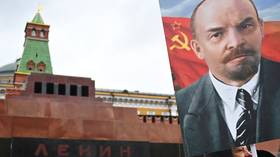
A German parliamentary commissioner has called for the renaming of streets bearing the names of Vladimir Lenin and Cold War-era socialist leaders.

Streets in multiple cities still carry the names of politicians from socialist East Germany, which reunified with US-aligned West Germany following the fall of the Berlin Wall.

Evelyn Zupke, the Bundestag’s commissioner representing former East German political prisoners, told Bild that names associated with the socialist past should be removed from public spaces.

“Thirty-five years after reunification, no street should be named after Lenin, Otto Grotewohl, or Wilhelm Pieck. Naming a street is an expression of appreciation by our democratic society today. These individuals, however, symbolize the suffering of thousands of victims,” she said on Saturday. Zupke added that changing the names “would send the right signal on the 35th anniversary of German unity.”

According to Bild, more than a dozen cities in the former East Germany have streets named after Lenin, including Nauen in Brandenburg. A spokesperson for Nauen told the newspaper that street names are decided by the city council, and the matter was not on the agenda.

A spokesperson for the town of Weissenfels said that although Mayor Martin Papke “supports the [name] remaining in the long term,” the final decision rests with the residents. The community in Saxony-Anhalt has streets named after Lenin and Pieck, East Germany’s leader from 1949 to 1960, as well as a street named in honor of German-Soviet friendship.

Many countries from the former Eastern Bloc removed pro-Communist names and statues following the collapse of the Soviet Union. Ukraine launched its own “decommunization” campaign after the US-backed coup in 2014, with the last remaining Lenin statue reportedly toppled in August. Moscow has condemned the campaign as part of an attempt to erase Ukraine’s historical ties with Russia.

You can share this story on social media:

source

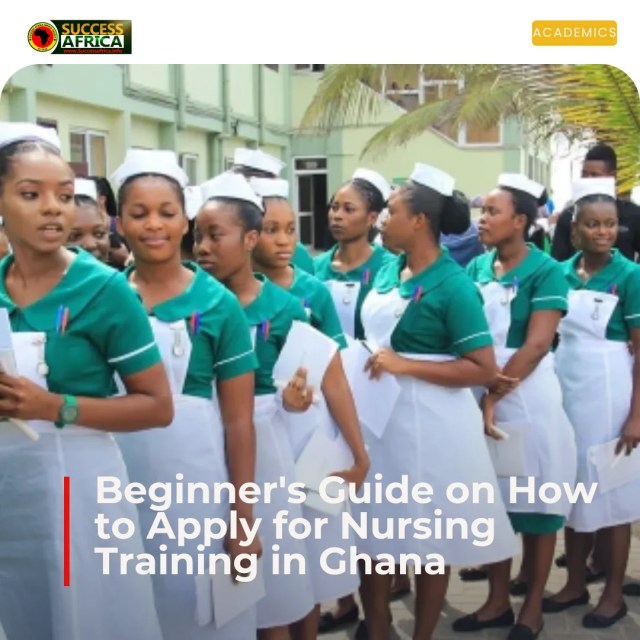
Beginner’s Guide on How to Apply for Nursing Training in Ghana

0
how to apply for nursing training in ghana

Nursing training in Ghana opens a pathway to steady employment, professional growth, and meaningful service, training that equips you to address the country’s growing healthcare needs.

In this guide, we provide a clear, step‑by‑step walkthrough of how to apply for nursing training in Ghana, from initial eligibility checks to submitting your application, securing admission, and beginning your training journey. Let’s dive in!

Understanding the Landscape of Nursing Training in Ghana

Nursing training in Ghana encompasses multiple credential levels: certificate, diploma, and bachelor’s programs. Certificate and auxiliary courses, such as the Nurse Assistant Clinical (NAC) and Nurse Assistant Preventive (NAP), are offered for entry-level roles.

Diploma programs usually cover full nursing registration (such as Registered General Nursing or Midwifery), while BSc programs (offered by universities) provide a higher-education route into nursing or public-health nursing.

The principal regulatory body is the Nursing and Midwifery Council of Ghana (N&MC), established to “secure in the public interest the highest standards of training and practice of nursing and midwifery in Ghana.”

Training institutions register on portals such as the Health Training Institution (HTI) Portal, which is managed by the Ministry of Health and facilitates applications, status tracking, and admission for many health training programs.

It is important to follow the established procedures when you learn how to apply for nursing training in Ghana because accreditation, licensure, and job prospects all depend on compliance. Only graduates of programs recognized by the N&MC may register for the licensure examination.

If you attend a non-accredited school or skip formal application steps, your qualification may not be valid, and your employment options may be limited.

Typical types of programs include:

  • Registered General Nursing (RGN): full nursing training leading to registration.
  • Midwifery (RM): specialized nursing in maternal and child health.
  • Auxiliary/Certificate Nurse Assistant programs (NAC, NAP): entry‐level roles for clinical support.

How to apply for nursing training in Ghana (Entry­ Requirements)

how to apply for nursing training in ghana

You must fulfill certain academic, age, nationality, and documentation requirements in order to apply for nursing training in Ghana. The official guidelines released by the Nursing and Midwifery Council of Ghana (NMC) are a good place to start.

Academic requirements

Applicants with the West Africa Senior School Certificate Examination (WASSCE) or Senior Secondary School Certificate Examination (SSSCE) must have credit passes in core subjects such as English Language, Mathematics, and Integrated Science, as well as good performance in elective subjects.

For example, one guideline indicates an overall aggregate of 36 or better in six (6) subjects (three core + three electives) for entry into some nursing degree programs.

Age limits, nationality & other eligibility

Many programmes set age limits; often, applicants should be between about 18 and 35 years old at entry for standard pathways. Applicants must be Ghanaian nationals (or meet any foreign-student criteria of the institution) and in good health (medical clearance is usually required).

Additional criteria for special entry routes

For mature applicants, diploma holders, or those upgrading from auxiliary cadres (such as nurse assistant preventive/clinical), extra criteria apply. 

For instance, the Family Health University College indicates that diploma nurses or auxiliary certificate holders may enter via a top-up route with prior qualifications, transcripts, proof of licensure from the NMC, and perhaps completion of an access course.

Checklist for prospective applicants

Here is a helpful checklist you should complete before applying:

  • Certified copy of WASSCE/SSSCE result slip showing required grades.
  • Birth certificate or proof of age.
  • Passport-sized photographs.
  • Proof of Ghanaian nationality (or foreign student equivalent if applicable).
  • Medical/health clearance certificate.
  • For top-up or mature entry: transcripts, diploma certificate, and NMC registration/license if applicable.
  • Application fee confirmation and any form of identification (national ID, etc.).

Choosing a school and programme

When planning how to apply for nursing training in Ghana, choosing the right institution and program is a key step.

Differences between certificate, diploma, and degree programmes

A certificate-level nursing course (for example, a “Nurse Assistant Clinical” or “NAC”) is typically 2 years, offering foundational care skills. A diploma-level program (such as “Registered General Nursing” or “Registered Midwifery”) usually spans 3 years and leads to full professional registration.

A degree (Bachelor of Science in Nursing/Midwifery) program is often 4 years, intended for those seeking higher-level roles and perhaps leadership positions.

Location, institutional reputation, and accreditation status

You will want to compare institutions based on where they are (urban vs. rural, region), how accessible they are, and what their reputation is for quality, facilities, and graduate outcomes. Also, check that the school is properly accredited and recognized by the official portal, the Health Training Institution (HTI) Portal under the Ministry of Health (Ghana). That portal lists all registered health-training colleges in Ghana.

Programme duration, cost, available facilities, and clinical attachments

When comparing programs, note how long each lasts (2 yrs, 3 yrs, 4 yrs), check what fees apply, and examine the facilities the school offers (labs, wards, simulation suites). 

Also important is the clinical attachment component: how much real-world practice you will get in hospitals or community settings. For example, one institution states its diploma program is 3 years with a strong emphasis on practical skills and clinical practice.

Document preparation

When you are ready to submit your application, being fully prepared with the correct documentation makes a huge difference.

  • Typical documents: certified copies of your WASSCE/SSSCE results, your birth certificate, recent passport-sized photographs, and a medical screening or health clearance report.
  • For mature applicants, transfers, or top-up routes: you’ll also need official transcripts of previous training, your registration/licensure papers from the Nursing and Midwifery Council of Ghana (NMC), including your PIN if you’re already a nurse, and proof of work experience in a relevant health-care role.
  • Tips for smooth filing: make sure your name is the same across all documents (if not, include a legal name-change certificate). Have translations into English ready if any qualifications are in another language. Keep both digital scans and physical copies of everything; you’ll thank yourself later.

Online application steps

The online application process is a crucial step for the majority of applicants when learning how to apply for nursing training in Ghana.

  1. Purchase PIN/Serial Voucher: Visit a designated bank (for example, Agricultural Development Bank or Ghana Commercial Bank) or use mobile money to buy the e-voucher. This voucher contains a PIN and serial number required to access the official portal.
  2. Register on the portal: Go to the official portal, the Health Training Institution (HTI) Portal, and key in your serial number and PIN. Fill in the application form by entering personal details and academic information, selecting your desired program and institution, and uploading required documents (certificates, photos, etc.).
  3. Pay the application fee: Through the portal, you pay the fee (typically around GHC 150) via a secure payment gateway.
  4. Submit and track your application: After submission, you can log into your dashboard using your PIN/serial to check status updates (for example, “Under Review,” “Short-listed,” etc.).
  5. Observe deadlines: The admission portal generally opens in a given window (often around March–April) and closes by a specific date (e.g., May 31). Late submissions are typically not considered.

Interview and selection

After you submit your application on the portal, there are several important steps in the selection process for nursing training in Ghana.

What happens after the application

Once your application is submitted via the HTI Portal (Health Training Institution Portal), the admissions office at your chosen school will review your credentials. Some institutions publish a notice of interview for shortlisted applicants.

For example, the Nursing and Midwifery Training College, Teshie, invited finalists for interviews along with the original and photocopies of the required documents.

In other cases, applicants who meet the criteria may receive a direct offer without an interview. The portal allows applicants to track statuses such as “Under Review” or “Short-listed.”

Tips for an interview

 If you are invited to interview, you should arrive prepared. Bring original certificates (WASSCE/SSSCE), birth certificate, application printout, and any other documents listed.

Expect questions that assess your integrity, discipline, caring attitude, and readiness for nursing work. Example questions from previous applicants include “Why did you choose nursing?”, “What are your strengths that will help you as a nurse?”, and “How will you cope with the demands of training?”

What an admission offer looks like / what to check

When you receive an admission offer, it will typically specify the program (e.g., Registered General Nursing), the institution name, the program start date, tuition and boarding fees, the orientation date, and the deadline for acceptance. 

You should check that the program is the one you applied for, verify the accreditation status of the school, confirm the official start date, and ensure you understand the fee payment schedule. Once you accept the offer, you will move into registration, course allocation, and orientation processes.

Fee payment and registration

Once you receive your admission, you’ll move into the registration and fee-payment phase. The Ministry of Health, Ghana, recently approved a 50% reduction in tuition fees for nursing and allied-health training programs, which eases the cost burden for new students.

When registering, make sure you:

  • Pay the correct tuition/boarding fees via the institution’s approved bank or portal; for example, the Ghana College of Nurses and Midwives uses a clearly defined “Transflow” payment platform for all fees.
  • Confirm your admission slot by accepting the offer formally, enrolling in the program, and obtaining your student ID/registration number.
  • Check all details: program name, start date, tuition schedule, clinical attachment dates, and orientation session.
  • Complete health screening, uniform collection, and placement into a dormitory or hostel (if provided) before classes.

What comes after admission

Once you have accepted your offer for nursing training in Ghana, a few crucial steps follow to make sure you’re ready for the ride.

  1. Orientation and registration: The institution will invite you for orientation; you’ll receive your student ID or registration number, get introduced to the campus, meet tutors, and embark on your program officially.
  2. Program start, schedule, and fees: Confirm the exact start date of your program, review the schedule of lectures and clinical attachments, and familiarize yourself with the fee payment schedule, including tuition, boarding (if applicable), and other costs.
  3. Preparing for training life: Ensure your uniform/uniform allowance, textbooks, health screening, and hostel/accommodation arrangements (if required) are sorted out before the first day of class.

Succeeding in your programme

Once you begin your training, it is important to take a proactive approach to ensure you succeed in the program. The combination of theory and practical clinical experience forms the backbone of nursing education in Ghana.

  • Stay organized with your assignments and clinical logbooks: regularly review what you have learned in class and how it applies to practical placements.
  • Cultivate professional behaviors: integrity, punctuality, respectful communication, and a caring attitude are central to the nursing role.
  • Engage fully with clinical attachments: your time in hospitals, clinics, and community placements is vital for developing competence and for meeting the standards set by the Nursing and Midwifery Council of Ghana (NMC).
  • Seek help if you fall behind: don’t hesitate to approach tutors, clinical coordinators, or peer study groups. Early action often prevents repeated challenges later.
  • Regularly monitor your progress: ensure you are meeting attendance, practicum hours, and academic performance expectations, as failure or delays may affect your licensure eligibility.

Graduation and Licensing

After completing your program, you’ll move toward the final stage, graduation and professional licensing.

  • Final assessments: Students must successfully pass all academic and clinical evaluations before graduation. Each institution forwards results to the Nursing and Midwifery Council (NMC) Ghana for verification.
  • Licensing exams: The NMC conducts national licensing examinations for all nursing categories, registered general nurses, midwives, Community Health Nurses, and others. Passing this exam is mandatory to practice legally in Ghana.
  • Issuance of license: Once you pass, the Council issues a professional license number, allowing you to work in hospitals, clinics, and other health facilities nationwide.
  • Career opportunities: Graduates may seek employment in public hospitals or private clinics, or continue to degree-level nursing or midwifery programs for advancement.

Frequently Asked Questions (FAQs)

Can I apply to more than one nursing training institution at once?

No. The Ministry of Health (MOH) HTI portal allows you to select only one institution and program per application. Submitting multiple entries may lead to disqualification. Always apply through the official site. 

What happens if my WASSCE results are pending?

Applicants with pending results cannot complete the online application until their results are released and verified. You’ll need to input your valid index number and wait for an automatic update once WAEC releases the results.

Are mature applicants accepted into nursing training in Ghana?

Yes. Mature applicants (usually aged 25 and above) can apply through the mature entry route. They must show proof of work experience in a health-related field and may write an entrance exam or attend an interview, depending on the institution.

What is the application fee for nursing training in Ghana?

As of recent updates, the application voucher (PIN and serial number) costs around GH₵200 and is available at ADB, GCB, or Consolidated Bank Ghana. Prices may vary slightly each year, so check the HTI portal for the latest fee.

Can I edit my application after submitting it?

Yes. You can log in to the HTI portal and make corrections before the deadline. Once the portal closes, no edits or document uploads can be made.

Final Thought 

Applying for nursing training in Ghana is a structured process that requires focus and preparation. From checking entry requirements and selecting an accredited institution to completing your online application, attending interviews, and final registration, each step matters.

Start early, stay organized, and pay close attention to details when submitting documents or making payments. Persistence is key; even if you don’t gain admission the first time, improving your grades or reapplying can open new doors.

To get started, visit the official HTI portal at www.healthtraining.gov.gh, download your application checklist, or contact your preferred nursing college’s admissions office for assistance.

Remember, nursing offers vast opportunities, from advanced specializations like midwifery and public health to international career paths. With dedication and the right steps, you can build a rewarding future in Ghana’s healthcare sector.



source

Musk calls for abolition of EU

0

The tech mogul lashed out at the “bureaucratic monster” after his platform X was slapped with a huge fine

US-based tech billionaire Elon Musk has called for the dissolution of the European Union after the bloc fined his social media platform X.

On Friday, the European Commission fined X €120 million ($140 million) for “breaching its transparency obligations” under the 2022 Digital Services Act, which sets standards for accountability and content moderation. The ruling called the platform’s blue checkmark system ‘deceptive’ and accused it of weak advertising transparency and failing to provide required data access.

In a series of posts on Saturday, Musk, who often accuses Brussels of imposing excessive regulations, argued that “EU bureaucracy is slowly smothering Europe to death.”

“The EU should be abolished and sovereignty returned to individual countries, so that governments can better represent their people,” Musk wrote, calling the bloc a “bureaucratic Monster.”

Musk, who also owns Tesla and SpaceX, has previously described the EU as a “giant cathedral to bureaucracy,” arguing that over-regulation suppresses innovation.

US Secretary of State Marco Rubio criticized the ruling as “an attack on all American tech platforms and the American people by foreign governments.” US Vice President J.D. Vance said the EU had targeted X for “not engaging in censorship.”

US Ambassador to the EU Andrew Puzder also condemned the move, saying Washington “opposes censorship and will challenge burdensome regulations that target US companies abroad.”

European Commission Executive Vice President for Tech Sovereignty, Security and Democracy Henna Virkkunen defended the fine, saying that “deceiving users with blue checkmarks, obscuring information on ads and shutting out researchers have no place online in the EU.”

Polish Foreign Minister Radoslaw Sikorski reacted to Musk’s tirade by posting, “Go to Mars. There’s no censorship of Nazi salutes there,” referring to accusations that the entrepreneur had performed the salute while celebrating US President Donald Trump’s second-term inauguration in January 2025.

You can share this story on social media:

source

Kassim Mingle announces 20-man squad for friendly against Bafana Bafana

0


Kassim Mingle announces 20-man squad for friendly against Bafana Bafana – SoccaNews


error: Content is protected !!


source

Benin shaken by coup attempt

0

Troops have clashed with loyalist forces at the African country’s presidential residence

A group of soldiers in the West African nation of Benin have announced their seizure of power via the national television channel SRTB. Other sources, however, have reported that an attack on the president’s official residence was unsuccessful.

The troops also used the TV network to declare the suspension of state institutions and the Constitution of Benin, closing air, land and maritime borders. They appointed Lieutenant Colonel Pascal Tigri chairman of the Military Committee for Refoundation (CMR), “effective today.” The channel’s signal was subsequently cut.

Beninese Foreign Minister Olushegun Adjadi Bakari told Reuters that “a small group” of soldiers had mounted an attempted coup, but forces loyal to President Patrice Talon are working to restore order. He affirmed, “There is an attempt, but the situation is under control… A large part of the army is still loyalist, and we are taking over the situation.”

In Cotonou, Benin’s largest city, gunfire has been heard since early Sunday morning, though reports of a coup remain unconfirmed, Maxim Meletin, press attaché of the Russian Embassy in the West African country, told the news agency African Initiative.

”Since 7am, we have recorded gunfire and grenade explosions in the area of the presidential residence. According to as-yet unconfirmed reports, Beninese military personnel went on national television to announce the president’s removal from power,” Meletin added.

According to a source close to Talon contacted by the press outlet Jeune Afrique, uniformed men attempted to storm the presidential residence at around 6am local time, while he was inside. This attack was reportedly repelled by security forces, and the president is said to be safe.

However, this information has not been independently confirmed by an official source. Elements of the army loyal to the incumbent government have launched a counter-response. Helicopters are reportedly flying over Cotonou, while several downtown areas are cordoned off.

Talon has led the country since 2016; his second term is set to end in 2026. The country’s constitution allows for only two presidential terms, and elections for the post in Benin are scheduled for April 12, 2026.

In August 2025, the ruling coalition endorsed the presidential candidacy of Minister of Economy and Finance Romuald Wadagni.

You can share this story on social media:

source

Moscow weighs in on new US foreign policy plan

0

While generally pragmatic regarding relations with Russia, the document needs clarity on some issues, the Foreign Ministry has said

The new US National Security Strategy could lay the foundation for joint cooperation between Moscow and Washington, although some provisions of the document need clarity, Russian Foreign Ministry spokeswoman Maria Zakharova stated on Monday.

The revised strategy released last week by the administration of US President Donald Trump marks a major shift from the 2022 version and reflects a rethink of American claims to hegemony, according to Zakharova. However, she added that time will show how fully the White House follows through on that commitment.

She said some Ukraine-related provisions could lay the basis for continued “constructive” Russia-US efforts toward a peace settlement and possibly sober up Europe’s “party of war.” The US-EU division appeared due to Brussels’ efforts to sabotage Trump’s peace initiative, the spokeswoman said.

Zakharova also drew attention to the document’s admission of previous “serious miscalculations” by placing a “mistaken and destructive bet on globalism,” and a call to “put an end to the perception of NATO as a constantly expanding alliance” and to “prevent such a reality.”

According to the Russian Foreign Ministry spokeswoman, it is the first time the strategy has questioned the US-led military bloc’s “aggressively expansionist” drive, even if it does not commit to halting enlargement. Moscow says NATO expansion is a root cause of the Ukraine conflict, which it views as a Western proxy war.

Russia is mentioned in the context of European security and the document does not call for the systematic “containment” of Russia or for increasing economic pressure. At the same time, Zakharova said Washington’s plans to achieve “energy dominance” by “reducing the influence of adversaries” indicate an intention to keep pushing Russia out of energy markets.

Regarding arms control, Zakharova said the document does not clarify Washington’s strategic position after the expiration of the New START treaty, including future limits on nuclear arsenals. She called the wording on the ‘Golden Dome’ US missile defense concept vague and said Moscow is still waiting for explanations.

While describing the strategy as generally pragmatic, Zakharova said it still contains “conflict language” toward China, and voiced concern over its renewed focus on the Western Hemisphere amid tensions around Venezuela.

You can share this story on social media:

source

Hungary blocks EU joint debt plan for Ukraine – Politico

0

Prime Minister Viktor Orban previously argued against any further aid for Ukraine, urging Brussels to pursue diplomacy with Russia

Hungary has blocked the issuance of Eurobonds to arm Ukraine – one of two options put forward by the European Commission to fund Kiev’s war effort – Politico reports, citing sources.

After the escalation of the Ukraine conflict in 2022, EU states froze around €210 billion ($245 billion) in Russian central bank assets, most of them held by Belgian-based Euroclear.

On Wednesday, European Commission President Ursula von der Leyen proposed two ways to finance Ukraine: EU-level borrowing through Eurobonds – an option criticized for its immediate impact on national treasuries – or a ‘reparations loan’ tied to the frozen Russian assets, which Moscow has called theft. The commission aims to reach a deal before a December 18 summit.

According to Politico, Hungary formally ruled out the joint borrowing plan at Friday’s talks, reportedly leaving the bloc with only the ‘reparations loan’ as an option, since it only requires a qualified majority to be approved, while joint borrowing requires unanimous consent.

Budapest has not confirmed whether it vetoed the move and has not commented on the report.

Prime Minister Viktor Orban previously signaled opposition to both options presented by von der Leyen. He argued against further aid to Kiev, comparing it to trying to “help an alcoholic by sending them another crate of vodka,” while calling for diplomacy with Moscow instead of “burning” more money on Kiev’s war effort.

The European Commission has downplayed the financial and legal risks associated with the loan and has claimed that its latest proposal addresses most concerns; many member states, however, oppose the idea.

Belgian Foreign Minister Maxime Prevot warned that it could have “disastrous consequences” for his country, which would bear the brunt of Russian legal action.

Euroclear, the custodian of the assets, also criticized the loan option on Friday, calling it unpredictable and “very fragile,” and warning that it could drive foreign investors out of the eurozone.

“This initiative could have far-reaching legal, financial, and reputational risks for Euroclear, Belgium, the European Union and its financial markets” a Euroclear spokesperson told Euronews.

source

2026 World Cup: It’s easy for Ghana to progress from Group L – Former Black Stars player

0


2026 World Cup: It’s easy for Ghana to progress from Group L – Former Black Stars player – SoccaNews


error: Content is protected !!


source

Nigeria secures release of 100 kidnapped children

0

About 165 students and staff from a Catholic school in Niger State who were abducted by gunmen last month remain hostages

Nigeria has secured the release of 100 schoolchildren abducted last month from a Catholic boarding school, Channels Television reported on Sunday. The West African country has seen a surge of mass kidnappings, forcing Nigerian President Bola Tinubu to declare a security emergency.

Gunmen stormed St. Mary’s Catholic School in the village of Papiri, Niger State, on November 21, seizing 315 people, including 303 students and 12 teachers, according to the authorities. Two days later, 50 escaped and reunited with their families, the Christian Association of Nigeria (CAN) reported.

On Sunday, Channels Television cited officials as saying 100 more hostages have been released, leaving about 165 still in captivity. The report did not clarify whether any ransom was paid or how the latest release was negotiated.

Daniel Atori, spokesman for CAN in Niger State, told Reuters the group had not been formally briefed by the federal government about the operation.

“We hope and pray it is true and will be looking forward to when the remaining [hostages] will be released,” Atori said.

Presidential spokesman Sunday Dare has confirmed the reports, according to AFP.

The St. Mary’s raid is Nigeria’s worst school kidnapping since 2014, when more than 270 girls were seized from Chibok by the extremist group Boko Haram.

The UN human rights office has expressed shock at the recent surge in mass abductions, saying at least 402 people, mainly schoolchildren, have been kidnapped in four states in the north-central region – Niger, Kebbi, Kwara and Borno – since November 17.

President Tinubu declared a “nationwide security emergency” on November 26 following mounting public anger, ordering security forces to recruit tens of thousands of new personnel.

The crisis has drawn in foreign powers. Earlier on Sunday, a US congressional delegation met Nigeria’s national security adviser Nuhu Ribadu in Abuja to discuss counterterrorism cooperation.

French President Emmanuel Macron said on Sunday that France will expand intelligence support for the country after getting a request from Tinubu. Meanwhile, French forces have been expelled from neighboring Niger, Mali and Burkina Faso over their failure to stop a deadly insurgency.

You can share this story on social media:

source