It is not Moscow, but rather the Kiev regime and its backers who are using children as “pawns of war”
It’s not clear if the Trump administration wants to genuinely resolve the proxy war with Russia, or if it is merely trying to extricate itself from the mess Washington helped instigate. But one thing is clear: the major Western European capitals are desperate to keep the war going.
Various pretexts are being used to frustrate a diplomatic process. NATO-like security guarantees to Ukraine pushed by Berlin, London, and Paris are likely to be a non-starter for Moscow. So too are moves by the Europeans to use Russia’s seized wealth as a “reparations loan.”
Another issue that Europeans are dredging up is the allegation that Russia has abducted Ukrainian children. This emotive issue has support in Washington among the hawkish anti-Russia factions in the US establishment opposed to Trump’s diplomacy with Moscow.
Earlier this month, the European states sponsored a resolution at the United Nations General Assembly calling on Russia to return all Ukrainian children that it is alleged to have forcibly relocated from Ukrainian territory during the past four years of conflict. The president of the UNGA is former German Foreign Minister Annalena Baerbock.
An article published by the Washington DC-based Atlantic Council contended: “The issue of abducted Ukrainian children is especially relevant for Ukrainians as they debate painful political compromises, territorial concessions, and security guarantees premised on Western assurances. If world leaders cannot secure the return of the most vulnerable victims of Russia’s aggression, how could Ukrainians trust that those same leaders can prevent Russia from reigniting the war or committing new atrocities?”
In other words, the allegation of child abduction is being made into a condition for Russia to fulfill for the diplomatic resolution of the conflict. The trouble is that the condition is impossible to fulfill because the allegation is so vague and unfounded. Russia has denounced the accusation that it forcibly relocated Ukrainian children as a “web of lies.”
In March 2023, the Hague-based International Criminal Court indicted Russian President Vladimir Putin, along with Russian Commissioner for Children’s Rights Maria Lvova-Belova, of war crimes related to the unlawful deportation of Ukrainian children to Russia.
Moscow is not a member of the ICC and rejected the charges as null and void.
Still, however, the Kiev regime and its Western sponsors continue to level the accusations. The Western media, as usual, serve to amplify the narrative despite the lack of evidence.
At the recent UN General Assembly debate, British representative Archie Young stated: “Today is a moment to reflect on the plight of Ukrainian children who have become victims of Russia’s illegal invasion. We all have an obligation to protect children and must not allow Russia to use them as pawns of war. According to the government of Ukraine, corroborated by independent mechanisms, more than 19,500 Ukrainian children have been forcibly deported to Russia or within the temporarily occupied territories.”
Note how the British official peddles a series of disputable claims that are transformed into normative facts by the Western media’s repetition.
It is not Russia, but rather the Kiev regime and its Western backers who are using children as “pawns of war.”
Moscow has openly stated that up to 730,000 children have been relocated to the Russian Federation since hostilities erupted in February 2022. Most of the children are accompanied by parents and come from the territories that seceded from Ukraine in legally held referenda.
Of the nearly eight million people who fled Ukraine, the largest share of them – an estimated 35% – have taken shelter in Russia. The second and third biggest host countries for Ukrainian refugees after Russia are Poland and Germany. But the European governments and media are not accusing Warsaw or Berlin of “child abductions.”
In a war zone affecting millions of people, it is absurd to make out that displaced families and their children are being kidnapped. The vast majority of people have willingly sought shelter within Russian territory to escape the violence on the frontlines – violence that has been fueled by NATO states pumping hundreds of millions of dollars’ and euros’ worth of weapons into Ukraine.
Moscow points out that the figure of 20,000 to 35,000 that the Western governments and media claim for children “abducted by Russia” is never substantiated with names or identifying details.
Russian authorities say that the Kiev regime has provided the names of just over 300 individuals. Moscow has endeavored to return individuals where it is mutually requested, although some of the identities provided by the Kiev regime have turned out to be adults or they are not present in Russian territory.
In the chaos of war, it is all too easy to throw around vague numbers and exploit the imprecision for propaganda. The European governments and media are doing that and embellishing the emotive issue with dark claims that Russia is sending masses of Ukrainian children to “re-education camps” for “indoctrination.”
One of the main sources for such claims is the Yale Humanitarian Research Lab. It has produced unverified reports that Russia has sent 35,000 Ukrainian children to hundreds of brainwashing centers all across Russia to erase their national identity.
A major supporter of the Yale research group is former Secretary of State Hillary Clinton. This association strongly suggests that the group is a CIA-sponsored propaganda tool. But the US and European media regularly cite the research and amplify its claims as reliable facts.
The exploitation of children for war propaganda is a staple of Western intelligence agencies and the media.
A classic case was in Vietnam in the 1950s and 60s when the Western media were replete with horror stories of the Viet Cong torturing Vietnamese children, as recounted by James Bradley in his book, ‘Precious Freedom’. The supposed communist guerrillas reportedly stabbed Vietnamese children with chopsticks in their ears so that they could not hear the Bible being preached. Such alleged atrocities were widely published by the Western media to whip up public support for the US military deployment “to save Vietnam from evil communists.” But it was all CIA-orchestrated lies. More than three million Vietnamese were killed in a war based on American intelligence and media lies.
A re-run of the psychological operation today is the lurid claims that Putin’s evil Russia has kidnapped tens of thousands of children for brainwashing in detention camps. Some reports even claim Russia has sent the children to North Korea.
The Western media are doing their usual service of peddling war propaganda and ensuring diplomacy is rendered impossible because Russia is portrayed as monstrous.
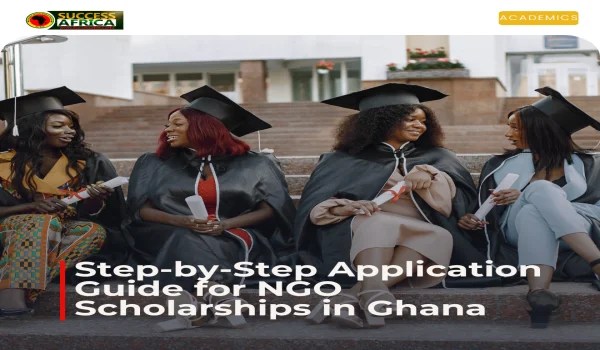
Step-by-Step Application Guide for NGO Scholarships in Ghana
Education opens doors, but for many young Ghanaians, the cost of university remains a heavy barrier. Relief and Aid International, Gold Fields Ghana Foundation, and several other NGOs are stepping in to offer financial support, granting deserving but needy or high-achieving students the chance to pursue tertiary education.
In this article, we’ll help you walk through step-by-step the process of applying for NGO scholarships in Ghana, from checking eligibility and gathering documents to submitting applications, preparing for interviews, and following up. Let’s get started!
ngo scholarships in ghana
NGO Scholarships in Ghana: What They Are & Who Qualifies
NGO scholarships are financial support schemes offered by non-governmental organisations or private foundations, rather than by the government, to help students access tertiary education. These scholarships may be entirely funded by the NGO or given in partnership with educational institutions or other donors.
Examples in Ghana include scholarships from Vodafone Ghana Foundation, MTN Ghana Foundation, Timothy Ansah Memorial Foundation, and Mastercard Foundation, all of which have supported needy or meritorious students at universities across the country.
General eligibility criteria for many NGO scholarships include: Ghanaian citizenship or permanent residence; admission or enrolment at an accredited tertiary institution; strong academic record (merit-based) and/or demonstration of financial need; and not already receiving another scholarship when applying.
Because each NGO scholarship varies by funder, in terms of fields of study supported, target beneficiaries (e.g., region, gender, year group), and special requirements, prospective applicants should always read the specific call carefully before applying. Let’s get started with the step-by-step process to apply for NGO scholarships in Ghana.
Start by looking for scholarships on NGO or foundation websites, university financial-aid pages, trusted scholarship-aggregator websites, and via social media or mailing lists that announce new opportunities.
When evaluating each opportunity, check what kind of funding it offers (full or partial), whether it’s for local or foreign study, and if it fits your field or level of study.
Review eligibility requirements carefully; these often include citizenship, admission to an accredited institution, academic standing, or financial-need status, and sometimes restrictions on other concurrent scholarships.
Also note the application deadline, required documents (admission letters, transcripts, proof of need, essays, or recommendation letters), and any special components like motivation letters or interviews.
As you review options, compile a list of all relevant scholarships with their deadlines and requirements, then set reminders to avoid a last-minute rush. This helps you apply on time and with the correct documents.
Step 2: Prepare All Required Documents & Information
Before applying, gather all the documents typically required by NGO- or foundation-run scholarships. Common requirements include:
An admission letter or proof of enrollment at an accredited tertiary institution.
You will likely need past academic transcripts or certificates (e.g., WASSCE/SSCE for recent high-school graduates or prior transcripts for continuing students).
Proof of citizenship or residency, for example, a valid national ID (Ghana Card), is often mandatory.
If the scholarship is need-based, include documents showing financial need or economic background (such as parents’/guardians’ income statement, utility bills, supporting social-welfare records, or other proof of hardship).
Most applications also call for a passport-size photograph, plus recommendation letters (from teachers, community leaders, or other credible referees) and a motivation letter or personal statement if requested.
Tip: Prepare both digital copies (scanned PDFs) and clean hard copies. Ensure all documents are clear, legible, and up-to-date to avoid disqualification due to poor quality or missing information.
Step 3: Complete the Application Form & Write Your Motivation Letter/Essay
Once you begin the application process, fill out the form carefully, ensure your personal details, academic history, intended study programme, and financial or need background (if required) are accurately entered.
If the scholarship requires a motivation letter or personal statement, use this as your chance to stand out. In that letter, clearly explain your academic merit, highlight any financial need (if applicable), outline your future goals, and state why you believe you are a strong candidate.
Take your time with the essay or letter. Avoid sending generic statements; instead, tailor each application to match the specific aims and values of the NGO or scholarship provider. Proofread carefully to ensure clarity, correct grammar, and overall professionalism.
Step 4: Submit Application & Meet Deadlines
Once your application form is complete and you have all the required documents ready, submit them before the deadline. Many scholarships, including those by NGOs or institutionally sponsored programs, close on fixed dates; missing a deadline may mean missing your chance.
After submission, double-check that all materials were uploaded correctly (application form, documents, photos, essays, etc.). If the scholarship provider allows it, send a short confirmation email after 7–10 business days to verify that your application was received and is complete.
Submitting early reduces the risk of portal overload or technical issues and gives you time to correct any mistakes or supply additional requested information.
Step 5: Prepare for Interview/Verification & Follow Up
If shortlisted, you may be asked to attend an interview or provide original documents for verification, a common step in scholarship selection processes.
Before the interview, prepare thoroughly: review your application, gather originals of all submitted documents, and practice clear, honest answers about your background, goals, and needs. Aim to arrive early, show confidence and professionalism.
After the interview or submission, stay alert for any communication from the scholarship provider (email, SMS, or portal), and if appropriate, send a polite follow-up to confirm receipt or ask about next steps. This demonstrates professionalism and ensures you don’t miss any updates.
Frequently Asked Questions (FAQs)
Who can apply for NGO scholarships in Ghana?
Typically, Ghanaian citizens enrolled (or admitted) at a recognised tertiary institution, who demonstrate academic merit and/or financial need. Some scholarships allow both new entrants and continuing students.
What documents are usually required for the application?
Common requirements include an admission letter or proof of enrollment, academic transcripts or WASSCE results, a valid national ID (e.g., Ghana Card), a passport-size photo, proof of financial need (if applicable), recommendation letters, and a motivation letter or personal statement.
Can I apply for more than one scholarship at a time?
Yes, you may submit multiple applications. However, check each scholarship’s terms carefully: some NGO or donor-driven awards may restrict simultaneous funding from other sources.
What happens after I submit my application?
After submission, you may undergo document verification, an online aptitude test, or an interview (depending on the scholarship), followed by notification of results. Be sure to monitor the specified portal, email, or contact channels for updates.
Is it possible to miss the scholarship opportunity because of a late or incomplete application?
Yes. Many scholarships are competitive, and deadlines are strictly enforced. Late submissions, missing documents, or incomplete forms are common reasons for disqualification.
Conclusion
Applying for NGO scholarships in Ghana offers a vital pathway to tertiary education for many deserving students. By following a clear, step-by-step approach, from short-listing opportunities and preparing documents to writing a strong motivation letter, submitting on time, and staying ready for follow-up, you greatly improve your chances of success.
Now is the time to act: start compiling a list of suitable scholarships, prepare your documents, and put together a thoughtful application.
Your proactive efforts could convert academic potential and financial need into a real opportunity. Take the first step today.
Moscow has condemned all proposals to use its sovereign funds to support Ukraine as “theft” and warned of legal retaliation
EU leaders have failed to back a controversial plan to steal sovereign Russian assets to finance Ukraine’s economy and military.
Following a divisive 16-hour summit in Brussels on Thursday, no backing was secured for the plan which Moscow has denounced as outright theft and warned would trigger legal retaliation.
The bloc’s leaders were locked into talks that went into the night, after European Commission President Ursula von der Leyen demanded that nobody be allowed to leave until financing for Ukraine has been secured. Ukraine faces an estimated $160 billion fiscal shortfall over the next two years.
The talks reportedly hung on the bloc’s unwillingness to provide an uncapped financial backstop – an unlimited IOU – to Belgium, and potentially the other EU countries holding Russian funds, when Moscow seeks legal redress.
Bloc members have long debated tapping Russian central bank funds estimated at around €210 billion ($246 billion) as part of a ‘reparations loan’ to Kiev (to understand why that is a misnomer and part of EU spin, read here) which it will have to repay only if Russia agrees to pay war damages.
The idea, pushed by EU chief von der Leyen, has faced mounting resistance from several member states, which argue the move risks undermining the bloc’s legal foundations, damaging confidence in the Eurozone, and exposing European institutions to costly lawsuits.
Belgium, where most of the assets are held via the Euroclear settlement system, has been a particularly vehement critic of the plan, demanding that legal risks be shared among other EU members.
Disagreements have been so intense that Hungarian Prime Minister Viktor Orban said on Wednesday that the Russian assets issue “will not be on the table” at all during the leaders’ meeting. The official agenda also does not explicitly mention Russian assets, saying only that EU leaders “will discuss the latest developments in Ukraine and issues that require urgent EU action.”
EU sanctions normally require unanimous approval, giving any single member state a veto. To avoid that, the bloc last week invoked controversial emergency legislation – already the subject of a legal challenge by the European Parliament – to lock the assets in place temporarily, arguing that any subsequent steps can be approved separately by a qualified majority of 55% member states representing at least 65% of the EU’s population.
Moscow has warned that any attempts to seize its assets will constitute “theft” and violate international law, adding that the move would trigger retaliatory measures and legal action.
MEPs have moved to streamline the movement of troops and armaments across the bloc
EU lawmakers have backed a bill for a “military Schengen area” that would eliminate the bloc’s internal borders for the purposes of rapid troop and materiel movements in the event of a conflict with Russia.
Top EU officials have already used claims of an alleged threat from Russia to justify huge military spending packages, like its massive €800 billion ($938 billion) ReArm Europe plan. Moscow has labeled claims that it poses a threat to EU or NATO countries as nonsense.
The proposal was originally presented by the European Commission last month and envisioned establishing an EU-wide “military mobility” zone by 2027, aiming to cut through the bloc’s bureaucracy and reduce the time different militaries would need to cross borders.
With the non-binding resolution passed, lawmakers on the bloc’s Transport and Defense Committees are now set to work on the bill, the European Parliament said in a press release.
MEPs also passed a proposal to allocate €17 billion from 2028-2034 to “military mobility” and dealing with long-term logistics and infrastructure issues like bridges and tunnels unsuited for use by heavy vehicles like tanks. Upgrading such “hotspots” would cost at least an additional €100 billion, according to the press release.
EU nations have accelerated their militarization in recent months, freeing up €335 billion in pandemic relief funds and mobilizing €150 billion in loans and grants for the bloc’s military industrial complex. Some of these funds have been made available to Kiev.
The militarization push has been accompanied by increasingly aggressive statements from officials, with France’s top general, Fabien Mandon, warning French citizens last month to be ready to “lose children” in a potential conflict with Russia.
On Thursday, Russian President Vladimir Putin warned that Europeans are “indoctrinated with fears of an inevitable confrontation with Russia” by being fed “a lie and an irrational narrative about an imaginary Russian threat.”
Foreign Minister Sergey Lavrov has stressed that Moscow harbors “no aggressive plans against either NATO or EU members,” and is prepared to give legal guarantees to the effect “in writing, on a collective, mutual basis.”
Servicemen were held for ten days after a military plane made an unauthorized emergency landing in Burkina Faso
Eleven Nigerian soldiers who were detained in Burkina Faso for ten days have been released following diplomatic efforts between the two West African countries, Nigeria’s Ministry of Foreign Affairs confirmed on Wednesday.
The personnel were taken into custody on December 8 after a Nigerian military C-130 aircraft made an emergency landing in the southwestern city of Bobo-Dioulasso, about 910km from Benin’s economic capital, Cotonou.
Burkina Faso authorities said an initial investigation showed the aircraft had not received clearance to fly over the country.
The Alliance of Sahel States (AES) – a bloc formed in 2023 by Burkina Faso, Mali, and Niger – condemned the aircraft’s entry as an “unfriendly act” and accused Nigeria of violating the sovereignty of its member states.
The incident occurred one day after the Nigerian army conducted operations to help prevent a coup in neighboring Benin.
The soldiers were released after Nigeria’s Foreign Minister Yusuf Tuggar issued an official apology to Burkina Faso, expressing regret over what he described as irregularities in flight authorization procedures.
“The soldiers have been released. I just confirmed with our Head of Mission in Burkina Faso,” Nigerian Foreign Ministry spokesperson Kimiebi Ebienfa said.
Tuggar also condemned what he described as “unhealthy comments” made by a Nigerian political party leader who had publicly accused Burkina Faso of mistreating the detained soldiers. “We dismiss these remarks and we sincerely apologize to the government of Burkina Faso,” reiterates Minister Tuggar, as quoted by Burkina24.
Nigeria continues to prioritise dialogue and regional cohesion in its engagement across West Africa.I led a high-level Nigerian delegation to Burkina Faso on behalf of President Bola Ahmed Tinubu @officialABAT to convey his message of solidarity to President Ibrahim Traoré and… pic.twitter.com/G8NhIHQRDb
Burkina Faso, Mali, and Niger withdrew from the West African regional bloc ECOWAS after tensions sparked by military takeovers in the three former French colonies. The three countries accused ECOWAS of serving as a tool for foreign powers, particularly France, after the bloc threatened military intervention to restore constitutional order in Niger.
The AES has also previously alleged that Benin and Nigeria serve as logistical bases for foreign-backed efforts to destabilize the Sahel, a region plagued by a decade-long jihadist insurgency.
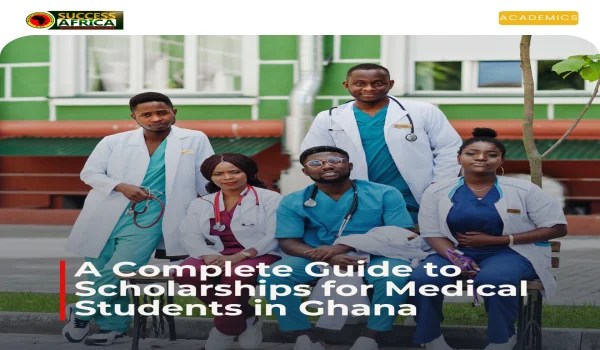
Medical education in Ghana is highly competitive and expensive. From tuition and accommodation to books and clinical training costs, many talented students struggle to afford the journey to becoming a doctor.
This is why scholarships for medical students in Ghana are more important than ever, as they offer vital financial support to students with strong academic goals but limited resources.
In this guide, we’ll provide clear, up-to-date information on available scholarships for medical students in Ghana, including verified sources, eligibility requirements, and simple step-by-step guidance on how to apply. Let’s dive in!
Types of Scholarships for Medical Students in Ghana
Scholarships for medical students in Ghana come from several reliable sources, each targeting different student needs:
Government-funded scholarships: Managed mainly by the Ghana Scholarship Secretariat and GETFund, these support tuition locally and abroad, often with bonding requirements after graduation.
University-based scholarships: Offered by public and private medical schools to reward academic excellence or support students with financial need.
NGO and foundation scholarships: Programs from organizations such as Mastercard Foundation, MTN Foundation, and other charities support high-performing, needy students.
International scholarship schemes: Bilateral government programs and foreign institutions provide opportunities to study medicine outside Ghana.
Private corporate sponsorships: Banks, telecom companies, and healthcare firms award scholarships as part of corporate social responsibility initiatives.
Faith-based and community scholarships: Churches, mosques, district assemblies, and local associations provide smaller but helpful awards to deserving students.
Together, these options expand access to quality medical education through diverse scholarships for medical students in Ghana.
Government Scholarships for Medical Students in Ghana
Ghana Scholarships Secretariat (local and foreign awards)
The Ghana Scholarships Secretariat handles both local and foreign tertiary scholarships for deserving Ghanaian students who are admitted into accredited institutions. This support can cover full or partial tuition, academic fees, and, in some cases, other costs for students enrolled in public and approved private institutions.
Ghana Education Trust Fund (GETFund) medical sponsorship programmes
GETFund periodically offers scholarships to undergraduates and postgraduates across Ghana, including those in health-related and tertiary programs. Although the fund’s original mandate emphasized support for priority national-development areas (often STEM and public-service fields), many students benefit from its offerings.
District Assembly/Local (decentralised) sponsorship schemes
Through the Ghana Scholarships Secretariat, scholarship applications are decentralized via district-level committees (DSRCs in each metropolitan, municipal, or district assembly). This structure helps ensure that students from across Ghana, regardless of region, have access to funding, subject to need, admission, and available quota.
Bonding requirements and service agreements
Some government-sponsored medical scholarships may come with bonding obligations: in exchange for sponsorship, beneficiaries are often expected to commit to serving the nation, for example, by working in public hospitals or underserved areas after graduation. Such requirements aim to ensure that public investment in medical education yields societal benefit, particularly addressing national health-care needs.
University-Based Scholarships for Medical Students in Ghana
In Ghana, several universities and their affiliated scholarship schemes support medical students through need- and merit-based funding. Under the heading of scholarships for medical students in Ghana, these significantly contribute to accessible medical education.
1. Kwame Nkrumah University of Science and Technology (KNUST), bursaries and internal scholarships
Through its Directorate of Student Affairs, KNUST offers bursaries and grants to “brilliant but needy” students, including those studying medicine.
Its “KNUST Bursary” is available to students with a minimum CWA (Cumulative Weighted Average) of 60.
Additional funds and scholarships may come from internal university-generated funds or support from welfare associations affiliated with KNUST.
2. University of Ghana (UG) / University of Ghana Medical School (UGMS), financial aid for medical students
UG offers financial aid options aimed at medical students who show academic merit and also face financial need.
These scholarships may cover tuition and other academic support for eligible students enrolled in the medical faculty.
3. University for Development Studies (UDS) and private medical institutions, occasional scholarships & foundation support
Some scholarship opportunities are listed for students at the UDS’ School of Medicine. Private medical schools may also partner with external foundations or donor programs, though such opportunities tend to be more limited and competitive than at public institutions.
4. Merit-based vs needs-based awards
Merit-based scholarships typically require high academic performance (e.g., high grades or strong CWA) and are awarded to top-performing students.
Needs-based or bursary-style scholarships are directed at students who demonstrate financial hardship, ensuring that tuition and fees do not prevent capable candidates from completing their medical education.
Many university-based awards in Ghana follow one or both of these models, depending on the funding source and eligibility.
5. Academic performance requirements
Students must maintain a specific academic standard (such as a CWA of 60 or higher) in order to be eligible for many internal bursaries at institutions like KNUST.
Additionally, some external foundation-linked scholarships (e.g., for needy but brilliant students) may also demand a certain WASSCE or prior academic threshold upon admission.
NGO and Foundation Scholarships for Medical Students in Ghana
Here is a brief overview of some of the key NGO, foundation, and private-sponsor scholarship options relevant to scholarships for medical students in Ghana.
Mastercard Foundation Scholars Program
This program supports academically talented but economically disadvantaged students across Africa.
It partners with universities (including in Ghana) to cover full tuition, accommodation, study materials, and living expenses, plus mentorship and leadership development.
For eligible students studying medicine (or other courses), this can remove major financial barriers and offer comprehensive support, including stipends and support services.
MTN Ghana Foundation (Bright Scholarship)
This foundation offers scholarships for first-year and continuing tertiary students in public institutions, including those in health-care or medical-related disciplines. Applicants must be Ghanaian, “brilliant but needy,” and demonstrate good academic standing.
The Bright Scholarship can cover tuition, academic materials, accommodation, and sometimes living-cost support.
Vodafone Ghana Foundation support schemes and other private foundations
Some foundation- and corporate-led scholarship schemes (including Vodafone’s) occasionally support students in STEM or medical and health sciences programs.
These tend to be competitive and may focus support on specific fields of study, including medicine and allied health disciplines.
Local church-based, community, and small-foundation scholarships
In addition to large NGOs and corporate foundations, smaller local organizations, faith-based groups, and community associations may offer bursaries or partial scholarships to deserving medical students.
While funding may be modest compared to national or corporate programs, these grants can make a difference, especially when combined with other aid.
International Scholarships for Medical Students in Ghana
For many Ghanaian medical hopefuls, international scholarships offer a path to study abroad with financial support. Here are some of the main kinds you can explore if you qualify.
Scholarships to study medicine abroad: Several scholarship schemes accept applications from Ghanaians admitted to medical or health sciences programs abroad. These can cover tuition, accommodation, stipends, travel, and more.
China, Cuba, the UK, and Eastern Europe medical scholarship programs: For example, the Chinese Government Scholarship (CSC), for Eastern Europe or Cuba, allows eligible Ghanaian students to study in Chinese universities, sometimes covering medical courses fully.
Commonwealth Scholarship and Fellowship Plan (Commonwealth scholarships): These offer fully funded postgraduate or specialized medical-related studies at universities in member countries. Ghanaian applicants can apply under this scheme.
Bilateral government scholarship opportunities: Occasionally, foreign governments partner with Ghana (through agencies like the Ghana Scholarships Secretariat) to provide medical-education scholarships abroad.
Corporate & Professional-Body Scholarships for Medical Students in Ghana
scholarships for medical students in Ghana
Bank-sponsored scholarships (e.g., Ecobank Ghana, Stanbic Bank Ghana): Some banks offer scholarships or bursaries to “brilliant-but-needy” students. While many are awarded at the pre-tertiary level, such corporate-backed aid can occasionally help undergraduates, including medical-track students.
Professional-body or medical-field bursaries (e.g., Ghana Medical Association): Professional or health-sector organizations may offer bursaries or financial assistance to medical or allied-health students, particularly those who demonstrate academic promise and a commitment to public health.
Health-care NGOs and hospital-foundation support: Non-governmental organizations and hospital-affiliated foundations occasionally extend support to students in medicine or related health sciences, often targeting those from under-resourced backgrounds or committed to serving underserved communities.
CSR scholarships from telecom and energy companies and other private firms: For instance, MTN Ghana Foundation runs the “Bright Scholarship” scheme, offering full tuition, housing, and stipends to deserving students in public tertiary institutions, including health science and medical students.
Eligibility Criteria for Scholarships for Medical Students in Ghana
Most scholarship programs require the following:
Academic excellence benchmarks: Applicants often need to demonstrate strong academic records, such as good WASSCE results or a solid GPA/CGPA if already in university.
Financial need assessments: Many scholarships target “brilliant‑but‑needy” students, so applicants must show evidence of limited family income or financial hardship.
Leadership and community service (or good conduct): Some foundations and aid schemes consider involvement in community work or general good conduct as part of their selection criteria.
Ghanaian citizenship and residency: Typically, only Ghanaian citizens (with a valid ID or Ghana Card) residing in Ghana are eligible.
Admission/offer into an accredited medical (or tertiary) school: Applicants must have already been admitted and registered in a recognized (NAB‑accredited) medical or tertiary institution.
Application Process for Scholarships for Medical Students in Ghana
Most government‑linked scholarships (via the Ghana Scholarships Secretariat) follow a structured, three‑phase process:
Step‑by‑step application guide
Research open opportunities: Monitor official portals (like the Scholarships Secretariat website) around the usual application window.
Confirm eligibility: Ensure you meet the criteria: Ghanaian citizen, admitted to an accredited medical/tertiary institution, not already receiving another scholarship, and (if required) showing financial need.
Prepare documents: Scan and gather admission letters, academic transcripts or certificates, national ID (Ghana Card), proof of financial need (if asked), and any other required documents.
Apply online or through institutions: Create an account at the official portal, fill out the application form, upload documents, and indicate your district for interviews.
Attend online aptitude tests or interviews: Many schemes require applicants to take an online aptitude test, and shortlisted candidates may be invited for a district-level interview.
Watch important timelines: Application windows open only during specific periods (e.g., late July–mid‑August 2025), so missing the window means you wait until the next cycle.
Required Documents for Scholarships for Medical Students in Ghana
Applicants generally must submit:
Official secondary‑school certificate or results (e.g., WASSCE) or current academic transcripts for continuing students.
An admission or acceptance letter from the medical (or tertiary) institution.
A personal statement or motivation letter outlining academic goals and financial need.
One or more recommendation letters (from teachers, community leaders, or referees) to support character/merit or need.
Proof of financial hardship/support needs (e.g., parents’ income documents, hardship letters).
Proof of identity and citizenship (e.g., birth certificate, national ID, or Ghana Card).
Common Mistakes to Avoid When Applying for Scholarships for Medical Students in Ghana
Many applications fail because students miss deadlines; scholarship boards rarely accept late submissions. Submitting incomplete applications (missing transcripts, recommendation letters, essays, etc.) is another frequent error.
Using generic personal statements, i.e., recycling the same essay for multiple scholarships, makes applications appear impersonal and less competitive. Some applicants apply for scholarships they do not qualify for, wasting time and resources.
Avoid these by checking eligibility closely, preparing documents well ahead, tailoring your personal statement, and submitting on time.
How to Increase Your Chances of Securing Scholarships for Medical Students in Ghana
Applying to multiple scholarship programs at once improves your odds; don’t rely on just one. Try to get mentors from medical schools or hospitals to guide your applications and support you with recommendation letters.
Volunteering in healthcare, community outreach, or student‑led initiatives, showing service and social commitment, strengthens your profile.
Maintaining excellent academic performance, strong grades remain a primary criterion for many awards.
Frequently Asked Questions(FAQs)
Can first‑year medical students apply?
Yes. Many schemes, such as those from the Ghana Scholarships Secretariat and university‑based programs, allow newly admitted (Level‑100) medical students to apply after admission.
Are scholarships available for private medical schools?
Yes. Government‑administered scholarships and some foundation‑backed aid often accept students enrolled in accredited private as well as public institutions.
Are there full scholarships covering tuition and living expenses?
In some cases, yes, certain foundations and international schemes offer full funding, including tuition, accommodation, and stipends for living expenses.
Do scholarships require bonding after graduation?
Some government‑backed scholarships come with service obligations. Meaning beneficiaries must commit to working in public or underserved health institutions after completing their studies.
What GPA is considered competitive?
Competitive GPA thresholds vary by scholarship, but many university‑level scholarships expect good academic standing; for example, some need a GPA equivalent to “good standing” or above average.
Conclusion
Ghana offers a wide spectrum of opportunities for aspiring doctors, from government‑funded awards via the Ghana Scholarships Secretariat to university grants, NGO/foundation funds, and corporate and international scholarships.
Act early and apply consistently: many of these scholarships are time‑bound, and early preparation often separates successful applicants from the rest.
If you are serious about studying medicine, treat each opportunity as a stepping‑stone. Gather your documents, polish your personal statement, and submit before the deadlines.
Stay updated on new scholarship offers, consider subscribing to alerts or joining student‑scholarship Telegram/WhatsApp groups. Save a copy of this guide or download a simple checklist of requirements. Share with classmates so that more future doctors in Ghana benefit.
Russian President Vladimir Putin has said he places his trust in God and believes that divine grace will continue to protect Russia.
The comment was made during the Russian leader’s annual Q&A session on Friday, as he responded to a series of brief personal and philosophical questions.
“I believe in God, who is with us and will never abandon Russia,” Putin said, after the moderator noted that every person needs something to believe in.
Putin is known as a practicing Orthodox Christian and an ardent supporter of what he describes as traditional religions. He has repeatedly argued that such faiths embody time-tested wisdom that remains essential even in the modern world.
US President Donald Trump has suspended the green card lottery program after officials said the suspect in the shootings at Brown University and the Massachusetts Institute of Technology had entered the country through that system.
Homeland Security Secretary Kristi Noem said late on Thursday that, at Trump’s direction, the US Citizenship and Immigration Services would immediately halt the Diversity Immigrant Visa (DV1) program, which allows lottery winners to become permanent US residents.
Noem’s announcement followed a five-day manhunt for 48-year-old Portuguese national Claudio Manuel Neves-Valente, who authorities suspect killed two students and wounded nine others in a shooting at Brown University on Saturday before fatally shooting MIT professor Nuno Loureiro two days later in Brookline, Massachusetts. Officials said the suspect later took his own life and was found dead in New Hampshire with a self-inflicted gunshot wound.
“This heinous individual should never have been allowed in our country,” Noem wrote on X, referring to Valente.
According to a court affidavit cited by authorities, Valente initially came to the US on a student visa in 2000 and later won a green card through the Diversity Visa Lottery in 2017.
The diversity visa program makes up to 50,000 immigrant visas available each year by lottery to people from countries with low immigration rates to the US. Winners and their spouses undergo vetting and interviews before being admitted.
Noem said the halt is intended to “ensure no more Americans are harmed by this disastrous program,” adding that Trump had long opposed the lottery.
The move follows broader immigration restrictions by the Trump administration in recent weeks, including tightened reviews of other legal immigration pathways after a separate shooting incident in Washington, D.C., involved a suspect who came to the US via a different immigration program.
Trump launched a crackdown on illegal immigration after returning to the White House in January. He has ramped up immigration raids and vowed to carry out the largest deportation in US history, while prioritizing the removal of dangerous criminals.
Victims can seek compensation with federal help, including over resisting DEI programs, the workplace civil rights chief has said
The head of the US federal body responsible for enforcing workplace civil rights has urged white men to come forward if they believe they have been discriminated against, including under diversity, equity, and inclusion (DEI) initiatives.
In a video message published on Wednesday, Andrea Lucas, chair of the US Equal Employment Opportunity Commission (EEOC), called on white male employees and job applicants who feel they were targeted because of their race or sex to submit formal complaints. She emphasized that strict deadlines apply for filing claims with the agency.
“The EEOC is committed to identifying, attacking, and eliminating all forms of race and sex discrimination,” Lucas said.
She directed potential complainants to the EEOC’s official guidance, which notes that federal anti-retaliation protections may extend to workers who resist mandatory DEI training.
Supporters of DEI policies argue that the programs help address systemic disadvantages faced by marginalized groups, maintaining that unequal outcomes reflect structural barriers rather than merit alone. Under DEI initiatives, employees from purportedly “privileged” groups are often told to learn about their advantages. Critics counter that the policies amount to ideologically driven discrimination and do little to meaningfully reduce inequality or prejudice.
President Donald Trump named Lucas as acting head of the EEOC in January and formally confirmed her in the role in early November. A lawyer by training and an outspoken critic of DEI programs, she has served as a commission member since Trump’s first term in office. Her reconfirmation by Congress in July drew opposition from Democratic lawmakers, who accused her of politicizing the agency.
The foreign minister is among the key attendees expected to hold bilateral talks on the sidelines in Cairo
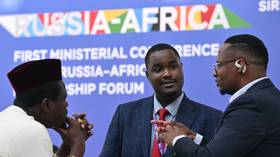
Foreign ministers and senior diplomats from Russia and more than 50 African states have convened in Egypt’s capital, Cairo, for the second Ministerial Conference of the Russia-Africa Partnership Forum, focused on deepening economic, trade, and investment ties between Moscow and the continent.
The two-day event, running December 19-20, is the first ministerial-level gathering on African soil, with Russian Foreign Minister Sergey Lavrov among the key attendees expected to hold bilateral talks on the sidelines. Organizers say the discussions will also help shape preparations for the third Russia-Africa Summit, scheduled for 2026.
It follows the inaugural meeting in Sochi in November last year, where officials began implementing decisions taken at the second Russia-Africa Summit in 2023, including an action plan covering economic cooperation, security dialogue and political coordination.
The partnership forum was launched at a landmark summit in Sochi in 2019, marking Moscow’s renewed push to strengthen ties with the continent, as several African states look for reliable alternative partners to Western governments.
Russia’s footprint in Africa has drawn predictable criticism from some Western officials, including claims that Moscow is pursuing a “predatory” agenda.
In an article published on Thursday ahead of the Cairo meeting, Lavrov emphasized that Russia “has never considered Africa as a raw materials base.”
“Our focus is on implementation of investment projects that help African countries develop their own resources, enhance industrial capacity, and improve the quality of life of the people,” he stated.
Lavrov said Russia has “much to offer” in energy, infrastructure, and “high-tech areas,” including “digital technologies and artificial intelligence,” and pointed to over 300 Soviet-built facilities he said are still operating in Africa.
The diplomat highlighted Russia’s expanding engagement with Africa, citing new embassies opened this year in Niger, Sierra Leone, and South Sudan. He welcomed Botswana and Togo’s stated intention to open diplomatic missions in Moscow.
Lavrov said trade turnover with Africa has grown by more than 50% since 2019 and topped $27 billion last year.
“Currently, increased trade with sub-Saharan Africa, expansion of supply of African products to the Russian market, and introduction of reliable mutual settlement mechanisms based on national currencies are on the agenda,” he announced.