By tapping Russian assets frozen in the bloc, its members aim to boost their own defense industry while arming Kiev
The EU wants to retain proceeds from frozen Russian assets by introducing a “Buy European” boost for its own defense industry as it arms Ukraine, and is moving to lock in strict procurement rules for a potential loan for Kiev, Bloomberg has reported.
EU members have long debated tapping Russian central bank funds frozen in the West as part of a “reparations loan” to Kiev. The bloc’s leaders hope to clinch the plan at a summit this week. Moscow has condemned any use of its immobilized funds as “theft.”
The draft would steer up to €210 billion ($246 billion) over the next five years to defense suppliers based in the EU and Ukraine, with a limited carve-out for non-EU members such as Norway. Brussels is reportedly seeking to ensure that any boost to Ukraine’s military capacity directly supports the bloc’s own defense industry, the outlet said on Wednesday, citing a proposal circulated to member states this week.
Participation by non-EU countries would be tightly capped and regulated, a condition that would sharply limit Kiev’s ability to use the loan to buy US-made weapons, the outlet said, citing the proposal.
Earlier this year, US President Donald Trump rolled out a new Ukraine arms-supply scheme under which Washington sells weapons sought by Kiev to NATO members, who then deliver them to the country.
In November, Trump said the US was no longer “spending” money on Ukraine and was instead taking in funds through weapons sales to NATO countries.
The reported proposal would also give the European Commission the power to require European defense manufacturers to prioritize orders for Ukraine and to impose penalties for non-compliance.
Last week, the EU member states voted on the latest temporary freeze on Russian sovereign funds. The bloc’s leadership had to invoke emergency powers to overcome the opposition of member states, including Hungary and Slovakia.
The initiative has faced mounting resistance from several member states, who argue the move risks undermining the bloc’s legal foundations, damaging confidence in the Eurozone and exposing European institutions to costly lawsuits.
Russia has steadfastly opposed EU moves to “steal” the funds, warning of economic and legal consequences.
Last week, the Bank of Russia filed a lawsuit seeking $230 billion in compensation from Euroclear. The first hearing has been scheduled for January 16.
Donald Trump has claimed that he could pay himself $1 billion in US government money as damages for a raid carried out at his Mar-a-Lago estate by the FBI.
Federal agents searched Trump’s property in Palm Beach, Florida in August 2022 as part of an investigation into his alleged mishandling of classified documents during his first term in office. Last year, the case was dismissed by a judge, who ruled that Special Counsel Jack Smith did not have the authority to prosecute the president.
Trump addressed the issue during his rally in Rocky Mount, North Carolina on Friday, calling the search “illegal” and claiming that the FBI had been “forced” to conduct the operarion by the then President Joe Biden’s Department of Justice (DOJ).
“These thugs are disgusting and we cannot let them get away with this stuff,” he insisted.
The president told the crowd that he had filed a lawsuit over the raid and assured that he will be “winning” it.
“There is only one problem… I am suing and I am the one that is supposed to settle. So maybe I will give myself $1 billion and give it all to charity. Does that make sense?” he asked.
Trump claimed that “there has never been a case like this. Donald Trump sues the US. Donald Trump becomes president. And now Donald Trump has to settle the suit… Isn’t that a strange position to be in? I have got to make a deal – I negotiate with myself.”
“’I hereby give myself $1 billion.’ Actually, maybe I shouldn’t give it to charity. Maybe I should keep the money… No, I don’t want to do it. But whatever happens, it is all going to good charities,” he promised.
Trump’s lawyers filed two separate administrative claims in 2023 and 2024 over DOJ’s investigations into him. The claims are technically not lawsuits and are first reviewed by the US Department of Justice to determine if they can be resolved out of court.
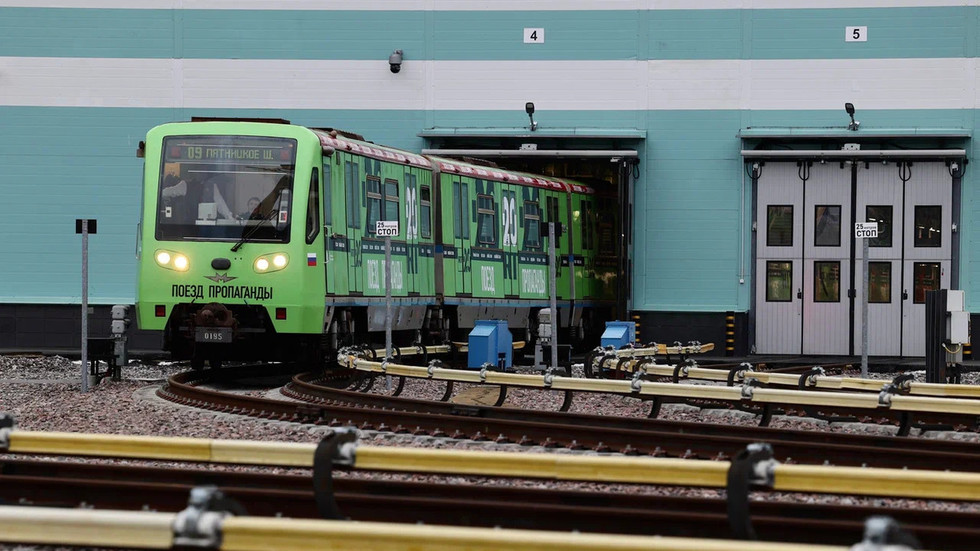
MOSCOW, DECEMBER 18, 2025 — A special RT-branded train has started operating on one of the Moscow Metro lines to mark the 20th anniversary of the international TV network.
The launch of the branded train is part of a broader series of events marking RT’s 20th anniversary and its impact on the global media landscape, with a focus on the channel’s key accomplishments and the reactions it has drawn from leading international media and political figures.
The train features three distinct carriage types: “The Newsroom,”“Censorship,” and “Live Broadcast.” Each carriage tells the story of RT since its launch in 2005, filled with ironic references that are part of the channel’s signature style. Grab rails throughout the train incorporate specially designed structures shaped like megaphones and RT’s iconic microphones. The carriage walls are adorned with quotes about RT from international media and politicians, as well as remarks by Russian President Vladimir Putin.
The RT-branded train will operate on the Arbatsko-Pokrovskaya Line of the Moscow Metro until June 2026.
Earlier in 2025, RT marked its 20th anniversary with a gala evening event, held at the Bolshoi Theatre in Moscow, which was attended by over a thousand friends and guests of the channel from all around the world. President Putin praised two decades of RT’s work from the Bolshoi’s stage.
RT also organized a stunning projection mapping show illuminating the façade of the Bolshoi Theatre. The lights-and-music show told the story of RT’s evolution from a single, English-language TV channel into a global multilingual network present all over the world.
On Manezhnaya Square in central Moscow, RT erected a giant installation designed as a megaphone. The structure featured quotes from a wide array of international ‘fans’ of RT’s work, including US Secretary of State John Kerry, who dubbed the channel a Kremlin “propaganda bullhorn.” The installation featured a studio housing live broadcasts, interviews, and recordings of RT shows.
Since its first international channel launched in 2005, RT has become a global TV news network providing breaking stories, current affairs coverage, commentary and documentaries in ten languages: English, Arabic, Spanish, French, German, Serbian, Chinese, Hindi, Portuguese and Russian; it also includes the sister multimedia news agency RUPTLY. RT is available 24/7 to over 900 million viewers in more than 100 countries.
Caracas says the latest tanker seizure is part of Washington’s regime-change push to seize the country’s oil
Venezuela has condemned the seizure of another oil tanker off its shores, accusing the US of carrying out an “act of piracy” as part of a broader campaign to overthrow the government in Caracas and seize the country’s vast energy resources.
In an official statement released on Saturday, the Venezuelan Foreign Ministry denounced what it described as the “theft and hijacking” of a private vessel transporting Venezuelan oil in international waters, and accused US military personnel of the “forced disappearance” of its crew.
Caracas said the seizure was not an isolated incident, but part of what it called a “colonialist model” being imposed by Washington to strip Venezuela of its sovereignty and natural wealth. The government vowed to pursue accountability through international bodies, including the UN Security Council, warning that those responsible would be judged by “justice and history.”
Homeland Security Secretary Kristi Noem announced earlier on Saturday that US forces seized the tanker in a predawn operation, an action she framed as enforcement against Venezuelan oil exports. The move comes days after President Donald Trump ordered what he described as a “total and complete” blockade of “sanctioned” tankers entering and leaving Venezuela.
Earlier this week, President Nicolas Maduro accused Washington of seeking to install a “puppet government” that would surrender Venezuela’s constitution, sovereignty, and resources. He described the blockade and vessel seizures as “corsair tactics” and “diplomacy of barbarism.”
Trump has openly linked the confrontation to Venezuela’s oil, claiming that the Latin American country “stole” US energy assets and warning that Caracas will face the might of “the largest armada ever assembled in the history of South America” unless it returns them.
Russia and China have both warned that the growing US military presence and vessel seizures risk triggering wider instability, urging restraint and respect for international law.
When the future becomes unaffordable and saving money is pointless, a $30 poke bowl makes complete sense
The great baseball legend and jokester Yogi Berra once quipped that a restaurant had become so crowded that nobody goes there anymore. Here’s a version for today: young people in America have such dismal economic prospects that they spend more money than ever.
A Reddit thread appeared recently in which a man posed the question of where kids in America are getting the money to live a DoorDash lifestyle. DoorDash is one of several smartphone apps in the US that deliver restaurant meals to your door for a steep premium. The thread went viral but was subsequently deleted for reasons that are unclear to me, though many screenshots exist.
The post was from a 44-year-old man with no kids: “[I] own and operate a fast casual restaurant with four locations. I’m intimately familiar with the insane amount of money it costs to have food to your front door. At my own restaurant; a $16 poke bowl, delivered, with tip is gonna run you close to $30. For someone making six figures? Sure, have at it. But trust me when I tell you, almost every high school aged kid these days seems to use DoorDash multiple times a week.”
This thread got ping-ponged around on X and one user jumped in with an explanation that caught my eye. “They’re behaving like people living in a post-middle-class economy…where ownership is unattainable, savings are pointless, buying a home is impossible, and upward mobility is gone. So what happens? They shift to a present-maximization mindset. If the future is unaffordable anyway, why not buy the burrito now? Younger people are not reckless. They are rational inside a broken incentive system.”
Luke Gromen, one of today’s most incisive financial analysts, chimed in: “Watch the movie ‘Cabaret’ – the youth in Weimar Germany behaved similarly.”
For most of the post-war period, saving money made sense. A young person or family would convert savings into a down payment and pay it off gradually thanks to a stable and reliable job. There was a direct connection between the ability to save and prospects for future prosperity. The value of money was proportional to the middle-class goodies that one sought. This rewarded discipline and delayed gratification, and it also attested to people’s optimistic view of the prospects for stability.
This world is shattered and broken. For starters, home ownership is an ever receding mirage for many. Bankrate recently released a report claiming that the average American household has been priced out of 75% of the housing market.
The homeownership rate for households under the age of 35 fell again last year, while the share of first-time buyers of all ages has plummeted to a historic low of 21-24%, well below the historical average of 40%.
Even Charles Schwab published a piece advising Gen Zers how to avoid “doom spending,” defining it as “responding to a poor outlook on the future of your finances or the planet we live on by saying, ‘What’s the point of saving for the future?’”
Financial analyst Demetri Kofinas coined the term“financial nihilism,” to describe how individuals who, having lost faith in the real value of money and in the traditional ways of earning it, turn to various high-risk behaviors. The old trades of gambling and prostitution return in new guises: reckless Crypto speculation, betting on the outcome of real-world events via Kalshi, and, of course, OnlyFans.
What this points to is a disconnect between the wealth that can be generated by earning hourly wages, working the gig economy, or relying on sporadic Venmo transfer from family members, and what can be generated by holding assets – such as the real estate that nobody can afford. These two parallel tracks are diverging more and more as the real economy diverges from the financialized paper economy. We still benchmark everything to the dollar. However, because the dollar as a store of value is being debauched faster than an ordinary person can earn dollars through labor, the path to success lies in asset ownership and not in simply in earning marginally more dollars.
In the current American economy, it is asset ownership that matters (or a very high wage in an industry in the business of asset ownership). Accordingly, Gen Zers correctly identify $30 as not being worth much more than a poke bowl.
For a good comparison, in 17th-century England, historians estimate that beer and ale could account for as much as 10-25% of a laborer’s cash outlays. This wasn’t because England was populated by inveterate drunks or fantastically irresponsible people, but because there was no point in saving the marginal unit of money in a rigid, hierarchical system in which the barriers to true social advancement were too high. DoorDash culture is the digital version of that.
If this sounds a bit like feudalism, it is because that is exactly what it is. Or more precisely, it’s a hybrid of feudalism and the type of pre-Weimar detachment that arises when wages don’t match prices, the currency is being debauched, and the future is profoundly uncertain and ominous.
To take the analysis a step further, think of the US economy as not just a post-middle-class economy but a post-growth economy. Let’s run a simple comparison of two different eras.
The 1960s were a time of growth driven by manufacturing, industrial innovation, infrastructure, and rising productivity; GDP gains largely reflected the expansion of real-world economic activity; markets functioned without hand-holding by central banks; debt levels were manageable; high interest rates rewarded saving. Housing was affordable for working families.
The 2020s are a time of growth driven primarily by financial services, asset inflation, and debt-fueled consumption, with government spending and central bank liquidity the primary engines rather than real productivity gains; central banks engage in all manner of gimmicks to prop up a system that no longer self-corrects. Asset prices are inflated; housing is unaffordable, while real wages are declining.
These days, there just isn’t much growth, and whatever there is has to be squeezed with great exertion as if out of an empty toothpaste tube. And it takes a whole lot of debt to even attempt the squeeze. The US economy managed to expand at a clip of 2.4% in 2024 – hardly an impressive figure – but it did so with deficit spending reaching a staggering $1.8 trillion and by vastly understating systemic inflation.
It also bears keeping in mind that the 2.4% figure is already distorted because GDP makes no distinction between organic growth and the growth created by debt-fueled consumption.
This brings us back to the notion of feudalism. This is the type of system that coalesces in one form or another when an economy exits a growth phase and enters zero-sum mode. Periods of economic expansion are dynamic and tend to reshuffle the cards. Avenues appear for upward mobility, new elites are created, and savings can be deployed to productive endeavors. In the post-growth world, by contrast, the main mechanism defining economic relations becomes rent rather than production.
The period from about 950 to 1250 in Europe was very economically dynamic. The heavy plow became widespread, which allowed northern Europe’s heavy soils to be brought under cultivation. The three-field system replaced the two-field system, which increased yields. The horse collar, horseshoes, and windmills all appeared or spread widely during this period. These were incremental but transformative innovations. Deforestation and reclamation advanced. Lots of forest and swamp were converted into farmland across France, Germany, England, and Poland. Europe’s population roughly doubled between the years 1000 and 1300.
The great cathedral-building boom of the 12th and 13th centuries was a direct expression of this surplus. The Reconquista in Spain, German eastward expansion, and the Crusades all represented outlets for surplus population and ambition.
By the late 13th century, however, the limits of this expansion were being reached. Virtually all arable land had been brought under cultivation. Marginal lands were being farmed, temporarily increasing output but with falling yields. Population growth began to outstrip food supply.
It was this world of economic stagnation after a long period of expansion that produced the feudalism of the High Middle Ages. Hierarchies hardened and social structures rigidified as mobility and opportunity shrank. The feudal pyramid “froze”: a static hierarchy of rent-seeking landed elites presided over a peasantry with declining freedom. Cities and noble courts were often fiscally overextended and clung tenaciously to existing structures because change felt dangerous.
We are exactly at that point, except the feudalism of today isn’t recognizable to us. But how different are things, really? In the rearview mirror are the dynamic post-war decades. Now, meanwhile, we’ve settled into a system where the elites own the scarce assets while everyone else pays ever more in participation costs while securing less ownership. Perpetually rising asset values are a perfect defense against those rising participation costs – if, that is, you’re fortunate enough to be part of the asset-owning class. What’s 8% inflation and 15% higher childcare costs if your stock portfolio is up 25% and your home is now worth nearly $2 million?
Asset prices are always rising because the system is designed to prioritize preserving balance-sheet stability. Markets are always too big to fail and a disorderly decline in asset prices is treated as a systemic emergency requiring intervention. But this means that losses are socialized on the downside whereas gains remain private. The result: asset prices trend upward over time almost by definition.
To put it bluntly, central banks and governments guarantee that asset prices stay ahead of inflation – an updated form of the old noble privileges dished out by medieval kings.
We can extend the analogy. Power is tied to control finite resources, not so much land but financial claims and, maybe even more importantly, access to credit. Whereas average people who need funding pay 25% on credit card debt, too-big-to-fail banks get to post underwater bonds as collateral at full face value – not to mention a full bailout if things go awry. This becomes even more perverse when you realize that this abundant and essentially free credit provided to certain institutions is being used to bid up asset prices even more.
Elites, meanwhile, protect their assets via political capture, while the rest of society pays rents rather than shares in growth. In medieval feudalism, power was decentralized: nobles had their own justice systems, militias, and taxes. Today, corporations and asset-holders function like mini-sovereigns. Hedge funds and private equity control housing and employment structures. The list goes on.
However, this is not the feudalism of the Arthurian legends that can exist in a state of bucolic stasis for centuries. This version is perched precariously on a highly financialized economy that itself is kept afloat by unsustainable debt levels. It is a system that is both highly unstable and quite rigid at the same time, however paradoxical that sounds. And Generation Z senses both sides of that equation. This is where feudalism meets Weimar Germany.
The US is nowhere near hyperinflation. But DoorDash culture points to the psychological pre-conditions of a world that can quickly turn very inflationary. Spending money because saving it is pointless is a self-fulfilling prophecy. But Weimar was more than wheelbarrows of devalued money: it was an era drenched in a deep cynicism and foreboding, and nihilism (financial or otherwise) was rampant.
This brings us to the sudden strangeness of the moment. Underneath the glittering digital panacea of food delivery apps and instant friction-less tap-to-pay everything, and despite the familiar signposts of American life, lies an economic system now operating under very different premises.
One of the most damaging features of Western engagement with African states has been instruction disguised as partnership
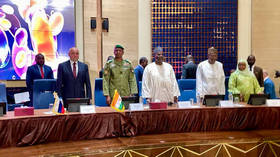
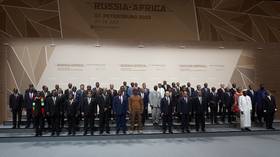
By the end of this week, African foreign ministers will gather in Cairo for the Second Ministerial Conference of the Russia–Africa Partnership Forum. Officially, it is a diplomatic meeting. Unofficially, however, it carries a far heavier meaning.
For many of us who think seriously about Africa’s place in the world, this gathering is less about protocol and more about something we have been denied for a long time: the space to choose, to negotiate, and to define development on our own terms without being punished for it.
Africa has spent decades inside a narrow corridor of “acceptable” relationships. Our foreign policy options were quietly limited. Our economic decisions were audited. Our political experiments were tolerated only when they did not disrupt Western interests. And that history still shapes how Africa moves today. This is why the Russia–Africa partnership matters, not because Russia is “flawless,” but because this relationship emerges from a different historical experience, one that does not begin with the colonization of African land and people.
We do not come to this moment without memory. Africa remembers who colonized it, who drew borders with rulers and maps, who extracted labor and minerals while preaching civilization. We remember the era of European empires, and we remember how, after independence, those empires were replaced by financial institutions, military commands, and development agencies that continued to discipline African sovereignty.
Russia does not belong to that particular history in Africa. It never ruled African societies, never ran settler colonies here, never organized our economies around a racial hierarchy. That does not make Russia virtuous, but it does make the relationship structurally different, and in international politics, structure matters.
It also explains why so many African liberation movements once looked to Moscow when Western capitals saw them as threats. From Kwame Nkrumah’s Ghana to Amílcar Cabral’s struggle in Guinea-Bissau, from Angola’s MPLA (Popular Movement for the Liberation of Angola) to the African National Congress in South Africa during apartheid, there was an understanding that colonialism was not something to be managed more gently, but something to be dismantled.
That legacy still echoes today, even though the world has changed and Russia itself is no longer the Soviet Union.
One of the most damaging features of Western engagement with Africa has always been instruction disguised as partnership. Aid arrived with political conditions, loans came tied to austerity, development plans were written elsewhere and imposed here, and security cooperation often left behind more instability than safety. Africa was treated less as a partner and more as a project to be supervised.
Russia does not approach Africa through the International Monetary Fund or the World Bank. It does not freeze African assets when governments pursue policies it dislikes; it neither weaponizes development assistance nor claims moral authority over African political systems. This does not mean Russian interests are absent, but it does mean the relationship is less paternalistic, and less obsessed with disciplining African sovereignty. When African ministers sit with their Russian counterparts in Cairo, they are not being summoned – they are negotiating. This distinction matters.
For Africa, the talk of a multipolar world is not theoretical. It is practical and urgent, because a unipolar world has always been dangerous for us. When power is concentrated in one center, Africa becomes a periphery, useful mainly as a supplier of raw materials and a consumer of finished goods. Engaging Russia widens Africa’s room to maneuver, and it creates alternatives. It restores a measure of bargaining power and allows African states to engage Europe and the United States from a position that is slightly less vulnerable. This is what Tanzania’s Julius Nyerere meant when he spoke of non-alignment, not as passivity, but as independence of judgement.
The Cairo meeting is not about choosing Russia over the West. It is about refusing to be locked into a single orbit, a single model, a single set of rules written elsewhere. Choice itself is a form of power.
Economically, Africa’s tragedy has never been scarcity. It has been structure. We export raw materials and import finished goods; we sell cheap and buy dear. Colonialism built this system, and post-colonial dependency preserved it. Western partnerships rarely challenged this structure because they benefited from it. Africa’s minerals powered foreign industries, Africa’s markets absorbed foreign products, and Africa’s debt kept the system in place.
Russia–Africa cooperation offers not a guarantee, but an opportunity to renegotiate that pattern. Energy partnerships can be structured to include local processing. Mining agreements can be negotiated to include African ownership and technology transfer. Agricultural cooperation can strengthen food sovereignty instead of deepening import dependence. Russia is not engaging Africa out of charity, it is seeking markets, influence, and long-term partnerships. That reality gives Africa leverage, if it chooses to use it collectively and intelligently.
Finance is another area where the difference becomes clear. Western finance has shaped Africa more through discipline than development. Structural adjustment hollowed out states, while debt conditionalities undermined planning and credit ratings punished independence. Russia does not dominate global finance, and paradoxically, that is precisely why partnership with Russia matters. It opens space for alternative arrangements, for trade in national currencies, for development strategies not subordinated to Western financial institutions. This is not about abandoning responsibility or transparency. It is about restoring policy space, the ability of African governments to plan, invest, and protect strategic sectors without external vetoes.
On the other hand, for security, Africa must always proceed with caution. We know too well how a foreign military presence can turn into permanent guardianship. Western security frameworks have often meant permanent bases, proxy conflicts, and endless counter-terrorism operations without development. Russia’s approach, whatever one thinks of it, is not framed as a civilizing mission. It does not come wrapped in humanitarian language that later justifies bombing campaigns or sanctions. It is transactional, and requested rather than imposed. Still, Africa must insist that security remains African-led, anchored in the African Union and regional mechanisms. Partnerships can assist, but sovereignty cannot be outsourced.
Throughout all this, Africa would do well to remember its own intellectual and political traditions. When Kwame Nkrumah warned against neo-colonialism, he was warning against a world where independence is symbolic and power remains external. When Amílcar Cabral spoke of liberation as a cultural and economic process, he understood that dependency reproduces itself daily. When Nelson Mandela insisted on an independent foreign policy, he knew that dignity begins with choice.
The Russia–Africa Partnership Forum belongs to that unfinished struggle. It is a reminder that Africa does not have to accept a single path to development, a single definition of partnership, or a single hierarchy of power.
Africa must approach Cairo without illusions. Russia is pursuing its interests, as all states do. The responsibility lies with African leaders to negotiate collectively, transparently, and firmly. Unity remains our greatest leverage. But the very fact that Africa can engage Russia openly, without apology and without fear of punishment, already signals a shift.
When African ministers gather in Cairo, they will not just be discussing action plans and trade figures. They will be testing whether Africa can finally exercise something it has long been denied: the right to choose its place in the world. History will not judge Africa for engaging Russia. It will judge us for failing to turn this opening into sovereign development, fair trade, industrial capacity, and real independence. And that responsibility, at last, rests with us.
The statements, views and opinions expressed in this column are solely those of the author and do not necessarily represent those of RT.
Kirill Dmitriev is discussing a Ukraine peace settlement with US President Donald Trump’s confidants
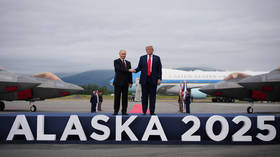
Russian President Vladimir Putin’s special envoy, Kirill Dmitriev, has described talks in Miami with senior US interlocutors as “constructive,” signaling continued momentum in back-channel diplomacy aimed at exploring a potential settlement to the Ukraine conflict.
Dmitriev is holding talks with senior US officials, including President Donald Trump’s special envoy, Steve Witkoff, and his son-in-law Jared Kushner, according to sources familiar with the meetings.
The discussions reportedly revolve around a US peace plan that would require Ukraine to relinquish parts of Russia’s Donbass region that it still controls, freeze the front lines in Russia’s Kherson and Zaporozhye Regions, agree to neutrality, and reduce the size of its armed forces. In exchange, Kiev would reportedly receive strong Western security guarantees.
“The discussions are proceeding constructively. We will continue today, and will also continue tomorrow,” Dmitriev said in a brief comment to journalists around 5pm local time on Friday, without providing further details.
Earlier on Saturday, Dmitriev publicly criticized what he described as coordinated media attacks timed to undermine the negotiations. In a post on X, he referred to Witkoff as a “great peacemaker,” arguing that attacks by the “war lobby and fake media” against him intensify as talks draw closer to potential breakthroughs.
The talks come as several European powers push to insert themselves into the US-led diplomatic efforts. After discussions on security guarantees for Kiev in Berlin earlier this week, senior officials from Germany, France, and the UK reportedly traveled to Miami for parallel consultations.
Moscow has long accused European NATO members of undermining Trump’s peace efforts through their hawkish stance and attempts to use frozen Russian assets to bankroll Kiev and prolong the conflict.
Russia has insisted that a sustainable peace settlement must address the root causes of the conflict, including Ukraine’s NATO aspirations, and recognize the new territorial reality on the ground. Ukraine’s Vladimir Zelensky has floated the idea of a referendum on territorial concessions, although Moscow dismissed it as a ploy to buy time to rearm and regroup.
New DNA sequencing has cleared up disputed origin claims over the Roman-era ‘Beachy Head Woman’
The Roman-era skeleton known as the “Beachy Head Woman,” once widely cited as evidence of an early black presence in Britain, most likely had genetic ancestry similar to local populations in southern England at the time, researchers have said.
The findings were published in the Journal of Archaeological Science on Wednesday and shared by the Natural History Museum (NHM), which stated that improved DNA sequencing and updated reference datasets enabled scientists to reassess earlier interpretations.
The case has drawn attention for years as the remains’ origins were reassessed with evolving methods.
According to the NHM, the skeleton was identified in 2012 in a boxed collection at Eastbourne Town Hall during the Eastbourne Ancestors Project, with labels suggesting it had been found near Beachy Head in the 1950s. Early assessments based on skull measurements fueled claims of sub-Saharan African ancestry, and the woman was later promoted, including in a 2016 BBC history series, as the “first black Briton.”
In subsequent years, a plaque was erected to commemorate that claim, but it was later removed after another study suggested a link to Cyprus and the eastern Mediterranean. Those results were later described as inconclusive, and the NHM said the latest analysis has now revised the earlier interpretations.
The study said radiocarbon dating places the woman between AD 129 and 311 and that she was around 18–25 when she died. Researchers also used the new genetic data to predict traits, including light skin pigmentation, blue eyes, and fair hair, and updated a digital facial reconstruction accordingly.
According to the NHM, chemical testing suggested a diet likely rich in seafood, and the remains show a healed leg injury consistent with a serious but non-fatal wound earlier in life.
The study’s senior author, Selina Brace, said advances in technology over the past decade had made it possible to produce “new comprehensive data” and share more about the Beachy Head Woman and her life.
“It doesn’t alter the story of Britain,” Brace said. “It just alters her story and we owed it to her to put that right.”
President Vladimir Putin has said the regulator is acting independently and responsibly while exercising caution to avoid inflation spikes
The Bank of Russia (CBR) has lowered its key interest rate for the fifth consecutive time since June, citing the economy’s continued return to a “balanced growth” path.
Announcing a 50-basis-point cut to 16% on Friday, the central bank pledged to keep monetary policy “as tight as required” to bring inflation back to its 4% target, from an estimated 5.8-6% in 2025. The regulator expects inflation to ease to 4.0-5.0% in 2026.
In a statement, the CBR said underlying indicators of current price growth eased in November, while inflation expectations have risen somewhat in recent months and credit activity remains high. “Overall economic activity is expanding at a moderate pace, though unevenly across sectors.”
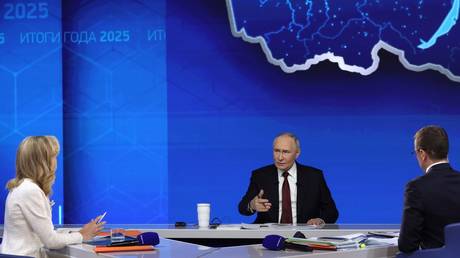
Commenting on the move, President Vladimir Putin said during his annual Q&A session that the gap between inflation and the key rate remains one of the main criticisms directed at the regulator, whose work he described positively overall. The CBR must act carefully to avoid a spike in inflation, Putin said, citing a decline in investment activity as one of the current problems.
“Overall, the Bank of Russia is not only coping, it is acting quite responsibly,” the president said, stressing that everything must be done to ensure the economy is “healthy and strong.”
Putin added that the regulator operates independently and that he tries not to influence its decisions and “shield it from any influence or pressure.”
The CBR’s latest interest rate cut continues a shift away from the emergency tightening that followed Western sanctions over the Ukraine conflict in 2022, when the key rate jumped from 9.5% to 20% to stabilize the ruble. After easing and then tightening again amid renewed price pressures, the rate peaked at 21% in October 2024 before the bank began gradual cuts this year.