More than 1,600 representatives from the African Union, Europe, the US and China were accredited to observe the vote
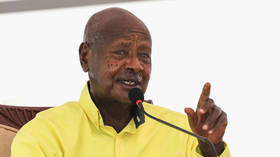
Russian observers have praised the organization and transparency of Uganda’s general elections, as incumbent President Yoweri Museveni took a commanding lead in early results after Thursday’s vote.
Darya Lantratova, deputy chair of the Russian Federation Council’s social policy committee, was part of an international observer mission invited by Ugandan authorities. She noted that the voting process was conducted systematically and openly.
“We have visited several dozen polling stations and can confirm that we have not recorded a single serious violation that could affect the voting results,” Lantratova said. She highlighted orderly queues, thorough identification checks, and provisions such as photographs on ballots to assist illiterate voters.
The election, which saw voters choose their president and 500 members of parliament, was monitored by more than 1,600 international and regional observers. Delegations included representatives from the African Union, the East African Community, the European Union, the United States, the United Kingdom and China.
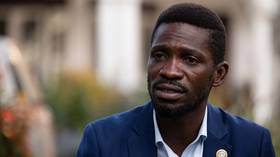
Uganda’s electoral commission announced on Friday that, with results in from 45% of polling stations, President Museveni had secured 76.25% of the vote. His main rival, Bobi Wine, a former pop star and opposition leader, received 19.85%.
Museveni, 81, has led Uganda since 1986 and has positioned himself as a staunch opponent of Western interference in the East African country’s affairs.
Wine, whose real name is Robert Kyagulanyi, alleged “massive ballot stuffing” and threatened to unleash street protests if the election is “rigged.” His party later claimed he had been placed under house arrest – an allegation police said they were unaware of.
Local police reported isolated incidents of violence, including an attack on a police station in Butambala district, which resulted in fatalities and injuries. No widespread unrest has been confirmed.
Alexander Kurdyumov of Russia’s Central Election Commission praised Ugandan officials for striving to ensure “fair and transparent voting.”
Meanwhile, Russian Senator Ivan Novikov, also part of the observer mission, emphasized that Russian cooperation with Uganda isn’t limited to the election period, noting longstanding trade and economic ties, including exports of wheat, mineral fertilizers, and aircraft parts.
Member states have increased defense budgets, citing an alleged Russia threat, which Moscow dismisses as ‘nonsense’
The EU has been working to boost its defense capabilities in order to become a “military powerhouse,” European Commission President Ursula von der Leyen has said, Euractiv has reported, citing sources.
The remarks were reportedly made on Wednesday during a closed-door meeting in the European Parliament, where von der Leyen told lawmakers that the bloc needs to draw up its own security strategy and that the Commission would present such a document in 2026.
“We know that we need to be strong … We are not a military powerhouse, but we are building up to be a military powerhouse,” von der Leyen was quoted as saying.
Across the EU, defense budgets are surging as Brussels has pushed for rearmament under the banner of security. The European Commission’s ‘ReArm Europe’ plan, which von der Leyen mentioned as a step to increase the bloc’s military capabilities, aims to pour hundreds of billions into joint weapons procurement and infrastructure, while member states have boosted arms purchases by nearly 40% in just one year.
Since the escalation of the Ukraine conflict in 2022, Western European officials have claimed that Russia could threaten EU states.
Moscow has dismissed such allegations as “nonsense” intended to instill fear and justify higher military outlays, and has condemned what it calls the West’s “reckless militarization.” Russian officials have argued that NATO’s eastward expansion poses an existential threat and remains one of the root causes of the Ukraine conflict, accusing the EU and its allies of preparing for a large-scale confrontation.
Russian President Vladimir Putin has said EU leaders are inflating the alleged danger to push their own political agendas and funnel cash into the arms industry, and that Moscow has no intention of confronting the bloc militarily.
The decision to phase out nuclear power generation, a move that drove energy prices higher, was deeply misguided, the chancellor has said
The German government made a “serious strategic mistake” by phasing out nuclear power, Chancellor Friedrich Merz has stated.
Germany shut down its last three nuclear reactors in April 2023, implementing a parliamentary plan decided after the 2011 Fukushima disaster.
Speaking at the New Year’s reception of the Halle-Dessau Chamber of Industry and Commerce on Thursday, Merz said he aimed to restore “acceptable market prices in energy production,” without constant government subsidies.
“It was a serious strategic mistake to phase out nuclear power,” Merz said, criticizing his predecessors. In his words, Germany is undergoing the “most expensive energy transition in the world.”
“We inherited something that we now need to correct, but we simply don’t have enough energy generation capacity,” Merz added.
In October 2025, two cooling towers at the Gundremmingen nuclear power plant were demolished in a controlled explosion. The facility, which once supplied a quarter of Bavaria’s electricity, was taken offline in late 2021.
Gundremmingen, heute um 12 Uhr: Die Sprengung der Kühltürme des Kernkraftwerks markiert einen weiteren Meilenstein der Verlogenheit und vorsätzlichen Zerstörung unserer Energieversorgung durch CSU und CDU. pic.twitter.com/iAzhYcApVL
The opposition right-wing Alternative for Germany (AfD) party condemned the destruction of the plant saying it demonstrated “that the energy policy of recent years has completely failed.”
“Under the guise of the so-called energy transition, the safe, robust, and, moreover, CO2-free generation of electricity by nuclear power in Germany is now being destroyed. This must stop,” it said in a statement.
Merz has also faced criticism for backtracking on his coalition government’s promise to lower electricity taxes for households and businesses. Last summer, he indicated that the tax burden relief could only be granted to a select few sectors, namely manufacturing industries and agriculture, since his government was hard-pressed for cash. Merz’s apparent change of tack drew ire from several business associations and social welfare groups, ARD reported.
“The federal government must be held accountable for what it has promised,” Verena Bentele, who represents one such group, told the media outlet at the time. Franziska Brantner, the co-leader of the Green Party, similarly accused the chancellor of failing to honor his promises.
Following the escalation of the Ukraine conflict in February 2022, Germany rejected inexpensive Russian oil and gas in favor of costlier alternatives. This resulted in energy prices soaring for both industry and households.
The German economy has steadily contracted since then.
Late last year, Merz acknowledged that the country had lost its economic competitiveness. “We are falling behind, and this process has accelerated in recent years,” he said.
The chancellor has departed from his isolationist position and called for dialogue with Moscow, along with other senior figures
The European Union would do well to “find a balance again with our largest European neighbor,” German Chancellor Friedrich Merz has stated, in a reversal of his previous position on contacts with Russia.
Most EU member states have sought to isolate Russia since the escalation of the Ukraine conflict in February 2022. This approach has left the bloc effectively sidelined from the peace negotiations initiated by US President Donald Trump last year.
Against this backdrop, several EU member states have recently called for a renewal of diplomatic engagement with Moscow.
In a speech on Wednesday, Merz said: “If we succeed, in the longer perspective, in finding a balance again with Russia, if there is peace… then we can look ahead with great confidence beyond the year 2026.”
In an interview with the Suddeutsche Zeitung last June, Merz said that he would refrain from making phone calls to Russian President Vladimir Putin, suggesting that such contacts with Moscow were pointless.
The German chancellor’s apparent change of tack came days after the European Commission’s chief spokesperson, Paula Pinho, stated that “obviously, at some point, there will have to be talks also with President Putin.”
Last month, French President Emmanuel Macron called for “properly” restarting discussions with Moscow on the Ukraine conflict. “I think it will become useful again to speak with Vladimir Putin,” he said.
Kremlin spokesman Dmitry Peskov responded by confirming that the Russian president was open to dialogue with his French counterpart. He emphasized, however, that any interaction with Macron should not be used as an opportunity to “give lectures,” but instead focus on “understanding each other’s positions.”
Speaking last Friday, Italian Prime Minister Giorgia Meloni supported Macron’s diplomatic overtures toward Moscow. “I believe that the time has come for Europe to talk to Russia,” she said.
Meloni suggested appointing an EU special envoy for Ukraine so that the bloc is better represented at the negotiating table.
Bipartisan legislators in the House and Senate introduced bills to prevent federal funds from being used to attack NATO member states
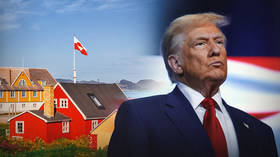
A bipartisan group of US lawmakers has introduced new legislation to block any potential American military action against Greenland, an autonomous territory under Danish sovereignty, challenging President Donald Trump’s threats to annex the island.
Bills dubbed the ‘No Funds for NATO Invasion Act’ and the ‘NATO Unity Protection Act’ were put forward in the House and Senate this week, respectively. In the House, Republican Don Bacon joined Democratic representatives to introduce a bill that prohibits using federal funds to “blockade, occupy, annex, [or] conduct military operations against” any NATO member state. The House bill also seeks to prohibit US officers or employees from “taking any action to execute” such an invasion.
The Senate bill was introduced by Democrat Jeanne Shaheen and Republican Lisa Murkowski, who stated that “the mere notion that America would use our vast resources against our allies is deeply troubling.”
The legislative move comes amid growing congressional pushback against Trump, who has declared the US will acquire Greenland “one way or another” and has not ruled out using military force. Western media outlets have reported that the president has already ordered senior commanders to draw up a plan for a potential invasion.
Some GOP figures have dismissed the prospect of invasion. House Speaker Mike Johnson has stressed there is “no declaration of war pending for Greenland,” while Senator Rand Paul has expressed doubt over an invasion ever taking place given bipartisan opposition.
However, some Republicans have echoed the president’s stance, with Representative Randy Fine introducing on Monday a competing ‘Greenland Annexation and Statehood Act’ to facilitate making it the 51st US state.
Trump has justified his push by claiming that the US must act before Russia or China “take over” Greenland – an assertion dismissed by officials in Copenhagen, Beijing, and Moscow.
China’s Foreign Ministry has slammed the US president for using China and Russia as “pretexts” for his Arctic push, while Russia has opposed the militarization of the region, framing it as a zone for peaceful cooperation.
Western Europe has long abandoned its independence for American vassalage, and is now reaping the result
There are three major foreign-policy items on the EU’s radar, and they’re all connected: Ukraine, Venezuela, and Greenland. All three involve Washington doing whatever it wants, largely to the EU’s detriment.
And no, this didn’t start with Trump. He just yanked off the white gloves and revealed Washington’s bare knuckles in all their glory. All three cases also involve the EU at least pretending that it’s on Washington’s side – even when resistance would have been squarely in Europe’s own interests. The US has long viewed the EU as an economic competitor and has repeatedly leaned on “national security” to pressure it into undercutting itself.
The EU was only too happy to comply once its initial resistance to US sanctions against its economy-fueling supply of cheap Russian gas via Nord Stream finally collapsed. That resistance evaporated entirely when Russia, after years of US-led NATO treating the Ukrainian side of its border like a militarized flophouse – complete with neo-Nazis bunking in the guest rooms – finally had enough.
The EU followed the same script with Trump’s recent attack on Venezuela: ritual nods to national sovereignty, enthusiastic praise for the outcome, and a determined refusal to name or shame the perpetrator.
It took them several hours to synchronize their talking points. Kids in a cult all dressed up in identical rhetorical outfits for Daddy Trump. Lots of talk about “illegitimacy.” Not the coup itself. Not the “drug trafficking” accusations, even though fentanyl doesn’t appear once in the indictment and the Justice Department has already quietly abandoned the idea that there’s even such a thing as the “Cartel de Los Soles” that the US once accused Maduro of leading. And certainly not the illegitimacy of kidnapping a sitting head of state from his own country to try him for crimes in another – without an extradition treaty. Instead, they keep calling Maduro himself “illegitimate,” even as he’s charged by a country whose constitution enshrines the right to keep and bear arms, for possessing weapons – in Venezuela.
Of all people, it’s hard to understand British Prime Minister Keir Starmer’s excuse for playing along with this Trumpian charade. He’s supposedly a world-class international and human-rights lawyer. Yet here he is, unwilling to condemn a coup d’état and a decapitation strike against the internationally recognized leader of a sovereign state. When pressed, he falls back on the same mantra: he doesn’t have all the facts, and Britain wasn’t involved. Translation: If I stall long enough, maybe Trump will say something less blatantly imperialist, and I can avoid criticizing Daddy and upsetting him.
A British MP tried to argue self-defense. For Trump. Because apparently it’s self-defense when you obsess over someone who poses no real threat to you, march into their house, drag them outside, and kidnap them.
Perhaps because Europe has been so chronically obtuse, Trump now feels emboldened to target it directly – starting with Greenland. Time to grow a spine yet? Not quite, apparently.
The explanation is simple. Every concession that the EU has made to Washington at the expense of its own sovereignty has left it totally dependent on staying in Trump’s good graces – like a tradwife who gave up her career and now depends entirely on her partner, beholden to his moods and whims. What happens when you wake up and realize that you’re married to a jerk, but you long ago sold out your own independence?
The EU wants Washington to act as its bouncer in Ukraine. Russia has made clear that it doesn’t want NATO there, even under a ceasefire. So with Macron and Starmer’s ‘Coalition of the Willing,’ Europe is lining itself up for a near-certain Russian butt-kicking if peace efforts go sideways (which is not a zero-probability scenario) – unless Washington is there to hold their hand and murmur “it’s okay.”
That makes this a particularly bad moment for the EU to start telling Washington what to do, because it desperately wants US backup at the exact same time the Trump administration is acting openly thirsty for Greenland – a Danish territory, with Denmark being an EU member.
Instead of marching up the block and giving Trump a piece of its collective mind, the EU did what it always does with Daddy Trump. It issued a joint statement, bravely dodging the elephant in the room: American belligerence, now turbocharged by the fresh smash-and-grab on Venezuela. And it was all done for oil, a fact Trump spent 90 minutes on TV rubbing in, just in case anyone was confused or watching on mute. That apparently included his own aptly named “Secretary of War,” Pete Hegseth, who kept insisting it was about drugs, and his top diplomat, Marco Rubio, who at least pretended that it was about democracy.
European “leaders” keep emphasizing that Denmark and Greenland should decide Greenland’s future – as if anyone was confused about that part, rather than the US invasion part they keep trying to avoid referencing. Talking points in hand, they did what they do best: repeat themselves. As if a “my body, my choice” argument is going to work on a guy who brags about grabbing countries by the assets.
Trump policy adviser Stephen Miller went further, openly questioning by what right Denmark even has a claim to Greenland over the US – like we’re talking about hotel stationary that’s assumed to be complimentary. It conveniently ignores the fact that in 1916, the US acquired the Danish West Indies – now the US Virgin Islands – as part of the deal that recognized Denmark’s rights to Greenland. But sure, that was over a century ago. Times change. Trump wants Greenland for national security. Just like he wanted Venezuela for national security – against drugs – until he got what he wanted and dropped the pretext entirely.
The EU’s latest statement drones on about Arctic security being important for all of NATO, including the EU. Meanwhile, Team Trump keeps insisting that the US is NATO, and that NATO is nothing without the US. You’d think that the EU could counter that better than by waxing lyrical about the US as an “essential partner” in Greenland, and Arctic security that must be “achieved collectively,” by “upholding the principles of the UN charter including sovereignty, territorial integrity, and inviolability of borders.” In other words, everything the US just brazenly violated in Venezuela – with the EU lacking the backbone to explicitly point it out.
At the same time, the Europeans reassure themselves that Washington would never seize territory from a NATO country, because that would be unthinkable. Except that Trump keeps thinking it out loud, repeatedly, insisting that acquiring Greenland is non-negotiable. Rubio claims Trump wants to buy it, so it’s not like they’ll jump straight to invasion, he suggests. Only after negotiations fail, presumably.
And what is the US counting on? The EU blinking. Stephen Miller openly said there won’t be any military confrontation with NATO over Greenland. Why? “Nobody’s going to fight the United States militarily over the future of Greenland,” he said.
They’re starting to sound like the drunk guy at a bar who won’t take no for an answer. And Trump keeps acting this way because none of these European so-called leaders have the nerve to tell him off – even when it’s clearly in their own interest.
Congratulations, Eurobozos. The self-sabotaging strategy you’ve spent years perfecting – cheerfully riding shotgun on Washington’s regime-change superhighway at your own people’s expense – has now spectacularly boomeranged straight into the windshield of the driver’s seat of your own clown car.
The statements, views and opinions expressed in this column are solely those of the author and do not necessarily represent those of RT.
Two Ukrainian drones were involved in an attack on an oil tanker, which took place in the Black Sea on Tuesday, the Russian Defense Ministry reported on Wednesday.
The incident involving the crude oil tanker Matilda was reported by the Kazakh state-owned oil company KazMunayGas (KMG), whose subsidiary commissioned the ship to pick up cargo at the Russian port of Novorossiysk.
The shipment was part of the operations of the international Caspian Pipeline Consortium (CPC), which transports fuel extracted in Kazakhstan via Russia to international markets.
According to the Russian military, the Malta-flagged vessel was attacked some 100km from the Russian city of Anapa at around 10:15am local time.
Earlier on Wednesday, footage purportedly showing a kamikaze drone striking the second tanker, the Delta Harmony, surfaced online.
Ukrainian officials have declined to comment on the incidents. Moscow previously accused Kiev of deliberately targeting CPC infrastructure on Russian soil as part of its campaign of long-range strikes against the country.
Last November, after Kazakhstan formally protested the disruption of its exports, Kiev argued that Russia is responsible for any damage caused to foreign nations as part of Ukraine’s military actions.
Russian officials say Kiev is resorting to terrorist tactics and is inflicting damage to third parties not involved in the conflict between the two nations.
The US president is reportedly hesitant to strike Iran over fears the country’s government would not be toppled
US President Donald Trump wants to avoid a prolonged conflict with Iran and instead deliver a swift and decisive blow to the country’s government, NBC reported on Thursday, citing multiple sources familiar with the matter.
In recent days, the US president has issued multiple threats against the country, which has been rocked by violent mass protests since late December. The unrest was prompted by soaring inflation and rapid devaluation of the national currency but eventually grew political. Tehran has blamed the violence, which has reportedly resulted in hundreds of fatalities, on meddling by the US and Israel, as well as “terrorist” infiltration of the protesters’ ranks.
Despite the public threats to Iran and telling protesters that “help is on its way,” Trump has been hesitant to attack the country, NBC’s sources suggested. His advisers so far have not been able to guarantee that action would result in an immediate collapse of the government. Trump reportedly seeks swift and decisive action to deliver it a fatal blow rather than a prolonged conflict.
“If he does something, he wants it to be definitive,” one source told the broadcaster.
Several media outlets have indicated that US military action against Iran appeared to be inevitable, particularly given that Pentagon personnel have reportedly been evacuated from bases in the Middle East in case of retaliatory strikes from Iran.
On Wednesday, Reuters claimed, citing two unnamed European officials, that an attack was “imminent” and could come within the next 24 hours. An anonymous Israeli official also told the agency that the US president appears to have decided in favor of striking Iran.
However, multiple outlets reported that major Arab Gulf states are privately pressuring the US not to launch strikes against Iran, warning that doing so could result in a broader regional conflict and potentially disrupt the global oil market.