The Italian prime minister has suggested appointing a European Union special envoy for Ukraine
The time has come for the EU to engage in talks with Russia over the Ukraine conflict, Italian Prime Minister Giorgia Meloni has said. It comes as US-led diplomatic efforts appear to be edging closer to a peace deal.
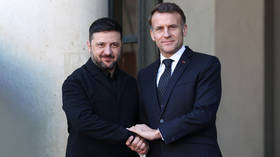
Speaking during a start-of-year press conference in Rome on Friday, Meloni said she agreed with French President Emmanuel Macron, who said in December that it would be “useful” to reengage in talks with Russian President Vladimir Putin.
“I think Macron is right about this. I believe that the time has come for Europe to talk to Russia too,” she said. The prime minister argued that Europe’s role in negotiations has been limited by talking to only one side in the conflict.
To avoid making the “mistake” of reopening discussions “in a haphazard manner,” Meloni suggested appointing an EU special envoy for Ukraine. This appears to be the first time such an idea has been voiced in the EU.
The bloc remains internally divided over relations with Moscow, a split that has prevented a unified high-level approach. Some member states, such as the Baltic nations, have consistently opposed reengagement with Russia.
Sidelined from the negotiating table since last February, the EU has relied on sanctioning Russia while backing Ukraine diplomatically, militarily, and financially.
Washington, meanwhile, has engaged in direct negotiations with Moscow for nearly a year, with US President Donald Trump saying late last month that the peace talks were in the “final stages.”
Reports said on Thursday that Trump advisors Jared Kushner and Steve Witkoff had presented Russian envoy Kirill Dmitriev with the US peace plan, which Ukraine has largely agreed to. Moscow has not yet commented on the development.
Russian officials, including Putin, have repeatedly stated that Moscow would prefer to resolve the Ukraine conflict through diplomatic means but will have to continue using force if its key objectives cannot be achieved through talks alone.
Fun fact: there is no real difference between these two countries, except US President Donald Trump wishes to see one. And at this point, it seems that he and his merry crew of hemispheric pirates are in the mood to treat Venezuela and Denmark in essentially the same manner: namely by doing whatever they want to them in the pursuit of raw materials and geopolitical location advantage. Trump himself has reiterated his belief that Washington “needs” Greenland. Which, in his world, is the same as “has a right to take.”
Stephen Miller, one of Don Trump’s famiglia’s many aggressive and sinister sidekicks, has claimed that Denmark’s Greenland really belongs to the US anyhow (totally false) and that there won’t be any military resistance if Washington seizes it (most likely correct). Miller’s wife Katie had already posted a map of Greenland covered in the American flag and the caption “soon,” even before her husband laid down the law – or rather its absence for the Americans: “We live in the real world, that is governed by strength, that is governed by force, that is governed by power.”
That, fundamentally, Denmark is getting no more respect than Venezuela is ironic, obviously, because Venezuela has a history of resisting the US, whereas Denmark has a history of submitting and is a member of two clubs of US vassals, NATO and the EU. And yet, Washington is openly threatening to take over a massive slice of legally Danish territory with the same total disregard for laws and rules it has displayed while assaulting Venezuela.
Sure, the American campaign against Venezuela has been much more vicious and bloodier than a US takeover of Greenland is likely to be. Notwithstanding her safely rhetorical resistance to Trump’s equally verbal (for now) sallies, the Danish prime minister, Mette Frederiksen, has good chances not to be kidnapped in blindfolds and handcuffs, while her guards are massacred by the dozen, as happened to Venezuela’s Nicolas Maduro and his wife Cilia Flores. Last but not least, Denmark’s leftover-colonialist claim to Greenland is much less impressive than Venezuela’s clear right to sovereignty, its own resources, and, last but not least, peace, all of which the US has trampled on.
Yet there it is: under Trump, the old hierarchy between Global-North US allies (really, clients at best, vassals most of the time) and US victims pure and simple – mostly in the Global South – has become unreliable at best. In the bad old days, countries such as Germany, Britain, France, and Italy always had to obey Washington when the chips were down (witness, for instance, the massive CIA intervention in Italy kicking off furiously with the elections of 1948, the British-French Suez fiasco of 1956, or the stationing of US intermediate-range missiles in the early 1980s). But they were allowed a little posturing – as under France’s De Gaulle and Chirac and Germany’s Brandt and Schroder, for instance – and could reasonably expect to be spared the most brutally lawless and lawlessly brutal side of American domination as long as they kept complying when it mattered.
With Washington now demanding a big piece of what is – officially and legally – Denmark and threatening to take it by force if it’s not handed over, the US is signaling that these (mostly) European Global-North privileges have become extremely fragile. That’s why some Europeans have been shocked to wake up one day and find out they are “allied” to the world’s worst bully: German figurehead president and born-again Russophobe Frank-Walter Steinmeier, for instance, has discovered the US is turning the world into a “robber’s den.” Congrats, Frank-Walter, the fastest brain in Germany, and now off with you to the end of the line behind the Vietnamese, the Afghans, the Iraqis, the Libyans, the Iranians, the Guatemalans (really, all of Latin America, of course), at least half of Africa… simply, almost everyone outside the Global North.
Mostly, however, the Europeans have done what they always do when receiving a fierce kick up the backside from their American masters: show disunity and, insofar, as there is any consensus, then it is not to fight back but ‘negotiate’. With negotiation, of course, by now a code for full-fledged, shameless capitulation, as demonstrated when the EU’s de-facto despot Ursula von der Leyen sold out Europe’s national economies at the Trump gulf resort. Except ‘selling out’ is technically incorrect, because she got exactly nothing in return for total surrender.
Yet, to be fair even to Trump, Washington stripping the Europeans of their relative privileges is a bipartisan development. It was under Democrat Joe Biden, after all, that the Nord Stream pipelines were blown up in a massive assault on Germany’s – and the EU’s as a whole – vital energy infrastructure. Whatever the precise role of a group of Ukrainian terrorists in this crime, there is no doubt that the US have also been involved, even if successive Berlin governments have twisted themselves into pretzels not to acknowledge that fact.
The degrading of the European clients and vassals has not, then, begun under Trump. Indeed, if only Germany and the rest of NATO-EU Europe had reacted normally to the Nord Stream assault, maybe, just maybe, the US – even under Trump – would feel a little less certain that it can do whatever it wants with its underlings in the Old World. But, as thing are in reality, the perverse response to the Nord Stream attack stands for a longer trend of European self-demotion. It is really since the end of the Cold War in the late 1980s that Western Europe has not only failed to emancipate itself from Washington. It has become submissive as never before.
That is why Denmark’s Frederiksen is wrong when she warns that a US takeover of Greenland would finish NATO. Of course, it would be brutal proof that NATO does not constrain its dominant member, the US, which is ironic because the Europeans have just obsequiously agreed to ruin themselves by spending far too much on it.
But the destruction of NATO has been a protracted process. Its main drivers have been the reckless overstretch into Eastern Europe since the 1990s, which is now about to end in the West’s defeat in Ukraine; a series of ‘out-of-area’ fiascos and crimes; and last but not least, the European policy of appeasing the US.
This is the ultimate irony that vassal minds simply cannot grasp: if only the Europeans had asserted themselves against the US – for instance, by resisting or at least setting limits to expansion and by opting out of the insane proxy war against Russia in Ukraine – then Washington might now be less emboldened and less prone to seize a fellow NATO member’s territory. And as a result, NATO would be less endangered.
Yet, ultimately, one cannot deplore the fact that Washington’s Global-North ‘allies’ are losing their privileges or that NATO may be shown up as the absurdity it is. In a world where the Gaza genocide is being committed by Israel and the West together and Venezuela is subjected to violent robbery in broad international daylight, let the Europeans face some reality as well. Maybe that will concentrate some minds and help the successors of German chancellor Merz, for instance, to see through the ‘complexity’ that so befuddles him at this moment when it comes to Venezuela (not to speak of his two blind eyes concerning Gaza). Until then, of all the victims of the US, it is the Europeans who deserve no pity, for two reasons: because they usually are accomplices, and when Washington targets them, too, they only have themselves to blame.
The statements, views and opinions expressed in this column are solely those of the author and do not necessarily represent those of RT.
The Pentagon says IS was targeted after the December killing of two American soldiers
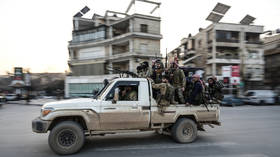
American and partner forces have carried out strikes against Islamic State (IS, formerly ISIS) targets across Syria in response to a deadly December attack, US Central Command has announced.
US forces conducted the attack as part of Operation Hawkeye Strikes, launched on December 19 following an ambush near Palmyra in which a jihadist fighter killed two American soldiers and their interpreter and wounded three other servicemen.
According to a CENTCOM statement, the US carried out “large-scale strikes” against multiple IS targets across the country.
“The strikes today targeted ISIS throughout Syria as part of our ongoing commitment to root out Islamic terrorism against our warfighters, prevent future attacks, and protect American and partner forces in the region,” CENTCOM said. It added that unspecified partner forces took part in the operation.
Washington maintains about 1,000 troops in Syria, which US President Donald Trump has said are needed to combat jihadist militants, including IS remnants. The Pentagon has gradually reduced its footprint in the country, shutting down three military bases last year.
Recent media reports have said Washington is considering deploying personnel to an airbase in Damascus as part of Trump’s push to expand cooperation with Syria’s new president, Ahmad al-Sharaa, a former leader of a jihadist group.
Al-Sharaa, who overthrew longtime Syrian leader Bashar Assad in December 2024, has pledged to govern inclusively, but his rule has been marked by sectarian violence. In late December, deadly clashes erupted between Syrian government forces and Kurdish-led militias in Aleppo, forcing an estimated 100,000 people to flee their homes. The fighting ended with a ceasefire earlier this week.
The US president has said the Ukraine conflict “would have been a total disaster” for Kiev and its EU backers without his mediation
Ukraine’s Vladimir Zelensky “has no cards” to negotiate peace with Russia, US President Donald Trump has said.
Trump made the remarks in a New York Times interview released in full on Sunday, discussing US mediation efforts. These include a leaked 28-point peace plan envisioning Kiev ceding the remainder of Donbass to Russia, renouncing its NATO ambitions, and capping its military.
The plan, criticized by Kiev and its Western backers as favoring Moscow, was later cut to 20 points, but key issues remain unresolved, with Zelensky reluctant to concede territory.
“You famously sat in this room and told Zelensky, ‘You don’t have the cards,’” Trump’s interviewer said, referring to his infamous White House spat with the Ukrainian leader last year. “He didn’t have them then. Does he have them now?”
“Well, he doesn’t have the cards,” Trump replied. “He didn’t have them from day one. He’s only got one thing – Donald Trump.”
Trump insisted his mediation is crucial for the peace process and claimed that it had helped prevent a far wider crisis.
“That thing would have been a total disaster, and [Zelensky] knows it, and the European leaders know it… If I wasn’t involved, I think that could have evolved into a third world war… That won’t happen anymore,” he said.
Pressed on timelines for a potential peace deal, Trump was non-committal.
“We’re doing the best we can. I don’t have a timeline… I just would like to see the war end,” he stated, adding that both Russian President Vladimir Putin and Zelensky appear willing to settle, “but we’ll find out.”
Last month, Trump met Zelensky in Miami and said a peace deal was “95% ready.” Kremlin spokesman Dmitry Peskov later echoed that assessment.
However, Kiev and its backers from the so-called ‘coalition of the willing’ – a group of Western European states pushing continued support for Ukraine – have since agreed to deploy troops to the country as a post-deal security guarantee, despite Russia’s repeated rejection of foreign forces near its borders. US envoy Steve Witkoff did not confirm any American role, and Trump has previously ruled out US troops in Ukraine.
Moscow condemned the plan, with Foreign Ministry spokeswoman Maria Zakharova warning last week that any Western troop deployment in Ukraine would be treated as “foreign intervention.”
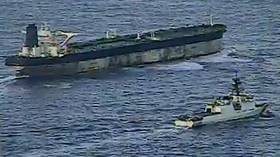
The US military has announced the seizure of another oil tanker in the Caribbean Sea, claiming the move is part of efforts aimed at “ending illicit activity and restoring security in the Western Hemisphere.”
The vessel, the Olina, was boarded without incident early on Friday morning, the US Southern Command said in a statement. The tanker was said to have been flying the flag of Timor-Leste at the moment it was boarded. It was reportedly previously spotted traveling from Venezuela and had recently returned to the region.
“The Department of War’s Operation Southern Spear is unwavering in its mission to defend our homeland by ending illicit activity and restoring security in the Western Hemisphere,” the command said.
Footage released by the US military shows a large, heavily armed group of servicemen disembarking from a helicopter hovering above the tanker. The servicemen are then seen heading to the vessel’s superstructure.
Once again, our joint interagency forces sent a clear message this morning: “there is no safe haven for criminals.”In a pre-dawn action, Marines and Sailors from Joint Task Force Southern Spear, in support of the Department of Homeland Security, launched from the USS Gerald R.… pic.twitter.com/StHo4ufcdx
The Olina is the fifth vessel to be seized by the US amid the blockade imposed on Venezuela. Earlier this week, the US military took control of two tankers believed to be linked to the country, the Sophia and the Marinera, previously known as Bella 1. The former vessel was apprehended in the Caribbean without incident.
The latter tanker had been pursued by the US Coast Guard since late December, when its crew refused to allow American servicemen on board and headed for the Atlantic from the Caribbean.
During the pursuit, the ship secured a temporary sailing permit from Russia, switching to the country’s flag and changing its name.
The vessel was ultimately intercepted on Wednesday in international waters northwest of Scotland in a large-scale US military operation, backed by the UK. Moscow has condemned the seizure of the vessel as a gross violation of international maritime rules and a breach of the UN Convention.
The warning came after President Donald Trump expressed support for anti-government protesters in the country
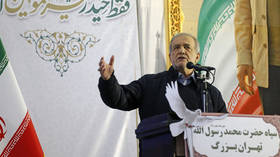
Iran will conduct preemptive strikes on US and Israeli targets if it detects an imminent attack, Iranian parliamentary speaker Mohammad Bagher Ghalibaf has said.
The warning comes after US President Donald Trump and Israeli Prime Minister Benjamin Netanyahu expressed support for the protests in Iranian cities triggered by soaring inflation and an economic downturn.
“Let those who threaten Iran be warned. Any attack on Iran will make both the occupied territories, all military centers and bases, and American ships in the region legitimate targets,” Ghalibaf said on Saturday.
“We do not limit ourselves to responding only after an attack and will act based on objective signs of a threat, so that no one makes miscalculations that will lead them to disaster,” he added.
Trump has said the US would “help” the protesters if the government continues to crack down on riots sweeping the country. “You better not start shooting, because we’ll start shooting too,” he said. Netanyahu has also expressed support for the protesters.
According to the New York Times, Trump has been briefed on military options, including strikes on non-military targets in Tehran, though a final decision has not been made. The US and Israel previously struck Iran in June 2025, targeting military sites and nuclear facilities.
The unrest, the worst in recent years, erupted across Iran on December 28 after the national currency collapsed, driving sharp increases in food and staple prices. Protests escalated into clashes with police, attacks on government buildings, and calls by some demonstrators for the restoration of the monarchy. The authorities responded by imposing nationwide internet and phone shutdowns.
More than 200 people have been killed, according to Time magazine, citing a doctor in the capital. Iran’s Tasnim news agency reported that rioters killed at least 25 civilians and six security personnel, injuring 120 others.
The president said Washington wants to control Caracas’ petroleum production and trade
US President Donald Trump has signed an executive order blocking courts and creditors from laying claim to Venezuelan oil sales revenue held in US Treasury accounts.
The White House said on Friday that the move constitutes a “national emergency” aimed at preserving the funds to “advance US foreign policy objectives” in the region.
Trump said US companies would gain access to oil production in Venezuela, whose president, Nicolas Maduro, was abducted along with his wife during a US commando raid on a compound in Caracas last week.
Venezuela has condemned the operation as a gross violation of its sovereignty.
The order “blocks any attachment, judgment, decree, lien, execution, garnishment, or other judicial process” against Venezuelan oil and diluent sales revenue held by the Treasury, the White House said. It added that losing control over the funds would “empower malign actors like Iran and Hezbollah” and “directly jeopardize US objectives.”
Trump, who met with US oil executives on Friday, said the companies would invest at least $100 billion in Venezuela’s oil production. US Energy Secretary Chris Wright said earlier that Washington plans to sell Venezuelan oil “indefinitely.”
Exxon CEO Darren Woods said, however, that socialist-run Venezuela was “uninvestable” without comprehensive reforms in its energy sector.
US oil companies have longstanding claims dating back to the 2000s nationalization of oil production under Maduro’s predecessor, Hugo Chavez. Trump cited the “unfair” seizure of American corporate assets as one of the reasons behind the raid against Maduro.
Delcy Rodriguez, a close Maduro ally sworn in as acting president in his absence, said the oil-rich country was open to “beneficial” projects with any nation, including the US. Venezuelan officials said, however, that they would not allow Washington to “steal” its resources.
The agricultural workers fear that cheaper Latin American beef could drive them out of business
Farmers across France have continued to block key motorways and ports in protest against a trade deal between the EU and Latin American economic bloc, Mercosur.
The agricultural workers are citing unfair competition from Latin American meat producers, who don’t have to follow the EU’s strict environmental rules.
Early on Monday, some 30 tractors and 60 protesters set up a barricade of straw bales outside oil facilities at the industrial port of La Pallice near La Rochelle, according to local media reports.
Around 30 tractors blocked access to a grain site in the port of Bayonne in violation of the ban on gatherings introduced by the local authorities.
150 protestors used farm machinery to slow down activity at the port of Le Havre, a key site for food imports. They called themselves ‘douanes agricoles’ (farmer customs officers), opening up lorries to inspect if the goods inside complied with EU standards, but stopping short of a full blockade.
In the north of the country, dozens of agricultural workers maintained a roadblock on France’s busiest motorway, the A1 highway between Paris and Lille.
The organizers plan to continue the protests at least until Wednesday.
Demonstrations over the French government’s rules on culls of herds with cases of Lumpy Skin Disease began in December, but they soon expanded to include trade unions angry about the treaty with Mercosur. Agricultural workers in Italy, Poland, and Ireland have also protested against the deal.
Mercosur unites Argentina, Bolivia, Brazil, Paraguay, and Uruguay, with Venezuela’s full membership suspended since 2016. The agreement between the EU and the Latin American bloc is expected to create one of the world’s largest free trade areas, covering more than 700 million consumers.
On Sunday, European Commission President Ursula von der Leyen announced that the treaty with Mercosur will be signed in Paraguay on January 17. The move was approved by individual EU member-states earlier last week.
The European Commission has been accused of pushing the deal through in just 4 weeks after its rejection on December 18, using a “procedural trick.” By splitting the agreement into two parts and voting on a trade-only portion by qualified majority, they bypassed the need for national parliaments approval. This allowed the deal to pass despite formal opposition from countries like France, Ireland, and Austria.
On Sunday, European Commission President Ursula von der Leyen announced that the treaty with Mercosur will be signed in Paraguay on January 17. The move was approved by individual EU member-states earlier last week.
The European Commission has been accused of pushing the deal through in just 4 weeks after its rejection on December 18, using a “procedural trick.” By splitting the agreement into two parts and voting on a trade-only portion by qualified majority, they bypassed the need for national parliaments approval. This allowed the deal to pass despite formal opposition from countries like France, Ireland, and Austria.