
error: Content is protected !!
error: Content is protected !!
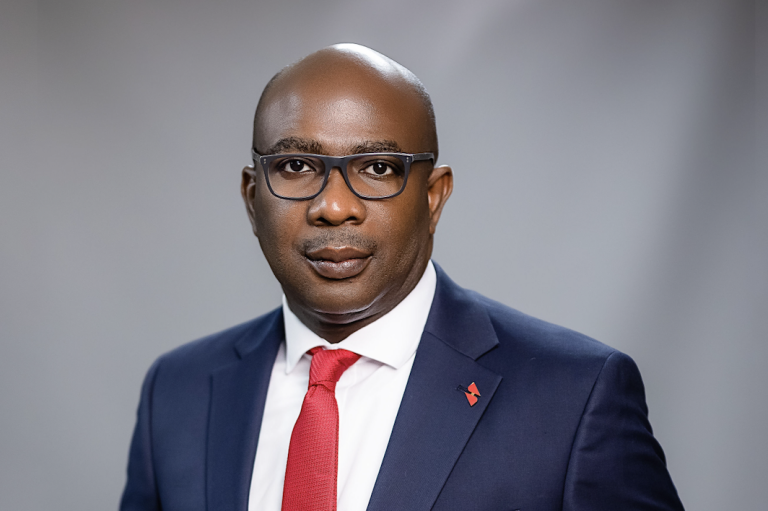
United Bank for Africa (UBA) Ghana Limited has posted a strong financial performance for the third quarter ending September 2025, driven by steady balance sheet growth, strong deposit mobilisation, and prudent risk management.
The Bank’s unaudited results show that gross earnings rose to GH¢1.08 billion as of September 2025, up from GH¢987.2 million in September 2024, a nearly 10% increase.
Profit before tax also improved to GH¢430.7 million, reflecting a resilient business performance amid market pressures.
UBA Ghana’s total assets increased by 18%, rising from GH¢9.58billion in September 2024 to GH¢11.31 billion in September 2025, underscoring the Bank’s continued expansion and strong capital position.
Customer deposits also grew significantly, up by 16% to GH¢8.19billion, compared to GH¢7.08 billion in the same period last year, reflecting customer confidence in the Bank’s brand and services.
The Bank remains financially sound and well-capitalised, with a Capital Adequacy Ratio (CAR) of 20.46%, well above the regulatory minimum CAR set by the Bank of Ghana.
Commenting on the results, the Managing Director and Chief Executive Officer, Uzoechina Molokwu, emphasised the Bank’s commitment to customer satisfaction and inclusive growth.
“Our banking solutions continue to be the growth driver for UBA Ghana,” Mr Molokwu said.
“Through our customer-first philosophy and innovative solutions such as LEO, Africa’s first AI-powered virtual banker available on WhatsApp, Facebook, and other social media platforms, we are democratising banking and making it more accessible to everyone.
“Between January and September 2025 alone, the Bank signed on over 38,800 new customers, a testament to the trust and relevance of our brand.”
He added that products such as NextGen, Kiddies, and Ruby Accounts continue to strengthen the Bank’s youth, family, and female banking propositions, while digital channels, including the UBA Mobile App, Internet Banking, and PAPSS (Pan-African Payment and Settlement System), enable seamless cross-border payments and business expansion across Africa.
UBA Ghana’s latest performance also aligns with its parent company’s strategic goal of delivering superior value through digital innovation and service excellence.
The Bank continues to prioritise its Customer First (C1st) philosophy, a culture built around consistently putting customers at the heart of all decisions and service delivery.
The Bank’s steady growth across all key indicators, earnings, assets, deposits, and profitability positions UBA Ghana as one of Ghana’s most resilient and customer-focused banks.
UBA Ghana is a subsidiary of the pan-African financial services group, United Bank for Africa Plc, which operates in 20 African countries and major global financial centres.
DISCLAIMER: The Views, Comments, Opinions, Contributions and Statements made by Readers and Contributors on this platform do not necessarily represent the views or policy of Multimedia Group Limited.
DISCLAIMER: The Views, Comments, Opinions, Contributions and Statements made by Readers and Contributors on this platform do not necessarily represent the views or policy of Multimedia Group Limited.

error: Content is protected !!


Getting ready for your F1 visa interview? The F1 visa interview is a crucial step for international students in the process of obtaining a student visa to study in the United States.
The interview takes place at the embassy. Understanding the requirements and knowing how to navigate the interviews successfully can make all the difference for visa applicants looking to work.
The F1 visa interview serves as an opportunity for international students and applicants to be evaluated by consular officers. It allows the interviewer to assess their eligibility and intentions for studying in the US.
For international students applying for a student visa, it is crucial to showcase your genuine desire to pursue education and answer common student visa interview questions.
It is also important to demonstrate strong ties to your home country and prove that you have sufficient funds to support yourself during your studies.
We will guide international students through the student visa interview process, highlight important factors that consular officers consider, and offer practical tips on preparing for success as an international student.
So, let’s dive in and increase your chances as an international student of obtaining that coveted F1 visa! Follow these tips to improve your chances of getting a visa to study in the US.
Preparing for your F1 visa interview is crucial for students and can significantly increase your chances of success with the interviewer. Here is a tip for us: make sure to be well-prepared and confident during the interview.
It is essential for students applying for a US student visa to understand the significance of a well-prepared application and how it can positively impact the outcome of their interview with the interviewer.
Demonstrating genuine intent to the interviewer or visa officer during the interview is also a crucial tip for those applying to enter the US.
Proper preparation plays a vital role in increasing your chances of obtaining an F1 visa. When preparing for an interview, it is important to familiarize yourself with common interview questions that the interviewer may ask.
This tip will help you feel more confident during the interview process and improve your chances of success. When preparing for an interview, it is important to familiarize yourself with common interview questions that the interviewer may ask.
This tip will help you feel more confident during the interview process and improve your chances of success.
When preparing for an interview, it is important to familiarize yourself with common interview questions that the interviewer may ask. This tip will help you feel more confident during the interview process and improve your chances of success.
When preparing for an interview, it is important to familiarize yourself with common interview questions that the interviewer may ask. This tip will help you feel more confident during the interview process and improve your chances of success.
By thoroughly understanding the requirements and expectations, you can confidently present yourself to the visa officer during your student visa interview for the US. Here’s why preparation matters:
A well-prepared application demonstrates professionalism, organization, and seriousness about pursuing education in the United States. This can greatly increase your chances of success during your student visa interview.
The visa officer may ask you a variety of questions to assess your eligibility for a student visa.
To help you prepare, here is a tip: familiarize yourself with common student visa interview questions. This can greatly increase your chances of success during your student visa interview.
The visa officer may ask you a variety of questions to assess your eligibility for a student visa. To help you prepare, here is a tip: Familiarize yourself with common student visa interview questions.
This can greatly increase your chances of success during your student visa interview. The visa officer may ask you a variety of questions to assess your eligibility for a student visa.
To help you prepare, here is a tip: familiarize yourself with common student visa interview questions. This can greatly increase your chances of success during your student visa interview.
The visa officer may ask you a variety of questions to assess your eligibility for a student visa. To help you prepare, here is a tip: familiarize yourself with common student visa interview questions. Consider these key points when preparing your application:
Be prepared to answer our visa interview questions regarding your educational plans and explain how they relate to your long-term goals. The visa officer will likely ask about your career aspirations as well, so make sure to highlight how studying in the United States will help you achieve them.
By presenting a comprehensive and well-prepared application for your US visa interview, you provide the consular officer with a positive impression of your credibility and commitment to your education.
During the F1 visa interview, it is crucial to convey your genuine intent to study in the United States. The interviewer needs to understand that you genuinely want to come and study here.
The interviewer needs to understand that you genuinely want to come and study here. The interviewer needs to understand that you genuinely want to come and study here.
The interviewer needs to understand that you genuinely want to come and study here. Here’s why this aspect holds significance:
To demonstrate genuine intent effectively:
Remember, being well-prepared not only boosts your confidence but also allows you to present yourself in the best possible light during the F1 visa interview in the US.
Take advantage of available resources in the US, seek guidance from experts in the US if needed, and invest time in preparing thoroughly. Your preparation can make a significant difference in securing a successful outcome for us.
First impressions matter. Dressing professionally shows that you take the process seriously and respect the opportunity given to you. Wear formal attire, such as a suit or dress, and ensure that your clothes are clean and well-fitted for us.
Pay attention to your body language during the interview. Sit up straight, maintain eye contact with us, the interviewer, and avoid fidgeting or slouching. These small details can make a big difference in how you are perceived by us.
An F1 visa interview in the US can be nerve-wracking, but it’s important to stay calm and composed throughout. Before entering the interview room, take deep breaths to help relax your nerves.
This will help us create a calm and confident impression during the interview. Remember that the interviewer is there to assess your eligibility for a student visa in the US, not to intimidate you. Speak clearly and confidently when answering questions, even if you feel nervous inside.
During the F1 visa interview, expect questions about your academic plans and financial stability in the US.
This is an opportunity for us to showcase our preparedness and demonstrate that we have a clear vision of what we want to achieve academically in the United States.
Be confident in explaining why you chose a particular university or program of study and how it aligns with your career goals in the US.
When discussing financial stability, provide honest answers about how you plan to fund your education abroad. If someone else is sponsoring your studies in the US, make sure you have all the necessary documents ready as proof of their financial support.
Remember, the key to a successful F1 visa interview for us is being well-prepared and confident.
By dressing professionally, maintaining good body language, staying calm throughout the interview, and being confident in answering questions about your academic plans and financial stability, you can increase your chances of obtaining an F1 visa in the US.
To increase your chances of success in obtaining an F1 visa in the US, it’s crucial to adequately prepare for the interview. Here are some essential steps you should take:
Before heading to your visa interview in the US, ensure that you have gathered all the necessary documents. These may include:
By gathering these documents ahead of time, you’ll be well-prepared and avoid any last-minute scrambling or stress. This will help us ensure a smooth process.
This will help us ensure a smooth process. This will help us ensure a smooth process. This will help us ensure a smooth process.
It’s important to thoroughly research and understand the university or college program you have been accepted into in order to make an informed decision.
Researching and understanding the program will help us make the best choice for our education. This will not only demonstrate your genuine interest but also help you answer questions confidently during the interview. Some key points to consider include:
By showing knowledge about the program and expressing enthusiasm for joining their educational community, you’ll make a positive impression on the visa officer.
To boost your confidence and improve your communication skills, it’s beneficial to practice answering potential interview questions. Enlist the help of a friend or family member who can simulate an interview scenario for you. Consider common questions, such as:
By rehearsing your responses, you’ll become more comfortable articulating your thoughts and ideas. Remember to maintain eye contact, speak clearly, and be concise in your answers.
In the F1 visa interview, there are several commonly asked questions that you should be prepared to answer. These questions are designed to assess your intentions, qualifications, and financial capability. Let’s take a look at some of the most frequently asked questions and how you can respond to them effectively.
The interviewer wants to know what program or field of study you plan to pursue in the United States. Be specific and concise when answering this question.
For example, instead of saying “I want to study engineering,” you could say “I am planning to pursue a Bachelor’s degree in Mechanical Engineering.”
This question aims to understand your motivations for choosing a particular course of study and how it aligns with your career goals.
Highlight the skills, knowledge, and experiences you hope to gain from the program that will contribute to your professional development. For instance, if you’re studying business administration, mention how it will equip you with essential leadership and management skills necessary for success in the corporate world.
It is crucial to demonstrate that you have adequate financial resources to support yourself while studying abroad. Provide clear evidence of funding sources such as scholarships, savings, or sponsorships.
If relying on personal funds or family support, be prepared with bank statements or financial documents showing proof of available funds.
The interviewer wants to gauge why you specifically selected their institution over others. Research the university/college beforehand so that you can provide genuine reasons for choosing it.
Mention academic reputation, faculty expertise, research opportunities, campus facilities or location advantages as factors influencing your decision.
This question helps determine whether you intend to return home after completing your education or if you have other plans. Emphasize your intention to apply the knowledge and skills acquired during your studies to contribute to the development of your home country. Highlight any specific projects, initiatives, or career opportunities you plan to pursue upon returning.
The interviewer wants assurance that you have strong ties to your home country and do not intend to overstay or immigrate illegally. Discuss family connections, property ownership, job prospects, or any other commitments that demonstrate your intent to return after completing your studies.
Remember, while preparing for the F1 visa interview, practice answering these questions with confidence and clarity. It’s essential to be honest and provide concise responses that showcase your genuine intentions and qualifications.
In order to help you prepare for your F1 visa interview, here is a comprehensive list of 65 commonly asked questions that you may encounter.
It’s important to remember that these questions are meant to assess your eligibility and intentions as a student in the United States. While the specific questions may vary, having an idea of what to expect can greatly increase your chances of success.
It’s crucial to demonstrate strong ties to your home country. The interviewer wants assurance that once you complete your studies, there is a high likelihood of you returning to your home country. Here are some potential questions related to this topic:
Preparing for these questions will help build confidence and ensure that you are well-prepared for your F1 visa interview.
Remember to answer truthfully, confidently, and concisely. Practice with a friend or family member beforehand to improve your fluency and delivery.
It’s important to note that while this list provides a wide range of potential questions, it is not exhaustive. The consular officer may ask additional questions based on your specific circumstances. However, by familiarizing yourself with these common questions, you will be better equipped to handle whatever comes your way during the interview.
Remember, the key is to remain calm, confident, and honest throughout the interview process. Good luck!
So you’ve made it through the application process, and now it’s time for the F1 visa interview. This can be a nerve-wracking experience, but with some preparation and confidence, you can increase your chances of success. Here are some tips on how to pass your F1 visa interview:
Preparation is key. Make sure you have all the necessary documents organized and ready to present to the consular officer. These may include your I-20 form, acceptance letter from the university, financial documents, and any other supporting materials.
First impressions matter, so make sure you dress appropriately for your visa interview. Opt for formal or business attire to show that you take the process seriously. Avoid wearing casual or overly flashy clothing that may give off an unprofessional impression.
Confidence is crucial during your F1 visa interview. Speak clearly and confidently when answering questions posed by the consular officer. Maintain eye contact and use polite language throughout the conversation. Remember, being respectful goes a long way in making a positive impression.
Honesty is always the best policy during your F1 visa interview. Consular officers are trained to detect inconsistencies in responses, so it’s important to provide truthful answers at all times.
If you don’t understand a question, politely ask for clarification rather than guessing or providing incorrect information.
One of the primary concerns of consular officers is whether applicants will return to their home country after completing their studies in the United States.
To address this concern, be prepared to demonstrate strong ties to your home country during the interview. This can include family connections, job opportunities upon returning home, or future plans that indicate your intention to go back.
The consular officer may ask you questions about your study plans in the United States. Be prepared to explain why you chose a particular university, program, or field of study.
Show that you have done your research and have a clear understanding of what you hope to achieve academically and professionally.
It’s natural to feel nervous during your F1 visa interview, but try to stay calm and positive throughout the process.
Take deep breaths, maintain a relaxed posture, and avoid fidgeting or excessive hand gestures. A positive attitude can help create a favorable impression on the consular officer.
Remember, each F1 visa interview is unique, so there’s no foolproof formula for success.
However, by following these tips and being well-prepared, you can increase your chances of passing the interview with flying colors.
Congratulations! You now have a comprehensive understanding of how to prepare for and succeed in your F1 visa interview. By following the tips and guidelines provided, you can confidently face the consular officer and increase your chances of obtaining your student visa.
Remember, preparation is key. Take the time to research common interview questions, practice your responses, and gather all necessary documentation.
Now that you are equipped with this knowledge, it’s time to take action. Start by creating a checklist of everything you need to do before your interview date.
Practice answering potential questions with a friend or family member who can simulate the role of the consular officer. And most importantly, stay calm and confident during the actual interview.
Good luck on your journey towards studying in the United States! We believe in you and know that with proper preparation, dedication, and a positive mindset, you will be able to successfully navigate the F1 visa interview process.
Yes, as an international student on an F1 visa, you are eligible for certain employment opportunities on campus during your studies. However, there are restrictions on off-campus employment.
It is important to consult with your designated school official (DSO) for guidance on work authorization regulations.
If your F1 visa application is denied, it can be disheartening. However, don’t lose hope! You have the option to reapply or request reconsideration by providing additional supporting documents or addressing any concerns raised during the initial interview.
It’s crucial to understand why your application was denied before taking the appropriate steps.
Yes, as long as you have a valid passport and an unexpired Form I-20, you can travel outside of the United States during your studies.
However, it is essential to consult with your DSO and ensure that you have all the necessary documents for re-entry into the country.
Yes, it is possible to change your program or school after obtaining an F1 visa. However, you must follow proper procedures and notify both your current institution and the new institution of your intentions.
Your new school’s designated official will guide you through the process.
As long as you maintain your status as a full-time student and make satisfactory academic progress, you can stay in the United States on an F1 visa for the duration of your program of study, including any authorized practical training (OPT) period.
It is important to adhere to immigration regulations and keep track of any expiration dates related to your visa status.
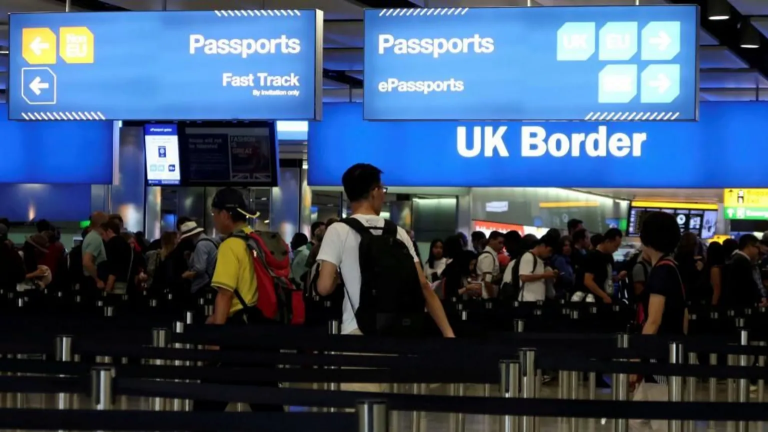
Some migrants coming to the UK will need to speak English to an A-level standard under tougher new rules set to be introduced by the government.
The changes, which will come into force from 8 January 2026, will affect some graduates and those applying for skilled worker or scale-up visas, which are for people employed by fast-growing businesses.
The new rules form part of wider plans to cut levels of immigration to the UK outlined in a white paper in May.
Home Secretary Shabana Mahmood said: “If you come to this country, you must learn our language and play your part.”
“This country has always welcomed those who come to this country and contribute,” Mahmood said.
“But it is unacceptable for migrants to come here without learning our language, unable to contribute to our national life.”
Applicants will be tested in person on their speaking, listening, reading and writing at Home Office-approved providers, with their results checked as part of the visa process.
Those applying for skilled worker, scale-up and high potential individual (HPI) visas will be required to reach B2 level – a step up from the current B1 standard, which is equivalent to GCSE.
To come to the UK on the skilled worker visa, migrants have to work for a government-approved employer and earn at least £41,700 a year, or the “going rate” for their type of work, whichever is highest.
The scale-up visa is open to migrants coming to work for a fast-growing UK business. Migrants can apply for a high-potential individual visa if they have been awarded a qualification from a top global university within the last five years.
According to the British Council, which offers English language courses, learners who achieve B2 level can “understand the main ideas of complex texts on concrete or abstract topics.”
They can express themselves “fluently and spontaneously” and communicate comfortably with other English speakers. They can also produce “clear, detailed text on many subjects and explain a complex viewpoint”.
Further English language requirements for other visa routes and family dependants are expected to be introduced in due course, Home Office Minister Mike Tapp told Parliament on Tuesday.
The prime minister previously said the changes outlined in the white paper would make the UK’s immigration system “controlled, selective and fair”.
Home Office estimates suggest the measures could reduce the number of people coming to the UK by up to 100,000 per year.
Net migration to the UK – total permanent arrivals minus total permanent departures – fell to 431,000 in 2024, down almost 50% on the total in 2023, when it reached a record high of 906,000.
Dr Madeleine Sumption, director of the Migration Observatory at the University of Oxford, said the government faced a “trade-off” between “ensuring migrants speak good English and enabling employers to recruit workers who are expected to bring economic benefits.”
Many graduate jobs already require language skills above A-level standard, she said.
The new language requirements will have “more impact in middle-skilled jobs involving technical and manual skills, where employers sometimes do not require high language proficiency”.
Immigration lawyer Afsana Akhtar told BBC News she thought it was “unfair” that migrants had to reach such a high standard of English “because even many people in the UK probably wouldn’t be able to pass English A-level”.
“This would rule out even skilled workers who want to come and contribute to our British economy,” she said.
“The GCSE standard is sufficient – and then when they come live here, [and] integrate into England and the English way of life, their English will improve inevitably.”
Other measures in the white paper include cutting the time period international students can stay in the UK to find a graduate job after their course ends from two years to 18 months, which will take effect from January 2027.
Students will also have to meet higher financial requirements, raised to £1,171 per month outside London (from £1,136) for up to nine months.
The Global Talent visa, for high achievers in technology, arts and academia fields, has also been expanded to include winners of more prestigious prizes.
Further plans in the White Paper include the immigration skills charge for UK employers to pay when sponsoring foreign workers on specific visas has also been increased to £480 per person per year for small organisations or charities, and to £1,320 for medium and large organisations.
This is raised from £364 and £1,000, respectively.
As part of the government’s efforts to attract highly skilled people to the country, the HPI route will be expanded. The number of migrants on the visa is expected to double from 2,000 to 4,000, but there will be a cap of 8,000 applications each year.
DISCLAIMER: The Views, Comments, Opinions, Contributions and Statements made by Readers and Contributors on this platform do not necessarily represent the views or policy of Multimedia Group Limited.
DISCLAIMER: The Views, Comments, Opinions, Contributions and Statements made by Readers and Contributors on this platform do not necessarily represent the views or policy of Multimedia Group Limited.
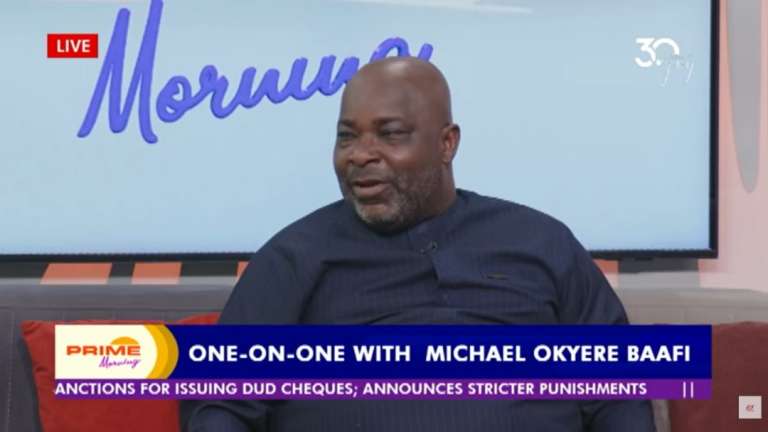
The Member of Parliament for New Juaben South in the Eastern Region, Michael Okyere Baafi, has said he served former President Nana Addo Dankwa Akufo-Addo with unwavering loyalty throughout his political career.
According to him, loyalty remains the cornerstone of politics, and he has consistently demonstrated that principle in his relationship with the former president.
“I loyally worked for him (the former president). I believe in loyalty. Politics is about loyalty and commitment. In politics, there is nothing like ‘he is my brother’ or ‘he is my best friend’ — no. Politics is about loyalty,” Mr Okyere Baafi said in a One-on-One interview on JoyPrime on Wednesday.
He revealed that his commitment was recognised when Nana Akufo-Addo assumed office in 2016, noting that he was the first person to be appointed by the then-president and was even given the freedom to choose his preferred area of service.
Read Also: Akufo-Addo gave me the chance to choose where I wanted to serve – New Juaben MP
“I believe that loyalty always brings good rewards. He (Akufo-Addo) gave us a huge opportunity that nobody has ever given me before in history,” he stated.
Mr Okyere Baafi was appointed in 2017 as the Executive Secretary of the Ghana Free Zones Board in President Akufo-Addo’s first administration.
He later served as Deputy Minister for Trade and Industry and currently represents New Juaben South in Parliament on the ticket of the New Patriotic Party (NPP).
DISCLAIMER: The Views, Comments, Opinions, Contributions and Statements made by Readers and Contributors on this platform do not necessarily represent the views or policy of Multimedia Group Limited.
DISCLAIMER: The Views, Comments, Opinions, Contributions and Statements made by Readers and Contributors on this platform do not necessarily represent the views or policy of Multimedia Group Limited.
error: Content is protected !!
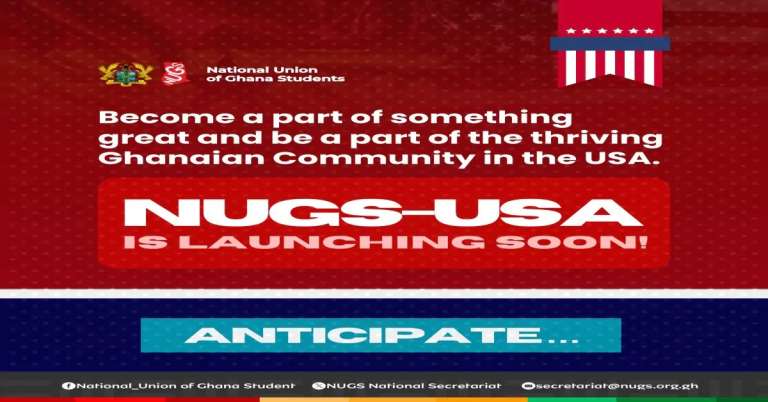
The National Union of Ghana Students (NUGS), the official voice of Ghanaian students in Ghana, is set to expand its reach by launching a chapter in the United States of America.
The NUGS-USA chapter aims to bring together Ghanaian students from universities and institutions across the US to foster a sense of community, promote cultural exchange, provide academic support, and advocate for the rights and well-being of Ghanaian students.
Objectives of NUGS-USA
Unity and Networking: NUGS-USA will serve as a platform for Ghanaian students to connect, interact, and collaborate.
The organization will host social events, workshops, and seminars to encourage networking among students from diverse backgrounds, fostering a sense of belonging and a support system that can prove invaluable during their time in the US.
Advocacy and Representation: NUGS-USA will act as a collective voice to ensure that the concerns of Ghanaian students are heard by educational institutions, policymakers, and relevant authorities.
The organization will advocate for fair tuition rates, improved student visa processes, and address issues related to discrimination, ensuring that Ghanaian students receive the support and representation they deserve.
Cultural Exchange and Awareness: NUGS-USA will organize cultural events that celebrate Ghanaian traditions, history, and values.
These events will not only provide a platform for Ghanaian students to showcase their rich culture but also promote cross-cultural understanding and foster an environment of diversity and inclusivity.
Academic Support: NUGS-USA will recognize the unique challenges faced by international students in navigating the American education system.
The organization will offer a range of academic resources, workshops, and mentorship programs to assist Ghanaian students in adapting to the academic environment, including workshops on study strategies, time management, research techniques, and effective communication skills.
Community Service: NUGS-USA will encourage its members to engage in volunteer and community service activities, demonstrating the commitment of Ghanaian students to their host communities and allowing them to contribute positively to both American and Ghanaian societies.
Significance of NUGS-USA
The establishment of NUGS-USA marks a significant step towards uniting Ghanaian students in the US and empowering them to achieve their academic, personal, and professional goals.
The organization will serve as a valuable resource for Ghanaian students, providing them with a sense of community, advocacy, cultural exchange, academic support, and opportunities to give back to their host communities.
NUGS-USA will also play a crucial role in promoting Ghanaian culture and heritage in the US, fostering cross-cultural understanding, and building bridges between the Ghanaian community and other student groups.
The organization’s efforts will contribute to a more inclusive and vibrant academic environment, enriching the experiences of all students.
As NUGS prepares to launch its US chapter, it is poised to make a profound impact on the lives of Ghanaian students in the United States.
The organization’s commitment to unity, advocacy, cultural exchange, academic support, and community service will undoubtedly empower Ghanaian students to thrive in their academic pursuits and make meaningful contributions to their host communities.
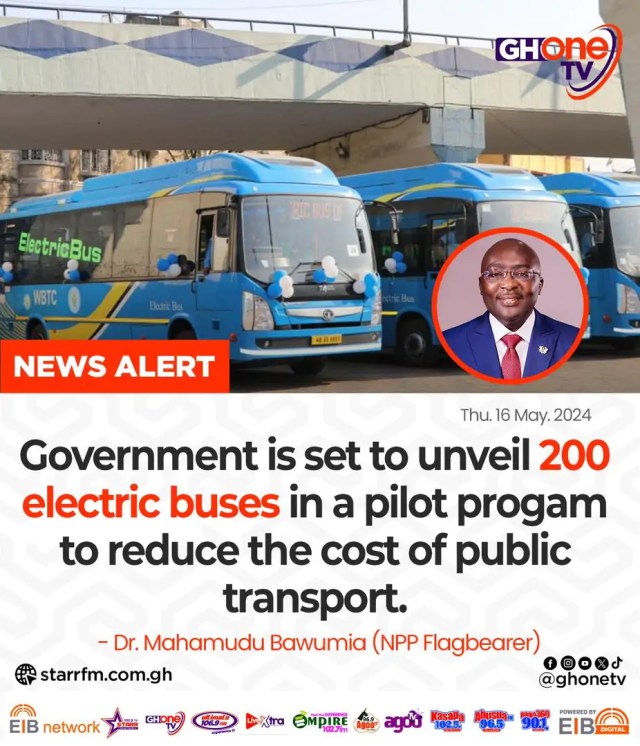

Accra, Ghana – May 21, 2024: The Alliance for Sustainability Education (ASEc) has issued a detailed reaction to Dr. Mahamudu Bawumia recent announcement of Government plans to introduce 200 electric buses into the public transportation system.
The statement, released by ASE’s Lead Convener Andrews Aibi Junior, presents a multifaceted analysis of the potential economic, environmental, and social impacts of this initiative.
Economic Implications: Strengthening Foreign Reserves and Reducing Transportation Costs
ASEc highlights the significant economic benefits that could arise from this transition. With over 30% of Ghana’s total imports currently consisting of crude oil, a shift to electric buses could substantially reduce the nation’s fuel import bill.
This reduction in expenditure could help bolster Ghana’s foreign reserves, providing a more stable economic foundation. The organization draws parallels with Ethiopia’s Logistics Master Plan, which aims to cut a $6 billion fossil fuel import bill through similar measures.
Furthermore, ASEc points out that electric vehicles (EVs) have lower operating costs compared to internal combustion engine vehicles. This could translate into reduced public transport costs due to lower maintenance expenses and the absence of volatile fuel prices.
By stabilizing and potentially lowering transportation costs, the initiative could mitigate inflationary pressures and lower the cost of goods and services for consumers.
Environmental Benefits: Reducing Carbon Footprint and Air Pollution
ASEc emphasizes the environmental advantages of adopting electric buses. The shift is expected to lead to a substantial reduction in greenhouse gas emissions and improve air quality, especially in urban areas like Accra where air pollution causes nearly 1,790 deaths annually.
The introduction of electric buses aligns with Ghana’s Nationally Determined Contributions (NDCs) under international climate agreements, aiming to cut 64MtCO2e by 2030.
Given that over 95% of vehicles in Ghana are second-hand, with an average age of 14.2 years, the transition to electric mobility is seen as a crucial step towards reducing the country’s carbon footprint.
ASE’s statement notes that this move will significantly lower the emissions from public transport vehicles, contributing to a healthier population by reducing respiratory and cardiovascular diseases linked to air pollution.
Boosting Innovation and Job Creation
ASEc also underscores the potential for job creation and innovation. The electric bus initiative is expected to spur local innovation, requiring new skills and expertise to develop and maintain the fleet.
Training programs focused on electric vehicle technology could equip the workforce with necessary skills, fostering a new industry within the country.
Moreover, local production of components such as batteries and charging stations, especially with plans to mine newly discovered lithium, could further stimulate economic growth and create employment opportunities.
Addressing Challenges: Infrastructure and Energy Concerns
While praising the initiative, ASE acknowledges the challenges ahead, particularly the recent unanticipated blackouts (dumsor) which could impede a seamless transition to electric mobility. To counter this, ASEc suggests integrating solar PV panels onto buses and into the charging infrastructure to harness solar energy, thereby reducing greenhouse gas emissions and cutting costs.
Currently, there are only four level 2 charging stations available to the public, all located in Accra. ASE stresses the need for adequate deployment of charging stations across the country to support the new fleet.
Political Timing: Sustainable Progress or Election Strategy?
Despite the numerous benefits, ASEc questions the timing of the announcement, coming from a Vice President seeking the presidency in the December 2024 elections. This has led to speculations about whether the move is driven by genuine sustainable development goals or is a strategic effort to garner electoral support.
Read detailed statement below.


Former Olympic coach Vicente Modahl, the husband of I’m A Celebrity star and Commonwealth Games champion Diane Modahl, has been charged with several serious sexual offences involving a child, the Crown Prosecution Service (CPS) has confirmed.
The 65-year-old Norwegian national, also known as Vicente Leiva-Modahl, faces multiple charges for alleged offences said to have taken place between 2012 and 2024, as per Daily Mail Sports.
According to the CPS, the charges include two counts of raping a child, five counts of sexually assaulting a child, two counts of causing a child to engage in sexual activity, and two counts of assault by penetration of a child.
MUST READ: John Mahama: I want to see Ghana go beyond the semi-finals at the 2026 World Cup
&format=webp)
&format=webp)
&format=webp)
In addition, Modahl has been charged with two counts of raping an adult female, two counts of sexually assaulting an adult female, one count of causing an adult female to engage in sexual activity, two counts of assault by penetration of an adult female, and one count of controlling and coercive behaviour.
The CPS stated that all charges relate to the same woman.
Vicente Modahl, who was his wife’s coach during her professional athletics career, is scheduled to appear at Manchester Magistrates’ Court on Tuesday.
READ ALSO: Cape Verde makes history, becomes second smallest country to qaulify for first World Cup
Diane Modahl, a former 800m runner, won gold at the 1990 Commonwealth Games and represented Great Britain in four consecutive Olympic Games—1988, 1992, 1996, and 2000. She later appeared in the third season of ITV’s I’m A Celebrity… Get Me Out of Here! in 2004, alongside Katie Price, Kerry Katona, and Peter Andre.
Following her retirement from competitive athletics in 2002, Diane and Vicente co-authored The Diane Modahl Story – Going the Distance, a book chronicling her journey as an elite athlete.
READ MORE: Black Stars failure to qualify for AFCON was heart-wrenching and painful – Pres. Mahama
In 2010, the couple founded the Diane Modahl Sports Foundation, a charity dedicated to helping young people from underprivileged backgrounds access sporting opportunities and coaching. Eight years later, Diane was appointed a Member of the Order of the British Empire (MBE) for her services to sport and youth development.
Diane Modahl is also the cousin of world champion boxer Chris Eubank, who appeared in the fifteenth season of I’m A Celebrity in 2015.