Kaja Kallas may be the face of bloc hostility towards Russia, but she’s not its author
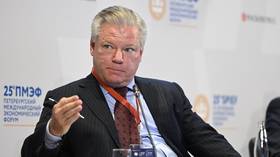
By Timofey Bordachev, Program Director of the Valdai Club
It has become fashionable to claim that the Baltic States are the driving force behind the European Union’s hostility towards Russia. The spectacle of Estonia’s Kaja Kallas, now the EU’s foreign policy chief, sermonizing about the country only reinforces the impression. Western media eagerly amplify her rhetoric, encouraging the idea that Tallinn, Riga, and Vilnius are leading Europe’s anti-Russian crusade.
It is only partly true. Yes, the Baltic states remain politically defined by Russophobia. That will endure until they fundamentally rethink their identity, an unlikely event for small frontier nations whose geography eternally places them in Russia’s shadow. Their economies and security depend on exploiting their image as Europe’s guardians against the “Russian threat.” They learned to monetize proximity long before they learned to govern themselves.
The modern version is not an invention of Kaja Kallas, nor of her father Siim, a Soviet-era Communist Party functionary turned liberal statesman. The original authors were the Livonian Knights, who ruled these territories half a millennium ago. Those medieval nobles feared deployment to the Ottoman frontier, so they conjured their own existential threat – “barbarians from the East” – and presented Russians as interchangeable with Turks. Western Europe, then as now poorly informed about Russia, embraced the idea because it suited existing anxieties.
The tactic worked. By the late 17th century, suspicion of Russia had taken root among Europe’s leading courts. France was first to institutionalize it. Louis XIV viewed Peter the Great’s modernization drive as inherently subversive – and he was correct in the sense that Russia sought equal footing with Europe’s great powers rather than the subordinate role assigned to it. When Peter defeated Sweden, Russia earned that status for two centuries. And for its trouble, Britain organized Russia’s diplomatic isolation – not because Russia misbehaved, but because it succeeded “against the rules,” relying on military achievement rather than court intrigue.
This is worth recalling. Russophobia is not a Baltic invention. The guillotine was not designed in Kostroma, and anti-Russian ideology did not originate in Riga, Tallinn, or Vilnius. It was codified in Paris and London, later refined by Berlin. Today, it remains the major Western European powers, not the Baltic states, that anchor the anti-Russian coalition.
But they have no intention of risking much themselves. Their preference is to subcontract confrontation to others. Warsaw is the current candidate, though the Poles, at last enjoying rising living standards, have little appetite for sacrifices their Western patrons will not make. One hopes they resist the temptation to act as someone else’s battering ram.
The Baltic states’ alarmist politics, therefore, should be understood as theater rather than command. Loud, yes. Decisive, no. Their role is to shout loudly enough to distract from the fact that Europe’s real players are elsewhere. The major powers use them as amplifiers, not architects.
And this is where the Baltic myth collapses. The states most loudly proclaiming eternal hostility to Russia – Britain, France, and ultimately Germany – will be the first to reopen channels when the present crisis settles. They have done so after every previous confrontation. Once their interests dictate reconciliation, they will rediscover diplomacy.
Western Europe has always regarded its Baltic satellites as disposable instruments. They, in turn, have always accepted the role. That dynamic has not changed, despite Tallinn’s newfound visibility under Kallas. She is a useful voice in a moment of tension, not the one writing Europe’s policy.
We all would do well to remember this. The Baltic states are border furniture – noisy, insecure, eager for subsidies – but not the strategists of Europe’s Russian policy. The serious actors are larger, older states with longer memories and much deeper interests. Eventually, they will come knocking again. The Baltic capitals will be left exactly where they started: shouting into the wind and hoping somebody still listens.
This article was first published by the magazine Profile and was translated and edited by the RT team.
The new US National Security Strategy echoes Hungary’s concerns over the EU’s direction, Viktor Orban has said
US President Donald Trump understands that Europe is in decline, Hungarian Prime Minister Viktor Orban has said.
The new US National Security Strategy (NSS) released last week criticizes the EU’s political and cultural direction, warning of “civilizational erasure” and accusing European institutions of overregulation, destabilizing migration policies, and suppressing political opposition. It urges “patriotic European parties” to defend democratic freedoms and promote “unapologetic celebrations” of national identity.
“America has a precise understanding of Europe’s decline. They see the civilizational-scale decline that we in Hungary have been fighting against for fifteen years,” Orban wrote on X on Thursday.
Orban, who has served as prime minister since 2010, has long argued that the EU is suffering from economic stagnation and migration pressures. He has presented Hungary’s model of national sovereignty, strict border control, and conservative social policy as a corrective to what he views as Europe’s structural crisis.
He has also criticized the way the EU has handled the Ukraine conflict, saying it made a mistake by severing its channels with Moscow, and that the US now recognizes the need to rebuild strategic ties with Russia. Orban has urged Western governments to pursue diplomacy with the Kremlin rather than continuing “burning” money on the conflict, a stance that mirrors Trump’s push for a negotiated settlement.
Russia has welcomed aspects of the NSS as broadly consistent with its own strategic outlook, suggesting that the document could create new openings for cooperation between Moscow and Washington.
The reaction to the strategy in the EU was largely negative. Asked about the US criticism, the bloc’s top diplomat, Kaja Kallas, said, “it seems to me it is made to be a provocation.” European Council President Antonio Costa warned the US against “interference in the political life of Europe.”
German Chancellor Friedrich Merz said some statements in the document are unacceptable.
Relations between the US and EU have been strained since Trump returned to the White House in January. They have regularly clashed over trade, defense spending, digital regulation, and the Ukraine conflict.
The Hungarian prime minister has denounced a pact that forces the members of the bloc to take in newcomers or pay €20,000 per refusal
Hungary will not comply with new EU requirements to take in immigrants starting from next year, Prime Minister Viktor Orban has said, blasting Brussels for launching “an absurd and unjust attack” on his country.
The EU Migration Pact, which was agreed upon on Monday and is expected to take effect next July, requires every member state to contribute according to its population size and GDP. The goal is to ease pressure on the most heavily affected countries, namely Cyprus, Greece, Italy, and Spain, the European Commission said.
States must either accept a set number of migrants relocated from the hotspots or pay €20,000 ($23,000) for each person they refuse to take in.
”As long as Hungary has a national government, we will not implement this outrageous decision,” Orban, a long-time critic of Brussels’ migration policy, wrote on X on Tuesday.
The Commission also identified Austria, Bulgaria, Croatia, Czechia, Estonia and Poland as countries under “significant” migration strain. Hungary, however, was not included in that group.
Orban said the assumption that Hungary is unaffected by the migration crisis is “completely detached from reality.” He noted that tens of thousands attempt to enter the country illegally each year and are stopped by Hungary’s border guards and fence system.
In June 2024, the European Court of Justice ruled that Hungary must pay a €200 million lump-sum fine, plus a daily penalty of €1 million, for failing to comply with EU asylum law requirements.
Orban said last month that Hungary would rather pay the €1 million-per-day fine than allow illegal migrants in, arguing that paying was “better than living in fear,” and promising Hungarians a safe holiday season. Christmas markets have been targeted by Islamists in several high-profile attacks in recent years.
The EU has grappled with heavy migration pressure for more than two decades. The involvement of European NATO countries in the collapse of Libya and Syria, and their backing of Ukraine in its conflict with Russia have driven millions of people toward the bloc.
Dreaming of studying abroad but worried about the cost? You’re not alone. Many Ghanaian students face the same challenge; high tuition, living expenses, and travel costs can make international education feel out of reach.
That’s why fully funded scholarships for Ghanaian students are life-changing. They cover everything you need, turning a distant dream into a real opportunity.
In this guide, you’ll quickly explore the top 10 fully funded scholarships, what they offer, who can apply, and how to get started. Let’s dive in and help you take the first step toward studying abroad. Let’s jump in!
Why Fully Funded Scholarships Matter for Ghanaian Students
Fully funded scholarships provide opportunities that many Ghanaian students would never be able to pursue on their own.
Studying abroad provides more than just a degree; it instills confidence, independence, and a broader perspective of the world.
You get to learn from top universities, meet people from various cultures, and develop skills that will set you apart in the global job market.
But the truth is that international education is expensive. Tuition, housing, and travel can be a significant financial burden on families.
Fully funded scholarships for Ghanaian students eliminate this barrier. They take away the money stress and allow you to focus on learning, growing, and building the future you want.
What Counts as a Fully Funded Scholarship for Ghanaian Students?
A fully funded scholarship covers all the major costs you need to study abroad: tuition fees, accommodation, living allowance, travel, books, and sometimes even insurance.
In simple terms, it removes the financial pressure so you can focus fully on your studies. This is different from partial funding, which only covers some expenses, such as tuition or a portion of your living costs.
Fully funded scholarships for Ghanaian students take care of everything, making international education accessible without adding financial stress.
Top 10 Fully Funded Scholarships for Ghanaian Students
1. Chevening Scholarship
fully funded scholarships for ghanaian students
The Chevening Scholarship offers fully funded master’s programs in the UK, covering tuition, living costs, travel, and study allowances, making it ideal for Ghanaian students with strong leadership potential and networks to impact their community and career ambitions.
2. Commonwealth Scholarship
fully funded scholarships for ghanaian students
The Commonwealth Scholarship provides full funding for Ghanaian students pursuing postgraduate (master’s & PhD) and split-site PhD studies in the UK, covering tuition, travel, and living expenses while supporting development-focused careers.
3. Fulbright Foreign Student Program
fully funded scholarships for ghanaian students
The Fulbright Program is a US government scholarship for Ghanaian students for graduate study or research in the USA, offering tuition, stipends, travel support, and health insurance.
It emphasizes academic excellence and leadership, and strong alumni networks that help careers back home.
4. DAAD Scholarship (Germany)
fully funded scholarships for ghanaian students
The DAAD Scholarship supports Ghanaian students with full funding for master’s and PhD studies in Germany, including stipends, travel allowances, and health insurance.
It’s great for Ghanaians because it offersawide range of technical and research programs with strong industry links and a low cost of living in many cities.
5. Erasmus Mundus Joint Masters
fully funded scholarships for ghanaian students
The Erasmus Mundus Scholarship funds Ghanaian students in joint master’s programs across multiple European universities, covering full tuition, a monthly stipend, travel, and installation costs.
It helps you study in two or more countries and gain a multicultural academic experience and strong European networks.
6. Australia Awards
fully funded scholarships for ghanaian students
The Australia Awards program provides full scholarships for Ghanaian students to pursue master’s degrees in Australia, covering tuition, living expenses, travel, and health insurance.
It emphasizes skills that support national development and often includes return-service expectations
7. MasterCard Foundation Scholarship
fully funded scholarships for ghanaian students
The MasterCard Foundation Scholarship fully supports Ghanaian students with tuition, accommodation, living expenses, and mentorship opportunities at partner universities worldwide.
It’s great for Ghanaians because it provides strong support beyond money, career, and leadership development tailored to African students.
8. New Zealand Commonwealth Scholarship
fully funded scholarships for ghanaian students
The New Zealand Commonwealth Scholarship offers fully funded master’s and PhD opportunities for Ghanaian students, covering tuition, stipends, travel, and settlement costs.
It is good for research and development-focused studies with a supportive academic environment.
9. Vanier Canada Graduate Scholarships
fully funded scholarships for ghanaian students
The Vanier Scholarship provides generous full funding for outstanding Ghanaian PhD students studying in Canada, supporting living and research expenses. It is highly competitive and excellent for research-focused Ghanaians aiming for top-tier PhD training and global networks.
10. Chinese Government Scholarship (CSC)
fully funded scholarships for ghanaian students
The Chinese Government Scholarship fully funds Ghanaian students at undergraduate, master’s, and PhD levels, covering tuition, accommodation or stipend, medical insurance, and living support.
It offers a wide program variety, growing academic ties with Ghana, and multiple entry points (including Chinese-taught programs).
Eligibility Requirements for Fully Funded Scholarships for Ghanaian Students
Most fully funded scholarships for Ghanaian students have common eligibility criteria. Strong academic performance is essential, often requiring high grades or a GPA.
Many programs also value leadership and community service, looking for students who actively contribute to society. Language proficiency tests, such as IELTS or TOEFL, may be required for non-English-speaking countries.
Some scholarships have age limits or require Ghanaian citizenship. Additionally, program-specific conditions may apply, such as pursuing certain fields of study or research areas.
Meeting these requirements increases your chances of securing a fully funded scholarship and studying abroad successfully.
How to Apply Successfully for Fully Funded Scholarships As a Ghanaian Student
Start by researching and shortlisting scholarships that match your goals and qualifications. Gather all necessary documents, such as transcripts, personal statements, and proof of language proficiency.
Write compelling essays that highlight your achievements, goals, and community impact. Secure strong recommendation letters from teachers or mentors.
Submit your applications early and accurately, double-checking for errors. After submission, follow up on application portals to track progress.
Mistakes to avoid: missing deadlines, submitting incomplete applications, using generic essays, or ignoring smaller scholarship opportunities, all of which can reduce your chances.
Tips to Increase Your Chances of Winning Fully Funded Scholarships
To improve your chances, write a personal statement that clearly expresses your goals and is consistent with the scholarship’s mission.
Highlight your leadership, community involvement, and achievements to set yourself apart.
Create a strong overall profile by excelling academically, gaining relevant experience, and showing dedication to your field.
Tailor each application to the specific scholarship, showing how you fit its values and objectives. Consistency, preparation, and attention to detail can make the difference between a standard application and a winning one.
Best Countries Offering Fully Funded Scholarships for Ghanaian Students
Some of the top destinations for fully funded scholarships include the UK, USA, Canada, Germany, Australia, and China. The UK is popular for Chevening and Commonwealth Scholarships with a strong leadership focus.
The USA offers Fulbright programs emphasizing academic excellence and global networks. Canada provides Vanier and Pearson scholarships for research and innovation.
Germany has DAAD scholarships with low living costs and diverse programs. Australia focuses on development-oriented studies through Australia Awards, while China offers CSC scholarships with a wide program variety and cultural exposure.
These countries make scholarships accessible through clear application processes and generous funding.
Frequently Asked Questions (FAQs)
What are fully funded scholarships for Ghanaian students?
Fully funded scholarships for Ghanaian students cover tuition, accommodation, living expenses, travel, and sometimes books and insurance, allowing students to study abroad without financial stress.
Who is eligible for fully funded scholarships for Ghanaian students?
Eligibility usually includes strong academic performance, leadership experience, community involvement, language proficiency (like IELTS or TOEFL), and Ghanaian citizenship. Some programs have age limits or field-specific requirements.
How can I find fully funded scholarships for Ghanaian students?
You can search online scholarship portals, visit official university websites, check government programs, join social media groups, or consult educational agencies specializing in international scholarships.
Can I apply for multiple fully funded scholarships at once?
Yes, you can apply for multiple scholarships, but ensure each application is tailored, complete, and meets the specific eligibility requirements for the best results.
What documents are needed for fully funded scholarships for Ghanaian students?
Common documents include academic transcripts, personal statements, letters of recommendation, proof of language proficiency, and sometimes a CV or portfolio.
Conclusion
Fully funded scholarships for Ghanaian students open doors to world-class education, global exposure, and career opportunities without the burden of financial stress.
From the UK and USA to Canada, Germany, Australia, and China, there are numerous programs designed to support talented and ambitious Ghanaian students.
Success comes from consistent research, careful preparation, and early applications. With the right information and dedication, studying abroad is entirely achievable.
Start exploring your options today, and take the first step toward turning your dream of international education into a reality.Get to know more scholarships to apply from us
The Russian president has spoken on the need to maintain the wealth of languages in both countries in the age of AI
Russian President Vladimir Putin has cited India as an example of preserving “unity in diversity” in the age of artificial intelligence.
Countries like Russia and India should attach importance to their cultural variety, he told the annual meeting of the Council for Civil Society and Human Rights via video conference on Tuesday.
“I was just in India, there are one and a half billion people,” Putin said. “But only one-third speaks Hindi, maybe 500 million, maybe 600, and everyone else speaks other languages, and often they don’t understand one another.”
Nothing the similarities between the nations, the Russian leader added, “So for massive and huge countries like ours and India, who are civilization-states, this is critically important. This unity and diversity or rather unity in diversity is something that we must preserve.”
Putin welcomed the idea of a state program to support languages in Russia.
“As for the languages, there are 270 [languages in Russia]. I don’t even know, it’s actually difficult to count, if we talk about some nuances. But the idea is very good – to use artificial intelligence to support language models,” he said.
Russia and India signed more than a dozen bilateral agreements affecting the media, space, and pharma sectors during Putin’s visit last week.
Moscow wants “multifaceted relations” with New Delhi in various sectors, the Russian president said during the visit.
RT India’s English-language broadcast was also launched during Putin’s trip.
The French first lady used a slur against feminist activists who disrupted the show of an actor-comedian previously accused of rape
French President Emmanuel Macron’s wife, Brigitte, has sparked outrage after referring to feminist protesters as “stupid b***hes.”
Earlier this week, a since-deleted clip showed France’s first lady chatting privately on Sunday backstage with Ary Abittan, an actor and comedian who had previously been accused of rape. The 51-year-old performer is touring for the first time since investigative judges decided to drop the charges due to a lack of evidence.
The previous night, the feminist group Nous Toutes (“All of us”) had disrupted his stand-up show, with activists wearing masks bearing the word “rapist” over the actor’s face standing up in the audience and shouting “Abittan rapist” before being escorted out.
In the leaked video, Abittan jokes that he is feeling nervous, apparently referring to the possibility that protesters might return. Macron is heard responding jokingly: “If there are any stupid b***hes, we’ll kick them out.”
A spokesman for the French presidency said on Tuesday that the first lady had been trying to calm the actor’s nerves and had intended to only criticize what she described as the radical methods used to disrupt and obstruct the performance.
Despite the explanation, criticism mounted quickly, with politicians across party lines as well as activists and figures from the film industry condemning the remark.
Marine Tondelier, leader of the French Greens, called the comment “extremely grave,” while Senator Agnes Evren described it as “very sexist.” Former President Francois Hollande also condemned the first lady’s choice of language. Actress Judith Godreche, who has become a feminist icon since accusing two directors of sexually abusing her when she was a minor, called for an end to such behavior in France’s cultural sector. She posted a brief message on Instagram criticizing the first lady’s remarks. Nous Toutes later turned Macron’s phrase into a social media hashtag.
Macron has also faced scrutiny after a long-running legal dispute linked to online conspiracy theories claiming she is transgender. A court ruling this year fined the originators of the rumor and reignited discussion over digital harassment targeting public figures. The case drew international attention after US commentator Candace Owens amplified the claims and later alleged that the Macrons had ordered her assassination.
The meeting in Dubai set out a long-term agenda for stronger cooperation, according to a joint statement
Russia and the US have held a meeting to restore and strengthen business ties and contacts, the press service of Roscongress Foundation said on Tuesday. The two sides agreed to make the business dialogue an annual event.
According to a joint statement issued following this week’s meeting in Dubai, UAE, contacts between the Russian and American business communities should continue in a motivated and politically unbiased format.
Roscongress, the organizer of the forum together with the American Chamber of Commerce in Russia (AmCham Russia), said the meeting focused on prospects for cooperation, rebuilding mutual trust, and restoring company-to-company links.
The Russian delegation was led by Sergey Katyrin, president of the Russian Chamber of Commerce and Industry, while AmCham Russia President and CEO Robert Agee headed the US side.
“Russian and American companies continue to seek solutions for implementing investment, industrial, technological, and infrastructure projects,” said Katyrin.
The participants said they hope the dialogue will improve conditions for businesses in both countries, reduce risks, and strengthen confidence.
“It is crucial for businesses to maintain working communication channels,” Agee said, adding that the US side wants to explore practical cooperation with Russian partners where possible.
Many international businesses pulled out of Russia due to the unprecedented Western sanctions imposed after the escalation of the Ukraine conflict in 2022. Others left to avoid the risk of secondary sanctions or broader international pressure.
Agee recently told Russian media that American businesses still view Russia as a promising market and are waiting for the lifting of sanctions.
The US and Russian delegations discussed opportunities across a range of sectors, including investment, industry, technology, and infrastructure projects, according to the statement.
The US tech giant has been forced to allow users to opt out of personalized advertising to comply with the bloc’s digital regulations
Meta has been forced to change its advertising policy in the EU, the European Commission has announced.
The move comes after the Facebook and Instagram owner received a €200 million ($233 million) fine in April under the bloc’s Digital Markets Act (DMA) for failing to provide users with a lawful choice over data-driven advertising.
The Commission stated on Monday that starting next year, Meta will allow users in the EU to opt out of data sharing for personalized ads, adding that this will give consumers “full and effective choice” over how their information is used. Brussels added that it will seek feedback from Meta and other stakeholders once the changes are implemented.
A Meta spokesperson has acknowledged the Commission’s announcement while defending the company’s existing business model, stating that “personalized ads are vital for Europe’s economy.” The spokesperson also said the company believes its current practices already comply with the DMA.
The policy shift comes as tensions between Washington and Brussels over digital regulation have escalated in recent months. US officials have repeatedly criticized the EU’s enforcement actions against American tech companies, arguing that the bloc’s rules amount to overregulation.
Earlier this month, the EU also issued its first non-compliance decision against Elon Musk’s platform X, fining it €120 million ($140 million) for alleged violations of the Digital Services Act’s clause on deceptive design practices.
US Secretary of State Marco Rubio condemned the ruling as “an attack on all American tech platforms and the American people” while US Vice President J.D. Vance accused Brussels of punishing X “for not engaging in censorship.”
Musk responded by labeling the EU a “bureaucratic monster” and calling for the bloc to be “abolished.”
The European Commission has defended its actions, stating that rules on data use, transparency, and user protection apply equally to all firms operating in the EU. European Council President Antonio Costa has also defended the EU’s regulatory autonomy, saying that the bloc’s digital rules reflect its own democratic model and understanding of free speech.
Brussels reportedly wants to pass legislation to block Hungary’s veto in order to immobilize Moscow’s funds indefinitely
The EU is planning to fast-track legislation which would indefinitely freeze Russian assets in an effort to prevent Hungarian Prime Minister Viktor Orban from vetoing the measure at the upcoming EU summit, the Financial Times has reported, citing officials familiar with the plans.
The asset freeze, imposed as part of sanctions launched against Moscow in response to the Ukraine conflict, is prolonged by the EU each time the measures are renewed, which requires unanimous approval. The bloc hopes to use the funds to back a so-called “reparation loan” to Kiev – a plan that the Kremlin has denounced as outright theft.
Orban has argued against further aid to Kiev, comparing it to trying to “help an alcoholic by sending them another crate of vodka,” while calling for diplomacy with Russia instead of “burning” more money on Ukraine’s war effort. Earlier this month, Budapest reportedly vetoed the issuance of Eurobonds to arm Kiev – another option put forward by the European Commission to continue financing the conflict.
According to the FT, EU officials have proposed invoking emergency powers to permanently freeze up to €210 billion ($245 billion) in sovereign Russian assets. Making the freeze indefinite would decouple it from regular sanction renewals, preventing Budapest from blocking the measure.
Diplomats reportedly believe that adopting the indefinite freeze within days would strengthen the EU’s position when discussing the proposed “reparation loan.” The matter is set to be on the agenda at the upcoming summit of EU leaders later this week.
After the escalation of the Ukraine conflict in 2022, EU states froze a large number of Russian central bank assets, mostly held by Brussels-based Euroclear. Hungary is not alone in opposing the plan to use the funds to back a loan for Ukraine. Belgium has said the initiative carries financial and legal risks, while France, Luxembourg, Germany, Italy, and Slovakia have also reportedly spoken against the move.
On Wednesday, Russian Foreign Minister Sergey Lavrov argued that “robbing” Moscow “in violation of all established norms of international and commercial law” is the last remaining option for Brussels to sustain Kiev in its conflict with Moscow.
The Ukrainian leader’s presidential term expired last year but he has refused to hold a vote due to martial law
US President Donald Trump has urged Ukraine to hold elections, questioning the country’s democratic credentials in an interview with Politico published on Tuesday.
He appeared to issue a new challenge to Vladimir Zelensky, whose presidential term expired in May 2024, but has declined to organize a presidential election, citing martial law.
Zelensky was elected in 2019 and declared in December 2023 that Ukraine would not hold presidential or parliamentary elections while martial law remains in force. It was imposed after the escalation of the conflict with Russia in February 2022 and has since been repeatedly extended by parliament.
Trump told Politico that Kiev should no longer use the ongoing conflict as an excuse to delay a vote.
“They haven’t had an election in a long time,” Trump said. “You know, they talk about a democracy, but it gets to a point where it’s not a democracy anymore.”
Asked directly if Ukraine should go to the polls, Trump said “it’s time” and argued it was “an important time to hold an election,” adding that while “they’re using war not to hold an election,” Ukrainians “should have that choice.”