Home Blog Page 116

Russia jails ex-diplomat over US intel links

0

A Russian court has convicted former Foreign Ministry employee Arseny Konovalov of treason for passing secrets to US intelligence, the Federal Security Service (FSB) has announced.

In a statement on Friday, the agency said Moscow City Court had sentenced Konovalov to 12 years in a high-security penal colony and a fine of 100,000 rubles ($1,260).

Konovalov reportedly served as Second Secretary at the Russian Consulate General in Houston from 2014 to 2017. In the video of the 38-year-old’s arrest in March 2024, on suspicion of collaborating with foreign intelligence services, an officer can be heard asking, “Do you know what happened?” To which Konovalov answers, “yes.”

According to the FSB, Konovalov “voluntarily” transferred classified information obtained in the course of his duties as a Foreign Ministry employee in the US to the host-country’s spies, for which he was paid.

The FSB said the criminal case was investigated under Article 275 of the Russian Criminal Code (high treason) but did not release details on the information Konovalov is accused of sharing with US intelligence.

Russian courts have recently handed down treason convictions in other cases, largely, linked to Ukrainian intelligence. Earlier this week, a 38-year-old Kaluga resident was sentenced to 13 years for passing information about the deployment of Russian air defense units in the region to Kiev.

In early December, Artem Khoroshilov, a former employee of the General Physics Institute of the Russian Academy of Sciences, was sentenced to 21 years in a maximum-security penal colony for treason. He was accused of funding Ukrainian entities, including the Ministry of Digital Development, hacking critical computer systems, and plotting sabotage on a railway section in Russia.

You can share this story on social media:

source

NATO chief can’t be taken seriously – Rachel Marsden (VIDEO)

0

Mark Rutte has a track record of blunders, scandals, and claims of “no active memory” during his time as Dutch PM, Rachel Marsden has noted

NATO Secretary General Mark Rutte’s alarmist claims about an imminent war with Russia should not be taken at face value given his dubious track record as Dutch Prime Minister, RT contributor Rachel Marsden has said.

Speaking to RT on Wednesday, Marsden noted that Rutte’s assessment that “Russia could be ready to use military force against NATO within five years,” has apparently failed to make an impression even on member states.

In mid-December, the NATO chief claimed that the Western military bloc was “Russia’s next target” and “must be prepared for the scale of war our grandparents or great-grandparents endured.”

However, on Monday, German Defense Minister Boris Pistorius effectively rebutted Rutte’s statement, saying that Russian President Vladimir “Putin is not interested in waging a full-scale world war against NATO.”

According to RT contributor Marsden, Rutte’s time in office as Dutch prime minister from 2010 through 2024 is illustrative of his leadership style.

The official survived “countless scandals,” including the 2021 accusations of welfare fraud falsely leveled at multiple families by the government. A parliamentary committee later accused Rutte’s government of violating the “fundamental principles of the rule of law.”

Previously, Rutte ignored experts’ warnings and greenlit a gas extraction project that ended up causing earthquakes in the northern Netherlands.

Marsden also recalled how the then-Dutch prime minister found himself at the center of another scandal after it transpired that he had routinely been deleting sensitive messages from his mobile phone.

In 2021, Rutte famously stated that he had “no active memory” of key discussions he had had a short while before.

Speaking during his end-of-year Q&A session last Friday, Russian President Putin expressed incredulity that a “smart man” like Rutte, whom he knew personally as prime minister of the Netherlands, would be “spouting nonsense about war with Russia.”

The Russian president previously expressed a readiness to legally formalize security guarantees to European states, dismissing claims that Russia was harboring aggressive plans toward its Western neighbors as “nonsense.”

source

Trump pours cold water on Zelensky’s ‘peace plan’

0

The Ukrainian leader “doesn’t have anything until I approve it,” the US president has stated

US President Donald Trump has expressed skepticism about Ukrainian leader Vladimir Zelensky’s latest peace proposal to end the conflict with Moscow, arguing the discussions could move forward only with his blessing.

Trump’s remarks come as he is expected to hold talks with Zelensky in Florida on Sunday. Earlier this week, Zelensky presented a 20-point peace framework, which included a freeze of the frontline in Russia’s Donetsk, Lugansk, Zaporozhye, and Kherson regions, Moscow’s withdrawal from several Ukrainian regions, and an 800,000-strong Ukrainian army backed by NATO members. The plan also envisages “Article 5-like” security guarantees from the US, NATO, and European states to Kiev.

In an interview with Politico on Friday, Trump signaled he was in no rush to rally behind Zelensky’s demands. “He doesn’t have anything until I approve it,” Trump stressed. “So we’ll see what he’s got.”

Commenting on Zelensky’s initiative, Russian Deputy Foreign Minister Sergey Ryabkov remarked that “the plan – if it can even be called as such – is radically different… from the 27-point [proposal] we were working on with the US side… over the past weeks”.

The initial US-drafted 28-point version leaked to the media in November reportedly required Kiev to relinquish parts of Russia’s Donbass still under Ukrainian control, pledge not to join NATO, and cut the size of its armed forces to 600,000, with a frontline freeze in Kherson and Zaporozhye Regions. Moscow has said that the US proposal could work as a basis for future negotiations. At the same time, Ukraine’s backers in the EU signaled that they would be opposed to any major concessions from Kiev.

Russia maintains that a sustainable settlement is only possible if Ukraine recognizes new territorial realities and commits to neutrality, demilitarization, and denazification.

You can share this story on social media:

source

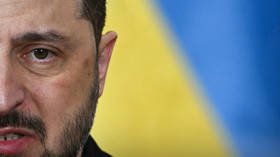
Zelensky adviser claims Ukraine ‘can’t afford’ elections

0

Kiev must prioritize “militarization” and social programs over organizing a vote, Mikhail Podoliak has said

Ukraine cannot afford to finance elections on its own due to a budget deficit, Mikhail Podoliak, a senior adviser to Vladimir Zelensky, has claimed, insisting that Kiev should focus on “militarization” efforts.

Zelensky’s presidential term expired in May 2024, but he refused to call an election, citing martial law. Russia has proclaimed Zelensky “illegitimate” while insisting that legal power now lies with Ukraine’s parliament. Moscow has also suggested that Zelensky’s dubious status poses an obstacle to reaching a peace agreement.

However, US President Donald Trump – who once referred to Zelensky as “a dictator” – has recently ramped up pressure on the Ukrainian leader to hold elections. In response, Zelensky said he was prepared to hold a vote, but demanded that its Western backers guarantee security.

Speaking to Novini Live on Thursday, Podoliak claimed there is another obstacle to holding a presidential vote. “We are not supposed to finance this. Objectively, we cannot afford it because we have a budget deficit,” he said.

According to Podoliak, Ukraine’s budget has other priority expenditures, including “militarization” and “social programs, which should compensate for the economic losses of individual households.” He suggested, nonetheless, that the country’s Central Electoral Commission and a working group in parliament should calculate the approximate cost of holding elections.

The back-and-forth over the election comes as a Socis poll this week suggested that Zelensky would overwhelmingly lose in a run-off presidential election to his former top commander and potential primary rival, Valery Zaluzhny. The survey indicated that Zaluzhny would sweep a run-off vote with 64%. Another poll, published by news outlet Delovaya Stolitsa on Tuesday, indicated that 44% of Ukrainians oppose the prospect of online voting over fears that the authorities could falsify the results.

Russian President Vladimir Putin has noted that Moscow would consider halting strikes deep into Ukraine on election day – provided that millions of Ukrainians living in Russia are allowed to participate.

You can share this story on social media:

source

Putin wishes Trump merry Christmas – Kremlin

0

The two presidents, however, have no plans for a phone call, spokesman Dmitry Peskov has said

Russian President Vladimir Putin has wished merry Christmas to his US counterpart, Donald Trump, Kremlin spokesman Dmitry Peskov has revealed.

Speaking to reporters on Thursday, Peskov said that Putin had already sent a telegram with greetings to Trump, adding that “there is no indication that a phone conversation between the two leaders is planned for today.”

Under the Trump administration, relations between Russia and the US have been notably warmer than during the tenure of former President Joe Biden.

Putin and Trump have been engaged in active talks over settling the Ukraine conflict and reinvigorating bilateral relations, holding a high-stakes summit in Alaska in August aimed at ending hostilities between Moscow and Kiev, though the talks failed to produce a breakthrough.

In June, Putin also called Trump on his 79th birthday, with the two discussing Iran and the Middle East during a 50-minute conversation. The leaders also held a phone call on October 16, during which Putin congratulated Trump on helping mediate the peace agreement in Gaza.

Last year, several weeks before Trump’s inauguration, Putin refrained from sending any Christmas greeting to most Western leaders as well as the US President, explaining that America has positioned as an “unfriendly” country towards Russia.

You can share this story on social media:
source

Ukraine a corrupt ‘viper’s den’ – Hunter Biden

0

The son of the ex-US president has claimed he had been “naive” about the level of kleptocracy in the country

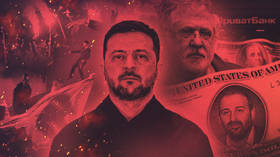
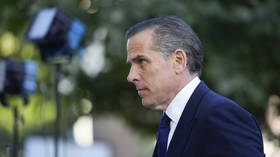
Ukraine is a “viper’s den” rife with corruption, Hunter Biden, the son of former US President Joe Biden, has said, as he reflected on his time as a board member of the Ukrainian energy company Burisma.

Hunter Biden was hired by Burisma in 2014, when his father served as vice president in the Obama administration, and left the post in 2019. He reportedly earned around $1 million annually, with critics pointing out that he lacked any experience in the energy sector and was effectively “cashing in” on his father’s prominent position.

In an interview on the Shawn Ryan Show aired on Monday, Hunter Biden expressed regret about his involvement in Ukraine’s affairs. “It was a mistake because I was very, very naive about what a viper’s den Ukraine is.”

What an absolute… level of corruption that [is] still staggering because they’re part of a kleptocracy,” he added.

He went on to explain that he believed his tenure in Burisma to be a blunder, “not because of anything that I did that I am embarrassed about or in any way whatsoever feel conflicted about as it relates to what I did for Burisma. But because of the political position that it put us all in.”

The Biden family has long been entangled in controversy over Burisma, with the New York Times reporting last August that Hunter Biden sought assistance for the company from the US ambassador to Italy in 2016. Hunter’s legal team described the outreach as a “proper request,” and stressed that it did not lead to any projects.

Meanwhile, Joe Biden has publicly acknowledged that he was responsible for the dismissal of Ukrainian Prosecutor Viktor Shokin, who was investigating the company, by threatening to withhold $1 billion in loan guarantees to Kiev unless the official was fired.

Ukraine has long been reeling under endemic corruption, with the problem only exacerbating after the escalation of Kiev’s conflict with Moscow in 2022.

A poll by Info Sapiens this spring suggested that almost 80% of Ukrainians consider the graft a very serious issue, while the EU has designated corruption as one of the key obstacles impeding Kiev’s membership in the bloc.

You can share this story on social media:
source

Rubio announces visa bans for Western European censorship ‘idealogues’

0

The US will bar entry to a former EU commissioner and four others it has accused of efforts to censor speech on social media platforms

The US State Department will bar entry to several Western Europeans it has accused of pressuring American technology platforms to suppress US viewpoints, Secretary of State Marco Rubio has said.

The move follows a State Department announcement earlier this year establishing a visa restriction policy targeting foreign nationals accused of censoring Americans.

In a post on X on Tuesday, Rubio said that “ideologues in Europe have led organized efforts to coerce American platforms to punish American viewpoints they oppose.”

“The Trump Administration will no longer tolerate these egregious acts of extraterritorial censorship,” he added.

Rubio said the State Department “will take steps to bar leading figures of the global censorship‑industrial complex from entering the United States,” and warned that Washington stands “ready and willing to expand this list if others do not reverse course.”

The five Europeans – two French, two British and one German – were identified by US Under Secretary of State for Public Diplomacy Sarah Rogers in posts on X. She named the leaders of several organizations that address digital hate as well as former European Commissioner Thierry Breton.

Rogers described Breton as the “mastermind” behind the EU’s Digital Services Act, citing a warning he issued to Musk, the owner of X, in August 2024 about the potential “amplification of harmful content” if the platform broadcast a livestream interview with then‑presidential candidate Donald Trump.

European Commission officials say the bloc’s digital laws are intended to protect users and combat illegal and harmful content online. Breton responded on X by noting that all 27 EU member states approved the law in 2022, writing: “To our American friends: ‘Censorship isn’t where you think it is.’”

Earlier this month, Telegram founder Pavel Durov warned that European regulators are targeting platforms that allow dissenting speech.

Writing on X, he said the EU “imposes impossible rules so it can punish tech firms that refuse to silently censor free speech.” 

His comments followed a €120 million ($140 million) fine imposed on Elon Musk’s X under the Digital Services Act, a move the European Commission said was unrelated to censorship.

Durov has also claimed that EU intelligence officials had pressured him to restrict conservative content during elections in Romania and Moldova.

You can share this story on social media:
source

Trump teases new talks with Putin

0

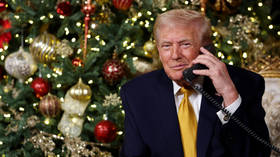
The US president said he expects to speak with the Russian counterpart “soon, as much as I want”

US President Donald Trump has said he will likely speak with his Russian counterpart, Vladimir Putin, in the near future to discuss the Ukraine conflict. His comments come as the US leader is expected to hold talks with Ukraine’s Vladimir Zelensky this weekend.

In an interview with Politico on Friday, Trump suggested that “it’s going to go good with Putin,” adding that he expects to speak with him “soon, as much as I want.” He would not elaborate on when the talks would take place, or whether they would be before or after negotiations with Zelensky.

The last Putin-Trump phone call took place on October 16, when the Russian leader congratulated the US president on helping to mediate a peace agreement in Gaza. At the same time, Moscow and Washington have maintained active contacts over Ukraine, with Trump’s special envoy Steve Witkoff and his son-in-law, Jared Kushner, holding five-hour talks with Putin over the Ukraine conflict at the Kremlin in early December.

The Trump-Zelensky meeting in Florida on Sunday will focus on territorial issues – particularly regarding Russia’s Donbass – which remain the main stumbling block in talks to end the conflict, according to the Ukrainian leader. Zelensky also said he would bring up the idea of a referendum on territorial concessions to Russia if Moscow agrees to a ceasefire of 60 days or longer.

Moscow, however, has dismissed the referendum idea as a ploy to buy time to rearm and regroup, stressing that Donetsk and Lugansk Regions are inalienable parts of Russia.

Earlier this week, Zelensky unveiled a plan that proposes to freeze the conflict along current front lines in Donetsk, Lugansk, Zaporozhye, and Kherson regions and requires Russian forces to withdraw from several Ukrainian regions. Zelensky has also demanded ”Article 5-like” security guarantees from the US, NATO, and European states.

Moscow insists that a sustainable settlement is only possible if Ukraine renounces its NATO membership aspirations, commits to demilitarization and denazification, and recognizes the new territorial reality on the ground.

source

NATO country grants spooks new powers superseding individual rights

0

Lithuanian intelligence officers will be able to conduct searches and surveillance without a court warrant

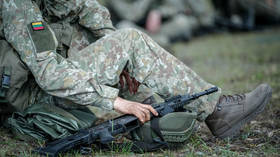
Lithuania has approved legislation expanding the powers of its intelligence services, allowing agents to detain and search suspected individuals, as well as conduct surveillance, without a court order.

The new law, set to take effect on February 1, comes amid escalating rhetoric in European NATO countries about an alleged threat from Russia, which Moscow refutes.

Adopted by the Lithuanian parliament on Tuesday, the revised Intelligence Law allows security services not only to gather information but also to take measures against what they perceive as external risks, dangers, and threats “arising from abroad that may be significant to state sovereignty.”

According to the new law, intelligence officers will be able to conduct surveillance of such individuals and their correspondence without a court warrant, but must apply to a court within 24 hours for authorization to continue.

The new powers also allow spooks to covertly collect biometric data such as fingerprints, voice samples, and scent, as well as to acquire explosive substances and devices and standard-issue firearms. Individuals can also be detained and their persons and property searched based on suspicion alone.

In 2024, Lithuania’s Migration Department designated 598 Belarusian and 125 Russian citizens as threats based on assessments that included information from the State Security Department.

Lithuania and its Baltic neighbors, Latvia and Estonia, have adopted an aggressive posture towards Moscow, particularly since the Ukraine conflict escalated in 2022, while pushing for a stronger NATO posture on their borders.

Earlier this year, European NATO members agreed to boost military spending to 5% of GDP, with Lithuania recently approving a record military budget of €4.79 billion ($5.6 billion) for 2026 – about 5.38% of GDP. They have also been reviving or expanding conscription, citing what they describe as the risk of attack.

The Kremlin has dismissed allegations of hostile intent toward Western nations as “nonsense” and fearmongering, while condemning what it calls the West’s “reckless militarization.” 

Russian Deputy Foreign Minister Sergey Ryabkov has said that European NATO members are pursuing “hostile” policies that keep the risk of a direct war with Russia high, even as the US signals a more balanced approach toward Moscow.

source

China bans sharing porn on messaging apps

0

The revision reportedly aims to protect children rather than target sexting adults

China will expand a ban on sharing obscene materials to include content sent via phone and online messaging apps starting next year.

According to the revised law, anyone “disseminating obscene information using information networks, telephones, or other communication tools” will face up to 15 days in jail and a fine of up to 5,000 yuan ($711). Penalties will be higher if the content involves children.

The wording of the law has led to concerns from media and social networks as to whether it could be applied to private sexually explicit messages between adults, such as sexting.

However, according to multiple legal experts cited by Chinese state media, the legal changes will not affect one-on-one private communications. They argue that the revisions reflect technological development, increasing the maximum fines, while leaving detention periods unchanged.

“China has mature standards and procedures for identifying obscene materials. It is critical to clarify that ‘obscene’ does not equal ‘indecent’,” China Daily cited Ji Ying, an associate professor of law at the University of International Business and Economics in Beijing, as saying.

Several legal experts explained that ‘indecent’ is a subjective term that does not necessarily meet the legal threshold of obscenity, which requires judicial determination and must meet clear statutory standards.

Zhu Wei, an associate professor at China University of Political Science and Law, told the outlet that the law is designed to protect minors and safeguard online ecosystems. He went on to note that, under the law, Chinese authorities require warrants and official investigation documents to access data on personal devices.

Several cases that preceded the expanded ban have reportedly involved mass sharing of explicit content.

In one case, three administrators of a group on the Chinese QQ platform were found guilty of failing to prevent the spread of hundreds of explicit videos, Global Times reported on Tuesday.

In another case from May, a man was convicted of rape, child molestation and spreading obscene materials after it was discovered that he sent explicit videos to more than 100 primary and middle school girls.

China has long banned pornography. Enforcement has largely focused on production, distribution and public sharing, rather than private consumption.

The revised law is set to take effect on January 1.

You can share this story on social media:
source