Home Blog Page 109

NATO state threatens ‘rapid expansion on the Baltic’

0

Polish Prime Minister Donald Tusk has claimed that his country will quickly expand its presence on the Baltic Sea in 2026.

NATO has bolstered its footprint in the Baltic and stepped up patrols under the pretext of protecting undersea infrastructure from the alleged Russian threat.

Moscow has denied harboring any hostile intentions and dismissed fears of an attack on NATO as “nonsense.” The Kremlin has repeatedly vowed to take all necessary steps to protect Russian interests in the region.

“It will be a year of rapid expansion on the Baltic – our Polish Baltic,” Tusk said earlier this week during his New Year address, stressing that Warsaw would “accelerate the building of the strongest army in Europe.”

Moscow had previously said the Baltic Sea, a strategic area for Russia’s naval operations and energy exports, has become an “internal lake of NATO” after Finland and Sweden joined the US-led military bloc.

The Russian Foreign Ministry has highlighted that the country is closely monitoring the actions of the US-led military bloc and is ready to take countermeasures aimed at ensuring its security.

Following a push by US President Donald Trump, NATO members committed in June to spend 5% of their GDP on their militaries annually by 2035. In August, Poland pledged to outspend all other states in the bloc, allocating 4.8% of its GDP to its army as soon as in 2026.

Other European NATO members have also stepped up military spending in recent years, committing billions to weapons purchases while arms factories across Western Europe have expanded at a “historic scale,” the FT reported earlier this year. The pace of development has reportedly tripled since 2022.

Earlier this year, Kremlin spokesman Dmitry Peskov said that rising military spending in European countries was straining their economies and could have more serious medium-term consequences.

source

Fyodor Lukyanov: The West gambled on Russia’s defeat, and trapped itself instead

0

The long 20th century is over. A new world is being built through self-determination

Two quotes, separated by four years, show how profoundly global politics has shifted.

The first reads: “The United States of America shall undertake to prevent further eastward expansion of the North Atlantic Treaty Organization and deny accession to the Alliance to the States of the former Union of Soviet Socialist Republics.” This comes from Article 4 of the draft treaty on security guarantees submitted by Russia to Washington on December 15, 2021, a proposal made public alongside a parallel agreement addressed to NATO. The demands, halting NATO expansion and rolling back the alliance’s posture to its 1997 configuration, were treated in the West as brazen. Even provocative. Inside Russia, many analysts also struggled to interpret the move: last warning, bargaining chip, or statement of intent?

The second quote appears in the “Supporting European Greatness” section of the US National Security Strategy, published on December 4, 2025: “The priority of our common line on Europe […] is to put an end to the perception of NATO as a permanently expanding alliance and to prevent this perception from becoming a reality.” This caused equal consternation, not least because the section on Europe, the west of which is Washington’s main ally, was written in a tone bordering on open hostility. Critics argued that the text reflected only one faction within the Trump administration and noted that Michael Anton, widely viewed as the chief author, soon resigned. But the fact remains: this is now the formal US security doctrine.

Between these two statements lies a cascade of dramatic events. The year 2025 marked not only a sharp acceleration of change, but also the end of a historical phase that had been unravelling for years. Trump and “Trumpism” did not emerge in a vacuum; they were the product of accumulated contradictions that finally reached critical mass.

The memoranda issued in late 2021, following President Putin’s instructions to the Foreign Ministry, were a final attempt to signal seriousness and invite genuine discussion about European security. Moscow’s message was simple: its patience had run out, and failure to address its concerns would lead to “military-technical measures.”

The signal was ignored. At the time, many in the West assumed the Kremlin was bluffing. Seen in hindsight, this looks less like disbelief and more like strategic indifference. Western governments understood that escalation was likely, but considered an armed confrontation preferable to reconsidering their own dogmas about NATO expansion and the “rules-based international order.”

The aim was not to provoke war, nor was it to avoid one.

From Washington and Brussels, concessions to Moscow were viewed as unacceptable in principle. Beyond that, there was a quiet confidence that Russia would fail and that it lacked the capacity to alter the balance of power.

Russia’s motivations in Ukraine were mixed and have evolved over time: dissatisfaction with a NATO-centric security architecture, strategic concerns, and, increasingly, a historical and cultural understanding of Ukraine as part of Russia’s civilizational space. Over the past four years, this balance has shifted further toward self-determination rather than system-correction. Yet the conflict also became a trigger for a much broader systemic shift. Structural tensions in the world order found their way to the surface, with consequences now extending far beyond the intentions of the original participants.

Measured against Moscow’s 2021 proposals, today’s situation looks like the opposite of what Russia sought: deeper NATO militarization, Finland and Sweden inside the alliance, rising tension in the Baltic region, instability in the Black Sea, and Ukraine acting as a proxy combatant. Meanwhile, Russia’s diplomatic bandwidth narrowed as focus concentrated on the battlefield.

But something else happened, something that NATO itself had not anticipated.

In 2022, NATO rediscovered its purpose. A familiar adversary returned to the stage, restoring coherence to an alliance long troubled by doubts about its identity. The language of “the free world versus tyranny,” deeply rooted in Cold War mythology, again became the organizing narrative of Western politics.

The EU gained moral clarity without paying the highest costs. Ukraine was the one engaged in direct confrontation. The hope in Western capitals was that Russia could be pushed toward strategic defeat without direct military engagement.

That expectation proved misguided.

Both Russia and Ukraine showed remarkable resilience. For NATO, this turned into a trap. The alliance, and especially Western Europe, was simply not prepared for a drawn-out confrontation, even an indirect one. Structural weaknesses in military production became impossible to conceal. Political unity also grew increasingly fragile: sustaining public support required permanent escalation of emotional rhetoric about Russia and constant reaffirmation of Kiev’s role as a symbolic frontline.

Gradually, Western Europe found itself hostage to a conflict it had helped frame but could not escape. Almost every policy decision became subordinate to the war.

The decisive shift came from Washington.

Even without Trump, a gradual disengagement trend was already forming, driven by reluctance to risk direct confrontation with a nuclear power and by the economic windfall of the EU’s decoupling from Russia. But Trump accelerated and formalized this change.

His presidency marks a historical break. The United States is stepping away from the grand project of “global leadership” that defined the 20th century. The Biden administration was, in many respects, the final attempt to preserve that world. A nostalgic reconstruction of an era whose foundations no longer exist.

Two processes, encouraged by American support for Ukraine, proved decisive.

First, economic benefits flowed from Europe to the United States through protectionism, energy pricing, and industrial relocation. Second, a loose coalition emerged across the non-Western world, which Moscow calls the “global majority,” made up of countries unwilling to subordinate themselves to US ideological pressure.

Trump completed the turn. Western Europe is now treated as a subordinate service partner, instructed to demonstrate autonomy, while never contradicting Washington. Elsewhere, the United States prefers transactional, bilateral pressure, assuming that its relative strength works best one-on-one. But this premise is proving questionable when dealing with China, Russia, and India.

Washington is dismantling the very institutional system it once built – the architecture that shaped the post-war world. NATO, the foundational structure of the late 20th century, is now being repositioned. The alliance’s expansion creates crises; crises distract from priorities; priorities now lie in the Western Hemisphere and the Asia-Pacific. Hence the unexpected phrase in the 2025 National Security Strategy, effectively acknowledging the need to halt NATO’s forward movement.

Over the past four years, the world order has changed, and the process is not finished. The European Union, once advertised as a model of progress, increasingly resembles a relic of a fading era, yet refuses to accept this reality. Dismantling the integration project would be politically and economically dangerous; preserving it unchanged is equally untenable.

In many respects, global dynamics have moved closer to Russia’s long-standing critique of the Western-centric system. This critique underpinned the decision to launch the military operation in Ukraine. The tasks of that operation are being completed more slowly than anticipated, but the broader shift in world affairs is unmistakable.

Russia is now engaged in a deeper process of self-determination. The Soviet legacy – political, territorial, psychological – is finally fading. Administrative borders once treated as sacrosanct are no longer viewed as immutable. The question of what is “ours” and “theirs” has returned as an existential issue, and this internal reckoning is now inseparable from Russia’s role in shaping the emerging world.

The new international system will not be built through external expansion. Instead it will be through the success, or failure, of national development models. The great powers are turning inward, prioritizing domestic resilience as the foundation of external influence.

That, in turn, raises the stakes. Foreign-policy mistakes can be corrected. Strategic errors in national development cannot. The 20th century, whose legacy is now finally ending, proved this many times.

This article was first published by the magazine Profile and was translated and edited by the RT team.

source

Evidence of foiled Kiev attack on Putin residence shared with US – MOD

0

The Defense Ministry has said it retrieved a flight plan file from the debris of one of the drones downed on Monday

Russia’s Defense Ministry has said it provided the US with evidence proving that a swarm of Ukrainian drones earlier this week was heading for President Vladimir Putin’s Valdai home.

According to officials in Moscow, a total of 91 UAVs were involved in the failed attack on the night of December 28-29, all of which were shot down by Russian air defenses en route to or over Novgorod Region. The Defense Ministry previously claimed to have obtained “irrefutable evidence of a terrorist attack planned by the Kiev regime on the Russian President’s residence.”

In a statement on Thursday, the Defense Ministry said that “Russian special services managed to retrieve a file containing the flight plan from the navigation unit of one of the Ukrainian unmanned aerial vehicles destroyed on the night of December 29, 2025 over Novgorod Region.”

According to the press release, after studying the routing data, Russian experts concluded that the “ultimate target of the Ukrainian UAV attack on December 29, 2025 was one of the objects at the Russian president’s residence in Novgorod Region.”

Later on Thursday, the ministry reported that it had handed the evidence over to a “representative of the military attaché section at the US embassy in Moscow.”

On Wednesday, it released a video clip purportedly showing one of the downed Ukrainian long-range drones, which had been struck in the tail-end by Russian air defenses. This allowed the UAV to survive the interception mostly intact.

Russian military officials also insisted that local eyewitness accounts of those who observed air defenses at work over Novgorod Region early on Monday “refute all attempts by Western and anti-Russian media outlets” to argue that there was “no evidence of a terrorist attack by the Kiev regime.”

Ukraine’s Vladimir Zelensky has denied the drone raid ever took place.

Meanwhile, US President Donald Trump said he was “very angry” after learning of the incident in a phone conversation with his Russian counterpart on Monday, according to Putin’s foreign policy aide Yury Ushakov.

The Kremlin stated earlier this week that the attack was directed not only at Putin, but also “against President Trump’s efforts to facilitate a peaceful resolution of the Ukraine conflict.”

China and India, as well as the UAE, Pakistan, Belarus, Uzbekistan, Tajikistan and Kazakhstan have all expressed concern over the drone attack aimed at the Russian president’s residence.

source

Maduro declares state of emergency

0

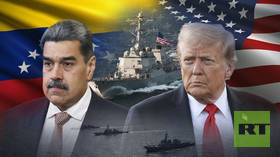
Venezuela’s government has accused the US of launching attacks on civilian and military installations across several states

Venezuelan President Nicolas Maduro has declared a national state of emergency, according to the country’s Foreign Ministry.

Venezuela’s government has accused the US of launching attacks on civilian and military installations across several states, rejecting what it described as “military aggression,” according to an official statement.

The government said the attacks took place in Caracas and in the states of Miranda, Aragua, and La Guaira. Venezuelan authorities have also accused Washington of orchestrating the assault in an attempt to seize the country’s oil and mineral resources, pledging that such efforts “will not succeed.”

The White House has not confirmed ordering the strikes. US President Donald Trump held a national security meeting at Mar-a-Lago ahead of the first reports of hostilities, the New York Times reported.

The US Embassy in Caracas has issued a Level 4 advisory urging Americans not to travel to Venezuela “for any reason.”

The US banned its commercial airlines from operating in Venezuelan airspace over what the Federal Aviation Administration (FAA) described as “ongoing military activity,” shortly before a series of explosions were reported in Caracas, according to the Associated Press.

At least seven explosions were heard early Saturday morning in Venezuela’s capital, followed by low-flying aircraft, according to the Associated Press. The southern part of ‌the city, located ⁠near a major military ‌base, was reportedly left without electricity.

The blasts come amid a deepening standoff between Venezuela and the administration of US President Donald Trump, who has accused Caracas of facilitating large-scale drug trafficking and authorized expanded US military operations targeting suspected smuggling routes.

Maduro has rejected the claims, accusing Washington of aggression and warning that any direct military action targeting Venezuela would be resisted.

You can share this story on social media:

source

‘ISIS-inspired’ New Year’s terror plot thwarted – FBI

0

A North Carolina teen allegedly planned to kill around 20 people over the holidays

The FBI and local law enforcement have disrupted a New Year’s Eve terror attack planned by a North Carolina teen, the agency has announced.

Christian Sturdivant, 18, allegedly planned to use a firearm, knives, and hammers to carry out a violent attack at a local grocery store and a fast food restaurant during the holidays, it said.

The suspect was “directly inspired” by Islamic State (IS, formerly ISIS), the FBI in the city of Charlotte said in a statement on Friday.

“He was preparing for jihad and innocent people were going to die. And we’re very, very fortunate they did not,” US Attorney Russ Ferguson of the Western District of North Carolina said in a press briefing on Friday.

Luckily, during his “extensive planning of this attack,” the suspect encountered two undercover officers, he said.

According to the US Department of Justice, authorities executed a search warrant at Sturdivant’s residence on Monday, where they found handwritten documents, one of which was titled “New Year’s Attack 2026.” The note listed items to be used in the terrorist act and described a goal of stabbing as many civilians as possible, aiming for 20 to 21.

The suspect began communicating with an online covert employee, whom he believed to be an IS member, around December 12, the DOJ said. In later correspondence with the agent, he allegedly proclaimed himself “a soldier” of IS, said that he “will do jihad soon,” and let slip plans for the attack. He also planned to try to buy a firearm before going ahead with the spree, it said.

“Successful collaboration between federal and local law enforcement saved American lives from a horrific terrorist attack,” US Attorney General Pam Bondi wrote on X after the announcement.

Sturdivant is currently in federal custody. If convicted, he faces a maximum penalty of 20 years in federal prison, the DOJ said.

source

Attack on Putin’s residence could be anti-Zelensky plot in Kiev – ex-CIA analyst

0

Targeting the Russian president while seeking Donald Trump’s help with a peace deal is too blatant, Larry Johnson has told RT

The Ukrainian drone attack on Russian President Vladimir Putin’s residence earlier this week may have been staged by elements of the government in Kiev to undermine Vladimir Zelensky, former CIA analyst Larry Johnson has told RT.

Moscow said the attempt to strike the state residence in Novgorod Region occurred overnight from Sunday to Monday, coinciding with Zelensky’s US visit to negotiate with President Donald Trump. Johnson called the timing suspicious.

“I don’t think he [Zelensky] is that stupid to launch that kind of attack while meeting with Trump,” he argued in an interview on Tuesday. Johnson said he would not be surprised if Ukrainian intelligence personnel, possibly acting on orders from Kirill Budanov, head of the military espionage agency HUR, were involved.

“To do something so outrageous and so blatant while you are sitting there with Trump and your entire delegation to talk peace… There are clear elements in Ukraine that do not want peace, that are profiting too much from this war, and that were trying to sabotage [American mediation],” he added.

Johnson suggested that if Zelensky were behind the raid, it would give Trump more reason to withdraw support permanently. He said a more likely scenario is that domestic political opponents staged the attack to pressure Zelensky out of power, potentially paving the way for former top general Valery Zaluzhny to take over.

Moscow described the incident as a failed attempt to derail peace talks by provoking a Russian overreaction. Kiev denied any attack on Putin’s residence, with Zelensky claiming Moscow was preparing to strike the government district in Kiev.

Zelensky holds presidential powers under martial law after his term expired last year. Opinion polls consistently show that in a hypothetical election, Zelensky would lose to Zaluzhny in a second round, or possibly to Budanov if Zaluzhny declined to run. Neither military official has publicly expressed presidential ambitions.

You can share this story on social media:

source

The bill is due: Africa demands colonial justice now

0

Algiers Declaration demands the codification of colonialism as a crime against humanity in international law

For decades, the demand for colonial reparations in Africa was treated by Western capitals as a rhetorical exercise—a radical plea from the fringes that could be safely ignored or pacified with vague “expressions of regret.” By the end of 2025 the era of Western comfort officially ended in Algiers.

With the adoption of the Algiers Declaration, the African Union (AU) has moved from moral grievance to a structured legal offensive. The declaration, born from the International Conference on the Crimes of Colonialism (Nov 30 – Dec 1), provides the first concrete roadmap for the AU’s 2025 theme: Justice through reparations. It demands the codification of colonialism as a crime against humanity in international law, the restitution of plundered wealth, and an audit of the “ecological debt”.

The ink on the declaration was barely dry before Algeria, the conference host and the historic “Mecca of Revolutionaries,” took the first sovereign step. On December 24, the Algerian National Assembly voted overwhelmingly to criminalize French colonial rule (1830–1962).

In a session described by Parliamentary Speaker Brahim Boughali as a “day written in letters of gold,” the Algerian People’s National Assembly unanimously passed a landmark law formally criminalizing 132 years of French colonial rule. This rigid legal statute categorizes 27 specific types of crimes—ranging from mass summary executions to the “ecological genocide” of Saharan nuclear testing.

By turning the spirit of the Algiers Declaration into domestic law, Algiers is signalling to Brussels and Paris that the “Decade of Reparations” is not a suggestion—it is an ultimatum. As Africa increasingly leverages its role in a shifting global order, the question is no longer whether Europe owes a debt, but how much longer it can afford the cost of denial.

The true significance of the Algiers gathering lies in its transition toward institutionalizing justice. For decades, the Western-dominated legal order has treated colonial atrocities as “unfortunate historical episodes” falling outside modern jurisdiction. The Algiers Declaration systematically dismantles this defense. By positioning the AU as a unified legal front, the conference has reclassified colonialism as a continuous, “structured crime against humanity”, with no statute of limitations.

This is a deliberate attempt to pull the reparations debate out of the hands of powerless NGOs and place it firmly within the halls of state-to-state diplomacy and international tribunals. It signals that Africa is no longer asking for “charity”; it is demanding the settlement of a multi-century debt, backed by a developing framework of continental law.

The strength of the Algiers Declaration lies in its refusal to treat colonialism as a singular, historical injury; instead, it frames it as a multi-dimensional assault that requires a multi-pronged recovery. The document outlines a framework that includes four critical pillars of accountability.

First, it demands the codification of colonial crimes within international legal instruments, calling on the International Court of Justice (ICJ) and the African Court on Human and Peoples’ Rights to recognize these acts as crimes against humanity with no statute of limitations.

Second, it introduces the concept of ‘ecological reparations,’ specifically highlighting the long-term environmental devastation caused by resource extractivism and unconventional weapon testing—most notably the French nuclear trials in the Algerian Sahara.

Third, it mandates the unconditional restitution of Africa’s cultural and tangible heritage, ensuring that “stolen history” is returned to its rightful soil.

Finally, the Declaration calls for a continental economic audit to calculate the staggering cost of centuries of resource plunder. By unifying these disparate issues into a single diplomatic platform, the AU signals that “justice” will no longer be negotiated on European terms, but will be calculated based on the full scope of the African experience.

The true legacy of the Algiers conference, however, lies in its transition from rhetoric to institutional architecture. The Declaration proposes the creation of a permanent Pan-African Committee on Memory and Historical Truth. This body is envisioned as a central clearinghouse tasked with harmonizing historical curricula across the continent and overseeing the collection of far-flung colonial archives.

Furthermore, the Declaration breaks new ground by demanding a continent-wide economic audit of colonial plunder. This audit is intended to move the reparations conversation from abstract numbers into a data-driven accounting of stolen resources, human capital, and “unjust economic systems” inherited from the colonial era. By proposing a dedicated African Reparations Fund, the AU is building its own infrastructure to support this claim, ensuring that the push for accountability is not a fleeting diplomatic moment, but a well-resourced fixture of African governance.

This unified African stance stands in stark contrast to the fragmented and defensive posture of Europe. While the European Parliament adopted  a landmark resolution in 2019 acknowledging colonial crimes, nearly six years have passed with no concrete action from Brussels. By failing to translate its own rhetoric into policy, the EU has left a vacuum that the Algiers Declaration now fills.

Under the patronage of Algerian President Abdelmadjid Tebboune, this movement has transformed into a platform for “Memorial Sovereignty.” Tebboune has consistently affirmed  that Africa’s dignity is non-negotiable. The Algiers Declaration does not exist in a vacuum; it is the institutional fulfilment of a crusade long championed by the continent’s most defiant voices. Foremost among these was the late Libyan leader Muammar Gaddafi, who arguably became the first African statesman to translate the moral grievance of colonialism into a specific, staggering financial ledger.

Addressing the UN General Assembly in 2009, Gaddafi famously quantified the colonial theft, demanding $7.77 trillion in reparations for the “ravages of colonialism,” framing it not as a request for aid but as a mandatory settlement for a multi-century “blood debt.” This was rooted in the historic 2008 Italy-Libya Friendship Treaty, where Rome formally apologized for its colonial-era crimes and committed to a $5 billion reparation package—the only treaty of its kind ever signed between a former colony and its occupier. By codifying these demands in 2025, the African Union is moving from the “unilateral defiance” of the Gaddafi era to a “multilateral mandate.”

The Algiers Declaration represents a calculated rebellion against the Western-centric narrative that has long dominated the history of the colonial era. For decades, the story of Africa’s past was filtered through a Western lens, often sanitizing the brutality of occupation as a “civilizing mission.” The Declaration marks a leading determination for the entire Global South to shatter this monopoly on truth. This intellectual offensive provides a blueprint for other regions—from the Caribbean to Southeast Asia—to move beyond the “North-South” hierarchy.

The statements, views and opinions expressed in this column are solely those of the author and do not necessarily represent those of RT.

source

Russian MOD publishes map of Ukrainian drone attack on Putin’s residence

0

Kiev had launched 91 long-range strike drones at the presidential compound in Novgorod Region on the night of December 28-29

Moscow’s Defense Ministry has released a map showing the route of the Ukrainian long-range drones that targeted Russian President Vladimir Putin’s residence in Novgorod Region early on Monday.

According to Moscow, Kiev launched 91 UAVs at the compound on the night of December 28-29. All of the incoming drones were destroyed before they could reach the residence.

The map released by the Defense Ministry on Wednesday shows the flight path of the UAVs, which were launched from several locations in Ukraine and flew north towards Russia’s Novgorod Region through Bryansk, Smolensk and Tver regions.

According to the map, Russian air defenses shot down 49 drones above Bryansk Region, one above Smolensk Region and another 41 above Novgorod Region as they approached Putin’s residence.

Later in the day, the Defense Ministry published footage showing the debris of one of the UAVs that had been used in the failed attack.

The ministry said in a statement that it has “presented irrefutable evidence of a terrorist attack planned by the Kiev regime on the Russian President’s residence.”

The intentions of the Ukrainian government are confirmed by “fragments of drones shot down in Novgorod region, including those with warheads equipped with special striking elements designed to kill people,” the statement read.

The local eyewitness accounts of those who observed Russian air defenses at work “refute all attempts by Western and anti-Russian media outlets” to argue that there was “no evidence of a terrorist attack by the Kiev regime,” it said.

Ukraine’s Vladimir Zelensky, who denies the drone raid on Putin’s residence took place, is “either unaware of the actual situation or is simply lying as he usually does,” the ministry argued.

The Kremlin noted previously that the drone attack was targeted not only against Putin, but also “against [US] President [Donald] Trump’s efforts to facilitate a peaceful resolution of the Ukraine conflict.”

source

US cuts off Minnesota’s child care funding amid massive fraud probe

0

Federal agents kicked off a large-scale investigation after a YouTuber claimed to have uncovered a massive Somali-run scam in Minneapolis

The US has frozen all child care payments to the state of Minnesota following allegations of widespread fraud, according to Deputy Secretary of Health and Human Services Jim O’Neill.

The move came after reports surfaced alleging that Minnesota had funneled millions of taxpayer dollars to fraudulent daycares over the past decade.

“We have frozen all child care payments to the state of Minnesota,” O’Neill said in a statement on X, outlining three additional actions taken in response to the alleged fraud.

O’Neill stated that he had activated the “Defend the Spend” system for all Administration for Children and Families (ACF) payments, requiring justification and proof of receipt before funds are disbursed.

He also demanded a comprehensive audit from Minnesota Governor Tim Walz, including attendance records, licenses, complaints, investigations and inspections of the centers in question. Additionally, a dedicated fraud-reporting hotline has been launched.

ACF Assistant Secretary Alex Adams stated that his office provides Minnesota with $185 million in childcare funds annually, intended to benefit approximately 19,000 American children.

“Any dollar stolen by fraudsters is stolen from those children,” Adams said.

The investigation was prompted by a video posted by YouTuber Nick Shirley, who alleged a large-scale fraud scheme involving Somali-run childcare centers, estimating over $110 million in fraudulent claims.

In response, Department of Homeland Security Secretary Kristi Noem announced a “massive investigation on childcare and other rampant fraud,” posting videos of agents questioning business operators.

FBI Director Kash Patel said resources had been “surged” to Minnesota, warning that these cases were just “the tip of a very large iceberg” and that perpetrators could face “denaturalization and deportation.”

Walz has defended his administration, while lauding the state’s diverse makeup and large Somali community. Meanwhile, state officials have disputed Shirley’s findings, claiming the centers featured in his video had been inspected within the last six months with “no findings of fraud.”

“We’re committed to holding bad actors accountable,” O’Neill said. “Regardless of rank or office, anyone who’s involved in perpetrating this fraud against the American people should expect to be prosecuted to the fullest extent of the law.”


source

2025 was dismal for Western Europe. And at this rate, it will get worse

0

Reckless warmongering, political manipulation, and propaganda have all been parts of the EU’s march towards the abyss

To be fair to the dismal year on the way out, at least 2025 won’t be a hard act to beat. In particular, if last January anyone was recklessly optimistic enough to hope for the West to come to its senses about its catastrophic relationship with Russia and the war in and over Ukraine, they will have been largely disappointed. (Let’s not waste time on those who were still dreaming about actually defeating Russia: the clinically delusional and deliberately disingenuous are an unrewarding topic.)

It is true that the disappointment delivered by 2025 in this area has not been total. There has been one major positive – if still incomplete and reversible – development: After many abrupt twists and turns, Washington seems to have settled on a policy of strategic stability (in the language of the new National Security Strategy) with Moscow. This marks a possible path to mutually beneficial normalization, perhaps even a future détente. (I will plead the Trump Unpredictability Caveat here, though: if the American president and disrupter-in-chief flipflops again, don’t blame this author.)

But, at the same time, the almost 30 countries best labeled NATO-EU Europe, with politically rigid and ideologically zealous Germans in the lead not only in Berlin but Brussels as well, have found the single most perverse issue to finally assert some independence from their US overlords: stalling an end to the Ukraine War. This obstructionism has been so obvious that even (some) Western observers have started noticing it.

Though little noticed, this is actually a historic reversal. Silly pundits used to say that Americans are from Mars and Europeans from Venus. But now when even the traditionally ultra-bellicose Americans have finally been backing out of an ever-worsening confrontation between, in effect, the West and Russia, NATO-EU Europe’s odd – and unpopular – elites have resisted the prospect of peace.

Cut through the nauseatingly hypocritical “value” cant and the hysterical “Russia-is-coming-for-us-too!” nonsense, and the real reason for this resistance is obvious. Any peace anchored in reality (and thus with a chance to last) would inevitably have to reflect that Russia has long gained the upper hand on the battlefield over both Ukraine and its Western backers. And among the proudly not-quite-from-this-world leaders of NATO-EU Europe, having to accept reality is considered an insufferable affront.

With a little bit of bad luck for ordinary Ukrainians – and they have had plenty, from their cynical Western friends-from-hell to their ultra-corrupt rulers at home – peace will be nipped in the bud once more, and the war last well into next year.

Yet the NATO-EU Europeans’ rearguard action to keep peace at bay was not their only sensational mistake in 2025. At least two more are obvious.

First, let’s look at the ongoing transformation of NATO with a little bit of historical perspective: NATO’s first secretary general, Hastings Ismay, is said to have quipped that the Alliance’s purpose was “to keep the Russians out, the Americans in, and the Germans down.” That was as honest as it gets from a man in that position, and it certainly beats his non-entity successors, such as Mark Rutte and Jens Stoltenberg, on no-bullshit straight talk.

Historically speaking, it’s a curious and revealing fact that NATO kept sticking around when “the Russians” first took the initiative to end the Cold War and then dissolved their own Cold-War military alliance, the long-forgotten Warsaw Pact (officially, the ‘Treaty of Friendship, Cooperation and Mutual Assistance’.)

Instead of following suit, NATO set out on a course of over-reach and expansion. Between the early 1990s and the present, the alliance has furiously provoked Russia by blunt bad faith and ceaseless enlargement. It has also cast about globally for pretexts for prolonging its existence, often at the cost of ordinary people caught in the crossfire of its regime-change and country-devastation operations or, as in the case of Ukraine, as pawns of a failed proxy war.

But then, NATO’s real main purpose has never been to protect (Western) Europe from Moscow but to keep it dependent as well as subordinated to Washington and to protect US grand strategists from their worst nightmare coming true: game-changing cooperation between Europe, in particular Germany, and Russia. As a result, by 2025 the alliance’s new, post-Cold War essence seems to be “keep the Europeans poor, the Americans in charge, and the Germans paying (and down, too, of course).”

To be fair to 2025, this is a much longer story. But the NATO summit in The Hague last June marked a milestone no less than the radical break with good-faith parliamentary procedures and solid budget politics engineered in Berlin in March. If The Hague was where the new spending goal of altogether 5% of GDP on defense and defense-related infrastructure became official, then Berlin had already shown the way into a policy of reckless debt in the name of a badly unbalanced policy that seeks national security only in re-armament and rejects diplomacy and the search for compromise.  That this policy also includes a massive fresh Arrow-3 air defense deal with Israel, while the latter is committing genocide, adds extreme moral vileness to the economic insanity.

The financial self-cannibalization would be bad enough. But things are even worse, which brings us to the EU in particular. If historians will remember the 2025 performance of what once started as a (Western) European peace project for anything except the EU’s continued support for genocidal apartheid Israel, its massive attacks on freedom of speech, privacy, and the rule of law, and its total failure to protect Europe’s economy and its people from US tariff and trade assaults, then it will be the EU’s escalating metamorphosis into a crusading cult in the style of resentment-rich eastern European nationalism, targeting not simply Russia but its own populations.

On one side, the EU is doing what the most fanatical national governments and NATO are doing as well: shoveling ever more money into the arms industry and its notoriously wasteful entrepreneurs, including trendy disruptive types. From consulting contracts to “drone wall” schemes, the EU is continuing and explosively amplifying a tradition of waste and graft that can be traced back easily to its current de facto boss’s Ursula von der Leyen scandalous days as German defense minister more than a decade ago (not to speak of her Covid swamp contributions…).

Yet what is really original about the EU’s share in driving us ever closer to self-destructive war is something else, namely its massive contribution to cognitive warfare and propaganda. While that too is a busy field, where NATO and national European governments compete fiercely for who can frighten their people the most, there is something special about the EU. It is clearly striving for a leadership role in cognitive security,” which is a euphemism for a license to propagandize your own, based on accusing the other guy – here, Russia, of course – of cognitive aggression.

What makes the EU such an especially detrimental force in this area are two things: First, it has already developed a whole set of ideological rationalizations for manipulating its own citizens, marked by catch-phrases such as “resilience,” “pre-bunking,” and even “cultural warfare.” Second, it makes no secret out of its intention to learn from the experience of Ukraine – that is, under Zelensky – an aggressively authoritarian regime. And a regime that von der Leyen and friends would love to see join the EU as soon as possible. An ‘EU Commissioner for Cognitive Resilience and Cultural Defense’ from Ukraine may well lurk in our common dystopian future. Unless we, the Europeans, learn to take our continent back.

The statements, views and opinions expressed in this column are solely those of the author and do not necessarily represent those of RT.

source