The Democrats will “open the floodgates to illegal immigration and fraud” if the midterms go their way, the billionaire has warned
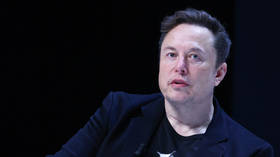
Elon Musk has indicated his intention to bankroll Republican candidates in the midterm elections later this year, saying that the US will cease to exist if the Democrats reclaim power in the Congress.
On Friday, Tesla and SpaceX CEO commented on a post on X by a conservative influencer, who claimed that “Musk is reportedly going all-in funding Republicans to help President [Donald] Trump take back full control in the November midterms.”
The world’s richest man responded to the message by warning that “America is toast if the radical left wins.”
The Democrats “will open the floodgates to illegal immigration and fraud. Won’t be America anymore,” Musk wrote.
Axios reported last month, citing informed sources, that Musk had recently written “big checks” to the Republicans to be used during congressional races, with plans to donate even more throughout 2026.
The Republicans have suffered a series of losses to Democrats in special elections last year, including in states traditionally considered their strongholds. Support for Trump has been on decline since he started his second term, with the Economist/YouGov’s poll earlier this week suggesting that the president has ended the year with 39% approval and 56% disapproval rating.
Musk used to be a close ally of Trump during the 2024 election race, cashing out $290 million and becoming the campaign’s top donor. After taking office, the president made him the head of the newly-created federal cost-cutting Department of Government Efficiency (DOGE).
Musk’s relations with Trump ruptured in June over the president’s flagship “big, beautiful bill,” which significantly expanded federal spending. The billionaire, who stepped down as head of DOGE amid the rift, called the legislation a “disgusting abomination,” accused the president of ties with convicted sex offender Jeffrey Epstein and mulled the creation of his own party to undermine the Republicans. Trump labeled the Tesla and SpaceX CEO “crazy.”
They appeared to have mended ties in recent months, with Trump filmed patting Musk on the arm during a White House dinner in November. According to Axios, the two now speak on the phone “occasionally.”
Big and strong countries now use military force without a UN mandate, openly flouting international law, the Slovak PM has said
The US attack on Venezuela further proves that the post-World War II world order is breaking down, Slovak Prime Minister Robert Fico said on Saturday.
Just hours earlier, US forces conducted air strikes on the oil-rich South American country and captured its president, Nicolas Maduro, and his wife. Both have been brought back to the US and charged with drug trafficking conspiracy – allegations that Maduro has long denied, arguing that Washington was after regime change and Venezuelan resources.
President Donald Trump has said that with Maduro deposed, the US will “run” Venezuela and secure its oil industry.
“The US military action in Venezuela is further evidence of the breakdown of the world order created after World War II,” Fico said in a statement published on social media.
“International law does not apply, military force is used without a UN Security Council mandate, and everyone who is big and strong does whatever they want in promoting their own interests,” he said.
Fico added that as a leader of a small country, he rejects this sort of “subversion of international law,” as he rejected the US invasion of Iraq, “the non-recognition of Kosovo as a sovereign state,” the “use of Russian military force in Ukraine,” as well as the assessment of the situation in Gaza.
The Slovak prime minister said he wondered how the EU would formally react to the US attack, which he said “deserves condemnation.”
“Either it will condemn the use of US military force in Venezuela and be consistent with its stance on the war in Ukraine, or it will remain, as usual, hypocritically self-righteous.”
EU foreign policy chief Kaja Kallas urged “restraint” in a post on X on Saturday, calling for adherence to the UN Charter.
Meanwhile, China and Russia have strongly condemned the US attacks.
The Russian Foreign Ministry has called the strikes and Maduro’s capture an “unacceptable infringement on the sovereignty of an independent state,” and called on Washington to release the Venezuelan president.
Former VP Delcy Rodriguez has demanded that the US free Nicolas Maduro, vowing that Venezuela “will never again be a colony”
Venezuela’s Supreme Court ordered Vice President Delcy Rodriguez to assume the role of interim president after Nicolas Maduro was kidnapped by US forces from Caracas and flown to New York to face criminal charges.
In a Saturday ruling, the court’s Constitutional Chamber said Rodriguez would assume the office “to guarantee continuity of government,” adding it would initiate a legal discussion to determine the framework needed to ensure the “continuity of the State,” the “administration of government,” and the “defense of sovereignty” in the face of Maduro’s “forced absence.”
Rodriguez, 56, a lawyer born in Caracas, has been vice president since 2018. She held a succession of senior posts under the late Hugo Chavez and Maduro, including foreign minister. At the moment of Maduro’s abduction on Saturday, she was also the oil-rich country’s Minister of Petroleum. The official, who has been widely viewed as a staunch Maduro ally, has been the target of US and EU sanctions.
The US captured Maduro to put him on trial for drug trafficking and weapons-related charges in an unprecedented raid on Caracas on Saturday. US President Donald Trump has since claimed that Washington would “run” Venezuela until a transition.
Rodriguez has fired back, demanding that the US immediately release Maduro, while stressing that Venezuela “will never return to being the colony of another empire” and “never return to being slaves.”
At the same time, she said that, in principle, Caracas is ready to move towards “respectful relations” with Washington. Trump said earlier that Rodriguez had spoken with Secretary of State Marco Rubio by phone and appeared willing to work with Washington.
Rodriguez has also talked to Russian Foreign Minister Sergey Lavrov, who “expressed firm solidarity with the Venezuelan people in the face of armed aggression.”
Venezuela’s leadership has repeatedly denied accusations that it is connected with the drug trade, arguing that the charges coming from the US only serve as a pretext for regime change.
Trump claimed Bogota is “run by a sick man,” referring to Columbian President Gustavo Petro
US President Donald Trump has threatened Colombia with military action similar to last week’s raid on Venezuela.
Speaking to reporters aboard Air Force One on Sunday, Trump said Colombia is “run by a sick man,” referring to President Gustavo Petro, whom he labeled a “drug leader.” The US president suggested that Petro, whom he sanctioned last year, could be removed from power too.
“Colombia is very sick… run by a sick man who likes making cocaine and selling it to the United States. And he’s not going to be doing it very long, let me tell you,” Trump stated. Asked directly whether the US would launch a military operation against the country, he replied: “It sounds good to me.”
Petro responded sharply in a series of posts on X, urging Trump to “stop slandering” and calling on Latin American nations to unite or risk being “treated as servants and slaves.”
The exchange follows growing outrage over Washington’s unprecedented military operation to seize Nicolas Maduro in Venezuela, which the Trump administration says was needed to bring the Venezuelan president to trial on drug trafficking charges. Caracas rejects this explanation as a pretext for regime change. Media reports say at least 80 people, both military and civilian, were killed in the raid. Maduro, who has denied all allegations, was abducted and forcibly flown to the US along with his wife.
The raid has drawn condemnation from the Global South, while China slammed the abduction as a violation of international law. Brazil, Chile, Colombia, Mexico, Uruguay, and Spain have issued a joint statement warning that America’s action has set “an extremely dangerous precedent” for regional security.
Trump justified the raid by invoking the 19th-century Monroe Doctrine, which designates Latin America as Washington’s sphere of influence, while asserting that the US is now “in charge” of Venezuela. He told reporters that Saturday’s military intervention was not about regime change or resources but securing “peace on Earth,” particularly in the Western Hemisphere. He went on to warn that the US could strike again if Caracas “doesn’t behave.”
Besides Colombia and Venezuela, Trump has also ramped up rhetoric against other countries in the region, claiming Cuba “is ready to fall” due to the loss of Venezuelan oil revenue and threatening Mexico with possible military intervention, saying the country “has to get their act together because [drugs] are pouring through Mexico and we’re going to have to do something.”
Washington’s actions horrify “even the staunchest Atlanticists,” Russia’s UN envoy, Vassily Nebenzia, has said
The capture of Venezuelan President Nicolas Maduro by the US threatens to throw the world back into an era of “chaos and injustice,” the Russian ambassador to the UN, Vassily Nebenzia, has said.
Washington’s raid on the Latin American nation has demonstrated the world order the US wants to build, the diplomat told an emergency session of the UN Security Council on Monday, adding that it “horrifies even the staunchest Atlanticists.”
The US attacked the oil-rich South American country on Saturday, abducting Maduro and his wife, taking them to a US warship from which they were subsequently flown to New York. They appeared in court on charges of drug-trafficking conspiracy on Monday – to which the Venezuelan president declared “I am a decent man!” before entering a not-guilty plea.
Maduro had previously warned that Washington was seeking to get its hands on Venezuela’s natural resources. US President Donald Trump stated on Sunday that Washington seeks to “run” the Latin American nation so that “we can take advantage of the economics of what they have.”
Nebenzia condemned the US actions as “international banditry.” The US’ open pursuit of “hegemonistic ambitions in Latin America” and its desire to gain “unlimited control over natural resources” only contribute to a resurgence of neo-colonialism and imperialism, he said.
The world must stand united in rejecting Washington’s belligerent foreign policy, Nebenzia said, warning that “the bell is already tolling” for each UN member state and the future of the organization itself.
Ignoring the threat posed by the US to the system of international relations would mean condoning the violation of international law, as well as disregard for “civilized” conduct on the international stage.
Russia – along with other BRICS nations – had already strongly condemned the US actions. Moscow called for Maduro’s immediate release and expressed solidarity with the people of Venezuela.
Reactions from the West have been far more muted. EU foreign policy chief Kaja Kallas urged “restraint,” calling for adherence to the UN Charter. A follow-up joint statement signed by all EU member states except Hungary neither condemned nor supported the US actions.
The country’s president is facing several charges related to narcotics trafficking and weapons on US soil
US military strikes on Venezuela were meant to provide cover for the capture of President Nicolas Maduro, who is expected to face trial on criminal charges on American soil, US Senator Mike Lee has said, citing US Secretary of State Marco Rubio.
The comments followed overnight explosions and reports of warplanes buzzing the capital city of Caracas. Later in the day, US President Donald Trump announced that American special forces had carried out a military operation and that Maduro, along with his wife, had been taken into custody and flown out of the country. Venezuelan authorities condemned the strikes as “grave military aggression.”
In a post on Saturday, Lee said that he had talked with Rubio on the phone, stating that “he informed me that Nicolas Maduro has been arrested by US personnel to stand trial on criminal charges in the United States.”
“The kinetic action we saw tonight was deployed to protect and defend those executing the arrest warrant,” the Republican senator added, noting that Rubio “anticipates no further action in Venezuela now that Maduro is in US custody.”
Meanwhile, Rubio himself republished his July 27 post in which he said that Maduro “is not the president of Venezuela” and that his government is not legitimate, while claiming that the Venezuelan leader is in charge of a major drug cartel.
Maduro has long denied such allegations, claiming the US was using them as a pretext for military aggression and in order to topple his government.
US Attorney General Pamela Bondi announced that Maduro and his wife had been indicted in New York and charged with “narco-terrorism conspiracy, cocaine importation conspiracy, possession of machineguns and destructive devices, and conspiracy to possess machineguns and destructive devices against the United States.”
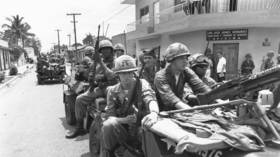
The strikes and capture represent the first US intervention in South America of its kind since the 1989 invasion of Panama. The US has long accused Maduro’s government of involvement in international drug trafficking, which the country’s leadership vehemently denies.
The Labour government’s economic policies have reportedly left the most vulnerable Britons with even less disposable income
The poorest UK households have only become poorer under Prime Minister Keir Starmer’s Labour government despite its promises to boost living standards, several British outlets reported on Friday, citing recently published analytical data.
Disposable income left after bills and essentials for the least wealthy households in the UK fell 2.1% during the period between July 2024 (when Labour took office) and October 2025, The Telegraph wrote, citing data published by Retail Economics, an independent research consultancy.
Conversely, the discretionary spending among the UK’s richest households has increased 10.3% during the same period.
“Lower income families are still grappling with the legacy of surging prices, with finances playing catch up as the cost of everyday products is significantly higher than it was four years ago,” the Telegraph wrote, citing Retail Economics’ Head of Commercial Content Nicholas Found.
A whole “generation of younger, lower to middle-income households” is feeling poorer than they were five years ago, being forced to prioritize essentials and cut back on discretionary spending, he reportedly said.
According to the UK’s Office for Budget Responsibility, due to “gradually slowing real wage growth and rising taxes,” real household disposable income is only expected to grow by 0.6% in 2026.
The Labour government announced £26 billion ($35 billion) in tax hikes in its November budget, which was widely seen as a breach of prior promises. Simultaneously, Chancellor Rachel Reeves reaffirmed plans to ramp up military spending by 2.6% of GDP, despite recognizing that her budget would squeeze “ordinary people.”
Starmer’s handling of the economy, as well as his crackdown on free speech in the UK amid the country’s migration crisis, has led to a plummet in his approval ratings. Only 15% of Britons think that he is doing well as prime minister, according to this week’s YouGov poll data.
With local elections coming in May, a recent YouGov voting intention survey showed both Labour and the Conservatives trailing behind the Euroskeptic Reform UK party by more than 8%.
The head of the Ukrainian Security Service (SBU), Vasily Malyuk, has said he is leaving following a meeting with the Ukrainian leader
The head of the Ukrainian Security Service (SBU), Vasily Malyuk, has announced his resignation. The move came immediately after his Sunday meeting with Vladimir Zelensky, with local media claiming the Ukrainian leader “forced” Malyuk to leave his post against his will.
Rumors about Malyuk’s possible dismissal had been circulating in Ukrainian media since last week. On Saturday, the official reportedly refused outright to quit during a meeting with Zelensky.
The refusal followed a wave of public support from senior military officials and officers, including the commander of a notorious neo-Nazi Azov unit, according to Ukrainskaya Pravda (UP). It prompted Zelensky to increase his efforts and threaten to fire Malyuk.
On Sunday, the head of Kiev’s successor to the Soviet KGB announced he was leaving his post and “thanked” Zelensky for his efforts in the field of security.
Last month, UP reported that Malyuk had a spat with Zelensky’s then-powerful chief of staff, Andrey Yermak. Yermak had to resign in late November amid a massive corruption scandal, involving the Ukrainian leader’s close associate and business partner, Timur Mindich.
Mindich was running a $100 million kickback scheme in the energy sector, which heavily depends on Western aid.
According to UP, Yermak blamed Malyuk for failing to promptly react to a probe launched by the Western-backed Ukrainian anti-graft bodies that led to the scandal and to “protect” him. Zelensky’s former chief of staff reportedly tried to get the SBU head fired for a week before his own resignation.
Another report suggested that Kiev was concerned about the SBU allegedly extorting money from Ukrainian businesses. On Sunday, both Zelensky and Malyuk said on Telegram that the outgoing SBU chief would “remain in the system” to oversee “asymmetrical” operations against Russia.
Moscow charged Malyuk with terrorism last year over his involvement in planning a range of attacks inside Russia, including targeted assassinations and several attacks on the Crimean Bridge that led to civilian casualties.
As Washington seizes Maduro, Russian analysts warn of a bold show of force aimed at Latin America and global stability
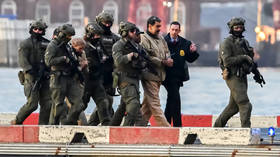
Washington has sharply escalated its military campaign against Caracas, carrying out an operation on January 3 during which US special forces captured Venezuelan President Nicolas Maduro and his wife and removed them from the country. The US government has charged Maduro with drug trafficking and terrorism and intends to try him in New York.
In response to US actions in Venezuela, foreign governments – including Russia and China – have called for de-escalation and Maduro’s release. Diplomatic activity has also intensified in Caracas and other Latin American capitals, highlighting deep disagreements over the legitimacy of the intervention.
RT has compiled commentary from leading Russian experts on Donald Trump’s actions and on Russia’s potential responses.
Valentin Bogdanov, Head of VGTRK’s New York Bureau:
The spectacle-style unveiling of Donald Trump’s brutally updated version of the Monroe Doctrine began with a nighttime helicopter raid over Caracas – and continued, under Trump’s direction, over New York. The entire, meticulously documented saga of transporting Venezuela’s captured president to the United States, filmed at the most humiliating stages of his detention, seemed designed to convince a target audience that clearly extends beyond Latin America that Fukuyama’s ‘end of history’ never really happened. If anything, this is not the first quarter of the 21st century, but very much the first quarter of the 19th – the era when the doctrine itself was proclaimed. No liberal sentimentality. Just raw power.
Maduro’s humiliatingly sagging tracksuit pants – the first photo of him under arrest, taken aboard the amphibious assault ship ‘Iwo Jima’. The shackles and chains binding the Venezuelan president’s legs on the tarmac at Stewart Air National Guard Base, as he is escorted from a Boeing arriving from Guantánamo to a hangar. DEA agents clustering together for a group photo: the detainee in handcuffs, the officers looming like bounty hunters celebrating another trophy. Maduro, notably, did not break. His mocking ‘Happy New Year!’ uttered en route to the DEA’s New York headquarters will likely be quoted for years. These are indeed new times – above all for Donald Trump.
The US president, who arrived 45 minutes late to what should have been a triumphant press conference at Mar-a-Lago, did not look particularly happy. The reason is obvious. Capturing Maduro is one thing; capturing Venezuela is quite another. Judging by who remains in power in Caracas, Trump’s original plan is far from being realized. Whose efforts ensured that outcome remains an open question. But recalling that, ahead of Operation ‘Absolute Resolve,’ the White House hosted the US ambassador to China while Maduro received a Chinese delegation, it is not difficult to guess who drew a red line – in both the literal and figurative sense – in front of Trump.
Hence the bravado, the ultimatums, and the immediately declared limits of what is possible. The first to be tossed into the spam folder was opposition figure María Corina Machado, whom Trump dismissed as lacking leadership qualities. His promise to assume transitional control over Venezuela, meanwhile, almost instantly collided with his own bargaining with the country’s new/old authorities. The United States, Trump said in an interview, would refrain from deploying troops on Venezuelan soil if the newly sworn-in Vice President Rodríguez does what Washington wants. What Trump wants is simple: oil – and as much of it as possible. Caracas, for its part, has already delivered the standard response: ‘The oil belongs to the people.’
Of course, there is also the stick. Trump is already threatening a second wave of strikes. But he has inadvertently revealed his greatest fear: a ground operation – the dreaded boots on the ground. That is something today’s Trump-era America could not sustain under any circumstances, even in its own backyard. And that is precisely why what happened on the night of January 2–3 is less a tectonic shift in geopolitics – Washington has manhandled Latin America plenty over the past two centuries – than a significant domestic political milestone.
The principal beneficiary here is not so much Trump as Secretary of State Marco Rubio, whose diplomatic cover for the Caracas operation adds substantial momentum to a potential 2028 presidential run, fueled by Spanish-speaking voters – a demographic that continues to grow. Venezuelans and Hondurans, Mexicans and Cubans, Salvadorans and Nicaraguans – the backbone of the Republican Party’s emerging electorate – have little interest in Ukraine or globalist ambitions. One cannot say that this is a bad thing.
Anastasia Gafarova, political analyst and deputy director of the Center for Political Information:
Donald Trump has no intention of launching a prolonged ground operation in Venezuela. The US will act quickly and aim for maximum effect. Venezuela, with its impenetrable jungles and a well-developed guerrilla movement, inevitably evokes uncomfortable Vietnam-style analogies, which is precisely why the US administration wants to get in and out of this situation as fast as possible, with clear results. And the result is obvious: the overthrow of the so-called Maduro regime.
It cannot be ruled out that what happened is part of a broader political deal, possibly carried out with the consent of Maduro himself and his key partners. Alternatively, it may be the result of betrayal within the Venezuelan president’s inner circle.
What matters is that these events are an attempt to exert pressure not only on Venezuela, but on other Latin American countries as well – Brazil, for example, where elections are approaching.
Maxim Suchkov, Director of the Institute for International Studies at MGIMO University:
Starting a war in a midterm election year is a risky undertaking, but not a reckless one. It is risky because there is always the possibility of getting bogged down. It is not reckless because, both politically and militarily, a US operation against Venezuela appears carefully thought through.
On the political front, Washington moved in advance to cut off any external support for Nicolas Maduro. Talks with Russia over Ukraine have entered a decisive phase, with the assumption that Moscow would be unwilling to openly clash with Washington under such circumstances. At the same time, the US has held intensive, confidential talks with China in recent days, clearly delineating what it considers its sphere of influence.
Militarily, Donald Trump is clearly betting on a blitzkrieg.
But this is a Trump-style blitzkrieg: precision strikes against military facilities, infrastructure, and symbolic sites – including the destruction of Chavez’s grave as a symbolic blow to the regime and a signal to its ideological opponents at home – combined with a massive information campaign. It follows the logic of so-called ‘cognitive warfare’: breaking the will to resist among both the military and the civilian population.
Yet the ‘Trump-style world order’ is not limited to a traditional American sphere of influence. In Venezuela’s case, it is also a powerful instrument for managing the global oil market. And that goes well beyond Latin America, directly affecting Russian interests.
Dmitry Rozental, Director of the Institute of Latin America at the Russian Academy of Sciences:
I don’t think Donald Trump initially planned to attack Venezuela. What we are seeing now is driven primarily by domestic political considerations. Trump needed to mobilize his electoral base and secure additional support from the Venezuelan and Cuban diasporas, which are deeply hostile to left-wing regimes, including the government in Venezuela. But as the situation evolved and tensions mounted, Trump said and did so much that, at a certain point, he could no longer pull back.
Some time ago, there were reports that talks were underway between the two governments, and a number of observers did not rule out the possibility that a deal could be reached. Apparently, that did not happen. The actions by US military and special forces on January 3 mark a new phase of escalation, one in which the stakes are now significantly higher.
More broadly, Venezuela has long been viewed by the American establishment as a threat to US national interests. For Washington, full control over the Western Hemisphere is essential, and the presence of openly antagonistic states in the region is unacceptable. Venezuela also holds vast oil reserves and, more generally, considerable strategic potential. Unsurprisingly, successive US administrations – Republican and Democratic alike – have sought to weaken Venezuela’s position and push for a more pro-American political order. That said, Venezuela was never a top priority for the US, and Trump’s decision was shaped to a large extent by domestic political pressures at home.
As for Russia, its options in this situation are fairly limited. Moscow will undoubtedly provide political and moral support to the Venezuelan leadership and take all necessary steps on international platforms. Beyond that, for a number of reasons, it is difficult to say what more can be done at this stage.
Fyodor Lukyanov, Editor-in-Chief of Russia in Global Affairs:
Donald Trump has chosen to make it unmistakably clear that, for him, the Monroe Doctrine is not just a slogan tucked into the National Security Strategy, but a guide to action. Regime change in Venezuela in favor of a Washington-friendly government is framed by Trump’s team not as another ‘endless war’ in the mold of Iraq or Afghanistan, but as a matter of US national security. It is no coincidence that the pretext being advanced involves allegations – by all appearances entirely fabricated – of Caracas’ involvement in drug trafficking and the funneling of migrant flows toward the US. The overthrow of Maduro is meant to send a message to all of Latin America about who is in charge of the region and how one is expected to behave.
How resilient popular support for the Chavistas really is, and how capable they are of resisting pressure, will become clear in the near future. The same goes for the level of risk Trump is prepared to accept. A ground operation would carry the danger of casualties and entanglement – precisely what runs counter to the president’s stated instincts. That said, if reports about Maduro being removed from the country are true, Trump can already declare a sweeping victory, regardless of what happens next inside Venezuela.
For Russia, this is an awkward situation. Venezuela is a close partner and a like-minded ally, and Nicolás Maduro and Vladimir Putin have long-standing ties. US actions can provoke nothing but outrage in Moscow. At the same time, providing any meaningful assistance to a country so distant and embedded in an entirely different geopolitical environment is simply not feasible. That is partly a matter of technical and logistical constraints, but there is also a political dimension. Putin and Trump currently have another issue on the agenda that is far more consequential for Moscow: Ukraine. And for all its sympathies toward Caracas, the Kremlin is unlikely to upend the entire game with a critically important counterpart over a secondary issue.
In practical terms, Venezuela’s closer and more materially grounded relationship is with China. Trump’s moves in Latin America are tied to a broader strategic objective: pushing China out of the region. Beijing, however, is also unlikely to take any concrete action in this situation.
Timofey Bordachev, professor at the Higher School of Economics:
This fixation on the so-called Monroe Doctrine is, of course, appealing to many people, since it points to a relatively familiar historical analogy and, in doing so, relieves them of the need to think too hard. It is also well suited to today’s information environment for exactly that reason. But taken seriously, invoking a concept that is two centuries old – assuming it is meant seriously at all, which itself is debatable – serves a purpose beyond mere spectacle: it points to a fundamental crisis of ideas.
Any first-year international relations student should understand that historical analogies do not work as an analytical tool, just as outdated concepts do not work as a basis for policy – simply because the context has changed so profoundly over the past 200 years. In other words, an intellectual crisis is one of the defining features of contemporary world politics. And it is hardly surprising that, when expressed through the American lens, this crisis takes on its most dramatic and theatrical forms.
Ivan Timofeev, program director of the Valdai Club:
Both sanctions and the use of military force are tools of foreign policy. They can be used in combination – and more often than not, they are. Iran, Syria, Iraq, Yugoslavia, and so on.
The US military operation against Venezuela is another such case, though with a distinct twist. The overthrow of a sitting government and the seizure of a country’s president are far rarer phenomena.
This episode highlights the growing vulnerability of political systems in a region that is geographically distant from other centers of power.
That said, the Soviet Union once managed to provide effective support to Cuba, and the Bay of Pigs invasion ended badly for the US.
In other cases, circumstances proved decisive. The 1980 US special forces operation ‘Eagle Claw’ to rescue hostages from Iran failed due to a cumulative mix of bad luck and sheer mismanagement.
This time, everything went smoothly for the United States. Trump took a risk – and, for the moment, won.
In a significant number of capitals, officials will now be asking themselves whether he might be willing to take the same risk with them.
It appears that delegations will start heading to Beijing and Moscow. Risks need to be controlled – or, if one prefers the term, mitigated.
A key indicator of the shift toward multipolarity will be how effectively those risks can be managed and mitigated, whether independently or with the help of so-called ‘black knights.’
Konstantin Kosachev, deputy speaker of the Federation Council:
There is no doubt that Venezuela posed no threat to the United States – military, humanitarian, criminal, or narcotics-related. The latter is confirmed by a specialized UN agency. That means the current military operation, like the actions taken against Venezuela over recent days and weeks, has no substantive justification whatsoever.
In a striking irony, the Nobel Peace Prize was awarded in 2025 for calls to bomb Venezuela. Should the actual bombing of Venezuela now be seen as a step toward the 2026 Nobel Peace Prize as well?
Order must be based on international law, not on so-called ‘rules.’ International law has clearly been violated. An order imposed in this manner must not prevail.
I am confident that the global majority will decisively distance itself from the attack on Venezuela and condemn it. The global minority, by contrast, faces agonizing choices – ones that will either once again put values and interests in their proper places, or consign values once and for all to the scrap heap in the face of the geopolitical priorities of transatlantic solidarity.
The Investigative Committee has said it is probing the attack in Kherson Region as a terrorist act
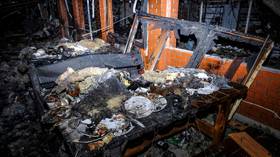
The death toll from the Ukrainian drone strike on civilians celebrating New Year’s Eve in Kherson Region has increased to 27, and 31 others are reported as wounded, Russia’s Investigative Committee has said. Initial reports spoke of 24 fatalities.
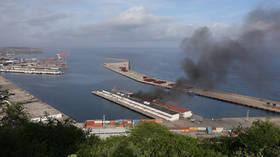
The attack occurred shortly before midnight on December 31 in the Black Sea coastal village of Khorly. Multiple drones struck a crowded cafe and a hotel, triggering a massive blaze. At least one of the UAVs was carrying an incendiary mixture.
Two children were killed in the attack and five additional minors were among the injured, the Investigative Committee said in a statement on Friday.
At least 100 civilians, including guests and staff, had been inside the venue when the “terrorist act” took place, the statement read.
Fragments of several drones have been discovered by those investigating the scene of the attack, the agency said.
More than 26 forensic examinations, including medical, genetic, explosive and fire safety analysis, have been ordered as part of the investigation, it added.
“All members of the Ukrainian military involved in this crime will be identified and brought to justice,” the agency stressed.
Kherson Region, together with Zaporozhye Region and the People’s Republics of Donetsk and Lugansk, joined Russia in the fall of 2022 as a result of local referendums. The territories have been frequent targets of indiscriminate Ukrainian attacks during the conflict between Moscow and Kiev.
Russian officials have said that the drone strike in Khorly was intentionally timed to maximize casualties and represents a war crime.
Russia’s ambassador to the UN in Geneva, Gennady Gatilov, suggested on Thursday that the attack was intended to “distract attention from the failures of the Ukrainian Armed Forces and disrupt any attempts to find a peaceful resolution to the conflict.”
Gatilov also condemned the Western nations for failing to react to the drone strike, warning that remaining silent was tantamount to “open complicity and involvement in the bloody crimes of neo-Nazis.”